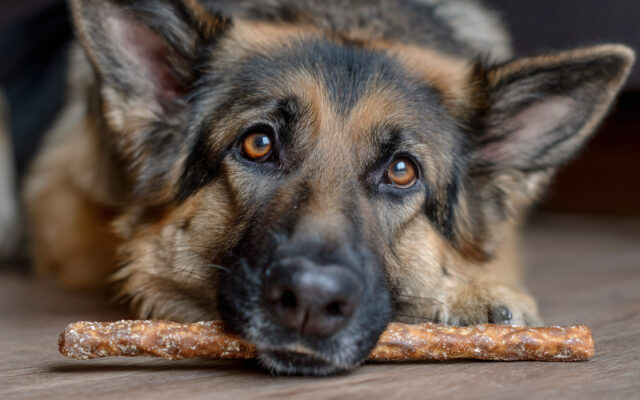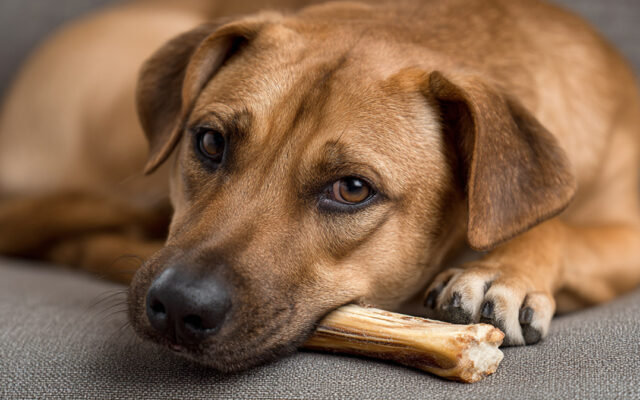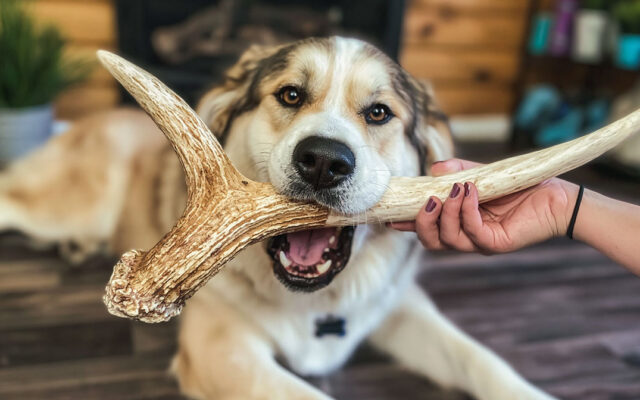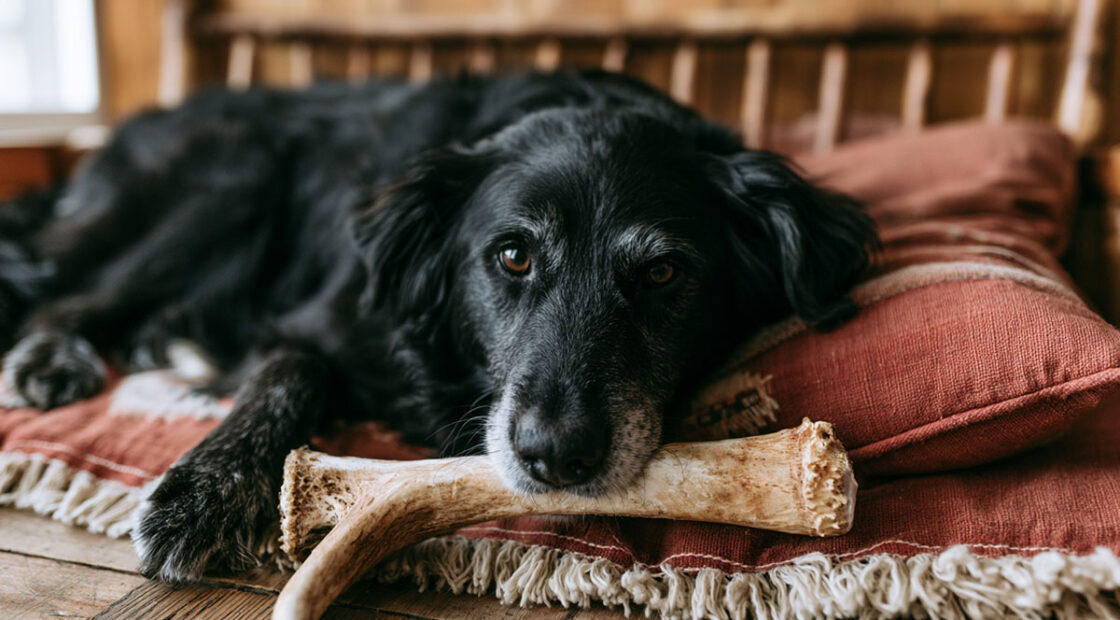
My dog destroyed a “heavy duty” rubber toy in under an hour. Then I handed her an elk antler, and it lasted a month. Finding the best antlers for dogs changed how I think about chew treats entirely.
But not all antler chews are the same. Elk, deer, and moose antlers differ in hardness, size, marrow content, and safety profile. Pick the wrong type for your dog’s jaw strength, and you’re looking at a cracked tooth or an ignored chew gathering dust.
This guide covers every type of antler for dogs, ranked by brand, with sizing recommendations, safety considerations, and alternatives for dogs that need something softer.
What Are Dog Antlers?
Dog antlers are naturally shed chews that come from elk, deer, and moose. Every year, these animals drop their antlers during winter, and collectors gather them from forests and fields across North America. No animals are harmed in the process.
My dog went through a phase where she destroyed every single chew toy within 48 hours. Rubber ones, nylon ones, those braided rope things. All of them. Then a friend handed me a piece of elk antler, and it lasted three weeks. That was the turning point.
Antlers are made of bone-like tissue packed with minerals. A University of Georgia study found 11 different minerals in deer antlers, with calcium making up roughly 19% and phosphorus around 10%. Magnesium, sodium, zinc, iron, and manganese were also present in smaller amounts.
The guaranteed analysis of a typical elk antler chew looks like this:
| Nutrient | Value |
|---|---|
| Crude Protein (Min) | 38.9% |
| Crude Fat (Min) | 1.2% |
| Crude Fiber (Max) | 1.8% |
| Moisture (Max) | 9.9% |
| Calories | 5.2 kcal/g |
That low fat content is one reason antlers became popular as a rawhide-free alternative. They’re a single ingredient treat with no artificial preservatives, no chemicals, no added flavors. Just antler.
There are three main forms you’ll see sold: whole antlers, which are the full intact piece; split antlers, which are cut lengthwise to expose the marrow; and antler slices, which are cross-cut rounds. Each serves a different chewing style, and picking the wrong one is where most people run into trouble.

Types of Antlers for Dogs
Not all antlers chew the same. The animal it comes from changes the hardness, size, marrow content, and how long the thing lasts before your dog grinds it down to nothing.
Elk Antlers
Best for: moderate chewers, first-timers, medium to large breeds.
Elk antlers are the most widely sold type and for good reason. They’re softer than deer antlers, which makes them easier on teeth. The outer cortex is dense enough to last, but not so hard that it turns into a dental bill. And the marrow content is higher than what you get with deer, so dogs stay interested longer.
Elk can weigh up to 800 pounds, and their antlers reflect that. A single shed can weigh up to 20 pounds, which means there’s plenty of material to cut into chews of various sizes. Split elk antlers are probably the safest starting point for dogs that have never tried antler chews before. For a deeper comparison of these two popular types, check out this breakdown of elk vs deer antlers for dogs.
Deer Antlers
Deer antlers are harder, denser, and smaller in diameter than elk. They come from whitetail, mule deer, and roe deer, all of which are lighter animals (maxing out around 300 pounds).
The trade-off? They last longer for aggressive chewers because that dense outer layer takes more work to grind through. But that same hardness is exactly why veterinary dentists flag them as a higher risk for tooth fractures. If your dog bites down hard rather than gnawing side to side, deer antlers can crack a carnassial tooth fast.
Because deer antlers have more prongs and less overall mass, they can’t be split the same way elk antlers can. The pieces would end up too small and become a choking hazard. So they’re typically sold whole, which actually makes the finished product larger than a cut piece of elk antler. If you’re curious about feeding deer antlers specifically, there’s a good resource on whether dogs can eat deer antlers safely.
Moose Antlers
Softest option available. Moose antlers have that distinctive paddle shape, and the bone density is lower than both elk and deer. That makes them the go-to for puppies with adult teeth, senior dogs, and light chewers who just want something to work on without destroying their mouth.
The downside is availability. Moose have a smaller range and lower population than elk or deer, so their antlers cost more and are harder to find. When you do find them, expect to pay a premium. But for a dog that needs something gentler, they’re worth every penny.
Split vs. Whole Antlers
This is less about the animal and more about how the antler is prepared.
| Feature | Split Antlers | Whole Antlers |
|---|---|---|
| Marrow access | Immediate, exposed | Dog must work to reach it |
| Durability | Shorter lifespan | Lasts weeks to months |
| Best for | Picky dogs, puppies, seniors | Power chewers, large breeds |
| Tooth risk | Lower (softer surface) | Higher (harder outer cortex) |
I usually start a new dog on split antlers and see how they handle it. If they’re a careful gnawer, I’ll move up to whole. If they’re trying to crack it in half like a walnut, that’s a red flag, and I switch to something else entirely.
One thing people mix up constantly: water buffalo horn vs. antler. They’re not the same product. Buffalo horn is keratin (like a fingernail), while antler is actual bone tissue with marrow. Totally different chewing experience, totally different nutritional profile.
Best Antlers for Dogs Ranked by Type and Brand
The natural dog treat market hit $6.99 billion in 2024, according to Grand View Research, and the chewable segment is growing at roughly 14% annually. Antler chews sit right in the middle of that growth, especially among owners looking for preservative-free, grain-free options.
Here’s what actually holds up, based on what’s available through major retailers like Amazon, Chewy, and specialty pet stores.
Top Elk Antler Picks
Deluxe Naturals remains one of the most consistently reviewed elk antler brands. They grade their antlers (A through C) and their Grade A pieces tend to have good marrow content and minimal chalk. Buck Bone Organics is another solid pick, especially for medium-sized dogs. Their antlers are sourced from wild sheds in the Rocky Mountains.
Prairie Dog Pet Products offers budget-friendly options that work well for dogs who are just getting into antler chewing. Not as dense as the premium brands, but perfectly fine for a moderate chewer.
Top Deer Antler Picks
WhiteTail Naturals is the name that keeps coming up for deer antlers. They sell whole pieces in various size grades, and their quality control is better than most of the no-name options on Amazon.
Hotspot Pets and Pawstruck both offer deer antler chews sized by dog weight class. Pawstruck in particular does a good job labeling their products for small, medium, large, and giant breeds, which takes the guesswork out of sizing.
Deer antlers are generally cheaper per piece than elk, but they may need replacing more often if your dog is an aggressive chewer. That price-per-week math matters when you’re buying chews regularly, and owning a dog is expensive enough already.
Top Moose Antler Picks
Mighty Paw makes moose paddle chews that work well for puppies and older dogs. The flat shape gives them something to hold between their paws while they gnaw.
Availability is the main problem here. Moose antler stock fluctuates seasonally, and popular sizes sell out fast on Chewy and Amazon. If you find a brand and size that works for your dog, consider buying a few at a time.
Best Antlers for Aggressive Chewers
Power chewers need whole elk or whole deer antlers. Period. Split antlers won’t last, and slices will be gone in a day.
Breeds like Labrador Retrievers, German Shepherds, and Rottweilers can generate serious jaw force. A 2009 study in the Journal of Anatomy found that bite forces in dogs can reach up to 3,417 Newtons at the molars. That’s enough to crack any chew that isn’t built to handle it.
Look for antlers marketed as “jumbo” or “monster” size (typically 8 inches or longer) and always choose pieces thicker than your dog’s muzzle width. For other tough chew options, see our guide to the best dog chews for heavy chewers.
Best Antlers for Puppies and Senior Dogs
Split moose antlers are the safest bet for both groups. The exposed marrow keeps puppies engaged without requiring them to bear down on a rock-hard surface.
Don’t give antlers to puppies that still have baby teeth. Wait until the adult teeth are fully in, which for most breeds happens around 6 to 7 months. For more specific guidance, there’s a helpful article on what age puppies can chew antlers. If you’re looking for something in the meantime, softer options like chew bones designed for puppies are a better fit.
Senior dogs with worn teeth or dental issues should stick to split elk at most. Some older dogs do better with Himalayan yak chews, which soften as the dog works on them and become pliable enough to reduce fracture risk.
Are Antlers Safe for Dogs?
This is where the conversation gets tricky, and honestly, a little heated depending on who you ask.
Veterinary dentists are mostly against antlers. A poll referenced by Dr. Julie Buzby found that less than 1% of veterinarians polled were comfortable with dogs chewing on antlers. The American Veterinary Dental College doesn’t officially endorse antlers as safe chews either.
The core issue is tooth fractures. Dogs have significantly less enamel than humans, with a mean thickness of only 0.35 to 0.44 mm compared to up to 2.5 mm in human teeth. Antlers don’t flex when a dog bites down, and the force concentrated between the upper fourth premolar and lower first molar can cause what’s called a slab fracture. That’s when a piece of the tooth shears right off.
A study found that one in four dogs presented for dental cleaning had a traumatic dental injury, and 50% of those injuries were fractured or broken teeth. Antlers, bones, and hooves are the primary culprits.
The Thumbnail Test
Cornell University’s veterinary faculty and multiple dental specialists recommend a simple rule: if you can’t dent it with your thumbnail, it’s too hard for your dog.
Most antlers fail this test. Whole deer antlers especially. Split antlers sometimes pass along the marrow edge, but the outer cortex never will.
The Veterinary Oral Health Council (VOHC) maintains a list of safe dog chews that have been tested for both effectiveness and safety. Antlers are not on that list.
Choking and Obstruction Risks
Beyond teeth, there’s the swallowing problem. Once an antler gets chewed down small enough to fit in a dog’s throat, it becomes a choking hazard. Swallowed pieces can also cause gastrointestinal blockages that require surgery.
The fix is straightforward: take the antler away before it gets small enough to swallow. If the piece is shorter than your dog’s muzzle, it’s time to toss it.
So Should You Give Your Dog Antlers?
Look, I still give my dog antlers. But I supervise every session, I limit chew time to about 15 to 20 minutes, and I watch for any sign that she’s trying to crack it rather than gnaw. The second she starts bearing down with her back teeth like she’s trying to split it, I take it away.
The risk is real. But with the right size, the right type, and active supervision, many dogs do fine. Your mileage may vary, and that’s not me being vague. It genuinely depends on your individual dog’s chewing style.
Nutritional Benefits of Antler Chews
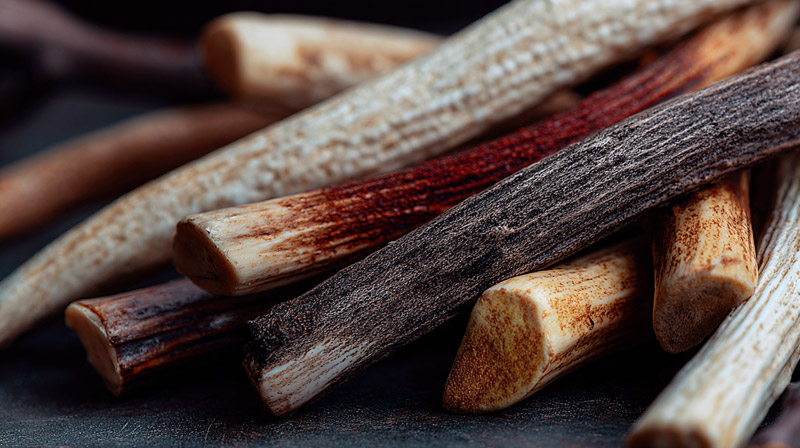
People throw around “nutritious” when talking about antlers, but what does that actually mean in practice?
Antlers contain calcium, phosphorus, zinc, manganese, and collagen. These minerals support bone development, dental health, and general body function. The protein content sits around 39%, which is higher than most commercial dog treats.
Mineral Content Breakdown
Calcium (19%): Supports skeletal structure and muscle function. Dogs need consistent calcium intake, and while antlers aren’t a primary dietary source, the minerals absorbed during chewing sessions add up over time.
Phosphorus (10%): Works alongside calcium for bone health. The ratio between these two minerals matters, and antlers naturally provide them in a balanced proportion.
Zinc and manganese: Present in trace amounts. Zinc supports immune function and skin health. Manganese plays a role in cartilage formation.
Low Calorie Advantage
With only about 1.2% crude fat, antlers are one of the leanest chew options available. Compare that to bully sticks, which are significantly higher in calories and fat content.
For dogs on a restricted diet or those prone to weight gain, antlers provide chewing satisfaction without the caloric load. According to APPA’s 2025 data, 59% of dogs in America are overweight, so low-calorie treat alternatives have become a real priority for owners.
Dental Health Effects
The mechanical scraping action of chewing on an antler does help remove some plaque buildup. Cornell University notes that 80 to 90% of dogs over age three show signs of periodontal disease, so anything that supports dental hygiene has value.
But here’s the honest part. The plaque removal benefits don’t outweigh the tooth fracture risk for every dog. If your dog is a gentle side-gnawer, antlers can genuinely help keep teeth cleaner. If your dog is a power chewer that clamps down hard, the dental “benefit” can quickly turn into a cracked premolar. For dogs in that category, something like natural dental chews approved by the VOHC might be the smarter play.
How to Pick the Right Antler Size for Your Dog
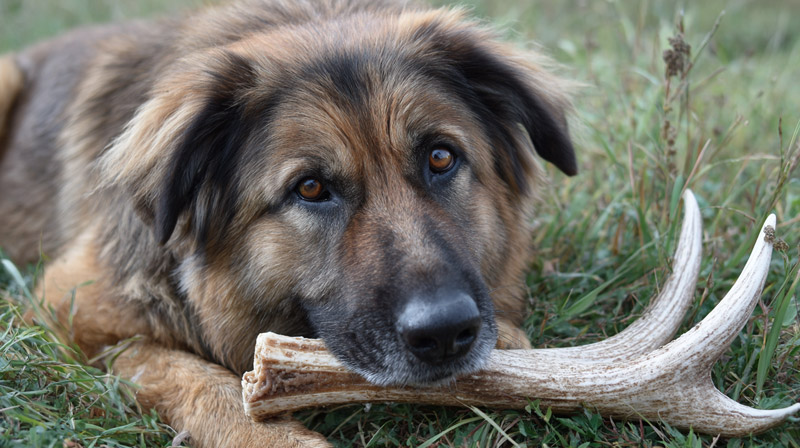
Sizing matters more than most people realize. Too small and your dog could choke on it or swallow it whole. Too large and they might lose interest or hurt themselves trying to get a grip.
The Muzzle Rule
The antler should always be longer than your dog’s muzzle. If it can fit entirely inside their mouth, it’s too small. This is non-negotiable. A piece that small becomes a swallowing risk the moment your dog gets excited.
Most brands size their antlers by dog weight, which is a decent starting point but not the whole picture. A 60-pound Bulldog and a 60-pound Siberian Husky have completely different jaw structures and chewing habits.
Weight-Based Sizing
| Dog Weight | Antler Size | Length (approx.) |
|---|---|---|
| Under 15 lbs | Small | 3–5 inches |
| 15–40 lbs | Medium | 5–7 inches |
| 40–70 lbs | Large | 7–9 inches |
| Over 70 lbs | XL / Monster | 9–14+ inches |
Always err on the side of oversizing. A bigger antler is safer than a smaller one. Your dog can still gnaw on an antler that’s “too big” for them, but they can’t un-swallow one that was too small.
Shape Preferences by Breed Type
Flat paddle-style antlers (from moose) work well for brachycephalic breeds like French Bulldogs and Boxers. Their shorter muzzles make it easier to grip a flat surface than a cylindrical one.
Long tine pieces are better for retrievers and larger breeds with longer jaws. Golden Retrievers and Great Danes tend to prefer these because they can hold them between their front paws and work the length of the piece.
Took me a while to figure this out with my own dog, actually. She’s a medium-sized mixed breed, and I kept buying cylindrical elk antlers that she’d just bat around the floor. Switched to a split paddle piece and she was set for weeks. Sometimes the shape matters more than the size.
How Long Do Antlers Last?
Depends on the dog. That’s the honest answer nobody wants to hear, but it’s true.
A medium-sized elk antler given to a 40-pound moderate chewer typically lasts 3 to 5 weeks of regular chewing sessions. Split antlers go faster, sometimes just one to two weeks for the same dog. Whole deer antlers can stretch to two months or longer because the outer cortex is harder to grind through.
Some customers report the same antler lasting six months for a casual chewer. Others go through one a week. I’ve had both experiences with the same dog at different ages.
Factors That Shorten Lifespan
Sun exposure is the biggest enemy. Leaving an antler outside dries it out, makes it chalky, and strips the flavor that keeps dogs interested. Store antlers indoors in a cool, dry spot when not in use.
- Aggressive chewing style (bearing down vs. gnawing)
- Moisture exposure (rain, slobber left pooling)
- Undersized antler for the dog’s weight class
Antlers don’t spoil or expire like food-based treats. They contain almost no moisture, so bacteria and mold aren’t a concern. But they do lose appeal once they’ve been sun-bleached or left outside for weeks.
When to Replace an Antler
Three clear signs. If you see any of these, toss it and get a new one.
Size check: Can it fit entirely inside your dog’s mouth? Gone. Sharp edges: Run your fingers along the chewed surface. Anything sharp or jagged gets thrown out. Deep cracks: Visible fracture lines mean the structural integrity is compromised and pieces could break off.
The longest lasting dog chews on the market are still antlers, even with these replacement timelines. A whole elk antler outlasts bully sticks, pig ears, and most rubber toys by a wide margin.
Cost Per Week vs. Other Chews
Antlers cost more upfront. A quality elk antler runs $15 to $30 depending on size and grade. But stretch that over weeks or months of use and the math changes fast.
| Chew Type | Avg. Price | Avg. Duration | Cost/Week (est.) |
|---|---|---|---|
| Elk antler (whole) | $18–25 | 3–8 weeks | $2–6 |
| Bully stick (6-inch) | $2–5 | 10–30 minutes | $14–35 |
| Himalayan yak chew | $10–18 | 1–3 weeks | $5–12 |
| Pig ear | $2–4 | 15–30 minutes | $14–28 |
Bully sticks are the most expensive chew per week if your dog burns through them quickly. For cost breakdown specifics, see why bully sticks cost so much. Antlers win the long-term value comparison for most dogs, assuming they actually enjoy chewing them.
Where to Buy Dog Antlers
Packaged Facts estimates the US pet treats and chews market at $12.8 billion in 2024. Antlers make up a growing slice of that, and availability has expanded across online and brick-and-mortar retailers over the past few years.
Online Retailers
Amazon leads online pet product sales with 59% of all US transactions in the category, according to Packaged Facts. Chewy follows at 41%.
Both platforms stock antlers from Deluxe Naturals, Buck Bone Organics, Pawstruck, and WhiteTail Naturals. The advantage of buying online is review volume. You can see hundreds of real owners reporting how long a specific antler lasted for their specific breed, which is more useful than any marketing copy.
Direct-from-brand websites like Devil Dog Pet Co and Farm to Pet sometimes offer fresher stock and better grading transparency than marketplace listings.
Local Pet Stores and Farm Supply Shops
Specialty pet stores accounted for 42% of natural dog treat sales in 2023, per Grand View Research. Staff at these stores can usually tell you the grade of the antler and where it was sourced, which is harder to verify on Amazon.
Tractor Supply and similar farm supply chains also carry antlers seasonally. The selection varies by location, but you’ll often find locally sourced options that don’t show up online.
What to Avoid When Buying
Not all antlers are equal. A few red flags to watch for:
- Bleached or whitened appearance (means the antler was sun-dried too long or chemically treated)
- No grading system listed (Grade A through C matters)
- Imported from unknown origins with no sourcing details
- Unusually cheap pricing for the size (often old, chalky stock)
Grade A antlers are brown, dense, recently shed, and have visible marrow content. Grade B may have minor cosmetic issues but is structurally fine. Grade C antlers are old, sun-bleached, and not worth buying as dog chews.
Wild-harvested antlers from the Rocky Mountain region (Montana, Idaho, Wyoming, Colorado) are generally considered the highest quality in North America. Farm-sourced antlers from elk ranches are also available, and most are certified disease-free by state wildlife agencies.
Alternatives to Antlers for Dogs That Love to Chew
Antlers aren’t right for every dog. If your dog has cracked a tooth, has dental issues, or just doesn’t seem interested, plenty of other durable chew options exist.
Himalayan Yak Chews
Made from yak and cow milk, lime juice, and salt. That’s it. These chews are hard enough to last but soften as the dog works on them, which significantly reduces fracture risk compared to antlers. If you’re wondering whether Himalayan dog chews are safe, the softening mechanism is what makes them a popular vet-recommended alternative.
Grand View Research data shows the chewable treat segment growing at 14% CAGR through 2030, and yak chews are a big part of that growth. For the best yak chews, look for brands that use traditional Himalayan recipes with minimal ingredients.
Bully Sticks
Fully digestible, high in protein, and dogs go absolutely nuts for them. The downside is that they don’t last long, especially the standard 6-inch sticks. A power chewer can finish one in 10 minutes flat.
Thick bully sticks and braided versions hold up better. They’re also higher in calories and fat than antlers, so they’re not ideal for dogs watching their weight. For more on what to expect, how long bully sticks last breaks down the durability question by size and thickness.
Raw Bones
Marrow bones and knuckle bones from beef are the classic choice. Dogs love them. The marrow provides protein and fat, and the bone itself offers chewing resistance.
But raw bones come with their own risks. They can splinter (especially cooked bones, which should never be given to dogs). They’re messy. And like antlers, they can crack teeth if the dog bites down too hard. Curious about bone marrow specifically? There’s a detailed guide on whether dogs can eat bone marrow safely.
Rubber Chew Toys
Kong Extreme and West Paw Zogoflex are the two names that come up repeatedly in veterinary recommendations. Both pass the thumbnail test. Both flex under pressure instead of staying rigid.
They won’t provide the nutritional benefits of antlers or collagen chews for dogs, but they’re the safest option for dogs with dental concerns. You can stuff them with treats or peanut butter for added enrichment.
When a Vet Says No Hard Chews at All
Some dogs just can’t have hard chews. Dogs recovering from dental surgery, seniors with advanced periodontal disease, or breeds prone to health problems affecting the jaw should stick to soft alternatives.
In those cases, look at healthy dog treats that prioritize digestibility over chewing duration. Soft jerky treats, beef tendons, or lamb ears all give dogs something to work on without the tooth fracture risk that comes with harder chews.
APPA’s 2025 report shows 94 million US households now own a pet. With that many dogs out there, the chew market keeps expanding with new options every year. If antlers don’t work for your dog, something else will.
FAQ on Best Antlers For Dogs
Are antlers safe for dogs to chew?
Antlers are safe with supervision, but they carry a risk of tooth fractures. The thumbnail test helps: if you can’t dent it with your fingernail, it’s too hard. Always monitor chewing sessions and remove small pieces.
What type of antler is best for dogs?
Elk antlers are the most popular choice. They’re softer than deer antlers, have higher marrow content, and come in sizes suitable for most breeds. Moose antlers work best for puppies and senior dogs.
How long do antler chews last?
A whole elk antler typically lasts 3 to 8 weeks for a moderate chewer. Split antlers go faster, usually one to two weeks. Aggressive chewers can wear them down in days.
Can puppies have antlers?
Only after adult teeth come in, usually around 6 to 7 months. Start with split moose or elk antlers, which are softer. Never give antlers to puppies still teething with baby teeth.
What is the difference between elk and deer antlers?
Elk antlers are larger, softer, and have more marrow. Deer antlers are denser and harder, lasting longer but posing a higher risk of cracking teeth. Elk is generally safer for most dogs.
When should I take an antler away from my dog?
Remove it when the piece is small enough to swallow, when you spot sharp edges or deep cracks, or if your dog starts biting down hard instead of gnawing from the side.
Are split antlers better than whole antlers?
Split antlers expose the marrow immediately, making them more appealing to picky dogs. They’re softer and safer for beginners. Whole antlers last longer and suit experienced, moderate chewers better.
Do antlers clean dogs’ teeth?
The mechanical scraping action removes some plaque buildup. But antlers are not a replacement for brushing or professional dental care. Over 80% of dogs over age three already show signs of periodontal disease.
How do I pick the right antler size?
The antler should be longer than your dog’s muzzle. If it fits entirely inside their mouth, it’s a choking hazard. Always size up rather than down. Most brands offer weight-based sizing charts.
What are good alternatives to antlers for dogs?
Himalayan yak chews soften as dogs work on them. Bully sticks are fully digestible but don’t last as long. Rubber toys like Kong Extreme are the safest option for dogs with dental concerns.
Conclusion
Choosing the best antlers for dogs comes down to matching the right chew to your dog’s size, age, and chewing behavior. There’s no universal answer here.
Elk antlers work for most dogs. They hit the sweet spot between durability and safety, with enough calcium, phosphorus, and zinc to add nutritional value without the calorie load of bully sticks or pig ears.
Deer antlers suit strong-jawed breeds that need a harder surface. Moose paddles are better for puppies with adult teeth and older dogs with worn dentition.
Always supervise chew sessions. Check for sharp edges and cracks regularly. Replace antlers before they become small enough to swallow.
If your dog is a power chewer prone to bearing down hard, consider rotating antlers with dog bones designed for dental health or yak bones. Variety keeps dogs engaged and reduces the wear on any single tooth.