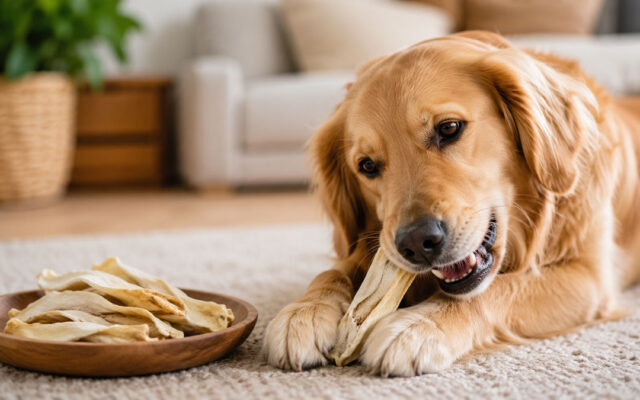
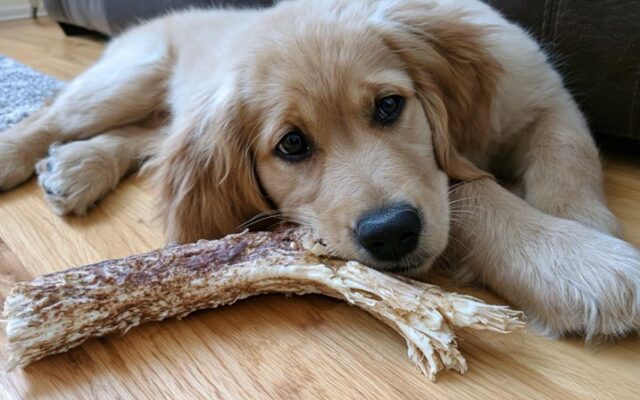
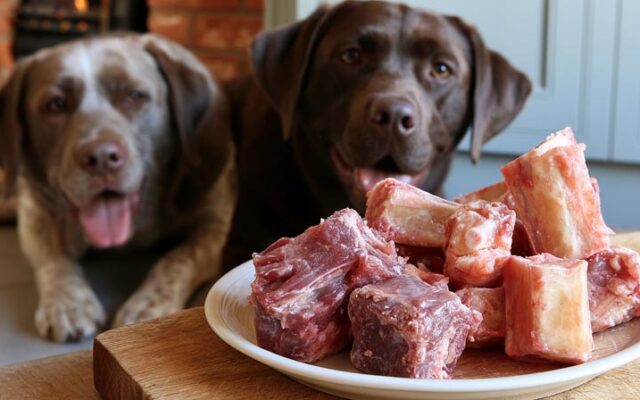
If your dog destroys every chew you buy within minutes, standard treats are not the problem. Your dog is.
Finding the best dog chews for heavy chewers is not about picking the most expensive option on the shelf. It is about matching chew durability, material safety, and jaw strength to your specific dog.
The wrong chew does not just waste money. It can fracture teeth, cause digestive obstruction, or expose your dog to harmful ingredients.
This guide covers natural chews, synthetic chews, and rubber options. It addresses safety risks, breed-specific sizing, dental health impact, and how often power chewers should actually be chewing.
What Are Heavy Chewer Dog Chews?
Heavy chewer dog chews are durable chew products built to withstand aggressive, sustained biting without splintering into ingestible fragments or breaking apart mid-session. They are designed for dogs with strong jaw muscles, a high bite drive, and a habit of destroying standard chews within minutes.
Not every “durable” chew qualifies. The distinction matters because a chew that fails structurally under power-chewer pressure becomes a choking hazard, not a treat.
There are 3 main categories of chews suited for heavy chewers:
- Natural chews: single-ingredient options like bully sticks, yak cheese, antlers, and beef tendons
- Synthetic chews: nylon-based products like the Nylabone Power Chew line and Goughnuts MAXX
- Rubber chews: vulcanized or natural rubber options like KONG Extreme and West Paw Zogoflex
Standard chews fail heavy chewers for 3 concrete reasons: structural breakdown under bite pressure, production of ingestible fragments that cause digestive obstruction, and surface hardness that is either too soft (destroyed instantly) or too hard (causes slab fractures).
What Makes a Dog a Heavy Chewer?
A heavy chewer is a dog that destroys a standard 6-inch bully stick in under an hour. Natural Farm’s chew strength guidelines put it simply: light chewers take hours or days on the same stick; medium chewers take 1 to a few hours; heavy chewers go through it in minutes to an hour.

Behavior patterns matter as much as breed. Dogs with high prey drive, separation anxiety, or excess energy tend to chew with more intensity regardless of breed. That said, certain breeds are consistent heavy chewers.
Breeds most commonly in the heavy chewer category include Labrador Retriever, Rottweiler, American Pit Bull Terrier, German Shepherd, Cane Corso, and Mastiff. But size alone isn’t the rule. A Jack Russell Terrier can outchew a Labrador on intensity if not duration.
How Chew Durability Is Measured
Shore A durometer rating measures the hardness of rubber and synthetic materials on a scale from 0 to 100. Lower numbers mean softer material; higher numbers indicate firmer compounds. Most rubber chews rated for heavy chewers fall between Shore A 60 and 80.
For natural chews, durability comes down to density and processing method. Whole antlers are denser than split antlers. Cold-dried bully sticks are harder than baked ones. Yak cheese chews processed at lower temperatures hold their structure longer under sustained chewing.
Bite force is the other side of the equation. Dog bite forces range from 13 to 1,394 Newtons in research published in a 2009 Journal of Anatomy study, with forces at the molars reaching as high as 3,417 Newtons. A Rottweiler bites at roughly 328 PSI, a Mastiff at 552 PSI, and a Cane Corso at approximately 700 PSI (Phillips Law Offices, 2026). A chew rated for a Labrador is not rated for a Mastiff.
What Are the Safest Dog Chews for Heavy Chewers?
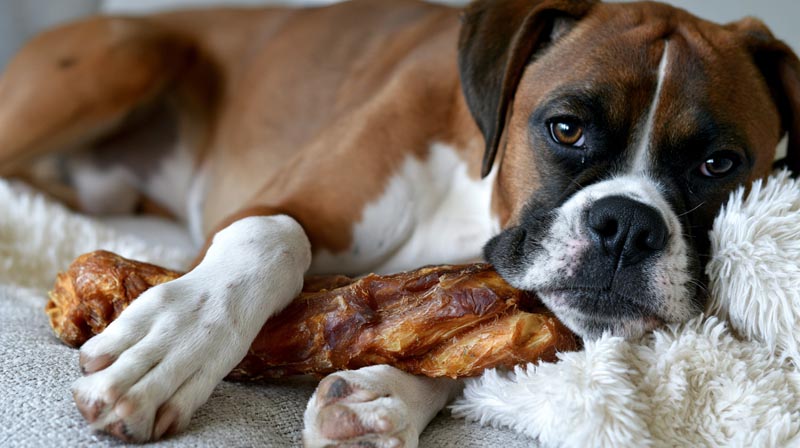
The safest dog chews for heavy chewers are products that are hard enough to last but soft enough to avoid slab fractures. That means they must pass a specific physical test before you give them to your dog.
The American Veterinary Dental College’s position is direct: if you cannot dent a chew with your thumbnail, it is too hard for your dog’s teeth. Full stop. Dental fractures affect 10 to 20% of all pets, and the most common cause in heavy chewers is biting down on objects that are too hard (Embrace Pet Insurance, 2021).
Chews That Veterinarians Warn Against
VCA Animal Hospitals lists 4 chew types to avoid outright: cooked bones, antlers, cow hooves, and rigid nylon chews. Each fails the thumbnail test and has documented links to slab fractures and tooth root abscesses.
The problem with antlers in particular is their marketing. Veterinary Practice News notes that antlers have become one of the most common causes of carnassial tooth fractures, the same upper fourth premolar that vets see broken most often in large breed heavy chewers.
Cooked bones splinter. Hooves are too dense. Ice cubes, widely given as a treat, also cause fractures in aggressive chewers. None of these are appropriate for power chewers regardless of size.
The Slab Fracture Risk in Hard Chews
Slab fractures occur when a dog bites down on a hard surface at an angle that flakes off a “slab” of tooth. Best Friends Veterinary Center describes the mechanism precisely: forces on the carnassial teeth, when excessive, result in buccal slab fractures of the upper fourth premolar most commonly.
The treatment cost is significant. Tooth extractions from hard chew fractures run $700 to $2,500 depending on complexity, and specialist root canal care for a single fractured tooth reaches $1,500 to $3,500 (SpectrumCare, 2026). Many owners don’t realize the fracture happened until an abscess forms weeks later.
Dogs hide dental pain reliably. They keep eating, playing, and chewing even with a fractured tooth exposing the pulp. Regular mouth checks are not optional for heavy chewers.
| Chew Type | Fracture Risk | Safe for Heavy Chewers |
|---|---|---|
| Cooked bones | High (splinters) | No |
| Whole antlers | High (too dense) | No |
| Cow hooves | High (thumbnail-hard) | No |
| Natural rubber (KONG Extreme) | Low | Yes |
| Bully sticks | Very low (digestible) | Yes (supervised) |
| Yak cheese chews | Low to moderate | Yes (correct size) |
What Are the Best Natural Chews for Heavy Chewers?
Natural chews for heavy chewers are single-ingredient or minimally processed products derived from animal sources. They offer the highest digestibility of any chew category, which matters when a power chewer breaks off a large piece.
Digestibility reduces the risk of intestinal obstruction. That’s the main practical advantage over synthetic options for dogs that actually consume portions of their chews.
Bully Sticks for Heavy Chewers
A 6-inch standard bully stick contains approximately 88 calories, with a caloric density range of 9 to 22 calories per inch depending on thickness (Freeman et al., Canadian Veterinary Journal, 2013). That means a single thick stick can represent 30% of the daily caloric needs of a 10-pound dog.
For heavy chewers, thick bully sticks are the right format. Standard thin sticks get destroyed in under 5 minutes by a true power chewer. The thicker braided or jumbo versions extend engagement time significantly and are 80 to 90% protein by composition (Bully Sticks Direct, 2026).
Bully sticks are highly digestible, so large swallowed pieces pass without obstruction in most healthy dogs. Still, supervision is standard practice as the stick shortens to a size that fits entirely in the mouth.
Sourcing matters. Grass-fed, USA or South American-sourced sticks carry fewer contamination concerns than mass-imported options.
Yak Cheese Chews
Himalayan yak chews are made from yak and cow milk compressed and dried into a hard block. The Himalayan Pet Supply brand is the category originator. These chews are lactose-free after processing, which matters for dogs with dairy sensitivity.
Durability profile: Yak chews rank harder than bully sticks but softer than whole antlers. They sit close to the thumbnail-test boundary, so correct sizing for the dog’s weight is non-negotiable. An XL yak chew rated for dogs over 70 lbs should not go to a 40-lb dog.
The last piece, once the chew is too small to be safe, can be microwaved for 30 to 45 seconds until it puffs into a digestible cheese puff. That’s a practical way to use the remainder without creating a choking hazard. You can read more about whether Himalayan dog chews are safe for your specific dog’s profile.
Antlers and Horns: What the Research Shows
Split elk antlers are meaningfully safer than whole antlers for heavy chewers. The split surface exposes the marrow center, which reduces the structural hardness the dog is biting against. Whole antlers require the dog to bite the full cortical bone surface, which fails the thumbnail test consistently.
Water buffalo horns sit in a similar risk category to whole antlers. They are dense, nail-hard, and have produced documented slab fractures in large breed heavy chewers according to veterinary dental case reports.
The safest antler option, if you want to offer antlers, is a split antler sized large enough that it cannot be swallowed whole, from a dog under 50 lbs with supervised session lengths under 20 minutes. For dogs over 100 lbs with 500+ PSI bite force, antlers are not recommended regardless of split or whole format.
What Are the Best Synthetic Chews for Heavy Chewers?
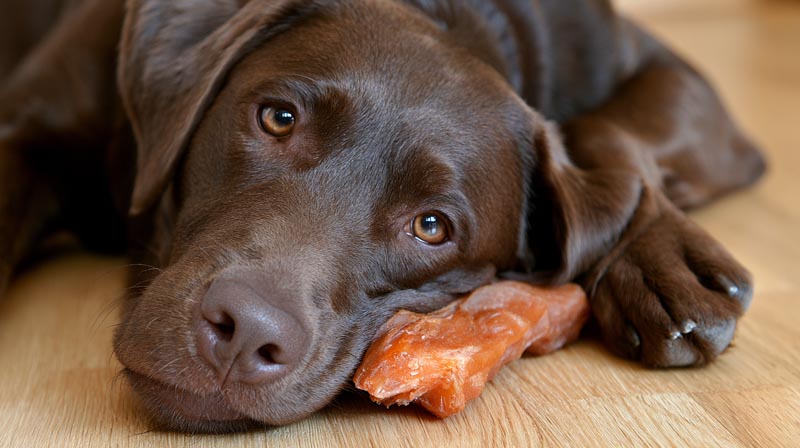
Synthetic chews for heavy chewers are non-digestible products made from nylon polymers or other engineered materials. They last longer than natural chews under sustained power chewing, but they are not meant to be consumed. Any dog that breaks off chunks and swallows them should not use synthetic chews.
Nylabone Power Chew vs. Goughnuts MAXX
These are the two most commonly recommended synthetic chew products for true power chewers. They work differently and suit different dog profiles.
Nylabone Power Chew: Flavor is infused throughout the nylon matrix, not just surface-coated. The Power Chew line is size-rated by dog weight: separate products exist for dogs under 25 lbs, 25 to 50 lbs, 50 to 100 lbs, and over 100 lbs. Dogs that shred the outer nylon layer into sharp splinters should move to a different chew type.
Goughnuts MAXX: Designed with a two-layer construction. The outer black rubber layer is the chewing surface. When a dog chews through to the inner red safety indicator layer, the chew is retired. This makes the Goughnuts MAXX one of the few products with a built-in wear indicator, which removes the guesswork from knowing when replacement is needed. The MAXX variant is rated for dogs with extreme bite force.
Goughnuts also offers a purchase guarantee: if a dog chews through to the safety layer, the company replaces the product. That’s a meaningful signal about their confidence in the material.
| Feature | Nylabone Power Chew | Goughnuts MAXX |
|---|---|---|
| Material | Nylon polymer | Natural rubber (dual-layer) |
| Safety indicator | None | Red inner layer |
| Digestibility | Not digestible | Not digestible |
| Size range | 4 weight-based sizes | MAXX for extreme chewers |
| Best for | Persistent but not extreme chewers | Extreme bite force breeds |
When Synthetic Chews Become a Hazard
A synthetic chew becomes dangerous the moment a dog starts breaking off pieces larger than small shavings. Nylon fragments are not digestible and can cause intestinal obstruction or perforations.
Signs that a synthetic chew needs to be replaced: visible gouges deeper than 3mm, sharp edges along the chew surface, or any change in the dog’s stool (nylon fragments sometimes pass but indicate the dog is swallowing material). At that point, the chew is retired regardless of how much material remains.
Petstages Dogwood sticks, sometimes marketed as heavy chewer products, are wood-alternative nylon hybrids. They work well for moderate power chewers but are not appropriate for Rottweilers, Mastiffs, or other extreme chewer breeds.
What Are the Best Rubber Chews for Heavy Chewers?

Rubber chews sit in their own category. They are not edible like natural chews, but they flex under bite pressure rather than fracturing, which removes the slab fracture risk entirely. For dogs with the highest bite force, rubber is often the safest long-term option.
KONG Extreme: The Standard Benchmark
The KONG Extreme uses a black rubber compound that is harder and more durable than the classic red KONG formula. It is designed for power chewers and is one of the few rubber products that has remained a veterinary recommendation for decades without safety concerns reversing that position.
Stuffing the KONG Extreme extends engagement time dramatically. An unfilled KONG holds a dog’s attention for 10 to 20 minutes. Filled with frozen peanut butter, kibble, or wet food and frozen overnight, the same KONG provides 45 minutes to over an hour of active engagement. That’s meaningful if your goal is also managing destructive chewing behavior.
Size selection is straightforward: KONG publishes a size guide matched to dog weight. Getting this right matters. A KONG that is too small can become lodged on a lower jaw, which is a veterinary emergency.
West Paw Zogoflex and Shore A Ratings
Shore A durometer context: The West Paw Zogoflex Tux and Qwizl are made from a proprietary rubber compound that West Paw describes as non-toxic, BPA-free, and recyclable through their take-back program. The material flexes without splintering and has no documented cases of fracture-causing rigidity.
West Paw offers a manufacturer guarantee: if a dog destroys a Zogoflex product, they replace it once. Real-world reviews from owners of Boerboel, Dogo Argentino, and similar extreme chewer breeds report the Tux holds up significantly better than most natural rubber alternatives at comparable price points.
Stuffing compatibility is a feature, not an afterthought. Both the Tux and Qwizl are designed with internal chambers that hold food, combining the durability of rubber with the engagement of a food-dispensing chew. For dogs that chew primarily out of boredom or anxiety, this combination addresses the root behavior rather than just redirecting it.
What Are the Best Dog Chews for Heavy Chewers by Breed Size?
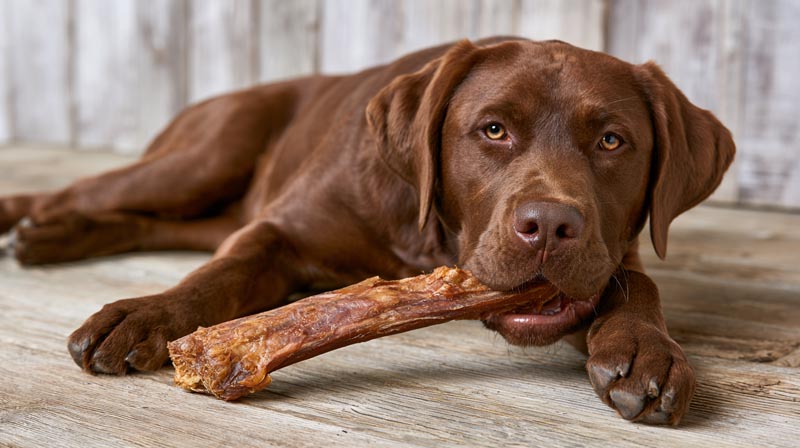
Breed size and jaw anatomy determine which chews are appropriate, not just which are “durable.” A chew that safely occupies a Labrador for 30 minutes could fracture a Mastiff’s teeth or be a choking hazard for a Dachshund.
Best Chews for Large and Giant Breed Heavy Chewers
For dogs over 70 lbs with documented bite forces above 300 PSI, the safest chew options narrow considerably. Bite forces in this range include the Rottweiler at 328 PSI, Mastiff at 552 PSI, and Cane Corso at 700 PSI (Rosenfeld Injury Lawyers, 2025). These numbers are not marketing. They reflect real crushing force on chew materials.
The 5 chew options with the strongest evidence base for large and giant breeds are:
- KONG Extreme (size XL or XXL, stuffed and frozen)
- Goughnuts MAXX Black (rated for extreme bite force)
- Thick braided bully sticks (jumbo, 12-inch minimum)
- West Paw Zogoflex Tux (XL, stuffed)
- Raw beef marrow bones (fresh, large femur only, under supervision)
Raw bones from a butcher are a different product from processed or cooked bones. Fresh large femur bones with meat clinging to them give the dog a legitimate chewing target without the splinter risk of cooked or dried bones. Session length should stay under 20 minutes to avoid sustained molar pressure that accumulates fracture risk even on relatively safer bone types.
Brachycephalic Breeds: Special Chew Considerations
Brachycephalic breeds including the Bulldog, French Bulldog, Pug, and Boston Terrier have compressed jaw anatomy that changes chew mechanics significantly.
Their more prominent fourth premolars, due to skull shape, make them more vulnerable to slab fractures from hard chews than breeds with normal skull structure, even when bite force is lower. Veterinary Practice News specifically flags brachycephalic breeds as higher-risk for carnassial fractures from hard dental treats.
For these breeds: rubber chews only, with no hard natural chews. KONG Extreme in the correct size is the standard recommendation. Yak chews can work if the dog is a moderate rather than extreme chewer, but require closer supervision than in non-brachycephalic breeds.
| Dog Size | Recommended Chew Type | Key Consideration |
|---|---|---|
| Small (under 25 lbs) | Thin bully sticks, collagen sticks | Caloric load per inch is high; limit sessions |
| Medium (25 to 65 lbs) | Standard bully sticks, KONG Extreme, yak chews | Size-match yak chew to dog weight |
| Large (65 to 100 lbs) | Thick bully sticks, Goughnuts MAXX, KONG XL | Monitor wear rate on synthetics |
| Giant (100 lbs+) | KONG XXL, Goughnuts MAXX, jumbo braided bully sticks | Avoid antlers and hard natural bones entirely |
| Brachycephalic | Rubber chews only | Skull shape increases fracture risk from hard chews |
How Do Dog Chews Affect Dental Health in Heavy Chewers?
Chewing has a real, documented mechanical effect on plaque. The friction of a chew surface against tooth enamel removes plaque biofilm before it calcifies into dental calculus. But the type of chew determines whether that benefit outweighs the fracture risk.
Periodontal disease affects at least 80% of dogs over 3 years of age (PMC, 2020). That’s the baseline problem chews are partly meant to address.
Plaque Reduction Evidence
A 2024 Journal of Veterinary Dentistry study found that a daily dental chew over 60 days produced a statistically significant 14.2% reduction in plaque and a 26.6% reduction in calculus in client-owned dogs (Crowder et al., 2024). These are real numbers from real dogs, not laboratory beagles in controlled conditions.
The VOHC (Veterinary Oral Health Council) seal signals that a product has gone through independent testing and met a defined threshold for plaque or calculus reduction. Not all dental chews carry the VOHC seal, and those without it have no verified efficacy data behind their dental health claims.
Chews with documented VOHC acceptance include Virbac C.E.T. VeggieDent FR3SH, OraVet Dental Hygiene Chews, and Whimzees. Each has clinical trial data behind the seal. None of these are appropriate as the sole dental hygiene strategy for heavy chewers, but they complement tooth brushing meaningfully.
The Dental Calculus Removal Rate vs. Fracture Risk Tradeoff
Here’s the part that doesn’t get enough attention. The chews that remove plaque most effectively via mechanical action tend to be harder chews. The chews that carry the highest fracture risk are also the harder chews. This is not a small tension.
The practical resolution: Use VOHC-approved dental chews for plaque control (these are typically moderate hardness, not power-chewer-grade). Use rubber or thick natural chews to satisfy the chewing drive. Don’t ask the same product to do both jobs for a heavy chewer.
Treatment costs confirm why this matters. Root canal therapy for a single fractured molar from a hard chew runs $1,500 to $3,500 with a specialist (SpectrumCare, 2026). Dental chews cost roughly $1 to $3 per chew. The math on choosing appropriate hardness is not complicated.
Owners of Rottweilers, Mastiffs, and similar breeds should factor safe dog chews into the broader picture of their dog’s dental care routine, not treat chewing as a substitute for annual veterinary dental exams.
What Ingredients in Dog Chews Are Dangerous for Heavy Chewers?
Ingredient safety matters more for heavy chewers than for moderate ones. A power chewer consumes more chew material per session, which means any toxic compound, processing chemical, or contaminated ingredient reaches a higher effective dose.
There are 5 specific ingredients worth screening for before purchase.
| Ingredient | Found In | Risk Level |
|---|---|---|
| BHA / BHT | Processed rawhide, jerky treats | Linked to cancer by WHO, US National Toxicology Program |
| Ethoxyquin | Fish-based chews, some imports | Banned in EU since 2020; liver enzyme changes in dogs |
| Propylene glycol | Soft semi-moist chews | FDA-banned in cat food; dose-dependent concern in dogs |
| Formaldehyde / chromium salts | Processed rawhide | Documented in rawhide processing (Dogs Naturally) |
| Artificial colorings | Flavored nylon chews | Non-digestible; fragments ingestible by power chewers |
BHA, BHT, and Ethoxyquin in Chews
BHA and BHT are synthetic antioxidants used to extend shelf life. Both are banned in multiple countries due to links to cancer, liver damage, and endocrine disruption (PetHub, 2021).
Ethoxyquin is a separate concern. The EU banned it in 2020 under assimilated regulation. Studies on Beagles showed liver enzyme changes and bile stasis at higher doses (Skippers Pet Products, 2024). Manufacturers are not legally required to list ethoxyquin on labels if it was added to ingredients before arrival at the manufacturing facility.
Practical screening rule: any chew with a shelf life exceeding 18 months without natural preservatives (tocopherols, rosemary extract, ascorbic acid) likely contains synthetic preservatives worth flagging.
Country of Origin and Import Contamination History
FDA Import Alert 72-07, updated January 2025, maintains a detention list for poultry jerky-type pet treats from China due to antibiotic and antiviral residues including tilmicosin, enrofloxacin, and amantadine, none of which are approved for poultry (FDA, 2025).
FDA Import Alert 71-04 separately covers rawhide pet chews detained for Salmonella contamination, with entries updated through November 2024 covering firms in China and Brazil.
The safest sourcing profile for heavy chewer natural chews is USA, New Zealand, or South American grass-fed operations with third-party testing documentation available on request.
How to Choose the Right Dog Chew for a Heavy Chewer?
Choosing the right chew comes down to 5 variables that interact with each other. Getting one wrong negates getting the others right.
The 5-point selection framework:
- Dog weight: size-match every chew to the dog’s weight category, not just breed
- Chew intensity: distinguish between moderate and extreme power chewers using the bully stick timing test
- Digestibility preference: choose natural/edible chews if the dog swallows large pieces; synthetic only if the dog is a surface-only chewer
- Supervision availability: if the dog will be unsupervised, rubber chews only
- Caloric budget: factor chew calories into daily intake; treats should not exceed 10% of total daily calories (WSAVA/AAHA guideline)
Supervised vs. Unsupervised Chew Safety
Not all chews work for unsupervised use. This is a hard line, not a preference.
Chews that require active supervision:
- Bully sticks (remove when 2 to 3 inches remain)
- Yak cheese chews (remove when small enough to swallow whole)
- Raw bones (session limit: 15 to 20 minutes)
- Any edible chew with a heavy chewer who consumes large pieces
Chews suitable for unsupervised use:
- KONG Extreme (stuffed and frozen)
- West Paw Zogoflex Tux or Qwizl
- Goughnuts MAXX (for dogs the product is appropriately sized for)
The ASPCA recommends active observation during all chew sessions and immediate veterinary consultation if a large piece is consumed. For owners who work full days away from home, a rubber chew left in a crate is the only appropriate solo option.
The Chew Rotation Strategy
Rotating between 3 to 4 chew types across a week reduces 3 specific risks: caloric surplus from daily high-protein natural chews, behavioral fixation on a single chew type, and cumulative wear from sustained daily contact with the same chew surface.
A practical weekly rotation for a large-breed heavy chewer looks like this:
- Monday / Thursday: stuffed frozen KONG Extreme (rubber, unsupervised)
- Tuesday / Saturday: thick bully stick, 15 to 20 minutes supervised
- Wednesday: West Paw Zogoflex Tux (stuffed, rubber)
- Friday: yak cheese chew, appropriately sized, supervised
This approach also distributes caloric load from natural chews across the week rather than daily, which matters given that a single 6-inch bully stick delivers approximately 88 calories (Freeman et al., Canadian Veterinary Journal, 2013).
Owners looking at the full cost picture can also check what longest lasting dog chews offer in terms of engagement time per dollar, which varies significantly between categories.
What Are the Best Chews for Heavy Chewer Puppies?
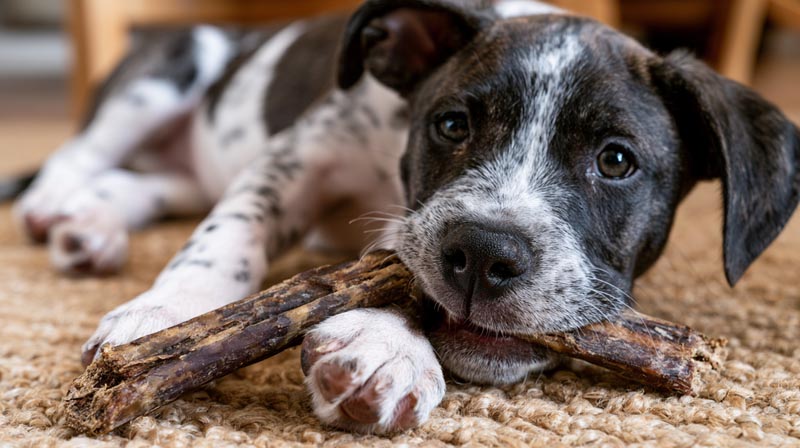
Puppy chew selection is a separate category from adult heavy chewer selection. Deciduous (baby) teeth emerge starting at 3 to 4 weeks of age, with puppies having a full set of 28 by 6 to 8 weeks (PetMD, 2023).
Adult teeth replace them progressively from 3 to 7 months, with molars completing last at 5 to 7 months. Until adult teeth are fully set, hardness limits apply that do not apply to adult heavy chewers.
Hardness Limits Before Adult Teeth Are Set
The rule is direct: no chews harder than rubber until all 42 adult teeth are confirmed in place, typically by 6 to 7 months.
Avoid during the puppy teething phase:
- Antlers (any type)
- Hooves
- Hard nylon chews
- Yak cheese chews (borderline hardness for developing teeth)
Veterinarians at Animal Dental AZ confirm that deciduous premolars and molars begin erupting at 3 to 4 weeks and permanent versions follow at 4 to 5 months. Biting hard objects during this transition window risks damaging both sets simultaneously.
Safe Chew Options for Heavy Chewer Puppies
4 chew formats work for puppies who are already showing power-chewer tendencies:
KONG Puppy (pink/blue rubber): softer compound than KONG Extreme, sized for developing jaws. Safe for unsupervised use once the correct size is confirmed.
Thin bully sticks, 5-minute sessions: appropriate from 12 weeks onward, digestible, single ingredient. Limit to 5 to 10 minutes per session for puppies under 6 months (Bully Sticks Direct, 2025).
Collagen sticks: lower caloric density than bully sticks, gentler on developing digestive systems, good rawhide alternative for puppies.
Nylabone Puppy Chew: nylon formulated specifically for puppy teeth hardness; softer than the Power Chew adult line. Replace when gouged.
The key difference between puppies and adult heavy chewers is session length. Puppies under 6 months should have supervised sessions capped at 5 to 10 minutes regardless of chew type, even with rubber products.
Giant Breed Puppies: Growth Plate Consideration
Giant breeds including the Great Dane, Mastiff, and Saint Bernard have growth plates that don’t close until 18 to 24 months of age. Chewing is not directly related to growth plate health, but high-impact chew sessions that cause a puppy to brace hard against a fixed object are worth monitoring in giant breeds under 12 months.
The practical takeaway: stick to rubber and soft natural chews for giant breed heavy chewer puppies and avoid anything that requires significant jaw force until adult dentition is confirmed complete.
How Often Should Heavy Chewers Get Chews?

Frequency depends on chew type, dog size, and caloric budget. There is no single daily limit that applies across all chew categories.
Dental disease is present in over 80% of dogs by age 3 (American Veterinary Dental College). Regular chewing is part of a prevention strategy, but daily high-calorie natural chews will cause weight gain if meal portions are not adjusted.
Frequency Guidelines by Chew Type
Veterinarians generally recommend 20 to 30 minutes of focused chewing per day, spread across 1 to 2 sessions rather than a single prolonged session (Mountain Valley Antlers, 2024).
Frequency per chew type:
- Rubber chews (KONG, West Paw): daily use is fine; no caloric or digestive concern
- Thick bully sticks: 2 to 3 times per week maximum; factor 88 calories per 6-inch stick into daily intake
- Yak cheese chews: 3 to 4 times per week; lower caloric density than bully sticks
- Raw bones: 1 to 3 times per week; sessions capped at 20 minutes
- Synthetic nylon chews: daily for surface-only chewers; monitor for fragment production
Signs of Overconsumption to Watch For
Power chewers can over-consume natural chews faster than owners realize. Session intensity is deceptive.
Signs that frequency or session length needs reducing:
- Loose stool or diarrhea within 12 to 24 hours of a chew session
- Visible weight gain over 2 to 3 weeks
- Reduced appetite for regular meals on chew days
- Excessive drooling or pawing at the mouth after chewing
The ASPCA recommends consulting a veterinarian immediately if a large chew fragment is consumed. Any chew with a naturally edible profile that gets consumed in large pieces, including yak chews and collagen sticks, carries an intestinal obstruction risk that rubber and synthetic chews do not.
For dogs managing sensitive stomachs alongside their heavy chewing habit, chew frequency should start at 2 sessions per week and only increase after confirming no digestive response. Dogs with existing health concerns should have chew selection confirmed by a veterinarian before introducing new products.
Owners who want to go deeper on specific product comparisons can also look at resources covering collagen chews for dogs or the broader category of one ingredient dog treats, both of which are worth understanding for heavy chewer households managing caloric budgets carefully.
FAQ on Best Dog Chews For Heavy Chewers
What is the safest chew for a heavy chewer?
Natural rubber chews like the KONG Extreme are the safest option. They flex under bite pressure instead of fracturing. For edible chews, thick bully sticks are highly digestible and carry low choking risk when supervised and sized correctly for your dog.
How do I know if my dog is a heavy chewer?
Give your dog a standard 6-inch bully stick. Heavy chewers finish it in under an hour. Light chewers take several hours or days. Power chewer breeds include Rottweilers, Mastiffs, Labradors, and Pit Bulls, but behavior matters as much as breed.
Are antlers safe for heavy chewer dogs?
Whole antlers are not recommended. They are too dense, fail the thumbnail test, and are a leading cause of slab fractures in large breed dogs. Split antlers are safer but still risky for dogs over 100 lbs with bite forces above 500 PSI.
Can heavy chewers have bully sticks every day?
Not recommended. A 6-inch bully stick contains roughly 88 calories. Daily use adds significant caloric load, especially for smaller dogs. Limit to 2 to 3 times per week and reduce meal portions on chew days to stay within the 10% treat guideline.
What chews last the longest for aggressive chewers?
Rubber chews last indefinitely with normal use. Among edible options, Himalayan yak chews XL and thick braided bully sticks last longest. Goughnuts MAXX outlasts most synthetic competitors for extreme bite force breeds like Cane Corsos and Mastiffs.
Are rawhide chews safe for heavy chewers?
Rawhide carries real risks: chemical processing, choking hazard, and documented contamination recalls. Most veterinarians recommend rawhide alternatives like collagen sticks or bully sticks instead. If you use rawhide, source from USA-based manufacturers and supervise every session.
What chews are best for heavy chewer puppies?
Avoid hard chews until all 42 adult teeth are in place, typically by 6 to 7 months. Safe options include KONG Puppy rubber chews, thin bully sticks in 5-minute sessions, and collagen sticks. Hard nylon, antlers, and yak chews risk damaging developing deciduous teeth.
How long should a heavy chewer chew per session?
Veterinarians recommend 15 to 20 minutes per session for most chew types. Longer sessions increase fracture risk from sustained molar pressure and digestive load from edible chews. Two shorter daily sessions are safer than one extended session for power chewing breeds.
Do dog chews actually clean teeth?
Yes, with the right product. A 2024 Journal of Veterinary Dentistry study found daily dental chews produced a 14.2% plaque reduction over 60 days. Look for the VOHC seal for verified efficacy. Hard chews that clean via abrasion also carry slab fracture risk for heavy chewers.
What should I avoid in dog chew ingredients?
Avoid BHA, BHT, and ethoxyquin in any chew. BHA and BHT are linked to cancer and banned in multiple countries. Propylene glycol, artificial colorings, and formaldehyde found in some processed rawhide are also worth screening for, especially in imported products.
Conclusion
This conclusion is for an article presenting the best dog chews for heavy chewers, and the core message is simple: durability without safety consideration is not a feature.
Slab fractures, digestive obstruction, and toxic ingredient exposure are real outcomes from the wrong chew choice. They are also entirely preventable.
Match chew hardness to jaw strength. Size every product to your dog’s weight. Rotate between natural chews, rubber options, and synthetic formats to spread caloric load and reduce risk.
For power chewer breeds like the Rottweiler or Cane Corso, chew selection is not optional maintenance. It directly affects long-lasting dental health and quality of life.
Choose intentionally. Supervise consistently. Your dog’s teeth will thank you.