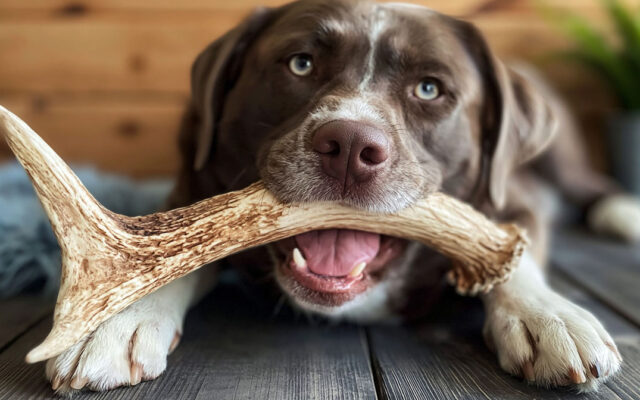
Split antlers show up in every pet store now, marketed as the safer version of whole antler chews. Your dog gets easy access to the marrow center without gnawing through dense cortical bone first. Sounds great until you hear what veterinary dentists have to say about it.
So, are split antlers safe for dogs? The answer depends on your dog’s size, chewing style, and how much risk you are willing to accept.
This article breaks down the dental fracture risk, the difference between split and whole elk antlers, choking hazards, nutritional value, and what board-certified veterinary dentists actually recommend. Plus, safer alternatives that still keep aggressive chewers happy.
What Are Split Antlers for Dogs
Split antlers are whole antlers that have been cut lengthwise down the middle, exposing the soft marrow core inside.
They come from elk, deer, or moose that shed their antlers naturally each year. Nobody harms the animals. Collectors pick them up off the ground in places like the Rocky Mountain region, then processors cut, sand, and package them for dogs.
The split is what makes them different from whole antlers. A whole antler keeps the marrow locked behind a dense outer shell of cortical bone. Your dog has to gnaw through that hard exterior before reaching anything tasty.
With a split antler, the marrow center sits right there in the open.
That exposed marrow is the whole selling point. Dogs tend to go after it immediately because it smells good and tastes better than the outer bone. The marrow itself is softer than the cortical shell, which is why many owners and some retailers position split antlers as the “safer” option compared to whole versions.
You will find split antlers sold by brands at pet stores, specialty online shops, and raw feeding suppliers. They typically come in sizes ranging from small (for dogs under 20 pounds) to extra-large (for breeds over 70 pounds). Most are labeled by animal source, with elk and deer being the most common options.
How Split Antlers Are Processed
Processing is fairly straightforward, though quality varies a lot between brands.

Grade A antlers are freshly shed, dense, and retain their natural mineral content. Lower-grade antlers may have been sitting exposed to weather for a long time, which dries them out and makes them brittle.
After collection, the antlers are sorted by weight and density. Then they get cut to length, split in half, and sanded to remove sharp edges. Reputable suppliers also cut off pointed tips that could injure a dog’s mouth or gums.
No cooking involved. No chemical treatment. The finished product is just raw antler bone with marrow exposed.
Worth noting: not all split antlers on the market go through careful quality checks. Cheap ones from unknown sources may skip the sanding step or use antlers that are too old and dry. That matters, because dried-out antlers splinter more easily.
Are Split Antlers Safe for Dogs
The short answer is complicated. And honestly, it depends on who you ask.
Most veterinary dentists say no. The American Veterinary Dental College has consistently warned against giving dogs any hard chews that do not flex under pressure, and antlers (split or otherwise) fall squarely into that category.
A study cited by Dr. Buzby of ToeGrips found that one in four dogs presented for a dental cleaning had a traumatic dental injury, with 50% of those injuries being fractured or broken teeth. Antlers rank among the most common causes.
PetMD reports that Dr. Mary Buelow at the University of Pennsylvania School of Veterinary Medicine notes that antlers have zero “give,” which makes them long lasting but also hard enough to cause serious dental damage.
But here is where it gets tricky. Split antlers are not identical to whole antlers in terms of how dogs interact with them. The exposed marrow gives dogs a softer surface to work on first, which can reduce the amount of time they spend gnawing directly on the hard outer shell. That is a real difference.
Some owners have given their dogs split elk antlers for years without a single cracked tooth. Others ended up at the emergency vet after one session.
The risk is always there. The question is really about how much risk you are comfortable with.
Dental Fracture Risk from Antler Chews
This is where the data gets uncomfortable, especially if you are already handing your dog an antler every evening like I was a couple years ago.
The most commonly fractured tooth from hard chews is the upper fourth premolar, also called the carnassial tooth. Veterinary dental specialists report seeing this injury so frequently from antlers that many have started issuing specific warnings about them.
According to Veterinary Practice News, dog enamel is only about 0.35 to 0.44 mm thick on average. Human enamel runs up to 2.5 mm. That is a massive difference. Your dog’s teeth just are not built to handle sustained pressure against something as dense as antler bone.
| Feature | Dog Teeth | Antler Bone |
|---|---|---|
| Mohs hardness | ~5 (enamel) | ~5 |
| Enamel thickness | 0.35-0.44 mm | N/A (solid mass) |
| Structure | Layered, hollow root | Solid, no layers |
| Weak point | Pointed cusps on premolars | None (designed for combat) |
The problem is structural. Antler rates about the same on the Mohs hardness scale as tooth enamel, roughly a 5. But the antler is a solid mass with no hollow interior, while your dog’s tooth has thin enamel over dentin over a hollow root canal.
When a slab fracture happens, it typically shears off a chunk of the tooth’s outer surface. If it exposes the pulp (the nerve), the tooth dies. Treatment at that point means extraction or root canal.
Cost of treatment ranges from $500 to $2,000 per tooth for extraction depending on complexity, according to Vetster. Root canal therapy can run $1,500 to $3,000 or more per tooth. A dog that fractures multiple teeth could rack up $5,000+ in dental bills from a single chew.
Spot pet insurance data shows that 16% of all dental claims they receive are for fractured teeth, with an average claim cost of $950.
Split Antlers vs. Whole Antlers: Which Is Harder on Teeth
Both can break teeth. But they are not the same product, and treating them the same is a mistake I see people make constantly.
Whole antlers keep all that dense cortical bone intact around the marrow center. Your dog has to work through the hardest part of the antler to reach anything rewarding. That means more sustained force against the outer shell, more pressure on premolars, and more time spent on the most dangerous surface.
Split antlers skip the hard part. The marrow is already exposed. Dogs tend to scrape and lick at the softer center first, which keeps their teeth away from the cortical bone for at least part of the chewing session.
Elk antlers have a thinner outer core compared to deer antlers, which makes them slightly easier for dogs to grind down. Deer antlers are the densest of the common species and carry the highest fracture risk.
How Dogs Actually Chew Each Type
This is what a lot of safety comparisons miss. It is not just about the hardness of the material. It is about the chewing behavior each type encourages.
With whole antlers: Dogs bear down with their back molars, applying full bite force against an unyielding surface. A 70-pound dog can apply over 200 pounds per square inch of pressure through those molars. That is a lot of force hitting a surface that does not flex at all.
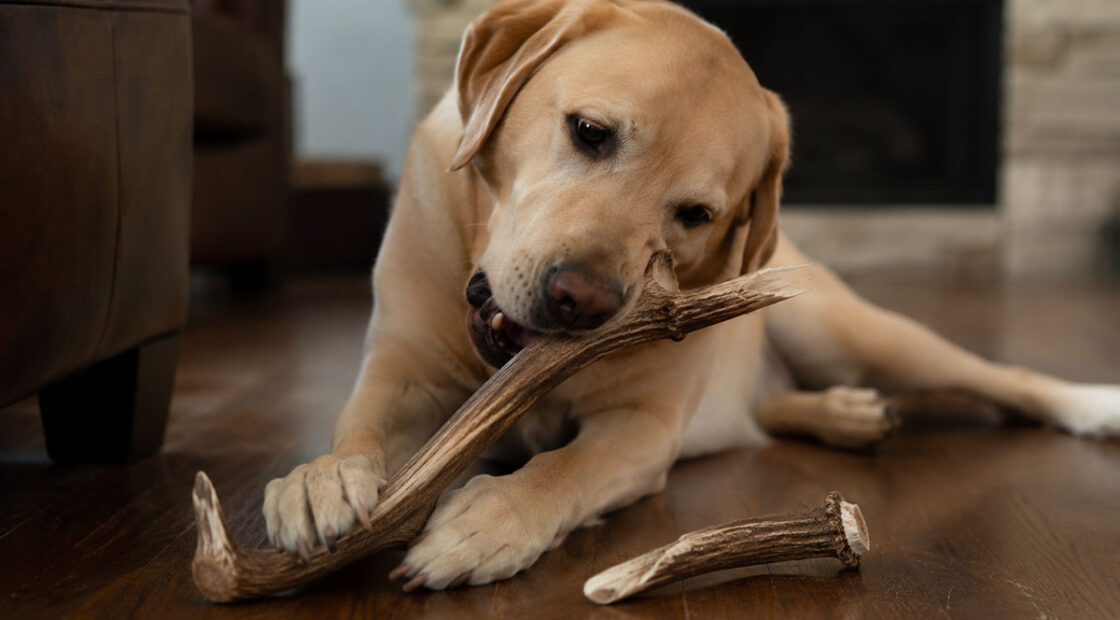
With split antlers: Dogs are more likely to use a scraping or licking motion on the exposed marrow first. They hold the antler with their paws and work the soft center with their tongue and front teeth. Less compressive force on the premolars, at least initially.
But once the marrow is gone (and it does run out), you are left with a hollow shell of cortical bone. At that point, a split antler arguably becomes more dangerous than a whole one because the remaining thin walls can crack under pressure.
The takeaway: split antlers are potentially less risky during the marrow phase, but the risk climbs once the marrow is consumed. You need to be watching and ready to take the antler away from your dog when it reaches that point.
Choking and Splintering Hazards with Split Antlers
Dental damage gets the most attention, but choking and gastrointestinal obstruction are the more immediately life-threatening risks.
Antlers are generally marketed as “splinter-resistant,” and compared to cooked bones, that is mostly true. Cooked chicken bones shatter into sharp shards. Antlers tend to wear down gradually into small gritty pieces instead.
But “splinter-resistant” is not “splinter-proof.”
Lower-grade antlers, or those that have dried out from sitting in a warehouse too long, absolutely can crack and break off in chunks. VCA Animal Hospitals lists antlers alongside bones as common causes of fractured teeth and potential choking hazards. Preventive Vet reports that antler splinters can get lodged in a dog’s mouth, throat, or intestines.
Fragment Size and GI Risk
Small antler fragments that make it past the throat usually pass through without issues. Dogs have strong stomach acid, and tiny bits of bone material generally dissolve or pass in stool.
Larger pieces are the real concern. A chunk big enough to cause a gastrointestinal blockage might require emergency surgery to remove. Kingsdale Animal Hospital notes that antler pieces are too hard for the GI system to break down, and intestinal blockages can lead to vomiting, loss of appetite, lethargy, and abdominal pain.
Signs a piece might be stuck:
- Repeated vomiting or retching
- Refusing food for more than 12 hours
- Visible discomfort when lying down
- Swollen or tender abdomen
Surgery to remove a GI obstruction can cost $1,000 to $3,000+ on top of the diagnostic imaging.
Sizing to Reduce Choking Risk
The antler should always be large enough that your dog cannot fit the entire thing in its mouth. A good rule: pick a split antler that is longer than your dog’s muzzle.
Once the antler wears down to a size your dog could swallow whole, throw it out. I know they are not cheap. But choosing safe dog chews means knowing when something has outlived its usefulness, no matter what you paid for it.
For smaller breeds like a Boston Terrier or French Bulldog, antler fragments become dangerous at a smaller size threshold. Brachycephalic dogs already have compromised airways, so any choking risk is amplified.
Larger breeds with powerful jaws, think Labrador Retrievers or German Shepherds, face a different issue. They can bite through antler material faster and create bigger fragments in less time.
Nutritional Value of Split Antlers
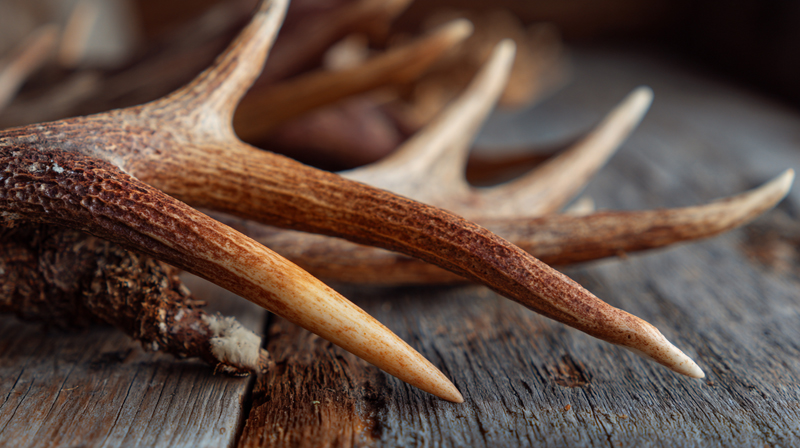
Antlers are not empty calories. They actually contain a surprisingly dense mineral profile, though whether your dog gets meaningful nutrition from chewing one is debatable.
Lab testing from Devil Dog Pet Co. shows a typical 3-ounce elk antler contains approximately 54% calcium and 27% phosphorus. That calcium-to-phosphorus ratio sits close to 2:1, which is considered ideal for canine bone health.
Other minerals present include magnesium, potassium, zinc, iron, and manganese. The marrow also contains glucosamine and chondroitin sulfate, both associated with joint health support.
Crude protein runs around 40%, with virtually no fat (0.03%).
| Nutrient | Approximate Content | Function |
|---|---|---|
| Calcium | 15-54% (varies by test) | Bone strength, muscle function |
| Phosphorus | 10-27% | Kidney function, cell development |
| Zinc | 60.6 ppm | Immune system, skin and coat |
| Iron | 81.7 ppm | Red blood cell formation |
| Protein (crude) | ~40% | Tissue repair |
Is the Nutrition Actually Meaningful?
Here is the honest part. Your dog is chewing the antler, not eating it.
The minerals leach out slowly as your dog gnaws. They are getting small amounts over extended periods, not consuming a full serving in one sitting like they would with a supplement.
For a dog already eating a balanced diet (and most commercial dog foods cover all mineral requirements), the minerals from an antler chew are supplemental at best. They will not replace actual dietary calcium or phosphorus in any significant way.
The marrow center is the most nutritionally accessible part, which is another argument for split antlers over whole ones. Dogs reach the nutrient-rich bone marrow faster when it is already exposed.
But calling antlers a meaningful nutritional source is a stretch. They are a chew first and a mineral delivery system a very distant second. If you want to supplement your dog’s minerals or joint support, there are healthier dog treats designed specifically for that purpose.
What Veterinary Dentists Say About Antler Chews
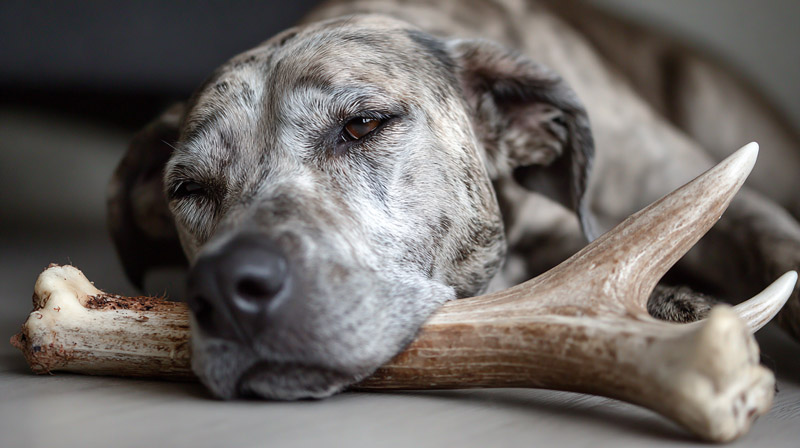
Veterinary dentists are, as a group, the most vocal opponents of antler chews. And they see the aftermath every day, so their opinion carries real weight.
The Whole Dog Journal reports that no veterinary dental specialist will sign off on letting your dog chew antlers. The publication quotes board-certified dentists who describe antlers as a leading cause of slab fractures in the premolars they treat.
Dr. John Lewis, a board-certified veterinary dentist writing in Veterinary Practice News, notes that antlers have become one of the most common offenders in causing carnassial tooth fractures. The reason is simple: antlers do not flex when chewed, and the pointed cusps of the premolar and molar teeth concentrate force in a way that results in slab fractures.
The “kneecap test” is the go-to guideline these specialists recommend. If you would not want to smack your kneecap with the chew, it is too hard for your dog’s teeth. Antlers fail this test every time.
The Counterargument
Not every vet takes the hardline position.
Some general practice veterinarians acknowledge that supervised, size-appropriate split antler chewing carries lower risk than whole antlers or other hard chews like cow hooves and nylon bones. The exposed marrow does provide a softer target, and dogs that gnaw gently (side-to-side scraping rather than vertical crunching) may never fracture a tooth.
The Veterinary Oral Health Council (VOHC) does not include antlers on its list of accepted products. But it also has not issued a formal ban. The VOHC’s accepted list focuses on chews with proven dental health benefits, which antlers have not demonstrated in controlled studies.
The safest approach, according to most dental professionals, is to skip antlers entirely and choose flexible rubber toys from brands like Kong or West Paw. These satisfy the chewing urge without putting teeth at risk.
If you still want to give your dog a split antler after reading all of this (and look, I get it, my dog loved them too), here is what the more moderate vets suggest:
- Choose split elk antlers over whole deer antlers (softer outer core)
- Size up, not down
- Limit chewing sessions to 15-20 minutes
- Remove the antler once the marrow is gone
- Check teeth and gums after every session for bleeding or chips
For dogs that need something to chew that lasts, there are middle-ground options. Himalayan yak chews are hard but slightly softer than antlers. Collagen chews are fully digestible. And bully sticks flex under pressure while still lasting a reasonable amount of time for heavy chewers.
Safer Alternatives to Split Antlers
If the dental fracture risk from antler chews is too much for you (and honestly, it was for me after my dog’s vet pointed out a hairline crack on his upper premolar), there are real alternatives that still keep a dog busy.
The Veterinary Oral Health Council maintains a list of accepted products that have actually been tested for plaque and tartar control. Antlers are not on that list. Greenies and OraVet chews are, and both carry the VOHC seal of acceptance.
Dr. Buzby of ToeGrips recommends Kong toys and West Paw Zogoflex toys as her go-to safe chew options for veterinary clients. Both brands make rubber chews that flex under pressure, which means they satisfy the chewing urge without putting teeth at risk.
| Alternative | Hardness | Digestible | Best For |
|---|---|---|---|
| Kong Classic | Flexible rubber | No (toy only) | Stuffable, all chewers |
| Bully sticks | Medium | Yes | Moderate chewers |
| Himalayan yak chews | Hard but softer than antler | Partially | Persistent gnawers |
| Collagen sticks | Medium-soft | Yes | Sensitive stomachs |
| VOHC dental chews | Soft-medium | Yes | Dental health |
Bully sticks are digestible, high in protein, and soften as your dog chews. They do not last as long as antlers, but they also will not crack a tooth. For aggressive chewers who go through bully sticks too fast, a bully stick holder can slow them down and prevent swallowing the last inch.
Beef tendons and turkey tendons offer a satisfying chew that bends and flexes. They are single-ingredient, low-fat, and way less likely to cause tooth damage than any antler product.
How to Pick the Right Chew for Your Dog’s Size and Bite Strength
Weight-based sizing is the starting point, but it is not the whole picture.
A 50-pound Golden Retriever that gnaws gently needs a completely different chew than a 50-pound American Pit Bull Terrier that bites down with full force. Dr. Jan Bellows, past president of the American Veterinary Dental College, recommends always sizing up, noting that small sizes increase choking risk significantly.
The thumbnail test works for any chew: press your thumbnail into the surface. If it leaves a slight dent, the chew is probably safe. If the surface does not give at all, it is too hard for your dog’s teeth.
For puppies still developing their adult teeth, stick with soft rubber toys or specifically designed puppy chews until at least 7 months of age.
How to Supervise Antler Chewing Safely
Look, if you have read everything above and still want to give your dog a split antler, that is your call. I did it for years before switching to softer chew options. But if you go that route, supervision is not optional. It is the whole game.
Pet Expertise recommends limiting antler chewing sessions to no more than 15 minutes per day, especially for dogs new to antlers. Heartland Antlers suggests starting even shorter, around 10-15 minute sessions, and gradually increasing as you learn how long your dog can safely chew on hard treats.
Wapiti Labs veterinarian Dr. Mark Nunez points out the most critical question: “Is my dog a gulper?” Dogs that swallow pieces quickly are the worst candidates for any hard chew, antlers included.
Session Rules
Time limit: 15-20 minutes maximum per session for adult dogs with healthy teeth. For puppies or senior dogs, even less.
Active watching required. This means you are in the room, looking at your dog, not scrolling your phone in the next room while your dog goes to town on an elk antler. If your dog starts bearing down hard and trying to snap the antler in half instead of scraping the marrow, take it away immediately.
Discard threshold: once the antler has worn down small enough that your dog could fit the entire piece in their mouth, it is done. Throw it out. Knowing when to take an antler away is the single most important safety habit.
Inspection and Rotation
Check the antler before every session. Run your fingers along the edges.
Red flags to look for:
- Cracks running along the length
- Sharp edges from uneven wear
- Splintering at the tips
- Significant size reduction since last use
Rotating between different chews (split antler one day, yak chew the next, rubber Kong after that) reduces repetitive stress on the same teeth. It also keeps your dog interested, which is a bonus because a bored dog chews harder.
Some owners soak antlers in water or broth before giving them to their dog, thinking it softens them. It might help very slightly on the surface, but the cortical bone stays the same hardness underneath. Do not count on soaking to meaningfully reduce fracture risk.
Signs Your Dog Has a Dental Injury from a Chew
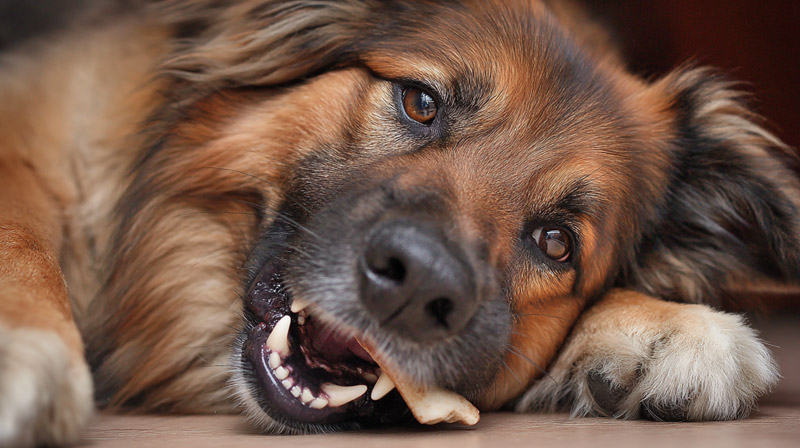
Dogs hide pain. Really well, actually.
VCA Animal Hospitals states that often there are no signs at all when a dog has a fractured tooth, because dogs are experts at masking discomfort. PetMD confirms that fractured teeth are frequently found incidentally during routine vet checkups, not because the owner noticed anything wrong.
This is the part that got me. My dog had a cracked premolar for what the vet estimated was probably a couple of weeks before I noticed him favoring one side while eating. He never stopped eating. Never whimpered. Just quietly adjusted.
Great Pet Care reports that 80-90% of dogs age three or older have active dental disease of some kind. Adding hard chews like antlers to the mix just increases the odds of a fracture going undetected.
Behavioral Signs to Watch
Changes in eating habits are usually the first clue, but they are subtle.
- Dropping kibble from one side of the mouth
- Chewing only on the left or right side
- Taking longer to finish meals
- Suddenly preferring wet food over dry
Your dog might also become head-shy, pulling away when you try to touch their face or muzzle. Even puppies can show this behavior if they have damaged a tooth on something too hard.
Houston Pet Dental notes that pets with dental pain may also show increased irritability, reduced interest in toys, or excessive lip licking.
Visual Signs You Can Check
If your dog lets you, gently lift their upper lip and look at the big cheek teeth in the back.
What to look for:
- Discolored teeth: A tooth that has turned gray, purple, or brown is likely dead or dying
- Visible fracture lines: Even small chips can indicate deeper damage
- Swollen or bleeding gums: Red, puffy tissue around a specific tooth
- A red or brown dot on the tooth surface: This means the pulp (nerve) is exposed, and the tooth needs immediate treatment
PetMD reports that the average cost of a dog dental procedure under anesthesia ranges from $100 to $700, with extractions adding $200 to $2,500 per tooth on top of that. Catching a fracture early usually means less invasive treatment and lower cost.
If you spot anything suspicious, schedule a veterinary dental exam. Do not wait to see if it gets better on its own. It will not. A fractured tooth with exposed pulp will become infected, and that infection can spread through the jawbone and into the bloodstream.
Annual dental exams catch problems you would never see on your own. Your vet can take dental X-rays under anesthesia to check below the gum line, where most of the damage hides. If your dog chews on antlers or any other hard chew regularly, bumping that to twice a year is worth considering.
FAQ on Split Antlers For Dogs
Are split antlers safer than whole antlers for dogs?
Split antlers expose the softer marrow center, so dogs spend less time gnawing on the hard cortical bone shell. That reduces some dental fracture risk. But once the marrow is gone, the remaining shell is still hard enough to crack teeth.
Can split antlers break a dog’s teeth?
Yes. Antler bone rates about a 5 on the Mohs hardness scale, roughly equal to tooth enamel. The upper fourth premolar is the most commonly fractured tooth from hard chews like antlers, whether split or whole.
What age can puppies start chewing split antlers?
Puppies should wait until their adult teeth are fully in, typically around 7 months old. Baby teeth fracture easily against hard surfaces. Even after adult teeth come in, start with short supervised sessions using soft split elk antlers.
How long should I let my dog chew a split antler?
Limit sessions to 15-20 minutes for adult dogs. Puppies and senior dogs should chew for even less time. Remove the antler once the marrow is consumed, since the remaining hard shell carries the highest fracture risk.
Do veterinarians recommend split antlers?
Most veterinary dentists advise against all antler chews. The American Veterinary Dental College warns against any chew that does not flex under pressure. Some general practice vets accept supervised split antler use for gentle chewers with healthy teeth.
Are elk split antlers better than deer split antlers?
Elk antlers have a thinner outer core and slightly lower density than deer antlers. That makes split elk antlers the softer option overall. Deer antlers are the hardest common species and carry the highest tooth fracture risk.
When should I take a split antler away from my dog?
Discard it once the antler is small enough to fit entirely in your dog’s mouth. Also remove it if you see cracks, sharp edges, or splintering. Check for gum bleeding after each session.
Can dogs choke on split antler pieces?
Small fragments usually pass through the digestive system. Larger chunks can lodge in the throat or cause gastrointestinal blockage requiring emergency surgery. Always size the antler larger than your dog’s muzzle to reduce choking risk.
Do split antlers have any nutritional value for dogs?
Antler marrow contains calcium, phosphorus, zinc, and glucosamine. The mineral content is real but the amounts your dog absorbs from chewing are minimal. A balanced commercial dog food already covers these nutritional needs.
What are safer alternatives to split antlers?
Rubber chew toys from Kong or West Paw flex under pressure and will not crack teeth. Bully sticks, collagen chews, and VOHC-approved dental chews are digestible options that still satisfy aggressive chewers without the dental fracture risk.
Conclusion
Are split antlers safe for dogs? They carry less risk than whole antlers, but “less risk” is not the same as “safe.” The exposed marrow gives dogs a softer chewing surface initially, yet the hard outer shell remains a real threat to the carnassial teeth and premolars once that marrow runs out.
Board-certified veterinary dentists consistently warn against all antler chews. The slab fracture risk alone makes them a gamble, with treatment costs running into thousands of dollars per tooth.
If you still choose to offer split elk or deer antler chews, supervise every session, limit chewing time, and discard the antler before it gets small enough to swallow.
For most dogs, VOHC-accepted dental chews, rubber toys, and digestible options like collagen chews or pig ears provide the same satisfaction without putting your dog’s teeth on the line.