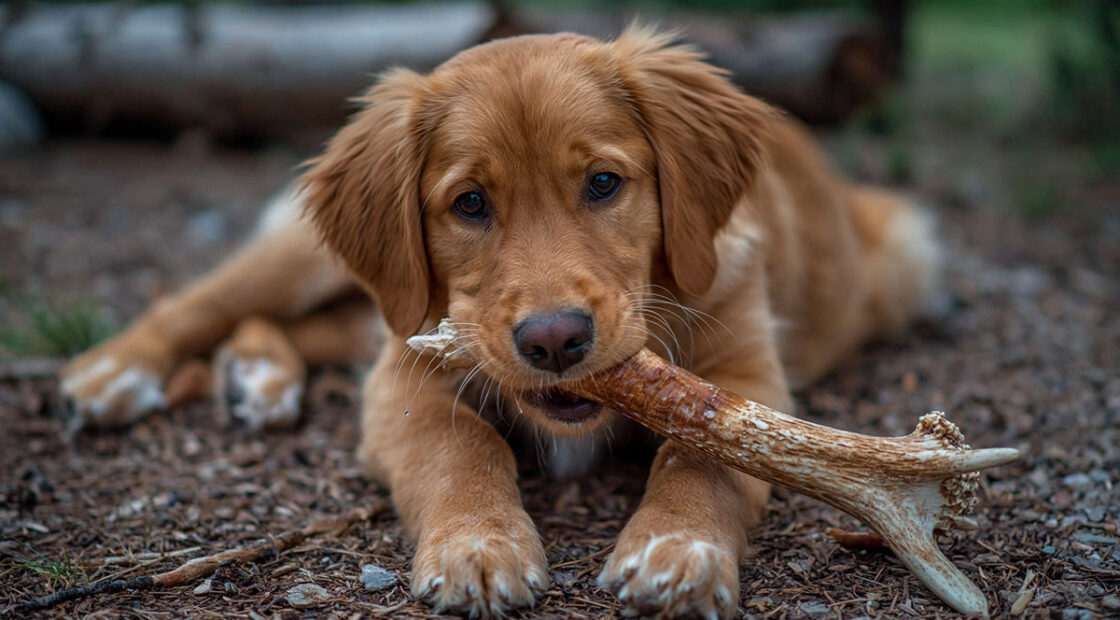
My dog cracked a carnassial tooth on a deer antler two years ago. The vet bill was $1,400. That’s when I started paying attention to the actual differences between elk vs deer antlers for dogs, because they’re not the same product.
One is denser and harder. The other has more marrow and a softer cortex. Those structural differences change everything about safety, chew duration, and which dogs should get which type.
This guide breaks down density, mineral content, dental fracture risk, breed matching, sourcing quality, and real cost-per-chew comparisons. Every recommendation is backed by veterinary research and hands-on experience with both antler types.
What Are Elk and Deer Antlers for Dogs?
Elk antlers come from Rocky Mountain elk (Cervus canadensis). Deer antlers come from white-tailed deer or mule deer. Both get sold as natural dog chews, and both are wildly popular right now.
The global pet chews and treats market hit $11.2 billion in 2024, according to Global Market Insights. North America alone holds 38% of the dog chews market share (Credence Research, 2024). A big chunk of that spending goes toward antler chews.
But here’s the thing most packaging won’t tell you. Elk and deer antlers are structurally different products. Lumping them together is like comparing a Golden Retriever to a Chihuahua and calling them the same dog.
Antler Anatomy Basics
Every antler has two main layers. The outer cortex is the hard, dense shell. The inner core is spongy marrow packed with minerals and protein.
Elk antlers have a thicker marrow center relative to their overall size. Deer antlers have a proportionally thicker cortex and less marrow. This single structural difference drives almost every practical distinction between the two.
Unlike horns, antlers are shed naturally every year. Male elk and deer drop them, then regrow a full set. That’s why you’ll see “naturally shed” on the label. It means no animal was harmed for the product, and the antlers were collected off the ground by shed hunters in places like the Yellowstone region and across the American West.
How They Differ from Other Chews
Single-ingredient composition: Antlers contain no additives, preservatives, or fillers. They’re bone-like tissue in its raw form.

No staining or odor: Unlike bully sticks or pig ears, properly processed antlers won’t leave grease marks on your carpet or smell up the room.
Virtually calorie-free: Dogs only consume tiny amounts of mineral dust while gnawing. That matters if you’re watching your dog’s weight, especially with breeds prone to obesity like Labrador Retrievers or Beagles.
Farm to Pet reports that deer antler marrow contains nearly 40% protein. Both types also carry calcium, phosphorus, magnesium, zinc, and iron in bioavailable forms.
Density and Hardness Compared
This is the single most important physical difference. It determines how long the chew lasts, how safe it is, and which dogs it works for.
Deer antlers are denser and harder than elk antlers. Full stop. The outer cortex on a white-tailed deer antler is thick relative to its overall diameter, and there’s less spongy marrow inside.
Elk antlers sit in a different spot. They’re bigger overall but have a higher marrow-to-cortex ratio. That softer inner core means the antler gives slightly more under pressure.
What This Means in Practice
| Feature | Elk Antler | Deer Antler |
|---|---|---|
| Cortex thickness | Moderate | Thick (relative to size) |
| Inner marrow | Generous, accessible | Less marrow, harder to reach |
| Overall density | Moderate | Higher |
| Typical chew duration | 3–6 months (whole) | 1–3 months (smaller size) |
A whole elk antler can last a moderate chewer three to six months. Deer antlers are physically smaller, so even though they’re harder per square inch, dogs go through them faster because there’s simply less material.
Split vs. Whole Changes Everything
Split antlers are cut lengthwise to expose the marrow. This changes the safety profile dramatically for both types.
A split elk antler becomes softer and more accessible. My dog went through one in about three days because the marrow was right there. Meanwhile, a whole elk antler from the same brand lasted weeks.
Split antlers are generally the safer option for dogs that are new to antler chewing or have moderate jaw strength. Whole antlers are tougher, longer lasting, and carry more dental risk because of that hard outer shell.
Nutritional Content Breakdown
Both elk and deer antlers deliver a concentrated mineral profile. The difference isn’t huge, but it’s worth knowing if nutrition is part of why you’re buying these chews.
Mineral Comparison
Calcium and phosphorus: Elk antlers carry higher concentrations of both, according to Peaks N Paws. These two minerals support bone development and dental health. Antlers deliver them in roughly a 2:1 calcium-to-phosphorus ratio, which is the ideal balance for dogs.
Zinc and iron: Present in both types. These trace minerals support immune function and oxygen transport. Not a replacement for a complete diet, but a meaningful bonus from a chew.
Magnesium and potassium: Found in the marrow core of both elk and deer antlers. They support cardiovascular and muscle function, which matters for active breeds like German Shepherds or Australian Shepherds.
Glucosamine and Chondroitin
The cartilage portions of antlers contain natural glucosamine and chondroitin. These compounds support joint health, and elk antlers tend to have more of them because their larger structure contains more cartilaginous tissue.
This makes elk antlers a slightly better fit for senior dogs or large breeds dealing with joint stiffness. Though honestly, the amounts are small. You wouldn’t skip a collagen supplement just because your dog chews an elk antler.
How Much Nutrition Actually Gets Absorbed?
Dogs consume only tiny amounts of mineral dust during gnawing sessions. They’re not eating the antler like food. So while the mineral profile looks impressive on paper, the practical nutritional impact is modest.
Think of it as a bonus, not a meal replacement. The real value is in the chewing activity itself, the mental stimulation, the dental scraping action, and keeping your dog occupied for hours instead of chewing your furniture.
Dental Fracture Risk by Antler Type

This is where most veterinarians get uncomfortable with antler chews. And the data backs up their concern.
A veterinary study found that one in four dogs presented for dental cleaning had a traumatic dental injury, with 50% of those injuries being fractured or broken teeth (Dr. Buzby’s ToeGrips, 2024). Antlers are consistently named among the top causes.
A survey of veterinary professionals reported by Pet Expertise found that 93% of veterinarians recommend against giving antlers to dogs. That’s a staggering consensus.
Why Deer Antlers Carry Higher Risk
Deer antlers are denser. Denser means harder surface. Harder surface means less give when your dog bites down at the carnassial teeth in the back of the mouth.
Veterinary dental specialists consistently identify the maxillary fourth premolar (the upper carnassial tooth) as the most commonly fractured tooth from hard chews. The force dogs generate at those rear teeth is intense. A Frontiers in Veterinary Science study measured bite forces ranging from 13 to 1,394 Newtons across 22 dogs of varying sizes.
Here’s what makes it worse. Dog enamel is significantly thinner than human enamel. Research published in the Journal of Veterinary Dentistry measured dog enamel at just 0.1 to 1 millimeter, compared to up to 2.5 mm in humans. That thin layer cracks easier than most owners realize.
What Veterinary Dentists Actually Say About Antlers
The AVDC position: The American Veterinary Dental College does not endorse any chew that doesn’t flex under pressure. Their guideline is simple. If you can’t indent it with your fingernail, it’s too hard for your dog’s teeth.
Slab fractures dominate: The most common antler-related injury is a slab fracture of the carnassial tooth. The hard antler slips during chewing, and the pointed cusps of the premolar shear off a chunk of enamel and dentin. Veterinary Practice News reports that antlers have become one of the most common causes of this specific fracture type.
Cost of treatment: A fractured carnassial tooth typically requires either extraction or root canal therapy. Those procedures can run anywhere from $500 to $3,000 depending on your location and veterinary specialist. That’s a steep price for a $15 chew.
The Veterinary Oral Health Council (VOHC) maintains a list of approved dental products. No antler chew appears on it. VOHC-approved chews have been statistically proven to reduce calculus formation without the fracture risk.
Size and Breed Matching
Getting the wrong size antler for your dog is where most problems start. Too small, and it becomes a choking hazard. Too hard, and you’re looking at a fractured tooth.
Elk Antlers Fit Bigger Dogs Better
Elk antlers are physically larger. A whole elk antler can measure 10 to 14 inches or more, making it a better geometric match for medium-to-large breeds.
Breeds like Rottweilers, Mastiffs, and Great Danes need a chew they can’t fit entirely into the back of their mouth. A thick elk antler achieves that. The dog gnaws along the surface rather than clamping down on it with the carnassials, which is safer.
Heartland Antlers and Prairie Dog Pet Products both offer sizing charts that match antler dimensions to dog weight brackets. The general rule is to pick an antler longer than your dog’s muzzle and thick enough that it won’t wedge between the back molars.
Deer Antlers Suit Smaller Dogs (With Caveats)
Deer antlers are naturally smaller and thinner. That makes them a reasonable size match for small-to-medium breeds. A French Bulldog or Cocker Spaniel would struggle with a massive elk antler but could handle a properly sized deer antler.
But small breeds often have weaker teeth and thinner enamel. Pairing a small dog with the hardest antler type is a contradiction. If you go with deer antlers for a small breed, split versions reduce that hardness problem significantly.
Quick Sizing Reference
| Dog Size | Recommended Antler | Notes |
|---|---|---|
| Under 20 lbs | Small split deer or small split elk | Always supervised, check teeth often |
| 20–50 lbs | Medium elk (whole or split) | Split for moderate chewers |
| 50–90 lbs | Large whole elk | Thick enough to prevent molar clamping |
| 90+ lbs | XL or “Beast” elk | 14+ inches, heavy gauge |
Puppies under 12 months should not chew hard antlers at all. Their adult teeth are still settling, and the enamel is at its most vulnerable. If you want to introduce antler chewing to a young puppy, wait until the adult teeth have fully come in and start with a split elk.
Chew Behavior and Dog Preferences

All the mineral data and sizing charts in the world don’t matter if your dog won’t touch the thing. And dogs are surprisingly picky about their chews.
Most Dogs Prefer Elk
Elk antlers give dogs immediate marrow access, especially in split form. That rich, protein-dense center acts as a reward that keeps them engaged. Dogs smell it, taste it, and keep coming back.
Deer antlers? Less marrow, harder outer shell, and not as much immediate payoff. My own dog ignored a whole deer antler for over a week. Same dog demolished a split elk antler in three sessions. That pattern shows up constantly in product reviews and forums.
Farm to Pet notes that deer antlers have more prongs and can’t be cut down or split as easily as elk antlers without creating pieces too small to be safe. That limits your options for making them more appealing.
Aggressive vs. Moderate Chewers
Aggressive chewers (think American Pit Bull Terriers, Cane Corsos, and Boxers) generate massive bite force. A 2020 study in the Journal of Experimental Biology confirmed that size and skull shape are the primary drivers of bite strength, with large brachycephalic breeds producing the most force.
These dogs need whole elk antlers. Deer antlers are too small, and split antlers of any type get consumed too quickly. But even with heavy chewers, limiting chew sessions to 15-30 minutes at a time reduces dental risk.
Moderate chewers do well with split elk antlers or medium-sized whole elk antlers. These dogs gnaw slowly, enjoy the process, and aren’t trying to crush the thing in half. Breeds like Cavalier King Charles Spaniels, Basset Hounds, and Shetland Sheepdogs fall here.
Smell and Freshness Matter
Freshly shed antlers (Grade A, brown exterior) carry more scent and flavor. Sun-bleached antlers that sat on the ground for months lose their appeal. Dogs know the difference.
If your dog shows zero interest in an antler chew, it might just be a stale product. Soaking the antler in warm water or low-sodium broth for a few minutes can bring some of the smell back. But a fresh, Grade A elk antler rarely needs that trick.
Sourcing, Grading, and Quality Differences

Not all antler chews are the same product. The difference between a Grade A elk antler and a Grade C deer antler is the difference between a safe dog chew and a trip to the emergency vet.
Only about 10-15% of gathered antlers each year qualify as Grade A, according to multiple specialty retailers including Alaskan Antler Chews and Pet Parents Brand. The rest are lower grades that carry more risk.
The Grading System Explained
| Grade | Appearance | Safety Level |
|---|---|---|
| A+ / A (Hard Brown) | Rich brown, dense, fresh shed | Highest, retains full minerals |
| B (Hard White) | Sun-bleached, 1–2 years old | Reduced, drier, more brittle |
| C / D (Chalky) | White powder, cracked, porous | Dangerous, splinters easily |
Mountain Valley Antlers reports that Grade B antlers retain only 60-80% of their original nutrient content. Grade C and D antlers drop to 15-25%.
The grading system applies to both elk and deer antlers equally. A Grade A deer antler is safer than a Grade B elk antler, every time.
How Processing Varies by Brand
Reputable brands like Devil Dog Pet Co, Gnawtlers (Pet Parents Brand), and Mountain Dog Chews hand-select antlers for weight, density, color, and shape. They cut, sand sharp edges, and vacuum seal the product.
Cheap antlers from big-box retailers? Often Grade B or worse, sold in bulk with no sourcing transparency. Mountain Dog Chews estimates the acquisition cost for these lower grades runs about $10 per pound wholesale, yielding roughly 3.5 pieces at $10 retail each. The margins are huge, which is why they flood the market.
Red Flags When Shopping
- White or chalky exterior (sun-bleached, old stock)
- Visible cracks along the surface
- No sourcing information on the packaging
- “Premium” label with suspiciously low pricing
If you’re buying antlers for your dog online, look for brands that specify Grade A, naturally shed, and USA-sourced. Wild-shed antlers from Colorado, Wyoming, Idaho, and Montana are the standard for quality elk antler chews.
Price Comparison and Value Per Chew Hour
Elk antlers cost more upfront. That’s the first thing you’ll notice at Chewy, Amazon, PetSmart, or any specialty retailer. But sticker price doesn’t tell the full story.
Actual Price Ranges
Deer antlers typically run $15-$30 for a medium to large piece. Heartland Antlers lists medium deer antlers at $19.99 and large at $25.99.
Elk antlers range from $20-$45 for comparable sizes, sometimes higher for XL or “beast” cuts from specialty brands. That’s roughly 20-40% more than deer at equivalent weight classes.
But raw price per unit misses the point entirely.
The Real Math: Cost Per Chew Hour
A whole elk antler can last a moderate chewer three to six months. A deer antler, being physically smaller, typically lasts one to three months even though the material is harder per square inch.
Quick example. A $35 whole elk antler lasting four months works out to about $8.75 per month. A $20 deer antler lasting six weeks costs roughly $13.33 per month. The cheaper product actually costs more over time.
Split elk antlers flip this equation. Because the marrow is exposed, dogs consume them much faster. A split elk antler might only last a week for a determined chewer. At $25 per split, that’s expensive entertainment.
Where to Find the Best Value
Specialty online retailers: Mountain Dog Chews, Devil Dog Pet Co, and Chewy Pawz typically offer better quality-to-price ratios than big-box stores. They grade more carefully and source directly from shed hunters.
Bulk packs: Top Dog Chews and similar brands sell variety packs by the pound, mixing elk and deer antlers. Good way to test which type your dog prefers without overcommitting.
Owning a dog is already expensive enough. So when you’re comparing antler options, always think about total cost of chewing, not just what’s on the price tag. And definitely factor in what a fractured tooth repair costs ($500 to $3,000) versus the price difference between elk and deer.
Common Risks Beyond Dental Damage

Tooth fractures get the most attention. But they’re not the only thing that can go wrong with antler chews, whether elk or deer.
GI Obstruction from Swallowed Fragments
PetMD reports that GI obstruction surgery for dogs ranges from $2,000 to over $10,000. CareCredit data puts the national average for a non-emergency foreign body enterotomy at $4,383.
Antler fragments cause this when dogs manage to break off a piece large enough to lodge in the stomach or intestines. Deer antlers, being harder and more brittle (especially in lower grades), tend to produce sharper fragments when they do break. Elk antlers are more likely to flake off in dust-like particles, which pass through the GI tract without incident.
The survival rate for dogs with foreign body obstruction surgery sits at 83-99% when caught early (PetMD). But “caught early” is doing a lot of work in that sentence. Waiting too long risks tissue death and bowel rupture.
Gum and Soft Tissue Damage
Less dramatic but more common than obstruction. The hard edges on deer antlers (especially whole, unsanded pieces) can cut gum tissue and cause bleeding.
Elk antlers cause this less often because their softer outer layer grinds down more gradually. But any antler with sharp edges from poor processing can injure the mouth. Always check that edges are sanded before giving an antler to your dog.
When to Take an Antler Away
This matters more than which type you buy. Knowing when to remove the antler is the single most important safety habit.
- The antler has worn down small enough to fit entirely in the dog’s mouth
- Visible cracks or splintering on the surface
- Sharp edges developing from uneven chewing
A good rule: if the remaining piece is shorter than the width of your dog’s mouth, toss it. No exceptions. The $15-$35 replacement cost is nothing compared to a $4,000+ obstruction surgery.
Dogs with existing dental problems, senior dogs with weakened teeth, and very young puppies should skip antler chews entirely. Stick with softer alternatives like collagen chews or Himalayan yak chews for those dogs.
Which Antler Type Fits Which Situation
After everything above, here’s the practical breakdown. No single antler type works for every dog. Your choice depends on four factors: size, chew intensity, dental history, and budget.
When Elk Antlers Are the Better Pick
Medium to large breeds with moderate chewing habits. Think Goldendoodles, Siberian Huskies, and Bernese Mountain Dogs. These dogs benefit from the larger size and softer cortex of elk antlers.
Dogs that need mental stimulation and marrow reward. Split elk antlers give immediate satisfaction. Perfect for anxious dogs or breeds prone to destructive behavior if left bored.
First-time antler users. The lower density makes elk a gentler introduction. Start with a split, graduate to whole if your dog handles it well.
When Deer Antlers Make Sense
Small breeds with light chewing habits who need a long-lasting occupation chew. A Yorkshire Terrier or Shih Tzu that gnaws gently can work on a properly sized deer antler for weeks.
Budget-conscious owners with light chewers. Deer antlers cost less per unit, and if your dog isn’t an aggressive chewer, the hardness risk stays lower.
When Neither Type Works
- Puppies under 12 months with developing teeth
- Senior dogs with weakened or missing teeth
- Dogs with a history of tooth fractures
- Extremely aggressive chewers that bite through rather than gnaw
For these dogs, consider natural dental chews that flex under pressure, or long-lasting chew alternatives that deliver the same mental benefits without the fracture risk.
Decision Table
| Your Dog’s Profile | Best Antler Choice |
|---|---|
| Large breed, moderate chewer | Whole elk antler, Grade A |
| Medium breed, first timer | Split elk antler |
| Small breed, gentle chewer | Small deer antler or small split elk |
| Any size, aggressive power chewer | XL whole elk (supervised, time-limited) |
| Puppy, senior, or dental issues | Neither. Choose softer chew alternatives |
Look, my own dog is a 60-pound mix who falls squarely in the “moderate chewer” category. Whole elk antlers have been the best fit for us. He gnaws slowly, gets weeks out of each one, and hasn’t had a dental issue. But I check his teeth after every session, and I’ve pulled antlers the second they started showing cracks.
That’s really the bottom line with antler safety for dogs. The type matters, the grade matters, the size matters. But nothing matters more than watching your dog while they chew and being willing to take the antler away before problems happen.
FAQ on Elk Vs Deer Antlers For Dogs
Are elk antlers safer than deer antlers for dogs?
Generally, yes. Elk antlers have a softer outer cortex and higher marrow-to-shell ratio. Deer antlers are denser and harder, which increases the chance of slab fractures on the carnassial tooth. Neither type is risk-free without supervision.
Which antler type lasts longer?
Whole elk antlers last longer because they’re physically larger. A moderate chewer can get three to six months from one. Deer antlers are harder per square inch but smaller overall, so dogs finish them in one to three months.
Can puppies chew on elk or deer antlers?
Not until adult teeth are fully in, usually around 12 months old. Puppy teeth and developing enamel are too fragile for hard antler chews. Start with softer options like yak chews until then.
What minerals do antler chews contain?
Both types provide calcium, phosphorus, zinc, magnesium, and iron. Elk antlers tend to have higher concentrations of calcium and phosphorus. The marrow also contains natural glucosamine and chondroitin, which support joint health.
Do veterinarians recommend antler chews?
Most don’t. Surveys show 93% of veterinarians advise against antlers because of dental fracture risk. The AVDC and VOHC do not endorse any chew that won’t flex under fingernail pressure. Always consult your vet first.
What is the difference between split and whole antlers?
Split antlers are cut lengthwise to expose the marrow core. They’re softer and easier to chew but don’t last as long. Whole antlers keep the hard outer cortex intact, making them more durable but carrying higher dental risk.
How do I pick the right antler size for my dog?
Choose an antler longer than your dog’s muzzle and thick enough that it can’t fit between the back molars. Small dogs need small splits. Large breeds like Alaskan Malamutes need XL whole elk, 14 inches or more.
What does Grade A mean for antler chews?
Grade A antlers are freshly shed within the current year. They have a rich brown color, high moisture content, and full mineral density. Only about 10-15% of gathered antlers qualify. Avoid white, chalky, or cracked antlers entirely.
Can antler chews cause intestinal blockages?
Yes, if a dog swallows a large fragment. GI obstruction surgery averages $4,383 nationally (CareCredit data). Deer antlers produce sharper fragments when they break. Elk antlers tend to flake into fine dust, which passes through safely.
How often should I let my dog chew an antler?
Limit sessions to 15-30 minutes per day. Shorter intervals reduce tooth wear and prevent aggressive chewing behavior. Always inspect the antler afterward for cracks or sharp edges, and replace it once it gets small enough to swallow.
Conclusion
Choosing between elk vs deer antlers for dogs comes down to your dog’s size, chew style, and dental health. There’s no universal answer. A Grade A elk antler works for most medium and large breeds. Deer antlers suit light chewers in smaller breeds.
Always buy naturally shed, fresh brown antlers from reputable sources. Skip anything chalky, cracked, or lacking sourcing information.
Supervise every chewing session. Limit time to 30 minutes. Check teeth regularly for chips or wear. Replace the antler the moment it gets small enough to swallow whole.
The right antler chew keeps your dog mentally stimulated, delivers calcium and phosphorus, and lasts weeks. The wrong one sends you to the veterinary dentist with a fractured carnassial tooth and a bill you didn’t plan for.
Match the chew to the dog. Not the other way around.