My dog once spent three straight hours on a single Himalayan chew. That kind of staying power from a natural treat made me curious, then skeptical. Are Himalayan dog chews good for dogs, or just good marketing?
These hard cheese chews made from yak milk and cow milk have exploded in popularity as a rawhide alternative. But not every vet agrees they’re safe, and not every dog should have one.
This guide breaks down the nutritional profile, real safety risks (including tooth fractures), which dogs should avoid them entirely, and how they compare to bully sticks, antlers, and other long-lasting chews. Everything here is backed by veterinary research and actual product data, not just label claims.
What Are Himalayan Dog Chews
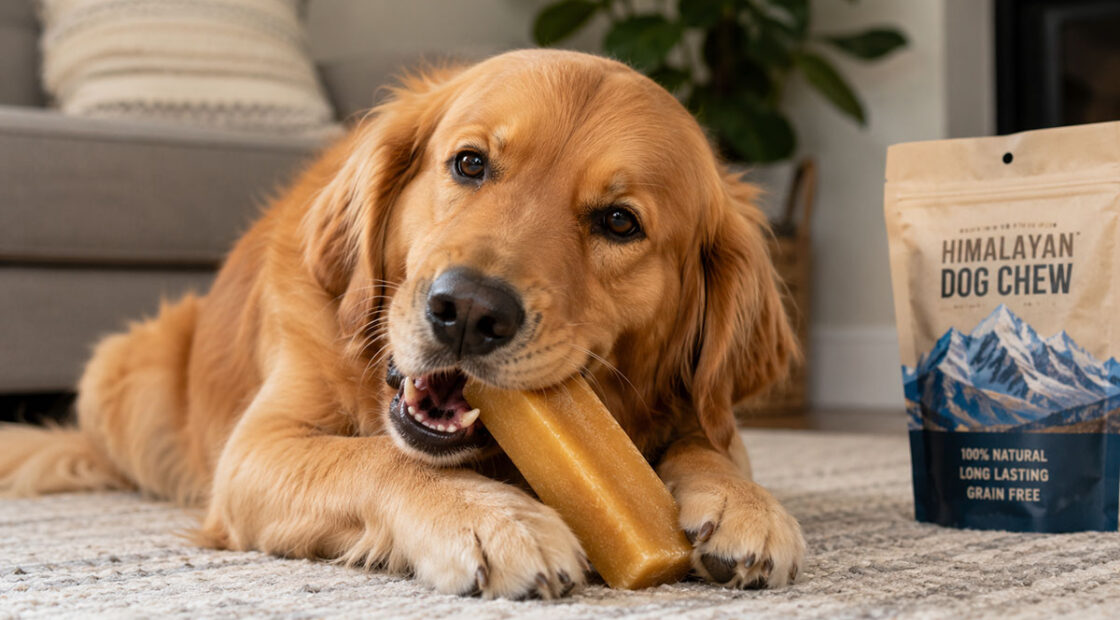
Himalayan dog chews are hard cheese treats made from yak milk and cow milk using a centuries-old recipe from Nepal and Tibet. The production process is straightforward: farmers boil milk for several hours, remove the fat through a centrifuge, then treat the remaining solids with lime juice and salt.
The curds get pressed under weight for about three weeks until moisture drops below 5%. After that, they’re cut to size and smoked for two to three months.
The result is a rock-hard, dense chew that softens slowly as your dog works it with saliva. My dog spent nearly two hours on his first one before I finally put it away for the night. That kind of staying power is what draws most pet owners in.
Himalayan Pet Supply, the original brand out of Bellingham, Washington, estimates that roughly 6 gallons of milk produce just 2 pounds of finished chews. About 30% of the production work happens with Nepalese farmers, with final quality control and packaging completed stateside.
Other popular brands include EcoKind, Pawstruck, and The Himalayan Co. You’ll find them at Chewy, Amazon, Petco, and most independent pet stores in sizes ranging from extra-small to extra-large.
How These Chews Differ from Other Popular Options
The pet treats and chews market hit an estimated $12.8 billion in 2024, according to Packaged Facts. Within that space, Himalayan chews sit in a unique category.

They’re not rawhide. Rawhide is chemically processed animal hide that swells in the stomach and can take 24 to 72 hours to pass. Himalayan chews are cooked dairy. They break down more like food.
They’re not bully sticks either. Bully sticks are single-ingredient beef muscle (pizzle) that digests in 2 to 4 hours. They’re softer, smellier, and get consumed much faster. A Himalayan chew can last days or even weeks depending on the dog.
And they’re definitely not antlers. Antlers are bone-like material that doesn’t break down at all. They last months but carry a much higher risk of cracking teeth.
| Feature | Himalayan Chew | Rawhide | Bully Stick | Antler |
|---|---|---|---|---|
| Main ingredient | Yak/cow milk | Cow hide | Beef pizzle | Bone matrix |
| Digestible | Yes | Poorly | Fully | No |
| Typical duration | Days to weeks | Hours | 30–90 min | Months |
| Chemical processing | None | Yes | Minimal | None |
Nutritional Profile of Himalayan Dog Chews
A 2023 study published in the Journal of Ethnic Foods found that Himalayan chews (called chhurpi in Nepal) contain between 60% and 69% crude protein by weight. That makes them one of the highest-protein natural dog treats you can buy.
The guaranteed analysis on most Himalayan Pet Supply products backs this up: 69% minimum crude protein, 1% minimum crude fat, 1% maximum crude fiber, and around 14% moisture.
Macronutrient Breakdown
Protein: The protein comes from casein, the primary protein in milk. It supports muscle maintenance, tissue repair, and energy. For dogs on weight management plans, a high-protein, low-fat treat is a solid choice.
Fat: Crude fat sits at roughly 1% to 1.3%. The skimming process during production strips nearly all fat content, which is why these chews work for dogs that need to watch calorie intake or dogs prone to pancreatitis.
Calories: A medium-sized chew runs about 209 kcal. A large one is around 300 kcal. That’s not nothing, so treat accordingly.
Minerals and Lactose Content
A 2024 study in Discover Food showed that 100 grams of chhurpi can deliver over 70% of the daily calcium, iron, and zinc needs of a child. For dogs, these minerals support bone density, immune function, and cell repair.
Here’s the thing most people worry about: dairy and dogs. But Himalayan chews are virtually lactose-free. The fermentation and drying process breaks down milk sugars, which is why most dogs with dairy sensitivity handle these chews without issues. Himalayan Pet Supply specifically states their products have had the lactose removed using a proprietary method.
Compare this to a healthy dog treat like a standard milk bone, and the ingredient list difference is night and day. No grains, no gluten, no soy, no corn, no artificial preservatives.
Are Himalayan Dog Chews Safe
The short answer: yes, with caveats. And honestly, that’s the answer for every single dog chew on the market.
Himalayan chews are digestible. That’s their biggest safety advantage over rawhide and antlers. When your dog scrapes off small pieces with their teeth, those pieces break down in the stomach like food. No swelling, no chemical residue, no lingering in the gut for days.
But “digestible” doesn’t mean “risk-free.”
The Tooth Fracture Problem
This is the real concern that most treat packaging won’t tell you about.
Tooth fractures affect 20% to 27% of dogs in clinical settings, according to research published in Veterinary Times. Many owners never even realize their dog has a cracked tooth because dogs are remarkably good at hiding oral pain.
Tufts University’s Cummings School of Veterinary Medicine specifically lists Himalayan yak chews alongside antlers, cow hooves, and hard nylon bones as items that should be avoided. Their reasoning is simple: if you can’t dent it with your thumbnail, it’s too hard for your dog’s teeth.
Cornell University’s veterinary dental team echoes this with what they call the “thumbnail test.” If a chew doesn’t give under your fingernail, it poses a fracture risk, especially to the carnassial teeth (those big upper premolars in the back).
VCA Animal Hospitals notes that the most frequently broken teeth are canines and upper cheek teeth, and that fractured teeth with pulp exposure require either root canal therapy or extraction. Neither procedure is cheap.
Choking Hazard Considerations
Once a Himalayan chew gets small enough for your dog to fit it entirely in their mouth, it becomes a choking risk. Period.
There’s a well-known incident from a French Bulldog community where a larger piece broke off and lodged in a dog’s throat. The dog survived after emergency vet care, but it’s the kind of story that sticks with you.
The standard recommendation from most manufacturers: once the chew is small enough to swallow, take it away. You can microwave the leftover piece for about 45 seconds to puff it into a crunchy, safer snack. Himalayan Pet Supply recommends soaking small pieces in warm water for 5 minutes first, then microwaving.
For dogs that tend to gulp rather than gnaw, Himalayan chews might not be the best fit. You know your dog. If they’re the type to try swallowing a tennis ball whole, maybe look at something like a Kong or a collagen chew instead.
Risks for Puppies and Senior Dogs
Puppies: Most brands say puppies can start at around 12 weeks, but that comes with a big asterisk. Puppy teeth are soft and still developing. The Himalayan Co. suggests waiting until adult teeth come in, typically around 4 months, and starting with shorter chewing sessions. Himalayan Pet Supply offers softer options like their Bone Chew (rated 7 on their Chewmeter vs. 8 for the original) specifically for younger and older dogs.
Seniors: Dogs with weakened enamel, missing teeth, or sensitive gums shouldn’t be gnawing on something this hard. The yakySNACKS line and softer bone-shaped chews exist for a reason. If your senior dog has any dental history, check with your vet first.
For puppies specifically, softer chew bones designed for young dogs are usually a better starting point before graduating to harder treats.
Dental Benefits and Limitations
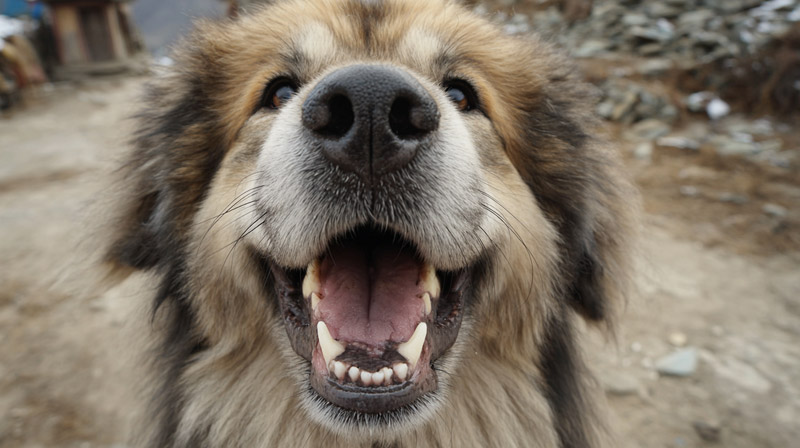
Here’s where it gets a little contradictory, and I think that’s worth being honest about.
Chewing does mechanically scrape plaque and tartar off teeth. That’s just physics. The abrasive action of gnawing on a hard surface removes buildup that brushing would otherwise handle. Himalayan Pet Supply markets their chews as promoting oral health, and the basic premise is sound.
But the VOHC (Veterinary Oral Health Council) has not approved most Himalayan chews.
What VOHC Approval Actually Means
The VOHC maintains a list of products that have been tested and proven to reduce plaque or tartar accumulation. Products like Greenies, OraVet, and certain C.E.T. chews carry the VOHC seal. Most Himalayan yak chews do not.
That doesn’t mean they’re useless for dental health. It means they haven’t gone through the specific testing protocol the VOHC requires. There’s a difference between “not proven” and “disproven.”
The American Veterinary Dental Society estimates that dental disease affects more than 80% of dogs by age three. So anything that encourages regular chewing has potential value. But if you want a chew that’s been clinically validated for dental benefits, you’d want to look at the best natural dental chews that carry VOHC approval.
The Hardness Tradeoff
This is the catch-22 with Himalayan chews and dental health.
A chew needs to be hard enough to scrape teeth effectively. But if it’s too hard, it cracks them. Veterinary dentists writing in Veterinary Times have raised concerns about the increase in fractured teeth they’re seeing from antlers and similarly hard products.
Dogs have 5 to 10 times less enamel than humans. Their teeth are designed for gripping and cutting, not prolonged grinding. The carnassial teeth take the most force during chewing, and those are exactly the teeth most likely to fracture.
A University of Pennsylvania study confirmed that dog teeth will fracture when the force from a chew product exceeds the tooth’s structural limit. The mean maximum load for carnassial teeth was 1,281 Newtons at a 60-degree impact angle.
So yes, Himalayan chews clean teeth. But they also carry a real risk of damaging them. Monitoring your dog’s chewing style matters more than the product itself.
Which Dogs Should Avoid Himalayan Chews
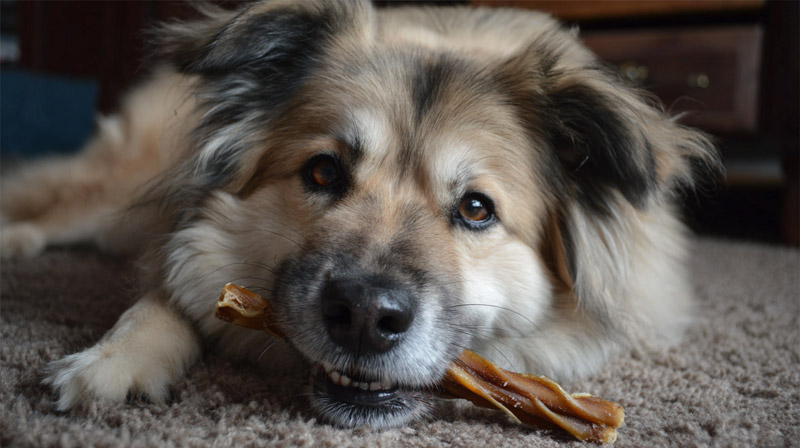
Not every dog should have one. That’s not a knock on the product. It’s just reality.
Dogs with Dairy Sensitivities
Even though the lactose is removed during production, the primary protein is still casein. Dogs with true dairy allergies (not just lactose intolerance) may react to casein with skin irritation, itching, or GI upset. If your dog has a known dairy allergy, skip these entirely.
For dogs with sensitive stomachs in general, treats specifically formulated for digestive sensitivity are a safer bet.
Power Chewers and Large Breeds
This is where it gets tricky. Breeds like Labrador Retrievers, American Pit Bull Terriers, and Bullmastiffs generate enormous bite force. They don’t just gnaw. They chomp.
For these dogs, a Himalayan chew might break into dangerously large pieces instead of being slowly scraped down. That creates both a choking risk and a tooth fracture risk simultaneously.
Fractured teeth have been reported in 10% to 29% of small-animal patients and 25% of working military dogs, per research in dvm360. Aggressive chewers account for a disproportionate share of those numbers.
If your dog falls into the heavy chewer category, look into chews designed specifically for aggressive chewing styles or consider thick bully sticks that give under pressure instead of resisting it.
Dogs with Specific Health Conditions
Pancreatitis history: While the fat content is very low (around 1%), dogs with a history of pancreatitis should have any new treat cleared by a vet. Even small dietary changes can trigger flare-ups.
Existing dental damage: If your dog already has cracked, loose, or missing teeth, adding a hard chew to the mix is asking for trouble.
Very small breeds: A Chihuahua or Yorkshire Terrier has much smaller, more fragile teeth. Even the extra-small chew size might be too hard for tiny jaws. The risk-to-benefit ratio shifts when we’re talking about a 5-pound dog.
How to Give a Himalayan Chew Safely
Assuming your dog is a good candidate for these chews, there are a few things that make the experience safer for everyone involved.
Supervision Is Not Optional
I know nobody wants to hear “supervise your dog” for the hundredth time. But with Himalayan chews, it actually matters.
Watch how your dog chews. Are they slowly scraping the end with their front teeth? Good. Are they clamping down with their back molars trying to crack it in half? That’s a problem. Remove the chew and reconsider whether it’s the right product for your dog.
The APPA’s 2024-2025 survey shows 94 million U.S. households own at least one pet, with 68 million owning dogs. A lot of those dogs are chewing on something right now. Supervision is what separates a good chewing session from an emergency vet visit.
The Size and Removal Rules
Pick a chew that matches your dog’s weight. Most brands offer clear size charts. Himalayan Pet Supply breaks it down as small (under 15 lbs), medium (under 35 lbs), large (under 55 lbs), and extra-large (over 55 lbs). Getting this right is the single easiest safety step you can take.
Once the chew gets small enough that your dog could swallow it, take it away. Some people call this the “two-finger rule” (if the remaining piece is shorter than two of your fingers, it’s time).
The Microwave Trick
Don’t throw away that leftover nub. Soak it in warm water for about 5 minutes, then microwave it on high for 30 to 45 seconds. It puffs up into a crunchy, airy treat that’s much easier and safer to eat.
Only microwave pieces that are about 1 inch or smaller. Larger pieces might not puff evenly on the inside. Let it cool for at least 2 minutes before giving it back to your dog.
Storage and Shelf Life
Himalayan Pet Supply says their chews last up to 5 years when stored properly. Keep them in an airtight container in a cool, dry place. Don’t refrigerate them, as cold can make them brittle. And if they get too much moisture, they can develop mold.
Between chewing sessions, let the chew air-dry before putting it away. A soggy chew stored in a bag is a recipe for bacterial growth.
Also, know how long your dog should chew in a single session. Marathon chewing sessions increase the risk of both tooth wear and stomach upset from consuming too much at once. About 10% of dogs experience loose stools after eating an entire chew in one sitting, according to Himalayan Dog Chew’s own product notes.
Himalayan Chews vs. Other Long-Lasting Dog Chews
Picking the right chew depends on your dog. Not on the marketing copy. Every long-lasting treat has tradeoffs, and being honest about those tradeoffs saves you money and keeps your dog out of the emergency room.
The global natural dog treats market was valued at $6.99 billion in 2024 and is growing at 12.3% annually through 2030, according to Grand View Research. That growth means more options than ever, but also more confusion about what’s actually worth buying.
Versus Rawhide
Rawhide is chemically processed cow hide. It goes through bleaching, washing, and treatment with preservatives before it reaches your dog’s mouth. The finished product doesn’t digest well and can swell 3 to 4 times its original size in the stomach.
Himalayan chews win here. No chemicals, no processing agents, and the pieces your dog scrapes off actually break down like food. Rawhide held 38% of the dog chew product market in 2024 according to Credence Research, but that share is shrinking as pet owners learn about digestibility risks.
If you’re still using rawhide and wondering whether to switch, it’s worth understanding whether products like cow ears count as rawhide (they don’t, by the way).
Versus Bully Sticks
Key difference: Bully sticks are softer, fully digestible, and get consumed much faster.
A standard bully stick lasts most dogs 30 to 90 minutes. A Himalayan chew can last days. But bully sticks are gentler on teeth because they give under pressure rather than resisting it. They also smell. A lot.
Cost-wise, bully sticks run $10 to $25 per package depending on thickness and length. Himalayan chews cost roughly $7 to $16 per piece but last significantly longer, making the cost-per-chew-hour competitive.
Curious about why bully sticks cost so much? Each bull only has one pizzle, which limits raw material supply.
Versus Antlers
Antlers are the hardest common dog chew. They last months. But they’re also the most likely to crack teeth.
| Chew Type | Durability | Tooth Risk | Digestible | Avg. Cost |
|---|---|---|---|---|
| Himalayan | Days to weeks | Moderate–high | Yes | $7–$16 per piece |
| Bully Stick | 30–90 min | Low | Fully | $3–$7 per stick |
| Antler | Months | High | No | $8–$20 per piece |
| Kong (rubber) | Years | Very low | No (toy) | $10–$20 |
Antlers don’t break down in the stomach at all. If your dog bites off a piece, it passes through like a rock, or worse, it doesn’t. For a deeper look at whether antlers are actually safe for your dog, the answer depends entirely on chewing style.
If you’re deciding between elk versus deer antlers, elk tend to be slightly softer with more accessible marrow.
Versus Rubber Chew Toys
Products like Kong aren’t really in the same category. They’re toys, not edible treats. A Kong stuffed with peanut butter serves a different purpose than a yak cheese chew.
But if your main goal is keeping your dog busy without any dental or digestive risk, a rubber chew toy is the safest option. Zero tooth fracture risk. Zero choking hazard (if sized correctly). Just no nutritional benefit.
The best approach for most dogs is rotation. Use a Himalayan chew twice a week, mix in a bully stick, throw in a Kong session, and give their teeth and jaws some variety. Sticking with one type of chew every day gets boring for your dog and repetitive for their teeth.
What Veterinarians Say About Himalayan Dog Chews
Vet opinions on Himalayan chews are mixed. Not split down the middle, but genuinely mixed, with the answer almost always being “it depends on the dog.”
The General Consensus
Most veterinarians acknowledge that Himalayan chews are a better option than rawhide. The digestibility, the minimal ingredient list, and the lack of chemical processing all work in their favor.
But veterinary dentists are more cautious. Tufts University’s veterinary school explicitly lists Himalayan yak chews among products to avoid, right alongside bones, antlers, and cow hooves. Their position: if you can’t flex it, bend it, or dent it with your thumbnail, it’s too hard.
VCA Animal Hospitals recommends eliminating bones, antlers, cow hoofs, nylon chews, and pizzle sticks, and advises throwing out any chew that doesn’t readily bend. Himalayan chews don’t bend.
The Thumbnail Test
How it works: Press your thumbnail into the chew. If it doesn’t leave a mark, it’s harder than your dog’s teeth can safely handle.
Cornell University’s Riney Canine Health Center backs this test as the standard for evaluating any dog chew. Himalayan chews fail it. So do antlers and nylon bones.
That said, plenty of general practice vets still recommend yak cheese chews for moderate gnawers. The disconnect between dental specialists and general practitioners is real and worth understanding. Your vet’s recommendation will likely depend on which camp they fall into and how familiar they are with your dog’s specific chewing habits.
AVMA and VOHC Positions
The AVMA (American Veterinary Medical Association) doesn’t have a blanket statement on Himalayan chews specifically. Their guidance centers on choosing safe chews based on individual dog assessments.
VOHC products that carry the seal of acceptance have been proven to reduce plaque or tartar by 15-20%, according to NBC News reporting on VOHC standards. No Himalayan chew brand currently holds this seal. Products like Greenies, C.E.T. chews, and certain Whimzees varieties do.
If VOHC-approved dental care matters to you, comparing Whimzees versus Greenies is a good starting point.
When Vets Do Recommend Himalayan Chews
Moderate gnawers: Dogs that scrape and lick rather than chomp.
Dogs with food sensitivities: The limited ingredient list (milk, lime juice, salt) avoids most common allergens.
Dogs that need long-lasting enrichment: Himalayan Pet Supply claims their chews last up to 7 times longer than a bully stick. For dogs with separation anxiety or boredom issues, that extended chew time matters.
The bottom line from most vets: know your dog first, then pick the chew. Not the other way around.
Signs Your Dog Is Not Tolerating a Himalayan Chew
Most dogs handle these chews just fine. But “most” isn’t “all,” and catching a bad reaction early makes the difference between a minor stomach upset and a vet visit.
GI Symptoms to Watch For
Even though the lactose is removed during production, some dogs still react to the casein protein. Here’s what that looks like:
- Vomiting within a few hours of chewing
- Diarrhea or unusually loose stools
- Excessive gas (more than usual, and yes, you’ll notice)
Himalayan Dog Chew’s own product information notes that about 10% of dogs may experience loose stools after eating a whole chew in one sitting. That number goes up if the dog consumes large pieces quickly instead of slowly scraping.
If your dog tends to have a sensitive stomach, starting with a short chewing session (15 to 20 minutes) and watching for any reaction over the next 24 hours is the smart move. For dogs with known digestive issues, single-ingredient treats with a protein source your dog already tolerates may be a better fit.
Dental Red Flags
Bleeding gums: Pink residue on the chew or visible blood around the gum line.
Visible tooth damage: A chipped or cracked tooth, especially on the upper premolars (carnassial teeth).
Pawing at mouth: Persistent rubbing at the face or jaw area during or after chewing.
Fractured teeth in dogs often go unnoticed. Cornell’s veterinary team notes that dogs rarely stop eating due to oral pain, which means you can’t rely on appetite changes as a warning sign. If you suspect dental damage, a vet exam with dental X-rays under anesthesia is the only way to know for sure.
Behavioral Warning Signs
| Sign | What It May Mean | Action |
|---|---|---|
| Dropping the chew repeatedly | Tooth pain or sensitivity | Remove chew, check teeth |
| Whining while chewing | Jaw discomfort or gum irritation | Stop session, monitor |
| Guarding behavior escalation | Resource aggression triggered | Manage environment, consult trainer |
| Loss of interest after initial excitement | Possible mouth soreness | Give a break, reassess |
Some dogs become unusually possessive over Himalayan chews. One owner on a French Bulldog community board described their dog as “acting like it was on crack” around the chew. If you’re seeing resource guarding behavior that wasn’t there before, the chew might be too high-value for your dog’s current training level. Work on behavioral issues around food and treats before reintroducing it.
When to Call Your Vet
Skip the wait-and-see approach if you notice any of these:
- Multiple episodes of vomiting after a chewing session
- Visible blood on the chew or in saliva
- Facial swelling (could indicate a tooth root abscess)
- Refusal to drink water (possible oral pain from hot/cold sensitivity)
For single-episode stomach upset or mild diarrhea, remove the chew and observe for 24 hours. If symptoms resolve, your dog may just have overdone it. If they return the next time you offer a chew, your dog probably isn’t a good candidate for this product.
Dogs are experts at hiding pain. That’s not stubbornness. It’s survival instinct. If something seems off, even if your dog is still eating normally and acting fine, trust your gut and get a professional opinion. A quick dental check is always cheaper than the root canal therapy or extraction you might need later. Those procedures can run into the thousands, and by then, you’re dealing with a problem that could have been caught earlier.
FAQ on Are Himalayan Dog Chews Good For Dogs
Are Himalayan dog chews safe for puppies?
Puppies can try them once adult teeth come in, usually around 4 months. Stick with softer options like the Himalayan Bone Chew and keep sessions short. Puppy teeth are fragile. Supervision is non-negotiable.
Can Himalayan chews break my dog’s teeth?
Yes. These hard cheese chews fail the thumbnail test that veterinary dentists recommend. Dogs that chomp rather than gnaw face a real risk of carnassial tooth fractures. Monitor your dog’s chewing style closely.
What are Himalayan dog chews made of?
They’re made from yak milk and cow milk, combined with lime juice and salt. The mixture is boiled, pressed, and smoked for 2 to 3 months. No artificial preservatives, grains, or gluten. That’s the entire ingredient list.
Are Himalayan chews digestible?
Yes. Unlike rawhide, which swells in the gut and can cause blockages, yak cheese chews soften with saliva and break down in the stomach like food. They’re significantly easier on your dog’s digestive system.
How long do Himalayan dog chews last?
Anywhere from a few hours to several weeks, depending on your dog’s size and chewing intensity. Himalayan Pet Supply says their chews last up to 7 times longer than a bully stick. Aggressive chewers will go through them faster.
What should I do when the chew gets small?
Take it away before your dog can swallow it whole. Soak the leftover piece in warm water for 5 minutes, then microwave for 30 to 45 seconds. It puffs into a crunchy, safer snack. Let it cool before serving.
Are Himalayan chews good for dogs with allergies?
They work well for dogs with grain or gluten sensitivities since they contain neither. But dogs with dairy allergies may react to the casein protein in yak milk. If your dog has a confirmed dairy allergy, skip these.
Do Himalayan chews clean teeth?
The chewing action scrapes plaque mechanically, which helps. But no Himalayan chew brand carries VOHC approval. For clinically proven dental benefits, products like Greenies or C.E.T. chews have stronger evidence behind them.
Are Himalayan chews better than bully sticks?
Different, not better. Himalayan chews last longer and have less fat. Bully sticks are softer on teeth and fully digestible in 2 to 4 hours. The best approach is rotating both rather than picking just one.
How many Himalayan chews can I give my dog per week?
Two to three sessions per week is a reasonable frequency for most dogs. A medium chew contains about 209 calories, so factor that into daily intake. Don’t let your dog finish an entire chew in one sitting.
Conclusion
So are Himalayan dog chews good for dogs? For the right dog, yes. A moderate gnawer with healthy teeth and no dairy sensitivity will get a high-protein, low-fat, long-lasting treat with minimal ingredients.
But they’re not universal. Power chewers risk tooth fractures. Dogs with casein allergies risk GI upset. Puppies and seniors need softer alternatives.
The smartest approach is matching the chew to your dog’s size, age, and chewing style. Use the thumbnail test. Supervise every session. Pull the chew once it gets small enough to swallow.
Rotate between yak cheese chews, dental chews with VOHC approval, and digestible options like bully sticks. No single treat does everything. Your dog’s safety always comes down to how well you know their habits.