My dog went through a Himalayan chew in two days. Then I found a hairline crack on his back molar. That’s when I started actually researching whether Himalayan dog chews are safe, instead of just trusting the packaging.
These hard cheese treats made from yak milk and cow milk have become one of the most popular natural dog chews on the market. But the safety picture is more complicated than most brands let on.
This article breaks down the real risks, including tooth fractures, choking hazards, and which dogs should avoid them entirely. You’ll also find veterinary opinions, a direct comparison against rawhide and antlers, and safer alternatives if the risks don’t sit right with you.
What Are Himalayan Dog Chews
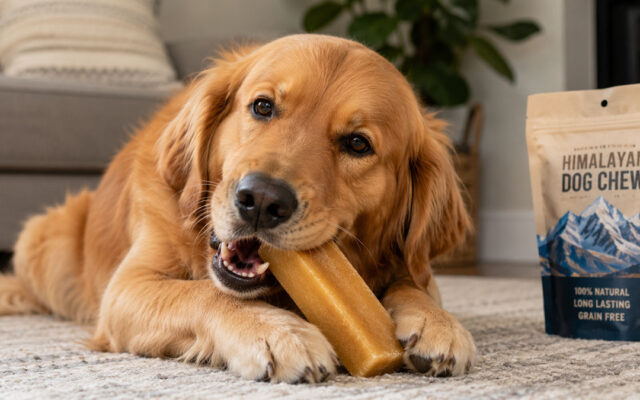
Himalayan dog chews are hard, dense treats made from a traditional recipe that originates in Nepal and Tibet. The base ingredients are yak milk and cow milk, combined with small amounts of salt and lime juice. That’s it.
The production process hasn’t changed much in centuries. Farmers boil the milk for several hours, curdle it with lime juice, press out the moisture using burlap sacs, and then smoke-dry the blocks at high altitude for up to three months. The result is a rock-hard cheese bar that dogs can gnaw on for hours, sometimes days.
You’ll see these sold under names like churpi, yak chews, or cheese chews. Himalayan Pet Supply is the brand that originally brought them to the U.S. market, but now dozens of companies sell their own versions, including EcoKind, The Himalayan Co., and various smaller importers.
The ingredient list is what makes these chews stand out from most other dog treats on the shelf. No artificial preservatives. No fillers. No grain, corn, or soy. A 2023 study published in the Journal of Ethnic Foods found that these chews typically contain 60% to 69% crude protein by weight, with fat content sitting around just 1% to 3%.
They’re also virtually lactose-free. The fermentation and extended drying process breaks down the milk sugars, which is why most dogs with mild dairy sensitivities can handle them without stomach issues.
What about calories? A standard large-sized chew runs about 300 to 360 calories. That’s roughly 83 kcal per ounce. Not a small number, and something to keep in mind if your dog is on a weight management plan or already getting healthy dog treats throughout the day.

The texture is the defining feature here. These chews are genuinely hard. Harder than bully sticks. Harder than most dental chews. Somewhere in the ballpark of antlers for dogs, though slightly softer because the cheese does gradually soften with moisture from saliva as your dog works on it.
That hardness is both the main selling point and the main concern. It keeps dogs occupied for long stretches, but it also creates real risks for dental damage, which we’ll get into next.
Are Himalayan Dog Chews Safe for Most Dogs
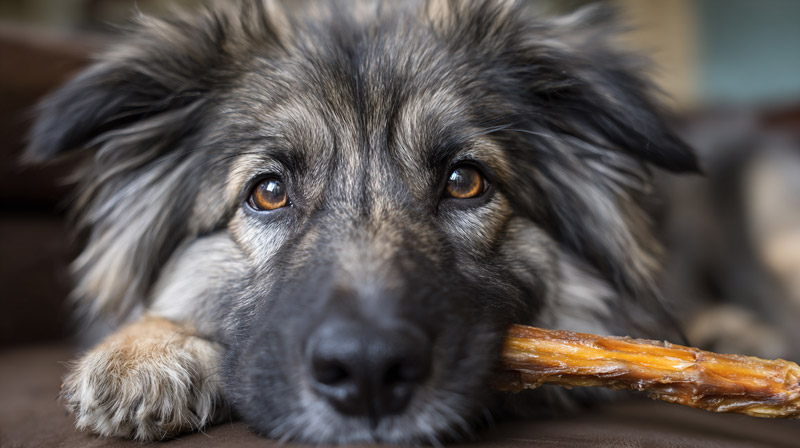
The short answer is: for many dogs, yes. But “safe” comes with conditions.
Most vets consider Himalayan chews a reasonable option when used with supervision and given to the right dog. The all-natural ingredient profile, high protein content, and lack of chemical processing give them a clear edge over rawhide, which can contain bleach residues and cause serious digestive blockages.
A 2024 review in Today’s Veterinary Practice by board-certified veterinary nutritionists noted that chew treats carry both benefits and risks. The benefits include behavioral enrichment and improved dental health. The risks include oral trauma, airway obstruction, and gastrointestinal blockage. The review emphasized that safety depends on the individual dog, not just the product.
The digestibility factor is where Himalayan chews do well compared to many alternatives. Because they’re made from hardened cheese, small slivers that your dog gnaws off will break down in the stomach. That’s a big difference from rawhide, which can sit in the gut for days without dissolving. It’s also different from nylon bones, which aren’t meant to be consumed at all.
But there’s a catch. The two biggest safety concerns with yak cheese chews are dental fractures and choking hazards. And neither one is rare enough to brush off.
Risks Linked to Chew Hardness
Dental fractures from hard chews are not a fringe issue. According to dvm360, fractured teeth have been reported in 10% to 29% of dogs seen in small-animal veterinary practices. Hard chews, bones, and antlers are among the top causes.
Dogs have significantly less enamel than humans. A study referenced in Veterinary Practice News found that the mean enamel thickness on a dog’s canine tooth ranges from just 0.35 to 0.44 mm, compared to up to 2.5 mm in humans. That thin enamel is brittle under pressure.
The most common fracture from hard chews is a slab fracture of the carnassial tooth (the large upper premolar used for crushing). When a dog bites down on something as hard as or harder than the tooth itself, the buccal surface can crack right off.
VCA Animal Hospitals recommends a simple test: if you can’t indent the chew with your fingernail, it’s too hard for your dog. Most Himalayan chews fail that test when they’re fresh out of the package.
Treatment for a fractured tooth isn’t cheap either. Root canal therapy or surgical extraction under general anesthesia can run anywhere from $1,000 to $3,000 depending on location and severity.
Choking and Blockage Incidents
Over 200,000 pet choking incidents happen every year in the United States, according to data cited by the CNY SPCA and National Pet Choking Prevention Day organizers. Chew treats are one of the leading contributors.
Bow Wow Labs reported that nearly 6 million dogs swallow an unchewed portion of a chew stick annually. These incidents lead to over 1 million vet visits and roughly $450 million in veterinary costs each year.
Himalayan chews carry a specific choking risk. As your dog works the chew down, the end piece gets small enough to swallow whole. That small chunk of hardened cheese can lodge in the throat or, worse, cause an intestinal blockage if swallowed.
The microwave trick: Most brands recommend taking the leftover piece (once it’s about 1 to 2 inches), soaking it briefly in water, then microwaving it for 30 to 45 seconds. The cheese puffs up into a lighter, crunchy treat that’s easier to chew and less likely to cause an obstruction. It works, but only if you actually remember to do it before your dog gulps the end piece.
Dogs with flat faces, like French Bulldogs, Pugs, and Boston Terriers, face a higher choking risk because of their shorter airways and the way their jaw structure handles hard objects.
Which Dogs Should Not Have Himalayan Chews
Not every dog is a good candidate for these chews. And honestly, the dogs that probably shouldn’t have them are more common than most people think.
Puppies under 6 months: Their baby teeth are softer and more fragile. A yak chew can crack deciduous teeth or damage developing adult teeth underneath. Most veterinary sources recommend waiting until at least 4 to 6 months when adult teeth start coming in, and even then, only with close supervision and limited session times of 10 to 15 minutes.
Senior dogs with dental issues: Older dogs often have weakened enamel, receding gums, or missing teeth. Gnawing on a rock-hard cheese bar isn’t doing them any favors. If your senior dog has had dental work or shows signs of oral discomfort, skip the hard chews entirely. A softer option like collagen chews for dogs is a better fit.
Aggressive chewers: This sounds backwards, since hard chews are often marketed to power chewers. But dogs that bite down with full force (think Bullmastiffs, Rottweilers, and American Pit Bull Terriers) can generate enough jaw pressure to fracture their own teeth on these chews. The carnassial teeth take the hardest hit.
Dogs with dairy sensitivities or pancreatitis: While the lactose content is minimal, the protein is still milk-derived. Dogs with known dairy allergies or a history of pancreatitis should avoid these treats. Even the low fat content can be a concern for dogs on very strict pancreatic diets.
Brachycephalic breeds: Short-nosed dogs already have compromised airways. Add a hard chew that can break into chunks, and the risk of an airway obstruction goes up significantly. If you own a Bulldog or a Shih Tzu, there are safer long-lasting treat options out there.
Nutritional Profile and Ingredient Safety
The ingredient list for a standard Himalayan dog chew is almost comically short: yak milk, cow milk, lime juice, salt. Some brands add cow milk only. Either way, you’re looking at one of the simplest single-ingredient dog treats on the market (well, technically three to four ingredients, but close enough).
Here’s what the typical nutritional breakdown looks like across major brands:
| Nutrient | Typical Range | Notes |
|---|---|---|
| Crude Protein | 52% – 75% | Varies by milk source and brand |
| Crude Fat | 0.9% – 3% | Low due to skimming process |
| Moisture | 10% – 14% | Affects hardness and shelf life |
| Calories | ~83 kcal/oz | About 300–425 kcal per treat |
| Lactose | Less than 0.1% | Broken down during fermentation |
That protein content is genuinely impressive. A 2024 study published in Discover Food found that 100g of chhurpi (the traditional cheese these chews are based on) can deliver the full dietary protein requirement and over 70% of daily calcium, iron, and zinc needs for a child. For dogs, that translates to a meaningful protein and mineral supplement during chew sessions.
The fat content stays low because the production process removes most of the fat through skimming before the curdling stage. That separated fat gets sold as butter in local Nepali markets. What’s left for the chew is essentially a lean, dried casein block.
No preservatives needed. The combination of smoking, extreme drying, and salt content gives these chews a long shelf life without any artificial additives. Store them in a cool, dry place and they’ll last for months.
Sodium is the one ingredient worth watching. Salt is part of the recipe, and while the amount per chew isn’t excessive for most dogs, it can add up if your dog is on a sodium-restricted diet due to heart or kidney conditions. Always check with your vet if your dog has underlying health problems that require dietary restrictions.
Himalayan Chews vs. Rawhide, Antlers, and Nylon Bones
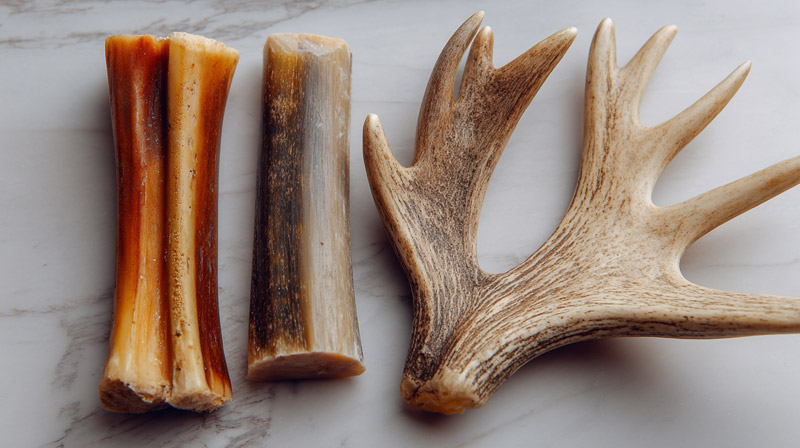
Every time you pick a long-lasting chew for your dog, you’re basically running a risk calculation. Here’s how Himalayan chews stack up against the other popular options.
| Feature | Himalayan Chew | Rawhide | Antler | Nylon Bone |
|---|---|---|---|---|
| Digestibility | High | Low to moderate | Very low | Not digestible |
| Tooth fracture risk | Moderate to high | Low | Very high | Moderate |
| Chemical processing | None | Often significant | None | Synthetic |
| Choking risk | Moderate (end pieces) | High (swelling chunks) | Low | Low |
| Typical duration | Days to weeks | Hours to days | Weeks to months | Weeks to months |
Rawhide is probably the most familiar comparison. Raw hides are animal skins that often go through chemical baths, including bleach and hydrogen peroxide, during processing. They swell when wet and can form rubbery plugs in a dog’s digestive tract. Dr. Judy Morgan and other holistic veterinarians have specifically flagged rawhide as a choking hazard because the softened pieces become slippery and hard to extract from airways. The AKC also cautions against unsupervised rawhide use. If you’ve been wondering whether cow ears count as rawhide, the answer gets complicated depending on the processing method.
Antlers sit at the extreme end of the hardness scale. Cornell University’s veterinary college explicitly recommends avoiding antlers, hooves, and bones due to their tooth-fracture potential. Whether antlers are safe for your dog depends heavily on the dog’s chewing style, but the general veterinary consensus leans toward caution. If you do use them, knowing when to take an antler away from your dog becomes critical.
Nylon bones (like those from Nylabone) don’t break down in the stomach at all. They’re designed for chewing, not consuming. That eliminates the digestive risk but introduces a different problem: if a dog manages to break off a chunk of nylon, it can cause an intestinal blockage that requires surgical removal.
Himalayan chews land in a middle ground. Better digestibility than rawhide or nylon. Softer than antlers. Fewer chemicals than processed rawhide. But still hard enough to crack teeth if your dog is an aggressive chewer.
For dogs that shred through bully sticks too quickly, a Himalayan yak chew can offer more lasting engagement. But if tooth safety is your top concern, softer options like beef tendons or turkey tendons might be the better call.
How to Give a Himalayan Chew Safely
If you’ve decided to try Himalayan chews with your dog, the way you introduce and manage them matters more than the chew itself.
Size Matching
Pick a chew that’s bigger than you think your dog needs. The chew should be longer than your dog’s muzzle and thick enough that it can’t fit between the back molars. Most brands publish weight-based sizing charts, but your dog’s chewing style matters more than body weight alone.
A 40-pound dog that’s a gentle nibbler can handle a “large” size. That same weight dog with powerful jaws? Go XL. For really big breeds, an XL Himalayan dog chew is the minimum starting point.
Supervision and Time Limits
Never leave your dog alone with a Himalayan chew. This is the single most repeated piece of veterinary advice across every source, and for good reason. Choking happens fast, and the window to respond is narrow.
Limit chew sessions to 15 to 20 minutes at a time, especially during the first few uses. Watch how your dog works the chew. Some dogs gnaw patiently at the surface. Others try to crack the chew in half with their back teeth. If your dog is a cracker, not a gnawer, this probably isn’t the right treat.
The Microwave Method for Leftover Pieces
Once the chew gets down to about 1 to 2 inches, take it away. Don’t let your dog try to finish it.
Soak the leftover piece in water for a few minutes, then microwave on high for about 30 to 45 seconds (based on a 1,100-watt microwave). The cheese puffs up into an airy, crunchy snack that’s much easier on teeth and far less likely to cause choking. Let it cool for two minutes before giving it back.
Frequency and Calorie Management
One chew per day is the maximum recommended by most brands and vets. Remember the 10% rule: treats shouldn’t make up more than 10% of your dog’s daily caloric intake.
At roughly 300 to 425 calories per chew, a single Himalayan treat can represent a significant chunk of a small dog’s daily energy needs. Factor that into meal portions to avoid gradual weight gain, especially if you’re also giving other treats for sensitive stomachs or training rewards throughout the day.
The global natural dog treats market was valued at $6.99 billion in 2024 according to Grand View Research, growing at 12.3% annually. That growth means more options hitting shelves every month. You’re not stuck with one type of chew if Himalayan treats aren’t the right fit for your dog. The key is matching the treat to the dog, not the marketing to the moment.
What Veterinarians Say About Himalayan Dog Chews
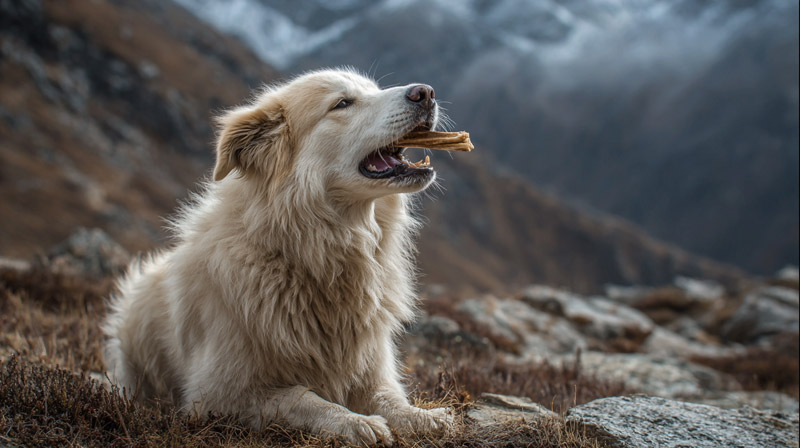
Veterinary opinion on Himalayan chews is mixed. Not split down the middle, exactly, but definitely not a blanket endorsement either.
Dr. Whitney Miller, chief veterinarian at Petco, has noted that yak chews can be a solid alternative to riskier options, offering a way to satisfy chewing urges without the dangers of rawhide. She’s also pointed out that dogs with dairy sensitivities should skip them entirely.
On the other side, Dr. Paiva, an emergency veterinarian quoted by Vetstreet, has flagged Himalayan chews as very hard and prone to splintering. In her experience, they can cause the same tooth fractures and gastrointestinal obstructions that send dogs to the ER.
The consistent veterinary position: safety depends on the individual dog, not the product alone. A board-certified nutritionist review published in Today’s Veterinary Practice (updated December 2024) stated that vets should weigh risks and benefits for each patient individually, and recommend chew treats only from reputable manufacturers.
The VOHC Factor
Himalayan dog chews do not appear on the Veterinary Oral Health Council’s accepted products list. That’s worth knowing.
The VOHC is the gold standard for dental product validation in veterinary care. Products that earn the VOHC seal have been scientifically tested and proven to reduce plaque or tartar. Greenies, Purina DentaLife, and Whimzees all carry the seal. Himalayan chews don’t.
That doesn’t mean they’re unsafe. It means no manufacturer has submitted clinical trial data to VOHC for review. So while yak chews may help scrape plaque through mechanical chewing action, there’s no independent verification of that claim.
If dental health is your primary goal, a VOHC-accepted natural dental chew is a more evidence-backed choice. You can compare popular options like Whimzees vs Greenies to see which fits your dog’s needs.
What Veterinary Dental Specialists Specifically Warn About
Dr. John Lewis, a board-certified veterinary dentist, wrote in Veterinary Practice News that items like yak milk cheese, antlers, bones, and cow hooves lack the “give” needed to protect teeth. He recommends rubber toys that are durable but flexible enough to avoid fractures.
Cornell University’s veterinary college is more direct: avoid antlers, hooves, and bones. Choose Kong or Goughnuts toys instead. Their guidance mentions the VOHC list as the go-to resource for safe dog chews.
VCA Animal Hospitals echoes the same fingernail test. If you press your nail into the chew and it doesn’t give at all, your dog’s teeth are at risk.
Signs of a Problem After Your Dog Chews One
Dogs hide pain. Took me a while to accept that about my own dog, but it’s true. A cracked tooth or a piece of cheese lodged in the gut won’t always show obvious symptoms right away.
Here’s what to watch for, broken into the three most common problems.
Tooth Fracture Symptoms
- Pawing at the mouth or rubbing the face against furniture
- Drooling more than usual
- Dropping food or chewing only on one side
- Refusing hard treats or kibble they normally eat
According to dvm360, many dogs with fractured teeth show no obvious signs at all. That’s why regular vet dental exams matter, especially if your dog chews hard treats regularly.
Gastrointestinal Blockage Warning Signs
Vomiting repeatedly (especially if nothing comes up) is the biggest red flag.
Other signs include lethargy, loss of appetite, no bowel movement for 24+ hours, and a bloated or tense abdomen. PetMD notes that without treatment, dogs with a complete intestinal obstruction can die within 3 to 7 days.
Surgery for intestinal blockage runs $2,000 to $10,000 on average, according to PetMD and MetLife Pet Insurance. The national average for a non-emergency foreign body enterotomy sits around $4,383, per CareCredit data.
When to Call the Vet vs. Go to Emergency
| Situation | Action |
|---|---|
| Dog coughing but breathing normally | Remove chew, monitor closely, call vet |
| Blue or purple gums, can’t inhale | Emergency clinic immediately |
| Repeated vomiting, lethargy | Same-day vet visit minimum |
| Swallowed large chunk, acting normal | Call vet, monitor for 24 hours |
If your dog’s gums turn blue or purple, that’s oxygen deprivation. Don’t wait. Get to an emergency vet. PetMD recommends attempting a finger sweep of the mouth only if you can safely open it, but don’t delay transport while trying.
Safer Long-Lasting Chew Alternatives
If you’ve weighed the risks and decided Himalayan chews aren’t the right fit, you still have plenty of good options. The trick is matching the chew to your dog’s size, jaw strength, and any dietary restrictions.
VOHC-Approved Dental Chews
These are the only chews with independent scientific proof of dental benefit. The VOHC list includes products from Greenies, Purina DentaLife, OraVet, and Whimzees, among others.
Products with the VOHC seal command about a 20% price premium over comparable non-approved products, according to Mordor Intelligence’s 2024 market analysis. But you’re paying for tested efficacy, not just marketing.
Greenies in particular have been on the VOHC list since 2007. They’re softer than Himalayan chews and fully digestible when chewed properly.
Bully Sticks and Collagen Sticks
Single-ingredient, high-protein, and fully digestible. Bully sticks support dental health through their fibrous texture, which creates a natural scraping action against teeth.
They’re softer than yak chews and carry less fracture risk. The downside? They smell. And they don’t last as long for aggressive chewers. A thick bully stick helps with durability, but even those won’t match a Himalayan chew’s longevity. If you’re curious about pricing, there’s a reason bully sticks cost what they do.
Collagen sticks are a newer alternative gaining traction. Lower in fat than bully sticks, easier on teeth, and they don’t carry the same odor problem. You can learn more about collagen supplements for dogs and how they support joint and skin health beyond just chewing.
Rubber Chew Toys with Treat Stuffing
Kong and West Paw make durable rubber toys that you can stuff with peanut butter, wet food, or frozen treats. Zero tooth fracture risk. Zero choking risk from the toy itself (assuming correct sizing).
The trade-off is obvious: they’re not edible. Some dogs lose interest once the filling is gone. But for dogs who crack through every edible chew in minutes, a stuffed Kong can provide 30+ minutes of focused activity without any of the dental or digestive dangers.
What to Avoid Entirely
Cooked bones: They splinter into sharp fragments that can perforate the stomach or intestinal wall.
Cheap imported chews without clear sourcing: The FDA has flagged certain jerky treats from overseas for causing illness in dogs. Stick with products that list their country of origin and manufacturing standards clearly.
If your dog has a track record of destroying chews fast and swallowing large pieces, the safest path might be skipping edible chews altogether and sticking with durable toys and accessories designed for heavy chewers. Knowing how long dogs should chew on hard treats also helps you set reasonable session limits.
Packaged Facts estimated the U.S. pet treats and chews market at $12.8 billion in 2024. With that kind of money flowing through the category, new products launch constantly. The best approach? Check the VOHC list first, read the ingredient label second, and watch your dog chew third. No treat is worth a trip to the emergency vet.
FAQ on Himalayan Dog Chews
Can Himalayan chews break a dog’s teeth?
Yes. These yak cheese chews are hard enough to cause slab fractures, especially on the carnassial teeth. Dogs with thin enamel or aggressive chewing habits face the highest risk. Use the fingernail test before giving one.
Are Himalayan dog chews safe for puppies?
Not for puppies under 6 months. Their baby teeth are fragile and can crack under pressure from hard chews. Wait until adult teeth come in, then supervise closely and limit sessions to 10 to 15 minutes.
What are Himalayan dog chews made of?
They’re made from yak milk and cow milk, combined with small amounts of salt and lime juice. That’s it. No preservatives, no grain, no artificial additives. The milk is boiled, curdled, pressed, and smoke-dried for weeks.
Are Himalayan chews digestible?
More digestible than rawhide, yes. The cheese softens with saliva and breaks down in the stomach. Small slivers pass through the digestive tract without much trouble. Large swallowed chunks, though, can still cause intestinal blockage.
How long should a dog chew on a Himalayan chew?
Limit sessions to 15 to 20 minutes at a time. Always supervise. Take the chew away once it gets small enough to swallow whole. You can microwave the leftover piece into a safer puffed treat.
Are Himalayan chews safe for small dogs?
They can be, if you pick the right size. The chew should be longer than your dog’s muzzle. Small breeds and brachycephalic dogs face higher choking risk, so extra caution and supervision are needed.
Do veterinarians recommend Himalayan dog chews?
Some do, with conditions. Others warn against them due to hardness. Himalayan chews are not on the VOHC accepted products list, so there’s no independent verification of dental health claims. Ask your own vet first.
Are Himalayan chews better than rawhide?
In most ways, yes. They contain no chemical processing, digest more easily, and have a simpler ingredient list. Rawhide swells when wet and can cause serious blockages. But Himalayan chews carry a higher tooth fracture risk.
Can Himalayan chews cause diarrhea?
Possible, especially on first use. The high protein content can upset sensitive stomachs. Dogs with dairy sensitivities may react even though lactose levels are minimal. Start with short chew sessions and monitor.
What should I do with the small end piece?
Don’t let your dog finish it. Soak the leftover piece in water, then microwave for 30 to 45 seconds. It puffs into a crunchy, lighter snack that’s much safer to eat and won’t pose a choking hazard.
Conclusion
So, are Himalayan dog chews safe? The honest answer is: it depends on your dog. These preservative-free, high-protein yak chews work well for moderate chewers under supervision. But they carry real risks for aggressive chewers, senior dogs, and brachycephalic breeds.
Tooth fractures and choking hazards aren’t edge cases. They happen regularly enough that veterinary dental specialists actively warn against hard chews that don’t pass the fingernail test.
Match the chew size to your dog’s weight and jaw strength. Limit chew sessions. Microwave the end pieces. And if your dog has any history of dental damage or digestive sensitivity, talk to your vet before handing over a yak cheese bar.
The best treat is the one your dog enjoys without a trip to the emergency clinic afterward.