A single bully stick can last 10 minutes or 10 days. The difference comes down to your dog, the stick, and how you store it.
Knowing how long do bully sticks last before they’re finished, before they expire, and before a partially chewed one goes bad saves you money and keeps your dog safe. These aren’t small questions when a premium beef pizzle chew costs $5-6 each.
This guide covers chew duration by dog size and chewing style, shelf life and storage, the safety cutoff point where a stick becomes a choking hazard, and practical ways to make each one last longer.
Whether you’ve got a gentle nibbler or a power chewer who destroys everything, the answers here are specific to your situation.
How Long Do Bully Sticks Last Before They’re Finished
Most bully sticks give dogs somewhere between 15 and 45 minutes of chew time per session.
That’s the average. Your dog might blow through one in 10 minutes or stretch it across three days. The range is honestly that wide.
A study published in the Canadian Veterinary Journal found that bully sticks contain an average of 15 calories per inch, with a range of 9 to 22 calories per inch depending on thickness and brand. That calorie density matters because denser sticks take longer to break down.
My dog, for reference, can demolish a standard 6-inch stick in about 20 minutes. A braided 12-inch? That one survives multiple evenings.
| Dog Size | Standard 6-inch Stick | Braided/Jumbo 12-inch |
|---|---|---|
| Small (under 20 lbs) | Several days | Up to a week+ |
| Medium (20-50 lbs) | 1-3 hours | Several hours to a full day |
| Large (50+ lbs) | Under 1 hour | 2-4 hours |
The thickness of the beef pizzle chew, your dog’s jaw strength, and whether they’re a power chewer or a casual gnawer all shift these numbers dramatically.
Puppies should be limited to 5 to 10 minutes per session regardless of how much stick is left. Their stomachs are more sensitive to the high protein content, and their developing teeth need a break.

Why Chew Duration Varies So Much Between Dogs
Breed plays a bigger role than most people realize.
A Labrador Retriever with a determined chewing drive will crunch through a thick bully stick in a fraction of the time it takes a Chihuahua to work through a thin one. And it’s not just about size. Some smaller breeds are surprisingly aggressive chewers.
Chewing style is the real variable. Dogs that gnaw methodically and savor the treat can stretch a single stick across multiple sessions. Dogs that bite down hard and rip chunks off will finish fast.
Bow Wow Labs estimates that over 500,000 dogs per year choke on or swallow objects that are too large for them to digest, with bully sticks being a frequent cause. So chew speed isn’t just about getting your money’s worth. It’s a safety concern.
Age matters too. Older dogs with weakened jaw muscles or dental issues tend to chew slower, while dogs in their prime (roughly 1 to 5 years old) are usually at peak chewing intensity.
Shelf Life of Bully Sticks Before Opening
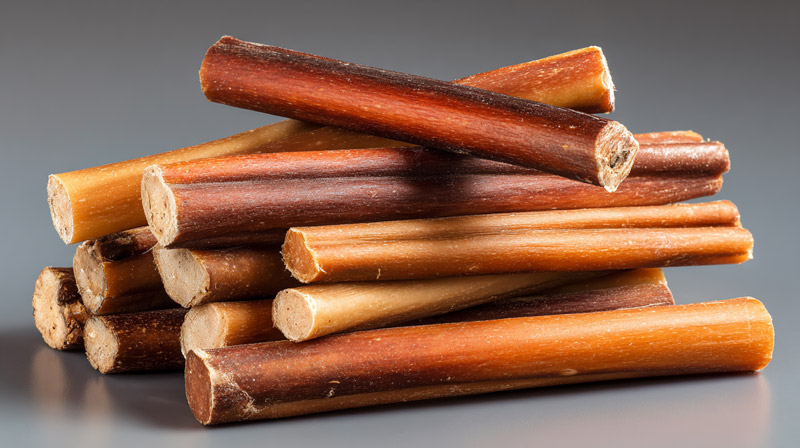
Unopened bully sticks stay good for 2 to 3 years from the manufacturing date when stored correctly.
That’s a long time. But the key word there is “correctly.”
The USDA Food Safety and Inspection Service explains that removing moisture from dried meat prevents enzymes and bacteria from breaking the product down. Quality bully sticks are slow-dried to reach 8 to 10% moisture content, which is low enough for long-term stability without preservatives.
Smoked vs. baked vs. air-dried vs. freeze-dried: each method affects shelf life differently.
- Smoked and baked sticks tend to have the longest shelf life because they lose more moisture during processing
- Air-dried sticks retain slightly more moisture, which can shorten storage time if conditions aren’t ideal
- Freeze-dried options hold up well in sealed packaging but can deteriorate quickly once exposed to humidity
The global pet food and treats market reached $138.9 billion in 2024 according to GM Insights, growing at 6.1% annually. That growth has pushed more brands into bulk packaging and online sales, which means bully sticks sit in warehouses and shipping containers longer than they used to. Checking the expiration date before buying in bulk is worth the extra few seconds.
How to Spot a Bully Stick That’s Gone Bad Before Opening
Look for these signs before handing one to your dog.
Discoloration: fresh bully sticks range from light tan to dark brown depending on processing. Green spots, white fuzzy patches, or any color you wouldn’t expect on dried beef means mold.
Smell: they’re going to smell like beef. That’s normal. What’s not normal is a sour, rancid, or ammonia-like odor. If the smell makes you recoil instead of just wrinkling your nose, toss it.
Packaging that looks puffy or bloated can indicate gas buildup from bacterial activity. Don’t open it. Just return it.
How Long a Partially Chewed Bully Stick Stays Safe
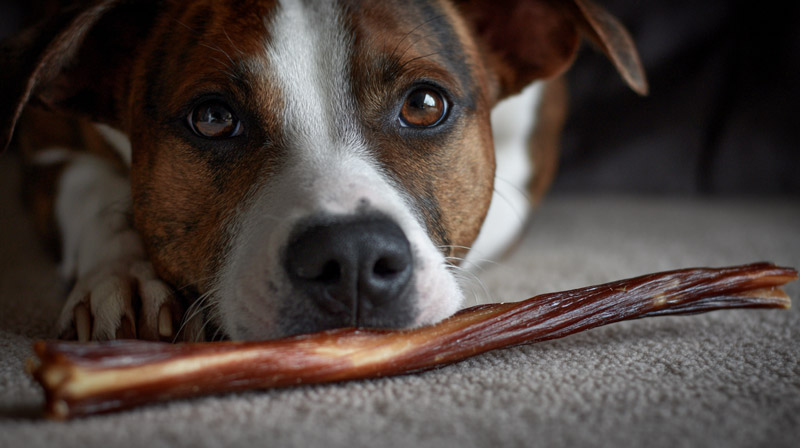
Here’s where things get tricky, because once your dog’s saliva hits that stick, the clock starts ticking.
A partially chewed bully stick left out at room temperature becomes a bacteria risk within hours. Saliva introduces moisture and microorganisms that thrive in warm, wet environments.
The Canadian Veterinary Journal study found that out of 26 bully sticks tested, one was contaminated with MRSA and another with Clostridium difficile. That was before any dog even touched them. After chewing, the bacterial load only increases.
General rule: refrigerate a used bully stick within 1 to 2 hours of chewing and use it again within a week.
Freezing works even better for extending the life of a partially chewed stick. Drop it in a resealable bag with as much air removed as possible, and it’ll keep for a few weeks.
But at some point… just throw it out. If it feels slimy, smells off, or has been sitting in your fridge for more than 7 days, it’s done.
How to Store a Used Bully Stick Between Chew Sessions
Paper bag method: let the stick air-dry for 30 minutes after your dog finishes, then place it in a paper bag in the fridge. The paper absorbs excess moisture without trapping it.
Ziplock in the freezer: seal it tight, freeze, and pull it out 15 minutes before the next session. The frozen texture actually slows chewing, which is a nice bonus.
What not to do: don’t seal a wet, freshly chewed stick in an airtight container at room temperature. That’s basically creating a petri dish. The trapped moisture encourages mold growth fast.
The FDA advises washing your hands after handling any pet treats to prevent bacterial cross-contamination. That goes double for used bully sticks that have been sitting in dog saliva.
What Makes Some Bully Sticks Last Longer Than Others
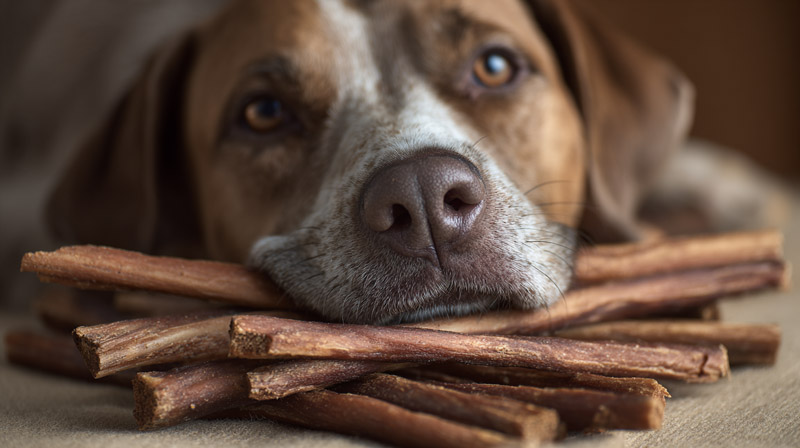
Not all bully sticks are created equal. The difference between a stick that lasts 10 minutes and one that survives an entire evening comes down to a few measurable factors.
Thickness is the biggest predictor of longevity. A jumbo-diameter bully stick gives your dog more material to work through before reaching the center. Thin sticks, especially those marketed for small breeds, break down quickly under any real chewing pressure.
Density matters too. Sticks that are slow-dried at controlled temperatures develop a firmer internal structure than those that are fast-dried at high heat. Cheap bully sticks are often fast-dried to speed up production, which leaves residual moisture inside and creates a softer, less durable product.
According to the American Pet Products Association (APPA), US pet food and treat industry sales are projected to hit $67.8 billion in 2025. That market pressure drives some brands to cut corners on processing time, which directly affects how long the stick holds up in your dog’s mouth.
Low-odor bully sticks go through extra processing that can affect durability slightly. They tend to be a bit drier and sometimes a touch more brittle. Most dogs don’t care either way, but power chewers may notice the difference.
Thin vs. Thick vs. Braided Bully Sticks
| Type | Average Chew Time (Medium Dog) | Best For |
|---|---|---|
| Thin/Standard | 15-30 minutes | Small breeds, gentle chewers, puppies |
| Thick/Jumbo | 1-3 hours | Medium to large breeds |
| Braided | 2-4+ hours | Aggressive chewers, large breeds |
| Knotted | 1-2 hours | Medium breeds, moderate chewers |
Braided bully sticks are three strands woven together. That gives the dog more surface area and structural resistance. My personal preference for any dog over 40 pounds.
Thick straight sticks work well for dogs that chew steadily without trying to snap the stick in half. If your dog is a strong-jawed breed like an American Pit Bull Terrier, go braided or jumbo. The standard thickness won’t survive.
For smaller dogs like a Bichon Frise or Maltese, a thin 6-inch stick provides plenty of chewing satisfaction without overwhelming their smaller jaws. Took me a while to figure out that sizing down actually gives these dogs a better experience.
How Dog Size and Chew Style Change Bully Stick Duration
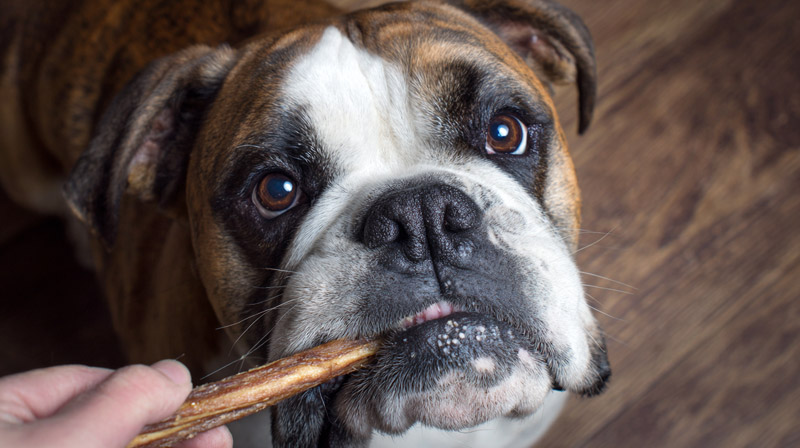
This is probably the most practical section if you’re trying to figure out how many bully sticks you’ll go through in a month. Because honestly, the answer depends entirely on your dog.
Small dogs (under 20 lbs) get the most mileage from bully sticks. A thin 6-inch stick can keep a small dog busy across several days of short chewing sessions. Many small breeds chew in bursts, putting the stick down and coming back later. That habit alone extends each stick significantly.
A Cavalier King Charles Spaniel or Pomeranian might nibble for 15 minutes and walk away. That’s three or four sessions from a single stick.
Medium dogs (20-50 lbs) typically finish a standard bully stick in one to several hours depending on thickness. This is the sweet spot where choosing the right stick type makes the biggest cost difference.
Large dogs (50+ lbs) are a different story entirely.
A German Shepherd or Boxer can power through a standard 6-inch stick in under an hour. For these breeds, jumbo or braided options are the only ones worth buying. Even then, expect 2 to 4 hours at most.
The APPA’s 2023-2024 National Pet Owners Survey found that 67% of millennials consider their pets family members and are willing to pay 40-60% more for premium, ethically sourced treats. That tracks with the trend toward thicker, higher-quality bully sticks that last longer and justify the price tag.
Power Chewers vs. Casual Chewers
Power chewers bite down with force, work the stick aggressively, and aim to break off pieces. They’ll finish any standard bully stick fast. These dogs need bully sticks designed for aggressive chewers, ideally jumbo or braided varieties paired with a holder.
Casual chewers gnaw slowly, lick the surface, and take breaks. A single thick bully stick can last these dogs several sessions over multiple days.
You probably already know which category your dog falls into. If you’re not sure, start with a thick 6-inch stick and time the first session. Under 20 minutes? You’ve got a power chewer on your hands.
Puppies are a special case. Their chewing patterns are still developing, and they shouldn’t have more than 5 to 10 minutes at a time regardless. Safe chew options for puppies need to match their size and jaw strength. Giving a 12-week-old puppy a jumbo braided stick makes about as much sense as giving a toddler a jawbreaker.
When a Bully Stick Becomes a Choking Hazard
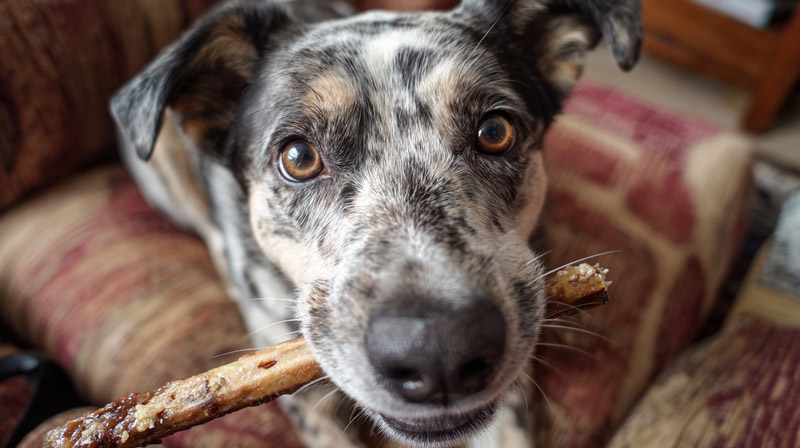
This is the part that matters most, and it’s the part too many dog owners skip.
Bully sticks become dangerous once they’re small enough for your dog to swallow whole. The general threshold is about 2.5 to 3 inches, though that number shifts based on your dog’s size.
Bow Wow Labs estimates that over half a million dogs each year end up at the emergency vet because they choked on or swallowed something too large to digest. Bully sticks are one of the most common culprits. Gastrointestinal blockage is the top reason for emergency vet visits in dogs, and a large chunk of unchewed bully stick lodged in the intestines can require surgery.
Here’s what makes bully sticks specifically tricky. They’re fully digestible (unlike rawhide), so many owners assume they’re always safe. And they are, mostly. But “fully digestible” doesn’t mean “safe to swallow in one piece.” A 3-inch chunk swallowed whole can still block the esophagus or intestine before stomach acid has a chance to break it down.
Bully Stick Holders and Safety Devices
A bully stick holder is probably the single best investment you can make if your dog chews these regularly.
Bow Wow Labs Bully Buddy: the most well-known option. Screws closed around the stick, prevents the dog from reaching the last few inches. Built from durable, non-toxic nylon.
EverChew SafetyChew: uses a patent-pending locking mechanism. No twisting or cranking needed. Works with sticks of various thicknesses.
Both products serve the same basic purpose. They hold the bully stick securely so your dog can chew down to a safe stopping point without you having to hover and snatch it away at the right moment.
If you’re not using a holder, the old-fashioned approach works fine too. Stay in the room. Watch. Once the stick gets down to a size your dog could potentially swallow, take it away and toss it.
Yes, throwing away 2-3 inches of a $5-6 treat stings a little. But understanding whether bully sticks are safe for your dog means accepting that the last nub is just the cost of keeping them healthy. An emergency vet visit for an intestinal blockage can run into the thousands. That perspective helps.
For dogs that tend to gulp the end piece, switching to bully stick rings or collagen chews can reduce the risk. These alternatives break down differently and don’t leave a swallowable nub at the end.
Proper Storage to Get the Most Life Out of Bully Sticks
Where you keep your bully sticks matters almost as much as what brand you buy.
Bully Sticks Direct data shows that bully sticks last up to two years when stored at 60-70 degrees Fahrenheit with humidity below 65%. Go above that humidity threshold and the sticks start absorbing moisture, softening up, and becoming a breeding ground for bacteria.
| Storage Method | Best For | Expected Freshness |
|---|---|---|
| Pantry (sealed bag, cool and dry) | Unopened sticks | Up to 2-3 years |
| Refrigerator (airtight container) | Partially chewed sticks | Up to 1-2 weeks |
| Freezer (ziplock, air removed) | Bulk supply or used sticks | 2+ months |
| Room temp, unsealed | Nothing. Don’t do this. | Days before spoilage risk |
The worst place to store bully sticks? Your garage. Or your car. Or anywhere with temperature swings and humidity.
One Amazon reviewer found two bully sticks left in a camper from the previous season and asked the manufacturer if they were still good. The brand’s response: if stored sealed in a cool area, they can last more than 3 years, but heat causes condensation inside the bag, which leads to mold.
That tracks with everything the USDA says about dried meat preservation. Lower moisture equals longer shelf life. Simple as that.
For dog owners who buy healthy dog treats in bulk, the first-in-first-out approach works best. Label your containers with purchase dates and use the oldest sticks first. Sounds like restaurant kitchen logic, but it prevents waste.
Bulk Buying and Long-Term Storage
Freezing is the move for bulk purchases.
Drop sticks into a freezer-safe bag, squeeze out as much air as possible, and seal. They’ll hold indefinitely in the freezer without losing quality. Thaw at room temperature before giving one to your dog, or hand it over frozen for an extra-tough chewing challenge.
Opened packages that stay at room temperature should be used within 30 to 60 days, according to Pet Educate. After that window, freshness drops and the risk of staleness or spoilage goes up.
The global pet treats market hit $10.50 billion in the US alone in 2025, per Mordor Intelligence. With that kind of spending, bulk purchasing of one ingredient dog treats like bully sticks keeps growing. Smart storage isn’t optional when you’re buying a 20-pack.
Bully Stick Composition and Why They’re Fully Digestible
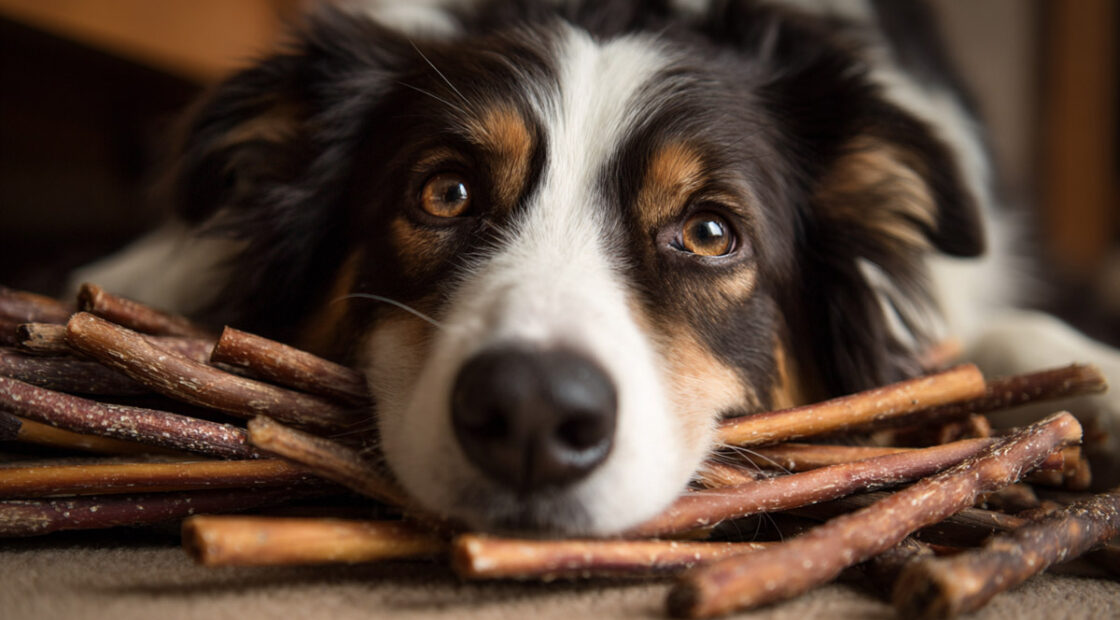
Bully sticks are beef pizzle. That’s it. One single ingredient.
The pizzle is the muscle from a bull, cleaned, stretched, and slowly dried at temperatures between 165 and 195 degrees Fahrenheit for 2 to 3 days. No chemicals, no preservatives, no fillers. Just dried beef protein.
A study published in the Canadian Veterinary Journal tested the nutritional composition across multiple brands and found the following averages:
- Crude protein: 80-90%
- Crude fat: approximately 3-4%
- Moisture: 6-15%
- Caloric density: 9 to 22 calories per inch (average of 15 kcal/inch)
That protein content is why dogs digest bully sticks so well. The stomach acids and enzymes break down pure muscle protein within 2 to 4 hours, even if a larger piece gets swallowed.
Rawhide, by comparison, is not digestible. It’s treated animal hide (a leather industry byproduct) that can swell to 3 to 4 times its original size in the digestive tract. Bully Sticks Direct reports that roughly 40-50% of veterinary foreign body obstruction cases involving chews trace back to rawhide. Bully sticks don’t carry that same risk because they’re protein, not processed skin.
That single-ingredient composition also makes bully sticks a good fit for dogs with food sensitivities. No wheat, no corn, no chicken, no artificial anything. If your dog can tolerate beef, they can handle a bully stick.
Calorie Count and Feeding Limits
A standard 6-inch bully stick contains approximately 88 calories on average.
For a 50-pound dog, that’s about 9% of daily caloric needs. Not bad. But for a 10-pound dog, that same stick could represent 30% of their daily calories. That’s a lot for a treat.
Most veterinarians recommend keeping all treats (including bully sticks) under 10% of a dog’s daily caloric intake. The Cummings School of Veterinary Medicine at Tufts University, which conducted one of the most cited studies on bully stick nutrition, reinforces this guideline.
Practical breakdown:
- Small dog (10 lbs): half a thin 6-inch stick per day, max
- Medium dog (30-50 lbs): one 6-inch stick per day is fine
- Large dog (70+ lbs): one 12-inch stick, or factor the 195+ calories into their meal plan
If you’re conscious about your dog’s weight, particularly with breeds prone to obesity like Beagles or Basset Hounds, adjusting their kibble portion on bully stick days makes a real difference. My vet told me to just scoop a little less food on treat-heavy days. Problem solved.
Bully Sticks vs. Rawhide: Why the Difference Matters
| Factor | Bully Sticks | Rawhide |
|---|---|---|
| Digestibility | Fully digestible (2-4 hours) | Not digestible, swells in gut |
| Ingredients | Single ingredient (beef pizzle) | Chemically treated animal hide |
| Blockage risk | Low (breaks down naturally) | High (can cause obstruction) |
| Protein content | 80-90% crude protein | Minimal nutritional value |
| Surgery cost if blocked | Rarely needed | $3,000-$7,000 for removal |
This comparison isn’t even close. Every veterinarian I’ve talked to recommends bully sticks over rawhide, and the data backs them up.
Rawhide goes through lime baths, bleaching, and chemical treatments before it reaches your dog’s mouth. Even “natural” rawhide is still heavily processed hide. Bully sticks skip all of that because dehydration alone preserves the beef muscle.
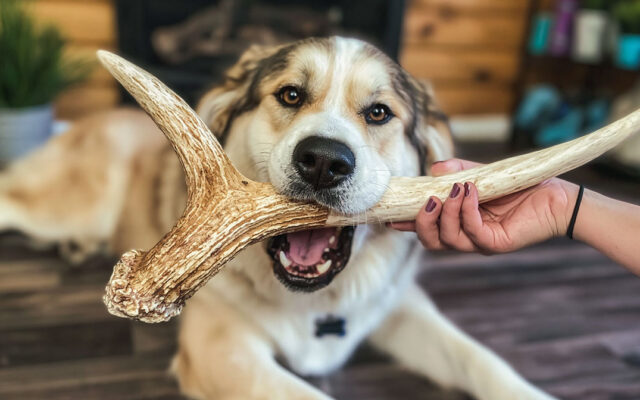
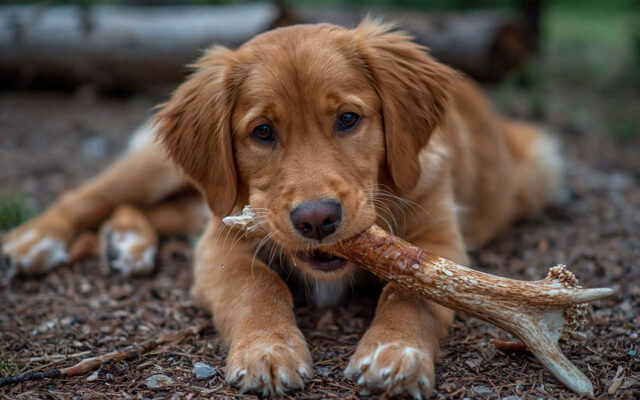
If you’re looking at safe alternatives to both, himalayan yak chews and antlers for dogs offer different textures and chew durations. But for digestibility, bully sticks remain the gold standard among natural dog chews.
How to Make a Bully Stick Last Longer
You’ve spent the money. Now make it count. Here are the methods that actually work, ranked roughly by how much extra chew time they add.
Freeze before serving. This is the single most effective trick. Freezing hardens the protein structure and makes the stick significantly tougher to break down. Bully Sticks Direct reports that aggressive chewers who normally finish a stick in 15-20 minutes can get 30-45 minutes or more from a frozen version.
Place the stick in a freezer-safe bag, freeze for 2-4 hours, and hand it over. The stick gradually softens as your dog works on it, creating a naturally paced chew session.
One caution here. Some dogs with dental issues or developing teeth (puppies under 6 months) shouldn’t chew frozen sticks because the hardness can cause fractures. Puppy In Training noted that a frozen bully stick has a consistency close to a smoked beef bone, which has caused broken molars in some dogs. Your mileage may vary.
Use a Bully Stick Holder
Holders serve two purposes at once: they slow your dog down and they prevent choking on the tail end.
The holder limits the angles from which your dog can attack the stick. That forces them to chew more carefully, which doubles chew time in many cases. And when the stick gets small, the holder keeps it locked in place so there’s no gulping the last nub.
If you’re wondering whether bully sticks are good for dental health, the slower chewing a holder encourages actually increases the teeth-scraping benefit. More time chewing equals more plaque removal.
Rotate with Other Long-Lasting Chews
Don’t rely exclusively on bully sticks. Rotating with other natural chews keeps your dog interested and stretches your budget.
- Yak chews last a long time and offer a completely different texture
- Natural dental chews complement bully sticks by targeting different chewing patterns
- Thick bully sticks on some days, thinner sticks on others
Dogs get bored with the same chew. I’ve watched my dog ignore a bully stick after three days in a row, then go crazy for it after a two-day break with a different treat.
Packaged Facts valued the US market for pet treats and edible chews at $12.8 billion in 2024. That kind of market means you’ve got more variety than ever. Use it.
Timed Chew Sessions
Limit sessions to 15-20 minutes at a time, then take the stick away and save it for later.
This stretches a single bully stick across multiple days. It also prevents overconsumption (remember, bully sticks can have side effects when dogs eat too much protein too fast, especially upset stomachs).
After each session, air-dry the stick for 10-15 minutes, then store it in the fridge in a sealed bag. Pull it out next time your dog needs something to do. That cycle works for 3 to 5 sessions from a single thick stick, easy.
Between the freezing, the holder, and timed sessions, you can realistically get 2-4 times the chew life out of each bully stick. That’s a big deal when a single premium stick runs $5-6.
FAQ on How Long Bully Sticks Last
How long does a bully stick last for a dog?
Most dogs finish a standard bully stick in 15 to 45 minutes. Small breeds can stretch one across several days. Large power chewers might be done in under an hour. Thickness, chewing style, and stick type all shift the number.
Do bully sticks expire?
Yes. Unopened bully sticks have a shelf life of 2 to 3 years from the manufacturing date. Store them in a cool, dry place below 80 degrees Fahrenheit. Check for mold, discoloration, or sour smells before giving one to your dog.
How should I store a partially chewed bully stick?
Air-dry it for 10-15 minutes after the chew session. Then seal it in a ziplock bag and refrigerate. Use it again within one week. Never leave a wet, saliva-covered stick sitting out at room temperature overnight.
When should I take a bully stick away from my dog?
Remove it once the stick gets down to about 2.5 to 3 inches. At that size, most dogs can swallow it whole. A bully stick holder prevents this problem by locking the last portion in place.
Can puppies have bully sticks?
Puppies can chew bully sticks, but limit sessions to 5 to 10 minutes. Their stomachs are more sensitive to the high protein content. Pick a thinner stick sized for their jaw, and always supervise closely.
Are bully sticks safer than rawhide?
Significantly. Bully sticks are fully digestible beef pizzle that breaks down in 2-4 hours. Rawhide is chemically treated animal hide that swells in the gut and frequently causes intestinal blockages requiring surgery.
How many bully sticks can a dog have per week?
A safe limit is 2 to 3 per week for most dogs. Each 6-inch stick averages about 88 calories, so factor that into daily food intake. Reduce kibble portions on days your dog gets a full stick.
Do bully sticks help clean teeth?
Yes. The chewing action scrapes plaque and tartar from teeth while stimulating saliva production. Saliva helps rinse away bacteria and food particles. They’re not a replacement for brushing, but they support dental health between cleanings.
What makes some bully sticks last longer than others?
Thickness is the biggest factor. Braided and jumbo sticks outlast thin ones by hours. Processing quality matters too. Slow-dried sticks at controlled temperatures produce a denser, firmer product that holds up better against aggressive chewers.
Can I freeze bully sticks to make them last longer?
Freezing works well. It hardens the protein structure and can double chew time for most dogs. Place the stick in a freezer bag for 2-4 hours before serving. Watch dogs with dental issues closely, as the extra hardness can risk tooth fractures.
Conclusion
The answer to how long do bully sticks last depends on three things: your dog’s size and chewing intensity, the stick’s thickness and processing quality, and how you handle storage between sessions.
A thin stick won’t survive 20 minutes with a Rottweiler. A thick braided one can keep a Shih Tzu busy for a week.
Shelf life sits at 2 to 3 years unopened. Partially chewed sticks last about a week in the fridge. Freezing extends both freshness and chew duration.
Pick the right size for your dog. Use a holder. Toss the nub at 2.5 inches. Check for spoilage before every session.
These are simple habits. They keep your dog safe, make each single ingredient chew last longer, and save you from expensive vet bills down the line.