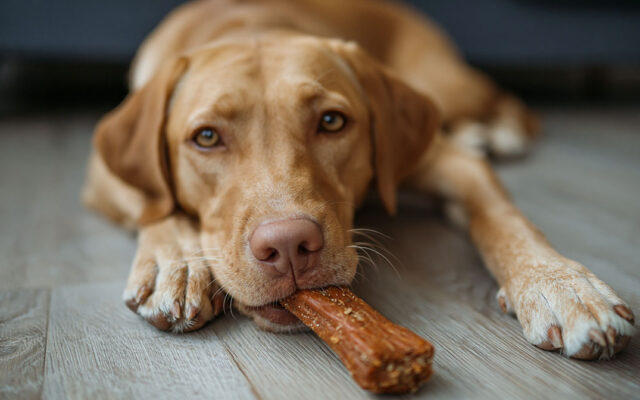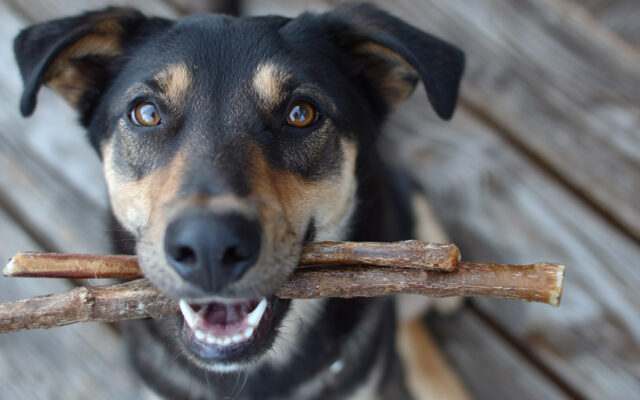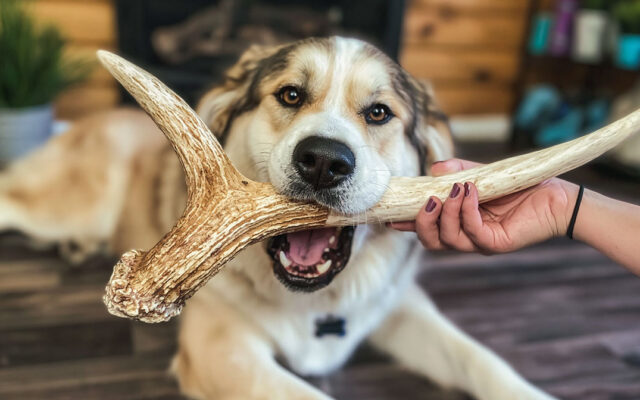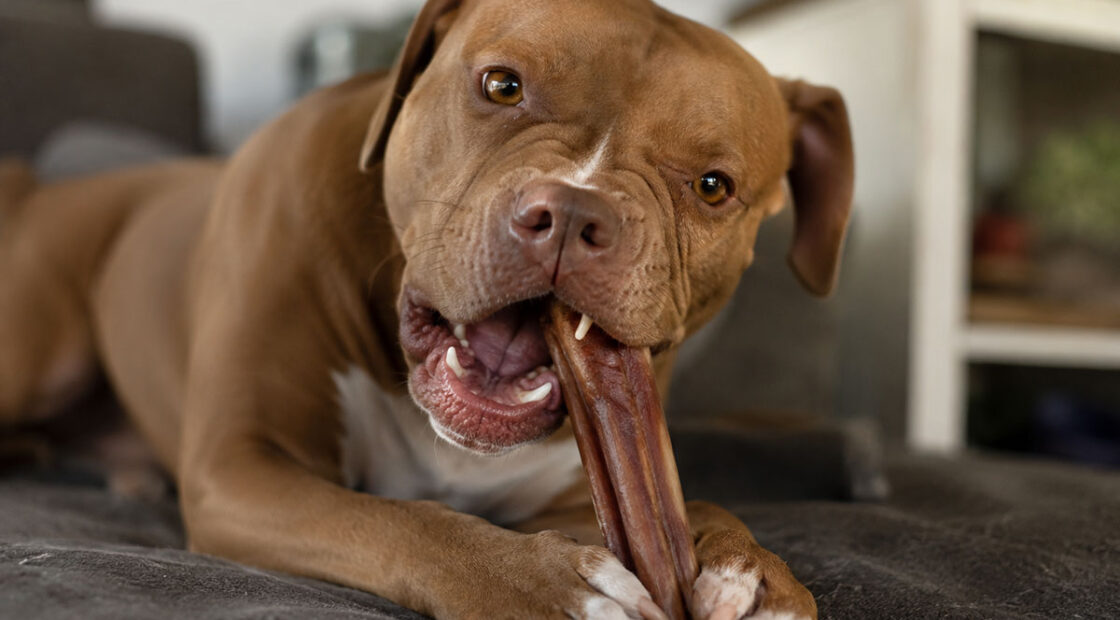
My dog went through a thick rubber chew toy in eight minutes. Timed it. That’s when I stopped buying anything labeled “durable” and started looking at bully sticks for aggressive chewers that could actually survive a serious jaw.
Not all bully sticks hold up. Thin ones vanish before you finish your coffee. The wrong shape falls apart under real bite force from power chewer breeds.
This guide covers which beef pizzle sticks actually last, how to pick the right thickness and style for heavy chewers, the safety risks most people overlook, and how bully sticks compare to alternatives like yak chews, antlers, and collagen sticks. Real products, real chew times, no guesswork.
What Are Bully Sticks?
Bully sticks are dried beef pizzle. That’s it. One ingredient, no fillers, no chemical processing.
They’re made from bull or steer muscle that gets cleaned, stretched, and slowly dried or baked until it hardens into a chewy stick. Some manufacturers smoke them. Others dehydrate them at low temperatures. The drying method changes the texture and smell, but the base product stays the same.
This is what makes bully sticks different from rawhide. Rawhide is processed animal skin, often treated with chemicals during manufacturing. Bully sticks are actual muscle tissue, which means they break down in your dog’s digestive system instead of sitting there like a lump.
They come in different shapes. Straight sticks, braided bully sticks, rings, springs, and knotted versions all exist. The braided ones last longer because three sticks are woven together, giving your dog more material to work through.
One thing nobody warns you about at the pet store: bully sticks smell. Some brands sell low-odor or odor-free versions that go through extra baking, but the standard ones have a strong, distinctly animal scent. My dogs don’t care. I do.
A study published in the Canadian Veterinary Journal by researchers at Tufts University found that only 44% of dog owners could correctly identify what bully sticks are actually made from. Even 38% of veterinarians got it wrong. Beef pizzle means bull penis. Once you know, you can’t unknow it, but dogs absolutely love these things.

Because bully sticks are a single-ingredient treat, they’re grain-free by default and work well for dogs with food sensitivities. High in protein, low in fat, and fully digestible. That combination is hard to find in the chew aisle.
Why Aggressive Chewers Destroy Most Dog Chews
Some dogs chew. Other dogs demolish.
If you’ve watched a 90-pound dog reduce a “durable” rubber toy to shreds in under ten minutes, you already know the difference. The pet industry loves the word “indestructible,” but your dog treats that as a personal challenge.
Chew Drive vs. Destructive Chewing
These are not the same thing, and mixing them up leads to bad decisions at the pet store.
Chew drive is biological. Dogs chew because it’s hardwired into their behavior. It keeps their jaws strong, cleans their teeth, and gives them mental stimulation. A dog with a strong chew drive will methodically work through a tough chew for an hour. That’s normal and healthy.
Destructive chewing is behavioral. Boredom, anxiety, lack of physical exercise, or stress triggers it. A dog ripping apart couch cushions isn’t satisfying a chew drive. They’re telling you something is wrong.
The fix for each is completely different. A power chewer needs tougher, longer-lasting chews. A destructive chewer needs the root cause addressed first, whether that’s more activity, better socialization, or help with behavioral issues.
Bite Force and What It Means for Chew Durability
Bite force is measured in PSI (pounds per square inch). It varies wildly between breeds, and it directly determines how fast your dog will destroy a chew.
| Breed | Estimated Bite Force (PSI) |
|---|---|
| Labrador Retriever | 230 |
| American Pit Bull Terrier | 240–330 |
| Rottweiler | 328 |
| German Shepherd | 238 |
| Mastiff | 552 |
| Cane Corso | 700 |
For comparison, the average human bite force sits around 140 PSI. A Cane Corso generates five times that.
But PSI isn’t the whole story. Jaw shape matters too. Breeds with shorter, wider jaws (like a Boxer or American Bulldog) have a mechanical advantage that lets them crush and grind more effectively than dogs with longer, narrower muzzles.
This is why a standard rawhide splits apart, nylon bones crack under pressure, and thin rubber chews get torn to pieces. Most dog chews aren’t built for the 300+ PSI range. And aggressive chewers live there.
What Makes a Bully Stick Durable Enough for Power Chewers
Not all bully sticks are created equal. The thin, 6-inch stick you grab off the shelf at the grocery store? Your power chewer will finish that during a commercial break.
Three things determine how long a bully stick actually lasts for a heavy chewer: thickness, shape, and how it was dried.
Thickness is everything. Sticks under 3/4 inch in diameter won’t survive more than a few minutes with a large breed dog. Look for jumbo or monster-thick varieties that start at 1 inch or wider. The difference in chew time between a standard and thick bully stick is significant, sometimes doubling or tripling duration.
Shape changes the game. Braided bully sticks last longer than straight ones because three sticks are twisted together, creating more density and more surface area to chew through. Knotted ends add extra chew time at the finish. Ring-shaped sticks give dogs a different grip angle, which can slow some chewers down.
Drying method matters more than people think. Slow-baked sticks tend to be harder and denser than smoked or sun-dried versions. That extra hardness translates directly into longer chew sessions. Some brands use low-temperature dehydration over 3-5 days, which produces the toughest texture.
A Tufts University study found bully sticks average about 15 calories per inch, with a range of 9 to 22 depending on thickness. The thicker the stick, the more calories per inch, but also the longer it lasts. For aggressive chewers, the calorie-per-minute-of-chew-time ratio actually favors thicker sticks.
Quick rule: if your dog weighs over 50 pounds and has a strong jaw, don’t bother with anything under jumbo thickness. You’re wasting money on sticks that won’t last.
Best Bully Sticks for Aggressive Chewers
I’ve burned through a lot of brands. Some lasted. Most didn’t. Here’s what actually holds up when your dog means business.
Thickest Straight Bully Sticks
Straight sticks are the classic option, and thickness is the only variable that matters here.
Natural Farm Jumbo Bully Sticks are consistently among the thickest on the market. They’re sourced from free-range, grass-fed cattle in South America, and the slow-baking process creates a noticeably dense texture. For a 70-pound dog, these typically last 30-45 minutes.
Best Bully Sticks (that’s the actual brand name) offers a “monster” thickness option that runs over 1 inch in diameter. They’re baked and lab-tested in the US, and they genuinely live up to the odor-free claim, which is rare. These are a good pick if the smell factor bothers you.
Downtown Pet Supply sells jumbo sticks in bulk packs of 12-25, which brings the per-stick cost way down. The thickness varies slightly stick to stick, but the quality is consistent enough for regular use.
Best Braided Bully Sticks
Braided options are where the real durability lives for power chewers.
Three sticks woven together means triple the material. My Bullmastiff gets at least an hour out of a 12-inch braided stick. A straight stick of the same length? Maybe 25 minutes on a good day.
Jack & Pup braided bully sticks are thick, tightly wound, and come from grass-fed beef. They’re one of the few braided options where the weave doesn’t unravel quickly under heavy chewing.
Redbarn also makes braided and twisted varieties that hold together well. Their quality control is solid, and they’re widely available at pet specialty stores if you prefer buying in person.
Best Value Bulk Options
If your dog goes through bully sticks regularly, buying single sticks at retail prices gets expensive fast. And there’s a reason bully sticks cost what they do: the sourcing and drying process takes time.
| Brand | Pack Size | Stick Type | Approx. Cost Per Stick |
|---|---|---|---|
| Downtown Pet Supply | 25-pack | Jumbo straight, 12″ | $2.50–3.50 |
| Natural Farm | 10-pack | Jumbo straight, 12″ | $4.00–5.00 |
| Best Bully Sticks | 12-pack | Monster thick, 12″ | $5.00–6.00 |
| Jack & Pup | 6-pack | Braided, 12″ | $5.50–7.00 |
Bulk buying from Downtown Pet Supply or directly from brand websites usually saves 30-40% compared to single-stick retail pricing. Just make sure you have a plan for storing them properly, because a bag of 25 bully sticks takes a while to get through even with a dedicated chewer.
The US pet treat market hit $10.5 billion in 2025, according to Mordor Intelligence. Dogs accounted for 54.7% of that spending. Natural, single-ingredient chews like bully sticks are a big part of what’s driving the premium segment of that growth.
Bully Stick Safety Risks With Heavy Chewers
Bully sticks are one of the safer dog chews out there. But “safer” doesn’t mean risk-free, especially with dogs that chew aggressively.
The biggest danger isn’t the stick itself. It’s the last two inches.
When your dog chews a bully stick down to a small nub, that piece becomes a choking hazard. Power chewers are particularly prone to this because they tend to gulp the remaining piece rather than let you take it away. Whole Dog Journal’s 2024 review of bully stick holders noted this is the primary safety concern, potentially causing choking or even intestinal perforation.
Bully stick holders help, but they’re not perfect. Products like the Bow Wow Labs Bully Buddy and JW Pet holders grip the stick so your dog can’t swallow the tail end. Whole Dog Journal tested eight different holders in 2024 and concluded that while every product reduced swallowing risk, none were reliable enough to use without supervision.
Calorie content sneaks up on you. Research from Tufts University’s Cummings School of Veterinary Medicine found the average 6-inch bully stick packs around 88 calories. That’s 9% of the daily calorie needs for a 50-pound dog and a full 30% for a 10-pound dog.
With 59% of US dogs classified as overweight or obese according to the Association for Pet Obesity Prevention’s 2022 survey, those hidden treat calories matter. Give your dog a thick 12-inch bully stick and you might be looking at 150+ calories, easy.
Bacterial contamination is documented. The same Tufts study tested 26 bully sticks and found contamination in multiple samples, including Clostridium difficile, MRSA, and E. coli. The FDA issued a recall of thousands of bully sticks in 2018 due to Salmonella contamination. Always wash your hands after handling these treats, and keep them away from young children, elderly family members, or anyone with a compromised immune system.
The takeaway: supervise your dog every time. Pull the stick when it gets small enough to swallow whole. And account for the calories in their daily feeding plan.
How Long Should a Bully Stick Last for an Aggressive Chewer?
Depends on the dog. Depends on the stick. But here are realistic numbers based on what actually happens, not what the packaging claims.
| Stick Type | 50–70 lb Dog | 70–100 lb Dog | 100+ lb Dog |
|---|---|---|---|
| Standard thin (6″) | 5–10 min | Under 5 min | Not worth it |
| Standard thick (12″) | 20–35 min | 15–25 min | 10–20 min |
| Jumbo thick (12″) | 40–60 min | 30–45 min | 20–35 min |
| Braided thick (12″) | 60–90 min | 45–70 min | 35–50 min |
Those times assume a dog that’s actively chewing, not one that carries it around the house for twenty minutes before settling in. Your mileage will vary.
My experience with large breeds like the Bullmastiff (and watching friends’ American Staffordshire Terriers and Boerboels go through them) is that anything under jumbo thickness for dogs in the 80+ pound range is basically throwing money in the trash.
“Long-lasting” on the label is marketing. It means nothing without knowing your specific dog’s jaw strength and chewing style. Some dogs methodically gnaw from one end. Others attack the middle and try to snap it in half. The snap-in-half dogs will always get shorter chew times regardless of thickness.
Track your dog’s chew time. Give them a specific stick type and note how long it actually lasts. Do this three or four times. You’ll quickly figure out which thickness and shape gives you the best value for your particular dog. That data saves you from buying sticks that disappear too fast or spending more than you need to.
Want to know how long dogs should chew on hard treats in general? Most vets suggest limiting any single chewing session to about 30 minutes, then giving your dog a break. This protects their teeth and prevents overconsumption.
Bully Sticks vs. Other Chews for Aggressive Chewers
Every chew has tradeoffs. Bully sticks get a lot of attention, but they’re not the only option, and they’re not always the best one depending on your dog.
Here’s how they actually stack up against the most common alternatives.
Bully Sticks vs. Yak Chews
Himalayan yak chews are made from yak and cow milk, salt, and lime juice. Hardened through a smoking and drying process.
They last longer than bully sticks for most dogs. But that extra durability comes with a catch.
Hardness is the main concern. Yak chews are significantly harder than bully sticks. For aggressive chewers that chomp rather than gnaw, that hardness creates real tooth fracture risk. Veterinary dentists at the University of Pennsylvania have confirmed that dogs’ teeth will fracture on chews that are too hard, with the carnassial teeth (upper fourth premolars) being the most vulnerable.
Digestibility favors bully sticks. Bully sticks break down in the stomach. Yak chews don’t digest as cleanly. Some dogs handle them fine. Others get loose stool or vomit pieces back up. If your dog has a sensitive stomach, bully sticks are the safer bet.
Bully Sticks vs. Antlers
Veterinary research published in Vet Times reports that tooth fractures occur in 20-27% of dogs, and hard chews like antlers are a leading cause.
Dr. Julie Buzby’s clinical data shows one in four dogs presented for dental cleaning has a traumatic dental injury, with half of those being fractured or broken teeth.
| Factor | Bully Sticks | Antlers |
|---|---|---|
| Hardness | Moderate, softens with saliva | Extremely hard, no give |
| Digestibility | Fully digestible | Not digestible |
| Tooth fracture risk | Low | High |
| Chew duration | 15–90 min depending on type | Hours to weeks |
| Calories | 9–22 per inch | Near zero |
The American Veterinary Dental College’s guideline is simple: if you can’t indent the chew with your fingernail, it’s too hard for your dog’s teeth. Antlers fail that test every time. Whether antlers are safe is a question worth considering carefully before handing one to your power chewer.
Bully Sticks vs. Collagen Sticks
Collagen sticks are the newer option on the block, and they’re growing fast.
Accio market data shows collagen stick searches have grown 533% over the past five years. The pet collagen treats market is projected to reach $793 million in 2025, according to Future Market Insights.
Collagen sticks are made from the corium (inner layer of cow skin), not the same as rawhide. They’re fully digestible, nearly odorless, and contain up to 95% pure collagen protein compared to 60-70% in standard bully sticks. They also tend to have lower fat content, typically 2-4% versus 8-12% in bully sticks.
For dogs that tear through bully sticks too quickly, collagen sticks often last longer because of their denser structure. The downside? They don’t have the same strong meat flavor, so some dogs are less interested initially.
How to Pick the Right Bully Stick Size and Shape
Buying the wrong size bully stick is the fastest way to waste money. Too thin, and it’s gone in minutes. Too short, and your dog can’t get a proper grip.
Match the stick to your dog’s weight:
| Dog Weight | Recommended Thickness | Recommended Length |
|---|---|---|
| Under 20 lbs | Thin to standard | 6 inches |
| 20–50 lbs | Standard to thick | 6–12 inches |
| 50–80 lbs | Thick to jumbo | 12 inches |
| 80+ lbs | Jumbo or braided | 12 inches |
A 6-inch stick for a 90-pound Golden Retriever or Rhodesian Ridgeback? That’s gone before you sit back down on the couch.
Straight vs. braided vs. ring:
- Straight sticks are the standard option, good for all chewing styles
- Braided sticks last 2-3x longer and work best for heavy chewers over 50 lbs
- Ring-shaped sticks force a different grip angle that slows some dogs down
- Spring/spiral sticks add variety but don’t necessarily increase chew time
Sourcing actually matters. “Grass-fed” and “free-range” aren’t just marketing labels on bully sticks. Cattle raised on pasture produce denser, higher-protein beef pizzle than feedlot cattle. South American and North American sourced sticks from brands like Natural Farm and Jack & Pup tend to be thicker and more consistent than mass-produced imports.
Look at the packaging. If it doesn’t tell you where the beef came from, that’s not a great sign. Reputable brands like Redbarn and Best Bully Sticks list sourcing details clearly.
How Many Bully Sticks Per Week Are Safe?
This is where most bully stick content gets vague. So let’s put actual numbers on it.
Tufts University research found that a standard 6-inch bully stick contains an average of 88 calories, ranging from 45 to 133 depending on thickness. A thick 12-inch stick can easily hit 150-200 calories.
Most vets follow the 10% rule: treats should make up no more than 10% of your dog’s daily calorie intake. The rest should come from complete, balanced food.
What that looks like in practice:
- A 50-lb dog needs roughly 1,000 calories daily. Treat allowance: 100 calories. One standard 6-inch bully stick nearly fills that
- A 30-lb dog needs about 700 calories daily. Treat allowance: 70 calories. A thick bully stick easily exceeds it
- A 90-lb dog needs around 1,500 calories daily. Treat allowance: 150 calories. One jumbo stick fits, barely
The Association for Pet Obesity Prevention reports 59% of US dogs are overweight or obese. Yet only 17% of dog owners acknowledge their dog has a weight problem, according to APOP’s 2023 survey. Those hidden bully stick calories add up.
A reasonable guideline for most dogs: 2-3 bully sticks per week, adjusted by size and activity level. Knowing the full safety picture helps you make smarter choices.
If your dog gets loose stool after bully sticks, cut back frequency. It usually means they’re getting too much protein from treats on top of their regular meals. And always factor the stick’s calories into your dog’s overall treat budget for the day.
Some owners use bully sticks as enrichment during crate time or when they need focused quiet time, basically treating it like a meal substitute. That’s fine occasionally, but reduce the regular meal portion to compensate. Side effects from overconsumption are real, including weight gain and digestive issues.
Storing Bully Sticks and Handling Partially Chewed Ones
You’ve got a half-chewed bully stick sitting on the floor. Now what?
Refrigerate partially chewed sticks. Once your dog’s saliva gets on the stick, bacteria start multiplying. Toss it in the fridge in a sealed bag or container. It’s good for a few more sessions if stored properly.
Don’t leave wet, partially chewed sticks sitting out at room temperature. Especially in summer. The bacterial contamination risk is real. Remember, the Tufts study found pathogens including MRSA and E. coli on bully sticks even before they’d been opened.
Unopened bully sticks last a long time. Most have a shelf life of 2-3 years when stored in a cool, dry place. Check the expiration date on bulk packs. If they start to look discolored or develop mold, throw them out.
Bulk storage tips for the 25-pack buyers:
- Keep unopened sticks in airtight containers or ziplock bags
- Store in a pantry or closet, away from heat and moisture
- If you bought odor-free sticks, they’ll stay odor-free in storage. Standard ones will smell up whatever cabinet you put them in
The smell is the number one complaint from dog owners about bully sticks. Low-odor varieties from brands like Best Bully Sticks go through extra baking that reduces the scent significantly. But even “odor-free” sticks aren’t completely scentless. They’re just less offensive. If smell is a dealbreaker for you, other long-lasting chew options like collagen sticks or certain rubber toys might be worth rotating in.
One more thing. If you have multiple dogs, don’t let them share partially chewed sticks. Resource guarding over high-value chews like bully sticks is common, even in dogs that normally get along. Give each dog their own stick in separate spaces. The prevention of resource-related aggression starts with simple management like this.
FAQ on Bully Sticks for Aggressive Chewers
What are bully sticks made of?
Bully sticks are made from beef pizzle, which is dried bull or steer muscle. They’re a single-ingredient, fully digestible chew with no chemicals, fillers, or artificial preservatives. High in protein, low in fat.
Are bully sticks safe for aggressive chewers?
Yes, when supervised. The main risk is choking once the stick gets chewed down to a small nub. Use a bully stick holder like the Bow Wow Labs Bully Buddy and always remove the last 2-3 inches.
How long should a bully stick last for a power chewer?
A standard thin stick lasts 5-10 minutes for a heavy chewer. Jumbo thick sticks last 30-45 minutes. Braided bully sticks give the best chew time, often 60-90 minutes for large breed dogs.
What thickness bully stick do I need for a large breed dog?
Dogs over 50 pounds need jumbo thickness, at least 1 inch in diameter. Anything thinner is a waste of money for breeds like Great Danes, Siberian Huskies, or Doberman Pinschers with strong jaws.
How many bully sticks can I give my dog per week?
Most vets recommend 2-3 per week for average-sized dogs. A 6-inch stick packs around 88 calories. Factor that into your dog’s daily intake using the 10% treat rule to avoid weight gain.
Are braided bully sticks better for heavy chewers?
Braided sticks last significantly longer because three sticks are woven together. For dogs that demolish standard straight sticks in minutes, braided options from brands like Jack & Pup or Redbarn are a better investment.
Do bully sticks smell bad?
Standard ones, yes. The natural beef pizzle odor is strong. Low-odor or odor-free varieties go through extra baking to reduce the scent. Best Bully Sticks and Natural Farm both offer genuinely low-odor options.
Are bully sticks better than antlers for aggressive chewers?
For tooth safety, yes. Antlers are extremely hard and cause dental fractures. Bully sticks soften with saliva and have some give. Split antlers reduce fracture risk slightly but still carry more danger than bully sticks.
Can bully sticks cause digestive problems?
Overconsumption can cause loose stool or stomach upset. Bully sticks are fully digestible, so blockages are rare. But the high protein content means too many in a week will affect some dogs. Start slow.
How should I store partially chewed bully sticks?
Refrigerate them in a sealed bag or airtight container. Saliva introduces bacteria, so don’t leave wet sticks sitting out. Unopened sticks last 2-3 years stored in a cool, dry place away from moisture.
Conclusion
Finding the right bully sticks for aggressive chewers comes down to thickness, shape, and knowing your dog’s jaw strength. Skip the thin sticks. Go jumbo or braided if your dog weighs over 50 pounds.
Always supervise chew sessions. Pull the stick before it becomes a choking hazard. Track calories, especially if your dog is on a weight management plan or already carrying extra pounds.
Bully sticks aren’t the only answer. Rotating between heavy duty dog chews, quality yak chews, and collagen sticks keeps your dog engaged and protects their teeth from repetitive stress on the same chew type.
Buy in bulk from trusted brands. Store properly. And let your dog enjoy the chew without turning treat time into a guessing game about safety or quality.