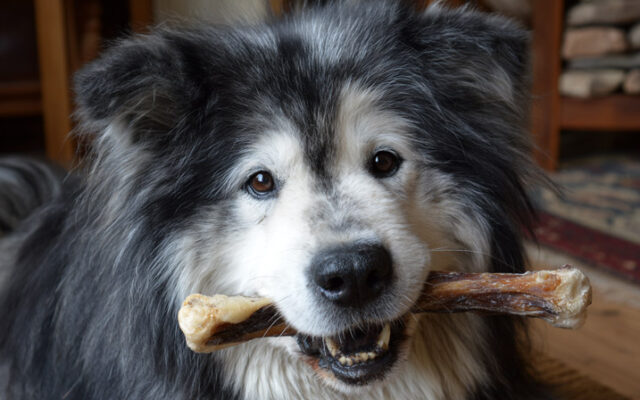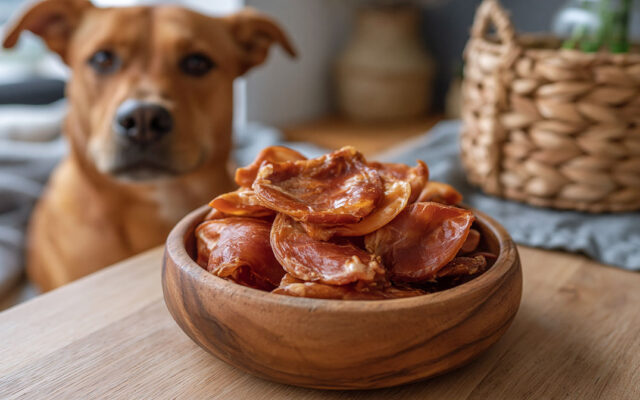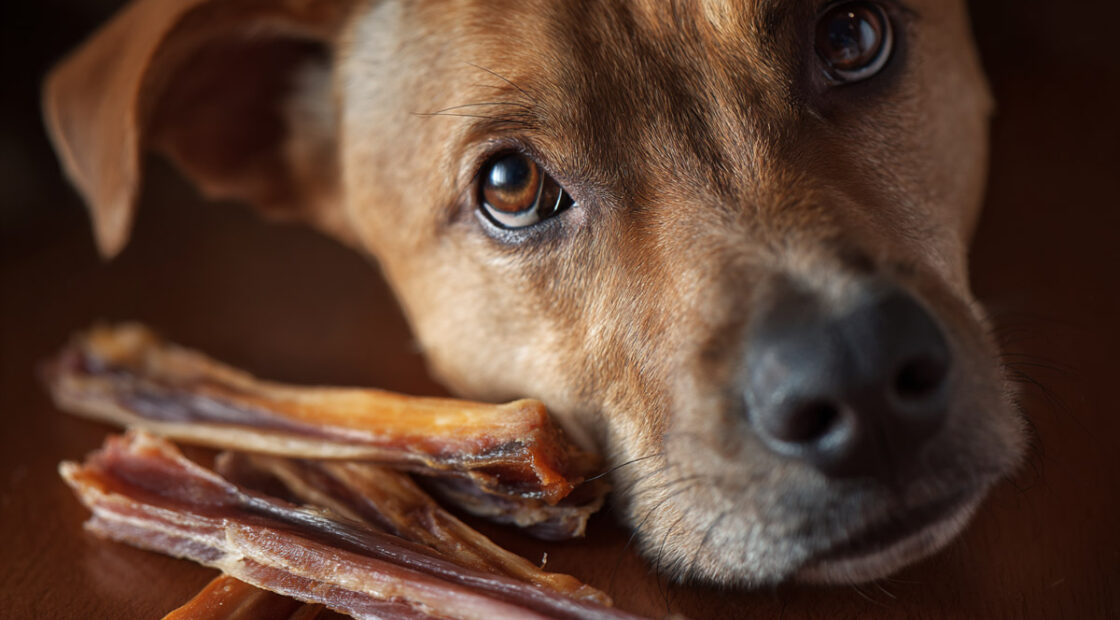
My dog once inhaled half a beef tendon before I could blink. That moment made me actually research whether beef tendons are safe for dogs, or if I’d been handing over a choking hazard disguised as a healthy dog treat.
The short answer: yes, beef tendons are safe for most dogs. They’re high in protein, low in fat, fully digestible, and packed with natural collagen. But safe comes with conditions that matter.
Size, supervision, and your dog’s chewing style all factor in. Get those wrong and a perfectly good chew becomes a vet visit.
This guide covers the real risks, the nutritional benefits, how beef tendons compare to rawhide and bully sticks, which dogs should skip them entirely, and how to supervise chew time the right way.
Are Beef Tendons Safe for Dogs?
Yes. Beef tendons are a safe chew treat for most dogs when sized correctly and given under supervision. They’re one of the few natural dog chews that veterinarians consistently recommend as a rawhide alternative.
But “safe” comes with conditions. My dog once chewed a tendon down to a nub the size of a grape before I noticed. Took me forever to figure out the right timing for when to pull it away. That’s the thing with beef tendons, and honestly most natural chews. The product itself isn’t the problem. The problem is how we give it.
Beef tendon chews are single ingredient treats made from dried connective tissue. They’re high in protein, low in fat, and fully digestible, which puts them ahead of rawhide on almost every safety metric. The AKC lists backstrap and tendon chews as a safer alternative to rawhide, noting they’re rich in protein and collagen while staying low in fat.
Three variables determine whether a beef tendon stays safe or becomes a hazard:
- Size match: the tendon must be large enough that your dog can’t swallow it whole
- Preparation method: dehydrated and air-dried tendons are safer than smoked or heavily processed ones
- Supervision: you need to be in the room, watching, the entire time
Over 200,000 pet choking incidents happen every year in the United States, according to the Central New York SPCA. That stat covers all chews and toys, not just tendons. But it drives home why no chew gets a free pass.
A study cited by Twin Maples Veterinary Hospital found that roughly 1 in 25 dogs needed veterinary treatment for a chew-related injury. Beef tendons carry less dental fracture risk than antlers or bones because they have some give when bitten. But they still demand attention.

Compared to other popular options, tendons sit in a good spot. They’re softer than antlers for dogs (which can crack teeth), more digestible than rawhide (which swells in the gut), and lower in fat than pig ears. If you’re trying to find safe dog chews that check most boxes, beef tendons belong on the short list.
They’re not perfect. No chew is. But when you match the tendon to your dog’s size and stay in the room while they work on it, the safety profile is strong.
What Are Beef Tendons Made Of
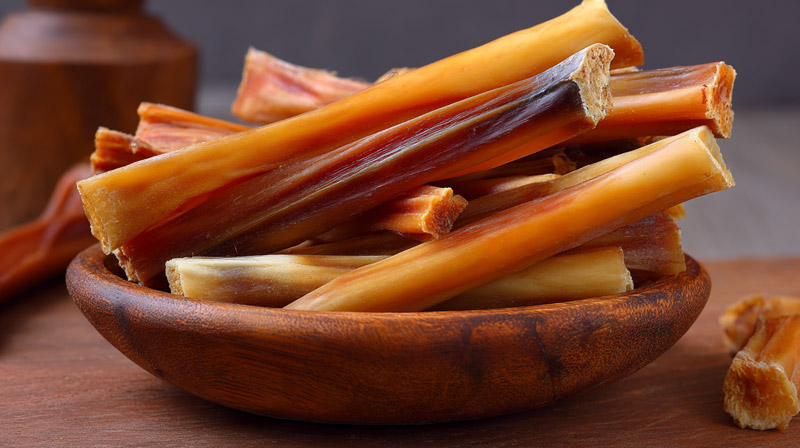
Beef tendons are connective tissue harvested from cattle, usually the Achilles tendon. This is the thick, fibrous band that attaches muscle to bone in a cow’s leg. It’s a byproduct of the meat industry, meaning it would typically be discarded or ground into commercial dog food if it weren’t dried and sold as a standalone chew.
The tissue itself is made primarily of collagen, elastin, and other structural proteins. There’s almost zero carbohydrate content and very little fat. That composition is what makes beef tendons so appealing as a treat, you’re giving your dog a protein-dense, low-fat chew without fillers or artificial additives.
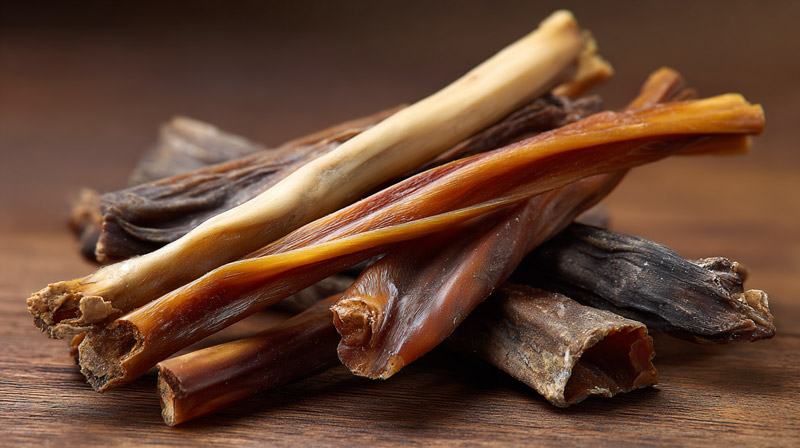
Most tendons measure six to ten inches long and come in sticks, strips, braids, or twisted shapes. The twisted and braided varieties actually serve a purpose beyond looks. Those ridges and grooves create more surface contact with the teeth during chewing, which improves the mechanical cleaning effect.
Nutritional Profile of Dried Beef Tendons
The numbers here are pretty straightforward. A typical dried beef tendon contains a minimum of 77% crude protein with only about 6.7% crude fat, based on guaranteed analysis data from Tuesday’s Natural Dog Company. Each treat carries roughly 222 calories.
| Nutrient | Amount |
|---|---|
| Crude Protein | 77% min |
| Crude Fat | 6.7% min |
| Moisture | 10.2% max |
| Crude Fiber | 1.3% max |
| Approx. Calories Per Treat | 222 kcal |
Beyond the macros, beef tendons contain glucosamine, chondroitin sulfate, and elastin. These compounds support cartilage health and joint fluid production, making tendons a functional treat rather than just an empty snack.
Calcium and phosphorus are present too, both of which contribute to bone and teeth strength. For dogs on grain-free or limited-ingredient diets, a single ingredient treat like this avoids the filler problem entirely.
Raw vs. Dehydrated vs. Smoked Tendons
Raw tendons are unprocessed and retain full moisture. Some raw feeding enthusiasts give these, but they spoil quickly and carry a higher bacterial contamination risk. Not ideal unless you really know what you’re doing with raw handling.
Dehydrated tendons are the most common form sold in pet stores. The drying process (either air-dried or oven-baked at low temperatures around 175 degrees F) removes moisture while keeping the protein structure intact. No chemical softeners. No bleaching agents. The result is a shelf-stable chew with a natural amber color that lasts 12 to 18 months stored properly.
Smoked tendons get an extra flavoring step using wood smoke. Dogs love the taste, but the smoking process can introduce compounds that aren’t great in large amounts. If your dog has a sensitive stomach, stick with plain dehydrated. My preference is always the simplest version available.
The ingredient label on a quality beef tendon chew should read one thing: beef tendon. That’s it. If you see preservatives, “natural flavors,” or anything you can’t pronounce, pick a different brand.
Health Benefits of Beef Tendons for Dogs
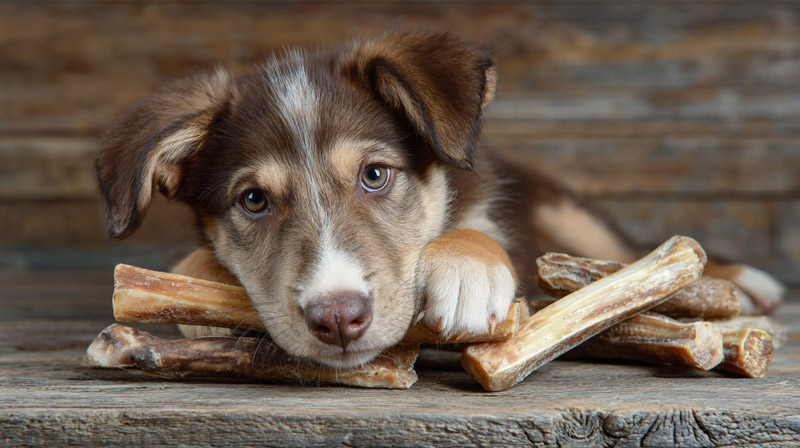
Beef tendons aren’t just something to keep your dog busy. They actually do things for your dog’s body. Joint support. Dental cleaning. Mental stimulation. Weight management. The combination is hard to find in a single treat, and that’s why veterinarians keep recommending them.
Joint and Connective Tissue Support
The collagen in beef tendons breaks down during digestion into amino acids that help with cartilage repair and skin health. Tendons also contain naturally occurring glucosamine and chondroitin, both of which are linked to improved joint fluid production.
Senior dogs get the most out of this. As dogs age, their natural collagen production drops, and the wear on joints becomes harder to reverse. A collagen-rich chew won’t replace a proper collagen supplement for dogs, but it adds to the overall intake in a way your dog actually enjoys.
Breeds that are prone to joint problems, like Bullmastiffs dealing with hip dysplasia or Labrador Retrievers carrying extra weight, can benefit from the natural glucosamine content. It’s not a medical fix. But it’s a helpful piece of the puzzle.
Dental Health Benefits
This is where tendons really earn their spot. The fibrous texture frays during chewing and acts like natural dental floss, scraping plaque off the tooth surface while massaging gum tissue.
Cornell University reports that 80-90% of dogs over age 3 show some form of periodontal disease. A Waltham Petcare Science Institute study analyzing over 3 million dog records confirmed that smaller breeds were up to five times more likely to develop it than giant breeds.
Regular chewing on abrasive surfaces reduces plaque and tartar buildup. Bully Sticks Direct notes that increasing the size of edible treats can lead to a substantial decrease in tartar accumulation. Products carrying the Veterinary Oral Health Council (VOHC) seal are proven to help, though not all tendon brands carry that certification.
Tendons offer a key advantage over harder chews here. Unlike antlers, which can be risky for dogs’ teeth, tendons provide moderate resistance. They clean without the excessive force that causes slab fractures on the upper premolars.
Low Fat Profile and Weight Management
At roughly 6.7% crude fat, beef tendons sit well below pig ears and many other popular treats. For dogs on a weight management plan (or breeds that gain weight easily, like Beagles or Bulldogs), this matters a lot.
The low fat content also reduces the risk of pancreatitis flare-ups, which is a real concern with fattier chews. The global natural dog treats market was valued at $6.99 billion in 2024, according to Grand View Research, with chewable treats growing at a projected 14% CAGR through 2030. The trend toward low-fat, high-protein chews is driving that growth.
Mental Stimulation and Anxiety Reduction
Chewing releases endorphins. That’s not a guess. Extended chewing triggers a natural calming response that helps dogs self-soothe. A beef tendon provides anywhere from 20 minutes to two hours of focused chewing activity, depending on your dog’s size and jaw strength.
For dogs that deal with separation anxiety, boredom, or general restlessness, having a long lasting chew makes a noticeable difference. I’ve seen it with my own dog. The days she gets a tendon during my afternoon calls, she’s calmer for hours afterward. It’s not magic. It’s just biology doing its thing.
If your dog tends toward destructive chewing, a beef tendon redirects that energy toward something appropriate. Way better than losing another pair of shoes.
Choking and Digestive Risks
No chew treat is risk-free. Beef tendons are safer than most, but they still come with two real dangers: choking and gastrointestinal blockage. Both are preventable with the right approach, but you have to take them seriously.
Tendons break apart differently than rawhide. They fray into smaller fibers rather than breaking into hard, swellable chunks. That’s better for digestion. But when a dog chews a tendon down to a small piece, it becomes something they can try to swallow whole. And that’s where trouble starts.
Warning Signs of a Blockage or Choking Episode
If your dog swallows a large piece of tendon without chewing it properly, watch for these signals in the hours that follow:
- Persistent gagging or retching without producing anything
- Excessive drooling
- Pawing at the mouth or face
- Loss of appetite or refusal to drink water
- Vomiting, especially repeated attempts
- Visible distress, restlessness, or inability to settle
Intestinal obstruction signs show up later, sometimes 24 to 72 hours after the incident. Look for abdominal bloating, lethargy, inability to pass stool, and pain when the belly is touched. If you notice any of these, that’s an emergency vet visit. Don’t wait it out.
Dr. Judy Morgan’s Naturally Healthy Pets notes that over 200,000 pet choking cases are reported annually by veterinarians in the US. That number doesn’t include incidents that resolve at home or, sadly, the ones that don’t get reported at all.
Which Dogs Are Most at Risk
Small breed dogs face the highest choking risk, period. Their airways and esophagus are narrower, and a piece of tendon that a Golden Retriever would pass without issue could lodge in a Chihuahua’s throat.
Gulpers and fast eaters are the other high-risk group. Some dogs don’t chew. They rip and swallow. You know the type. If your dog inhales food like it’s a race, you need extra caution with any natural chew, tendons included.
Dogs with a history of resource guarding also pose complications, especially in multi-dog homes. The anxiety around “protecting” the chew leads to faster consumption and less thorough chewing. If behavioral issues like guarding are a factor, separate your dogs during chew time.
Brachycephalic breeds (French Bulldogs, Pugs, Boston Terriers) deserve extra attention. Their shortened airways make any obstruction more dangerous and harder to resolve quickly.
How to Choose the Right Size Beef Tendon
Getting the size right is the single biggest safety decision you’ll make with beef tendons. Too small, and you’ve handed your dog a choking hazard. Too large isn’t really a problem, it just means a longer chewing session. Always err on the side of bigger.
Matching Tendon Size to Dog Weight
The basic rule: the tendon should extend past your dog’s back molars when held sideways in the mouth. If the whole chew fits inside the mouth, it’s too small.
| Dog Size | Weight Range | Recommended Tendon |
|---|---|---|
| Small | Under 20 lbs | Thin strips, 4–6 inches |
| Medium | 20–50 lbs | Standard sticks, 6–8 inches |
| Large | 50–90 lbs | Thick sticks, 8–10 inches |
| Giant | 90+ lbs | Jumbo or braided tendons |
Thick tendons break down more slowly and give you more warning before they reach a dangerous size. Thin tendons get chewed through faster, which means you have to pay closer attention. For heavy chewers, always pick the thickest option available.
What to Look for on the Label
Ingredient list: it should say “beef tendon” and nothing else. That’s the whole list. If there’s more than one ingredient, you’re looking at a processed product, not a natural chew.
Sourcing country: look for products that state where the tendon was sourced. USA, Brazil, Argentina, and some European countries are common origins. Avoid products with no sourcing information at all.
Processing method: dehydrated or air-dried is what you want. Avoid chemically treated or bleached options. The best products come from grass-fed, free-range cattle and include batch tracking information.
The US pet treats market hit $10.50 billion in 2025 according to Mordor Intelligence, with dog treats commanding 54.7% of that share. The sheer volume of products on shelves means quality varies wildly. Reading labels isn’t optional. It’s the bare minimum.
How Often Can Dogs Have Beef Tendons
A beef tendon isn’t an everyday treat. At around 222 calories per stick, giving one daily would blow past most dogs’ treat allowance before you even count their regular meals.
The 10% Calorie Rule
Most veterinarians follow a straightforward guideline: treats should make up no more than 10% of a dog’s daily calorie intake. For a 50-pound moderately active dog eating roughly 1,000 calories per day, that’s 100 calories in treats.
One full beef tendon at 222 calories already exceeds that limit. So you either give a partial tendon and save the rest, or you reduce the main meal portion on days your dog gets one. I usually cut my dog’s dinner by a quarter on tendon days. Works fine.
Recommended Frequency by Dog Size
Small breeds (under 20 lbs): one small tendon strip, two to three times per week max. Their calorie budget is tight. A Yorkshire Terrier eating 200 calories a day can’t absorb a 222-calorie treat without consequences.
Medium breeds (20-50 lbs): one standard tendon, two to three times per week. Adjust meal portions accordingly.
Large and giant breeds (50+ lbs): one tendon, three to four times per week is reasonable. Breeds like Great Danes or Mastiffs have the caloric room, but you still don’t want to overdo the protein load.
Natural Farm Pet recommends starting with just 3 to 5 minutes of chew time when introducing beef tendons, then gradually increasing over five days. That’s good advice. Dump a new protein source on a sensitive stomach without a warmup and you’ll be cleaning carpets at 2 AM. Your mileage may vary, but slow introductions prevent a lot of digestive misery.
Dogs with kidney disease or those on restricted protein diets should skip beef tendons entirely, or at minimum get veterinary clearance first. The protein concentration is too high for compromised kidneys to process comfortably. Same goes for dogs with a known beef allergy, though interestingly, most beef allergies target muscle proteins rather than connective tissue. Still, check with your vet before experimenting.
Beef Tendons vs. Rawhide and Other Natural Chews
This is where beef tendons pull ahead of the pack. Not every natural chew is created equal, and the differences in digestibility, processing, and risk profile are bigger than most people realize.
Rawhide is the one that trips people up. It looks like a natural product, but the manufacturing process tells a different story. Rawhide goes through chemical bleaching and processing that strips away natural nutrition. Beef tendons, by contrast, are just dried connective tissue with their original protein structure intact.
Devil Dog Pet Co reports that beef tendons reach 95-97% digestibility, which basically eliminates the blockage concerns that make rawhide so risky. When rawhide swells in a dog’s stomach, it can’t break down efficiently. Tendons do.
| Chew Type | Digestibility | Fat Content | Dental Benefit | Choking Risk |
|---|---|---|---|---|
| Beef Tendon | Very high (95–97%) | Low (~6.7%) | Moderate (fibrous scraping) | Low–moderate |
| Rawhide | Poor | Low | Moderate | High |
| Bully Stick | High | Moderate | Moderate | Moderate |
| Antler | N/A (not consumed) | None | Low (too hard) | Low (fracture risk) |
| Pig Ear | Moderate | High | Low | Moderate |
How Rawhide Processing Compares
Rawhide comes from the inner layer of cow or horse hides and often undergoes heavy chemical treatment to remove hair, fat, and odor. Some products are bleached. The Honest Kitchen notes that rawhide isn’t very digestible and can swell inside the digestive tract, increasing blockage risk if dogs swallow large pieces.
Beef tendons skip all of that. They’re air-dried or dehydrated at low temperatures. No bleaching. No chemical softeners. The ingredient list reads “beef tendon” and stops there.
If your dog currently gets rawhide and you’re looking at alternatives, bully sticks are another safe option worth considering alongside tendons.
Tendons vs. Bully Sticks
Bully sticks are made from beef pizzle (the penis of a bull) and are fully digestible. They’re a solid treat. But they carry more fat and calories than tendons, and they tend to cost more per chew.
Tendons last longer for aggressive chewers because the connective tissue is denser and tougher. If you want to know why bully sticks cost so much, it comes down to processing and sourcing. Tendons give you a similar safety profile at a lower price point.
For dogs that need variety, rotating between tendons and bully sticks keeps things interesting. You can check out potential bully stick side effects to compare risk factors between the two.
Tendons vs. Antlers and Harder Chews
Antlers are incredibly popular. And incredibly hard. That’s the problem.
The AKC warns that antler hardness can break dogs’ teeth, and splinters can puncture the mouth, throat, or intestines. Twin Maples Veterinary Hospital specifically flags antlers as a top dental injury risk. Tendons don’t carry that dental fracture danger because they have give when bitten.
If you’re considering hard chews for your dog, read up on whether split antlers are actually safe before committing. Pig ears carry their own set of concerns too, mainly around high fat content and bacterial contamination.
When to Avoid Giving Your Dog Beef Tendons
Beef tendons work for most dogs. But “most” isn’t “all.” There are specific situations where you should skip them entirely or at least get your vet’s sign-off first.
Dogs With Pancreatitis or Fat-Sensitive Conditions
PetMD notes that about two-thirds of pancreatitis cases in dogs are classified as chronic rather than acute. Dogs with a history of pancreatitis need treats under 10% fat on a dry-matter basis, according to veterinary nutritionists.
Beef tendons sit at roughly 6.7% crude fat, which falls within the acceptable range for many dogs with pancreatitis. But some commercial tendon products are not as lean as advertised, especially smoked or flavored varieties. Always check the guaranteed analysis on the label and confirm with your vet.
Breeds with higher pancreatitis risk (Miniature Schnauzers, Cocker Spaniels, Dachshunds) should only get tendons after veterinary clearance. The AVMA published research in 2024 confirming that dietary fat management remains the cornerstone of pancreatitis prevention in dogs.
Puppies and Teething Considerations
Puppies under 16 weeks should not have beef tendons. Their teeth and jaws aren’t developed enough to handle the density, and the risk of swallowing large unchewed pieces is higher with puppies who are still learning how chewing works.
After 16 weeks, introduce tendons slowly. Natural Farm Pet recommends limiting initial chew sessions to 3-5 minutes and building up gradually over five days. Choose thinner, smaller tendon strips for puppies rather than full-size sticks. For appropriate puppy chew options, look into the best chew bones designed specifically for puppies.
Dogs on Restricted Protein Diets
Kidney disease: dogs with compromised renal function often need to limit protein intake. A treat that’s 77% protein is too much for these dogs to process comfortably. Skip tendons entirely unless your vet specifically says otherwise.
Beef allergies: this one is interesting. Most beef allergies in dogs target muscle proteins, not connective tissue proteins like collagen. So some dogs with a mild beef sensitivity can actually tolerate tendons. But that’s a conversation for your vet, not something to test on your own. If your dog has a history of food reactions, treats designed for sensitive stomachs are a safer starting point.
Post-Surgical and Dental Recovery Dogs
Dogs recovering from surgery (especially abdominal procedures) or recent dental extractions should not chew on anything firm until fully healed. The mechanical action of chewing on a tendon puts stress on healing tissues and could reopen wounds or dislodge sutures.
Wait for your vet to clear your dog for normal chewing activity. That usually takes two to four weeks depending on the procedure.
Safe Supervision Practices While Your Dog Chews
Every vet says it. Every chew product package says it. “Supervise your dog while chewing.” But what does proper supervision actually look like in practice? Because sitting in the same room scrolling your phone while your dog works on a tendon isn’t really supervision.
The Discard Rule
Once the tendon is small enough to swallow whole, it goes in the trash. Period. Kip & Twiggy’s, citing veterinarian Dr. Jo de Klerk, specifically recommends removing beef tendons when they’ve been chewed down to a size that could get stuck in the throat.
The test is simple. If the remaining piece is smaller than the width of your dog’s mouth, take it away. My general rule: if I could fit the leftover piece inside a golf ball, it’s done. Toss it. Not worth the risk for the 30 seconds of chewing that’s left.
Multi-Dog Household Management
Chew time in a home with multiple dogs needs structure. Resource guarding is common, and high-value items like beef tendons are exactly the kind of thing that triggers it.
Preventive Vet notes that resource guarding is a natural survival behavior, not a dominance issue. Dogs with higher levels of impulsivity and fearfulness are more likely to guard aggressively, according to a University of Guelph study analyzing over 3,000 dog owners.
What works:
- Feed chews in separate rooms with physical barriers (baby gates, closed doors)
- Give each dog the same type and size of chew at the same time
- Never let one dog finish and wander toward another dog’s chew
If your dogs have a history of food-related aggression, manage chew sessions like you would manage separate mealtimes. No exceptions.
Storing Partially Chewed Tendons
Between sessions: let the tendon air dry after a slobber-heavy session before storing. A damp tendon thrown into a bag breeds bacteria fast.
Storage method: airtight container, cool and dry location, away from direct sunlight. Properly stored dried beef tendons maintain quality for 12 to 18 months unopened. Once your dog has been working on one, use it within a few days.
Inspect every tendon before giving it back to your dog. Look for fuzzy mold growth, sour or off smells, and slimy texture. If anything looks or smells wrong, throw it out. A $3 tendon is not worth a $300 vet bill.
Emergency Response If Your Dog Chokes
It can happen. Even with perfect supervision, a dog can grab a piece and try to swallow before you react. Here’s what to do:
- Stay calm. Open your dog’s mouth and look for a visible obstruction
- If you can see the piece and reach it safely, try gentle removal with your fingers (never push deeper)
- For a dog you can lift, try a modified Heimlich: place your fists just below the ribcage and give firm upward thrusts
- If the dog is in breathing distress, get to an emergency vet immediately
Loose stools, vomiting, or loss of appetite in the hours after chewing could signal that a large piece made it past the throat but is causing problems further down the digestive tract. Watch your dog closely for 24 to 72 hours after any incident and don’t hesitate to call your vet if something seems off.
Knowing how long dogs should chew on hard treats helps you set reasonable time limits. And if you want the full picture on what’s available beyond tendons, take a look at the longest lasting chews on the market to find what fits your dog’s chewing style best.
FAQ on Are Beef Tendons Safe For Dogs
Are beef tendons digestible for dogs?
Yes. Beef tendons are highly digestible, reaching 95-97% digestibility according to veterinary sources. They break down in the stomach far more efficiently than rawhide, which swells and resists digestion. That’s why tendons carry a much lower risk of gastrointestinal blockage.
Can puppies have beef tendons?
Puppies over 16 weeks old can have beef tendons. Start with thin strips and limit sessions to 3-5 minutes. Their jaws and teeth are still developing, so choose smaller sizes and supervise closely. Younger puppies should stick to softer puppy-appropriate chews instead.
How often should I give my dog a beef tendon?
Two to three times per week works for most dogs. Each tendon carries about 222 calories, so adjust meal portions on chew days. Follow the 10% rule: treats should never exceed 10% of your dog’s daily calorie intake.
Are beef tendons better than rawhide?
Significantly better. Beef tendons are a single ingredient chew with no chemical processing, while rawhide undergoes bleaching and chemical treatment. Tendons digest fully. Rawhide swells in the gut and frequently causes blockages. Most veterinarians recommend tendons over rawhide without hesitation.
Can beef tendons cause choking?
Any chew can cause choking if sized incorrectly or left unsupervised. Remove the tendon once it’s small enough to swallow whole. The risk is lower than with rawhide or cooked bones, but never leave your dog alone with any natural chew.
Do beef tendons clean dogs’ teeth?
They help. The fibrous texture frays during chewing and scrapes plaque off tooth surfaces, similar to natural dental floss. They won’t replace a professional dental cleaning, but regular chewing on tendons supports canine dental health between vet visits.
Are beef tendons good for dogs with joint problems?
Beef tendons contain natural glucosamine, chondroitin, and collagen, all of which support joint cartilage and connective tissue. Senior dogs and breeds prone to hip issues benefit most. They complement (but don’t replace) a proper collagen supplement program.
What size beef tendon should I get for my dog?
The tendon should extend past your dog’s back molars when held sideways in the mouth. Small dogs need thin 4-6 inch strips. Large breeds need thick 8-10 inch sticks. If the whole chew fits inside the mouth, it’s too small.
Can dogs with allergies eat beef tendons?
Most beef allergies target muscle proteins, not connective tissue like collagen. Some dogs with mild beef sensitivity tolerate tendons fine. But always check with your vet first. Dogs with confirmed beef allergies should try turkey tendon alternatives instead.
How should I store beef tendons?
Keep them in an airtight container in a cool, dry spot away from sunlight. Unopened dehydrated tendons last 12-18 months. After your dog has chewed on one, air dry it before storing and use it within a few days. Toss anything that smells off or looks slimy.
Conclusion
So, are beef tendons safe for dogs? Yes, with the right precautions. They’re one of the better natural chew options available, sitting comfortably above rawhide and pig ears on the safety scale.
The high protein, low fat profile makes them a smart pick for weight-conscious dogs. The natural glucosamine and chondroitin support joint health in aging breeds. And the dental cleaning action from that fibrous texture adds real value between veterinary checkups.
But none of that matters if you skip the basics. Match the tendon size to your dog. Stay in the room during chew time. Toss the piece before it becomes small enough to swallow whole.
If your dog has kidney issues, a confirmed beef allergy, or a history of pancreatitis, talk to your vet first. For everyone else, a dehydrated beef tendon two or three times a week is a solid addition to your dog’s treat rotation.
Simple rules. Big payoff. Your dog gets a satisfying, long lasting chew that actually does something good for their body.