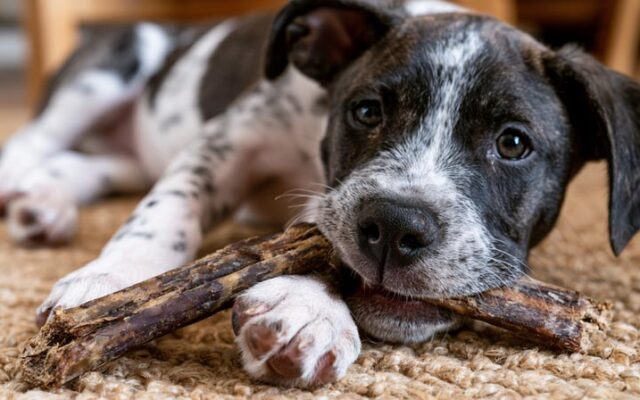
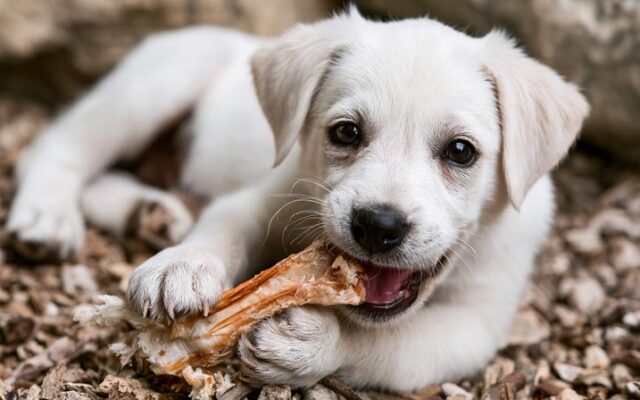
Yes, dogs can eat bone marrow, but not without conditions.
Raw marrow bones are a staple in the BARF diet and raw feeding community, praised for their fat, flavor, and chewing value. They also carry real risks: pancreatitis in fat-sensitive breeds, bacterial contamination from Salmonella and Listeria, and dental fractures from improper bone selection.
The answer changes depending on your dog’s breed, health history, age, and how the bone is sourced and prepared.
This guide covers what bone marrow actually contains, which dogs should avoid it, safe portion sizes, preparation rules, and where veterinary opinion genuinely divides.
What Is Bone Marrow for Dogs?
Bone marrow is the soft, fatty tissue found inside the hollow center of animal bones. Dogs can eat it directly from the bone or consume it as part of a raw meaty bone during a raw feeding routine.
There are 2 types: red marrow (hematopoietic tissue that produces blood cells) and yellow marrow (fat-dominant tissue). Most of what dogs get from a beef femur or knuckle bone is yellow marrow.
Yellow marrow is mostly fat with very little protein, which makes it one of the most fat-dense whole foods a dog can consume.
Red marrow contains hematopoietic stem cells that the body turns into red and white blood cells. Yellow marrow is primarily long-chain fatty acids: in an analysis of bovine bone marrow, oleic acid was the main fatty acid, followed by palmitic and stearic acid (Marzocchi et al., Journal of Oleo Science, 2018).
Common sources used in raw feeding include:

- Beef femur bones (most widely used, durable)
- Knuckle bones (softer cavity, suits smaller dogs)
- Tibia and shank bones (mid-range density)
- Lamb and venison bones
Raw feeding practitioners, including veterinarian Dr. Ian Billinghurst (author of Give Your Dog a Bone), classify marrow bones as recreational bones, meaning they are meant for chewing and nutritional supplementation, not as a replacement for raw meaty bones in a complete canine diet.
Is Bone Marrow Safe for Dogs?
Yes, bone marrow is safe for most healthy adult dogs when fed raw and in controlled amounts. The form of the bone and the health profile of the dog are the 2 factors that determine whether it stays safe.
Raw marrow bones are less brittle than cooked ones. Cooked bones are a different matter entirely.
Is Raw Bone Marrow Safe for Dogs?
Raw marrow bones are the safest delivery format for dogs consuming marrow. Raw bone keeps more moisture and is less brittle than cooked bone, reducing the risk of sharp fragments breaking off during chewing, though it is still hard enough to break teeth.
A common raw-feeding rule of thumb is to offer raw beef marrow bones for about 20 minutes at a time, 1 to 2 times per week, and after a full meal to reduce aggressive chewing behavior.
Key safety conditions for raw marrow bones:
- Always supervise the session
- Match bone size to dog size (large marrow bones for medium to large dogs only)
- Avoid bones cut horizontally (split bones), which create sharp lateral edges
- Vertical cuts are safer than horizontal splits
- Discard once the bone becomes small enough to swallow whole
Are Cooked Marrow Bones Safe for Dogs?
No. Cooking causes bone tissue to lose moisture and become brittle. Cooked bones fracture into sharp splinters that can lacerate the esophagus, stomach, or intestinal wall.
This applies to all cooking methods including boiling, roasting, steaming, and smoking. The heat-induced structural change is irreversible.
The American Kennel Club warns that cooked bones splinter into shards that a dog can choke on. On raw bones, the AKC is more cautious than raw feeders: it suggests asking your veterinarian first, since raw bones may carry bacteria like Salmonella, while raw feeding advocates and some integrative veterinarians put more weight on the structural difference between raw and cooked bone.
| Bone Type | Splinter Risk | Recommended |
|---|---|---|
| Raw beef femur (vertical cut) | Low | Yes, with supervision |
| Raw beef femur (horizontal split) | Moderate | Use caution |
| Cooked marrow bone (any type) | High | Never |
| Raw pork marrow bone | Moderate to High | Generally avoid |
What Are the Nutritional Benefits of Bone Marrow for Dogs?
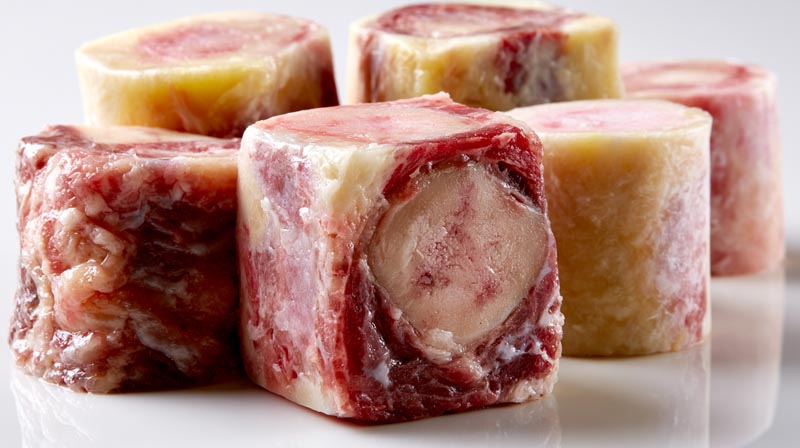
Bone marrow delivers concentrated fat and energy, plus small amounts of other nutrients. It is not a complete protein source, but that is not what it is for.
Because marrow is mostly fat, and fat carries about 9 calories per gram, a tablespoon (approximately 14g) of raw beef marrow works out to roughly 110 calories, about 12g of fat, and under 1g of protein. Exact values vary with the animal and the bone.
Fat and Energy
Yellow marrow is composed primarily of long-chain monounsaturated and saturated fats, mainly oleic acid, palmitic acid, and stearic acid. These are structural fats used in cell membrane integrity and long-term energy storage.
A small 2020 study in Frontiers in Veterinary Science compared 8 Staffordshire Bull Terriers fed either a high-fat raw meat-based diet or a high-carbohydrate kibble and found skin gene-expression changes suggesting possibly enhanced innate immunity and lower oxidative stress in the raw-fed dogs (Anturaniemi et al., 2020). The sample was tiny, but the broader point stands: fat in the canine diet is not inherently harmful. The quantity and the dog’s individual tolerance are what matter.
Joint and Connective Tissue Support
Marrow itself is mostly fat. The collagen, glucosamine, and chondroitin people associate with marrow bones come mainly from the cartilage and connective tissue attached to knuckle and joint-end bones, not from the marrow.
The evidence that these compounds improve mobility in dogs is weaker than many owners assume. A systematic review in the Journal of Veterinary Internal Medicine rated the strength of evidence as low for all joint nutraceuticals studied, with the exception of omega-3 fatty acids in dogs (Vandeweerd et al., 2012).
This is one reason raw feeding practitioners recommend marrow and knuckle bones for older dogs or breeds prone to hip and elbow issues, but the benefit is unproven. For dogs already managing hip dysplasia, a bone is at most a minor dietary extra alongside veterinary treatment, not a substitute for it.
Micronutrients
Other nutrients found in or around raw beef marrow:
- Iron: concentrated in red marrow, which is involved in blood cell production (femur bones are mostly yellow, fatty marrow, so amounts are modest)
- Fat-soluble vitamins: present in small amounts in the fatty tissue
- Calcium and phosphorus: mostly from bone the dog scrapes off and swallows, not from the marrow itself
- Alkylglycerols: compounds found in marrow fat that have been studied for immune effects, though evidence in dogs is lacking
What Are the Risks of Feeding Dogs Bone Marrow?
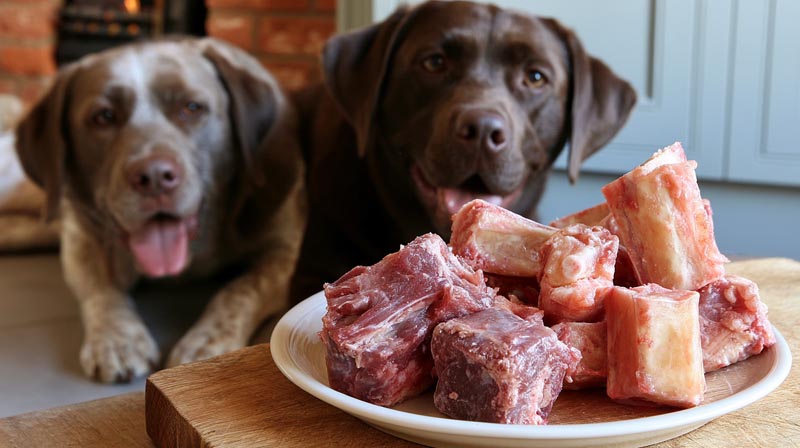
The benefits are real. The risks are also real. Both exist at the same time, and the dog’s individual health profile is what determines which side of the scale tips.
The 3 primary risk categories are fat-related illness, bacterial contamination, and physical injury from the bone itself.
Can Bone Marrow Cause Pancreatitis in Dogs?
Yes, it can, especially in fat-sensitive breeds. Pancreatitis is inflammation of the pancreas triggered when the organ releases digestive enzymes prematurely, and rich, fatty food is a common trigger.
A Texas A&M case-control study found that dogs that had eaten table scraps had about twice the odds of pancreatitis, and dogs that got into the trash had about 13 times the odds, while being overweight also raised the risk (Lem et al., JAVMA, 2008). The Merck Veterinary Manual lists dietary indiscretion as a common risk factor and severe hypertriglyceridemia (high blood fat) as another.
Miniature Schnauzers carry the highest breed-specific risk. Merck describes them as dramatically overrepresented. A Texas A&M study found that 32.8% of healthy Miniature Schnauzers had triglyceride levels above the reference range, compared with 5.3% of other breeds, and that both prevalence and severity increased with age (Xenoulis et al., Journal of Veterinary Internal Medicine, 2007). In a 2026 survey of more than 2,900 UK Miniature Schnauzers, owners reported a pancreatitis diagnosis in 7.6% of dogs (Johnson-Pitt et al., 2026).
Other at-risk breeds include Yorkshire Terriers, Cocker Spaniels, Dachshunds, and Poodles.
For any dog with a history of pancreatitis, bone marrow is contraindicated. Merck notes that a low-fat diet is crucial for treatment success in dogs, and a single high-fat treat can be enough to set off a relapse.
Can Dogs Get Sick from Raw Marrow Bones?
Bacterial contamination is a documented risk. The FDA’s Center for Veterinary Medicine analyzed 196 raw pet food samples and found 15 positive for Salmonella and 32 positive for Listeria monocytogenes. None of the dry or semimoist pet food samples in the same study tested positive for Listeria monocytogenes (FDA).
Freezing raw bones for 2 weeks before serving can reduce (but not eliminate) parasite load. It does not kill Salmonella or Listeria.
Physical risks from the bone itself include:
- Dental fractures from bones that are too hard (especially split femur bones)
- Round marrow bone sections getting stuck over the lower jaw or teeth, especially in smaller dogs
- Constipation from swallowed bone fragments after the session
- Gastrointestinal upset, loose stools, or vomiting, especially during first-time introduction
How Much Bone Marrow Can a Dog Eat?
No universal veterinary dosage exists for marrow specifically. General raw feeding guidelines treat marrow as a supplement or treat, not a dietary staple.
The standard veterinary rule of thumb is that treats and snacks should contribute less than 10% of a dog’s total daily calorie intake. Given that 1 tablespoon of raw beef marrow contains roughly 110 calories, portion control is not optional. The dog calorie calculator can show you what 10% looks like for your dog.
| Dog Size | Suggested Marrow Amount | Frequency |
|---|---|---|
| Small (under 20 lbs) | Half tablespoon | 1 to 2 times per week |
| Medium (20 to 50 lbs) | 1 tablespoon | 2 to 3 times per week |
| Large (50+ lbs) | 1 to 2 tablespoons | 2 to 3 times per week |
| Overweight or pancreatitis history | Avoid or consult vet | Not recommended |
When introducing marrow to a dog that has never had it, start with a smaller amount than the table suggests and observe stool consistency over 24 to 48 hours. Loose stools or vomiting after the first session are common and do not automatically mean the dog cannot tolerate marrow long-term. It usually just means the introduction was too fast.
Introduce marrow gradually over 2 to 3 weeks. Dogs with sensitive digestive systems (common in breeds like the Miniature Schnauzer) need an even slower ramp-up, if marrow is appropriate for them at all.
What Types of Marrow Bones Are Best for Dogs?
Bone source, cut direction, and size relative to the dog all affect safety. Not all marrow bones carry the same risk profile.
Beef Marrow Bones
Beef femur and knuckle bones are the most commonly fed marrow bones. Beef femur bones are best cut vertically, not split horizontally, to avoid creating sharp lateral edges that break under chewing pressure.
Knuckle bones have a softer marrow cavity and are better suited for medium-sized dogs or less aggressive chewers. Bones from a butcher or supplier who can tell you how the animal was raised and how the bones were handled represent the cleaner end of the sourcing spectrum.
Lamb and Venison Bones
Often described by raw feeders as a lighter option than beef, though marrow fat content has not been well compared across species. They can suit dogs that are weight-sensitive or prone to digestive upset from richer marrow, in small portions.
Venison marrow is also a useful option for dogs on elimination diets (novel protein protocols), since it is less commonly used and unlikely to trigger an existing food sensitivity. Check with your vet first, since any extra food can muddy an elimination trial.
Pork Marrow Bones
Generally not recommended. Many raw feeders report that pork bones are more prone to breaking into fragments than beef or lamb bones, even when raw.
Opinion is split even among experienced raw feeders on pork bones. When in doubt, stick to beef or lamb.
Can Puppies Eat Bone Marrow?
Puppies can eat small amounts of raw marrow after 12 weeks, once weaning is complete and with your vet’s okay. That said, the margin for error is smaller than with adult dogs, and 3 specific risks apply to puppies that do not apply at the same level to adults.
Fat load sensitivity: A puppy’s digestive system is still developing. The same tablespoon of marrow that a 40-pound adult handles without issue can cause significant gastrointestinal distress in a 10-week-old puppy. Start with half a teaspoon and observe closely.
Dental fragility: Puppy teeth are more fragile than adult teeth. Hard marrow bones, especially large beef femur bones, can fracture developing teeth. Knuckle bones or softer recreational bones are more appropriate for puppies under 6 months.
Calcium-to-phosphorus ratio disruption: This is the risk most owners miss. Large breed puppies are particularly vulnerable. Growing puppies need calcium and phosphorus in a tightly controlled balance, and treats and raw extras that are not balanced for growth can push the diet off target. When a puppy’s diet does not supply enough calcium relative to phosphorus, the body pulls calcium from developing bones, potentially causing skeletal deformities.
A 2024 case series in Animals documented 4 large-breed puppies fed exclusively non-supplemented, boneless raw meat diets who developed suspected nutritional secondary hyperparathyroidism, with pain, weakness, and reduced bone density. 2 had pathological fractures and were euthanized (Nowak et al., 2024). The condition was linked to calcium-to-phosphorus imbalance during rapid growth.
Puppies under 6 months: consult a veterinarian before introducing marrow. Large breed puppies specifically (future adult weight over 50 lbs) need more careful management of any treat or raw food that is not balanced for growth.
For guidance on full puppy dietary management, including how to structure safe chew routines alongside a complete diet, see puppy training and feeding resources that address breed-specific growth needs.
Can Dogs with Health Conditions Eat Bone Marrow?
The dog’s individual health profile matters more than any general rule about bone marrow. 4 specific conditions change the answer from “yes with moderation” to “avoid or consult a vet first.”
| Condition | Risk Factor | Recommendation |
|---|---|---|
| Pancreatitis (active or history) | High fat load | Contraindicated |
| Obesity | Caloric surplus | Avoid or strict portion only |
| Chronic kidney disease | Phosphorus from swallowed bone | Veterinary clearance required |
| Diabetes mellitus | Fat-to-carb ratio disruption | Veterinary supervision required |
Pancreatitis and Obesity
Pancreatitis history is the clearest contraindication. Even a single high-fat meal can trigger a relapse in a dog that has had pancreatitis before, which is why vets put these dogs on low-fat diets.
The fat in bone marrow is the problem, not the bone itself. Yellow marrow is mostly fat, making it one of the most fat-dense whole foods a dog can consume.
Obese dogs face the same concern from a different direction. Bone marrow runs roughly 110 calories per tablespoon, and caloric surplus from a treat that is also high in fat accelerates weight gain. For dogs already on restricted-calorie chew routines, marrow adds more than most owners expect.
Chronic Kidney Disease
Dogs with chronic kidney disease (CKD) require phosphorus restriction as the first-line dietary intervention. The IRIS 2023 Treatment Recommendations advise keeping plasma phosphate between 2.7 and 4.6 mg/dL in dogs with CKD, with a more realistic target of under 5.0 mg/dL in Stage 3.
Marrow bones add phosphorus mainly through the bone a dog scrapes off and swallows. Standard maintenance dog foods already contain more phosphorus than therapeutic kidney diets (generally more than 1.5 g per 1,000 kcal, versus 0.4 to 1.2 g in renal diets). Adding marrow bones on top of any regular diet compounds that problem.
A study of 24 dogs with surgically reduced kidney function found that dogs on a high-phosphorus diet had a 33% survival rate compared to 75% in the phosphorus-restricted group over 24 months (Brown et al., 1991, as summarized in an ACVN Nutrition Notes review in Today’s Veterinary Practice).
Diabetes and Blood Thinners
Diabetic dogs: fat metabolism and insulin response are already disrupted. Adding a high-fat food source without veterinary oversight changes the metabolic picture in unpredictable ways.
Dogs on immune-suppressing medications or blood thinners: the bacterial contamination risk from raw marrow bones is elevated in immunocompromised dogs. The FDA found that raw pet food carries much higher Salmonella and Listeria contamination rates than dry and semimoist pet foods. For a dog with a suppressed immune response, the pathogen exposure from a raw bone represents a different risk profile than for a healthy adult dog. For dogs on blood thinners, bone fragments that cut the gums or gut can bleed more than usual.
If your dog is on any long-term medication, check with your vet before introducing any raw food source, including marrow bones. This applies to large breeds with known health predispositions just as much as to smaller dogs.
How Should Bone Marrow Be Prepared for Dogs?
Raw is the right call. Everything else introduces a problem.
Cooking removes moisture from bone tissue, making it brittle and prone to fracturing into sharp fragments. This applies whether you roast, boil, steam, or smoke the bone. The AKC’s guidance is blunt: cooked bones splinter into shards that a dog can choke on, and splintered fragments can cause serious internal damage.
Sourcing Matters More Than Most Owners Realize
Buying from a butcher or supplier you trust reduces (but does not eliminate) contamination risk. Ask how the bones were handled and stored, and treat them like any raw meat.
Avoid grocery store bones that may have sat at warm temperatures or been improperly refrigerated before purchase.
Some raw pet food suppliers freeze their marrow bones for a set period before sale to reduce parasite risk. That does not address bacterial contamination, but it does reduce parasite risk.
Session Management
About 20 minutes per session is the standard recommended by many raw feeding sources. Beyond that window, dogs often shift from licking marrow to actively chewing the bone wall, which is where dental fractures happen.
Practical session rules:
- Feed after a full meal, not before, to reduce aggressive chewing
- Choose a location that can be sanitized (outside, on a towel, not on fabric furniture)
- Teach the “drop it” command before introducing marrow bones
- Discard when the bone shrinks to a size the dog could swallow whole
- Never leave the dog unsupervised during the session
What Not to Do
Do not boil marrow bones to reduce bacteria. Boiling makes the bone brittle and renders out much of the marrow fat. The bone becomes more dangerous to chew and less appealing at the same time, which is the worst outcome from a safety and value standpoint.
Do not season, marinate, or add any flavoring. Garlic, onion, and many common seasonings are toxic to dogs. Salt increases sodium load, which is already a concern for dogs with cardiovascular or kidney issues.
For dogs that need safer chew alternatives without the bacterial and fat risks of raw marrow bones, there are options that carry a lower risk profile while still providing chewing stimulation and some nutritional benefit.
What Do Vets Say About Feeding Dogs Bone Marrow?
The honest answer is: it depends on who you ask, and the disagreement between veterinary camps is real.
There are 3 distinct positions in veterinary and institutional guidance on raw marrow bones, and they do not fully agree with each other.
Where Institutions Stand
The FDA warns that raw pet food can be dangerous to pets and the people handling it. In its 2010 to 2012 study, published in 2014, Listeria monocytogenes turned up in 16% of 196 raw pet food samples and Salmonella in about 8%, while only 1 of 480 dry and semimoist samples tested positive for Salmonella (Nemser et al., Foodborne Pathogens and Disease, 2014).
The AKC takes a more permissive middle position. It explicitly warns against cooked bones, and treats raw bones as a decision to make with your vet: if you give one, it should be larger than the length of the dog’s muzzle, and the dog should be supervised. It also notes that a bone and its marrow can cause diarrhea.
Mainstream veterinary guidance generally leans cautious on raw bones, citing bacterial contamination, fractured teeth, and gastrointestinal injury, and it often does not separate raw from cooked bones as sharply as raw feeders do.
Where Integrative Vets Differ
Integrative and raw-feeding veterinarians, including Dr. Ian Billinghurst (author of Give Your Dog a Bone, 1993) and other holistic practitioners, take the position that raw bones are species-appropriate and that dogs’ digestive systems are built for them.
Their argument centers on a distinction they feel mainstream guidance glosses over: cooked bone danger and raw bone danger are not the same thing. Raw bone tissue is less brittle. Cooked bone tissue splinters. Treating them identically, in their view, conflates two structurally different materials.
A 2026 Leipzig University study published in BMC Veterinary Research found that dogs fed raw meat-based diets had lower body condition scores (less obesity) than dogs fed commercial complete diets, but their rations had a lower-than-recommended calcium-to-phosphorus ratio and the dogs had lower blood levels of several trace minerals (von Lindeiner et al., 2026). That does not settle the bacterial risk debate, but it shows the picture is more mixed than either camp tends to admit.
The Practical Takeaway
The split in veterinary opinion comes down to which risk is weighted more heavily: fat content and bacterial contamination (mainstream veterinary guidance, FDA) or the nutritional value and species-appropriateness of raw bone tissue (integrative, raw feeding community).
Neither camp denies the risks. They disagree on whether the benefits outweigh them for healthy adult dogs. That is a judgment call that belongs to the owner, ideally made with input from a vet who knows the dog’s individual health history.
For breeds with shorter average lifespans or known predispositions to fat-related health issues, the risk calculus shifts further toward caution. For a healthy, active adult dog of a breed without fat sensitivity, the evidence for supervised raw marrow bone feeding as an occasional supplement is reasonable. Just don’t expect universal veterinary enthusiasm for it.
If you are feeding a breed like the Great Dane or another large-breed dog prone to bloat and gastrointestinal issues, the bloat prevention considerations around meal timing and exercise apply to marrow bone sessions too. Feed after a full meal, limit the session to 20 minutes, and avoid vigorous activity immediately after.
FAQ on Can Dogs Eat Bone Marrow
Is bone marrow safe for dogs?
Yes, for most healthy adult dogs. Raw marrow bones are safe when fed in controlled portions, matched to the dog’s size, and supervised throughout. Cooked marrow bones are never safe. Fat-sensitive breeds and dogs with health conditions need veterinary clearance first.
Can dogs eat raw bone marrow?
Raw is the only recommended format. Raw bone is less brittle than cooked bone, which reduces splinter risk. Limit sessions to about 20 minutes, feed after a meal, and buy from a supplier you trust, handling the bone like raw meat to reduce bacterial contamination exposure.
How much bone marrow can a dog eat?
No more than 10% of daily caloric intake from treats applies here. For most medium and large dogs, that means 1 to 2 tablespoons of marrow, two to three times per week. Small dogs should start with half a tablespoon and increase only if digestion stays stable.
Can bone marrow cause pancreatitis in dogs?
Yes. Marrow is mostly fat. Dogs with a pancreatitis history should avoid it entirely. Miniature Schnauzers are dramatically overrepresented among dogs with pancreatitis and should never have high-fat foods without veterinary guidance.
What type of marrow bones are best for dogs?
Raw beef femur bones cut vertically are the standard recommendation. Knuckle bones suit smaller dogs. Lamb and venison marrow bones are often used as a lighter option for weight-sensitive dogs, in small portions. Avoid pork bones entirely.
Can puppies eat bone marrow?
Small amounts are possible after 12 weeks with your vet’s okay. But puppies face 3 specific risks: fat-load sensitivity, fragile developing teeth prone to fractures, and calcium-to-phosphorus ratio disruption during bone development. Large breed puppies under 6 months need veterinary sign-off before any marrow introduction.
Is beef heart good for dogs?
Yes. Like marrow, beef heart is nutrient-dense organ meat used in raw feeding. It provides taurine, iron, and B vitamins with a leaner fat profile than bone marrow, making it a better regular dietary addition than marrow for most dogs.
Are there safer chew alternatives to marrow bones?
Yes. Collagen chews offer a chewing outlet without the bacterial contamination risk or fat load of raw marrow bones. Himalayan yak chews are another option, particularly for dogs with sensitive stomachs or pancreatitis history.
Can dogs eat bone marrow every day?
No. Daily marrow consumption causes caloric surplus and increases pancreatitis risk from sustained high fat intake. Even healthy adult dogs should not have marrow more than 2 to 3 times per week, with session length capped at about 20 minutes each time.
What do vets say about feeding dogs bone marrow?
Opinion splits clearly. The FDA warns about bacterial risk in raw pet food, and mainstream veterinary guidance leans cautious on raw bones. The AKC allows raw bones with supervision and your vet’s input. Integrative vets support marrow as part of a species-appropriate raw diet. Your dog’s individual health profile should drive the decision.
Conclusion
Whether dogs can eat bone marrow comes down to one answer: it depends on the dog.
For healthy adult dogs without fat sensitivity, raw marrow bones offer real value as a high-energy, high-interest chew. Fat, a little iron, and the chewing itself are not nothing.
But the fat load is significant, the bacterial contamination risk from raw feeding is documented, and breeds like the Miniature Schnauzer, Yorkshire Terrier, and Dachshund face elevated pancreatitis risk that changes the calculus entirely.
Source carefully. Feed raw. Cap sessions at about 20 minutes. Match bone size to your dog.
And if your dog has a history of kidney disease, obesity, or pancreatitis, skip marrow and talk to your vet before introducing any high-fat chew into the canine diet.