The FDA logged over 6,200 illness complaints tied to jerky pet treats between 2007 and 2015. More than 1,140 dogs died. Most of those products were imported, loaded with additives, and sold under labels that screamed “natural.”
Finding genuinely healthy dog jerky treats takes more than grabbing the first bag off the shelf. You need to know which proteins work best, which ingredients to avoid, and how to tell real quality from clever packaging.
This guide covers everything from single-ingredient jerky options and safe homemade recipes to portion guidelines, label reading, and the recall history you should know about. Whether you’re buying store-bought or firing up a dehydrator, you’ll walk away knowing exactly what to look for and what to skip.
What Are Healthy Dog Jerky Treats?
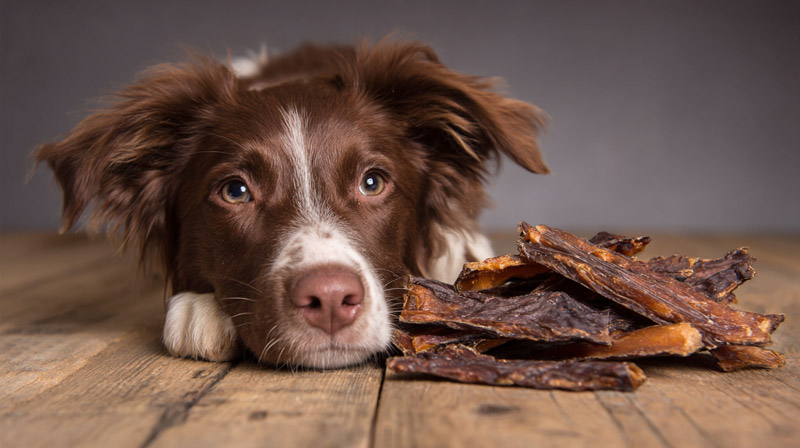
Healthy dog jerky treats are dehydrated or slow-dried strips of meat made from a single protein source, without artificial preservatives, fillers, or added sugars. That’s the short version.
The longer version is that most jerky treats sitting on pet store shelves don’t qualify. A lot of them contain glycerin, sodium nitrite, meat by-products, and other ingredients that have no business being in something you hand to your dog. My dog will eat literally anything, so the job of filtering out garbage falls on me.
There’s a real difference between dehydrated, freeze-dried, and traditionally smoked jerky for dogs. Dehydrated treats use low heat over several hours to remove moisture while keeping nutrients intact. Freeze-dried options skip the heat entirely, using a vacuum process that preserves the raw nutritional profile. Smoked jerky adds flavor but can introduce compounds you don’t necessarily want in a daily treat.
The protein percentage on the guaranteed analysis label tells you a lot. A quality jerky treat should show crude protein above 60% on a dry matter basis, with minimal crude fat and low moisture content.
Key distinction: if the ingredient list goes beyond one or two items, you’re probably not looking at a genuinely healthy option. The best ones read like a grocery receipt for one item. Chicken breast. That’s it.
The FDA has been monitoring jerky pet treats since 2007, and their investigation ran through 2015. Over 6,200 dogs were reportedly sickened and more than 1,140 died, with most complaints linked to imported jerky products. That history alone is reason enough to read every label carefully.

Best Proteins for Dog Jerky Treats
Not all proteins are created equal when it comes to jerky treats. The cut of meat, its fat content, and where it comes from all matter more than most pet owners realize.
Single-Ingredient Proteins vs. Blended Formulas
Single-ingredient jerky is exactly what it sounds like. One protein. Nothing else. Chicken breast, beef, turkey, salmon, or venison dried into strips.
Blended formulas combine proteins or add sweet potato, fruits, or other fillers. They’re not automatically bad, but every added ingredient is another thing to evaluate. And another potential allergen.
Grand View Research data shows the natural dog treats market reached $6.99 billion in 2024, with animal-based formulations accounting for 68.1% of market share. Pet owners are clearly choosing meat-first products.
| Protein | Calories per oz (approx) | Best For |
|---|---|---|
| Chicken breast | ~80 | Low-calorie training treats, everyday use |
| Beef | ~116 | High-value reward, strong chewers |
| Turkey | ~85 | Sensitive stomachs, lean option |
| Salmon | ~100 | Skin and coat support, omega-3s |
| Venison | ~95 | Novel protein for allergy-prone dogs |
Organ meat jerky (beef liver, chicken hearts) packs more nutrients per ounce than muscle meat. But it’s also richer. Feed too much liver and you risk vitamin A toxicity over time. Small pieces, not the whole strip.
Novel Proteins for Dogs with Allergies
Some dogs react to chicken and beef because those proteins show up in nearly everything they eat. After years of the same protein, their immune system can start treating it like a threat.
That’s where novel proteins come in. Duck, bison, rabbit, and venison are proteins your dog likely hasn’t been exposed to repeatedly. They give the immune system something unfamiliar, which often means no allergic response.
If you own a breed prone to food sensitivities, like a Labrador Retriever or a German Shepherd, novel protein jerky treats can be a solid option. Even smaller breeds like the French Bulldog frequently deal with chicken allergies, and switching to duck or rabbit jerky often helps.
Fat content matters here too. High-fat jerky can trigger pancreatitis, especially in breeds like Miniature Schnauzers, Dachshunds, and Cocker Spaniels. Cotswold RAW research found that obese dogs are almost twice as likely to develop pancreatitis compared to dogs at a healthy weight. Stick to lean cuts.
Ingredients to Avoid in Commercial Dog Jerky
This is the part where reading the back of the package matters more than anything on the front.
Most commercial jerky treats market themselves with words like “natural” and “wholesome” in big letters. Then you flip the bag over and find a list of chemicals you can’t pronounce. My general rule: if I wouldn’t eat it, my dog doesn’t get it either.
Artificial Preservatives and Additives
Propylene glycol keeps jerky soft and chewy. It’s also an ingredient in antifreeze. The FDA considers it safe for dogs in small amounts, but “safe” and “healthy” are not the same thing.
BHA and BHT are synthetic antioxidants used to extend shelf life. Both have been flagged as possible carcinogens in animal studies. They show up in more jerky treats than you’d expect.
Sodium nitrite prevents bacterial growth and adds color. It’s what makes some jerky look unnaturally red. Artificial coloring agents serve zero nutritional purpose. Your dog doesn’t care what color the treat is.
Vague Label Language
“Meat by-products” and “animal digest” are label terms that could mean almost anything. They’re catch-all categories that let manufacturers use the cheapest available protein source without telling you what it actually is.
Added sugars and excessive salt are common too. AAFCO recommends a minimum of 0.3% sodium on a dry matter basis for adult dogs, but many commercial jerky products contain far more than what’s needed.
Garlic and onion powder show up in some flavored jerky products. Both are toxic to dogs. Even small amounts over time can cause damage to red blood cells. This one catches a lot of people off guard because garlic is sometimes marketed as a “natural” flea deterrent in pet products.
Country-of-Origin Concerns
The FDA’s investigation into jerky treat illnesses involved products primarily imported from China. Antibiotic and antiviral residues were detected in imported poultry jerky. The FDA’s Import Alert 72-07 specifically targets poultry jerky-type pet treats for detention due to the presence of antibiotic and antiviral residues.
Here’s a tricky part. Pet food labels don’t always require listing the country of origin for each ingredient. A package can say “Made in USA” while still containing ingredients sourced from overseas. Look for “Made in USA with ingredients sourced in the USA” or similar specific language.
Best Store-Bought Healthy Dog Jerky Treats
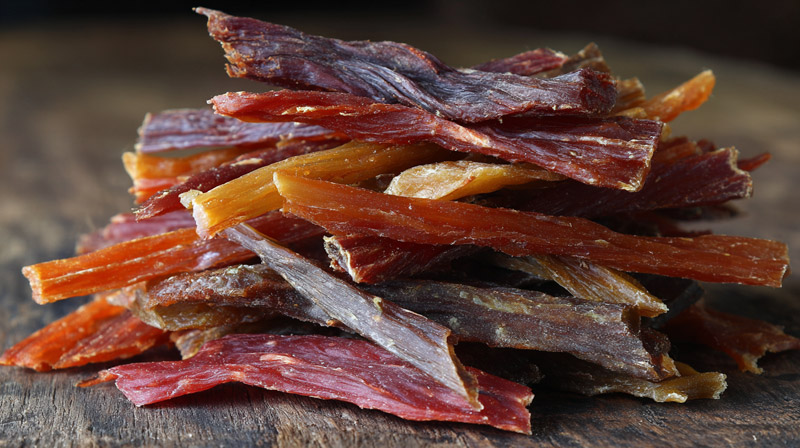
Finding a genuinely good jerky treat at the store takes work. Took me way too long to figure that out. Most of what lines the shelves at big-box pet stores is marketing wrapped around mediocre ingredients.
Mordor Intelligence data shows the freeze-dried and jerky treats segment is growing at roughly 11% CAGR through 2029, which means more options keep hitting shelves every month. More options doesn’t always mean better options, though.
Best Chicken Jerky Treats
Full Moon Chicken Jerky: USDA-inspected, human-grade chicken breast. One ingredient. Made in the USA. It’s straightforward and consistently rated well by dog owners who actually read labels.
Rocco & Roxie Jerky Sticks: Slow-smoked with no artificial preservatives. The ingredient list stays short. These are thicker than most, which is nice for dogs that tend to inhale treats in two seconds.
If your dog has a sensitive stomach, look for chicken jerky with zero added glycerin or sugar. Those two ingredients are the most common culprits behind loose stools after treat time.
Best Beef and Alternative Protein Jerky Treats
Stewart Pro-Treat Beef Liver: Freeze-dried, single ingredient. High protein density per calorie. Works well as a training treat because you can break it into small pieces without it crumbling into dust.
Wholesome Pride Sweet Potato Chews: Not technically a protein jerky, but worth mentioning for dogs that do well on plant-based treats. Single ingredient, grain-free, no added anything.
For dogs that need one-ingredient treats, venison and bison jerky options from smaller brands often outperform big-name competitors on ingredient transparency. Check the guaranteed analysis for crude protein above 60% and crude fat below 15%.
| Brand | Protein Source | Ingredient Count | Made In |
|---|---|---|---|
| Full Moon | Chicken breast | 1 | USA |
| Rocco & Roxie | Chicken/beef | 3–5 | USA |
| Stewart Pro-Treat | Beef liver | 1 | USA |
| Wholesome Pride | Sweet potato | 1 | USA |
According to APPA’s 2025 State of the Industry report, the US dog treat category reached $6.8 billion in annual sales. A growing portion of that spending is shifting toward premium, limited-ingredient products. Pet owners are clearly willing to pay more for fewer, better ingredients.
How to Make Dog Jerky Treats at Home
Homemade jerky treats give you total control over what your dog eats. And honestly, it’s not complicated. If you can slice meat and press a button on a dehydrator, you’re qualified.
Dehydrator Method vs. Oven Method
Dehydrator method: Slice your protein into strips between 1/8 and 1/4 inch thick. Set the dehydrator to 160F. Wait 4 to 6 hours depending on the meat and strip thickness. Done.
Chicken and turkey need the full 6 hours. Beef and venison can be ready closer to 4. The strips should bend without snapping but shouldn’t feel moist or squishy.
Oven method: Set your oven to the lowest temperature (usually 170-200F). Place strips on a wire rack over a baking sheet. Prop the door open slightly with a wooden spoon for airflow. Check after 3 hours and then every 30 minutes.
The oven works fine, but dehydrators do a more consistent job. My Nesco runs basically nonstop during the weekends, and I batch enough jerky to last about two weeks.
Regardless of method, the internal temperature of poultry-based jerky needs to reach 165F to kill salmonella and other bacteria. Use a meat thermometer. Don’t guess.
Safe Storage and Shelf Life
Refrigerated: Homemade jerky lasts about 2 weeks in an airtight container in the fridge.
Frozen: Up to 3 months in a freezer bag with the air pressed out. Thaw individual portions as needed.
Room temperature storage isn’t recommended for homemade jerky since there are no preservatives keeping bacteria at bay. I learned this the hard way after leaving a batch on the counter for a week. It smelled fine to me, but my dog ended up with an upset stomach.
Some people vacuum seal their batches, which can push the fridge life closer to 3 weeks. If you’re making jerky regularly (and your dog will make sure you do), investing in a vacuum sealer pays for itself pretty fast.
Nutritional Benefits of Jerky Treats for Dogs
Jerky treats aren’t just something to keep your dog busy. They actually deliver real nutritional value when you pick the right ones.
High Protein Density
Compared to biscuit-style treats, jerky packs significantly more protein per calorie. A typical dog biscuit might contain 20-25% crude protein. Quality jerky treats hit 70% or higher on a dry matter basis.
That protein density matters for active dogs, working breeds, and dogs recovering from illness. Breeds with high exercise needs, like the Australian Shepherd or Siberian Husky, benefit from the amino acid profile in meat-based jerky over grain-based alternatives.
Dogster reported that in 2024, 69% of pet food buyers showed interest in treats and toppers that offer functional nutritional benefits. The shift toward protein-rich, functional treats is happening fast.
Dental and Training Benefits
The chewing action on dried meat strips provides mild dental benefits. It’s not a substitute for brushing or natural dental chews, but the mechanical scraping helps reduce surface plaque. Something is better than nothing.
For training, jerky is what dog trainers call a “high-value reward.” The strong scent and rich flavor make dogs pay attention in ways that a dry kibble piece never will. Tear a strip into pea-sized pieces and you’ve got a training session’s worth of motivation from a single treat.
Low-Carb Option for Weight Management
Overweight dogs benefit from jerky treats because they’re naturally low in carbohydrates. Most biscuit treats rely on wheat, corn, or rice as filler. Jerky skips all of that.
If your dog is on a restricted diet for weight management, swapping grain-based treats for lean chicken or turkey jerky reduces carb intake without eliminating the reward. Just watch the portions, because calories still count regardless of the source.
Grand View Research notes that the US pet snacks and treats segment is expected to grow at a 4.7% CAGR through 2030, with health-driven purchasing being a primary factor. Pet owners are replacing filler-heavy treats with healthier alternatives at a steady rate.
How Much Jerky Should a Dog Eat Per Day?
Treats should not exceed 10% of a dog’s daily caloric intake. The WSAVA, AAHA, and the American College of Veterinary Nutrition all back this guideline. It’s the single most referenced rule in canine nutrition, and it applies to jerky just like everything else.
The tricky part is that most people have no idea how many calories their dog actually needs per day. And jerky calories vary a lot depending on the protein source.
| Dog Weight | Approx. Daily Calories | Max Treat Calories (10%) | Chicken Jerky Strips |
|---|---|---|---|
| 10 lbs | ~275 | 27 | 1 small strip |
| 30 lbs | ~600 | 60 | 2–3 small strips |
| 50 lbs | ~900 | 90 | 3–4 strips |
| 80 lbs | ~1,300 | 130 | 4–5 strips |
Beef jerky runs about 116 calories per ounce. Chicken jerky is closer to 80. That difference adds up fast, especially for small dogs. A single ounce of beef jerky could blow through the entire treat budget for a Yorkshire Terrier or Chihuahua.
Risks of Overfeeding Jerky Treats
The Association for Pet Obesity Prevention reported in 2024 that 59% of dogs in the US are overweight or obese. Excess treats are a major contributor.
Too much protein from jerky can also strain the kidneys over time, especially in senior dogs or breeds already prone to kidney issues. And high-fat jerky is a known trigger for pancreatitis, particularly in predisposed breeds like Miniature Schnauzers.
A Purina Lifespan Study found that overweight dogs live an average of 2 years less than dogs maintained at a healthy weight. Cutting back on treats is one of the easiest adjustments you can make.
Are Jerky Treats Safe for Puppies and Senior Dogs?
Age changes everything about how you should approach jerky treats. What works for a 3-year-old dog in peak health won’t necessarily work for a 12-week-old puppy or a 10-year-old with kidney concerns.
Jerky Treats for Puppies
Under 12 weeks: Skip the jerky entirely. Their teeth are still developing and their digestive systems aren’t ready for concentrated dried protein. Stick with softer options like puppy-safe chews during this stage.
4 months and older: Thin-cut, soft jerky or freeze-dried treats can work. Tear them into tiny pieces. Puppies don’t need a full strip, and the choking risk with thick jerky is real, especially for smaller breeds like Pomeranians or Maltese.
Banfield Pet Hospital data from nearly 5 million dogs showed that overweight or obese body condition during growth persists into adulthood (odds ratio of 1.85). Starting healthy treat habits early matters.
Jerky Treats for Senior Dogs
Senior dogs with dental disease may struggle with standard jerky. The dried texture is hard on worn teeth and inflamed gums.
Better options for older dogs:
- Freeze-dried treats that soften quickly in the mouth
- Thin-sliced, lightly dehydrated strips (not fully dried)
- Rehydrated jerky pieces soaked briefly in warm water
Reduced kidney function is common in older dogs. Since jerky is concentrated protein, portions should be smaller than what you’d give a younger, healthy adult. Talk to your vet about appropriate limits if your senior dog has any known health problems.
How to Read Dog Jerky Treat Labels
The front of the bag is marketing. The back of the bag is where you actually find out what you’re buying.
VCA Animal Hospitals notes that treats and supplements are exempt from the “complete and balanced” nutritional adequacy statement required on regular dog food. That means less regulatory oversight on what goes into them. You’re on your own to evaluate quality.
Decoding Label Claims
“Natural” has a loose definition in pet food. According to AAFCO, it means the product is derived from plant, animal, or mined sources, without chemically synthetic processing. But it doesn’t mean organic, non-GMO, or free from questionable practices.
“Human-grade” now has an actual AAFCO definition. Every ingredient must be fit for human consumption, and the product must be manufactured in a facility that meets federal human food regulations (21 CFR Part 117). Before this definition was standardized, brands used the term freely without any backing.
“Grain-free” simply means no grains are used. It says nothing about overall quality or protein content. Some grain-free treats use potato or tapioca starch as filler instead, which isn’t necessarily better.
Reading the Guaranteed Analysis
Every dog treat package must display a guaranteed analysis panel. Here’s what to look at:
- Crude protein (min): Higher is generally better for jerky. Look for 60%+ on a dry matter basis
- Crude fat (max): Below 15% for standard jerky. Under 10% for dogs prone to pancreatitis
- Moisture (max): Lower moisture means more concentrated nutrition per piece
The ingredient list order matters. The first ingredient should be a named whole protein like “chicken breast” or “beef.” If it says “poultry” or “meat” without specifying what kind, that’s a red flag.
Certifications That Matter vs. Marketing Fluff
| Certification | What It Means | Reliable? |
|---|---|---|
| USDA Organic | Meets National Organic Program standards | Yes |
| Global Animal Partnership | Animal welfare rated (5-step program) | Yes |
| “Premium” or “Gourmet” | No regulated definition | No |
| “All Natural” | Loosely defined, varies by context | Weak |
And watch for the difference between “Made in USA” versus “Made in USA with imported ingredients.” The AAFCO and FDA don’t require brands to list the country of origin for every single ingredient. A product can contain chicken sourced overseas and still carry a domestic label if final assembly happens stateside.
Common Recalls and Safety Issues with Dog Jerky Treats
The FDA’s investigation into jerky pet treat illnesses is the largest and longest-running pet food safety case in agency history. It started in 2007 and ran through the end of 2015.
During that period, the FDA received approximately 5,200 complaints. The total count eventually reached over 6,200 dogs, 26 cats, and 3 people affected. More than 1,140 dogs died.
What the FDA Found
Most of the implicated products were chicken, duck, or sweet potato jerky treats imported from China. The FDA tested over 1,200 samples for contaminants including salmonella, heavy metals, pesticides, and antibiotics.
Antibiotic and antiviral residues were detected in imported poultry jerky. The FDA revised Import Alert 72-07 in 2015 to include all poultry jerky-type treats, allowing detention without physical examination for products from flagged manufacturers.
Despite all that testing, no single definitive cause was ever identified. The FDA closed the active investigation without pinpointing the exact contaminant. That’s the part that still bothers a lot of pet owners, myself included.
Fanconi Syndrome and Jerky Treats
Fanconi syndrome is a kidney condition that showed up in some dogs after eating certain jerky treats. It affects the kidney’s ability to reabsorb nutrients, leading to excessive urination, thirst, and weight loss.
It was one of the more alarming patterns the FDA tracked during the investigation. While typically associated with Basenjis as a genetic condition, the acquired form appeared across multiple breeds linked to jerky consumption.
How to Check for Recalls Before Buying
The FDA maintains a searchable database of pet food recalls and safety alerts. Petful, an independent site, has also compiled one of the most complete recall archives going back to 2007.
In 2024 alone, several jerky-related products were recalled. Carolina Prime Pet issued a recall for Hollywood Feed chicken treats in November 2024 due to potential salmonella contamination.
Before buying any new jerky brand:
- Search the brand name on the FDA recall database
- Check where the product is manufactured (not just where the company is headquartered)
- Look for companies that publish third-party testing results
Sourcing transparency is the easiest filter. If a company won’t tell you exactly where their meat comes from and how it’s processed, that tells you something. Brands that invest in safe, high-quality chews and treats tend to be upfront about their supply chain.
If you’re looking for alternatives to jerky altogether, options like collagen chews or Himalayan yak chews offer long-lasting chewing with simpler ingredient profiles and fewer safety concerns.
FAQ on Healthy Dog Jerky Treats
What makes a dog jerky treat healthy?
A healthy jerky treat uses a single-ingredient protein with no artificial preservatives, added sugars, or fillers. Look for named whole meats like chicken breast or beef liver as the only ingredient on the label.
Are homemade jerky treats safer than store-bought?
Generally, yes. Making jerky at home lets you control the protein source and avoid additives like glycerin or sodium nitrite. Just make sure poultry reaches 165F internal temperature to kill bacteria like salmonella.
Can puppies eat jerky treats?
Puppies under 12 weeks should avoid jerky. After 4 months, thin-cut or freeze-dried options work if torn into small pieces. Their developing teeth and digestive systems need softer, gentler treats at first.
How much jerky can I give my dog daily?
Treats should stay under 10% of daily calories. For a 30-pound dog eating around 600 calories per day, that’s roughly 60 calories from jerky. Two to three small chicken strips, depending on the brand.
Which protein is best for dog jerky?
Chicken breast is the leanest and most affordable option. For dogs with common protein allergies, novel proteins like duck, venison, or rabbit work well. Beef liver packs the most nutrients per ounce but requires smaller portions.
Are jerky treats from China safe?
The FDA investigated imported jerky treats from 2007 to 2015 after thousands of illness reports. Most implicated products came from China. Stick to treats made and sourced in the USA for the lowest risk.
What ingredients should I avoid in dog jerky?
Skip anything with propylene glycol, BHA/BHT, sodium nitrite, artificial coloring, or vague terms like “meat by-products.” Garlic and onion powder are toxic to dogs and sometimes appear in flavored jerky products.
Can jerky treats cause pancreatitis in dogs?
High-fat jerky can trigger pancreatitis, especially in breeds like Miniature Schnauzers and Cocker Spaniels. Choose lean proteins and check that crude fat stays below 15% on the guaranteed analysis panel.
How long do homemade dog jerky treats last?
Refrigerated homemade jerky lasts about two weeks in an airtight container. Frozen, it holds for up to three months. Skip room temperature storage since there are no preservatives to prevent bacterial growth.
What does “human-grade” mean on jerky treat labels?
Under AAFCO’s definition, every ingredient must be fit for human consumption and manufactured in a facility meeting federal human food regulations. Before this standard was set, brands used the term with no real accountability.
Conclusion
Choosing healthy dog jerky treats comes down to reading labels, knowing your protein sources, and ignoring most of what the front of the package tells you. The ingredient list and guaranteed analysis do the real talking.
Stick to limited-ingredient options with named whole proteins. Keep treats under 10% of your dog’s daily caloric intake. Check the FDA recall database before trying a new brand.
If you want full control, a food dehydrator and some lean chicken breast or beef will get you there for a fraction of the cost. Your dog won’t know the difference between a $15 bag and a homemade batch. Actually, they’ll probably prefer yours.
Whether you buy from brands like Full Moon and Stewart Pro-Treat or make your own, the goal stays the same. Preservative-free, high-protein treats from a transparent source. Everything else is noise.