My dog once nearly choked on the last inch of a bully stick. That moment changed how I think about every chew treat I bring home. So, are bully sticks safe for dogs? The answer is yes, but only if you know what to watch for.
Bully sticks are fully digestible, single-ingredient beef chews that most vets prefer over rawhide. But they come with real risks: choking hazards, bacterial contamination, and hidden calories that can throw off your dog’s diet.
This guide covers what the research actually says about bully stick safety, which dogs should avoid them, how to pick a quality product, and the supervision steps that keep chew time from turning into an emergency vet visit.
What Are Bully Sticks?
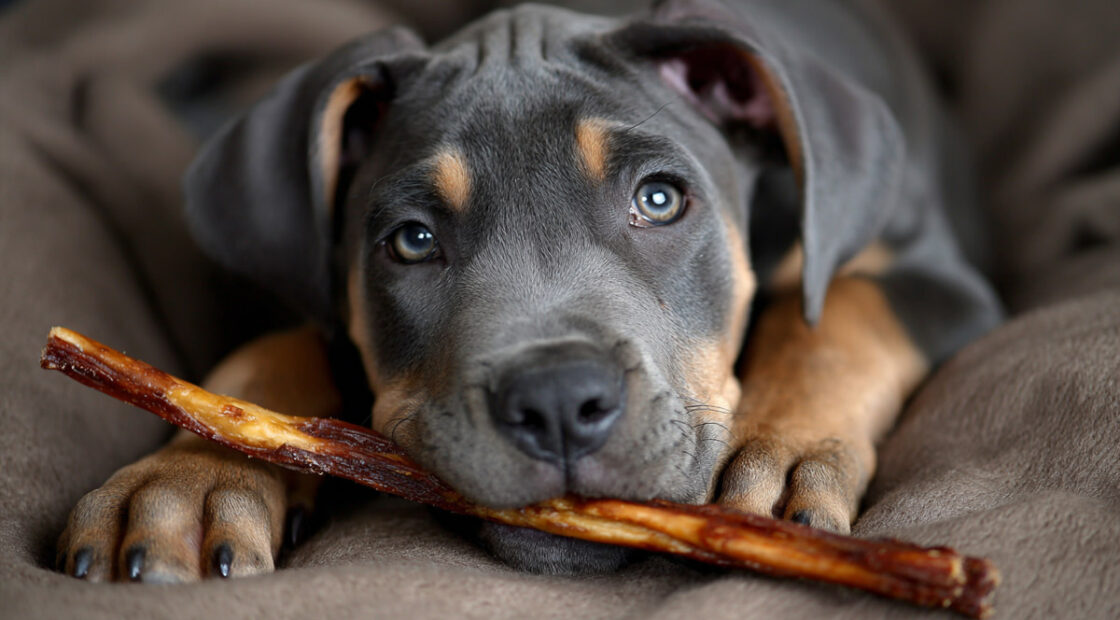
Bully sticks are single-ingredient dog chews made from dried bull pizzle. That’s beef muscle tissue, specifically from the penis of a bull or steer. Sounds weird, right? My dog doesn’t care. He goes absolutely nuts for them.
The manufacturing process is pretty straightforward. The raw beef pizzle gets cleaned, stretched, and then dried using one of several methods. Some manufacturers air-dry them at low temperatures. Others oven-bake or smoke them. A smaller number use irradiation to kill bacteria.
You’ll find them in a bunch of different forms at the pet store.
- Standard straight sticks in 6-inch or 12-inch lengths
- Braided bully sticks that last longer because of the extra thickness
- Rings and springs shaped to give dogs a different chewing angle
Dogs are drawn to these chews because of the high protein content and strong natural scent. The protein level in most bully sticks falls between 70-80%, which is significantly higher than processed dog treats. They also contain collagen, which supports joint health and coat quality in dogs of all ages.
A Tufts University survey published in the Canadian Veterinary Journal found that only 44% of pet owners could correctly identify what bully sticks are made from. Even among veterinarians, 38% got it wrong.
Look, the ingredient list is just… beef. One ingredient. That’s actually one of the biggest selling points over other chew treats that come loaded with preservatives and fillers. If you’re someone who values single-ingredient treats for dogs, bully sticks fit that description perfectly.

Are Bully Sticks Safe for Dogs?

The short answer is yes, with caveats.
Most veterinarians consider bully sticks generally safe when used under supervision and sourced from reputable manufacturers. They’re fully digestible (unlike rawhide), made from natural beef protein, and free from chemical additives when produced correctly.
But “generally safe” doesn’t mean risk-free. There are real concerns you need to know about.
What the Research Says
The most cited study on bully stick safety comes from Tufts University’s Cummings School of Veterinary Medicine, published in the January 2013 issue of the Canadian Veterinary Journal. Researchers tested 26 bully sticks from different manufacturers across the US and Canada.
The findings raised some eyebrows. Out of 26 products tested, 27% were contaminated with E. coli, 4% had Clostridium difficile, and 4% had MRSA. The calorie content was also higher than most owners expected.
On the positive side, bully sticks break down in a dog’s stomach within 2-4 hours. Rawhide can sit there for 24-72 hours. That digestibility difference is why vets overwhelmingly prefer bully sticks over rawhide as a chew option.
The Real Safety Factors
Sourcing matters more than anything. A bully stick from a reputable US manufacturer that tests every lot is a completely different product than a cheap import with zero quality controls.
Supervision is non-negotiable. The biggest acute risk isn’t contamination. It’s a dog gulping down the last piece whole and choking on it. I’ve been there, fishing a soggy nub out of my dog’s mouth at the last second. Not fun.
Size matching keeps dogs safer. A Chihuahua needs a thin junior stick. A Bullmastiff needs something thick and durable. Getting this wrong increases the choking risk dramatically.
The American Kennel Club acknowledges that bully sticks offer health benefits for dogs when given appropriately. They support dental health, provide mental stimulation, and deliver high-quality protein. Just don’t treat them like a set-it-and-forget-it chew.
Choking and Blockage Risks

This is the part that actually scares me as a dog owner.
Bully sticks are fully digestible, so if a piece makes it to the stomach, it’ll break down. The problem is what happens before it gets there. A chunk that’s too big can lodge in the throat or esophagus. And dogs, being dogs, will absolutely try to swallow the last 2-3 inches whole rather than give it up.
How Choking Happens
Dogs chew a bully stick down over 30-90 minutes. As it gets shorter, they start to lose grip. At some point, the remaining piece becomes small enough to fit in the back of the mouth, and instinct takes over. Gulp.
A piece that gets stuck before reaching the stomach can cause choking, gagging, or in serious cases, intestinal perforation. Whole Dog Journal’s 2024 review of bully stick holders specifically noted that preventing dogs from swallowing the last few inches is the primary safety concern with these chews.
Reducing the Risk
| Prevention Method | How It Works | Best For |
|---|---|---|
| Bully stick holder | Grips the stick so the dog can’t swallow the end piece | All dogs, especially fast chewers |
| Size-appropriate selection | Match stick thickness and length to breed size | Multi-dog households |
| Supervised time limits | Remove the stick before it gets dangerously small | Dogs who chew aggressively |
| The “swallow size” rule | Take it away when the remaining piece could fit whole in the dog’s mouth | Every dog, no exceptions |
Products like the Bully Buddy and similar bully stick holders clamp onto the chew so dogs can’t access the final inch or two. Whole Dog Journal tested eight different holders in 2024 and found that while none were perfect, all of them reduced the risk of swallowing end pieces.
If you have an aggressive chewer, look at bully sticks designed for power chewers. Braided versions last longer and give you more time before the stick reaches a dangerous size. You should also understand how long bully sticks typically last for different dog sizes so you can plan supervision accordingly.
Bacterial Contamination in Bully Sticks

The Tufts study wasn’t just about calories. It found some genuinely concerning bacteria in off-the-shelf bully sticks.
Out of 26 products tested, researchers identified three different types of dangerous bacteria: Clostridium difficile in one stick (4%), MRSA in one stick (4%), and E. coli in seven sticks (27%), including one tetracycline-resistant sample. These aren’t minor pathogens. MRSA alone is a serious antibiotic-resistant infection.
Then in 2018, the FDA announced a recall of Redbarn bully sticks after the Colorado Department of Agriculture detected Salmonella in a retail sample. As recently as October 2025, Best Buy Bones recalled four lots of bully stick treats for Salmonella contamination.
The risk isn’t just to your dog. Immunocompromised humans, young children, elderly family members, and pregnant women can pick up these bacteria from handling contaminated treats or touching surfaces where the dog chewed.
How Manufacturing Methods Affect Safety
Air-dried: Low-temperature drying preserves nutrients but may not eliminate all bacteria. These tend to have stronger odor.
Oven-baked: Higher temperatures reduce bacterial load more effectively. Usually produces a lower-odor product.
Smoked: Adds flavor but variable in terms of bacterial control depending on temperature and duration.
Irradiated: Most effective at killing pathogens. The Tufts study noted a difference in contamination rates between irradiated and non-irradiated products.
Country of origin matters too. “USA-made” means the product was manufactured in the US. “USA-sourced” means the raw beef came from American cattle. These are two different things, and the labeling can be misleading. Some products use beef imported from South America or other regions, then process it domestically.
After handling any bully stick, wash your hands with soap and water. Clean any surface your dog chewed on. This is basic food safety, same as handling raw chicken in your kitchen. If you want to understand more about potential reactions from these chews, check out common bully stick side effects.
Calorie Content and Overfeeding Concerns
Here’s what caught most people off guard in the Tufts research.
A standard 6-inch bully stick contains an average of 88 calories. The range across the 26 tested products was 9 to 22 calories per inch, depending on thickness and density. That’s a lot more than most dog owners realize.
What 88 Calories Actually Means
For a 50-pound dog, one 6-inch bully stick represents about 9% of daily calorie needs. Manageable.
For a 10-pound dog? That same stick covers 30% of their daily calories. That’s not a treat anymore. That’s practically a meal.
Veterinary nutritionists recommend that treats (all treats, not just bully sticks) make up no more than 10% of a dog’s daily caloric intake. The other 90% should come from complete, balanced food. One thick bully stick can blow past that limit in a single chewing session for smaller breeds.
The Obesity Connection
The Association for Pet Obesity Prevention’s 2022 survey found that 59% of dogs in the US are classified as overweight or obese. Their 2024 data showed that 35% of dog owners now recognize their pet is overweight, up from just 17% in 2023. That’s progress, but a huge gap still exists between reality and perception.
A Purina lifespan study demonstrated that even moderate excess weight can reduce a dog’s life expectancy by up to 2.5 years. Bully sticks aren’t the sole cause of dog obesity, obviously. But they’re a hidden calorie source that many owners don’t account for.
If you’re giving your dog bully sticks regularly, reduce their regular food portions to compensate. Track the calories. A thinner stick has fewer calories per inch (9-12) compared to a thick one (18-22). For dogs on restricted diets, offering half a stick instead of a full one is a reasonable compromise.
Calorie management matters for all breeds, but it’s particularly relevant for larger dogs like the Bullmastiff, where feeding guidelines need careful attention. Treats add up fast when you’re already managing a healthy treat routine.
Bully Sticks vs. Rawhide and Other Chew Alternatives

This comparison comes up constantly. Walk into any pet store and you’ll see bully sticks and rawhide sitting on the same shelf, priced very differently. So what’s actually different?
Digestibility Is the Big Divide
Bully sticks are pure muscle protein. Your dog’s stomach acids break them down within 2-4 hours.
Rawhide is processed animal skin. It can sit in the digestive tract for 24-72 hours, swelling to 3-4 times its original size. If a large piece gets stuck, you’re looking at a potential intestinal blockage that requires emergency surgery.
One source estimated that 40-50% of veterinary foreign body obstruction cases involving chews trace back to rawhide. Surgical removal typically costs $3,000-$7,000.
How the Main Chew Options Compare
| Chew Type | Digestible? | Biggest Risk | Typical Duration |
|---|---|---|---|
| Bully sticks | Yes, fully | Choking on end piece | 30–90 minutes |
| Rawhide | No, poorly | Intestinal blockage | 30–60 minutes |
| Antler chews | No | Tooth fractures | Weeks to months |
| Nylon bones | No | Swallowed fragments | Weeks |
| Collagen chews | Yes, fully | Minimal when supervised | 15–45 minutes |
Rawhide also goes through chemical processing that bully sticks don’t. Manufacturers use lime baths, bleaching agents, and sometimes formaldehyde to treat rawhide hides. Those residues can remain in the final product. Bully sticks skip all of that because dehydration alone is enough to preserve them.
When a Different Chew Makes More Sense
Bully sticks aren’t the only option worth considering. Collagen chews offer similar digestibility with a different texture. Himalayan yak chews are a good beef-free alternative for dogs with protein sensitivities. And if you’re curious about antler chews for dogs, they last much longer but carry a higher tooth fracture risk.
A Rutgers University study tested the dental benefits of different chews and found that bully sticks reduced oral bacteria by 60.2%. Raw bones came in at 79%, and brushing at 70.3%. So bully sticks do help with dental health, but they’re not the top performer. They hit a sweet spot between dental benefit, digestibility, and safety that most other chews can’t match.
For dogs that tear through standard chews in minutes, explore options among the longest lasting dog chews or the best picks for heavy chewers. And if your pup has a touchy stomach, treats formulated for sensitive stomachs might be a better starting point before introducing bully sticks.
Which Dogs Should Avoid Bully Sticks?
Bully sticks work for most dogs. But not all of them.
Some dogs have conditions or chewing habits that make bully sticks a bad fit, no matter how natural or digestible they are. Knowing when to skip them matters just as much as knowing how to give them safely.
Puppies With Baby Teeth
Most veterinarians recommend waiting until a puppy has their full set of 42 adult teeth before introducing bully sticks. That happens around 6 months of age for most breeds.
Kinship reports that bully sticks are “notorious for causing dental fractures” in dogs with developing teeth. Puppies that try to crack into a hard chew before their jaws are ready risk broken teeth that need surgical repair.
For puppies under 6 months, softer rubber teething toys or frozen washcloths are safer options. If you’re raising a young pup, you’ll find better alternatives among the best chew bones designed for puppies.
Dogs With Pancreatitis or Fat Sensitivity
High-fat diets are the most common trigger for pancreatitis in dogs. While bully sticks are marketed as “low fat,” the actual fat content varies by product and isn’t always listed on the packaging.
Breeds like Miniature Schnauzers, Cocker Spaniels, and Dachshunds have a higher genetic risk for pancreatitis. For these dogs, even moderate-fat treats can cause flare-ups.
If your dog has a history of pancreatitis, talk to your vet before giving any bully stick. There are lower-fat chew options like beef tendons or turkey tendons that might be safer picks.
Other Dogs That Should Skip Bully Sticks
| Dog Profile | Why Bully Sticks Are Risky | Better Alternative |
|---|---|---|
| Aggressive gulpers | Swallow large chunks whole, high blockage risk | Bully stick holder or safer chew options |
| Beef-allergic dogs | Beef protein triggers allergic reactions | Yak bones or fish-based chews |
| Calorie-restricted dogs | 88 calories per stick can blow daily treat limits | Low-calorie dental chews |
| Dogs with dental issues | Hard texture can fracture weakened teeth | Softer collagen-based chews |
Large, powerful breeds like the Cane Corso or Rottweiler can be aggressive chewers that demolish a bully stick in minutes. For those dogs, the choking window is shorter and more dangerous. Extra-thick braided sticks help, but supervision is still the real safety net.
How to Choose a Safe Bully Stick
Not all bully sticks are the same product. The difference between a well-sourced, properly processed stick and a cheap import with no quality controls is significant.
The AKC recommends looking for chews with clear ingredient labels and high digestibility. Single-ingredient products with no added chemicals or preservatives are the baseline. If the packaging lists anything beyond “beef pizzle,” put it back on the shelf.
What to Look For When Buying
Country of origin: “USA-made” means processed domestically. “USA-sourced” means the raw beef came from American cattle. They’re not the same thing.
Processing method: Oven-baked and air-dried sticks are the most common. Baked options tend to have less odor and slightly better bacterial safety profiles.
Thickness and length: Match these to your dog’s breed. A French Bulldog needs a different size than a German Shepherd. Too thin and a large dog gulps it. Too thick and a small dog can’t work it.
Odor level: “Odor-free” sticks are typically more heavily processed to remove smell. “Low odor” sticks use modified baking processes. Neither category is inherently safer than the other.
Reading Labels and Marketing Claims
The pet treat industry uses terms that sound good but lack regulated definitions. “Natural” has no legal standard for pet treats. “Organic” requires USDA certification, which very few bully stick brands actually carry. “Free-range” means the cattle had outdoor access, but the specifics vary widely.
Third-party testing is the most reliable quality signal. Brands that test every lot for Salmonella and other contaminants, then publish results, are doing more than the industry requires.
If you’re curious about the cost factor behind quality sourcing, there’s a good reason bully sticks carry a higher price tag than most dog treats. You’re paying for single-ingredient beef from tracked supply chains, proper processing, and batch testing. Cheap sticks skip those steps.
How to Give Your Dog a Bully Stick Safely
You’ve picked a good bully stick. Now the part that actually determines whether it stays safe: how you manage the chewing session.
Most vets recommend giving bully sticks 2-3 times per week, not daily. Each session should be supervised from start to finish. I know that sounds like a lot of babysitting for a dog treat, but one bad swallow can turn into a $5,000 vet bill. Took me exactly one scare to never leave the room again.
The Session Checklist
- Always supervise, especially the first few times with a new chew
- Remove the stick when it gets small enough to fit entirely in your dog’s mouth
- Keep fresh water available (chewing makes dogs thirsty)
- Limit sessions to 30-45 minutes to manage calorie intake
- Wash your hands after handling, clean the chewing surface afterward
A bully stick holder locks the chew in place so your dog can’t access the last dangerous inch. If your dog is the type to try gulping the end piece (and you’ll know fast), a holder is worth every penny.
Storage Between Sessions
A half-chewed bully stick sitting on your carpet for two days is a bacteria problem waiting to happen.
Store partially used sticks in a sealed container in the refrigerator. Toss any stick that’s been sitting out at room temperature for more than 24 hours. Good hygiene with dog chews follows the same logic as handling raw meat. You wouldn’t leave a raw steak on the counter overnight, and the same principle applies here.
If you want to understand better how long dogs should chew on hard treats in general, that’s worth reading before setting time limits for your specific dog.
What Veterinarians Say About Bully Sticks

The veterinary consensus on bully sticks is “yes, but.”
Yes, they’re a safe chew option for most dogs when given correctly. But they require supervision, calorie tracking, and proper hygiene. No vet will tell you to hand your dog a bully stick and walk away.
The General Professional Stance
The American Kennel Club states that bully sticks are highly digestible and don’t splinter like some other chews. The AKC also notes they’re suitable for dogs of any breed, age, or size, including puppies old enough to chew hard treats on their own.
Veterinary nutritionists recommend giving bully sticks no more than 2-3 times weekly. They should count toward the 10% treat calorie rule. A 6-inch stick at roughly 88 calories might be the only treat your dog gets that day, depending on their size.
The Tufts Cummings School study authors, led by Dr. Lisa Freeman (a board-certified veterinary nutritionist), emphasized that “veterinarians and pet owners need to be aware of pet treats like these bully sticks as a source of calories in a dog’s diet.”
When to Check With Your Vet First
Pre-existing health conditions: Pancreatitis, kidney disease, or obesity all change the risk calculation for bully sticks.
Dietary restrictions: Dogs on prescription diets or calorie-controlled weight loss programs need vet approval before adding any treat, including bully sticks.
Beef allergies: If your dog has confirmed beef protein sensitivity, bully sticks are off the table entirely.
Post-surgical dogs: After dental surgery or gastrointestinal procedures, hard chews should be reintroduced only on your vet’s timeline.
Every dog is different. My neighbor’s Labrador Retriever can work on a bully stick for 45 minutes without issue. My friend’s Beagle tries to swallow the thing whole in under 10 minutes. Same treat, completely different risk profile. That’s why blanket advice only goes so far, and knowing your dog’s chewing habits is the real safety measure.
Ultimately, bully sticks sit in a good spot among natural dog chews. They’re digestible, single-ingredient, high in protein, and enjoyed by nearly every dog breed out there. The risks are real but manageable with the right approach. Supervise. Size correctly. Count the calories. And when in doubt, ask your vet.
If you’re exploring the broader world of dog chews beyond bully sticks, take a look at whether pig ears are safe for dogs, or compare elk versus deer antlers to see which type works for your dog’s chewing style. And for a full list of trustworthy options, our guide to the best natural dental chews covers what vets actually recommend.
FAQ on Are Bully Sticks Safe For Dogs
Can dogs eat bully sticks every day?
Most vets recommend 2-3 times per week, not daily. A single 6-inch stick packs around 88 calories. Daily use can lead to weight gain, especially for smaller breeds where that’s a big chunk of their calorie budget.
Are bully sticks safe for puppies?
Puppies can have bully sticks once their adult teeth come in, usually around 6 months old. Before that, their jaws and teeth aren’t strong enough. Start with thin sticks, short sessions, and constant supervision.
What are bully sticks made of?
Bully sticks are dried bull pizzle, which is beef muscle tissue. They’re a single-ingredient chew with no chemicals or preservatives when sourced from reputable manufacturers. The protein content typically falls between 70-80%.
Are bully sticks better than rawhide?
Yes, for most dogs. Bully sticks are fully digestible and break down in 2-4 hours. Rawhide can sit in the gut for up to 72 hours, swelling and potentially causing blockages that require emergency surgery.
Can bully sticks cause diarrhea?
Some dogs get loose stools when first introduced to bully sticks. This is common and usually temporary. Reduce chew time and introduce gradually. If diarrhea persists beyond a couple of sessions, consult your vet.
How long should a dog chew a bully stick?
Limit sessions to 30-45 minutes. This controls calorie intake and gives you time to remove the stick before it gets small enough to swallow whole. Always take it away once it reaches a gulpable size.
Do bully sticks have bacteria?
A Tufts University study found E. coli in 27% of tested bully sticks and MRSA in 4%. Wash your hands after handling them. Keep immunocompromised family members away from the chew and any surfaces it touches.
Are bully sticks good for dogs’ teeth?
A Rutgers University study showed bully sticks reduced oral bacteria by 60.2%. The chewing action scrapes away plaque and tartar buildup. They help, but they don’t replace brushing or professional dental cleanings.
When should I take a bully stick away from my dog?
Remove it when the remaining piece is small enough to fit entirely in your dog’s mouth. That’s the choking danger zone. A bully stick holder can grip the last inch so your dog can’t gulp it down.
How many calories are in a bully stick?
A standard 6-inch bully stick averages 88 calories, ranging from 9 to 22 calories per inch depending on thickness. For a 10-pound dog, that single stick represents about 30% of their daily caloric needs.
Conclusion
So, are bully sticks safe for dogs? Yes. They’re one of the better natural dog chew options available when you handle them correctly.
The Tufts University research and multiple FDA recalls prove these treats aren’t without risk. Bacterial contamination, choking on end pieces, and hidden calorie loads are all real concerns that demand your attention.
But compared to rawhide, nylon bones, or cooked bones, bully sticks offer superior digestibility and a cleaner ingredient profile. They support dental health, provide mental stimulation, and deliver high-quality protein without chemical additives.
The formula is straightforward. Buy from reputable brands that test their products. Match stick size to your dog’s breed and chewing style. Supervise every session. Remove the stick before it becomes a swallowing hazard. Factor those 88 calories into your dog’s daily intake.
Do those things consistently, and bully sticks become a safe, satisfying part of your dog’s routine.