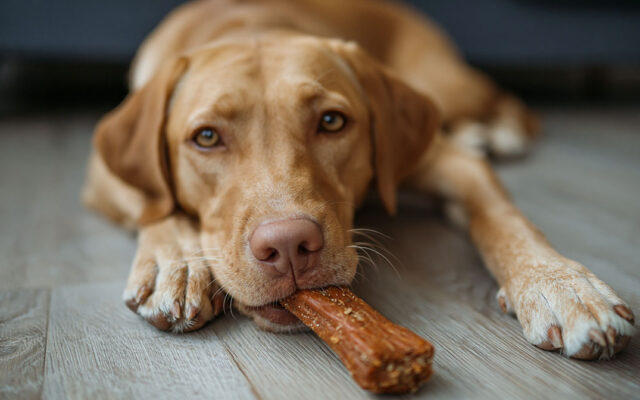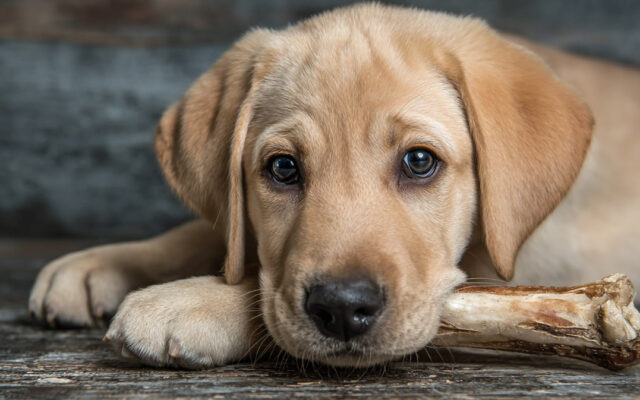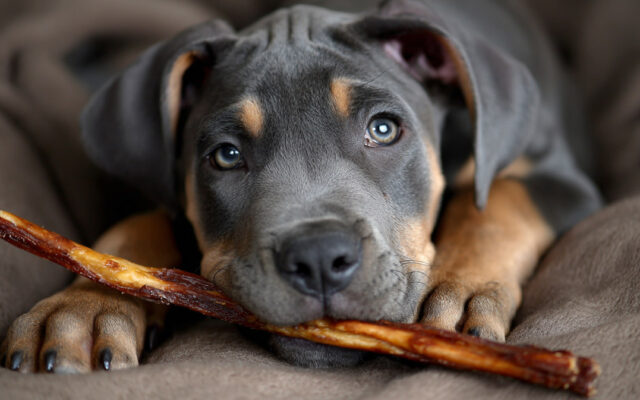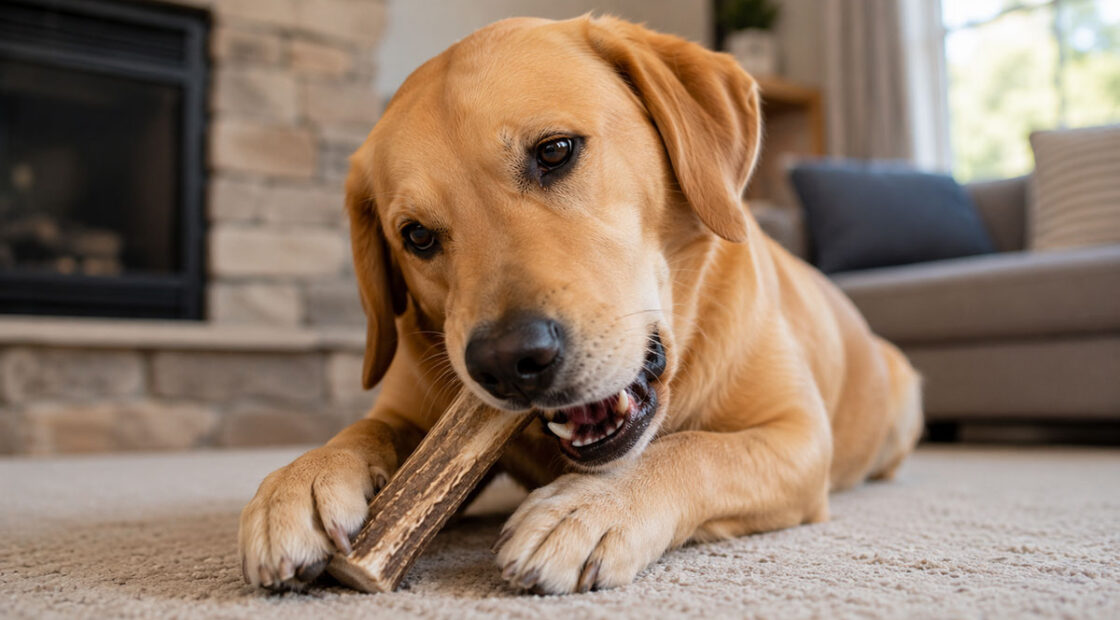
My dog demolished a brand new bully stick in under ten minutes. So I grabbed a deer antler from the pet store, thinking it would finally last. Two weeks later, I was at the vet with a cracked carnassial tooth and a $1,800 bill.
Can dogs eat deer antlers? Technically, yes. But “can” and “should” are very different questions.
An informal poll of over 1,000 veterinarians found that 93% recommend against giving dogs antler chews. The risks include tooth fractures, choking hazards, and intestinal blockages that can require emergency surgery.
This article covers what deer antlers actually are, who they are safe for, which dogs should never have them, and what safer alternatives exist if the risk is not worth it for your dog.
What Are Deer Antlers for Dogs
Deer antlers are naturally shed bone-like growths that fall off whitetail and mule deer every year, usually between January and April. They hit the ground in forests and fields, where shed hunters collect them before they get weathered or chewed up by rodents.
Once collected, antlers get cut into different sizes, cleaned, and sold as dog chews. No chemicals, no cooking, no added flavors. Just bone.
They come in three main forms:
- Whole antlers: The full exterior is intact, giving dogs the hardest chewing surface and longest durability
- Split antlers: Cut lengthwise to expose the marrow center, making them slightly easier to work with
- Sliced antlers: Cross-cut into rounds or discs, usually sold for smaller dogs or lighter chewers
A University of Georgia study found 11 different minerals in whitetail deer antlers. Calcium makes up about 19% by weight, phosphorus around 10%, followed by smaller amounts of magnesium, sodium, zinc, iron, and manganese. The National Deer Association notes that calcium and phosphorus alone account for 30 to 35% of a hardened antler’s total weight.
That mineral profile is what makes them appealing as a natural dog treat. They also contain glucosamine and chondroitin, which is why some pet stores market them as joint-supporting chews.
But here is the thing. Antlers were built for combat. Bucks use them to fight other bucks during mating season, absorbing repeated impacts from rival animals. That means they are extraordinarily dense. Way harder than rawhide, bully sticks, or rubber chew toys.

And that hardness is where the real debate begins.
How Deer Antlers Compare to Other Antler Types
Not all antler chews are the same. Deer, elk, and moose antlers have different densities, and that matters when you are picking one for your dog.
| Antler Type | Density | Best For |
|---|---|---|
| Whitetail deer | Very hard, compact core | Moderate chewers only |
| Elk | Medium, more spongy interior | Most adult dogs (split preferred) |
| Moose | Softest, highest marrow ratio | Lighter chewers, older dogs |
If you want a deeper comparison, check out the differences between elk and deer antlers for dogs. The density gap between them is significant enough to change the risk profile completely.
Can Dogs Safely Chew Deer Antlers
The short answer: yes, but with serious caveats. And most vets would rather you picked something else.
An informal poll of over 1,000 veterinarians found that 93% did not recommend letting dogs chew antlers. Only about 6% said they would educate clients about risks but still give them to their own dogs. Less than 1% gave full approval.
That is a pretty overwhelming consensus. Veterinary dentist Dr. Fraser Hale popularized what many clinicians call the “kneecap test.” If you would not want someone to hit you on the kneecap with the chew, it is too hard for your dog’s teeth. Antlers fail that test every time.
Still, some dogs chew antlers for years without a single problem. My neighbor’s Lab has been gnawing on the same elk antler since 2023 and his teeth look fine. But anecdotes are not data. And the dogs who do run into trouble can end up in surgery.
What the AVMA and Veterinary Dental Specialists Say
The veterinary dental community is almost unanimously against antler chews. The Whole Dog Journal reported that no veterinary dental specialist will sign off on antler use for dogs. Their reasoning is straightforward: antlers are basically solid bone, and dog enamel is thin.
Dogs only have about 0.35 to 0.44 mm of enamel thickness on average, according to a study published in Annals of Anatomy. Humans have up to 2.5 mm. That five to tenfold difference matters a lot when you factor in that dogs can generate bite forces up to 3,417 Newtons at the molars.
Thin enamel plus extreme bite force plus a surface harder than the tooth itself. That is the equation vets worry about.
When Antlers Might Be Acceptable
Some veterinarians take a more measured position. If all three conditions are met, certain dogs may handle antler chews without incident:
- The dog is a gentle “scraper” rather than an aggressive biter who clamps down hard
- The antler is size-appropriate (larger than the dog’s mouth) and inspected regularly
- Chewing is always supervised, never left unattended
But even with those conditions, the risk is never zero. And if your dog has any existing dental work or a history of cracked teeth, antlers are off the table entirely.
Health Benefits of Deer Antlers for Dogs
Antlers are not all downside. There are real reasons pet owners keep buying them, and some of those reasons hold up under scrutiny.
Mineral Content and Nutritional Value
Calcium and phosphorus are the two biggest draws. Since hardened antlers contain these minerals in roughly a 2:1 ratio, dogs do absorb small amounts as they gnaw through the outer layers.
The mineral breakdown also includes zinc (which supports immune function), manganese, and iron. Some manufacturers point to the glucosamine and chondroitin content as a bonus for joint support. Those claims are harder to verify in meaningful doses from chewing alone, but the compounds are present in the antler matrix.
Antlers contain virtually no fat and are low in calories. For dogs on restricted diets or those prone to weight gain, this puts them ahead of many commercial treats. They are also single-ingredient chews with nothing added.
Behavioral and Dental Stimulation
This is where antlers really earn their reputation with dog owners.
A good antler chew can last weeks or even months, depending on the dog. Compare that to a bully stick that might survive 20 minutes with an aggressive chewer. For long-lasting chew options, antlers are hard to beat on durability alone.
Chewing itself is a stress-relief behavior. Dogs who destroy furniture, shoes, or door frames out of boredom often calm down with an appropriate chewing outlet. Antlers give them something to work on for extended sessions, which can reduce anxiety-driven destruction.
The friction from gnawing also scrapes plaque and tartar off teeth. Whether this constitutes real “dental care” is debatable. The Veterinary Oral Health Council has not approved any antler products for dental health claims. But the mechanical action of chewing does provide some degree of cleaning.
What Antlers Do Not Have
A few things antlers avoid that other popular chews include:
- No artificial preservatives or chemical treatments
- No strong odor (unlike bully sticks, which smell terrible)
- No mess or greasy residue on floors and furniture
- No common allergens
For owners who have tried rawhide and worried about digestibility, or tried pig ears and dealt with the grease, antlers feel like a cleaner alternative. And they are. The tradeoff is just in a different category.
Risks and Dangers of Giving Dogs Deer Antlers
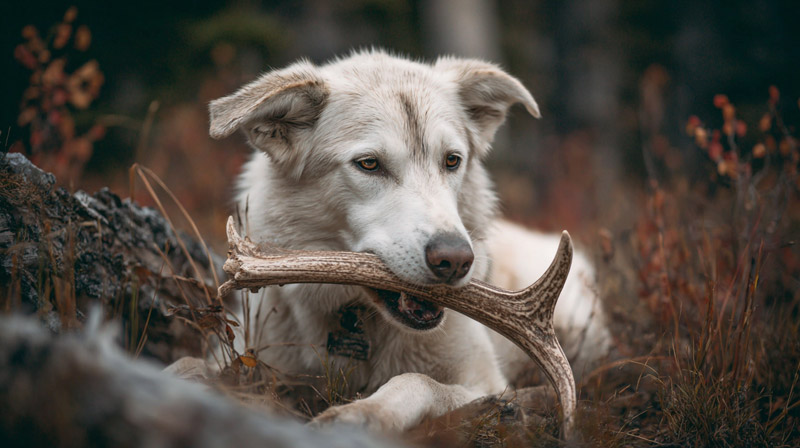
Here is where things get serious. The risks are not theoretical. Veterinary emergency rooms see antler-related injuries regularly, and the costs add up fast.
Tooth Fractures from Hard Chews
A study of 621 dogs and cats found that 26.2% had some form of tooth fracture, with the canine (fang) teeth and the upper fourth premolar being the most commonly damaged. Your Pet Dentist estimates that 14 to 27% of all dogs have at least one fractured tooth.
Antlers are among the most common culprits. Veterinary Practice News identified antler chews as one of the top offenders in carnassial tooth slab fractures. That is the big premolar in the back of the mouth that does most of the heavy chewing work.
When that tooth cracks, it often exposes the pulp cavity. That means infection, pain, and either a root canal or full surgical extraction. Dr. Julie Buzby reported that her own dog fractured four teeth during a single hour of antler chewing.
Root canal therapy on a dog typically costs between $1,500 and $3,000. Surgical extraction runs $500 to $2,500 depending on the tooth and location. Either way, it is a general anesthesia procedure, and recovery takes weeks.
Choking and Intestinal Blockage
When antler pieces break off, the danger shifts from dental to digestive.
Small fragments can lodge in the throat, esophagus, or intestines. The AKC warns that dogs left unsupervised with antlers are at the highest risk because owners may not realize a piece has been swallowed until symptoms appear.
Signs to watch for:
- Pawing at the mouth or face
- Excessive drooling or lip-licking
- Gagging, retching, or repeated swallowing attempts
- Vomiting, lethargy, or loss of appetite
Intestinal obstruction surgery ranges from $3,000 to $7,000 and carries real risk of complications. A 2025 PetSmart Charities-Gallup study found that 66% of pet owners say the most they could afford for lifesaving treatment is $1,000 or less. Antler-related emergencies can exceed that number quickly.
Gum and Mouth Injuries
Even without a full fracture, antlers can cut and bruise gum tissue. The hard surface scraping against soft gums causes bleeding, and splintered edges create puncture wounds inside the mouth.
These injuries are often minor on their own. But repeated gum damage opens the door to bacterial infection, especially if the dog has existing periodontal disease. And since over 80% of dogs over three years old have some degree of periodontal disease according to Tufts University veterinary data, that overlap is common.
Which Dogs Should Not Have Deer Antlers
Some dogs are at significantly higher risk than others. Antlers are not a one-size-fits-all product, and knowing whether antlers are safe for your specific dog means looking at several factors.
Aggressive and Powerful Chewers
This sounds backwards because aggressive chewers are exactly who pet stores market antlers toward. But that is the problem.
Breeds with exceptionally strong jaw muscles generate bite forces that can shear through enamel in seconds. The 2009 Journal of Anatomy study found that bite force increases with skull size, meaning large breeds produce the most dangerous forces against hard chews.
Breeds at highest risk include: American Pit Bull Terriers, Rottweilers, German Shepherds, Mastiffs, and Cane Corsos. These dogs do not gently scrape. They bite down hard, and antlers bite back.
If you own a powerful chewer, look into safer chew options built for heavy chewers instead.
Puppies and Senior Dogs
Puppies have baby teeth with short roots that fracture easily. Their jaws are still developing too. PetsRadar reported that in some cases, a puppy’s jaw may not tolerate the chewing force against an antler, potentially leading to jaw fractures.
Most vets suggest waiting until adult teeth are fully set before considering any hard chew. That is typically around 6 to 7 months, though some large breeds take longer. Even then, starting with something softer like puppy-appropriate chew bones makes more sense. For guidance on what age puppies can start chewing antlers, the answer is: later than most people think.
Senior dogs face the opposite problem. Their teeth are worn, potentially weakened by years of chewing, and more brittle. A cracked tooth in a 10-year-old dog means anesthesia, surgery, and a longer recovery window. The risk-benefit math stops making sense.
Small Breeds and Dogs with Dental History
Small dogs like Chihuahuas, Yorkshire Terriers, and Shih Tzus have proportionally smaller teeth and weaker jaw structures. Antlers designed for medium or large dogs become an obvious mismatch.
Dogs with prior root canals, extractions, or crown restorations should avoid antlers completely. Any existing dental weakness becomes a fracture waiting to happen.
How to Choose the Right Deer Antler for Your Dog
If you have weighed the risks and still want to try antlers, picking the right one matters. A lot of the danger comes from poor sizing, wrong antler type, or not knowing when to take an antler away from your dog.
Size Matching and the Swallow Rule
The antler should always be larger than your dog’s mouth. If your dog can fit the whole thing between their back teeth, it is too small. Period.
A good rule: the antler should be at least 1.5 times the length of your dog’s muzzle. This keeps it from becoming a choking hazard as it wears down. Once the antler gets small enough that your dog could swallow it, throw it away immediately.
Split vs. Whole: Which Is Safer
| Feature | Split Antler | Whole Antler |
|---|---|---|
| Starting hardness | Softer (marrow exposed) | Harder (full exterior) |
| Initial chewing | Licking and scraping marrow | Gnawing on hard outer shell |
| Risk profile | Lower at first, rises as marrow depletes | Higher from the start |
| Durability | Shorter lifespan | Lasts longer |
Split antlers are generally the safer pick because dogs spend more time on the softer marrow before hitting the hard outer layer. But once the marrow is gone, you are left with the same hard shell as a whole antler. That is when most injuries happen.
Sourcing and Quality
Look for antlers that are naturally shed, not cut from live animals. They should be unbleached and unbaked. Boiling antlers actually makes them more likely to splinter, which is the opposite of what you want.
Grade A antlers are freshly shed with no sun bleaching or weathering. They are denser and less likely to crack in unpredictable ways. Avoid anything that looks chalky, dried out, or has visible stress fractures along the surface.
For a curated breakdown of high-quality options, check out the best antlers for dogs that meet sourcing and safety standards. And if you are exploring antler chews for dogs for the first time, starting with elk or moose rather than deer antlers reduces the initial risk.
How Long Do Deer Antlers Last as Dog Chews
Antler durability is one of the main selling points. Nothing else in the chew aisle comes close.
A properly sized deer antler chew lasts anywhere from a few weeks to several months, depending on the dog. Heartland Antlers reports that gentle chewers can use the same antler for months, while aggressive chewers may wear one down in weeks.
Lifespan by Chew Intensity
| Chewer Type | Whole Antler | Split Antler |
|---|---|---|
| Light / scraper | 3 to 6 months | 1 to 3 months |
| Moderate | 1 to 3 months | 2 to 6 weeks |
| Aggressive / power | 2 to 6 weeks | 1 to 3 weeks |
Split antlers run out faster because the exposed marrow gets consumed first. Once that soft center is gone, dogs lose interest or start biting the hard shell harder. That transition point is where the risk jumps.
Knowing how long dogs should chew on hard chews per session matters too. Most vets suggest capping sessions at 30 minutes, then putting the antler away.
When to Discard an Antler
Size threshold: If the antler fits entirely inside your dog’s mouth, throw it out. No exceptions.
Visible damage: Cracks, splintering edges, or chalky white patches mean the structural integrity is compromised. Sharp edges can cut gums or break into swallowable fragments.
Loss of interest followed by renewed aggression: When dogs stop licking and start clamping down hard on a worn antler, they are working the hardest part of the material. That is when fractures happen.
Storage and Cost Comparison
Store antlers in a dry spot out of direct sunlight. UV exposure dries them out and makes cracking more likely. A toy basket or drawer works fine.
Future Market Insights valued the global pet toys market at $3.2 billion in 2024, with chew toys commanding 28% of that share. Antlers sit at the premium end of the chew market, typically running $10 to $30 per piece depending on size and type.
Compared to bully sticks that last much shorter, the cost per chewing hour is lower with antlers. But that savings disappears instantly if a dental emergency hits.
Safer Alternatives to Deer Antlers
If the risks feel too high (and for a lot of dogs, they are), there are real alternatives that keep your dog busy without risking a trip to the emergency vet.
Rubber Chew Toys
Kong and West Paw Zogoflex are the two names that come up in almost every veterinary recommendation for safe chewing. Both pass the fingernail test, meaning if you press your nail into the surface, it gives slightly. That flex is what protects teeth.
Kong toys can be stuffed with peanut butter or frozen treats, which extends the chewing session without any hard surface contact. West Paw’s Zogoflex line is recyclable, dishwasher safe, and guaranteed against dog damage.
Grand View Research data shows chew toys held the largest product segment share in the pet toys market in 2023, driven partly by growing demand for dental-safe alternatives to bones and antlers.
Digestible Chews and Tendons
These break down in the stomach, which solves the intestinal blockage problem entirely.
- Collagen chews: High in protein, fully digestible, and gentler on teeth than any bone-based product
- Beef tendons: Chewy texture that cleans teeth through friction without fracture risk
- Turkey tendons: Lower fat option, good for dogs with sensitive stomachs
For dogs that need something tougher, thick bully sticks hold up well against heavy chewers while still being digestible. Just be aware of the potential side effects of bully sticks like calorie density and bacterial contamination if poorly sourced.
VOHC-Approved Dental Chews
The Veterinary Oral Health Council tests and certifies products that actually reduce plaque and tartar. No antler product has ever received this certification.
Products with the VOHC seal include:
- Greenies dental chews (multiple sizes, including puppy formulas)
- Purina DentaLife daily oral care treats
- OraVet dental hygiene chews
- Virbac C.E.T. enzymatic oral hygiene chews
The VOHC, established in 1997, consists of nine veterinary dentists and scientists who review clinical trial data before awarding approval. If dental health is the goal, these products have evidence behind them. Antlers do not.
For a broader look at options, here is a breakdown of natural dental chews and how they compare. You can also explore safe dog chews across different categories if you want the full picture.
Other Whole-Food Options
Frozen carrots work surprisingly well as teething chews for puppies. The cold soothes gum pain and the texture gives them something to gnaw on.
Himalayan yak chews are another popular pick. They are hard enough to last but softer than antlers, and they soften further as the dog works them. If you are wondering whether Himalayan dog chews are safe, the answer is generally yes for moderate chewers, though the same supervision rules apply.
For sensitive dogs, check out treats designed for sensitive stomachs that avoid common allergens and irritants.
What Veterinarians Actually Recommend About Antler Chews
The professional consensus leans heavily against antlers. But the reasoning is more nuanced than a flat “no.”
The Majority Position
Dr. Julie Buzby’s informal poll of over 1,000 veterinarians showed 93% recommending against antler chews. That poll gained traction in veterinary circles because many of the 6% who initially accepted antlers later changed their minds after seeing injuries in their own dogs.
The Whole Dog Journal states plainly that no veterinary dental specialist will approve antlers for dogs. Kinship (by The Dodo) puts it even more directly: deer antler chews fail on all measures of safety.
The Conditional Approval Camp
A small group of vets take a middle-ground approach. Dr. Hannah Godfrey, a UK-based veterinarian with 13 years of experience, told PetsRadar that antlers can be acceptable under strict conditions:
- Healthy adult dogs only (not puppies, not seniors)
- Direct supervision during every session
- Daily inspection for cracks or sharp edges
This conditional stance shows up more among general practice vets than dental specialists. The dental specialists, who see the fractures firsthand, tend to be the most opposed.
The American Kennel Club’s Position
The AKC acknowledges antlers as a popular natural chew but flags the risks clearly. Their guidance emphasizes that dogs left unsupervised with antlers face the highest danger, and that owners should remove antlers once they become small enough to swallow.
The AKC also notes that while most vets advise against antlers, some owners use them for years without issues. Their framing is informational rather than prescriptive, which is different from the harder stance taken by veterinary dental organizations.
How to Talk to Your Own Vet About Chews
Bring it up at your next wellness visit. Your vet knows your dog’s dental history, breed-specific risks, and chewing behavior better than any article can.
Ask specifically about your dog’s enamel condition and jaw strength. If your vet has treated tooth fractures from hard chews before, they will likely steer you toward healthier treat options that carry less risk.
The 2025 AVMA Pet Ownership Sourcebook shows 87.3 million pet dogs in the United States, and the average veterinary visit cost hit $220 for dog owners. A single fractured tooth adds hundreds or thousands on top of that. The math alone makes the conversation worth having.
FAQ on Can Dogs Eat Deer Antlers
Are deer antlers safe for puppies?
No. Puppies have fragile baby teeth with short roots that fracture easily. Their jaws are still developing too. Most vets recommend waiting until adult teeth are fully set, typically around 6 to 7 months, before considering any hard chew.
Can deer antlers break a dog’s teeth?
Yes, and it happens often. Antlers are dense enough to crack the carnassial tooth, which is the large upper premolar that handles most chewing. Studies show 14 to 27% of dogs have at least one fractured tooth, with hard chews being a top cause.
What is the difference between elk and deer antlers for dogs?
Deer antlers are harder and more compact. Elk antlers have a softer, spongier interior and are generally considered the safer option. Moose antlers are the softest of the three. The density difference directly affects fracture risk.
How long do deer antlers last as dog chews?
Anywhere from a few weeks to several months. Light chewers get the most time out of them. Aggressive chewers can wear down a whole antler in two to six weeks. Split antlers deplete faster because the exposed marrow goes first.
When should I take a deer antler away from my dog?
Remove it when the antler fits entirely inside your dog’s mouth. Also discard it if you see cracks, sharp edges, or splintering. Once the chew gets small enough to swallow, it becomes a choking hazard.
Do veterinarians recommend deer antlers for dogs?
The vast majority do not. A poll of over 1,000 vets showed 93% recommend against antler chews. Veterinary dental specialists are the most opposed, citing tooth fractures and intestinal blockage as the primary concerns.
Are split antlers safer than whole antlers?
Initially, yes. Dogs spend more time licking the softer marrow instead of biting the hard exterior. But once the marrow is gone, you are left with the same hard outer shell. The risk returns at that point.
Can dogs digest pieces of deer antler?
Small shavings from surface gnawing usually pass without issue. Larger swallowed fragments are the problem. They can cause gastrointestinal blockage or puncture the intestinal wall, potentially requiring emergency surgery.
What are safer alternatives to deer antlers?
Rubber chew toys like Kong and West Paw Zogoflex top most vet recommendation lists. Collagen chews, beef tendons, and VOHC-approved dental treats are fully digestible options that clean teeth without fracture risk.
How do I choose the right size deer antler for my dog?
The antler should be larger than your dog’s mouth. A good rule is at least 1.5 times the length of their muzzle. If your dog can fit the whole thing between their back teeth, it is too small and dangerous.
Conclusion
So can dogs eat deer antlers? They can. But the question really comes down to whether your specific dog should.
The mineral content is real. Calcium, phosphorus, zinc, and glucosamine are all present in naturally shed antlers. And for gentle chewers with healthy teeth, a properly sized antler under supervised chewing may work fine for months.
But the dental damage risk is equally real. Slab fractures, root canals, emergency extractions. These are not rare outcomes.
Know your dog’s chewing style before you buy. Match the antler type and size to their jaw strength. Inspect the chew every single session.
And if your dog is a power chewer, a puppy, or a senior with worn teeth, skip the antler entirely. Rubber chew toys, VOHC-approved dental chews, and digestible collagen treats give you the enrichment benefits without gambling on a fractured tooth.
Talk to your vet. They have seen your dog’s mouth. Trust that over marketing on a package.