Most dogs have active dental disease by age three. Yet the chew aisle is full of products making dental claims with zero clinical evidence behind them.
Finding the best dog bones for teeth means knowing which products actually reduce plaque and tartar, which ones risk fracturing your dog’s teeth, and what veterinary dental research says about each category.
This guide covers VOHC-approved dental chews, raw and synthetic bone safety, ingredient red flags, and size-matching guidelines. It also breaks down what works differently for puppies, adults, and senior dogs.
By the end, you will know exactly which dental bones are worth buying and which ones to leave on the shelf.
What Are Dog Bones for Teeth?
Dog bones for teeth are chews designed specifically to reduce plaque and tartar through mechanical abrasion, enzymatic action, or both. They are not the same as recreational chews or raw marrow bones, which have no clinical dental function and carry real fracture risks.
The clearest way to separate a genuine dental bone from a marketing claim is 3 letters: VOHC. The Veterinary Oral Health Council awards its Seal of Acceptance only to products that pass at least 2 controlled clinical trials demonstrating a statistically significant reduction in plaque, tartar, or both (VOHC). Without that seal, any dental claim on the label is unverified.
Dental Bones vs. Regular Bones vs. Recreational Chews
Key difference: the chew’s design determines whether it actually cleans teeth.
- Dental bones: shaped and textured to contact tooth surfaces; may include active ingredients like sodium hexametaphosphate or glucose oxidase
- Raw bones: no standardized design; cleaning effect is inconsistent and fracture risk is documented at 20-27% prevalence in dogs (Journal of Veterinary Dentistry)
- Recreational chews: bully sticks, antlers, and similar products satisfy chewing urges but are not formulated or tested for plaque or tartar reduction
Banfield Pet Hospital data from 2024 found that 73% of dogs seen at its clinics in 2023 had dental-related issues. Most of those dogs were presumably being given something to chew. The product category matters as much as the chewing habit itself.
How the VOHC Seal Works
A product earns the VOHC Seal of Acceptance only after the manufacturer submits clinical trial data showing a minimum 15% reduction in plaque or tartar in each trial, with an average of at least 20% across both trials (Royal Canin Academy, VOHC protocol summary). The VOHC does not conduct the trials itself, but it reviews them against strict protocols.

2 claim categories exist: “Helps Control Plaque” and “Helps Control Tartar.” A product accepted for both has cleared a higher evidence bar than one accepted for only one category.
The VOHC program is voluntary. Most products on pet store shelves have never been submitted. That does not automatically make them harmful, but it does mean there is no independent verification behind their dental claims.
What Types of Dog Bones Are Best for Dental Health?
4 main categories of dog bones are marketed for dental health: raw bones, synthetic bones, compressed or enzymatic dental chews, and rawhide-based chews. They do not all work the same way, and they do not all carry the same risk profile.
| Type | Cleaning Mechanism | VOHC-Accepted Options | Main Risk |
|---|---|---|---|
| Enzymatic dental chews | Enzymatic action + abrasion | Greenies, WHIMZEES, OraVet | Calorie load; size mismatch |
| Rawhide-based chews | Mechanical abrasion | Virbac C.E.T. Enzymatic Rawhide | Digestibility; sourcing quality |
| Synthetic nylon bones | Surface abrasion only | None currently VOHC-accepted | Tooth fracture; indigestible material |
| Raw bones | Mechanical abrasion (inconsistent) | None | Tooth fracture; bacterial contamination |
Raw Bones
Raw bones clean teeth through mechanical abrasion as the dog gnaws across the surface. The effect is real but unpredictable. No raw bone product holds a VOHC seal, and the tooth fracture prevalence in dogs is reported at 20-27%, with chewing on hard objects listed as a primary cause alongside trauma (Journal of Veterinary Dentistry, University of Pennsylvania cadaveric study).
Large raw beef knuckle bones are among the softer options because the cartilage and softer bone tissue yield under bite pressure. Weight-bearing leg bones, by contrast, are dense enough to fracture carnassial teeth. Cooked bones of any kind are a harder, more brittle version of the same risk and are not recommended by the AVDC.
Synthetic Bones
Synthetic bones made from nylon are among the most marketed dental products. They are also among the most likely to cause slab fractures.
Dogs have 5 to 10 times less enamel than humans (Montana Pet Dentist), and the cusps of their teeth are designed for grip and cutting, not extended grinding. A nylon bone that does not bend under thumb pressure meets the threshold for fracture risk, according to the AVDC’s own guideline: if you cannot dent it with your fingernail, it is hard enough to break a dog’s tooth.
No nylon bone product currently holds a VOHC seal for plaque or tartar reduction. Some dogs chew them for years without incident. Others fracture a carnassial tooth within a few sessions. The outcome depends on bite force, chewing style, and bone hardness, none of which are standardized across products.
Enzymatic Dental Chews
Enzymatic dental chews are the most clinically supported category. The 3 most commonly VOHC-accepted products in this group are Greenies, WHIMZEES, and OraVet Dental Hygiene Chews.
- Greenies: VOHC-accepted for both plaque and tartar control; toothbrush shape cleans to the gumline; approximately 90 calories per regular-sized chew
- WHIMZEES: grain-free, plant-based, 10 ingredients; VOHC-accepted for plaque and tartar; lower calorie load at approximately 44 calories per medium chew
- OraVet: uses delmopinol hydrochloride to form a protective barrier on tooth surfaces, reducing bacterial adhesion; approximately 71 calories per medium chew
Delmopinol works differently than mechanical abrasion. It reduces the cohesion and attachment of the dental plaque biofilm at the surface level, which means it helps prevent plaque from forming in the first place rather than just scraping it off (dvm360, veterinary dental home care guide).
Compressed Rawhide and Alternative Chews
Virbac C.E.T. Enzymatic Rawhide Chews are VOHC-accepted and include chlorhexidine as an active ingredient. Research cited in the dvm360 veterinary dental home care guide found increased efficacy against plaque, tartar, and gingivitis compared to rawhide chews without chlorhexidine.
The concern with standard rawhide is sourcing and digestibility. Products sourced from unregulated overseas processing have been associated with chemical exposure. The C.E.T. line specifically addresses the active ingredient gap that plain rawhide leaves open.
For dogs with sensitive stomachs, WHIMZEES and plant-based alternatives like Virbac C.E.T. VeggieDent FR3SH are the better fits. Both hold VOHC acceptance. VeggieDent also includes a prebiotic for gut support, which is relevant for dogs that have had GI issues with other chews.
What Are the Best Dog Bones for Teeth?
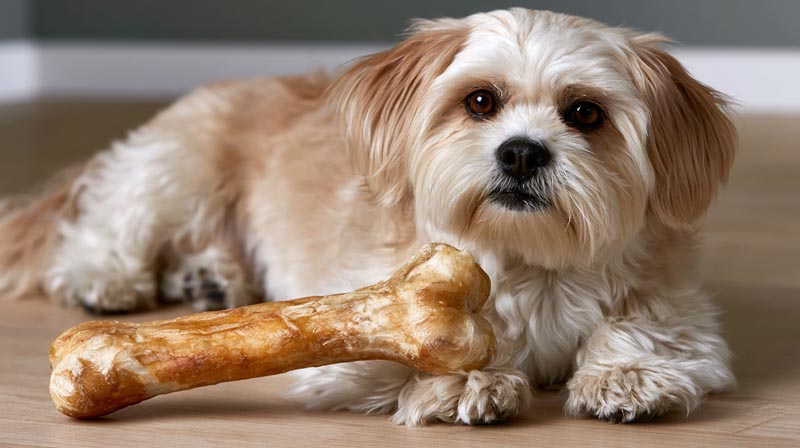
The ranking below applies 4 criteria to each product: VOHC acceptance status, active cleaning mechanism, ingredient safety profile, and size availability. Products without VOHC acceptance are included only where they represent a distinct functional category with documented use.
Best Overall Dog Bone for Teeth
Greenies Original Dental Treats hold VOHC acceptance for both plaque and tartar control. The toothbrush shape is designed to reach the gumline, which is where periodontal disease starts. Sizes range from Teenie (for dogs under 5 lbs) to Large (for dogs 25-50 lbs), with a Jumbo size for larger breeds.
Cost runs approximately $2.50 per bone at regular retail pricing (Indigenous Pet Products). That adds up to roughly $75/month for a daily routine, which sounds like a lot until you compare it to a professional dental cleaning under anesthesia running $300 to $800 in most US markets (PawBench, 2026).
My dog has been on Greenies once daily for 2 years. His last vet check came back with noticeably cleaner teeth than the year before brushing was added to the routine. The taste acceptance is high across most breeds, which is not something you can say about every dental product.
Best for Sensitive Stomachs and Allergies
WHIMZEES BRUSHZEES are plant-based, grain-free, and made with approximately 10 ingredients. No artificial colors, flavors, or preservatives. VOHC-accepted for both plaque and tartar.
The ridged geometry is doing real work here. The alligator, hedgehog, and brush shapes are not just cute. The grooves and ridges increase surface contact with tooth enamel during chewing, which means more mechanical abrasion per session.
For dogs sensitive to wheat or poultry (both present in Greenies), WHIMZEES removes those allergen concerns entirely. At approximately $1.41 per bone, they also cost less per dose than Greenies without sacrificing the VOHC credential.
Best for Heavy Tartar Buildup
OraVet Dental Hygiene Chews take a different approach than most dental bones. Rather than relying primarily on mechanical abrasion, OraVet uses delmopinol hydrochloride to create a barrier on tooth surfaces that prevents bacteria from adhering.
This makes OraVet particularly useful for dogs that already have established tartar concerns, where preventing new buildup between cleanings is the priority. The VOHC accepts it for tartar control. It is designed for daily use in dogs 6 months and older.
Some dogs with sensitive gastrointestinal systems have had issues with OraVet, according to user reports aggregated by multiple vet review sites. Worth knowing before committing to a full bag.
Best Enzymatic Bone for Dogs
Virbac C.E.T. Enzymatic Rawhide Chews combine mechanical abrasion with a chlorhexidine-glucose oxidase system that produces hydrogen peroxide as an antibacterial agent in the oral environment. VOHC-accepted.
These are better for dogs that do not do well with soft chews because they have a firmer texture closer to natural rawhide. The enzymatic system continues working for a period after the chewing session ends, which is an advantage the purely mechanical chews cannot claim.
Best Dog Bone for Teeth by Size
Small breeds (under 20 lbs): Greenies Teenie or WHIMZEES XS. Undersized chews become choking hazards; oversized ones skip the premolar contact zone where tartar accumulates most.
Medium breeds (20-50 lbs): Standard Greenies, WHIMZEES Regular, or OraVet Medium. Full contact across the premolars and carnassials.
Large and giant breeds (50+ lbs): Greenies Large or Jumbo, WHIMZEES Large, or Virbac C.E.T. Rawhide in the appropriate weight tier. For breeds like the Bullmastiff, Great Dane, or Mastiff, jaw force is high enough that the size match matters even more than for smaller dogs. An undersized chew for a 120-lb dog can be swallowed whole before any cleaning happens.
How Does Chewing Reduce Plaque and Tartar in Dogs?
Dental plaque starts forming within a few hours of eating, as bacteria combine with food particles and saliva to create a biofilm on tooth surfaces. Within 24 hours, that soft plaque begins mineralizing as calcium and phosphorus from saliva harden it into tartar (VCA Animal Hospitals). Once tartar forms, brushing alone cannot remove it. Professional scaling is the only option at that point.
This 24-hour window is why chewing frequency matters as much as chew type. A dental bone given once a week does not keep up with daily plaque formation cycles.
Mechanical Abrasion
Mechanical abrasion removes plaque physically. As the dog gnaws and chews, the bone or chew surface scrapes across the tooth enamel, disrupting the plaque biofilm before it can mineralize.
The VOHC protocol requires a minimum 15% plaque or tartar reduction across each clinical trial, and an average of at least 20% across 2 trials for a product to earn its seal (Royal Canin Academy). Products with both mechanical and chemical action consistently outperform those relying on abrasion alone.
Sodium hexametaphosphate (HMP) is the most clinically studied anti-tartar agent in dog dental products. Research published in a ResearchGate-hosted study on HMP in dogs found tartar reduction of 60 to 80% depending on dosage regimen, with a single daily HMP-coated biscuit reducing calculus formation by nearly 80%.
Enzymatic Action
Enzymatic bones work through 2 active systems: glucose oxidase generates hydrogen peroxide in the mouth, creating an antibacterial environment; lactoperoxidase uses that hydrogen peroxide to produce antibacterial compounds that target the oral microbiome directly.
The result is that enzymatic chews reduce the bacterial population driving plaque formation, not just the plaque that has already formed. Delmopinol, used in OraVet, works by reducing the surface tension that allows bacteria to adhere to enamel, which prevents biofilm formation at an earlier stage.
These mechanisms are why product type selection matters for dogs with active periodontal disease vs. dogs in maintenance. A dog with advanced gum disease benefits more from the antibacterial action than from abrasion alone.
Why Chewing Alone Has Limits
Chewing reaches the premolars and carnassials most effectively, which happen to be the teeth where tartar accumulates fastest. It does not reach the lingual (tongue-side) surfaces of most teeth, and it provides inconsistent contact with the incisors.
Brushing removes approximately 3 times more plaque than chewing alone when done correctly (AVDC). The combination of daily brushing plus a VOHC-accepted dental chew is more effective than either on its own. Where brushing is not tolerated, a daily VOHC chew is the best single-product alternative, not a complete substitute.
Are Hard Dog Bones Safe for Teeth?
Tooth fractures in dogs occur at a prevalence of 20-27%, and chewing on hard objects is among the leading causes alongside vehicle trauma (Journal of Veterinary Dentistry; Embrace Pet Insurance data). Most owners have no idea their dog has a fractured tooth because dogs instinctively adapt by chewing on the other side or swallowing food whole.
The problem is the consequence when you do find out. A complicated crown fracture, where the pulp is exposed, leaves 2 options: root canal or extraction. Both are expensive. Both require anesthesia.
The Fingernail Test and the Kneecap Test
The AVDC and Tufts University veterinary dental specialists use 2 practical tests before recommending any chew:
- Fingernail test: press your thumbnail firmly into the surface. If you cannot make a dent, the chew is hard enough to fracture enamel.
- Kneecap test: if you would not want the item thrown hard at your kneecap, it is too hard for a dog’s teeth.
Both tests eliminate the same category of products: antlers, cow hooves, hard nylon bones, Himalayan yak chews in large/dense forms, and cooked bones of any kind.
High-Risk Bone Types
Humans have 5 to 10 times more enamel than dogs (Montana Pet Dentist). Dog teeth are designed for grip and cutting, not sustained grinding. Extended chewing on hard surfaces causes both acute slab fractures and chronic wear-down of the enamel over time.
The 4 bone types with documented high fracture risk:
- Elk and deer antlers (split or whole)
- Cow hooves
- Hard nylon chews (Nylabone Power Chew and similar)
- Cooked or smoked marrow bones
Raw large knuckle bones sit in an intermediate zone. They are softer than the above, but fracture risk is still present in power-chewing breeds. If you give raw bones, supervision is mandatory. When chewing becomes a sustained gnawing session focused on a single spot, that is the moment to remove the bone.
If you want to look into whether antlers are safe for dogs or specifically how elk vs. deer antlers compare for dogs, the fracture risk difference between whole and split versions is worth understanding before you buy.
What to Do If a Tooth Fractures
Do not wait for symptoms. A fractured tooth can look fine on the surface while the pulp is already exposed and infected. Schedule a veterinary dental examination as soon as you notice any chip, discoloration, or asymmetry in the tooth.
The carnassial tooth (upper fourth premolar) is the most commonly fractured tooth from chewing. It is also one of the most functionally important. Loss of this tooth changes how the dog chews for the rest of its life.
What Dog Bone Size Is Right for Dental Cleaning?
Size match is one of the most overlooked variables in dental bone selection. The right size is not about the dog liking the chew. It is about whether the chew actually contacts the teeth where cleaning is needed.
An undersized bone for a large dog becomes a choking hazard and bypasses premolar contact entirely. An oversized bone for a small dog causes jaw fatigue before meaningful plaque contact happens. Neither scenario delivers the dental benefit the product is capable of providing.
Size-to-Weight Guidelines
| Dog Weight | Recommended Chew Size | Example Products |
|---|---|---|
| Under 5 lbs | Petite / Teenie | Greenies Teenie, WHIMZEES XS |
| 5-15 lbs | Mini / Small | Greenies Petite, Purina DentaLife Mini |
| 15-25 lbs | Small / Regular | Greenies Regular, WHIMZEES Small |
| 25-50 lbs | Regular / Medium | Greenies Large, OraVet Medium |
| 50+ lbs | Large / Jumbo | Greenies Jumbo, WHIMZEES Large |
Brachycephalic Breeds
Flat-faced breeds including French Bulldogs, Bulldogs, Pugs, and Boston Terriers have compressed jaw anatomy that affects both chewing mechanics and dental crowding. Crowded teeth trap more plaque in the gaps between them, making these breeds particularly prone to accelerated periodontal disease.
For brachycephalic dogs, softer chews with a flexible texture are better suited than hard or semi-rigid options. The jaw cannot generate full contact force across a stiff chew, so the cleaning action is inconsistent. WHIMZEES and similar plant-based flexible chews work better for this group than standard rawhide or hard nylon options.
How to Read the Chew Length
A dental bone should be longer than the dog’s muzzle. This prevents the dog from attempting to swallow it whole and ensures the chew reaches back to the carnassial teeth, which are the largest and most tartar-prone teeth in the mouth.
A good rule of thumb I learned from my own vet: hold the chew up to your dog’s muzzle before you buy. If the whole thing fits in the mouth at once, go up a size. That single check has prevented more choking incidents than any amount of packaging research.
How Often Should Dogs Chew Bones for Dental Benefits?
VOHC clinical trial protocols use daily chewing as the standard test condition. This means the plaque and tartar reduction percentages on VOHC-accepted product labels are based on daily use. Give the chew less often, and the reduction numbers no longer apply.
Plaque begins hardening into tartar within 24 hours (VCA Animal Hospitals). A chew given every 3 days is not keeping pace with that formation cycle. The 24-hour window is the biological argument for why daily use is the recommendation, not just a marketing push from product manufacturers.
Daily vs. Several Times Per Week
NBC News veterinary sources suggest dental treats 2 to 3 times per week as a minimum when combined with regular brushing. Without brushing, daily becomes the practical floor for meaningful plaque control.
The combination outperforms either method alone. A 2024 review in dvm360 notes that daily brushing plus a VOHC-accepted chew reduces plaque more effectively than either strategy in isolation. Brushing covers the lingual and incisor surfaces that chewing misses. The chew covers the premolars and carnassials that many dogs resist having brushed.
Chewing Session Length
Most VOHC-accepted dental chews are designed to last 10 to 20 minutes for the average dog. A chew consumed in under 2 minutes has not had enough contact time with tooth surfaces to achieve meaningful abrasion.
- Aggressive chewers may need larger sizes to extend session length
- Senior dogs or dogs with jaw pain may need softer options that require less force
- Dogs that gulp chews whole are a supervision concern regardless of size
Age-Specific Frequency Adjustments
Puppies (under 6 months): Most VOHC-accepted products are not recommended before 6 months. Deciduous (baby) teeth have shallower roots and softer enamel. Puppy-specific rubber teething toys and very soft chews are safer during this period. More on this in the puppy section below.
Adult dogs (1-7 years): Daily use of an appropriately sized VOHC chew is the standard recommendation. This is when the routine is easiest to establish and when prevention is most effective at delaying professional cleaning frequency.
Senior dogs (7+ years): The AVDC reports that periodontal disease affects nearly all dogs by age 7, and enamel wear in older dogs increases fracture risk from firmer chews. Daily use of a softer enzymatic chew remains beneficial, but texture selection becomes more conservative. More detail in the senior dog section below.
If you are researching safe chewing options broadly or comparing how long-lasting chews hold up over extended sessions, both factors interact with how often and how long your dog actually chews, which determines whether any dental benefit is actually happening.
What Ingredients in Dog Bones Support Dental Health?
Reading a dental bone ingredient list takes about 30 seconds. Most people skip it. That’s a problem, because the gap between a product with genuine active ingredients and one that’s just a flavored chew is not visible from the packaging.
3 categories of ingredients matter: active dental agents that reduce plaque or tartar chemically, texture agents that drive mechanical abrasion, and preservatives that may affect long-term safety.
VOHC-Recognized Active Dental Ingredients
Sodium hexametaphosphate (HMP) is the most clinically studied anti-tartar agent in dog dental products. Research published via ResearchGate found tartar reduction of 60 to 80% depending on dosage, with a daily HMP-coated biscuit reducing calculus formation by nearly 80%.
HMP works by binding salivary calcium, preventing it from attaching to plaque and mineralizing into tartar. It is the same chemistry used in some prescription dental diets.
- Glucose oxidase: generates hydrogen peroxide in the mouth, creating an antibacterial environment
- Lactoperoxidase: uses that hydrogen peroxide to produce compounds that disrupt the oral bacterial biofilm
- Delmopinol hydrochloride: reduces bacterial adhesion to tooth surfaces at the biofilm level (used in OraVet)
- Chlorhexidine: antiseptic agent used in Virbac C.E.T. rawhide chews; dvm360 notes increased efficacy vs plain rawhide
Texture Agents That Drive Abrasion
Mechanical abrasion comes down to the chew’s texture and firmness. Not all texture agents are equal.
Cellulose fibers add a slightly abrasive surface structure that scrapes plaque during chewing. Many compressed dental chews use this. Effectiveness depends heavily on how the dog chews, not just what the product contains.
Plant-based starches (potato starch, pea flour, rice flour) form the structural matrix in products like WHIMZEES. They provide a semi-firm texture that resists quick dissolution, extending contact time across tooth surfaces.
Ingredients to Avoid
| Ingredient | Found In | Concern |
|---|---|---|
| BHA (butylated hydroxyanisole) | Some rawhide, treats | Listed as possible carcinogen in California; linked to liver/kidney damage (Dogster) |
| BHT (butylated hydroxytoluene) | Commercial treats | More toxic than BHA in rat studies; suspected carcinogen (Skippers Pet Products) |
| Propylene glycol | Soft chews, moist treats | Linked to Heinz body anemia; avoid in regular rotation |
| Artificial colors/flavors | Many mass-market chews | No dental function; some linked to behavioral issues (Pupford) |
Natural preservatives (tocopherols/vitamin E, ascorbic acid/vitamin C, rosemary extract) are the safer alternative. Look for these terms on the ingredient label rather than BHA or BHT.
What Do Veterinary Dentists Say About Dog Bones for Teeth?
The AVDC and AAHA are the two primary professional organizations that publish guidance on canine dental care. Their positions on dental bones are consistent: VOHC-accepted dental chews are a legitimate supplement to brushing, not a replacement for it.
AAHA guidelines recommend annual professional dental cleanings starting at 1 year for small-breed dogs and 2 years for larger breeds (AAHA Dental Care Guidelines). Professional cleanings reach below the gumline. Chewing does not.
The VOHC Seal in Practice
Greenies, WHIMZEES, OraVet, Virbac C.E.T. VeggieDent FR3SH, Purina DentaLife, and Pedigree DentaStix all hold current VOHC seals as of 2024-2025 (VOHC accepted products list).
Blue Buffalo earned a VOHC Tartar seal in 2025. SwedenCare’s ProDen PlaqueOff Soft Chews earned acceptance for both plaque and tartar in 2024. The list is updated as new products pass clinical review.
Key clinical threshold: products must demonstrate a statistically significant plaque or tartar reduction of at least 15% per trial, with a combined average of 20% across 2 trials, before the VOHC awards any seal (Royal Canin Academy).
What Vets Say About Specific Products
Purina DentaLife’s manufacturer trials show an average 57% tartar reduction with daily use (NBC News veterinary source compilation, 2026). This is among the higher single-product reduction figures in the VOHC-accepted category.
OraVet is specifically recommended by board-certified veterinary dentists for dogs with active gingivitis because delmopinol addresses the bacterial biofilm mechanism rather than just the surface plaque. The COMPLETE ORAL HEALTH ASSESSMENT protocol (COHAT) guide from PetHealthCtr recommends OraVet alongside Virbac C.E.T. Hextra as the 2 preferred at-home chew options.
Professional Cleaning vs. Daily Chewing: The Numbers
Daily chewing is prevention. Professional cleaning is treatment. The AAHA distinguishes these clearly.
- Professional cleaning under anesthesia costs $300 to $800 in the US (PawBench, 2026)
- VOHC-accepted chews cost $0.50 to $1.50 per day, or $15 to $45 per month
- Small and medium breeds (under 50 lbs) typically need a professional cleaning annually (COHAT guide)
- Large breeds typically need one every 1 to 2 years
The math is clear. Consistent daily chewing may not eliminate the need for professional cleanings, but it can extend the interval between them. That is what the AVDC means when it says chews supplement rather than replace professional care.
How Do Dog Bones for Teeth Compare to Other Dental Care Options?
Dental bones are one tool. The full toolkit includes daily brushing, dental diets, water additives, and professional cleaning. Most dogs will do better with 2 or 3 of these combined than any single option alone.
A 2024 study published in PMC evaluated 6 dental homecare protocols over 8 weeks. The finding that matters: combining a water additive with either brushing or a dental chew produced better results than either method used alone. No single product dominated across all measures.
Brushing vs. Dental Chews
Daily brushing with dog-specific toothpaste is the gold standard for home dental care, according to the AVDC and the 2023 Frontiers in Veterinary Science study on water additives.
Brushing covers: lingual (tongue-side) surfaces, incisors, and gingival margins where periodontal disease originates.
Dental chews cover: premolars and carnassials through mechanical abrasion; some also provide systemic antibacterial effects through enzymatic or chemical action.
The practical reality: most dogs tolerate dental chews more readily than brushing. A VOHC-accepted chew used daily is the pragmatic second-best option when brushing is consistently refused.
Water Additives
Water additives used alone, without any mechanical care, do not significantly reduce existing dental deposits (PMC study, 2024 and 2023 Frontiers in Veterinary Science).
They may reduce new plaque formation by 10-20% when combined with brushing (RunyePet analysis of veterinary study data). Their main proven benefit is breath freshening through bacterial reduction in the oral environment. That is useful, but it is not plaque or tartar control.
Dental Diets vs. Dental Chews
Prescription dental diets (Hill’s t/d, Purina DH) are VOHC-accepted and engineered with specific kibble size and texture to create mechanical cleaning on every bite. They address the teeth that chews often miss because every meal becomes a cleaning event.
The tradeoff:
- Dental diets require switching the primary food source, not just adding a chew
- Some dogs with food sensitivities cannot tolerate the protein sources in available dental diets
- Cost is higher than a daily chew routine when calculated per month
- Dental chews are additive to any diet, with no transition required
For dogs that handle both, the combination of a VOHC dental diet plus a daily VOHC chew covers more tooth surfaces than either alone. For most pet owners, a VOHC chew added to a regular diet is the practical starting point.
What Dog Bones for Teeth Are Best for Puppies?
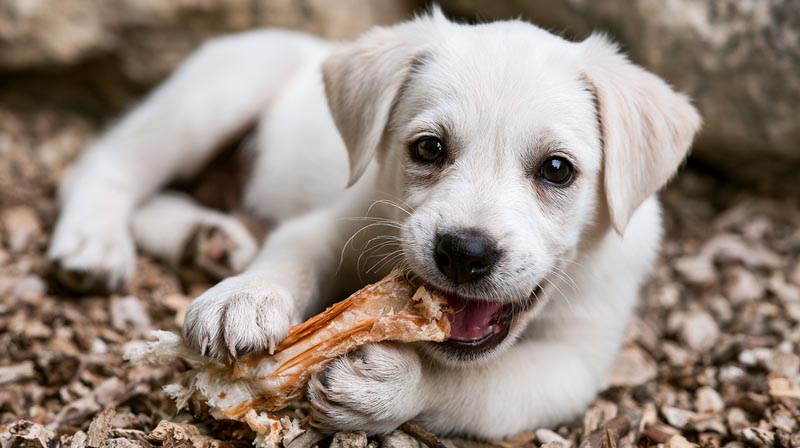
Most VOHC-accepted dental products are not recommended before 6 months of age. This is not an arbitrary cutoff. Before 6 months, puppies are still transitioning from deciduous (baby) teeth to permanent adult teeth, and both the enamel and root depth of baby teeth make hard or semi-hard chews a real fracture risk.
A broken baby tooth can cause infection that damages the permanent tooth developing beneath it (Houndsy veterinary dental guide, 2025). That is the kind of early dental problem that sets up gum disease years before the dog reaches adulthood.
Deciduous Teeth vs. Adult Teeth
Puppies begin teething around 3 weeks. By 6 months, most baby teeth have fallen out and permanent adult teeth are in place (Dogwood Animal Hospital, 2026). Large breeds may not complete this transition until 9 to 12 months.
Key difference from adult teeth: deciduous teeth have shallower roots, thinner enamel, and are designed for nursing, not sustained chewing. Any product that requires significant jaw force is wrong for this stage.
Safe Options Before 6 Months
The right approach before adult teeth come in:
- Rubber teething toys (KONG Puppy line) that have give under pressure
- Soft puppy-specific dental chews labeled for dogs under 6 months
- Dental wipes or finger brushes with puppy-formulated toothpaste
- Cold wet washcloth for brief gum soothing under supervision
This period is also when brushing tolerance is easiest to establish. A puppy that learns to accept a finger brush at 8 weeks is far easier to brush at 2 years than one that never had early mouth-handling exposure.
Introducing Dental Chews After 6 Months
Once permanent teeth are in, start with the smallest appropriate VOHC size for the dog’s weight. Greenies Teenie (under 5 lbs) and WHIMZEES XS are the entry points.
Supervise the first several sessions. Puppies are notorious for trying to swallow things whole. A chew that a 40-lb adult dog takes 15 minutes to finish may be gulped in 2 minutes by an enthusiastic 6-month-old. If the session ends in under 5 minutes with no visible chewing, go up a size or switch to a longer-lasting format.
Breeds like the Labrador Retriever, Golden Retriever, and Australian Shepherd tend to be enthusiastic chewers from early puppyhood. For these breeds, matching the chew size to jaw size early prevents the gulping problem before it becomes a habit.
For dedicated resources on the best chew bones for puppies specifically, the size-matching and texture guidance for younger dogs differs meaningfully from adult dog recommendations.
What Dog Bones for Teeth Are Best for Senior Dogs?
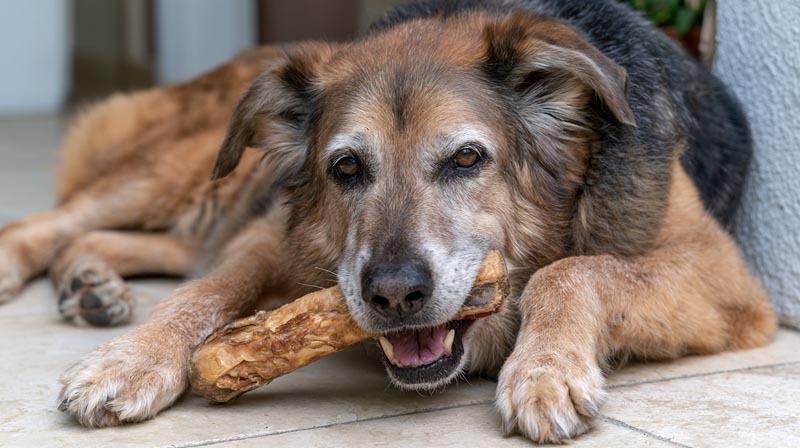
Dogs aged 8 years and above are more than 3 times more likely to have periodontal disease than dogs aged 2 to 4 years (Royal Veterinary College epidemiology study). By the time a dog reaches senior status, oral health is rarely starting from a clean baseline.
The challenge with senior dogs is a specific tradeoff: they need dental cleaning more urgently than younger dogs, but the options that clean most effectively (firm chews, hard bones) carry higher fracture risk as enamel wears down over years of use.
Enamel Wear and Fracture Risk in Older Dogs
Chronic chewing causes gradual enamel wear over time, leaving the dentin more exposed in senior dogs than in younger ones. A chew that was safe at age 2 may cross the fracture threshold by age 9, not because the chew changed but because the tooth did.
Safe texture range for senior dogs: semi-firm to soft enzymatic chews that yield under moderate pressure. This rules out antlers, hard nylon bones, and dense yak chews for most seniors.
AAHA notes that smaller-breed senior dogs have the highest periodontal disease risk due to crowded teeth and a more delicate jaw structure (AAHA Trends Magazine, 2023). For a Chihuahua or Yorkshire Terrier at age 10, a soft enzymatic chew is not just a preference. It is the appropriate medical choice.
Arthritis and Jaw Pain
Jaw muscle fatigue and temporomandibular joint discomfort are common in senior dogs, particularly larger breeds. A dog that seems disinterested in chewing may not be picky. It may be in pain.
Signs that a chew is causing discomfort: dropping the chew repeatedly mid-session, chewing only on one side, whimpering, or avoiding the chew after the first bite. Any of these warrant a texture adjustment and a veterinary check.
Best Senior Dog Dental Chew Options
WHIMZEES and Purina DentaLife are the 2 VOHC-accepted products most commonly recommended for senior dogs in veterinary-reviewed sources. Both are softer than Greenies while still carrying VOHC clinical evidence.
OraVet is also well-suited to seniors because its delmopinol barrier mechanism does not require sustained hard chewing to work. For a senior dog with jaw pain or missing teeth, OraVet delivers dental benefit with less physical demand on the mouth than purely mechanical chews.
Breeds with known dental health challenges like the Dachshund, Pomeranian, and Shih Tzu tend to accumulate tartar faster with age and benefit most from a consistent soft enzymatic chew routine alongside annual professional cleanings.
For dogs with established dental disease or post-cleaning recovery, resources on how long dogs should chew on hard chews provide practical session-length guidance that applies especially to seniors who may over-chew if left unsupervised.
FAQ on Best Dog Bones For Teeth
What are the best dog bones for teeth cleaning?
VOHC-accepted dental chews are the most clinically supported option. Greenies, WHIMZEES, and OraVet all hold the Veterinary Oral Health Council seal, meaning they passed controlled clinical trials proving meaningful plaque and tartar reduction.
Are raw bones good for dog teeth?
Raw bones provide mechanical abrasion but carry a tooth fracture risk of 20-27%. No raw bone holds a VOHC seal. Large raw knuckle bones are softer than weight-bearing leg bones, but supervision is mandatory regardless of type.
What dog bones are unsafe for teeth?
Antlers, cow hooves, cooked bones, and hard nylon bones all fail the fingernail test. If you cannot dent the surface with your thumbnail, it is hard enough to cause slab fractures on carnassial teeth.
How often should dogs chew dental bones?
Daily. VOHC clinical trials use daily chewing as the standard test condition. The plaque reduction percentages on product labels only apply with daily use. Occasional chewing does not keep pace with the 24-hour plaque formation cycle.
Can puppies have dental chew bones?
Not before 6 months. Deciduous teeth have shallow roots and thin enamel. A fractured baby tooth can damage the permanent tooth forming beneath it. After 6 months, start with puppy-appropriate soft chews in the correct size for body weight.
Are dental chews a substitute for brushing?
No. Brushing removes roughly 3 times more plaque than chewing alone, according to AVDC data. Dental chews cover premolars and carnassials well but miss lingual tooth surfaces entirely. Both methods together outperform either used alone.
What does the VOHC seal mean on dog dental bones?
It means the product passed at least 2 controlled clinical trials showing a statistically significant reduction in plaque, tartar, or both. The minimum threshold is 20% average reduction across trials. It is the only independent dental efficacy standard for pet products.
What ingredients should I look for in dog dental bones?
Look for sodium hexametaphosphate, glucose oxidase, lactoperoxidase, or delmopinol as active agents. Avoid BHA, BHT, and propylene glycol. Natural preservatives like mixed tocopherols and ascorbic acid are the safer alternatives for long-term daily use.
Are dental bones safe for senior dogs?
Yes, with the right texture. Senior dogs have worn enamel and higher fracture risk, so hard or dense chews are inappropriate. Soft enzymatic options like WHIMZEES or OraVet deliver dental health benefits without placing excessive stress on aging teeth.
How do dental bones compare to professional dog teeth cleaning?
They are preventive tools, not treatments. Professional cleaning under anesthesia reaches below the gumline where periodontal disease originates. Daily dental bones can extend the interval between cleanings but cannot replace them. Annual veterinary dental exams remain necessary.
Conclusion
This conclusion is for an article presenting the best dog bones for teeth as a practical tool in canine oral health, not a complete solution on its own.
The VOHC Seal of Acceptance is the only standard worth trusting. Without it, dental claims on packaging are unverified marketing.
Pair daily enzymatic chews with regular brushing. That combination covers more tooth surfaces than either method alone and slows periodontal disease progression meaningfully.
Size match matters. So does texture. A chew that works for an adult German Shepherd is not the right choice for a senior Miniature Schnauzer.
Canine dental hygiene requires consistency. Annual professional cleanings, daily chewing, and ingredient-aware product selection together give your dog the best long-term outcome.