My puppy chewed through a pair of boots in under ten minutes. That’s when I realized I needed to find the best chew bones for puppies before the furniture was next.
Picking the right chew bone isn’t just about saving your stuff. The wrong product can crack developing teeth, cause choking, or lead to intestinal blockages. And with hundreds of options on the shelf, from bully sticks to rubber toys to dental chews, it’s hard to know what’s actually safe for a teething puppy.
This guide breaks down which chew bones work for different breeds and sizes, what materials to avoid, how long chewing sessions should last, and whether dental chews actually clean teeth. Everything here is based on veterinary guidelines and real product testing.
What Makes a Chew Bone Safe for Puppies
Not every chew bone on the shelf belongs in your puppy’s mouth. My vet told me this on day one, and I wish more people heard it that early.
Puppy teeth are wildly different from adult dog teeth. They’re sharper, yes, but also way more fragile. Puppies start with 28 baby teeth that begin falling out around 3-4 months of age, with a full set of 42 adult teeth typically in place by 7-8 months. During that window, anything too hard can crack a developing tooth and send you straight to the emergency vet.
Banfield Pet Hospital data from 2023 shows 73% of dogs seen at their locations were diagnosed with dental-related issues. That number includes dogs whose dental problems started in puppyhood with the wrong chew products.
The Fingernail Test
Here’s a quick trick that actually works. Press your fingernail into the chew bone. If you can leave a small indent, it’s probably soft enough for a puppy. If the surface doesn’t give at all, skip it.
This rules out most antlers, hard nylon bones designed for adults, and weight-bearing bones from large animals. All of those can fracture puppy teeth before the adult set even comes in.
Size and Choking Risk
Too small: anything your puppy can fit entirely in their mouth is a choking hazard. Period.

Too large: oversized bones can strain a young jaw and discourage healthy chewing habits.
Just right: the chew should be slightly larger than your puppy’s mouth, easy to grip, and impossible to swallow whole.
Puppies that gulp food tend to gulp chew fragments too. If your pup is a fast eater, stick with non-edible rubber chews or closely supervised edible options.
Digestibility Matters More Than You Think
Every edible chew bone will break down into smaller pieces eventually. The real question is whether those pieces pass safely through your puppy’s digestive system or create a blockage.
Rawhide is the classic offender here. Pieces swell in the stomach and intestines, and puppies can’t break them down efficiently. Single-ingredient chews like bully sticks and beef tendons are generally more digestible, though you still need to watch for large chunks being swallowed.
Cornell University’s veterinary college notes that 80-90% of dogs over age 3 show some form of periodontal disease. Starting dental care early, with safe chew bones included, sets your puppy up for a healthier mouth long-term.
The VOHC Seal
The Veterinary Oral Health Council awards a Seal of Acceptance to products that reduce plaque or tartar by at least 20% in clinical trials. They don’t test products themselves. They review submitted trial data from manufacturers.
Not every great puppy chew carries the VOHC seal, but if you see it on a product, you know the dental claims have been independently verified. Look for it especially on dental chews and dental sticks marketed for puppies.
Best Chew Bones for Puppies by Type
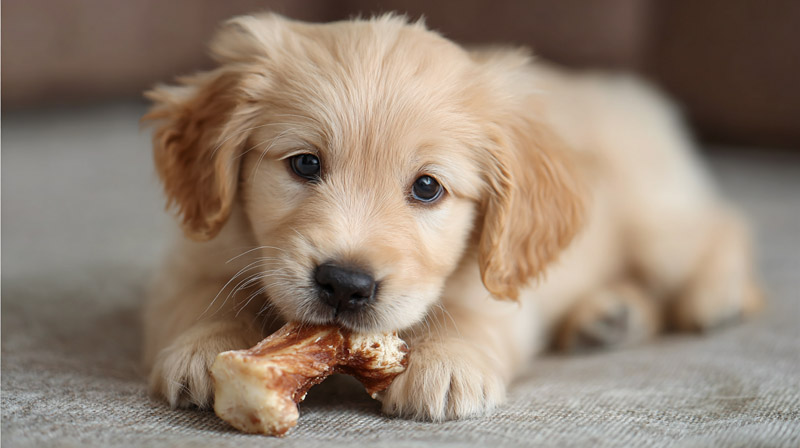
Picking the right chew bone means understanding what’s out there. And honestly, the options have gotten a little overwhelming. Grand View Research valued the global pet toys market at $8.88 billion in 2023, with chew toys holding the largest product segment share. There’s no shortage of choices.
But not all of them belong anywhere near a puppy.
Natural Chew Bones
Natural chews come from animal-sourced materials. They satisfy a puppy’s instinct to gnaw on something real, and most are fully digestible when sized correctly.
Bully sticks remain one of the most popular natural options. They’re made from a single ingredient (beef pizzle), they soften as the puppy chews, and they don’t splinter. You can learn more about whether bully sticks are safe before picking them for your puppy. One downside: they smell. You’ll know what I mean the first time you open the bag.
Beef tendons are another solid pick. They’re lower in fat than bully sticks and still provide a good chewing workout. Tendons work well for puppies who aren’t aggressive chewers yet.
Raw marrow bones (frozen) can work for older puppies approaching their adult teeth stage, but they carry risks. Bacterial contamination from raw products is real. And the marrow inside is high in fat, which can upset sensitive puppy stomachs.
| Natural Chew | Digestibility | Best For |
|---|---|---|
| Bully sticks | High | Moderate to strong chewers |
| Beef tendons | High | Light to moderate chewers |
| Raw marrow bones | Low (bone itself) | Older puppies, supervised only |
| Turkey tendons | High | Small breeds, gentle chewers |
Rubber and Synthetic Chew Toys
Kong Puppy and Nylabone Puppy Chew are the two names you’ll hear most from vets and trainers. Both are designed specifically for developing teeth and gums.
The Kong Puppy is made from a softer rubber compound than the adult version. You can stuff it with peanut butter or wet puppy food and freeze it overnight. That frozen filling gives sore gums something cold to work against. Took me about three puppies to figure out this trick, but it’s the single best teething hack I know.
Benebone makes a puppy-specific wishbone that’s flavored with real food ingredients. It’s shaped for a puppy to hold between their paws while chewing. Synthetic chews like these don’t break apart the way edible chews do, so there’s less risk of intestinal blockage. But you do need to replace them once they show heavy wear or small pieces start to chip.
Future Market Insights reports chew toys account for 28% of the global pet toys market share in 2025, the largest of any product category. Rubber and nylon options drive a big chunk of that number.
Edible Chew Bones
Whimzees Puppy dental chews have earned a following for good reason. They’re vegetable-based, grain-free, and come in puppy-specific sizes. Wellness Pet Food states that Whimzees Brushzees reduced plaque and tartar by 20% on average in clinical trials, earning the VOHC Seal of Acceptance.
N-Bone Puppy Teething Rings are another reliable pick. They’re soft enough for teething gums and dissolve as the puppy chews, reducing choking risk.
Himalayan yak chews get a lot of attention these days. They’re made from hardened yak and cow milk, and they last longer than most edible options. But here’s the catch: they can be too hard for very young puppies. I’d wait until your pup has most of their adult teeth before introducing yak chews. If you’re curious about the makeup, here’s what yak chews actually contain.
Stuffed Kongs (frozen with pumpkin or plain yogurt inside) technically fall into this category too. They combine the safety of a rubber toy with the reward of an edible treat.
Best Chew Bones by Puppy Size and Breed
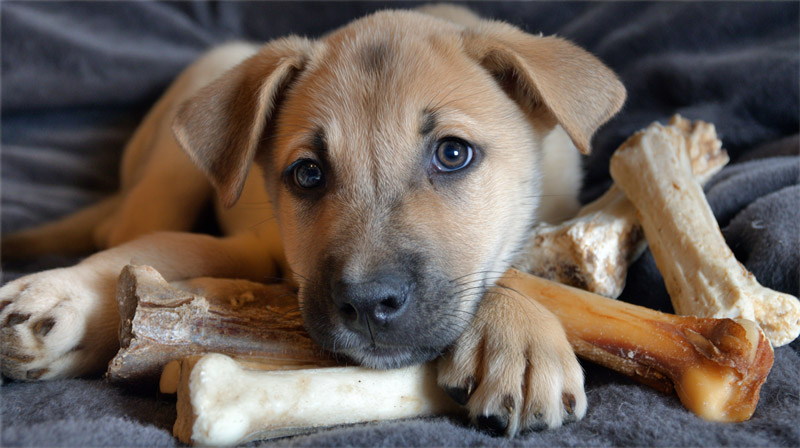
A Chihuahua puppy and a German Shepherd puppy have almost nothing in common when it comes to chew bone selection. Size, jaw strength, and chewing style all change the equation.
Waltham Petcare Science Institute research found that extra-small dog breeds (under 14.3 lbs) were up to five times more likely to develop periodontal disease than giant breeds. So smaller puppies actually need more attention paid to their dental health from the start, not less.
Small Breed Puppies
Breeds like the French Bulldog, Yorkshire Terrier, Maltese, and Pomeranian need chew bones that are soft, small in diameter, and easy to grip.
Best picks under 15 lbs:
- Nylabone Puppy Chew in X-Small or Petite size
- Kong Puppy (small)
- N-Bone Puppy Teething Rings
- Thin bully sticks, 4-6 inches
Avoid anything marketed as “long lasting” for small breed puppies. Those products are usually too hard and dense for tiny jaws.
Medium Breed Puppies
Beagles, Australian Shepherds, Cocker Spaniels, and Bulldogs fall into this middle ground. They have more jaw strength than toy breeds but don’t need the heavy-duty stuff meant for giant breed puppies.
Bully sticks in regular thickness work well here. So does the Benebone Puppy Wishbone in the medium size. Whimzees Puppy in the medium/large format gives a good chewing session without being overwhelming.
Medium breeds like the American Staffordshire Terrier and Staffordshire Bull Terrier sometimes show aggressive chewing tendencies even as puppies. If you notice your medium breed puppy destroying chews in minutes, look into options designed for heavy chewers.
Large and Giant Breed Puppies
Puppies from breeds like the Labrador Retriever, Golden Retriever, Great Dane, and Bullmastiff need chew bones that can handle serious jaw pressure without being dangerously hard.
Thick bully sticks hold up better for these guys. XL Himalayan dog chews can work once the puppy has most of their adult teeth in place. Kong Puppy in the large size gives big breed puppies something proportional to their mouth.
Large breed puppies grow fast. A Rottweiler puppy at 4 months might already outgrow a chew that was perfect at 8 weeks. Reassess chew sizes every few weeks during the first six months.
The American Veterinary Medical Association reports that 70% of U.S. households owned a pet in 2023. A significant portion of those are large breed dogs whose owners need size-appropriate products from day one.
Chew Bones for Teething Puppies
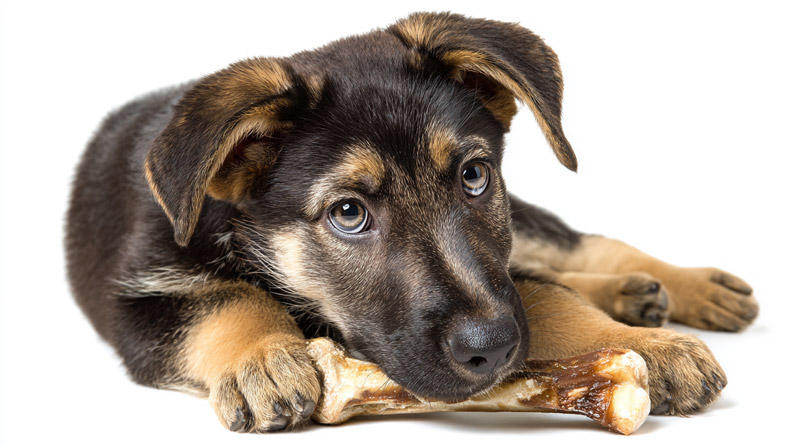
Teething is probably the single most frustrating period of puppyhood. Not for the dog. For you. Because everything you own becomes a potential chew toy.
Puppies typically start losing baby teeth around 12-16 weeks, with the process running through about 6-8 months of age. The peak discomfort usually hits between 4 and 6 months, when adult premolars and molars are pushing through the gums. That’s when the chewing gets intense.
What Happens During Teething
| Age | What’s Happening | Chewing Behavior |
|---|---|---|
| 2–4 weeks | Baby teeth start appearing | Minimal, still nursing |
| 8 weeks | All 28 baby teeth are in | Moderate, exploring |
| 3–4 months | Baby teeth begin falling out | Increasing, gum soreness |
| 4–6 months | Adult teeth pushing through | Peak chewing, high discomfort |
| 6–8 months | 42 adult teeth mostly in place | Chewing starts to ease off |
Best Chews for the Teething Window
Frozen options are the MVP here. Cold numbs inflamed gums the same way it works for human babies. Stuff a Kong Puppy with plain yogurt or mashed banana, freeze it overnight, and hand it over in the morning. My puppy went from destroying baseboards to quietly working on a frozen Kong in about two days.
Frozen carrots also work surprisingly well. They’re cheap, they’re crunchy enough to feel good on sore gums, and they’re low calorie. Just cut them to an appropriate size so there’s no choking risk.
Soft rubber teething toys with textured surfaces give puppies something to press their gums against. The texture provides relief without the hardness that could damage emerging teeth.
Teething vs. Boredom Chewing
Not all chewing during this period is teething-related. Some of it is just… puppy behavior. Boredom chewing tends to happen when your puppy hasn’t had enough exercise or mental stimulation. Teething chewing focuses more on gnawing and pressing objects against the gums.
If your puppy is going after chair legs and shoes but ignoring their chew toys, the issue might be boredom rather than sore gums. Adding more play sessions and rotating chew options usually helps. Understanding common behavioral issues in puppies can give you a broader picture of what’s driving the chewing.
Chew Bones to Avoid Giving Puppies
Some products that are perfectly fine for adult dogs can seriously hurt a puppy. This section might save you a vet bill.
Cooked Bones
Cooked poultry bones, pork bones, and rib bones should never be given to any dog, but especially not puppies. Cooking makes bones brittle. They splinter into sharp fragments that can puncture the esophagus, stomach, or intestines.
This is not a “sometimes it’s fine” situation. Cooked bones are the number one cause of bone-related emergency vet visits. Just don’t do it.
Rawhide
The problems with rawhide for puppies:
- Pieces swell in the digestive tract, causing blockages
- Chemical processing (bleaching, preservatives) adds unknown substances
- Large chunks break off and become choking hazards
- Not easily digested by a puppy’s developing system
If you’ve been wondering whether products like cow ears count as rawhide, it’s worth looking into. Some alternatives that look like rawhide are actually quite different in how they’re processed and digested.
Hard Antlers and Dense Nylon Bones
Whole antlers are too hard for puppy teeth. The USDA’s APHIS program notes that puppies don’t have their full adult set until 7-8 months. Chewing on rock-hard surfaces before then risks fracturing deciduous teeth or damaging incoming adult teeth.
If you’re set on trying antlers eventually, split antlers expose the softer marrow center and reduce fracture risk. But even those should wait until teething is mostly complete. There’s also a question of what age puppies can safely start chewing antlers that’s worth reviewing.
Adult-formula nylon bones (the ones marketed as “virtually indestructible”) are designed for fully developed adult jaws. Puppies don’t have the bite force to wear these down properly, and the surface is hard enough to chip baby teeth.
Weight-Bearing Bones from Large Animals
Femurs and leg bones from cattle or bison are extremely dense. Even for adult dogs, veterinary dentists recommend against them. For puppies, they’re a definite no.
VCA Animal Hospitals states that over 80% of dogs over age three have active dental disease. A lot of that damage starts with inappropriate chewing materials given too early.
How Long Should a Puppy Chew on a Bone
There’s a sweet spot. Somewhere between “not enough to matter” and “so much their gums are bleeding.”
The 10-15 Minute Rule
For puppies under 6 months, 10-15 minutes of supervised chewing at a time is a solid guideline. This gives them enough time to satisfy the urge without overdoing it on their developing jaw and teeth.
After 15 minutes, take the chew away. Put it in the fridge (if it’s an edible chew) or somewhere out of reach. You can offer it again later.
Older puppies approaching their full adult teeth (6+ months) can handle slightly longer sessions, maybe 20-25 minutes. But supervision is still non-negotiable.
When to Take the Chew Away
Size reduction rule: if the chew bone has worn down to a size your puppy could swallow whole, it’s done. Throw it out. This applies to bully sticks, yak chews, edible dental chews, and anything else that gets smaller over time. If you’re curious about general guidelines for removing hard chews, this breakdown on chewing duration covers it well.
Other signs it’s time to stop:
- Bleeding gums (a little pink on a teething puppy’s toy is normal, but active bleeding is not)
- Obsessive, frantic chewing that doesn’t stop when redirected
- Visible tooth chips or fragments on the chew
Rotation Keeps Things Interesting
Puppies get bored with the same chew bone fast. Rotating between 3-4 different types (a frozen Kong one day, a bully stick the next, a rubber teething toy after that) keeps their interest up and prevents obsessive attachment to one item.
It also lets you spread out the calorie load from edible chews. Bully sticks and yak chews are part of your puppy’s daily calorie intake, not extras on top of regular meals. Most people forget this and wonder why their puppy is gaining weight.
Do Chew Bones Clean Puppy Teeth
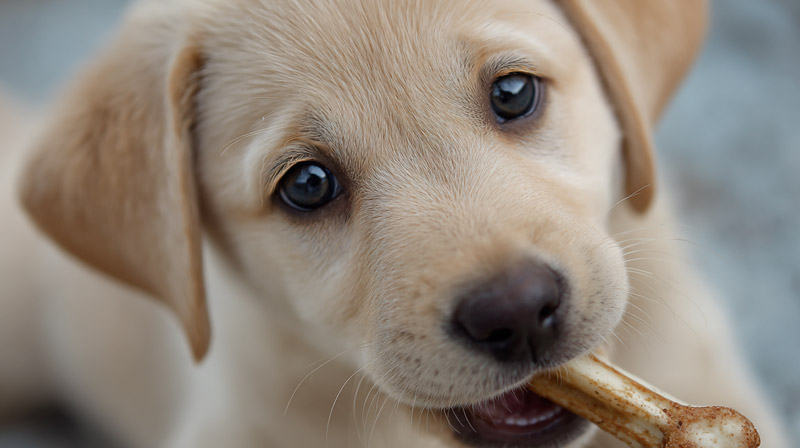
Short answer: yes, but with a big asterisk.
Chew bones reduce plaque and tartar buildup through mechanical abrasion. The scraping action as your puppy gnaws on a textured surface physically removes the soft bacterial film before it hardens into calcite deposits. A PMC-published study found that daily dental chews reduced calculus coverage by 20% to 35% and plaque by 12% to 17% compared to dogs that received no chew at all.
That’s real, measurable impact. But it’s not a replacement for brushing.
What the Science Actually Shows
Mechanical chewing works best on the back teeth. Dogs naturally use their premolars and molars to grind down chew bones, which is where the scraping action concentrates. Front teeth (incisors and canines) get almost no benefit from chewing alone.
A separate PMC study on vegetable-based dental chews showed plaque reduction of 36% to 44% in 30-day trials. The researchers noted that results were most effective on caudal (rear) teeth and recommended combining chews with active brushing for full-mouth coverage.
AAHA reports that fewer than 10% of pet owners brush their dog’s teeth daily. Dental chews fill the gap for the other 90% who just aren’t going to pick up a toothbrush.
The VOHC Standard for Dental Claims
Mechanical products: must reduce plaque or tartar by at least 10% to earn the VOHC Seal of Acceptance.
Chemical agents: products using anti-plaque ingredients need to hit a 20% reduction threshold.
PetMD reports that 93% of dogs over age 3 have dental issues. Products carrying the VOHC seal have at least passed independent scrutiny, which is more than most of what you’ll find on pet store shelves.
Greenies (Mars PetCare) earned VOHC acceptance for both plaque and tartar across multiple sizes, including puppy-specific formulations. That dual designation is uncommon and worth noting when comparing Whimzees against Greenies for your puppy.
Chew Bones Are Supplemental, Not Primary
Think of dental chew bones the way you’d think of mouthwash. Useful? Absolutely. A substitute for brushing? Not a chance.
The ideal routine for a puppy looks like this:
- Daily toothbrushing with a puppy-safe enzymatic toothpaste
- One appropriately sized natural dental chew per day
- Regular vet checkups that include oral examinations
Start getting your puppy used to having their mouth handled early. The Royal Canin Academy notes that introducing toothbrushing at a young age increases long-term compliance from both pets and owners.
How to Pick the Right Chew Bone for Your Puppy
All the information in this article means nothing if you freeze in the pet store aisle staring at 40 different chew bone options. Been there. Done that. Bought the wrong thing three times before I figured out a system.
Here’s how to cut through it.
Start with Your Puppy’s Profile
| Factor | What to Check | Why It Matters |
|---|---|---|
| Age | Under or over 6 months | Determines hardness level |
| Weight | Current weight, not projected adult size | Determines chew bone size |
| Chewing style | Light nibbler vs. power chewer | Determines material (rubber vs. edible) |
| Allergies | Known protein or grain sensitivities | Determines ingredient restrictions |
A Shih Tzu puppy at 4 months needs something completely different from a Siberian Husky puppy at the same age. Weight and jaw structure vary wildly between breeds, so don’t buy based on age alone.
Match Chewing Intensity to Material
Light chewers (slow, gentle, easily distracted) do well with soft rubber toys like Kong Puppy, frozen stuffable options, or thin natural chews. Many toy breeds and Cavalier King Charles Spaniels fall here.
Moderate chewers can handle standard bully sticks, Benebone puppy wishbones, and medium-density edible chews. Border Collies and Boxers as puppies tend to sit in this range.
Power chewers go through most products fast. Collagen chews offer a strong middle ground here, and the longest-lasting chew options are specifically built for dogs who demolish everything in minutes.
Budget and Replacement Frequency
Puppy chew bones are not a one-time purchase. They wear down, get gross, and need replacing regularly.
Lower cost, higher frequency: frozen Kongs (reuse the toy, only replace the filling), frozen carrots, and basic rubber teething toys. These cost almost nothing per session.
Mid-range: bully sticks run $2-5 each depending on thickness and length. A moderate chewer might go through one every 2-3 sessions. If you want to understand why bully sticks carry a higher price tag, the sourcing and processing explains most of it.
Premium: Himalayan yak chews, VOHC-approved dental chews, and specialty single-ingredient treats cost more per unit but often last longer.
Owning a dog adds up quickly. The real lifetime cost of a dog is something most people underestimate, and chew supplies are a recurring line item you should plan for from the start.
Where to Buy
Vet offices stock products that have been vetted (literally) for safety. You’ll pay more, but the selection tends to be curated for quality. If you’re looking for puppies with known health backgrounds, finding a reputable breeder who can recommend specific chew products is also useful.
Specialty pet stores like PetSmart and Petco carry the broadest selection. Staff can sometimes help match products to your puppy’s breed and age, though quality of advice varies.
Online retailers (Chewy, Amazon) offer convenience and subscription options. Chewy in particular lets you filter by puppy age and size, which saves time. Just watch for counterfeit products from third-party sellers on Amazon.
The Trial Approach
Don’t buy in bulk until you know what your puppy actually likes.
Grab one of each type: a rubber chew toy, a natural chew like a bully stick, an edible dental chew, and a frozen stuffable. Let your puppy try each one over a week. You’ll quickly see which format they prefer and which ones hold their attention longest.
Then buy more of the winners. Puppies can be weird about preferences. My last pup ignored every fancy chew I brought home and was obsessed with frozen banana-stuffed Kongs. Your mileage may vary.
FAQ on The Best Chew Bones For Puppies
What age can puppies start chewing bones?
Most puppies can start with soft chew toys around 8-12 weeks. Avoid hard bones until adult teeth are mostly in place, usually around 6-7 months. Stick with rubber teething toys and frozen Kongs during the early months.
Are bully sticks safe for puppies?
Bully sticks are one of the safer natural chew options. They soften as the puppy chews and don’t splinter. Always supervise and discard the stick once it’s small enough to swallow whole. Size it to your puppy’s breed.
Can puppies chew on Nylabones?
Only the puppy-specific formula. Standard Nylabones are too hard for developing teeth. The Nylabone Puppy Chew line uses softer material designed for baby teeth and teething gums. Replace once you see heavy wear or chipping.
How long should a puppy chew on a bone?
Limit sessions to 10-15 minutes for puppies under six months. Older puppies can go 20-25 minutes. Always supervise, and take the chew away if gums start bleeding or the puppy becomes obsessive about it.
Are rawhide bones safe for puppies?
No. Rawhide swells in the digestive tract and poses choking and blockage risks. Puppy stomachs can’t break it down efficiently. Choose safer alternatives like bully sticks, beef tendons, or rubber chew toys instead.
What chew bones help with puppy teething?
Frozen stuffable toys (like Kong Puppy filled with yogurt) work best. The cold numbs sore gums. Soft rubber teething toys with textured surfaces also provide relief. Frozen carrots are a cheap, low-calorie option that most puppies enjoy.
Can puppies chew on antlers?
Whole antlers are too hard for puppy teeth and can cause fractures. If you want to try them, wait until your puppy has their full set of 42 adult teeth. Even then, check whether antlers suit your dog first.
What is the best chew bone for a small breed puppy?
Kong Puppy (small), Nylabone Puppy Chew in X-Small, and thin bully sticks work well for breeds like Pugs and Dachshunds. Choose soft, narrow chews that match their smaller jaw size.
Do dental chew bones actually clean puppy teeth?
They reduce plaque and tartar through mechanical scraping, mostly on back teeth. Products with the VOHC Seal of Acceptance have clinical proof behind them. But dental chews supplement brushing. They don’t replace it.
How do I know when to throw away a chew bone?
Apply the swallow test. If the chew has worn down to a size your puppy could fit entirely in their mouth, throw it out. Also discard any chew showing cracks, sharp edges, or pieces breaking off during use.
Conclusion
Finding the best chew bones for puppies comes down to knowing your dog. Their age, breed size, chewing intensity, and where they are in the teething timeline all shape the right choice.
Stick with puppy-specific products from brands like Kong, Nylabone, and Benebone until that full set of 42 adult teeth comes in. Skip rawhide, cooked bones, and anything too hard to pass the fingernail test.
Rotate between natural chews, rubber toys, and frozen options to keep things interesting. Supervise every session. Toss anything that’s worn down to a swallowable size.
Pair chew bones with daily brushing and regular vet checkups. Good puppy dental health habits built now pay off for years. Your furniture will thank you too.