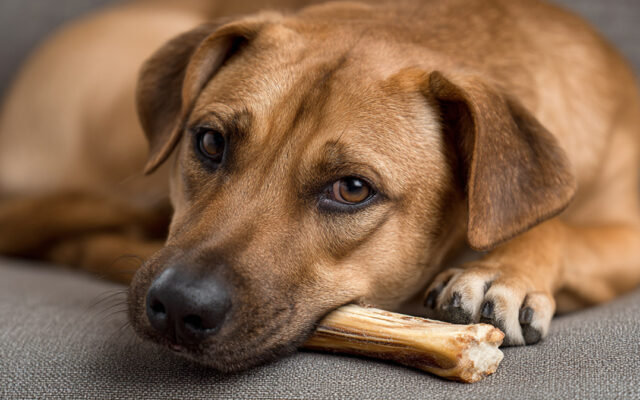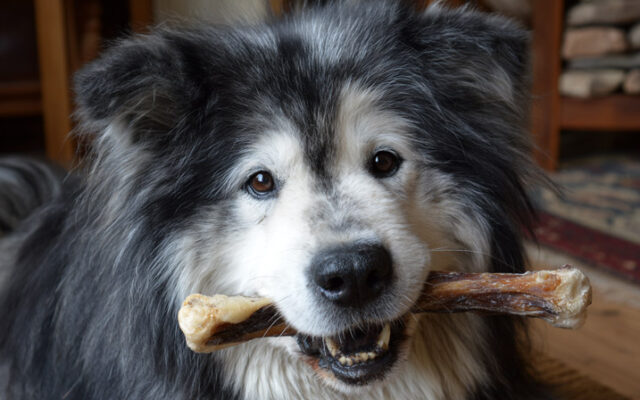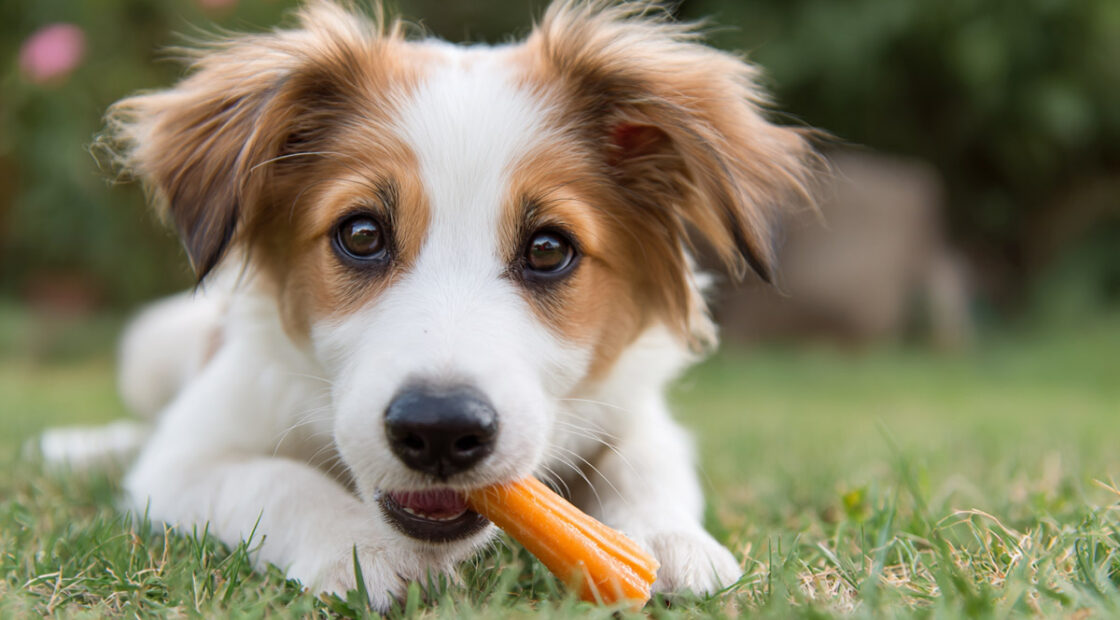
My dog used to destroy a rawhide chew in minutes, then spend the next day with an upset stomach. Switching to collagen chews for dogs fixed both problems.
These natural treats are made from the collagen-rich corium layer of beef hide, and they’re quickly replacing rawhide as the go-to long-lasting chew for good reason. They’re digestible, protein-dense, and actually support joint health and dental hygiene instead of just keeping your dog busy.
But not all collagen chews are the same. Quality, sizing, and sourcing all matter.
This guide covers what collagen chews are, how they’re made, their nutritional profile, safety compared to rawhide and bully sticks, the best products for different dog sizes, and what veterinarians actually recommend.
What Are Collagen Chews for Dogs

Collagen chews are natural dog treats made from the corium layer of beef or pork hide. That’s the soft inner layer of the skin, packed with collagen protein.
They come in sticks, rolls, braids, and rings. My dog goes through a braided collagen stick about once a week, and I’ve tried enough brands to know they’re not all the same.
The key difference between collagen chews and traditional rawhide comes down to processing. Rawhide uses the tougher outer hide layer and often goes through chemical treatments, including bleaching and preservatives. Collagen chews skip most of that.
They’re made from animal tissues rich in collagen protein, typically from grass-fed beef, pork skin, or fish skin. The corium is separated, shaped, and then dried or slow-baked without the harsh chemical baths that rawhide gets.
According to APPA’s 2025 State of the Industry Report, 94 million U.S. households now own at least one pet, and the demand for natural, digestible dog chew alternatives keeps climbing alongside that number.

Unlike synthetic chews from brands like Nylabone or Kong, collagen chews are fully consumable. Your dog eats them. That changes the safety equation entirely because you’re dealing with a food product, not a toy.
Grand View Research valued the natural dog treats market at $6.99 billion in 2024, with the chewable segment growing at a projected 14% CAGR through 2030. Collagen chews sit right in the middle of that growth.
How Collagen Chews Are Made

The manufacturing process starts with raw animal hides, usually beef. The hide gets split into layers.
The outer layer heads to the leather industry. The inner corium layer, which is where all the collagen lives, becomes your dog’s chew.
Separation and Processing
Step one is stripping the corium from the outer hide. This inner layer is naturally softer and more protein-dense than the tough exterior that becomes leather or traditional rawhide.
From there, most manufacturers use one of two methods:
- Air-drying at controlled temperatures to retain the collagen’s bioactive properties
- Slow-baking, which creates a firmer texture while keeping the amino acid profile intact
Some brands also use enzymatic treatment to break down the collagen slightly before drying. This pre-digestion step is what allows certain products to claim digestibility rates as high as 99%, according to manufacturer testing data.
Why the Process Matters
Rawhide processing typically involves lime baths, hydrogen peroxide washes, and sometimes formaldehyde-based preservatives. These chemicals are leftover from the leather tanning industry.
Collagen chew production skips most of those steps. No bleaching. No chemical preservation in reputable brands. The result is a single-ingredient chew that’s closer to a dried protein treat than an industrial byproduct.
Brands like Natural Farm, Pawstruck, and Earth Animal No-Hide have built their product lines around this cleaner processing approach. But quality still varies. Some manufacturers overseas cut corners. Always check where the product is sourced and how it’s made.
Nutritional Profile of Collagen Chews

Collagen chews are protein-heavy. Most products land somewhere between 70-90% crude protein, which is significantly higher than many commercial dog treats.
But protein content alone doesn’t tell the full story.
Amino Acid Breakdown
Collagen is loaded with three amino acids that matter most for connective tissue:
- Glycine: the most abundant amino acid in collagen, supports gut lining repair and immune function
- Proline: plays a direct role in cartilage formation and skin elasticity
- Hydroxyproline: unique to collagen, used by the body to stabilize collagen fibers in joints and bones
Collagen makes up roughly 30% of total protein in a dog’s body and about 70% of the protein in their skin, according to veterinary nutrition sources. So these aren’t random amino acids. They’re the building blocks your dog already uses in large quantities.
Fat and Calorie Content
This is where collagen chews beat most alternatives.
| Chew Type | Typical Fat Content | Protein Range |
|---|---|---|
| Collagen sticks | 2–4% | 70–90% |
| Bully sticks | 8–12% | 60–80% |
| Pig ears | 15–20% | 50–65% |
| Rawhide | 1–3% | 60–80% |
The low fat content (typically 2-4%) makes collagen chews a leaner option than bully sticks or pig ears. For dogs on weight management plans or breeds prone to pancreatitis, that gap matters a lot.
One thing collagen chews are not: a complete nutritional source. They’re a supplement and a treat. You wouldn’t replace meals with them any more than you’d eat protein bars for dinner. Well, some of us would, but it’s not recommended.
Health Benefits of Collagen for Dogs

The benefits here are real but sometimes overstated by marketing departments. Let me break down what actually holds up.
A 2021 study found that 52 dogs with early osteoarthritis symptoms showed significant pain reduction within four weeks of receiving collagen peptides. By week 16, all dogs had improved quality of life scores. That’s a meaningful result from a peer-reviewed study, not a brand’s marketing page.
Collagen Chews for Dogs with Joint Issues
Breeds that commonly deal with joint problems get the most from collagen supplementation. Labrador Retrievers, Golden Retrievers, and German Shepherds top the list.
Collagen supports cartilage maintenance and connective tissue repair. The glycine, proline, and hydroxyproline in these chews are the same amino acids your dog’s body uses to rebuild joint tissue naturally.
But let’s be honest. A collagen chew once or twice a week isn’t going to replace glucosamine-chondroitin supplements for a dog already diagnosed with hip dysplasia. It’s a support tool, not a treatment plan. Think of it as adding value on top of whatever your vet has already recommended.
Fortune Business Insights reports that hip and joint supplements held the largest market share among pet supplements in 2024, driven by the growing number of dogs with joint issues. Collagen chews tap into that same demand.
Collagen Chews for Dental Health
The mechanical chewing action does the heavy lifting here. When a dog gnaws on a collagen stick for 20-30 minutes, the abrasive texture scrapes plaque off their teeth. It’s not as effective as a professional dental cleaning, obviously, but it beats doing nothing.
Future Market Insights valued the dog dental chews market at $2.7 billion in 2025, projected to reach $4.5 billion by 2035. That growth reflects how seriously pet owners now take dental care.
Collagen chews don’t currently carry VOHC (Veterinary Oral Health Council) acceptance seals the way products like Greenies or Whimzees do. That doesn’t mean they’re ineffective for dental health. It just means they haven’t gone through VOHC’s specific testing protocol.
The chewing also triggers saliva production, which naturally cleanses the mouth and supports gum health. My dog’s breath is noticeably better on weeks when she gets regular chewing sessions versus when we skip them.
Are Collagen Chews Safe for Dogs

Short answer: yes, for most dogs. Longer answer: it depends on size selection, supervision, and your specific dog’s chewing style.
Digestibility Compared to Rawhide
This is where collagen chews genuinely shine. Clinical data from manufacturer testing shows digestibility rates around 98-99% for collagen chews, compared to rawhide’s much wider range.
One study testing various dog treats found rawhide digestibility ranged from 14.2% to 99.5%, a gap so wide it’s practically useless as a benchmark. That inconsistency is the real problem with rawhide. Some products digest fine. Others sit in your dog’s stomach like a rock.
Collagen chews break down into peptides that the digestive system actually recognizes and processes. They soften during chewing rather than forming the dense, indigestible lumps that make rawhide risky.
Collagen Chews vs. Rawhide Safety
The core risk with rawhide: large pieces can swell in the stomach and cause gastrointestinal blockages requiring emergency surgery.
The core risk with collagen chews: choking from swallowing a piece that’s too large, which is a supervision issue more than a product issue.
| Safety Factor | Collagen Chews | Rawhide |
|---|---|---|
| Digestibility | 98–99% | 14–99% (varies widely) |
| Chemical processing | Minimal to none | Often includes bleach, lime, preservatives |
| Blockage risk | Low | Moderate to high |
| Choking risk | Present (supervise) | Present (supervise) |
| Calorie concern | Moderate protein load | Lower nutritional value |
More vets are recommending collagen chews as a rawhide alternative, especially for dogs with sensitive stomachs. The single-ingredient, grain-free composition works well for dogs that react poorly to additives.
Still, supervision is non-negotiable. I don’t care what the packaging says. Watch your dog chew. Take it away when it gets small enough to swallow whole. That applies to every chew product on the market, collagen included.
Calorie and Allergy Considerations
Collagen chews are calorie-dense because they’re almost pure protein. If your dog gets one every day, those calories add up fast.
The standard 10% daily calorie rule for treats applies here. A large collagen stick can run 80-120 calories. For a 20-pound dog, that’s a significant chunk of their daily intake.
Dogs with beef or pork allergies should obviously avoid bovine and porcine collagen products. Fish skin chews offer an alternative collagen source for allergy-prone dogs.
Best Collagen Chews for Dogs
Not every collagen chew on the shelf is worth buying. Sourcing transparency, processing method, and size variety all matter when picking the right product.
Credence Research found that the dog chews market hit $342.5 million in 2024, with natural formulations driving the fastest growth. Rawhide still holds 38% market share, but alternatives like collagen are gaining ground every year.
What to Look for When Buying
Single ingredient list: The best collagen chews contain beef corium and nothing else. No added flavors, no preservatives, no fillers.
Country of origin: USA-sourced products generally follow stricter manufacturing standards. South American grass-fed beef is another solid option. Be cautious with products that don’t disclose their sourcing.
Size range: A good brand offers multiple sizes. If they only sell one size, they’re not thinking about the Chihuahua owner versus the Great Dane owner.
Best Collagen Chews for Aggressive Chewers
Power chewers destroy standard collagen sticks in minutes. Braided formats last longer because the twisted structure adds resistance and density.
Brands like Bones & Chews and Canine Butcher Shop make thicker, braided collagen chews specifically for heavy chewers. Look for products labeled “large” or “extra-thick” with braided or knotted construction.
Even then, some dogs will power through a braided collagen chew in 30 minutes. If your Rottweiler or Mastiff finishes a collagen braid in under 15 minutes, you might need to consider longer-lasting chew options like Himalayan yak chews instead.
Best Collagen Chews for Puppies and Small Dogs
Puppies under four months shouldn’t get hard chews of any kind. Their teeth and jaws aren’t ready.
After that, thin collagen sticks work well as teething chews. The softer texture soothes gum irritation without the tooth fracture risk that comes with harder products like antlers or nylon bones.
For small breeds like Shih Tzus, Pomeranians, or French Bulldogs, look for collagen chews sized to be slightly longer than your dog’s muzzle. If they can fit the entire thing in their mouth, it’s too small and becomes a choking hazard.
How to Choose the Right Size Collagen Chew

Getting the size wrong is where most problems happen. A chew that’s too small becomes a choking hazard. A chew that’s too large frustrates a small dog into giving up.
The American Kennel Club warns that choosing a chew that’s too small directly increases choking risk, while overly hard chews can cause dental fractures. Both problems are avoidable with proper sizing.
| Dog Weight | Recommended Chew Size | Format |
|---|---|---|
| Under 20 lbs | 5–6 inch thin sticks | Standard or twist |
| 20–40 lbs | 6–8 inch medium sticks | Standard or braid |
| 40–70 lbs | 8–12 inch thick sticks | Braid or roll |
| Over 70 lbs | 12+ inch extra-thick | Braid, roll, or knotted |
These are general guidelines. Your dog’s chewing style matters more than their weight alone.
Gulpers vs. gnawers: If your dog bites off large chunks and swallows them fast, size up. Always. A Beagle that gulps should get the same size chew as a moderate-chewing Boxer.
When to take it away: Once a collagen chew gets small enough that your dog could fit the whole thing past their back teeth, it’s done. Toss it. Took me a few scares to learn this, but the same rule that applies to antlers applies here.
How Often Should Dogs Get Collagen Chews

Most dogs do fine with collagen chews 2-3 times per week. Some can handle daily sessions. It depends on the dog’s size, activity level, and the rest of their diet.
The standard treat guideline is the 10% rule. Treats, including collagen chews, shouldn’t make up more than 10% of your dog’s daily calorie intake. A single 12-inch collagen stick can carry 80-120 calories, which is a big chunk for small breeds.
Signs You’re Overdoing It
Loose stool: The most common sign. Too much concentrated protein in one sitting can upset digestion, especially in dogs with sensitive stomachs.
Weight gain: If your dog is putting on pounds and you’re giving daily collagen chews, start by cutting back to every other day.
Decreased appetite at meals: When a dog fills up on chews, they skip dinner. That’s a calorie balance problem, not a pickiness problem.
Adjusting Frequency by Life Stage
Puppies (4-12 months) do well with thin collagen sticks 2-3 times weekly during teething. Keep sessions short, around 10-15 minutes.
Adult dogs in the 1-7 year range can handle more frequent chewing, up to once daily for active breeds that burn the extra calories. Breeds like the Australian Shepherd or Border Collie that run all day need the extra protein less carefully monitored than a Bulldog sleeping on the couch.
Senior dogs (7+ years) benefit from the collagen supplementation but may need lower-calorie options or smaller portions. Their metabolism slows, but their joints need the support more than ever.
Collagen Chews vs. Other Long-Lasting Dog Chews
Every chew type has tradeoffs. What works for a 10-pound Dachshund doesn’t work for a 120-pound Saint Bernard.
The bully sticks segment alone is projected to reach $861 million by 2032, according to WiseGuy Reports. Collagen chews are a smaller but faster-growing slice of the same market.
Collagen Chews vs. Bully Sticks
Smell: Bully sticks stink. Collagen chews have minimal odor. If your dog chews indoors, this matters.
Fat content: Collagen chews run 2-4% fat versus 8-12% for bully sticks. For dogs on restricted diets, that’s a big gap.
Price: Bully sticks cost more per chew, partly because of sourcing costs. You can read more about why bully sticks are so expensive to understand the pricing.
Both are fully digestible and single-ingredient. The main differences come down to odor, fat, and whether you’re prioritizing muscle protein (bully sticks) or connective tissue support (collagen).
Collagen Chews vs. Yak Chews
Yak chews are made from hardened yak and cow milk. They’re one of the hardest natural chew options available, which makes them last longer but also raises the risk of dental fracture.
| Feature | Collagen Chews | Yak Chews |
|---|---|---|
| Hardness | Medium, softens with chewing | Very hard, stays firm |
| Dental risk | Low | Moderate (tooth fractures possible) |
| Odor | Mild beef smell | Nearly odorless |
| Best for | Joint/skin support, gentle chewers | Power chewers needing durability |
| Ingredients | Beef corium | Yak milk, cow milk, lime, salt |
Dr. Whitney Miller, Chief Veterinarian at Petco, has noted that yak chews can be a good alternative to riskier chewing options. But the hardness factor is real. I’ve talked to enough owners whose dogs cracked a premolar on a yak chew to take that seriously.
Collagen Chews vs. Rubber and Nylon Chews
Different category entirely. Kong and Nylabone products aren’t consumable. They’re toys.
Your dog doesn’t eat them (ideally), so there’s no nutritional benefit. They last longer, sure. But they don’t deliver protein, amino acids, or the digestive safety of a single-ingredient natural chew.
Best approach? Rotate. Use rubber chews for unsupervised play. Save collagen chews for supervised treat sessions where your dog gets both enrichment and nutrition.
What Veterinarians Say About Collagen Chews

The veterinary community has largely come around on collagen chews as a safer alternative to rawhide. That doesn’t mean every vet agrees on everything, though.
Veterinarians at PetJope recommend selecting collagen chews with undenatured type II collagen (UC-II) specifically for joint support, citing over 20 studies showing UC-II’s effectiveness for joint health and mobility in dogs.
General Vet Consensus
- Collagen chews are digestible, safe for most dogs, and a clear upgrade from rawhide
- Supervision during chewing is always recommended, regardless of the chew type
- Size-appropriate selection is the single most important safety factor
Dr. Whitney Miller, DVM, has specifically recommended collagen sticks (such as Barkworthies Beef Collagen Sticks) as part of her list of safe, single-ingredient treats for dogs.
When Vets Advise Against Collagen Chews
Beef allergies: Dogs with confirmed beef protein sensitivities should avoid bovine collagen products. Fish skin collagen is the typical alternative.
Pancreatitis history: Even though collagen chews are low-fat, the concentrated protein can still trigger flare-ups in dogs with a history of pancreatitis. Your vet needs to sign off first.
Puppies under 3 months: Veterinarians at PetJope advise waiting until at least three months of age before introducing any collagen chews. Their digestive systems and teeth aren’t ready.
The Research Picture
A 2017 study from the Collagen Research Institute in Kiel, Germany, found that specific collagen peptides had a positive impact on osteoarthritis in dogs, affecting metabolic processes in canine cartilage cells. This is one of the earlier peer-reviewed studies specifically examining collagen-rich treats in a clinical canine setting.
A separate 2021 study tested collagen peptides on 52 dogs with early osteoarthritis and reported measurable pain reduction starting at week four, with continued improvement through week 16.
That’s promising, but two studies don’t make a medical consensus. More research is needed, and most vets say the same thing. Collagen chews are beneficial, not miraculous. They’re one piece of a bigger picture that includes proper exercise routines, weight management, and veterinary check-ups.
If owning a dog is expensive, spending a few dollars on collagen chews that might reduce future vet bills for joint problems seems like a pretty reasonable bet. At least, that’s how I look at it when I’m placing another order for my pup’s favorite braided sticks.
FAQ on Collagen Chews for Dogs
Are collagen chews safe for dogs?
Yes. Collagen chews are highly digestible and free from the chemical processing found in rawhide. They break down into peptides your dog’s stomach can handle. Always supervise chewing sessions and pick the right size for your dog’s weight.
Are collagen chews better than rawhide?
For most dogs, yes. Collagen chews offer digestibility rates around 98-99%, while rawhide varies wildly. They also skip the bleach and chemical baths that rawhide goes through during manufacturing.
How often can I give my dog collagen chews?
Two to three times per week works for most dogs. Active breeds can handle daily sessions. Follow the 10% daily calorie rule for treats and adjust based on your dog’s weight and activity level.
Can puppies have collagen chews?
Puppies over three to four months old can have thin collagen sticks. They work well as teething chews because the texture soothes gums without the tooth fracture risk of harder options like antlers or nylon bones.
What are collagen chews made of?
They’re made from the corium layer of beef hide, which is the soft inner layer rich in collagen protein. Quality products contain a single ingredient with no added preservatives, flavors, or fillers.
Do collagen chews help with joint health?
They provide glycine, proline, and hydroxyproline, the amino acids your dog uses to maintain cartilage and connective tissue. They’re supportive but won’t replace dedicated joint supplements like glucosamine for dogs with serious joint issues.
Are collagen chews the same as rawhide?
No. Both come from animal hide, but collagen chews use only the inner corium layer and undergo minimal processing. Rawhide uses the outer layer and often involves chemical treatments during production.
Can collagen chews cause blockages?
The risk is much lower than with rawhide. Collagen softens as dogs chew and breaks down in the digestive system. The main concern is choking from swallowing a piece that’s too large, which proper sizing and supervision prevent.
What size collagen chew should I get for my dog?
Pick a chew slightly longer than your dog’s muzzle. Dogs under 20 pounds need thin 5-6 inch sticks. Dogs over 70 pounds need 12-inch extra-thick braids or rolls. Size up for aggressive chewers.
Do veterinarians recommend collagen chews?
Most vets consider collagen chews a safe, digestible alternative to rawhide. They recommend choosing high-quality, single-ingredient products and always matching the chew size to your dog’s weight and chewing style.