My dog went through a bully stick in 12 minutes. A rubber chew toy lasted a week before it looked like modern art. Then someone at the dog park handed me an elk antler, and it was still going strong a month later. Antlers for dogs have become one of the most talked-about natural chews available, but the debate around safety, dental risk, and which type actually works is louder than ever.
This guide breaks down everything: antler types, mineral content, veterinary opinions on dental fracture risk, which dogs should avoid them entirely, and how to pick the right size and brand. Plus the best alternatives if antlers aren’t the right fit for your dog.
What Are Antlers for Dogs
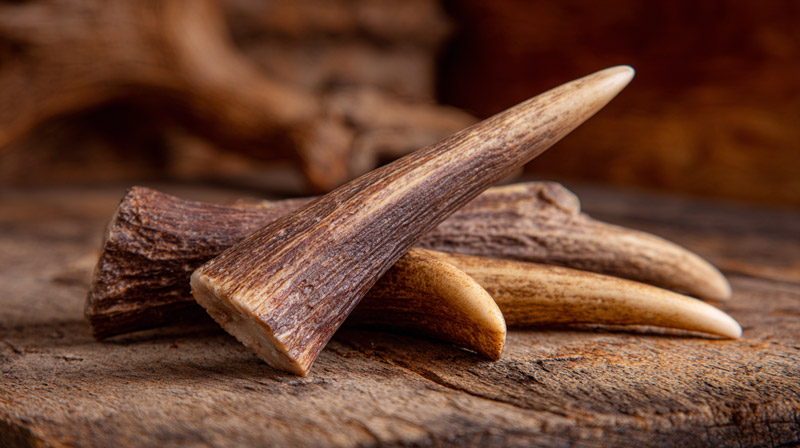
Antlers for dogs are naturally shed chews from the cervidae family, collected from elk, deer, moose, and caribou after the animals drop them during their annual cycle. No animals are harmed in the process.
They’ve become one of the most popular natural dog chews on the market, and it’s not hard to see why. My dog destroyed a bully stick in 20 minutes flat. An elk antler? That thing lasted weeks.
Once collected, antlers go through a cleaning and cutting process before they hit pet store shelves. Manufacturers wash them, trim sharp points, and cut them into sizes that match different breeds. Some get split lengthwise to expose the marrow center. Others stay whole for dogs that need a longer-lasting challenge.
What makes them different from rawhide or synthetic chews is the composition. Antlers are roughly 56% inorganic matter, mostly calcium phosphate, calcium carbonate, and magnesium carbonate, according to research published in the Canadian Journal of Animal Science. The organic portion, about 44%, is primarily protein.
The natural dog treat market was valued at $6.99 billion in 2024 and is projected to reach $14.03 billion by 2030, per Grand View Research. Antler chews sit right in the middle of that growth, pushed by pet owners who want single-ingredient options without additives or preservatives.
That said, antlers are a lightning rod for debate. Some pet owners swear by them. Veterinary dental specialists mostly say stay away. The answer, as with most things related to dogs, depends on the individual animal in front of you.
Types of Antlers Used as Dog Chews
Not all antlers are the same. The species, cut, and density vary a lot, and picking the wrong type for your dog’s chewing style can mean a cracked tooth or a trip to the emergency vet.

Here’s a quick comparison of what’s out there:
| Antler Type | Hardness | Marrow Content | Best For |
|---|---|---|---|
| Elk | Medium | High | Moderate chewers, most breeds |
| Deer (whitetail) | Very hard | Low | Light gnawers only |
| Moose | Soft to medium | High (paddle) | Puppies, seniors, sensitive teeth |
| Caribou | Medium-hard | Moderate | Medium dogs, moderate chewers |
Elk Antlers vs. Deer Antlers
This is the matchup most people are trying to figure out when they walk into a pet store. The two look similar but behave very differently when a dog gets hold of them.
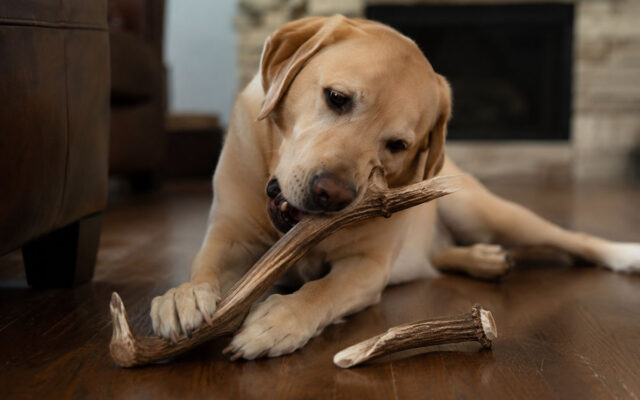
Elk antlers have a thinner outer cortical layer and a larger, spongier marrow core. Dogs can actually gnaw through to the good stuff without putting extreme force on their teeth. Most antler sellers and veterinary sources consider elk the safer pick between elk and deer antlers for this reason.
Whitetail deer antlers are a different story. They’re dense throughout, almost jawbreaker-hard, with very little marrow inside. Mountain Dog Chews, a specialty antler retailer, specifically warns against whitetail deer antlers because they lack that softer center and can snap or crack under heavy jaw pressure.
If you’ve got a Labrador Retriever or Golden Retriever that chews moderately, elk is the safer call. Deer antlers should really only go to lighter chewers who gnaw slowly rather than chomp down hard.
Moose antlers deserve a mention too. The paddle sections are the softest option available, and multiple sources note that properly cut moose antlers don’t splinter or break the way deer antlers can. One commenter on Whole Dog Journal who sells moose antler splits for a decade said they’ve never seen one break or splinter. Good for puppies, good for older dogs. Just harder to find consistently.
Split vs. whole is the other big decision. Split antlers expose the marrow immediately and give dogs a softer starting point. Whole antlers last longer but require more force. For dogs just starting out with antler chews, or for anyone worried about whether split antlers are safe, splits are the lower-risk introduction.
Nutritional Composition of Antler Chews
People buy antlers because they last forever. But there’s a nutrition angle here that doesn’t get enough attention.
Antlers are packed with minerals. The breakdown looks something like this:
- Calcium: roughly 22% of the antler’s composition, supporting bone density and nerve function
- Phosphorus: about 11%, working alongside calcium for skeletal health
- Crude protein: approximately 37-40%, primarily from the marrow and collagen matrix
- Zinc and iron: trace amounts that support immune response and oxygen transport
Elk velvet antler is also a natural source of glucosamine sulfate, chondroitin sulfate, and hyaluronic acid. These are the same compounds you’ll find in joint supplements marketed for older dogs. Whether a dog gets enough of these through chewing alone is debatable, but it’s more than zero.
The real question is how much nutrition dogs actually absorb from chewing versus just grinding the surface. They’re not eating the whole antler in one sitting. The mineral dust and small particles they ingest during a chewing session do add some calcium and phosphorus to their diet, but it’s not a substitute for balanced meals.
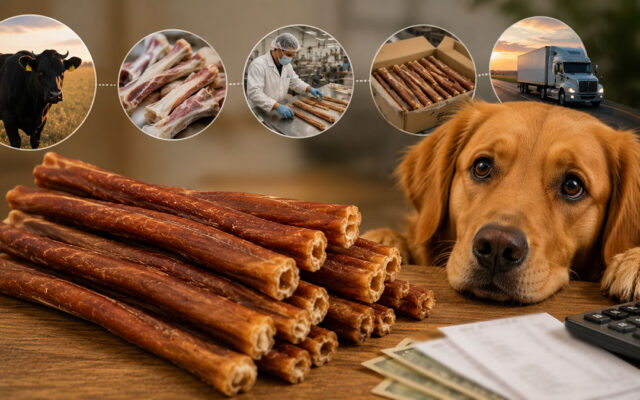
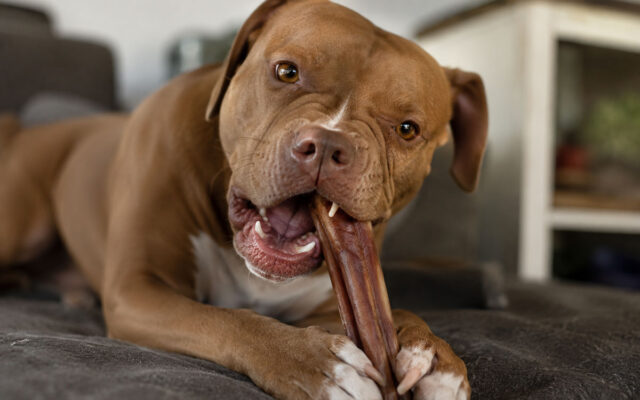
Compared to other popular natural chews, antlers have a unique profile. Bully sticks are higher in protein and fully digestible, but they’re gone in minutes. Collagen chews offer joint-supporting benefits and break down safely in the stomach. Antlers split the difference: longer lasting, mineral-rich, but with a lower overall nutritional delivery per session.
For raw feeders and people who supplement their dog’s diet, antler powder (ground from the same shed antlers) has become a popular food topper. It delivers the mineral profile without any of the dental risks. Something worth knowing if you like what antlers offer nutritionally but worry about the chewing part.
Are Antlers Safe for Dogs
This is the question. And the honest answer is: it depends on the dog, the antler type, and whether you’re in the room while they chew.
Veterinary dental specialists are, by and large, not fans. The Veterinary Oral Health Council has no formal recommendations regarding textural properties or hardness of chews for dogs. But the general guideline from most veterinary dentists is straightforward: if you can’t indent it with your thumbnail, it’s too hard for your dog’s teeth.
Antlers fail that test every time.
Dental fracture is the primary risk. Tooth fracture in dogs has a reported prevalence of 20% to 27%, according to clinical research reviewed in the Veterinary Times. And a study of 621 dogs and cats found that 26.2% had some form of dental trauma, with nearly half involving pulp exposure. Antlers rank among the most common culprits for carnassial tooth fractures specifically.
The fourth upper premolar, the carnassial tooth, takes the worst damage. Veterinary Practice News identified antlers as one of the most common offenders in causing these fractures. When dogs move an antler to the back of their mouth and bite down, the force concentrates between pointed teeth. The antler doesn’t give. The tooth does.
Then there’s the choking hazard. Pieces can break off, and if they’re small enough to swallow but too large to pass, you’re looking at a potential gastrointestinal obstruction. That can mean emergency surgery.
But. And this is a real “but.” Millions of dogs chew antlers without incident. The risk is real, but it’s not a certainty. Supervised chewing, proper sizing, choosing softer antler types like elk or moose, and pulling the antler before it gets small enough to swallow all reduce the danger. For a deeper breakdown, read more about whether antlers are safe for dogs.
What Veterinarians Say About Antler Chews
The veterinary community isn’t fully united here, but it leans heavily in one direction.
Board-certified veterinary dentists are the most vocal critics. The American Veterinary Dental College doesn’t endorse antlers. As Whole Dog Journal put it bluntly: no veterinary dental specialist will ever sign off on letting your dog chew antlers.
General practice vets have a wider range of opinions. Some say no antlers ever. Others say they’re fine with conditions: healthy adult dogs, moderate chew style, right antler type, always supervised.
The two tests that come up over and over:
- Thumbnail test: press your thumbnail into the chew surface. If it doesn’t leave a mark, it’s too hard
- Kneecap rule: would you want someone to hit you in the kneecap with it? If the answer is no, your dog shouldn’t chew it
Antlers fail both tests. That’s the baseline veterinary position. What you do with that information depends on your comfort with risk, your dog’s chewing habits, and how long you let them chew on hard chews in a single session.
Which Dogs Should Avoid Antlers
Some dogs just shouldn’t have them. Period.
Aggressive power chewers are at the top of the list. Breeds like the American Pit Bull Terrier, Mastiff, and Rottweiler can generate jaw forces exceeding 1,000 Newtons. Research shows dogs can produce voluntary bite forces ranging from 13 to 1,394 Newtons, directly proportional to size. At the upper end, that’s enough to crack an antler and a tooth simultaneously.
Puppies with baby teeth should stay away from whole antlers entirely. Deciduous teeth aren’t built for that kind of impact. If you want to introduce antler chews to a younger dog, check what age puppies can safely start, and stick with split elk or moose pieces only. Even then, watch closely.
Senior dogs face the opposite problem. Older teeth are more brittle. Enamel wears down over a lifetime of chewing. A 10-year-old dog biting into a whole deer antler is asking for a slab fracture. Softer alternatives like Himalayan yak chews or collagen-based chews are a better match.
Dogs with existing dental problems, crowns, or weakened enamel should skip antlers completely. Same goes for any dog that’s had a tooth extraction or root canal. The risk is just too high when the teeth are already compromised.
Small breeds like Chihuahuas, French Bulldogs, and Shih Tzus also need careful consideration. A piece that breaks off an antler might pass through a German Shepherd without issue. That same piece in a 10-pound dog could lodge in the throat or intestine.
How to Choose the Right Antler Size and Type
Picking the right antler is mostly about knowing your dog. Not just the breed. The chewing style.
My neighbor’s Beagle gnaws lazily on a split elk antler for days. My dog, who is roughly the same weight, will try to crack a whole antler like a walnut. Same size dog. Completely different antler needs.
Sizing Rules
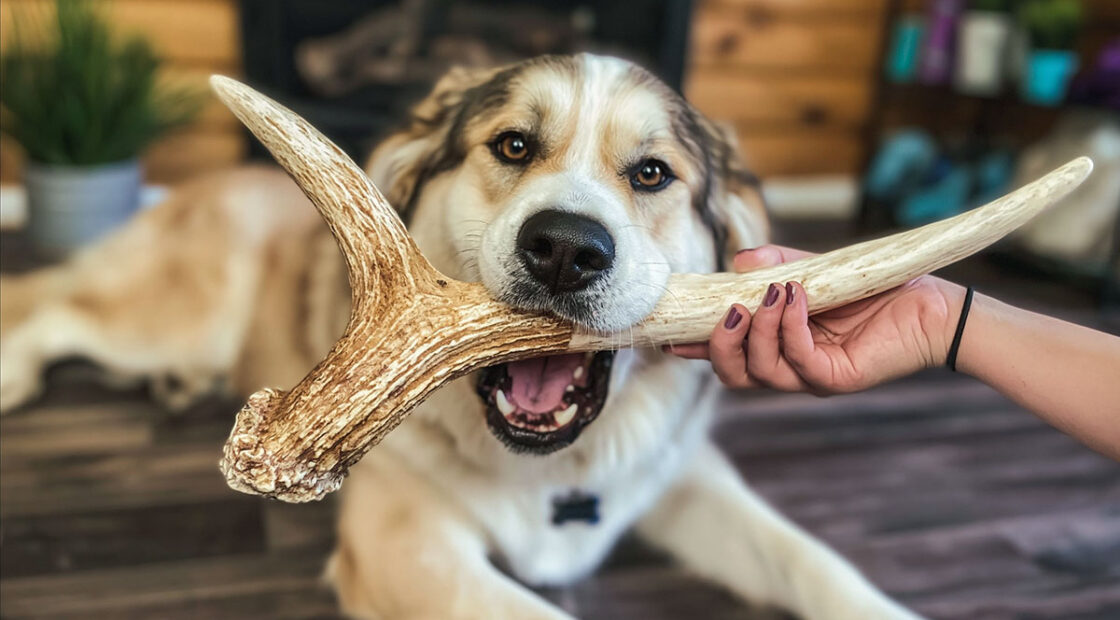
The antler should always be larger than your dog’s mouth. If they can fit the whole thing between their back teeth, it’s too small and becomes a choking risk immediately.
General weight guidelines:
- Under 20 lbs: medium split antlers only
- 20-50 lbs: large whole or split, depending on chew intensity
- Over 50 lbs: XL or jumbo whole antlers
When in doubt, size up. A too-big antler is a slower chew. A too-small antler is a trip to the vet.
Matching Antlers to Chew Style
Gentle gnawers: split elk or moose paddles. These dogs scrape and lick rather than crunch. The exposed marrow keeps them interested without requiring heavy jaw force.
Moderate chewers: whole elk antlers. Tough enough to last, with enough marrow content to stay appealing. This is the sweet spot for most healthy adult dogs.
Heavy chewers: proceed with extreme caution. If your dog destroys a Kong Extreme in under an hour, antlers carry real dental risk. Consider other options built for heavy chewers instead, or at minimum, use only the thickest whole elk antlers and limit chew sessions to 15-20 minutes.
Freshness and Grade
Commercial antlers come in grades, though the system isn’t standardized across the industry.
Grade A antlers are freshly shed (usually collected within one season), brown in color, dense, and heavy for their size. They have a natural scent and no surface cracking. These are what you want.
Grade B and C antlers have been sitting on the forest floor longer. They’re lighter, often sun-bleached white or chalky, and more brittle. Cheaper, yes. Also more likely to crack into sharp fragments. Big box pet stores tend to carry lower-grade stock.
Look for antlers that feel solid throughout with no soft spots. They should smell faintly like bone, not like chemicals. Country of origin matters too. North American wild-shed antlers from elk or deer are generally the standard for quality. Knowing when to take an antler away from your dog is just as important as choosing the right one to begin with.
How Long Do Antlers Last
Longer than almost anything else you’ll put in your dog’s mouth. That’s the short answer.
A medium-sized elk antler chew can last anywhere from several weeks to six months, depending on the dog. Some pet owners report the same whole antler lasting up to a year with a moderate chewer. Compare that to a standard bully stick, which a determined dog can finish in 10-20 minutes.
The U.S. pet treats and chews market hit $12.8 billion in 2024, according to Packaged Facts. A lot of that spending goes toward chews that vanish in a single session. Antlers flip that equation. The upfront cost is higher, but the per-hour value is hard to beat.
Here’s a rough cost-per-chew-hour comparison:
| Chew Type | Avg. Price | Typical Duration | Cost Per Hour |
|---|---|---|---|
| Elk antler (whole, large) | $15–25 | 4–12 weeks | $0.25–0.75 |
| Bully stick (6-inch) | $3–6 | 15–45 min | $4–8 |
| Himalayan yak chew | $10–18 | 1–3 weeks | $0.75–2.00 |
| Nylabone (durable) | $8–15 | 2–6 months | $0.10–0.50 |
The numbers speak for themselves. But longevity depends on a few variables.
Dog size and jaw strength are the biggest factors. A 90-pound Alaskan Malamute will grind through an antler in a fraction of the time a Cavalier King Charles Spaniel takes. Split antlers go faster than whole ones because the marrow is already exposed.
When to replace: Take the antler away once it’s small enough to fit entirely in your dog’s mouth, once you see cracks or sharp edges, or once it’s been chewed down to a thin, brittle piece. Chewy recommends limiting daily chew time to around 30 minutes to reduce dental wear and extend the antler’s life.
You can stretch the lifespan by rotating between two or three antlers. Some owners soak antlers briefly in water overnight to soften the surface slightly and re-engage a dog that’s lost interest. Store them in a dry, cool spot when not in use. Antlers don’t expire the way food-based treats do, but sun exposure and moisture will make them brittle and less safe over time.
Best Antler Brands for Dogs
The antler you buy matters almost as much as the type you pick. There’s a big gap between Grade A, freshly shed stock and the bleached, brittle pieces sitting on a big box store endcap.
Mordor Intelligence projects the natural dog treats market to reach $10.1 billion by 2030, up from $6.2 billion in 2025. With that kind of growth, new brands pop up constantly. But the established names have earned their reputation for a reason.
What to Look for in an Antler Brand
Sourcing transparency: The best brands tell you exactly where their antlers come from. Wild-shed, North American elk or deer. No farm-cut, no imports from unknown origins.
Grading system: Grade A antlers are freshly collected within one season, dense, brown, and heavy. Avoid brands that don’t disclose their grading or sell mostly Grade B/C stock.
No chemical treatment: Legitimate antler chews are cleaned and cut. Nothing else. No bleaching, no flavoring, no preservatives. If the ingredient list has more than one item, move on.
Top Antler Brands Worth Considering
Heartland Antlers consistently ranks as a top pick for antler chews across review sites like Dogtime and PetGuide. They sell Grade A, USA-sourced deer and elk antlers with a satisfaction guarantee. Chemical-free, naturally shed, available in sizes from small to extra large.
WhiteTail Naturals is another strong contender, handcrafted in Texas from wild-shed deer and elk. Their jumbo deer antlers get called out specifically for durability with aggressive chewers. Dogtime rated them as a top pick for long-lasting options that won’t splinter or crack easily.
A few more names that show up repeatedly in reviews and owner recommendations:
- Devil Dog Pet Co: Rocky Mountain elk antlers, individually inspected, with a portion of sales going to rescue programs
- Prairie Dog Pet Products: Grade A North American antlers, retaining natural moisture for reduced splintering
- Buck Bone Organics: offers elk, moose, and deer in multiple cuts, with particularly clear guidance on matching antler hardness to chew style
Deluxe Naturals and Blue River Pet Products round out the field for bulk buyers and multi-dog households. Both offer pound-based pricing that brings the per-antler cost down.
One thing I’ve learned the hard way: the cheapest antlers on Amazon are cheap for a reason. They’re often old stock, sun-bleached, or mislabeled (elk sold as moose, deer sold as elk). Spend the extra few dollars on a reputable brand. Your dog’s teeth will thank you. Owning a dog is expensive enough without adding an avoidable dental bill.
Alternatives to Antlers for Heavy Chewers
Some dogs just can’t have antlers. Their chew style is too aggressive, their teeth are too compromised, or you’d rather not take the risk. Fair enough.
The good news is that the safe dog chew market has expanded a lot in the past few years. Cornell University research shows 80-90% of dogs over age three have some form of periodontal disease. So finding a chew that cleans teeth without breaking them isn’t just nice to have. It’s a real priority.
Here are the main alternatives, each with a different trade-off:
Bully sticks are fully digestible, high in protein, and much softer on teeth than antlers. The downside? A power chewer can destroy a 6-inch stick in under 20 minutes, and they’re not cheap. At $3-5 per stick retail (sometimes under $1 in bulk from direct suppliers), costs add up fast. Still, the thicker braided versions for aggressive chewers can stretch that chew time to an hour or more. Know the potential side effects too, mostly calorie-related.
Himalayan yak chews hit an interesting middle ground. They’re made from hardened yak and cow milk, so they’re edible and digestible, but firm enough to last days or weeks. Softer than antlers, harder than bully sticks. A good fit for moderate to heavy chewers who need something durable without the fracture risk. The natural dog chew brand Dogsee Chew raised $8 million in Series B funding in early 2025 to expand production, which tells you the demand is real. Check whether Himalayan dog chews are safe for your specific dog before buying, especially for breeds prone to digestive issues.
Rubber chew toys carry zero ingestion risk and last indefinitely. The Kong Extreme and West Paw Zogoflex lines are built for the most destructive chewers. They won’t clean teeth the way an edible chew does, but they also won’t crack a tooth. Stuff them with peanut butter or treats to keep a dog engaged longer.
Collagen sticks have become a dark horse in the chew market. Made from beef collagen, they’re fully digestible, lower in fat than bully sticks, and last longer than rawhide without the blockage risk. A solid single-ingredient treat option for dogs with sensitive stomachs.
One more thought. There’s no rule that says you have to pick just one. Rotating between different long-lasting chew types keeps your dog interested and spreads the wear across different jaw movements. My dog gets a yak chew on Tuesdays, an elk antler (supervised) on weekends, and a stuffed Kong when I need 30 minutes of peace on a Wednesday evening. Mix and match based on what your dog handles well.
FAQ on Antlers For Dogs
Are antlers safe for dogs to chew on?
It depends on the dog. Antlers are extremely hard and can cause dental fractures, especially in aggressive chewers. Most veterinary dentists advise against them. If you do use antlers, supervise every session and choose softer types like elk or moose.
What type of antler is best for dogs?
Elk antlers are the most commonly recommended. They have a thinner outer shell and more marrow than deer antlers, making them easier on teeth. Moose antlers are the softest option. Whitetail deer antlers are the hardest and carry the most risk.
Can puppies chew on antlers?
Puppies with baby teeth should avoid whole antlers. Their deciduous teeth fracture easily under that kind of pressure. After six months, a split elk antler can work under close supervision, but softer chews like collagen sticks are generally safer for young dogs.
How long do antler chews last?
Anywhere from a few weeks to several months, depending on your dog’s size and chewing intensity. Whole elk antlers last longer than split ones. A moderate chewer on a large antler can get three to six months of use from a single piece.
What is the difference between split and whole antlers?
Split antlers are cut lengthwise, exposing the marrow center for immediate access. They’re softer and shorter-lasting. Whole antlers keep the marrow sealed inside, requiring more effort to reach. Whole versions suit moderate chewers, while splits work better for beginners.
When should I take an antler away from my dog?
Remove it once it’s small enough to fit entirely in your dog’s mouth. Also toss it if you see cracks, sharp edges, or splintering. A good rule: if the antler is shorter than the width of your dog’s lower jaw, it’s time for a new one.
Do antlers clean dogs’ teeth?
Chewing can scrape away some plaque and tartar buildup. But antlers aren’t a replacement for brushing or professional dental cleanings. The dental hygiene benefit is secondary to the chewing enrichment, and the fracture risk may outweigh any cleaning effect for heavy chewers.
Are antlers better than bully sticks?
They serve different purposes. Antlers last much longer but carry dental fracture risk. Bully sticks are fully digestible and softer on teeth but disappear fast. Antlers win on durability and cost per chew hour. Bully sticks win on safety and digestibility.
Can antlers cause intestinal blockage in dogs?
Yes. If a piece breaks off and your dog swallows it, there’s a risk of gastrointestinal obstruction. Larger fragments may not pass naturally and can require emergency surgery. Always supervise chewing and remove small or broken pieces immediately.
What minerals are in antler chews?
Antlers contain roughly 22% calcium and 11% phosphorus, along with zinc, iron, magnesium, and manganese. The marrow core also provides collagen and protein. Dogs absorb small amounts of these minerals through the grinding and chewing process over time.
Conclusion
Antlers for dogs can be a durable, mineral-rich chew option, but they’re not a universal fit. The dental fracture risk is real, and veterinary dental specialists have made their position clear.
Your dog’s chewing style, age, breed, and tooth condition should drive the decision. A moderate chewer on a properly sized elk antler is a different scenario than a power chewer crunching down on old deer antler stock.
Match the antler type to your dog. Supervise every session. Replace it before it gets small enough to swallow. And if antlers aren’t the right call, alternatives like Himalayan yak cheese chews, collagen sticks, and rubber chew toys cover the gap without the same level of risk.
Know your dog. Pick accordingly.