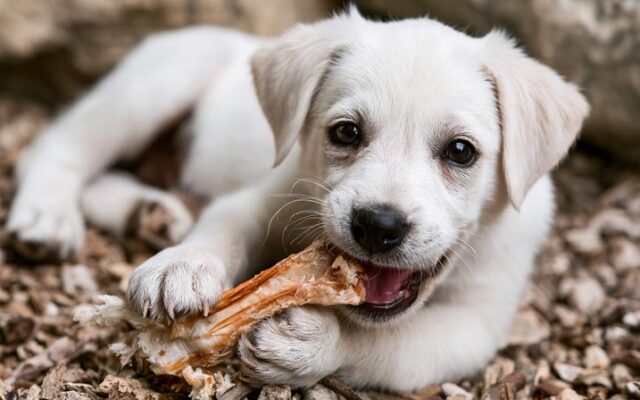
Most dog owners pick up a yak chew at the pet store without knowing what’s actually inside it.
Yak chews are made of just 4 ingredients: yak milk, cow milk, lime juice, and salt. No preservatives. No binders. No additives of any kind in the traditional Himalayan recipe.
That simplicity is exactly why these hard cheese chews have grown into a $272 million global market by 2025, driven by owners who want to know what they’re handing their dog.
This article covers the full ingredient composition of yak chews, how they’re sourced and manufactured, what the nutritional data actually shows, and which dogs should and shouldn’t have them.
What Are Yak Chews Made of?
Yak chews contain 4 core ingredients: yak milk, cow milk, lime juice, and salt. No artificial preservatives, binders, or synthetic additives are used in the traditional recipe.
The product is also sold under the names Himalayan dog chew, Chhurpi dog chew, and hard cheese chew. All refer to the same base formula.
Most commercial versions use a yak-cow milk blend rather than 100% yak milk. Pure yak-only chews exist but are less common on retail shelves due to supply constraints from the Himalayan region.
| Ingredient | Role | Notes |
|---|---|---|
| Yak milk | Primary protein source | Higher protein and fat than cow milk |
| Cow milk | Secondary base (blended) | Most commercial chews use a yak-cow blend |
| Lime juice | Natural coagulant | Separates curds from whey |
| Salt | Preservation and flavor | Used in small amounts only |
The Himalayan dog chew category grew to USD 272.37 million in 2025 and is projected to reach USD 360.56 million by 2030, according to 360iResearch (2025). That growth is directly tied to consumer preference for minimal-ingredient, preservative-free pet treats.
Yak Milk vs. Cow Milk Ratio in Yak Chews
The ratio varies by brand and sourcing season. Traditional Nepalese producers use a higher yak milk ratio. Commercial brands sold in North America and Europe often blend 50-70% yak milk with cow milk to keep costs and supply stable.

Why the ratio matters: A higher yak milk percentage produces a denser, harder chew with more protein per gram. Cow milk dilutes the chew density slightly but also makes the final product more accessible price-wise for mass retail.
- High yak ratio: denser block, higher protein, longer chew time
- Higher cow ratio: softer texture, lower cost, wider availability
- Pure yak formulas: rare, premium-priced, limited seasonal supply
Role of Lime Juice and Salt in the Recipe
Lime juice is the only acidifying agent in the traditional recipe. It lowers the pH of the heated milk, causing casein proteins to coagulate and separate from the whey.
Salt serves 2 functions: it draws out residual moisture during compression and acts as a mild natural preservative. The amounts used are small enough that most dogs tolerate the sodium load without issue, though dogs on sodium-restricted diets should be monitored.
Where Does the Yak Milk Come From?
Yak milk is sourced from the Himalayan region, primarily Nepal, Tibet, and Bhutan, at elevations above 3,000 meters. Durkha Dog Chew announced the opening of a commercial-scale yak cheese chew production facility in Nepal in 2024, targeting 50 tons of output within the first 6 months and 100 tons per month within the first year (IMARC Group, 2024).
The altitude and cold climate directly affect milk quality. Yaks graze on high-altitude grasses with minimal exposure to pesticides or industrial farming inputs, which is part of why the ingredient is marketed as clean-label.
Yak Milk Nutritional Advantage
Research published in the Journal of Food and Nutrition Research (2023) confirmed that yak milk has a total solids content of 18.99 g/100g, compared to 12.44 g/100g in Holstein cow milk. That difference carries through to the finished chew.
Key nutritional differences from cow milk:
- Protein content: 4.7-6.5% in yak milk vs. approximately 3.2% in standard cow milk
- Fat content: 5.6-7.5% in yak milk (PMC, 2023)
- Essential amino acid content: approximately 45% higher than cow milk (PMC, 2023)
- All beta-casein in yak milk is A2 type, which some dogs digest more easily
Seasonal Variation and Supply
Yak milk production peaks in summer and autumn. Protein and lactose content are higher during warm seasons, while fat content increases into late lactation (PMC, 2023).
Practical impact: Batches made from summer milk may test slightly higher in protein than winter batches. Most manufacturers blend across seasons to maintain consistent composition, but this is not always disclosed on packaging.
A 2023 study in the Journal of Ethnic Foods (Panta et al.) documented that Nepali Chhurpi exporters recorded annual average growth of 10-11% over 5 consecutive fiscal years, driven by rising global demand for the hard, defatted yak cheese chew format.
How Are Yak Chews Manufactured?
Yak chews go from raw milk to finished product through 6 steps: heating, acidification, curd separation, compression, drying, and size-cutting. No chemical preservatives are added at any stage.
The Dog Chew Company sources yak milk through direct relationships with over 1,000 farmers in the Himalayas of eastern Nepal, following the same Chhurpi process that has been practiced for centuries.
Traditional Himalayan Method
The traditional process is slow and labor-intensive. Smoking alone can take up to 28 days over a wood fire in Himalayan-style smokehouses, according to Himalayan Dog Chews Nepal (2024).
Step-by-step process:
- Milk is heated and lime juice is added to separate curds from whey
- Curds are drained, placed in cotton cloth bags, and hand-pressed to remove moisture
- Compressed blocks are smoked over slow-burning wood fires for flavor and preservation
- Smoked blocks are sun-dried outdoors for 4-8 weeks at high altitude
- Dried blocks are cut into size-graded pieces and inspected for quality
This extended drying drops moisture content to approximately 10% or below, producing the characteristic rock-hard texture without chemical hardening agents.
Commercial Manufacturing Variations
Traditional vs. commercial methods differ in 3 ways:
Hand pressing vs. mechanical compression: Commercial facilities use mechanical presses to standardize block density and reduce production time.
Smoke-drying vs. oven-drying: Some producers skip the smoke step and use controlled oven drying instead, which affects flavor but not safety. Authentic smoke-dried chews carry a mild smoky scent.
Size grading: Traditional producers cut by eye. Commercial operations use weight-based grading systems for S, M, L, and XL sizes, typically calibrated to dog body weight ranges.
| Method | Drying Time | Flavor Profile | Common For |
|---|---|---|---|
| Traditional smoke-dry | 4-8 weeks | Mild smoky, rich | Artisan, premium brands |
| Commercial oven-dry | Days to 1-2 weeks | Neutral, mild cheese | Mass retail products |
| Sun-drying only | 4-6 weeks | Mild, slightly sour | Small-batch Nepal exporters |
What Is the Nutritional Composition of Yak Chews?
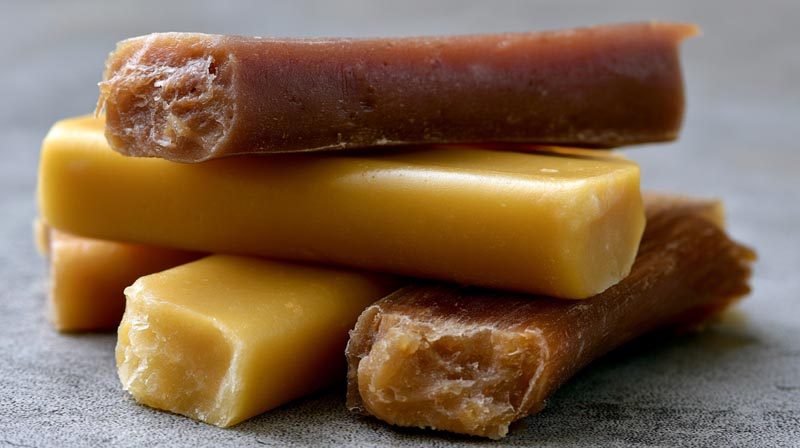
Yak chews are high-protein, low-fat, low-carbohydrate treats. Studies have consistently shown protein content ranging from 60% to 69% by weight, according to a 2023 analysis published in the Journal of Ethnic Foods.
For context, Mighty Paw’s independently verified guaranteed analysis shows 64.4% crude protein and 1.5% crude fat per serving, with a caloric density of 2,751 kcal ME/kg.
Macronutrient Breakdown
Crude fat is intentionally low because the manufacturing process removes most fat during whey separation. This is a meaningful distinction from bully sticks, which carry significantly higher fat per gram.
Typical guaranteed analysis per 100g:
- Crude protein: 60-69% (Journal of Ethnic Foods, 2023)
- Crude fat: 1.5-3% depending on milk blend and skimming thoroughness
- Crude fiber: under 1%
- Moisture: approximately 10%
- Carbohydrates: under 5%
Key Minerals in Yak Chews
A 2024 study in Discover Food found that 100g of Chhurpi can deliver all daily protein requirements and over 70% of daily calcium, iron, and zinc needs for a child. The same mineral profile carries through to the dog chew format.
Calcium supports bone density and dental strength. Phosphorus works alongside calcium in bone metabolism but is present at lower levels than in cow milk (PMC, 2023). Zinc supports immune function and skin health. Iron is notably higher in yak milk than in standard cow milk, according to PMC (2023).
Are Yak Chews Processed or Natural?
Yak chews are minimally processed. The only transformations applied are heat, acid coagulation, mechanical compression, and moisture removal through drying. No synthetic chemicals enter the process at any stage.
Brands like Native Nepal Dog Chew and YforYak openly state compliance with both FEDIAF (European Pet Food Industry Federation) and FDA guidelines, with testing at each stage of milk intake and production.
What “Minimally Processed” Means for This Product
The USDA and FDA do not have a single universal definition of “minimally processed” for pet treats, but the term is generally applied when no artificial preservatives, colors, flavors, or binders are added. Yak chews meet all 4 criteria by default.
Processing steps that occur: boiling, acid coagulation, pressing, smoke or sun drying.
Processing steps that do NOT occur: chemical preservation, bleaching, artificial flavoring, binder addition, or irradiation.
Natural vs. Organic Labeling on Packaging
“Natural” on a yak chew label is generally accurate and means no synthetic additives. “Organic” is a stricter certification requiring USDA organic-certified milk sources, third-party auditing, and documentation of feed and farming practices.
Most yak chews on the market are natural but not certified organic. The difference matters if you’re buying for a dog with a verified synthetic-additive sensitivity vs. a general preference for clean-label products.
What to check on labels:
- Ingredient list should show only milk, lime juice, and salt
- Any “natural flavors” or “smoke flavor” addition signals a non-traditional formula
- Coating ingredients (bacon, chicken flavor) are common upsells and move the product outside minimal-ingredient territory
Do Yak Chews Contain Additives or Allergens?
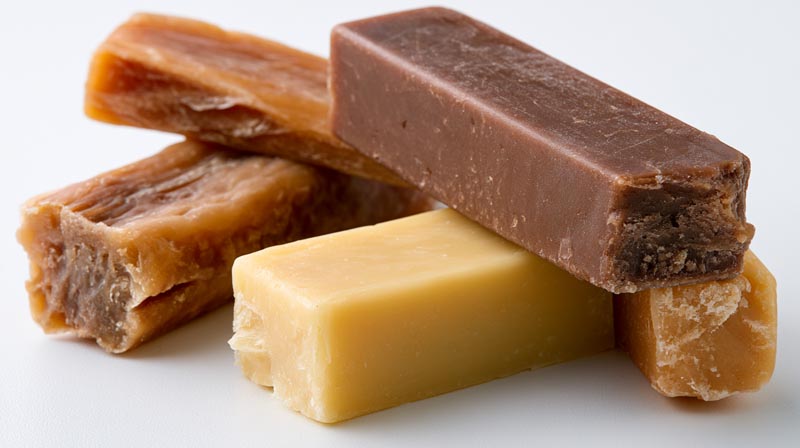
Traditional yak chews contain no additives. The core allergen to consider is dairy. However, lactose content in a properly dried yak chew is near zero because lactose is water-soluble and is removed with the whey during production.
Mighty Paw’s product page confirms their chews are “free from lactose, grains, gluten, chemicals, and preservatives.” That claim holds for any chew produced through the standard Chhurpi method.
Dairy Allergy vs. Lactose Intolerance in Dogs
These are 2 different conditions and yak chews affect them differently.
Lactose intolerance means the dog lacks sufficient lactase enzyme to break down lactose. Because lactose is removed during Chhurpi processing, most lactose-intolerant dogs tolerate yak chews without digestive upset.
True dairy allergy is an immune response to casein proteins in milk. Yak chews are still primarily casein, so a dog with a confirmed dairy protein allergy may react. This is rare but worth noting for dogs already on elimination diets for food allergy management.
Checking for Additives in Commercial Versions
Not all products labeled “yak chew” follow the 3-4 ingredient formula. Some commercial versions add:
- Flavoring coatings (bacon, chicken, sweet potato) applied after drying
- Binding agents to shape non-traditional forms
- Smoke flavoring as a liquid additive rather than actual smoke-drying
Reading the ingredient list is the only reliable check. If the list extends beyond milk, lime juice, and salt, the product deviates from the traditional minimal-ingredient formula. For dogs with diagnosed food sensitivities, that distinction matters. The best dog treats for sensitive stomachs are typically those with the shortest, cleanest ingredient lists, which is where traditional yak chews outperform most commercial alternatives.
How Does Ingredient Composition Affect Chew Hardness and Safety?
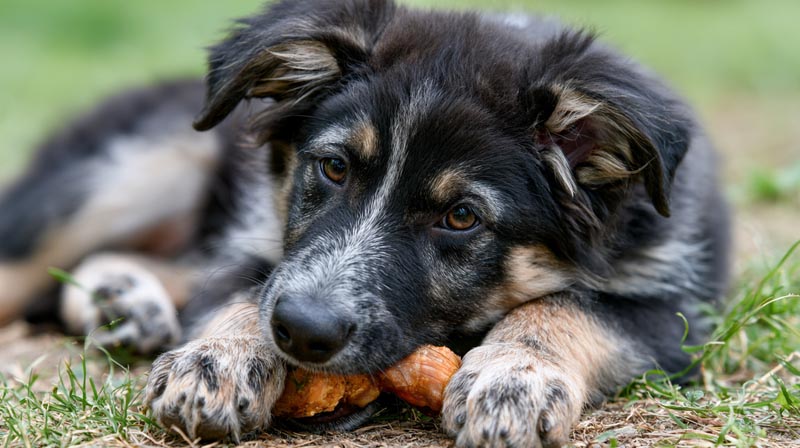
Hardness in yak chews is a direct function of moisture content, not chemical treatment. Drop moisture below 10% through extended drying and the casein protein matrix compresses into a rock-hard block. No added hardeners are involved.
This matters for safety because hardness from dehydration behaves differently than hardness from synthetic binders. The chew softens with saliva over time, reducing the risk of large brittle fragments breaking off suddenly.
The Thumbnail Test for Chew Safety
Veterinary dentists commonly recommend the thumbnail test as a baseline safety check for hard chews: press your thumbnail firmly against the surface of the chew. If it leaves a mark or slight impression, the chew is safe. If your nail cannot indent the surface at all, the chew is too hard and poses a dental fracture risk.
Well-dried yak chews typically sit right at the threshold. A fresh, fully dried XL chew may fail the test for small or older dogs with worn enamel. The same chew after 10-15 minutes of chewing usually softens enough to pass.
Milk Ratio and Final Density
Higher yak milk ratios produce denser chews with more tightly packed casein structures. This means longer chew times for aggressive chewers but also a harder initial surface that may not suit all dogs.
Density by size grade (approximate):
- Small (S): lower density, faster softening, suited to dogs under 15 lbs
- Medium (M): moderate density, most common retail size, suited to 15-35 lb dogs
- Large (L) / XL: highest density, longest chew time, suited to dogs over 35 lbs
Size grading is calibrated to chew resistance, not just physical dimensions. A medium chew for a 25 lb dog offers the right resistance level for sustained chewing without excessive dental stress. Always check safe dog chews sizing guides before selecting a grade, particularly for puppies or seniors with different enamel strength.
What Happens to Yak Chews When Microwaved?
Microwaving the end piece of a yak chew turns it into a puffed, crunchy snack. The transformation is physical, not chemical. No new ingredients are added.
The process works because residual moisture inside the compressed casein matrix converts to steam when heated rapidly. That steam expands the protein structure, puffing the chew to 2-3 times its original size, according to YforYak’s B2B sourcing guide (2026).
The Science Behind the Puff
Journal of Dairy Science research (2025) confirmed that high intact casein content is the key variable enabling microwave expansion in dried cheese products. Lower-protein chews expand poorly or unevenly.
Why this matters: Yak chews with 60-69% protein have the casein density needed for clean, even puffing. Blended chews with higher cow milk ratios or added binders may not puff as reliably.
How to Microwave a Yak Chew End Piece
Soak the end piece in water for 5 minutes first. This adds surface moisture that improves expansion and reduces the risk of burning.
Standard method (Mighty Paw, 2024):
- Soak piece in water 5 minutes
- Microwave on HIGH for 45-60 seconds at 1,000W
- Add 15-second bursts for 700-800W microwaves
- Cool fully (5 minutes) before serving
The puffed format is notably softer than the original hard chew. A 2024 veterinary dental care guide specifically named dried yak milk chews among products hard enough to cause tooth fractures, and noted that the puffed form eliminates that risk entirely since it dissolves easily (YforYak, 2024).
Nutritional Impact of Microwaving
Caloric and protein content remain essentially unchanged after microwaving. The heat affects texture and moisture, not macronutrient composition.
Devil Dog Pet Co’s product testing showed yak chews dissolve completely in simulated stomach acid within 4 hours, and the puffed format digests faster still given its lower density and greater surface area.
How Do Yak Chew Ingredients Compare to Other Long-Lasting Chews?
Yak chews sit between bully sticks (softer, higher fat) and antlers (harder, mineral-only) in the long-lasting chew category. Rawhide is not a meaningful comparison for nutrition since it offers minimal protein and undergoes chemical processing.
The US pet treats and chews market reached $12.8 billion in 2024, with natural, single-ingredient formats as the top growth driver, according to Packaged Facts (2025).
| Chew Type | Primary Ingredients | Protein % | Fat % | Digestible? |
|---|---|---|---|---|
| Yak chew | Yak/cow milk, lime, salt | 60-69% | 1.5-3% | Yes |
| Bully stick | Dried bull pizzle (single ingredient) | ~85% | ~3% | Yes |
| Antler | Calcium, phosphorus, minerals | Near 0% | 0% | No (inedible) |
| Rawhide | Processed bovine hide | Low | Low | Poorly |
Yak Chews vs. Bully Sticks
Bully Sticks Direct (2026) confirmed both are significantly more digestible than rawhide, but they differ meaningfully in protein source and hardness.
Bully sticks: dried beef muscle protein, single ingredient, softer texture, higher calorie density, strong odor.
Yak chews: compressed dairy casein, 3-4 ingredients, harder texture, lower fat per gram, virtually odorless for indoor use.
For dogs needing safer bully stick alternatives due to calorie concerns or odor sensitivity, yak chews are the standard recommendation from most veterinary nutritionists.
Yak Chews vs. Antlers
Antlers provide zero protein. Their chew duration comes from being inedible mineral material, not from dense digestible protein. That’s a fundamental difference in what dogs actually get from the session.
Bully Sticks Direct (2026) noted the narrow use case for antlers is extreme power chewers with healthy intact dentition, fully supervised, given split antler only. Yak chews cover that same cohort with actual protein nutrition and lower fracture risk than whole antler.
For a detailed breakdown of how antler types compare, the guide on elk vs. deer antlers for dogs covers size, hardness, and split vs. whole format decisions.
Yak Chews vs. Rawhide
Rawhide is processed from the inner layer of cow or horse hides using chemical treatments including bleach and formaldehyde in some manufacturing processes.
Yak chews outperform rawhide on every meaningful safety metric: digestibility, ingredient transparency, absence of chemical treatment, and protein content. Devil Dog Pet Co’s internal testing showed competitor rawhide had 60% remaining material after 12 hours in simulated stomach acid. Yak chews fully dissolved within 4 hours.
The safety profile of Himalayan dog chews is well-documented across veterinary literature, which consistently flags rawhide as a higher-risk option for GI obstruction.
Are Yak Chew Ingredients Safe for Dogs with Specific Health Conditions?
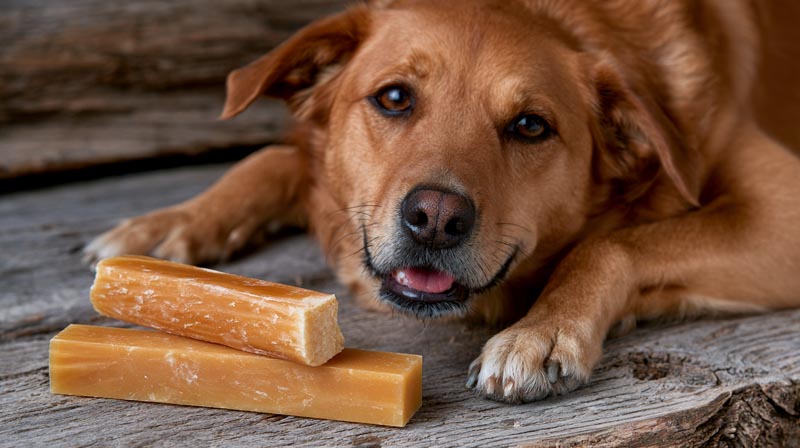
Yak chews are safe for most healthy adult dogs. For dogs with kidney disease, pancreatitis, obesity, or dairy sensitivity, the answer depends on the condition’s severity and the dog’s current dietary protein and phosphorus targets.
The Association for Pet Obesity Prevention’s 2024 survey found 35% of U.S. dog owners report their dog is overweight or obese. For those dogs, the caloric density of yak chews (approximately 275 kcal per medium serving) requires proportional meal reduction on chew days.
Kidney Disease and Phosphorus Load
VCA Animal Hospitals and Today’s Veterinary Practice both confirm that limiting dietary phosphorus is the primary nutritional intervention for dogs with CKD. Phosphorus content is directly linked to protein content, so reducing protein reduces phosphorus.
The concern with yak chews for CKD dogs: High protein content (60-69%) means high phosphorus load per session. The recommended dietary phosphorus range for CKD dogs is 0.2-0.5% on a dry matter basis (VCA, 2024). A medium yak chew adds meaningful phosphorus above that range.
Dogs in IRIS CKD Stage 1 with no proteinuria may tolerate occasional small yak chew portions. Stage 2 and above warrants veterinary clearance before any high-protein chew.
Pancreatitis and Fat Content
Yak chews are low in fat (1.5-3%), which is actually favorable for dogs with pancreatitis. Most veterinary guidance on pancreatitis management focuses on reducing dietary fat, not protein.
The JAVMA (2024) confirmed that for dogs with concurrent CKD and pancreatitis, a low-fat diet takes priority. Yak chews clear the fat threshold for most pancreatitis management protocols, though the high protein content still warrants portioning caution.
Lactose Sensitivity and Dairy Allergy
The traditional Chhurpi process removes approximately 95% of lactose with the whey during pressing and drying, according to YforYak (2026). Most lactose-sensitive dogs tolerate yak chews without digestive upset.
Lactose intolerance and dairy protein allergy are 2 separate conditions. The first involves lactose metabolism. The second is an immune response to casein proteins that remain fully present in yak chews regardless of lactose removal. Dogs with confirmed dairy protein allergies should avoid yak chews entirely.
Digestive issues linked to yak chews, when they do occur, typically appear as soft stool or gas within 6-12 hours of the first chewing session (YforYak, 2026). That timeline helps distinguish a chew-related reaction from unrelated GI issues.
Obesity and Caloric Management
A medium yak chew represents roughly 7-13% of total daily energy intake for a 30 lb dog on a 750 kcal daily allowance. That’s not negligible.
Practical rule: reduce the day’s meal portion by the estimated chew calories. Most owners skip this step, which is how chews quietly contribute to weight gain over weeks and months.
For dogs actively managing weight, long-lasting chew options that provide enrichment value with lower caloric density may be a better fit than a full-size yak chew daily. Smaller portion sizes or the puffed end-piece format offer the same dairy protein in a lower-calorie serving.
FAQ on What Are Yak Chews Made Of
What ingredients are in a yak chew?
Yak chews contain 4 ingredients: yak milk, cow milk, lime juice, and salt.
No artificial preservatives, binders, or additives are used in the traditional Himalayan Chhurpi recipe. That minimal ingredient list is what separates authentic yak chews from commercial alternatives with longer labels.
Are yak chews 100% yak milk?
Most are not. The majority of commercial Himalayan dog chews use a yak-cow milk blend, typically 50-70% yak milk.
Pure yak-only formulas exist but are less common due to seasonal supply limits from the Nepal and Tibet sourcing regions.
Is there dairy in yak chews?
Yes. Yak chews are a dairy-based dog chew made from compressed dried milk.
Lactose content is near zero after processing since most lactose leaves with the whey. But casein protein remains, so dogs with confirmed dairy protein allergies should avoid them.
Are yak chews grain-free and gluten-free?
Yes. The traditional formula contains no grains, gluten, soy, or corn by default.
Yak chews are a natural fit for dogs on elimination diets or with grain sensitivities, as long as the ingredient list shows only milk, lime juice, and salt.
What gives yak chews their hardness?
Hardness comes from moisture removal, not chemical hardening. Extended sun or smoke-drying drops moisture content to approximately 10%.
That low moisture level compresses the casein protein matrix into a dense block. No synthetic agents are involved at any stage of the drying process.
Do yak chews contain artificial preservatives?
No. Salt and low moisture content act as the only natural preservatives in authentic Himalayan cheese chews.
Properly dried yak chews have a shelf life of 3-5 years without refrigeration. Any product listing chemical preservatives deviates from the traditional minimal-ingredient formula.
How much protein is in a yak chew?
Studies show yak chew protein content ranges from 60% to 69% by weight, according to a 2023 analysis in the Journal of Ethnic Foods.
Fat content sits at 1.5-3%, making yak chews a high-protein, low-fat option compared to bully sticks and most other long-lasting dog chews.
Are yak chews the same as Himalayan dog chews?
Yes. “Yak chew,” “Himalayan dog chew,” and “Chhurpi dog chew” all refer to the same product.
The name varies by brand and region but the base formula is identical: yak and cow milk coagulated with lime juice, compressed, and slow-dried using traditional Nepalese methods.
Can the yak chew end piece be eaten?
Yes, but microwave it first. Soaking the nub in water for 5 minutes then microwaving for 45-60 seconds puffs it into a crunchy cheese snack.
The puffed format is softer, easier to digest, and eliminates the choking risk of a small hard piece. Protein and caloric content remain essentially unchanged.
Are yak chews safe for dogs with sensitive stomachs?
Generally yes, because the lactose-free, grain-free composition suits most sensitive dogs.
Digestive upset, when it occurs, usually signals a casein protein sensitivity rather than lactose intolerance. Start with a small portion and monitor for soft stool or gas within 6-12 hours of the first session.
Conclusion
This conclusion is for an article presenting what yak chews are made of, and the answer is simpler than most pet owners expect.
Yak milk, cow milk, lime juice, and salt. That’s it.
The Chhurpi manufacturing process, developed across generations in Nepal, Tibet, and Bhutan, does the rest. Heat, acid coagulation, compression, and extended smoke or sun-drying create a hard cheese chew with 60-69% protein, near-zero lactose, and no chemical preservatives.
For most dogs, that composition makes yak chews one of the cleanest long-lasting natural chews available. Dogs with kidney disease or confirmed dairy protein allergies need veterinary guidance before use.
Read the ingredient label. If it lists more than 4 items, it isn’t a traditional formula.