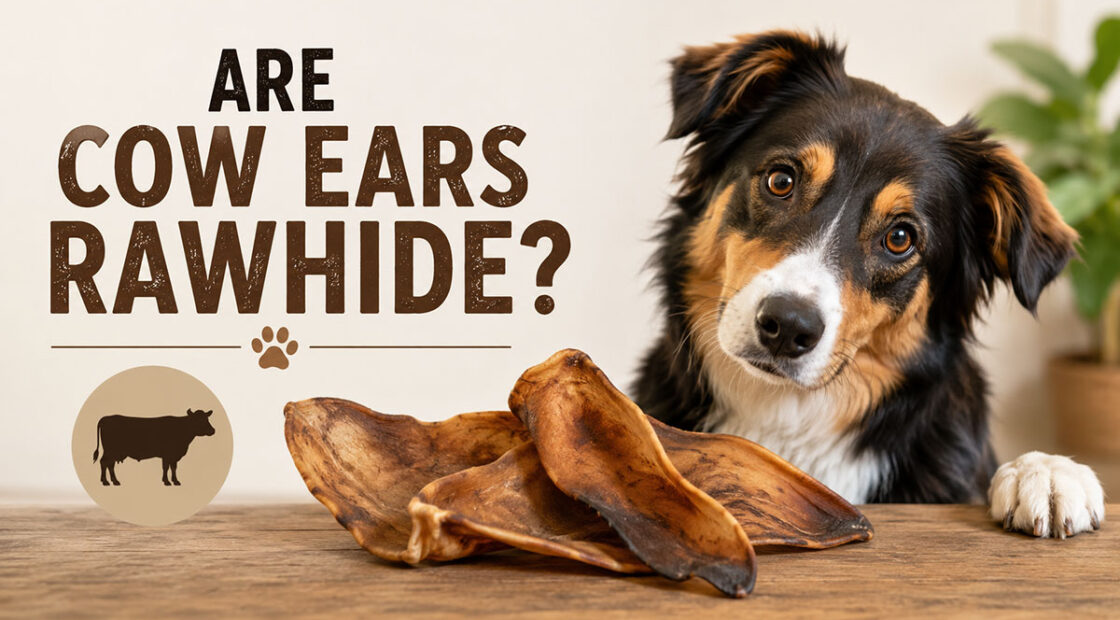
My dog loved rawhide chews until one got stuck in her throat. That was the last time I bought one. If you’ve ever wondered whether cow ears are rawhide, the short answer is no. They’re completely different products made from different parts of the animal.
Cow ears are cartilage. Rawhide is chemically processed hide. The difference matters because it affects digestibility, safety, and what your dog actually gets out of chewing.
This guide breaks down exactly how cow ears and rawhide differ, from manufacturing and nutrition to choking risks and bacterial contamination. You’ll also learn which dogs benefit most from cow ears, what to watch out for, and how to pick a safe product.
What Are Cow Ears?
Cow ears are dehydrated dog chews made from the outer ear (pinna) of cattle. They’re cartilage, not hide. Not bone, not muscle. Just cartilage wrapped in a thin layer of skin.
That distinction matters more than most people realize. My dog went through a phase where she’d demolish anything I put in front of her, and cow ears became a go-to because they’re a single-ingredient treat with nothing weird hiding in the fine print.
The manufacturing process is pretty straightforward. Hair gets removed, the ears go through a disinfection step (usually sodium hypochlorite), and then they’re dried. Some brands bake them, others dehydrate at low temperatures, and a few use smoking. The end result looks and feels different depending on the brand, ranging from flat and crunchy to slightly puffed.
Some cow ears also get irradiated before packaging to kill bacteria like Salmonella. You can sometimes tell because irradiated ears tend to look unnaturally white.
Nutritional profile of a typical cow ear:
- Crude protein: around 75%, making them a protein-rich dog treat
- Crude fat: roughly 8-12%, significantly lower than pig ears (which run about 15%)
- Calories per ear: approximately 120-150 kcal
- Natural source of chondroitin and glucosamine for joint support
Grand View Research estimated the global natural dog treats market at $6.99 billion in 2024, growing at 12.3% annually. Cow ears sit right in the middle of that growth as more dog owners shift toward minimally processed, single-ingredient treats.
Best Bully Sticks, one of the larger brands in this space, sources their cow ears from free-range, grass-fed Brazilian cattle and sells them without preservatives, chemicals, or added flavoring. That kind of clean label is exactly what’s driving the chewable treat segment, which is projected to grow at a 14% CAGR through 2030 according to the same Grand View Research report.

What Is Rawhide?
Rawhide is the inner layer of an animal’s hide, usually from cattle. The outer layer becomes leather for shoes, bags, jackets. The leftover inner layer? That gets processed into rawhide chews for dogs.
Here’s where it gets less appetizing.
The production starts at a tannery. Hides are de-haired through both physical scraping and chemical baths. Then they’re treated with another chemical solution to puff the hide, which makes it easier to split into two layers. The lower split becomes rawhide.
Chemicals commonly used in rawhide processing:
- Lime solution: used for soaking and de-hairing
- Hydrogen peroxide: acts as a bleaching agent
- Sodium sulfide: breaks down hair follicles
- Artificial dyes and flavoring: added after shaping for consumer appeal
Whole Dog Journal reported that some rawhide products labeled “100% cowhide” can still legally contain chemical residues from processing, since the ingredient listing rules don’t require manufacturers to disclose processing agents. A rawhide bone washed in formaldehyde and whitened with titanium dioxide can still be listed as “100% cowhide.”
Rawhide chews come in rolls, bones, chips, and pressed shapes. The dense collagen structure softens slowly when chewed, which is why dogs can work on a single piece for hours. But that same density is also why rawhide sits in the stomach so much longer than most other chews.
Between 2003 and 2022, the FDA recorded 3,691 pet food and treat recalls. Biological contamination accounted for 35% of those, and chemical contamination for 32%, according to a review published in the Journal of Food Protection. Rawhide products have been part of that recall history, including a notable expanded recall by United Pet Group (Spectrum Brands) covering brands like American Beefhide and Healthy Hide due to quaternary ammonium compound contamination.
Are Cow Ears the Same as Rawhide?
No. Cow ears are not rawhide.
This is the part that trips people up, and honestly, I get it. Both come from cows. Both are dried. Both end up in the same aisle at the pet store. But the similarity stops there.
| Feature | Cow Ears | Rawhide |
|---|---|---|
| Source material | Outer ear (cartilage + skin) | Inner layer of animal hide |
| Processing | Dehydrated or baked, minimal chemicals | Chemical baths (lime, bleach, hydrogen peroxide) |
| Digestibility | Fully digestible | Largely indigestible |
| Composition | Cartilage | Dense, processed collagen |
| Additives | Typically none | Often includes dyes, flavoring, preservatives |
Cow ears are cartilage. Rawhide is processed hide. These are two completely different animal tissues that go through completely different manufacturing steps.
Here’s something that caught my attention while researching this. Dogs Naturally Magazine reported that some manufacturers actually shape rawhide to look like cow ears or pig ears. Same rawhide, different mold. If you’re not reading labels carefully, you could accidentally buy a rawhide product disguised as a natural ear chew.
The Credence Research dog chews market report from 2024 found that rawhide still held about 38% of the dog chews product category, leading all other types. But the shift toward natural, digestible alternatives is clearly underway. Packaged Facts estimated the U.S. pet treats and chews market at $12.8 billion in 2024, with single-ingredient treats among the top trending product categories.
Why the Confusion Exists
Look, both products are dried cattle by-products sold as dog chews. They often sit next to each other on shelves. Some brands even use similar packaging. Without knowing the difference between cartilage and processed hide, you’d have no reason to think they’re fundamentally different products.
Also, “rawhide” has become a catch-all term in casual conversation. People call all sorts of dried animal chews “rawhide” the same way people call every adhesive bandage a Band-Aid. That generic usage makes the confusion worse.
How Cow Ears and Rawhide Differ in Digestibility
Digestibility is the real reason this comparison matters. Not texture, not price, not how long they last. It’s what happens after your dog swallows a piece.
Cow ears soften quickly with saliva and stomach acid. The cartilage structure breaks apart into smaller, digestible pieces that move through the gastrointestinal tract without much trouble. Devil Dog Pet Co noted that while rawhide can sit in a dog’s stomach for hours or even days, cow ears digest efficiently because they’re actual food, not processed leather.
Rawhide behaves differently. It swells when wet and resists breakdown. Chunks can remain intact in the stomach or intestines for extended periods, creating a real risk of gastrointestinal blockage.
Choking and Blockage Risk Comparison
Cow ears: Tear into smaller, softer pieces during chewing. The fragments are digestible. Still a choking risk if a dog tries to gulp the last chunk whole, but the material itself breaks down in the digestive system.
Rawhide: Breaks into tough, gummy chunks that don’t dissolve easily. These pieces can lodge in the esophagus, stomach, or intestines. The 2019 pig ear Salmonella outbreak investigated by the FDA and CDC resulted in 154 human infections across 34 states, with 26% of patients requiring hospitalization. That investigation also reinforced broader concerns about how animal-based chews are processed and how contamination risks differ across product types.
The size of your dog and their chewing style both factor in. A Labrador Retriever who inhales everything in sight has different risk levels than a Chihuahua who nibbles carefully. Aggressive chewers can tear off large pieces of either product, but rawhide chunks are the ones more likely to cause a blockage because they just don’t break down.
Took me a while to figure out that my dog is a gulper, not a chewer. Once I realized that, I stopped buying anything that could break into large, indigestible pieces. Cow ears were fine because even when she bit off a bigger chunk, it softened up. If you’ve got a dog with similar habits, you might also want to look at safe dog chew options that account for aggressive chewing behavior.
Nutritional Differences Between Cow Ears and Rawhide
This is where it gets kind of lopsided.
Cow ears actually contribute something to your dog’s diet. Rawhide, for the most part, does not.
| Nutrient | Cow Ears | Rawhide |
|---|---|---|
| Protein | ~75% (crude) | Minimal usable protein |
| Fat | 8–12% | Negligible |
| Calories per piece | 120–150 kcal | Varies widely; mostly indigestible |
| Joint-supporting compounds | Natural chondroitin, glucosamine | None |
| Vitamins & minerals | Zinc, iron, selenium, phosphorus, B12 | None significant |
Dogs Naturally Magazine puts pig ears at roughly 15% fat and 22% protein, while cow ears come in leaner at about 12% fat and 26% protein. That’s a real difference if you’re watching your dog’s calorie intake.
One thing to keep in mind: cow ears are not meal replacements. They’re treats. Most veterinary guidelines suggest treats should make up no more than 10% of a dog’s daily calorie intake. A 50-pound dog eating 1,000 calories a day shouldn’t be getting more than 100 calories from treats, which means one cow ear is already close to that limit.
Rawhide delivers almost nothing in terms of nutrition. The dense collagen structure is largely indigestible, so whatever nutrients might technically be present aren’t being absorbed. You’re basically giving your dog a very long-lasting, chemical-treated chew toy that provides zero nutritional return. The Honest Kitchen described rawhide as a product that keeps dogs occupied but comes with significant risk and little nutritional value.
If your dog needs more protein-rich options that actually contribute to their daily nutrition, healthy dog treats with transparent ingredient lists are worth considering. Same goes for collagen chews, which offer some of the structural protein benefits without the rawhide processing concerns.
Chemical Processing in Rawhide vs. Cow Ears
This section isn’t going to make rawhide look great. But it’s the reality of how each product gets made.
How Rawhide Gets Manufactured
The Whole Dog Journal broke down the process clearly. After the hide is split at the tannery, the lower layer (the part that becomes rawhide) travels to a processing facility. If the tannery and processor are far apart, the hide is either frozen or soaked in a lime solution to prevent spoilage during transport.
At the processor, the split hide gets washed, treated with an antibacterial or bleaching agent, cut into shapes, and then dried. That sounds simple enough, but the “vast differences” between end products come down to where the hides originate, how many chemicals are applied, and what quality standards (if any) the facility follows.
Dog Food Advisor forum discussions have flagged that rawhide from China has historically been associated with arsenic compounds used as preservatives. And there’s essentially no federal regulation specific to rawhide processing, since rawhide is classified as a chew rather than food.
The United Pet Group recall is a good example of what can go wrong. Their rawhide manufacturing facilities in Mexico and Colombia were using quaternary ammonium compounds as processing aids. Consumer complaints about unpleasant odors, vomiting, and diarrhea led to a voluntary recall that eventually expanded to include private label brands across multiple retailers.
How Cow Ears Get Manufactured
Much simpler.
Hair removal, disinfection (sodium hypochlorite is most common), then drying through baking or dehydrating. Some facilities add an irradiation step. That’s it.
No lime baths, no hydrogen peroxide soaks, no artificial dyes. Brands like Mika & Sammy’s process their cow ears in USDA-certified facilities and sell them as a single-ingredient product with no preservatives or chemicals.
The difference shows up on the label. A quality cow ear treat lists one ingredient: beef ear. A rawhide product might list “100% cowhide” and technically be accurate, even though the hide went through a chemical gauntlet to get there.
If chemical-free processing is a priority for you (and it probably should be, honestly), cow ears are in a different league than rawhide. For dogs with sensitive stomachs, the gap is even wider. You might also want to check out treats designed for sensitive digestion that skip harsh processing altogether.
The APPA National Pet Owners Survey (2023-2024) found that approximately 66% of U.S. households, around 86.9 million homes, own pets. With 65.1 million of those households owning dogs, the demand for transparency in treat manufacturing isn’t some niche concern. It’s mainstream. And it’s only growing.
When Cow Ears Are a Better Choice Than Rawhide
Not every dog needs to be switched off rawhide. But most dogs would probably benefit from it.
The real question isn’t “which one is better?” in some abstract sense. It’s which chew makes sense for your dog, right now, given their size, their chewing habits, and whatever health stuff they’ve got going on.
Dogs With Sensitive Stomachs
If your dog gets loose stools from half a milk bone, rawhide is going to be a problem. The dense collagen structure doesn’t break down easily, and the chemical residues from processing can irritate an already touchy digestive system.
Cow ears digest efficiently because they’re cartilage, not processed leather. Pawstruck notes that cow ears break down in a dog’s digestive system with significantly less risk of blockages compared to rawhide.
For dogs that have chronic digestive sensitivity, sticking with treats formulated for sensitive stomachs is the safer play. Cow ears fit that category for most dogs.
Puppies and Senior Dogs
Puppies have developing teeth and jaws that aren’t ready for dense, hard chews. Cow ears are softer than rawhide and bend rather than splinter, making them a more forgiving option for young dogs still learning how to chew properly.
Senior dogs often deal with weakened teeth or gum sensitivity. A rawhide bone can crack an older dog’s tooth. Cow ears provide chewing engagement without the same risk of dental damage.
PetMD reports that about two-thirds of pancreatitis cases in dogs are chronic, and these dogs are at higher risk of repeated episodes if given fatty treats. Cow ears, at 8-12% fat, fall well within the range most vets consider acceptable for dogs not on strict fat restrictions. If your senior dog does have pancreatitis history, check with your vet first. And consider looking into chew bones designed specifically for puppies if you’re shopping for a younger dog.
Dogs That Gulp Instead of Chew
You know the type. The dog that doesn’t so much “enjoy” a treat as “attempt to consume it in one motion.”
Rawhide is dangerous for gulpers because chunks that aren’t chewed properly can lodge in the esophagus or intestines. Cow ears still carry some choking risk (every chew does), but the material softens and breaks apart rather than staying rigid.
Breeds like Golden Retrievers and Boxers tend to be enthusiastic, fast eaters. Supervised chewing sessions are non-negotiable with these dogs regardless of what you’re giving them.
| Dog Profile | Better Option | Why |
|---|---|---|
| Sensitive stomach | Cow ears | Digestible cartilage, no chemical processing |
| Puppy (teething) | Cow ears | Softer, bends without splintering |
| Heavy chewer (70+ lbs) | Either (supervised) | Cow ears may be too quick; rawhide lasts longer |
| Overweight dog | Cow ears | Lower fat, moderate calories |
Risks of Cow Ears for Dogs
Cow ears aren’t perfect. Nothing is. And I’d be doing you a disservice if I only talked about the good stuff.
Fat Content and Pancreatitis
At 8-12% fat, cow ears are leaner than pig ears. But “leaner” doesn’t mean “fat free.”
For dogs prone to pancreatitis, even moderate-fat treats can trigger a flare-up. Cotswold RAW’s veterinary research notes that obese dogs are almost twice as likely to develop pancreatitis compared to dogs at a healthy weight, and dogs with high blood fat levels are nearly four times more likely.
If your dog has a history of pancreatic issues, talk to your vet before adding cow ears to the rotation. Breeds like Miniature Schnauzers, Cocker Spaniels, Dachshunds, and Yorkshire Terriers carry a higher genetic risk for pancreatitis according to PetMD.
Bacterial Contamination
Salmonella is the big one. It’s not unique to cow ears, but any animal-based treat that goes through minimal processing carries some bacterial risk.
The 2019 FDA and CDC investigation into pig ear treats resulted in 154 human Salmonella infections across 34 states, with 26% of those patients hospitalized. While that outbreak was specific to pig ears, the underlying contamination risk applies to cow ears too, especially products imported from South America.
Between 2003 and 2022, Salmonella-linked recalls made up 24% of all pet food recalls and 85% of all bacteria-related recalls, according to research published in the Journal of Food Protection. That’s not a small number.
The Worms & Germs Blog from the University of Guelph made a useful point: if a treat looks like a piece of an animal and doesn’t say it was cooked, treat it as raw. Dried doesn’t mean cooked. And freeze-dried definitely doesn’t mean sterile.
Calorie Overload
One cow ear runs about 120-150 calories.
For a 20-pound dog eating 400 calories a day, a single cow ear is already 30-37% of their daily intake. Way over the 10% treat guideline. Even for a 50-pound dog, one ear pushes close to the limit.
Give cow ears two or three times a week at most. Not daily. And adjust meal portions on days your dog gets one.
How to Choose Safe Cow Ear Treats
The cow ear market isn’t regulated the way you’d hope. The FDA oversees pet food and treats under the Food Safety Modernization Act (FSMA), but enforcement is inconsistent and many products come from overseas facilities where processing standards vary wildly.
Pet Food Institute confirms that the FDA regulates both finished pet food products (including treats and chews) and their ingredients. But “regulated” and “consistently inspected” are two very different things.
Here’s what to look for when buying cow ear treats.
Single ingredient: The label should list one thing. Beef ear. That’s it. If you see preservatives, artificial flavoring, or coloring agents listed, skip it.
Sourcing transparency: Know where the cattle came from. Brands that specify grass-fed, free-range, or a specific country of origin (USA, Brazil, New Zealand) are generally more trustworthy than those that say nothing about sourcing.
Facility certification: Look for products processed in facilities that follow FSMA guidelines. Some brands like Mika & Sammy’s process in USDA-certified and inspected facilities, which adds an extra layer of quality assurance even though FSIS ended its formal pet food certification program in 2022.
No chemical hair removal: Some cow ears are processed using harsh chemicals to remove the natural fur. Ask the brand or check their website. Better options use blanching or mechanical removal.
Brutus & Barnaby, for instance, sources their cow ears from grass-fed cattle in South America and Turkey, with no added hormones or antibiotics. Their products have built a following specifically because of the clean label approach.
The AAFCO’s 2024 update added requirements for chemical-free processing documentation, according to Mordor Intelligence’s natural dog treats market report. That’s a step in the right direction for holding brands accountable.
Signs a Cow Ear Treat Has Gone Bad
Smell it. A fresh dehydrated cow ear has a mild, meaty scent. If it smells sour, rancid, or chemically off, throw it out.
Look at it. Discoloration (green or dark spots), a slimy or tacky surface texture, or visible mold all mean the treat is spoiled.
Dehydrated cow ears typically last 1-2 years when stored in a cool, dry place. Smoked versions may have slightly shorter shelf life due to higher moisture retention. Once you open a sealed bag, use the treats within a few weeks and store them away from heat and humidity.
If your dog enjoys the chewing experience but you want to explore alternatives beyond cow ears and rawhide, there’s a whole category worth looking into. Pig ears are a close cousin (fattier, but similar texture). Bully sticks offer a longer-lasting, fully digestible chew. Himalayan yak chews are a hard cheese-based option that works well for persistent chewers. And beef tendons sit somewhere between cow ears and bully sticks in terms of toughness and chew duration.
The point is, you’ve got options. And none of them need to be rawhide.
FAQ on Are Cow Ears Rawhide
Are cow ears considered rawhide?
No. Cow ears are made of cartilage, not processed animal hide. Rawhide comes from the inner layer of cow skin and goes through chemical treatment. They’re completely different products in composition, processing, and digestibility.
Are cow ears safe for dogs to chew?
Generally yes, when given under supervision. Cow ears are fully digestible and don’t splinter. The main risks are choking if your dog gulps large pieces and potential Salmonella contamination from improperly processed products.
Are cow ears better than rawhide for dogs?
For most dogs, yes. Cow ears digest more easily, contain no chemical residues, and provide actual nutrition including protein and chondroitin. Rawhide carries higher risks of intestinal blockage and offers almost zero nutritional value.
Can cow ears cause pancreatitis in dogs?
Cow ears contain 8-12% fat, which is moderate. Dogs with a history of pancreatitis or breeds predisposed to it (like Miniature Schnauzers) should get vet approval first. For healthy dogs, the fat content is generally not a concern.
How often can I give my dog a cow ear?
Two to three times per week is a good starting point. Each cow ear contains roughly 120-150 calories, so adjust meal portions on days you give one. Treats should stay under 10% of your dog’s daily calorie intake.
Are cow ears good for puppies?
Cow ears work well for puppies because they’re softer than rawhide and bend instead of cracking. Start with shorter chewing sessions and always supervise. They’re a solid option for teething pups who need something to gnaw on.
Do cow ears smell bad?
Fresh, properly dehydrated cow ears have a mild meaty scent. Not strong enough to bother most people. Smoked cow ears tend to have a slightly stronger odor. If the smell is sour or chemical, the treat is likely spoiled or over-processed.
What should I look for when buying cow ears?
Look for single-ingredient products with no preservatives or artificial additives. Check for sourcing transparency (grass-fed, country of origin) and facility standards. Avoid any product that doesn’t clearly state what’s in it.
Can cow ears cause a blockage in dogs?
The risk is much lower than with rawhide because cow ear cartilage softens and breaks down in the digestive tract. But large chunks swallowed whole can still pose a choking hazard. Always remove the last small piece.
What are good alternatives to both cow ears and rawhide?
Bully sticks, Himalayan yak chews, deer or elk antlers, and lamb ears are all popular rawhide-free options. Each has different durability and fat content, so match the chew to your dog’s size and chewing style.
Conclusion
So, are cow ears rawhide? Not even close. Cow ears are a natural, single-ingredient dog chew made from cartilage. Rawhide is chemically processed hide that your dog’s digestive system struggles to break down.
That distinction has real consequences for your dog’s safety. Cow ears offer protein, chondroitin, and actual digestibility. Rawhide offers chewing time and not much else, with added risks of gastrointestinal blockage and chemical residues.
Neither product is completely risk-free. Cow ears still carry calorie concerns, potential bacterial contamination, and choking hazards for aggressive chewers. Supervision matters every time.
Buy from brands that source transparently, list one ingredient, and skip the chemical processing. Read the label. Watch your dog chew. And if something feels off about a treat, trust your gut and toss it.
Your dog deserves better than guesswork when it comes to what goes in their mouth.