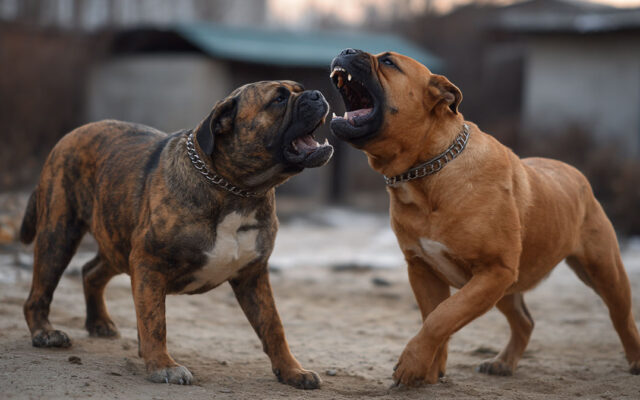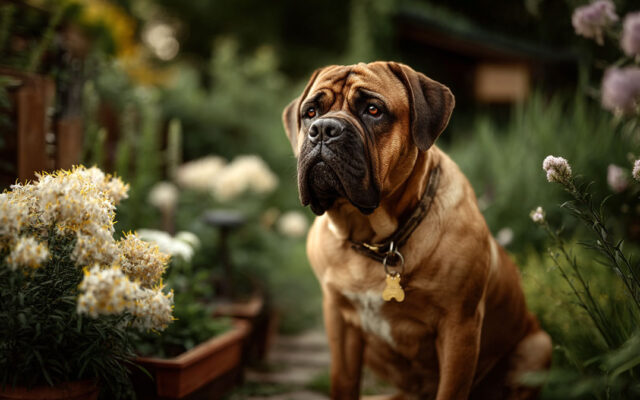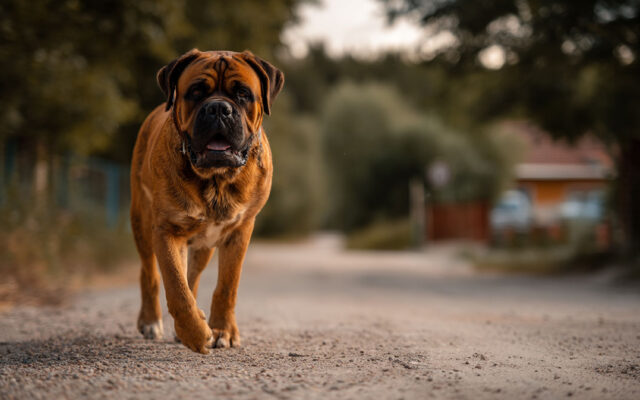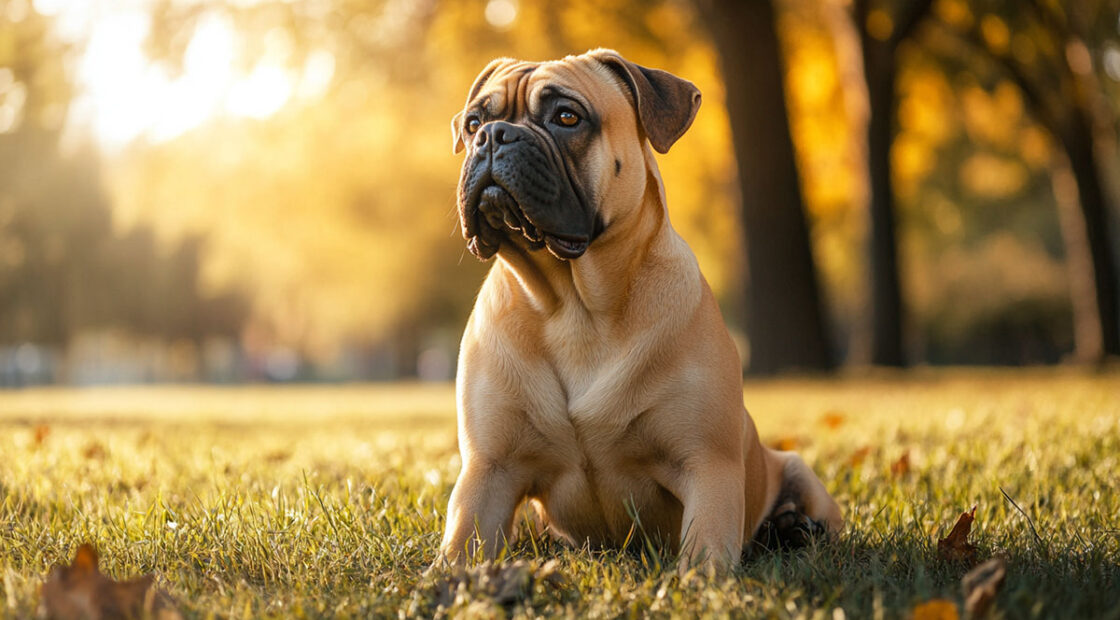
Size gets all the attention with this breed, but the job explains more. A Bullmastiff was built to track an intruder, close the distance fast, and pin him to the ground without tearing him apart.
It sits in the AKC Working Group next to other guardian lines, the Cane Corso and the English Mastiff among them. The standard it’s measured against calls for a build that’s nearly square, more substance than bulk, and a black mask no matter what color the coat is.
One stat worth knowing before anything else: a peer-reviewed analysis of Orthopedic Foundation for Animals hip-screening data found hip dysplasia in 24.0 percent of evaluated Bullmastiffs, one of the highest rates recorded among large breeds (Oberbauer, Keller & Famula, PLOS ONE, 2017).
What Is a Bullmastiff
Silence is the whole point of this breed. Plenty of dogs bark at a stranger walking up the driveway. A Bullmastiff was built for the moment after the barking would have stopped, if it barked at all, closing in on an intruder and putting him on the ground without mauling him.
The breed sits in the Working Group at both the AKC and FCI, and it comes from a fairly specific cross, roughly 60 percent Mastiff, 40 percent Bulldog. Estate patrol against poachers was the original job, done in the dark, done alone.
The size does most of the talking when people first meet one. But the temperament underneath is what actually separates a Bullmastiff from a generic guard dog. It was never built to bite and hold the way a Cane Corso does, and it wasn’t built to corner and bark like a livestock guardian either. It was built to knock a grown man down and sit on him until the gamekeeper showed up. Quiet, unglamorous, and it worked.
Bullmastiff Origin and Breed History
The American Kennel Club officially placed the Bullmastiff among its recognized breeds in 1934, a decade after the UK Kennel Club did the same in 1924 (AKC, Breeds by Year Recognized).
Those dates trace back to the 1860s, on English estates where poaching wasn’t treated as some minor nuisance. It carried the weight of a hanging offense back then, which says a lot about how seriously landowners guarded their land.
- 1860s: gamekeepers start deliberately crossing Mastiffs with Bulldogs
- 1924: the Kennel Club in England recognizes the breed
- 1934: AKC recognition follows
- 1935: the first written breed standard gets approved
The Mastiff alone was tried first and didn’t work well enough. Too slow, and not enough drive to actually run a man down.
Bulldogs of that era had the speed and the grip the job needed, but left alone they tended to do real damage once they caught up to someone. Mixing the two solved both problems at once. What came out the other side could close the gap fast and still stop short of killing.

The nickname “Gamekeeper’s Night Dog” stuck for a reason. It worked estate perimeters after dark, relying on scent rather than sight.
Bullmastiff Breed Standard and Appearance
The AKC standard calls for a symmetrical, powerfully built dog, one that looks nearly square from the side instead of stretched out the way a Mastiff does.
Substance counts for more than raw bulk here. Judges specifically look for muscle and bone over fat, and it’s a distinction breeders take seriously at shows, not just a technicality on paper.
| Trait | Males | Females |
|---|---|---|
| Height at withers | 25 to 27 inches | 24 to 26 inches |
| Weight | 110 to 130 lbs | 100 to 120 lbs |
| Body proportion | Nearly square silhouette | Same square profile, lighter frame |
That square proportion is written directly into the AKC standard, and it’s one of the clearest ways to tell this breed apart from its heavier ancestor. Line the two up side by side and the difference is obvious fast. It’s worth a closer look at how the two breeds actually differ beyond just the name.
Coat Colors and Markings
Fawn, red, and brindle are the only colors that qualify under the official standard. Nothing else counts, no matter how striking it looks.
- Fawn: light tan to golden, the most common color on family pets today
- Red: deeper rust tone, historically favored for working lines
- Brindle: striped pattern over a fawn or red base
Every color variation needs the black mask, along with dark eyes, dark ears, and dark nails to match.
A Bullmastiff without the mask isn’t disqualified from being loved, obviously, but it would be faulted in the show ring. It’s one of those small details breeders and judges check first.
Bullmastiff Temperament and Family Behavior
Protective instinct in this breed doesn’t switch off just because company is over, and it runs at a fairly constant level day to day. Dominance tends to run high too, high enough that an owner who stays passive will lose ground fast. Strangers get a watchful read at first. Warmth only comes once the dog decides, on its own terms, that someone is safe.
Around people the dog already trusts, that same intensity softens into something closer to a leaning, sighing, faintly ridiculous couch companion. The full picture of Bullmastiff temperament covers a lot more than “big and protective,” including how the breed tends to read tone of voice and body language over actual words.
Territorial streaks can show up early, sometimes before six months old. A puppy staking claim to a doorway or a food bowl isn’t just cute stubbornness. It’s the breed’s default setting showing itself, and left unmanaged it can slide into real behavioral issues later on.
A kid the dog already knows gets treated like pack. Someone unfamiliar, especially if they’re running around and yelling, is going to get read very differently.
Bullmastiff Health Problems and Lifespan
Health in this breed comes down to a short list of conditions, and most trace back to the same root cause: a lot of dog packed into a body that ages faster than something like a Labrador’s.
Median lifespan sits at 8.5 years, based on VetCompass Australia veterinary records covering the breed over a ten-year period (Animals, 2024). Hip dysplasia shows up in 24.0 percent of evaluated Bullmastiffs, one of the highest rates recorded across large breeds in the OFA-based analysis mentioned earlier. Elbow dysplasia comes in lower, at 14.2 percent, from that same dataset. Bloat is harder to pin to one number. Large and giant breeds as a group have been estimated at a 3.9 to 36.7 percent lifetime risk of GDV, and deep, narrow chests push individual dogs toward the higher end of that range.
Common Health Conditions
Hip and elbow dysplasia comes down to abnormal joint development, and it shows up as stiffness, especially right after rest. Reputable breeders screen for both before pairing dogs, and it’s worth reading up on hip dysplasia in the breed specifically before picking a puppy.
Bloat, or gastric dilatation volvulus, is the one that scares experienced owners most. The stomach fills with gas and twists on itself, cutting off blood flow within hours, and it can kill an otherwise healthy adult dog with almost no warning. That’s the reason so many owners read up on bloat prevention long before they ever see a symptom.
Lymphoma turns up often enough in this breed to be one of the more commonly reported cancers, and there’s a genetic component researchers are still mapping through DNA studies of affected bloodlines.
None of these three announce themselves early. That’s the uncomfortable part of owning a giant breed: the warning signs tend to show up close to the point where action is urgent, not optional.
Health Screening Tests
Screening exists to catch problems in breeding stock before puppies inherit them, not to fix a dog that’s already sick.
A breeder who can’t produce paperwork for these tests isn’t worth buying from. That’s not a harsh take. It’s just how the math works out for a breed carrying this much orthopedic and cardiac risk.
- OFA hip and elbow radiographs
- PennHIP evaluation, an alternative hip laxity measurement
- Annual eye examination for progressive retinal atrophy
- Cardiac evaluation
- Thyroid panel
Ask to see the actual certificates. A verbal assurance that “the parents were tested” doesn’t count for much.
Bullmastiff Training and Socialization
Training a Bullmastiff isn’t optional homework. It’s the difference between a dog you can take anywhere and one that drags you across a parking lot at 120 pounds.
The window for shaping behavior is narrow, and in a breed this size, it closes fast.
- Start bite inhibition the day the puppy comes home, well before eight weeks old, since jaw strength develops faster than judgment does.
- Begin crate training in the first week, using short sessions that build up slowly rather than one long confinement.
- Expose the puppy to new people, surfaces, and sounds regularly before sixteen weeks, the window most trainers consider the critical socialization period.
- Introduce structured obedience work around twelve weeks, focused on impulse control rather than tricks.
- Keep reinforcing calm greetings past the first year, since dominance tendencies tend to resurface around social maturity.
Skip step three and the payoff shows up later as reactivity toward anything unfamiliar, a much harder problem to unwind in an adult dog than to prevent in a puppy. A proper puppy training plan front-loads the hard work while the dog still weighs under fifty pounds.
Owners who treat socialization like a one-time checklist item, instead of something kept up through adulthood, tend to be the ones caught off guard when their four-year-old suddenly starts guarding the yard against the mail carrier.
Bullmastiff Exercise, Living Space and Climate Needs
This breed doesn’t need marathon exercise, and that tends to surprise people expecting a dog this size to demand hours of activity every day.
Thirty to forty-five minutes a day, split into two walks, covers most adult Bullmastiffs just fine. Push a young dog much harder than that and the growth plates pay the price.
- Yard access helps but isn’t mandatory if the daily walks are consistent
- Floor space indoors matters more than yard size, since the breed likes to sprawl out to sleep
Stairs and jumping should stay limited until the growth plates close, which is usually past eighteen months.
Apartment living works for some Bullmastiffs and fails for others, and the deciding factor is usually noise tolerance in shared hallways rather than square footage. Anyone weighing that decision should look closer at what different living environments actually demand from an owner before committing. A well-planned exercise routine matters more for joint health than it does for burning off energy.
Heat and Cold Tolerance
Heat is genuinely hard on this breed. The short muzzle and heavy body make panting an inefficient way to cool down, and heatstroke risk climbs fast once the temperature does.
Cold isn’t much better. There’s almost no insulation in that short coat, so outdoor time in freezing weather needs to stay brief, not something to test on a whim.
A Bullmastiff is, in practice, an indoor dog with a big engine and a narrow comfort zone. Air conditioning in summer and a warm floor in winter aren’t luxuries here. They’re closer to basic care. The same narrow comfort zone is why traveling with a Bullmastiff takes more planning than a road trip with a smaller dog.
Bullmastiff Grooming and Coat Care
Grooming a Bullmastiff is a light job compared to most large breeds, but the parts it does demand aren’t optional.
The coat itself is short, dense, and low maintenance, needing little more than a rubber curry brush once or twice a week. Shedding runs moderate year-round, with a heavier drop showing up during the spring and fall coat changes.
The wrinkles around the muzzle trap moisture and food debris fast, and a Bullmastiff left unwiped after meals can develop skin infections in those folds within days. A damp cloth after every meal handles most of it.
- Wipe facial wrinkles daily, and dry them fully before the dog settles down
- Trim nails every three to four weeks, since overgrown nails change how the dog stands
- Check ears weekly for odor or discharge, more often in humid climates
- Brush teeth two to three times a week, or lean on chew-based maintenance between brushings
Large-breed teeth build tartar fast, and plenty of owners work something like natural dental chews into the weekly routine to slow that down between brushings. Chews double as enrichment too, and toys built for a Bullmastiff’s jaw outlast standard ones by a wide margin.
Drool is the part nobody warns new owners about enough. A full grooming routine for this breed usually includes a drool towel stashed in every room, not just the kitchen.
Bullmastiff vs Other Guardian Breeds
The Cane Corso and the English Mastiff come up constantly in the same searches as the Bullmastiff, and each one solves the guardian job in its own way.
| Breed | Typical Weight | Typical Lifespan | Exercise Need |
|---|---|---|---|
| Bullmastiff | 100 to 130 lbs | 7 to 9 years | Low to moderate |
| Cane Corso | 85 to 110 lbs | 9 to 12 years | High |
| English Mastiff | 120 to 230 lbs | 6 to 10 years | Low |
The Cane Corso generally asks for 60 to 90 minutes of structured daily activity, a figure that shows up consistently across breed-care guides. Skip that and the dog gets destructive fast, something a Bullmastiff owner rarely has to deal with.
Weight tells its own story. A Bullmastiff typically outweighs a Cane Corso at a similar shoulder height, while the English Mastiff beats both by a wide margin, with males sometimes topping 230 pounds.
Lifespan puts the Bullmastiff somewhere between the other two, closer to the Mastiff’s 6 to 10 year range than the Corso’s 9 to 12. On trainability, Cane Corsos generally pick up obedience work faster, while Bullmastiffs and Mastiffs both lean more independent and less eager to please for its own sake.
None of these three breeds is a downgrade from the others. They’re built for slightly different households, and the differences matter more than the family resemblance suggests.
What Does It Cost to Own a Bullmastiff?
A Bullmastiff puppy from a reputable breeder runs $1,000 to $2,000 for pet quality, climbing to $2,500 or more for show-quality bloodlines.
That number is just the entry fee. Total Bullmastiff cost breakdowns that track spending through the first year, once the puppy price, supplies, vaccinations, and initial vet visits get added in, typically land somewhere in the $3,500 to $7,500-plus range.
Ongoing costs settle into a monthly rhythm after that. Food, insurance, grooming supplies, and routine care usually run somewhere around $200 to $400 a month, and pet insurance premiums specifically tend to fall between $30 and $60 depending on coverage and deductible.
Insurance costs skew higher for this breed specifically. Providers price in the known risk of hip dysplasia, bloat surgery, and cancer treatment before the policy is even quoted.
Adoption cuts the entry cost dramatically. Going through rescue adoption channels instead of a breeder typically runs $150 to $500, and a lot of those dogs arrive already spayed or neutered and vaccinated.
When a Bullmastiff Is Not the Right Fit
A Bullmastiff is not a starter dog, and pretending otherwise is how good dogs end up in rescue.
| Good fit if | Not a fit if |
|---|---|
| You’ve handled a large, dominant breed before | This is your first dog ever |
| You have a yard or reliable daily walk routine | You’re in a small space with no outdoor access nearby |
| Your climate allows indoor comfort year-round | You live somewhere with extreme heat and no air conditioning |
| You can commit to structured training before 16 weeks | You want a dog with minimal training investment |
Very young children in the house don’t automatically rule it out, but a 120-pound dog that hasn’t learned impulse control around toddlers is a real risk, not a hypothetical one worth waving off.
People chasing a genuinely quiet dog should know the low bark frequency is real, though it gets replaced by something else entirely: physical presence, leaning on you, blocking doorways, staring down visitors until they leave. That’s its own kind of demanding, just quieter about it.
Money is the part people underestimate most going in. It’s worth understanding just how expensive a dog can get over a full lifetime before assuming the sticker price is the real number.
None of this makes the breed a bad choice. It just makes it a specific one, and specific choices need honest information going in.
FAQ on Bullmastiff Guide
Is a Bullmastiff a Mastiff or a Bulldog breed?
Neither on its own. A Bullmastiff is a deliberate cross, roughly 60 percent Mastiff and 40 percent Bulldog, bred to combine the Mastiff’s size with the Bulldog’s speed and grip. The AKC classifies it as its own distinct breed within the Working Group.
Are Bullmastiffs good with children?

With children the dog already knows, generally yes, and often protective to a fault. Unfamiliar kids, especially ones running or shrieking, can trigger the guarding instinct fast, so supervised introductions matter more than they would with a retriever-type breed.
Do Bullmastiffs bark a lot?
Rarely, and that’s by design. The breed was built to work silently at night, relying on scent and physical presence rather than noise.
A Bullmastiff is more likely to block a doorway than announce a stranger with barking.
Why do Bullmastiffs drool so much?
Loose jowls and heavy flews, both standard traits of the breed, don’t hold saliva the way a tighter-lipped dog’s mouth does. Heat, excitement, and the anticipation of food all make it noticeably worse.
What mistakes do new Bullmastiff owners make?
Skipping early socialization is the biggest one, followed by underestimating how much training a dominant dog this size actually needs. Getting the feeding routine wrong, free-feeding or exercising right after meals, raises bloat risk for no good reason.
What is the difference between a Bullmastiff and an English Mastiff?
The English Mastiff came first, an older and heavier breed built more for size and presence than for speed. Bullmastiffs showed up later, engineered specifically to close the gap on a running man and stop him without killing him.
Where do you find a reputable Bullmastiff breeder or rescue?
Start with the American Bullmastiff Association’s accredited list or the AKC Marketplace, both of which vet for health testing before listing anyone. A responsible Bullmastiff breeder will show OFA and cardiac certificates without being asked twice.
What Should You Do Before Bringing a Bullmastiff Home?
Health paperwork should come before any deposit changes hands. Ask for the breeder’s OFA hip and cardiac certificates and actually read them, don’t just take someone’s word that testing happened.
Containment built for an adult dog, not a puppy, needs to be ready before pickup day. This breed grows into serious size fast, and whatever setup worked for the first few weeks won’t hold for long.
Socialization is the piece that can’t wait. Set aside the first sixteen weeks for structured exposure to new people, sounds, and surfaces, because that window narrows fast and fear responses that get imprinted after six months rarely correct fully.
Paperwork and containment are problems money solves quickly. Socialization is different. Miss that window and no amount of spending fixes it later.
A shorter-than-average lifespan paired with a first year that already outspends every later year means the real financial commitment lands early, a trade-off buyers accept for a better-screened, better-documented puppy.
Since that early window closes fast, most owners pair the exposure work with proactive aggression prevention training rather than waiting for a problem to surface.