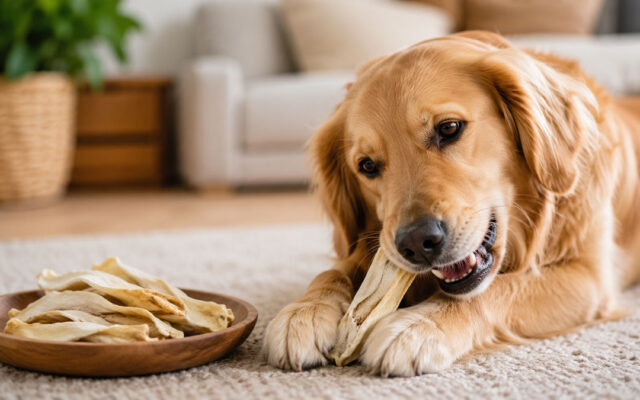
If your large dog destroys every chew you hand them in under an hour, the Himalayan dog chew XL is probably the most practical solution you haven’t tried yet.
Made from yak and cow milk using a centuries-old Nepali recipe, this hard cheese chew is fully digestible, grain-free, and built to last days, not minutes.
But not every dog, breed, or chewing style is a match for the XL size. Get it wrong and you’re looking at a wasted $18 or, worse, a safety issue.
This guide covers everything you need to make the right call: ingredients, sizing, safety protocols, nutritional facts, brand comparisons, and where to buy without overpaying.
What Is a Himalayan Dog Chew XL?
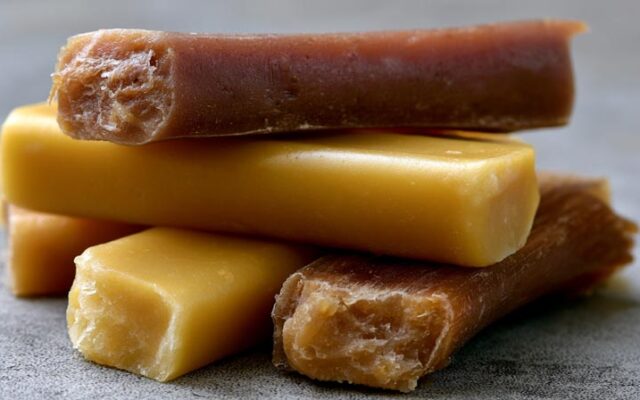
A Himalayan dog chew XL is a hardened yak and cow milk cheese bar originally made in Nepal’s Himalayan highlands. It is a fully digestible, grain-free, long-lasting dog chew with 4 ingredients: yak milk, cow milk, lime juice, and salt. No binders. No preservatives. Nothing else.
The XL size typically weighs between 5.5 and 6.5 oz and measures 6 to 7 inches in length (Devil Dog Pet Co., product specs). It is designed for dogs in the 40 to 70 lb range, depending on the brand, though some brands (like EcoKind) classify XL as appropriate for dogs 50 to 90 lbs.
What most people don’t know is that this chew started as a human food. Locals in Nepal and Tibet chewed hardened chhurpi (pressed yak cheese) while working in the fields, sometimes for hours at a time. The texture holds up because the milk is boiled, drained of fat, pressed, and then sun-dried and smoked for 8 to 9 weeks (Petfood Industry, 2023). That process is what gives the chew its density.
Himalayan Pet Supply brought this product to the US market in 2007. Before their Shark Tank appearance, the company generated around $5 million annually. After the show aired, annual revenue jumped to roughly $15 million, and their product now appears in over 5,000 stores nationwide (Himalayan Dog Chew Shark Tank source, 2024).
The global yak cheese chew market was valued at approximately $257.88 million in 2024, and is projected to reach $360.56 million by 2030, growing at a 5.74% CAGR (360iResearch, 2025). The dog treat market overall grew at 19.2% from 2020 to 2024 (FactMR, 2024).

Nepal exported 1,646 tonnes of dog chew worth Rs. 3.18 billion in fiscal year 2023/24, making chhurpi one of the country’s most significant agricultural exports, competing closely with tea shipments (Rising Nepal Daily, 2024).
The XL format is not just a bigger version of the standard size. It serves a specific function: it outlasts smaller sizes on powerful jaws, stays large enough to prevent accidental swallowing, and gives large-breed power chewers a meaningful challenge rather than a 10-minute snack.
Breeds like the Labrador Retriever, German Shepherd Dog, and Golden Retriever are among the most common matches for this size. They have the jaw mass to use it properly and the weight class that justifies XL over the standard large size.
What Ingredients Are in a Himalayan Dog Chew XL?
The ingredient list on every authentic Himalayan dog chew is exactly 4 items: yak milk, cow milk, lime juice, and salt. That is the complete formula. No fillers, no artificial flavors, no binding agents.
Here is what each ingredient actually does in the product:
- Yak milk: The primary protein source. Provides dense casein protein and gives the chew its hardness after the drying and smoking process. Higher yak milk content generally means a denser, longer-lasting bar.
- Cow milk: Blended with yak milk. Most manufacturers use a roughly 80/20 yak-to-cow ratio, though some brands like EcoKind use 100% yak milk. Cow milk softens the texture slightly and reduces production cost.
- Lime juice: Acts as a natural acidulant. It assists fermentation, helps separate the whey, and contributes to the chew’s preservation without any synthetic preservatives.
- Salt: Present in low amounts. Helps with preservation and draws out moisture during the drying phase. Himalayan chews have a low overall sodium profile.
Guaranteed analysis from Himalayan Pet Supply’s classic formulation (verified through retail lab data): crude protein minimum 69%, crude fat minimum 1%, crude fiber maximum 1%, moisture maximum 14% (Fun Time Dog Shop product listing citing Himalayan Dog Chew specs).
That 69% crude protein figure is high. A typical bully stick runs 35 to 45% crude protein. Himalayan chews sit significantly above that range, which is part of why they register as a nutritionally dense treat rather than just an entertainment item.
The fat content at 1% is unusually low for a chew. Bully sticks typically run 3 to 10% fat depending on the cut and brand. For dogs on lower-fat diets or those prone to pancreatitis, this makes the Himalayan XL a practical option worth discussing with a vet.
The production process burns off most of the lactose. The milk undergoes fermentation during pressing, which converts lactose to lactic acid. The finished product is considered lactose-free by most manufacturers, though trace amounts may remain (EcoKind product documentation, 2024). Dogs with lactose intolerance (as opposed to full casein protein allergy) typically tolerate hard yak chews without the digestive response they would get from fresh dairy.
It takes roughly 6 gallons of raw milk to produce 2 lbs of finished Himalayan dog chew, which is part of why the XL size commands a premium price point.
What Dog Size and Breed Is the XL Size Designed For?
The XL size targets dogs in the 40 to 90 lb range, depending on chewing intensity. Size charts vary by brand, but the consistent recommendation is that XL is appropriate for large-breed adult dogs with developed jaw strength.
| Size | Dog Weight Range | Best For |
|---|---|---|
| Small | 5-25 lbs | Toy and small breeds |
| Medium | 25-50 lbs | Mid-size moderate chewers |
| Large (XL) | 40-90 lbs | Large breeds and power chewers |
| Monster/Giant | 90+ lbs | Extra-large breeds or very aggressive chewers |
Weight alone doesn’t tell the whole story. Chewing intensity matters more in practice. A 45-lb Labrador that demolishes everything in under 5 minutes needs XL or larger, not medium. An aggressive 40-lb dog needs to size up 1 to 2 levels beyond their weight class for both safety and chew duration (Devil Dog Pet Co., 2025).
Breed Jaw Strength Considerations
The XL size works best for breeds with strong jaw muscles and developed molars. These include the Labrador Retriever, German Shepherd, Golden Retriever, Rottweiler, Boxer, and Bernese Mountain Dog.
High-bite-force breeds like the Rottweiler, Cane Corso, and Mastiff may work through an XL faster than expected. These dogs sometimes need the Monster size or supervised shorter sessions to prevent swallowing large pieces.
Puppy Age Restriction
Yak chews are not appropriate for puppies under 6 months. At that stage, adult teeth have not fully erupted and enamel is still developing. The hardness of the XL size in particular poses a real fracture risk on immature teeth.
After 6 months, once full adult teeth are present, a properly sized yak chew is appropriate with supervision. EcoKind recommends starting with shorter sessions (10 to 15 minutes) when introducing any yak chew to a younger dog.
Is a Himalayan Dog Chew XL Safe for Dogs?
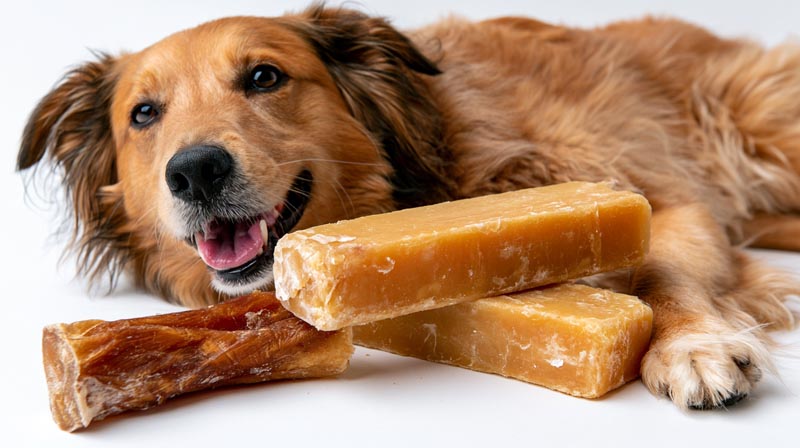
Himalayan dog chew XL is safe for most healthy adult dogs when sized correctly and used with supervision. The chew is fully digestible, contains no chemicals, and does not splinter. But “safe” is conditional on a few specific protocols that owners skip at their own risk.
Digestibility vs. Rawhide
This is the most important safety distinction. Rawhide is made from chemically processed animal hide, the inner corium layer of cattle skin treated with bleach and other agents during the leather industry production process. It is poorly digestible. Large swallowed pieces have been documented causing intestinal blockages requiring surgery costing $3,000 to $7,000 per incident (Bully Sticks Direct, 2026).
Himalayan chews are made from dairy protein (casein). They are digestible in the same way that cheese is digestible. Compressed casein dissolves more slowly than dried muscle protein (like bully sticks), but it does break down in stomach acid. Small pieces scraped off during normal chewing pass through without issue in healthy dogs.
The risk point is large piece ingestion. The final 3-4 inches of a Himalayan chew, the nub, becomes small enough that a dog could swallow it whole. If swallowed unpuffed, the dense compressed cheese takes longer to dissolve than an equivalent piece of dried muscle, which increases short-term obstruction risk. This is why the nub protocol exists.
The Nub Safety Protocol
When the chew reaches a size that can fit entirely in your dog’s mouth, it needs to be taken away and microwaved.
The process: microwave the nub on high for 45 to 60 seconds. The compressed cheese puffs up into a light, airy cheese crisp. Let it cool completely for 2 to 3 minutes. Then give it back as a snack. The puffed version is fully safe to eat whole.
Skipping this step is the primary safety failure point with Himalayan chews. The chew itself is safe. An unattended dog swallowing a 3-inch dense cheese stub unpuffed is where problems happen.
The Thumbnail Hardness Test
The American Veterinary Dental College issued guidance that no chew should be given to a dog if it does not yield under a thumbnail (AVDC position, cited by multiple veterinary sources including VCA Animal Hospitals and Bestie Paws Hospital, 2025).
Press your thumbnail firmly into the surface of the XL chew. It should leave at least a faint impression. If it leaves no mark whatsoever, the chew may be too hard for that specific dog. This matters most for high-bite-force breeds like Rottweilers or Mastiffs, where slab fractures (large sections of tooth crown shearing off) are a documented risk with excessively hard chews.
Over 80% of dogs older than 3 years have active dental disease (VCA Animal Hospitals / Banfield study data). Hard chews can actually help reduce plaque and tartar through mechanical abrasion, but the hardness must match the dog’s tooth strength. Himalayan chews are generally safer in this regard than antlers or nylon chews, which sit at the extreme hard end of the chewing spectrum.
Session Length and Supervision
Veterinary dentists recommend limiting hard chew sessions to 10 to 15 minutes at a time, especially for power chewers. Continuous 2-hour sessions under no supervision with a high-bite-force dog is a setup for either a dental fracture or a large piece ingestion event.
Quick rule: chew present means owner present. Store it between sessions. This applies to every hard natural chew, not just Himalayan.
What Are the Nutritional Facts for a Himalayan Dog Chew XL?
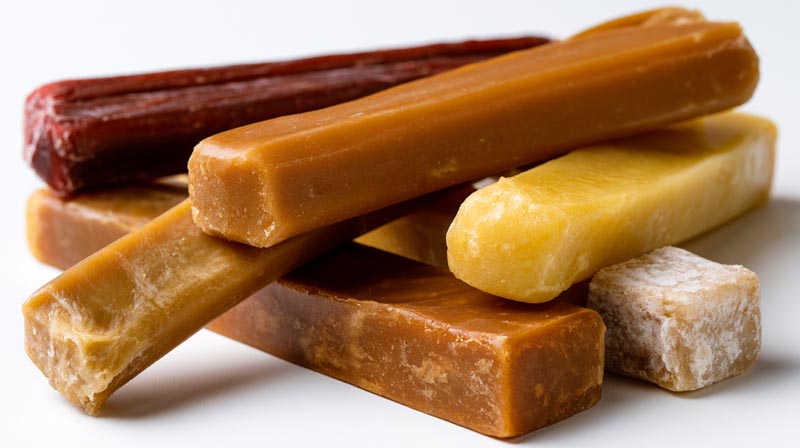
The XL chew is nutritionally dense, high in protein, and very low in fat. It functions more like a high-protein supplement snack than a typical treat, which affects how it should factor into a dog’s daily caloric intake.
| Nutrient | Amount (as % dry weight) | Comparison |
|---|---|---|
| Crude Protein | 69% minimum | Bully stick: approximately 35-45% |
| Crude Fat | 1% minimum | Bully stick: approximately 3-10% |
| Carbohydrates | Approximately 30% | Rawhide: near zero |
| Moisture | 14% maximum | Typical range for dried chews |
Caloric Load and Daily Intake
An XL chew weighing 5.5 oz delivers roughly 475 to 600 total calories for the full bar, based on approximately 85 to 110 calories per oz for hard cheese-based treats (general nutritional density data for dairy protein products at ~1% fat).
A 70-lb dog typically needs 1,200 to 1,400 calories per day. A full XL chew eaten in one session would represent 35 to 50% of that dog’s daily caloric budget. That’s not realistic, because no dog finishes an XL in one session. A power chewer working through an XL over 5 to 10 days is consuming 50 to 120 calories per session.
Treat intake, including chews, should not exceed 10% of a dog’s daily caloric intake by general veterinary nutritional guidance. For a 70-lb dog, that ceiling is roughly 120 to 140 calories per day from all treats combined.
Calcium, Phosphorus, and Large Breed Considerations
Dairy-based chews contribute calcium and phosphorus to the diet. For most healthy adult large-breed dogs, this is not an issue at normal chewing frequency. For dogs already on calcium-supplemented large-breed diets, it is worth mentioning to your vet if your dog is chewing through multiple bars per week.
Puppies of giant breeds (think Great Dane or Mastiff) have strict calcium-to-phosphorus ratio requirements during development. High calcium intake can disrupt bone growth in these breeds. Giant-breed puppies should not have Himalayan chews as a frequent treat without veterinary input.
How Does a Himalayan Dog Chew XL Compare to Rawhide and Bully Sticks?
Three chews dominate the long-lasting dog chew market: Himalayan yak chews, bully sticks, and rawhide. They are not equivalent. Each has a distinct safety profile, nutritional composition, and ideal use case.
| Factor | Himalayan XL | Bully Stick | Rawhide |
|---|---|---|---|
| Main ingredient | Yak/cow milk casein | Dried beef muscle | Chemically processed hide |
| Digestible? | Yes (slower than bully stick) | Yes (typically digested within 2-4 hours) | No (poorly digestible) |
| Obstruction risk | Low when the nub-removal protocol is followed | Very low | High (documented risk) |
| Crude protein | Approximately 69% | Approximately 35-45% | Minimal nutritional value |
| Fat content | Approximately 1% | Approximately 3-10% | Variable |
| Chew duration (large dog) | Days to weeks | 15 minutes to 2 hours | Hours (softens quickly) |
| Dental abrasion | Yes, effective | Moderate | Some effect, but softens quickly |
| Chemical processing | None | None | Yes (may involve bleaching or formaldehyde-based processing) |
The Rawhide Problem
Rawhide is made from the inner layer (corium) of cattle or horse hides, the same material used in leather production. It undergoes treatment with chemicals to separate layers, halt decomposition, and achieve its familiar white color. It is not digestible the way food is digestible.
Approximately 40 to 50% of veterinary foreign body obstruction cases involving chews trace back to rawhide ingestion (Bully Sticks Direct, 2026). Surgical intervention to remove obstructions costs between $3,000 and $7,000 per incident. Himalayan chews carry none of this risk profile when used correctly.
Himalayan XL vs. Bully Sticks
Both are fully natural, digestible alternatives to rawhide. The difference is in the chewing math. Bully sticks are dried beef pizzle, a single muscle-tissue ingredient. Bully sticks fully digest within 2 to 4 hours in the stomach. They disappear fast. Most dogs demolish a 6-inch bully stick in under an hour.
Himalayan XL gives you 10 to 20 times the duration for a similar price point. For a Labrador that blasts through bully sticks for aggressive chewers in minutes, the XL yak chew is the obvious economic and practical alternative.
The tradeoff: bully sticks have richer flavor. Dogs respond more immediately and enthusiastically. Himalayan chews are less exciting at first sniff but sustain engagement far longer once the dog gets into them.
Looking at the broader picture of longest lasting dog chews, the Himalayan XL sits near the top for large breeds. And unlike rawhide, it qualifies as one of the safe dog chews that veterinary sources consistently recommend as a digestible alternative.
How Long Does a Himalayan Dog Chew XL Last?
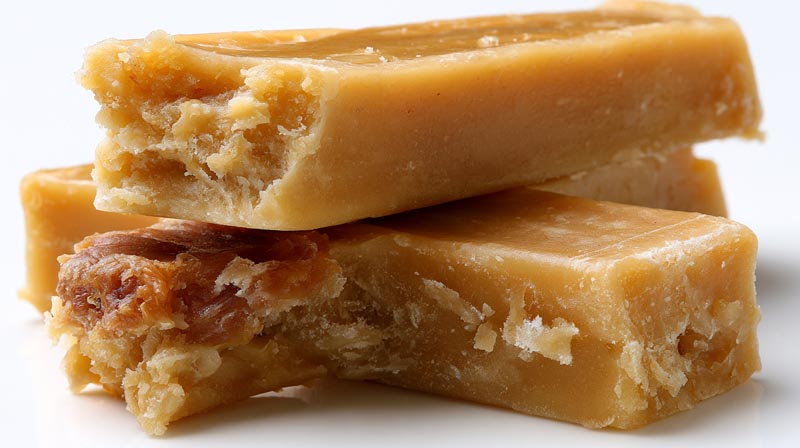
Duration depends almost entirely on jaw strength and chewing frequency, not just dog weight. Two 70-lb dogs can produce wildly different results with the same XL chew.
Average Duration by Chewer Type
For a moderate chewer (daily 15-minute sessions), an XL typically lasts 2 to 3 weeks.
For a power chewer that works the bar intensively every day, expect 5 to 10 days. Some very aggressive large-breed chewers, particularly high-bite-force breeds like the Rottweiler or Cane Corso, can get through an XL in 3 to 5 days.
Those numbers are why some owners find the XL underwhelming on price-per-day math once they realize their specific dog is a destroyer. For those dogs, the Monster size is the better buy.
Factors That Affect Duration
- Session length: 15-minute supervised sessions stretch duration far more than an hour of unsupervised chewing.
- Moisture exposure: Wet conditions soften the chew faster. Avoid leaving it in humid environments between sessions.
- Breed jaw mechanics: Breeds that chew with lateral grinding motion (like many terriers) work through hard chews differently than breeds that bite straight down.
- Storage: Store between sessions in a dry, room-temperature location. Airtight containers extend chew life by limiting moisture absorption.
Shelf Life
Unopened, an authentic Himalayan dog chew XL has a shelf life of up to 5 years when stored properly in dry, room-temperature conditions (Bully Bunches product specs, 2024). This is a real practical advantage for owners who buy in bulk.
Once a dog starts chewing on it, the clock changes. The chewed end has been exposed to saliva and should not sit in humid or warm environments between sessions. Store it dry and bring it back out the next day.
When to Discard the Chew
Take it away when the piece is small enough to fit entirely inside your dog’s mouth. That is the nub threshold. At that point: microwave it, let it puff, let it cool, give it back as a safe cheese crisp snack. Do not let the dog chew the raw nub unsupervised.
Also inspect for lengthwise cracks or structural fractures. A chew that is splitting along its length can produce sharp-edged chunks rather than the soft scraped pieces that come off a healthy bar. Discard those.
This is especially relevant for are Himalayan dog chews safe considerations, where the condition of the chew at each session matters as much as the initial choice to buy it.
What Do Veterinarians Say About Himalayan Dog Chews for Large Dogs?
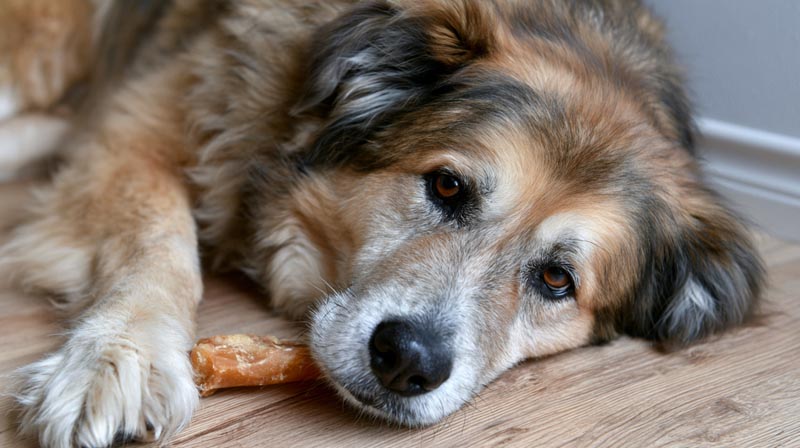
Vet opinions on Himalayan chews are genuinely split, and both camps make reasonable points. Understanding where the disagreement actually sits helps you make a practical decision for your specific dog.
The consensus is this: yak chews are a better choice than rawhide for digestibility and safety, but they carry real risks for high-bite-force large breeds if used without size-matching and session limits.
The Case for Himalayan Chews
Natural dental chew recommendation: MedicAnimal’s 2025 vet panel lists yak cheese chews as the top natural dental chew option, citing 65%+ protein, full digestibility, and chew duration 2 to 3 times longer than standard dental chews.
Around 80% of dogs over age 3 have active dental disease (VCA Animal Hospitals, Banfield study data). Regular mechanical chewing can reduce plaque and tartar by up to 50 to 80% (MedicAnimal, 2025).
Himalayan Pet Supply’s chews are produced in a facility certified to GFSI, APHIS, SQF, and AIB standards, and third-party safety testing has been conducted by Washington State University, Oklahoma State University, Edge Laboratories, and Midwest Laboratories (Himalayan Dog Chew product documentation).
The Case for Caution
Vetstreet’s emergency veterinarian contributor flags that yak chews are very hard and can cause tooth fractures, particularly in large dogs with powerful bites (Vetstreet, 2025).
The American Animal Hospital Association (AAHA) 2019 Dental Care Guidelines note that fractured teeth can be prevented by appropriate chew selection. A VOHC-aligned dental guide specifically lists dried yak milk alongside antlers and bones as products “so hard that chewing can result in tooth fracture with pulp exposure” (cited in YforYak, 2026).
The thumbnail test resolves most of this. If the chew yields under your thumbnail, it is within an acceptable hardness range for most adult dogs. Himalayan XL typically passes this test, unlike antlers or nylon products, which do not yield at all.
What Vets Actually Recommend in Practice
- Size up rather than down, especially for power chewers
- Limit sessions to 10 to 15 minutes at a time
- Always supervise, never leave the dog alone with a hard chew
- Apply the thumbnail test to every new batch, since density can vary slightly between production runs
- Avoid giving Himalayan XL to dogs with existing dental problems or known tooth fragility
Dogs with casein protein allergy (a distinct condition from lactose intolerance) should not have yak chews at all. Check with your vet if your dog has a documented history of dairy sensitivity.
Which Brands Make Himalayan Dog Chew XL?
The market has consolidated significantly. In 2022, Himalayan Pet Supply acquired EcoKind, the leading yak chew brand on Amazon, making Primal Pet Group (which owns Himalayan Pet Supply) the dominant player in the US hard cheese chew category (Primal Pet Group press release, August 2024).
Today, Himalayan and EcoKind together account for the majority of cheese chews sold in the US.
| Brand | Key Feature | XL Availability | Notable Certification/Attribute |
|---|---|---|---|
| Himalayan Pet Supply | Original brand, founded in 2008 | Yes, multiple sizes available | World Fair Trade Certified |
| EcoKind | Popular online brand with a 100% satisfaction guarantee | Yes | Acquired by Himalayan Pet Supply in 2022 |
| Tibetan Dog Chew | Nepal-sourced regional brand | Yes | Nepal origin; no U.S. certification publicly listed |
| Devil Dog Pet Co. | Veteran-owned company with hand-inspected chews | Yes (XL and Monster sizes) | Direct-to-consumer brand with Subscribe & Save options |
Himalayan Pet Supply (The Original)
Founded in 2008, Himalayan Pet Supply pioneered the hard cheese chew category in the US. Every pound sold funds one textbook donation to rural libraries in Nepal through the Manaram Foundation, now totaling over 175 libraries built (Chewy brand page, Himalayan Pet Supply).
Their chews are sourced from rural community co-ops in Eastern Nepal and West Bengal, then inspected and packaged at their facility in Arlington, Washington. The supply network spans over 10,000 Himalayan farmers (Chewy product documentation, 2024).
EcoKind
EcoKind markets itself on a 100% satisfaction guarantee and positions its chews for aggressive chewers and sensitive stomachs. Their size guidance places XL for dogs 50 to 90 lbs, with giant sizes for 90+ lbs.
Since the 2022 acquisition, EcoKind has remained a separate brand under the Primal Pet Group umbrella, retaining its own product line and Amazon presence.
What to Check on Any Label
Authentic yak chews should meet 4 criteria before you buy:
- Yak milk listed as the first ingredient
- No artificial preservatives, binders, or colorings
- Nepal or Himalayan region as country of origin
- USDA and FDA import compliance language on packaging
Avoid products priced below $8 for an XL size. Suspiciously cheap bars often use lower yak-to-cow ratios, less curing time, or include undisclosed binders. The pale yellow color, rough uneven texture, and faint smoky smell are signs of an authentic, properly dried hard cheese chew.
Also avoid anything labeled “yak-style” without a clear ingredient list. That phrasing sometimes signals a product that mimics the format but uses artificial hardening agents instead of the traditional fermentation and smoking process.
Where to Buy Himalayan Dog Chew XL and What to Pay
The XL size is widely available both online and in physical retail. Price ranges from roughly $13 to $22 per single bar, depending on brand, retailer, and whether you subscribe.
Retail Channels
Online-first channels:
- Chewy: Autoship discount up to 35% on first order, ongoing discounts on repeat delivery
- Amazon: Subscribe and Save typically saves 5 to 15%, with first-order promotions reaching 30%
- Brand direct (himalayan.pet, ecokindpettreats.com): full price but sometimes offers bundle deals
Physical retail:
- Petco and PetSmart: carry Himalayan Pet Supply brand, full retail price, convenient for single-bar testing
- Independent pet stores: often stock regional brands not available on major platforms
Price Comparison by Channel
| Channel | Single XL Price | With Subscription/Autoship |
|---|---|---|
| Chewy (Autoship) | Approximately $14-$18 | First order may receive up to 35% off |
| Amazon (Subscribe & Save) | Approximately $14-$20 | Typically 5-15% ongoing savings, with up to 30% off the first order |
| Petco / PetSmart | Approximately $16-$22 | Repeat delivery discounts may be available |
| Brand direct | Approximately $15-$20 | Bundle packs often reduce the per-unit cost |
Buying in Bulk
Multi-packs are the clearest path to savings on a per-bar basis. EcoKind and Himalayan Pet Supply both sell 1 lb to 5 lb bags, which typically contain 3 to 8 XL bars depending on weight.
Given the 5-year shelf life of properly stored Himalayan chews, bulk buying is low-risk for owners who have confirmed their dog likes and tolerates the product. Buy a single bar first. If your dog responds well and shows no digestive issues after the first few sessions, move to bulk.
Red Flags When Buying Online
Third-party Amazon sellers occasionally list fake or low-quality versions under legitimate brand names. Before purchasing:
- Check that the seller is the brand itself or a major authorized retailer
- Read recent reviews for mentions of unusual texture, color, or smell
- Confirm the product ships from a US warehouse (not directly from an overseas seller with no inspection record)
For owners who want to explore related natural chew options alongside the Himalayan XL, it helps to understand whether Himalayan dog chews are good for dogs broadly before committing to a long-term purchase routine.
For comparison shopping beyond yak chews, the best yak chews for dogs covers a wider brand range with specific size and chewer-type recommendations. If your dog is a confirmed destroyer of every chew you hand them, the section on best dog chews for heavy chewers gives a practical breakdown of which formats survive the most powerful jaws.
Dogs that produce a lot of tartar and plaque alongside their chewing habit may benefit from pairing a Himalayan XL with a best natural dental chew for dogs that carries VOHC acceptance, since Himalayan chews themselves do not carry VOHC certification.
And if you are still deciding between Himalayan XL and the two most common alternatives, the detailed breakdown of are bully sticks safe for dogs and are yak bones good for dogs helps put each product’s risk profile in direct context.
FAQ on Himalayan Dog Chew XL
What size dog is the Himalayan dog chew XL made for?
The XL size suits dogs between 40 and 90 lbs. Aggressive power chewers should size up regardless of weight. Always choose a bar longer than your dog’s muzzle to prevent accidental swallowing.
Is a Himalayan dog chew XL fully digestible?
Yes. It is made from compressed yak and cow milk casein, which breaks down in stomach acid. It is not rawhide. Small pieces scraped off during normal chewing digest safely in healthy adult dogs.
What ingredients are in a Himalayan dog chew XL?
Just 4: yak milk, cow milk, lime juice, and salt. No preservatives, binders, artificial flavors, or additives. The curing and smoking process removes nearly all lactose from the finished bar.
How long does an XL Himalayan dog chew last?
For a moderate chewer, 2 to 3 weeks. For an aggressive power chewer, 5 to 10 days. Chew duration depends on jaw strength, session length, and whether the bar is stored dry between uses.
What do I do with the leftover nub?
Microwave it on high for 45 to 60 seconds. The dense cheese puffs into a light, airy crisp. Let it cool completely before giving it back. Never let your dog swallow the raw unpuffed nub whole.
Are Himalayan dog chews safe for dogs with lactose intolerance?
Generally yes. The fermentation and smoking process converts most lactose to lactic acid. The finished chew is considered lactose-free by most manufacturers. Dogs with a full casein protein allergy are a different case and should avoid it.
Can puppies have a Himalayan dog chew XL?
Not under 6 months. Adult teeth must be fully erupted before introducing any hard chew. The XL size specifically is too large and too hard for developing teeth. Start with a smaller size after 6 months, supervised.
How does a Himalayan dog chew XL compare to bully sticks?
Both are digestible and natural. Bully sticks are higher fat and disappear faster, often in under an hour. Himalayan XL lasts 10 to 20 times longer per bar, making it the better value for large-breed power chewers.
Where is the Himalayan dog chew XL made?
Authentic bars are handcrafted in Nepal, primarily in Eastern Nepal’s Himalayan highlands. Himalayan Pet Supply sources from rural co-ops and inspects the finished product at their Arlington, Washington facility before US distribution.
What should I look for on the label when buying a Himalayan dog chew XL?
Check for yak milk as the first ingredient, Nepal as the country of origin, no artificial preservatives, and USDA/FDA import compliance. Avoid “yak-style” products and any bar priced suspiciously below $8 for an XL size.
Conclusion
This conclusion is for an article presenting the Himalayan dog chew XL as a long-lasting, digestible yak milk chew built for large-breed dogs and power chewers.
The core case is straightforward: 69% crude protein, 1% fat, no rawhide, no chemical processing, and a shelf life of up to 5 years.
Pair that with the nub microwave protocol and the thumbnail hardness test, and you have a safe natural chew that outlasts bully sticks by weeks.
Size correctly, supervise sessions, and buy from brands with Nepal origin labeling and clean ingredient lists.
Done right, the Himalayan yak chew XL is one of the most cost-effective hard chews available for aggressive chewers over 40 lbs.