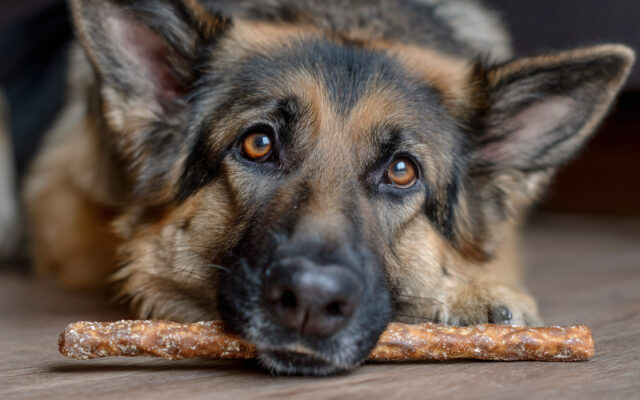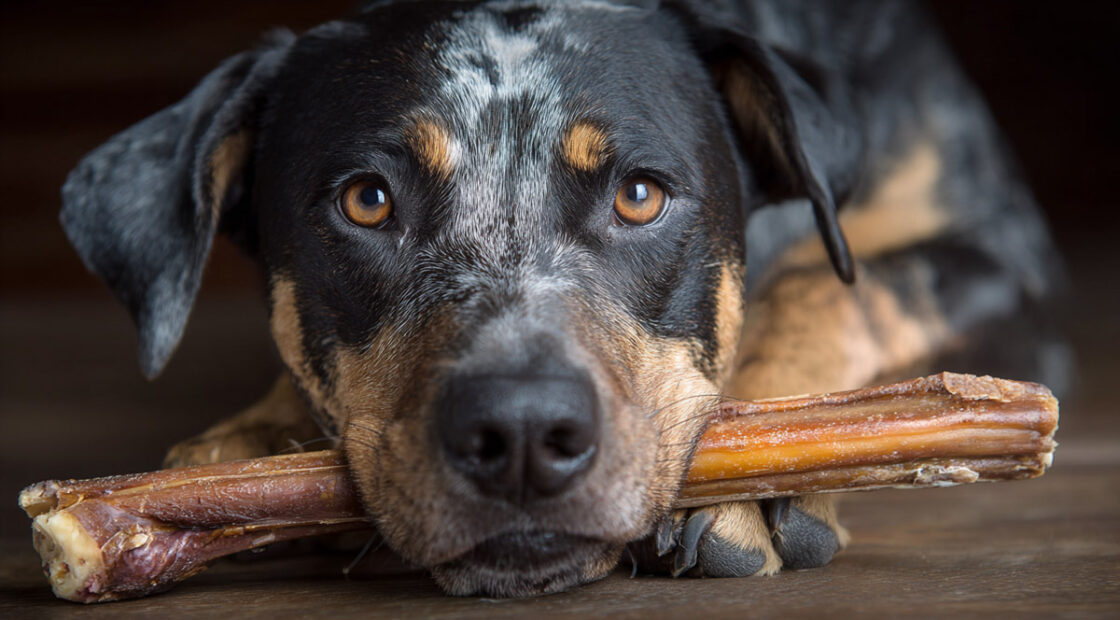
My dog acts like bully sticks are the greatest thing ever invented. Yours probably does too. But after a trip to the vet and some reading I wasn’t expecting, I started looking at bully sticks side effects a lot more carefully.
These dried pizzle chews aren’t as harmless as the packaging suggests. Bacterial contamination, hidden calories, choking hazards, and digestive upset are all real concerns backed by veterinary research.
This article breaks down what the Tufts University study actually found, which dogs should skip bully sticks entirely, how many per week are safe, and what safer alternatives look like. Everything here comes from published data and vet guidance, not guesswork.
What Are Bully Sticks
Bully sticks are dried bull or steer penises sold as single-ingredient dog chews. That’s it. No additives, no grains, no fillers in the good ones.
They go by other names too. Pizzle sticks. Bull pizzle. Steer sticks. All the same thing.
The Tufts University study published in the Canadian Veterinary Journal tested 26 different bully stick products and found most owners had no idea what they were actually made from. About 71% of people feeding bully sticks said they avoid byproducts in pet food, which is ironic since bully sticks are literally a byproduct of the beef industry.
Processing methods vary a lot between manufacturers. Some are oven-dried at low temperatures to preserve the protein structure. Others are smoked, baked at high heat, or even irradiated to kill bacteria. The more processing a stick gets, the safer it generally is from contamination, but some owners prefer minimal processing because they want a “natural” chew.
You’ll find them in different shapes: standard straight sticks, braided versions, rings, and spring-shaped curls. Standard 6-inch sticks are the most common. Thicker varieties tend to last longer and are better for bigger dogs.
Look, my dog loses his mind when I pull one out of the bag. But knowing what they are and how they’re made matters before you hand one over. Especially once you see what the research says about the risks.

Bacterial Contamination in Bully Sticks
This is the most studied risk. And the findings are not great.
Researchers at Tufts University and the University of Guelph tested 26 bully sticks from different manufacturers across the U.S. and Canada. Out of those 26, 27% tested positive for E. coli. One contained Clostridium difficile. Another had methicillin-resistant Staphylococcus aureus (MRSA). One E. coli sample showed tetracycline resistance.
That’s a small sample size, sure. But finding MRSA and C. difficile in a dog treat you’re handling with bare hands? That got people’s attention.
Salmonella and E. Coli Risk From Bully Sticks
The FDA has issued real recalls over this. In 2018, Redbarn Pet Products pulled their 7-inch bully sticks nationwide after the Colorado Department of Agriculture detected Salmonella in a retail sample. The recall eventually expanded to include multiple brands that shared the same raw material supplier.
Then in October 2025, Best Buy Bones recalled their Nature’s Own Pet Chews Bully Bites after FDA testing confirmed Salmonella contamination in four production lots.
These aren’t isolated events. Pet treats made from minimally processed animal parts carry a baseline risk of bacterial contamination because they skip the heating and sterilization steps used in regular pet food manufacturing. According to Today’s Veterinary Practice, raw chews are particularly susceptible because they often lack “use by” dates and may not indicate storage time.
| Bacteria Found | Tufts Study Detection Rate | Health Risk |
|---|---|---|
| E. coli | 27% of samples | GI illness in dogs and humans |
| Clostridium difficile | 4% of samples | Severe diarrhea, colitis |
| MRSA | 4% of samples | Antibiotic-resistant infection |
| Salmonella | Found in FDA recalls | Vomiting, bloody diarrhea, fever |
Human Health Risks From Handling Bully Sticks
You’re at risk too, not just your dog. Salmonella and E. coli transfer to your hands when you touch these chews. Then to your countertops, your couch, wherever your dog carries the stick around the house.
The Tufts researchers specifically flagged that young children, elderly individuals, pregnant people, and immunocompromised individuals should avoid all contact with bully sticks. Dogs don’t just chew them in one spot. They drag them across floors, onto furniture, and into beds.
Wash your hands after handling them. Every time. Sanitize any surface the chew touches. At least in my experience, that’s the part most dog owners completely skip.
Calorie Content and Weight Gain
A single 6-inch bully stick contains roughly 88 calories. That number comes directly from the Tufts study, which measured a mean caloric density of 15 kcal per inch across 26 products.
For a 10-pound dog, 88 calories is 30% of their entire daily caloric requirement. For a 50-pound dog, it’s still 9%. Those numbers add up fast if you’re handing these out multiple times a week without adjusting meal portions.
The Association for Pet Obesity Prevention’s 2022 survey found that 59% of dogs in the U.S. are overweight or obese. Their 2023 follow-up showed that 82% of dogs receive treats at least once daily, and 58% of dog owners give treats more than once a day. Treats are a known contributor to rising pet obesity rates, and calorie-dense chews like bully sticks make the problem worse when owners don’t account for them.
Here’s what bugs me. Most bully stick packaging doesn’t list calorie counts. Calorie information isn’t currently required on pet treats or most pet foods, according to Dr. Lisa Freeman, professor of veterinary nutrition at Tufts. So owners have no easy way to know what they’re adding to their dog’s daily intake.
Practical calorie math: If your dog needs 400 calories a day and you give them one 88-calorie bully stick, you need to cut roughly 22% of their regular meal to compensate. Most people don’t do this. They just add the treat on top.
For breeds already prone to weight issues, like Labrador Retrievers, Beagles, or Bulldogs, that uncounted calorie load can push them into unhealthy territory quickly. Your vet might tell you your dog needs to lose weight and never think to ask about the bully stick habit.
Choking and Intestinal Blockage
Over 200,000 pet choking incidents are reported by veterinarians every year in the United States, according to data from National Pet Choking Prevention Day. That number doesn’t even include unreported events that happen at home.
Bully sticks become a specific choking hazard at one point: the end piece. When a dog chews a stick down to a small nub, about 2 to 3 inches, many dogs will try to swallow it whole rather than keep chewing. That piece can lodge in the throat or esophagus before it ever reaches the stomach.
Why the End Piece Is the Problem
Bully sticks are fully digestible once they reach the stomach. That’s one of their selling points over rawhide, which can sit in the gut for days. But “digestible” doesn’t help if the piece gets stuck in the airway or throat on the way down.
Dogs that gulp and swallow aggressively are at the highest risk. Aggressive chewers can break down a 6-inch stick in under 10 minutes, and at that speed, they’re not carefully gnawing, they’re ripping off chunks.
Signs of a choking event or gastrointestinal obstruction include:
- Pawing at the mouth or face
- Gagging, retching, or dry heaving without producing anything
- Sudden loss of appetite or refusal to drink
- Vomiting, lethargy, or abdominal pain
If a large piece makes it past the throat but can’t pass through the intestines, surgical removal might be needed. That’s an emergency vet visit. And it’s not cheap.
Safety devices like the Bully Buddy holder grip the stick so the dog can’t swallow the last few inches. It’s a simple fix. You can also just take the stick away once it gets short enough to swallow, which is what most vets recommend. Supervision matters here more than with almost any other chew.
Digestive Upset and Diarrhea

This is probably the most common side effect that owners actually notice. Dogs get loose stools or outright diarrhea after eating bully sticks, and it happens more often than you’d think.
The reason is straightforward: bully sticks are extremely protein-rich. That concentrated protein load hits the digestive system hard, especially if the dog isn’t used to it or eats too much at once.
Dogs with sensitive stomachs react worse. If your dog already has food sensitivities or a history of GI issues, a bully stick can set off a bout of diarrhea, gas, or vomiting that lasts a day or two. Treats made for sensitive stomachs might be a better option for these dogs.
Then there’s the pancreatitis angle. The high fat and protein content in bully sticks can trigger pancreatitis in predisposed breeds. Pancreatitis shows up as severe vomiting, abdominal pain, fever, and refusal to eat. It’s a serious condition that requires vet treatment, and some breeds are more vulnerable than others.
Breeds with higher pancreatitis risk: Miniature Schnauzers, Cocker Spaniels, and Cavalier King Charles Spaniels show up more frequently in veterinary pancreatitis cases.
If you’re introducing bully sticks for the first time, limit chewing to 5 or 10 minutes and see how your dog handles it before giving them longer sessions. That trial period saves you a lot of carpet cleaning.
Chemical Residues and Preservatives
The label says “all natural” or “single ingredient.” But that doesn’t always tell the full story.
Some manufacturers use chemical washes during processing to reduce bacterial contamination. Others add preservatives that never appear on the packaging. The pet treat industry has fewer labeling requirements than human food, and the Association of American Feed Control Officials (AAFCO) guidelines for treats are less strict than for complete pet foods.
Where the bully stick comes from matters. A lot.
| Sourcing Region | Common Concerns |
|---|---|
| United States | Higher manufacturing standards, better traceability |
| South America (Brazil, Argentina) | Large-scale production, variable quality control |
| Asia (India, China) | Reports of chemical processing agents, less regulatory oversight |
A Today’s Veterinary Practice review of animal-derived chew products found that some products labeled as “rawhide-free” actually contained skin layers inconsistent with their labeling claims. Of 10 products tested in one study, 2 were mislabeled and 4 contained bacterial and fungal organisms.
The “natural” label on pet treats has no regulated definition. Anyone can slap it on packaging. Same goes for “organic” in most cases. Unless the product carries USDA organic certification specifically, the word means nothing legally.
When buying bully sticks, look for products that list the country of origin, the processing method, and ideally some form of third-party testing. Single-ingredient treats with transparent sourcing are a safer bet. But “transparent” is doing a lot of heavy lifting in an industry where pricing varies wildly and cheaper products often cut corners on quality control.
Dental Risks and Tooth Fractures
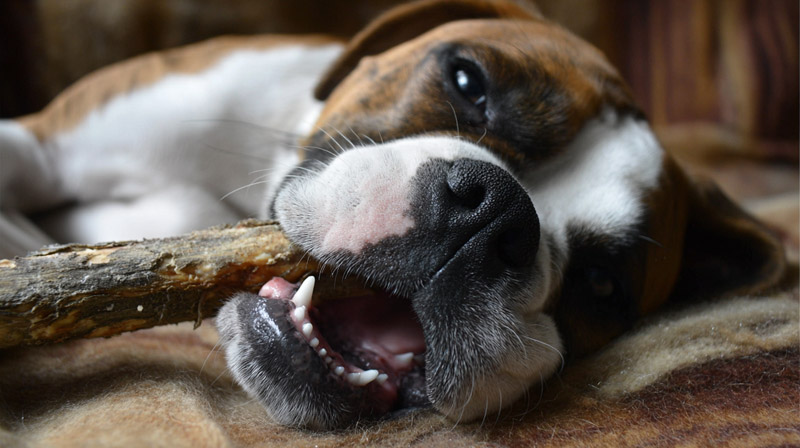
Bully sticks are softer than antlers or cow hooves. But “softer” is relative. A well-dried bully stick is still hard enough to crack a tooth if your dog bites down at the wrong angle.
Veterinary dental data published by dvm360 shows that fractured teeth appear in 10% to 29% of dogs seen in small-animal practice. Hard chews and direct force trauma are the two most common causes.
Slab Fractures on Carnassial Teeth
The carnassial teeth take the hit. These are the large upper premolars and lower molars that dogs use to crush and shear food. When the chew is as hard as or harder than the enamel, the buccal surface chips off in a slab.
Dogs have 5 to 10 times less enamel than humans, according to Veterinary Practice News. That thin enamel layer is strong but brittle, and it doesn’t regenerate once cracked.
A fractured carnassial tooth doesn’t always cause obvious pain. Many dogs keep eating normally. But untreated fractures lead to pulp exposure, infection, and eventually tooth root abscesses that require extraction or root canal treatment.
The Thumbnail Test for Chew Hardness
Simple rule from veterinary dentists: press your thumbnail into the chew. If it doesn’t leave a slight indent, the chew is too hard for your dog’s teeth.
Most fresh bully sticks pass this test. The problem comes when sticks have been over-dried or when you buy very dense, compressed varieties. Those can rival antlers in hardness.
Smaller breeds and senior dogs with worn enamel are at the highest risk. If your dog already has dental issues, talk to your vet before giving any chews marketed for dental health. The Veterinary Oral Health Council maintains a list of accepted products that have been tested for both safety and plaque reduction.
How Many Bully Sticks Per Week Are Safe
The 10% rule is where most veterinarians start. All treats combined, including bully sticks, should make up no more than 10% of your dog’s total daily calories.
For most dogs, that works out to 2 to 3 bully sticks per week. Not per day. Per week.
| Dog Size | Daily Calorie Need (approx.) | Bully Stick Impact (88 cal) | Suggested Frequency |
|---|---|---|---|
| Small (10 lbs) | 275–300 cal | ~30% of daily intake | Once a week max |
| Medium (30 lbs) | 550–700 cal | ~13–16% of daily intake | 2 times per week |
| Large (50 lbs) | 900–1000 cal | ~9–10% of daily intake | 2–3 times per week |
| Extra Large (80+ lbs) | 1400+ cal | ~6% of daily intake | 3–4 times per week |
On days your dog gets a bully stick, cut their regular meal by the equivalent calorie amount. My vet was pretty blunt about this: if you’re not reducing the kibble, you’re overfeeding. Simple as that.
Time-Limited Chewing Sessions
New to bully sticks: start with 5 to 10 minutes. Let your dog’s digestive system adjust to the concentrated protein before giving longer sessions.
Experienced chewers can go 30 to 60 minutes per session, but always with supervision. Take the stick away when it gets small enough to swallow whole (roughly 2 to 3 inches). That’s the point where chewing turns into a choking risk.
Daily use is technically possible for large, active dogs with high caloric needs. But most veterinary sources, including guidance from the American Kennel Club, suggest keeping it occasional rather than routine. Your dog won’t lose interest in a treat they only get a few times a week. They will lose interest in regular meals if bully sticks become a daily expectation.
Which Dogs Should Avoid Bully Sticks
Not every dog should have bully sticks. Some dogs are better off with something else entirely.
Dogs With Pancreatitis History
Severe acute pancreatitis has a mortality rate near 40% in dogs, according to a clinical study published in Veterinary Medicine and Science. The protein and fat content in bully sticks can trigger episodes in susceptible dogs.
Breeds at highest risk according to PubMed research and the Merck Veterinary Manual:
- Yorkshire Terriers and other small terrier breeds
- Dachshunds
- Boxers
- Poodles (especially miniature)
If your dog has had even one bout of pancreatitis, skip the bully sticks. Low-fat chews are a better call.
Puppies and Senior Dogs
Puppies under 6 months shouldn’t have bully sticks. Their baby teeth aren’t built for hard chews, and their digestive systems can’t handle the protein load. Softer chew options designed for puppies are the way to go.
Senior dogs with weakened teeth, gum disease, or reduced jaw strength face higher fracture risk. Thinner sticks or collagen-based chews give them the chewing satisfaction without the dental danger.
Dogs With Beef Protein Allergies
Bully sticks are beef. Pure beef. If your dog has a diagnosed beef protein allergy or sensitivity, a bully stick will trigger the same reaction as any other beef product.
Symptoms show up as itching, ear infections, or GI upset. Some owners don’t connect the dots because they’ve eliminated beef from meals but still hand over beef-based chews. Check your treat ingredients as carefully as you check food labels.
Safer Alternatives to Bully Sticks
Every chew has tradeoffs. There’s no perfect option. But some carry fewer risks than bully sticks while still keeping your dog happy and occupied.
Collagen Sticks
Collagen sticks are made from the corium layer of cowhide, not the outer hide used in rawhide. They’re lower in calories, easier to digest, and typically last up to 20% longer than a bully stick of the same size, according to Natural Farm Pet.
The joint health benefits are the real selling point. Collagen supports cartilage, bones, and skin health, which makes these sticks especially good for older dogs or active breeds dealing with stiffness.
Dental-Specific Chews
VOHC-approved products have been tested and shown to reduce plaque and tartar. That seal means something. Brands like Greenies and OraVet carry the Veterinary Oral Health Council acceptance mark.
These are formulated to be firm enough for mechanical cleaning but soft enough to avoid tooth fractures. If dental health is your main goal, a VOHC-accepted chew does the job more reliably than a bully stick.
Other Options Worth Considering
Frozen Kongs: stuff a rubber Kong toy with peanut butter, yogurt, or mashed banana and freeze it. Low calorie, long lasting, zero choking risk.
Himalayan yak chews are another popular pick. They’re hard cheese made from yak and cow milk, with a long chew time and relatively low fat content. Safety varies depending on your dog’s chewing style, so supervision still matters.
Beef tendons offer a softer chew with less bacterial risk than bully sticks. And plain frozen carrots work surprisingly well for light chewers or teething puppies.
| Alternative | Calorie Level | Best For | Watch Out For |
|---|---|---|---|
| Collagen sticks | Lower than bully sticks | Senior dogs, joint support | Still beef-based |
| VOHC dental chews | Moderate | Plaque and tartar control | Not for aggressive chewers |
| Frozen Kong | Very low | All dogs, mental stimulation | Filling ingredients matter |
| Yak chews | Moderate | Long chew sessions | Can be very hard |
| Beef tendons | Lower than bully sticks | Moderate chewers | Size appropriately |
No chew is completely risk-free. Supervision is the one constant across all of them. If your dog is the type to gulp large pieces without chewing properly, choosing the right chew and watching them while they work on it is non-negotiable, regardless of what treat you pick.
FAQ on Bully Sticks Side Effects
Can bully sticks cause diarrhea in dogs?
Yes. Bully sticks are high in protein, and that concentrated load can cause loose stools or diarrhea, especially on first exposure. Dogs with sensitive stomachs react more strongly. Start with short 5 to 10 minute chewing sessions to let their system adjust.
Are bully sticks safe for puppies?
Puppies over 6 months with adult teeth can have bully sticks in short, supervised sessions. Younger puppies should stick with softer chew options. Always remove the stick once it gets small enough to swallow whole.
Can bully sticks cause blockages?
Bully sticks are fully digestible, so intestinal blockage is less likely than with rawhide. The real danger is the end piece lodging in the throat before reaching the stomach. Supervision and removing small remnants prevents this.
Do bully sticks have bacteria?
The Tufts University study found E. coli in 27% of tested samples, plus Clostridium difficile and MRSA. The FDA has issued Salmonella-related recalls on bully stick products. Always wash your hands after handling them.
How many bully sticks per week is safe?
Most vets recommend 2 to 3 per week for average-sized dogs. Treats should stay under 10% of daily caloric intake. On bully stick days, reduce your dog’s regular meal portions to compensate for the extra calories.
Can bully sticks cause vomiting?
Some dogs vomit after eating bully sticks, usually from consuming too much too fast. The rich protein content can irritate the stomach. If vomiting happens repeatedly, stop giving them and check with your vet.
Are bully sticks bad for dogs’ teeth?
Most bully sticks are soft enough to be safe. But over-dried or very dense varieties can cause slab fractures on carnassial teeth. Use the thumbnail test: if your nail can’t dent it, it’s too hard for your dog.
Can bully sticks make dogs gain weight?
A single 6-inch bully stick contains roughly 88 calories. For a 10-pound dog, that’s 30% of their daily requirement. Without adjusting meal portions, regular bully stick use leads to weight gain over time.
Are bully sticks safer than rawhide?
Generally, yes. Bully sticks are a single-ingredient, fully digestible natural dog chew. Rawhide often contains chemical processing agents, takes longer to break down, and carries a higher risk of intestinal blockage.
Can humans get sick from handling bully sticks?
Yes. Salmonella and E. coli on contaminated sticks transfer to hands, countertops, and any surface your dog drags the chew across. Children, elderly people, and immunocompromised individuals face the highest risk from handling these treats.
Conclusion
Understanding bully sticks side effects comes down to knowing what you’re actually giving your dog. A dried bull pizzle with 88 calories per stick, potential bacterial contamination, and real choking risks if you’re not paying attention.
None of this means you need to throw them all out. It means you need to be smarter about how you use them.
Limit sessions to 2 or 3 times per week. Adjust meal portions on chew days. Remove the end piece before your dog tries to gulp it. Wash your hands every single time.
For dogs with pancreatitis history, beef allergies, or dental problems, skip bully sticks and look at collagen chews or VOHC-approved dental products instead.
Supervision is the one thing that makes every chew safer. No product replaces you watching your dog while they work on a treat. That’s the part that actually matters most.