Not every premium dog food brand earns its reputation. Redbarn dog food has been a fixture in independent pet stores since 1996, built on protein-first formulas and a manufacturing record that most mid-tier brands can’t match.
But “premium” gets thrown around a lot. Does Redbarn actually deliver on ingredient quality, nutritional completeness, and safety?
This guide covers everything: ingredient analysis, AAFCO compliance, recall history, product line breakdowns, competitor comparisons, and life stage suitability for puppies and senior dogs.
By the end, you’ll know exactly which Redbarn format fits your dog and whether the price is worth it.
What Is Redbarn Dog Food?
Redbarn dog food is a protein-first pet food brand founded in 1996 by childhood friends Jeff Baikie and Howie Bloxam, headquartered in Long Beach, California. Over 80% of Redbarn’s products are manufactured in Great Bend, Kansas, with a team that has grown to 500 members producing more than 200 foods, treats, and chews.
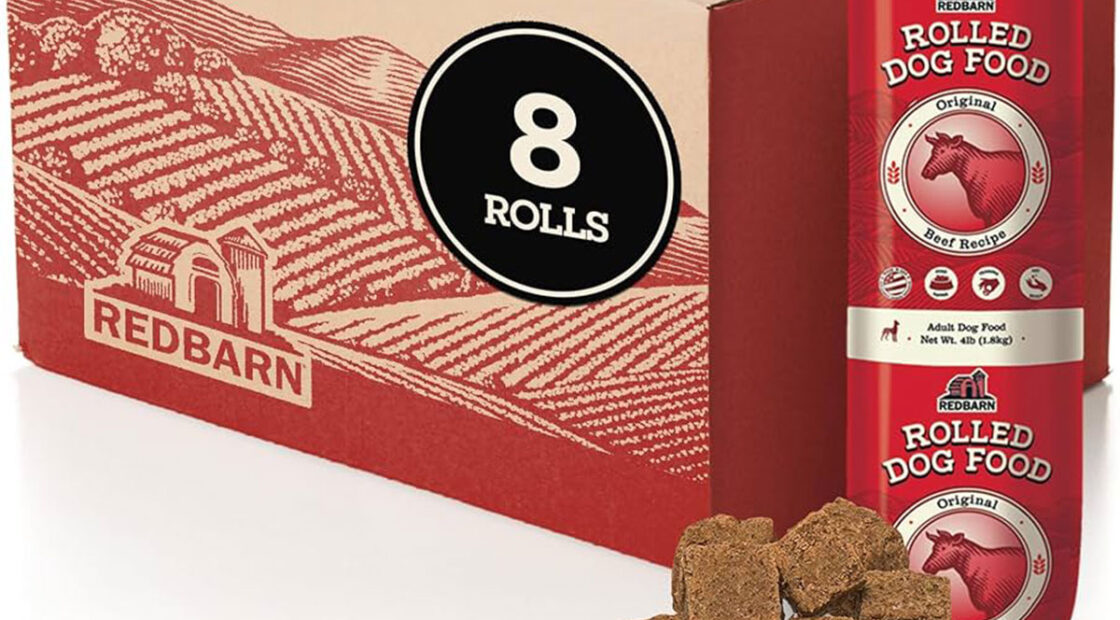
The brand started with a single product: their now-iconic food roll, sometimes called a chub. That format built the brand’s reputation and still defines what most dog owners picture when they think of Redbarn.
Redbarn positions itself as a high protein dog food company focused on named meat sources, minimal processing, and clean ingredient quality. The lineup spans food rolls, grain-free kibble, whole grain kibble, gently air-dried food, wet food toppers, freeze-dried raw, and a large selection of chews including bully sticks.
According to the American Pet Products Association (APPA), nearly 66% of U.S. households owned a pet in 2024. Dog food accounts for 58.8% of the entire U.S. pet food market revenue, which reached $45.4 billion that year (Grand View Research, 2024). Redbarn operates within that market as a family-owned independent, competing against multinational brands while selling primarily through independent pet retailers, Chewy, and Amazon.
Redbarn holds SQF Level 3 certification from the Safe Quality Food Initiative. That is the highest food safety standard available and subjects Redbarn’s manufacturing to the same testing protocols applied to human food production.
Dogs in the Redbarn world are similar to bigger breeds that need real nutrition: think Mastiff, Great Dane, or Labrador Retriever owners who care about what’s actually going into the bowl. The brand fits that buyer.
What Ingredients Does Redbarn Use Across Its Product Lines?
Redbarn uses named meat sources as the first 5 ingredients across all kibble lines. No recipe in the grain-free or whole grain kibble range leads with a plant protein or grain.
In 2024, a Pet Food Institute report found that over 41% of U.S. pet parents purchased premium dog food. Redbarn’s ingredient approach directly addresses what those buyers are checking on the label: real meat first, no artificial preservatives, and functional additions like taurine and L-carnitine.
Protein Sources and Meat Inclusion Rates
Primary animal proteins used across the Redbarn lineup:
- Beef, lamb, pork meal, and beef meal (Land recipes)
- Turkey, chicken, duck meal, turkey meal, and chicken meal (Sky recipes)
- Salmon, trout, salmon meal, ocean fish meal, and menhaden fish meal (Ocean recipes)
- Beef, beef liver, and beef lung in the semi-moist food rolls
Dog Food Advisor’s dry matter analysis of Redbarn Grain-Free kibble shows 31% crude protein and 17% fat, which places it above average for dry dog food in both categories (Dog Food Advisor, 2024). The air-dried Powerfood line reaches 39.7% crude protein on a dry matter basis.
The rolls clock in at 25.4% dry matter protein. That sounds lower than kibble, but it accounts for the 70% moisture content in the format. On a dry matter comparison, it holds up fine.
Grain-Free vs. Grain-Inclusive Formulas
Redbarn offers both grain-inclusive and grain-free kibble, which is less common than you’d think for a mid-premium brand.
| Formula Type | Carbohydrate Sources | AAFCO Life Stage |
|---|---|---|
| Grain-Free Land/Sky/Ocean | Lentils, garbanzo beans, peas, sweet potato, potato | All Life Stages |
| Whole Grain Land/Sky/Ocean | Oat groats, barley, brown rice, sorghum, millet | All Life Stages or Adult Maintenance |
| Semi-Moist Food Rolls | Whole wheat flour, brown rice flour | All Life Stages |
| Air-Dried Powerfood | Minimal (flaxseed, vitamins, minerals) | All Life Stages |
The grain-inclusive line uses oat groats and barley rather than corn or wheat. That matters because corn and wheat are filler-grade grains that add calories without meaningful nutrients. Oat groats are not that.
One caveat worth knowing: the grain-free formulas contain peas and lentils in the first 10 ingredients. That connects to the FDA’s DCM investigation, covered in detail in section 5.
How Does Redbarn’s Nutritional Profile Compare to AAFCO Standards?
Every Redbarn food product is formulated to meet AAFCO nutritional profiles. Most of the kibble and roll lines carry the “All Life Stages” designation, which is a stricter standard than adult maintenance alone because it must also cover puppy growth requirements.
Crude Protein, Fat, and Moisture Across Formats
AAFCO sets a minimum crude protein of 18% (dry matter) for adult dogs and 22% for growth and reproduction. Redbarn exceeds both minimums across all its food formats.
| Product Format | Dry Matter Protein | Dry Matter Fat | Moisture |
|---|---|---|---|
| Grain-Free Kibble | 31% | 17% | 10% |
| Whole Grain Kibble | 29% | 16-17% | 10% |
| Semi-Moist Food Rolls | 25.4% | 11.5% | ~70% |
| Air-Dried Powerfood | 39.7-40.9% | 28-31.5% | ~8-10% |
| Canned Pate | 43% | 31% | ~78% |
The canned pate line earns a 5-star rating from Dog Food Advisor with 43% dry matter protein and only 18% carbohydrates, compared to average wet food which runs closer to 30-35% carbs (Dog Food Advisor, 2024).
Added Functional Nutrients Beyond AAFCO Minimums
Redbarn includes 3 nutrients not required by AAFCO in most of its recipes:
- Taurine: supports heart health, eye function, and bile acid production for fat digestion
- L-Carnitine: supports fat metabolism and lean muscle maintenance
- Methionine (DL-Methionine): supports urinary tract health and protein synthesis
Redbarn also adds prebiotics (inulin from chicory root), probiotics (Lactobacillus strains), and omega-3 and 6 fatty acids from flaxseed and salmon oil. These additions go beyond what AAFCO mandates and target digestive health, coat condition, and cardiovascular function specifically.
Life Stage Suitability
The Whole Grain Land recipe and the Grain-Free Land recipe both carry adult maintenance-only AAFCO statements, not all life stages. That means they are not formulated for puppies or pregnant/lactating females.
The Sky (poultry) and Ocean (fish) lines in both grain-free and whole grain formats carry the “All Life Stages including growth of large size dogs (70 lbs or more as adult)” statement. That is the most demanding AAFCO designation available and the one to look for if you have a puppy.
What Are the Main Redbarn Dog Food Product Lines?

Redbarn produces more than 200 individual products across 5 major food formats. The food roll was the original and is still the most recognized.
Redbarn Food Rolls
Dog Food Advisor rates the semi-moist rolled dog food range at 3 stars on average, with individual recipes ranging from 2.5 to 3 stars (Dog Food Advisor, 2024). That is lower than the kibble line, primarily because of the moderate meat inclusion rate and the presence of pea protein and iron oxide in some recipes.
Roll formats available:
- Original Beef Recipe
- Chicken Recipe
- Lamb Recipe
- Liver Recipe
- Grain-Free versions of the above
On a dry matter basis, rolls deliver approximately 30-43% protein, making them competitive with premium kibble. The format is particularly useful as a wet food topper, a training reward sliced into cubes, or a complete meal for dogs that resist dry food. Shelf life is 18 months sealed, 2 weeks refrigerated once opened, or 6 months frozen.
Redbarn Kibble
Both the Grain-Free and Whole Grain kibble ranges earn 5-star average ratings from Dog Food Advisor. Individual recipes range from 4.5 to 5 stars. The first 5 ingredients in every recipe are animal proteins, which is the defining feature of Redbarn’s “First-Five” kibble branding.
Kibble formulas contain 24-30% protein depending on the recipe, which exceeds AAFCO minimums by a wide margin (Devil Dog Pet Co, 2025). Made in the USA, though ingredients are globally sourced.
Redbarn Freeze-Dried Raw
Air-dried vs. freeze-dried: Redbarn’s Gently Air-Dried Powerfood line uses low-heat air drying rather than true freeze-drying. Air drying removes moisture while preserving nutrients, delivering 85% or more meat content per recipe with minimal processing. The Air-Dried range averages 40.9% dry matter protein across 6 recipes (Dog Food Advisor, 2024).
Freeze-dried raw sales grew 15.6% in 2023 across the premium pet food category (Wifitalents, 2024), reflecting exactly the kind of minimal processing demand Redbarn’s air-dried line is built to capture.
Redbarn Toppers and Wet Food
Redbarn’s canned line includes 5 grain-free pate recipes in 13 oz cans, all rated “All Life Stages.” The canned pate earns a 5-star rating from Dog Food Advisor for its above-average protein and below-average carbohydrate content.
Toppers and stews are designed to improve palatability for dogs that eat dry kibble reluctantly. This is something I’ve used myself with a picky eater, and rolling a slice of Redbarn beef chub into kibble is the fastest way to fix a dog that’s gone off their food.
Dogs of all sizes and breeds can benefit from topper-based feeding strategies, from a Chihuahua being a dramatic eater, to a Rottweiler that just gets bored of the same kibble. The roll format is probably the most practical topper option Redbarn offers.
Is Redbarn Dog Food Safe?
Redbarn holds SQF Food Safety Code for Manufacturing certification, which is not required in the pet food industry. This subjects Redbarn’s manufacturing process to the same safety testing protocols used for human food production.
Their quality assurance team runs over 400 safety tests per week across their production facilities, testing for pathogens including Salmonella, coliforms, and enteros (FDA, 2018).
Grain-Free Formulas and DCM Risk
The FDA began investigating reports of canine dilated cardiomyopathy (DCM) in July 2018, focusing on grain-free diets high in peas, lentils, and legumes. More than 90% of the reported DCM cases involved grain-free diets, and 93% of those diets contained peas or lentils (AKC Canine Health Foundation, 2023).
In December 2022, the FDA announced it would not release further public updates until meaningful new scientific information emerges, as no definitive causal link between grain-free diets and DCM has been established (AVMA, 2023).
What this means for Redbarn specifically: their grain-free kibble formulas contain peas, lentils, and garbanzo beans in the first 10 ingredients. Redbarn was not among the 16 brands named by the FDA as having 10 or more DCM case reports associated with their food.
Redbarn does include taurine and L-carnitine in their grain-free formulas, both of which have been flagged as potentially relevant to the DCM cases. If DCM is a concern for your dog, the whole grain line removes legumes as a primary carbohydrate source entirely.
For breeds already at elevated DCM risk like Doberman Pinschers, Irish Wolfhounds, or Great Danes, discussing diet choices with a veterinarian before selecting a grain-free formula makes sense.
Manufacturing Location and Quality Control
80% of Redbarn products are made in Great Bend, Kansas. The remaining products are produced in Long Beach, California. Unlike many mid-tier pet food brands that use co-manufacturers, Redbarn maintains direct control over production at its own facilities.
This direct manufacturing model reduces supply chain risk and allows tighter consistency testing. Brands that outsource to contract manufacturers have less visibility into day-to-day production conditions, which is a real difference when you’re evaluating safety track records.
Has Redbarn Dog Food Been Recalled?
Redbarn has had 2 recalls, both occurring in early 2018. No recalls have been issued by Redbarn since March 2018. As of June 2026, the FDA recall database shows no active or recent Redbarn recalls.
The 2018 Salmonella Recall
On February 9, 2018, Redbarn issued a voluntary recall of its 7-inch Bully Stick 3-pack after the Colorado Department of Agriculture collected a retail sample that tested positive for Salmonella. No illnesses in pets or humans were reported at the time of the initial recall announcement (FDA, 2018).
On March 8, 2018, Redbarn expanded the recall to include all products manufactured from the same raw material supplier. The expansion covered 24 SKUs across 4 brands: Redbarn, Chewy Louie, Dentley’s, and Good Lovin’, all with best-by dates ending in “BC.” Distribution covered the period from March 2017 through February 2018 (FDA, 2018).
The root cause was a single raw material supplier, not a systemic failure in Redbarn’s own manufacturing. The recall was completed and terminated by the FDA.
What the Recall Record Means for Buyers
2 recalls in nearly 30 years of operation is a relatively clean safety record for a pet food brand. For context, both Purina Pro Plan and Blue Buffalo have had more recent recalls, including a 2022 Purina Pro Plan recall for elevated Vitamin D levels and a 2023 recall for one of their veterinary diet lines.
The 2018 Redbarn recall originated from a third-party supplier, was self-reported voluntarily, was contained quickly, and produced zero reported pet or human illnesses. That response pattern reflects a functioning quality control infrastructure rather than one that required external pressure to act.
If you own a breed that’s more vulnerable to foodborne illness, like an older Basset Hound or a dog with a compromised immune system, checking the FDA recall database every few months is good practice regardless of which brand you’re feeding.
How Does Redbarn Dog Food Perform for Dogs with Allergies or Sensitivities?
Redbarn does not market a dedicated limited ingredient diet (LID) product line under that specific label. However, several formulas function effectively as limited ingredient options due to their short ingredient lists and use of single dominant protein sources.
Novel Protein Options
Dogs with chicken or beef allergies need a protein source their immune system has never been exposed to. Novel proteins are the clinical approach to food allergy elimination diets.
Redbarn’s available novel protein formats:
- Lamb: Available in the food roll and Whole Grain Land kibble
- Salmon/trout: Available in Grain-Free Ocean and Whole Grain Ocean kibble, plus air-dried formats
- Turkey/duck: Available in the Sky kibble lines and air-dried formats
Salmon is the clearest novel protein option here since turkey and chicken are common allergens. The Ocean recipe in both grain-free and whole grain formats leads with salmon, trout, salmon meal, ocean fish meal, and menhaden fish meal as the first 5 ingredients, making it one of the most fish-forward kibble options in the mid-premium segment.
Common Allergens Present in Redbarn Products
Not every Redbarn product suits every allergic dog. Before picking a formula, owners with allergic dogs need to check the following.
Chicken: Present in the Sky recipes and many air-dried formulas. Cross-contamination risk in shared facilities.
Wheat flour: Present in the original food rolls. Dogs with wheat or gluten sensitivities should use grain-free rolls instead.
Pea protein: Present in several roll formulas. Dogs with legume sensitivities should check ingredient lists carefully.
Beef: Present in Land recipes. Dogs with beef allergies should stick to Sky or Ocean lines exclusively.
Redbarn vs. Prescription Hydrolyzed Protein Diets
Redbarn is not a veterinary-grade prescription diet. Brands like Hill’s z/d and Royal Canin HP use hydrolyzed proteins (proteins broken into fragments too small for the immune system to recognize and react to). That is the gold standard for dogs with confirmed, severe food allergies.
Redbarn’s role in allergy management is more practical: it works well for dogs with mild sensitivities or suspected intolerances who have not been formally diagnosed. If your dog has been through a proper elimination diet and still reacts to multiple proteins, ask your vet about a hydrolyzed prescription formula rather than cycling through Redbarn’s limited novel protein options.
Dogs with sensitive stomachs can also benefit from Redbarn’s treats formulated for sensitive digestion, particularly the single-protein chews and one-ingredient treat formats that eliminate the guesswork entirely.
What Do Pet Owners and Veterinarians Say About Redbarn Dog Food?
Redbarn earns a 4.5 out of 5 stars from Dogster and a 4.5 out of 5 paws from Wag!, with both platforms citing ingredient quality and manufacturing safety as the primary strengths.
Dog Food Advisor gives the Grain-Free kibble and Whole Grain kibble lines a 5-star average rating. The air-dried Powerfood line also averages 5 stars. The semi-moist food rolls score lower at 3 stars on average, primarily due to moderate meat inclusion rates and the presence of pea protein and iron oxide (Dog Food Advisor, 2024).
Owner Feedback Patterns
Chewy and Reddit reviews for Redbarn show 3 consistent themes across thousands of comments:
- Palatability: Even selective eaters eat Redbarn rolls. Multiple owners report dogs that rejected every other kibble or topper finally finishing their bowl
- Coat and stool quality: Reports of shinier coats and firmer stools within 3-4 weeks of switching are common (Devil Dog Pet Co, 2025)
- Pill concealment: The semi-moist roll texture is consistently cited as the easiest and most reliable way to give medication
One reviewer on Chewy put it plainly: “My dogs love all the Redbarn flavors. I use them as an extra on their regular kibble, as a training treat and they work great to give pills.”
Veterinary Perspective
One flag worth knowing: a veterinarian consulted by Reviewed.com noted that “all life stages” formulas can be a concern because food adequate for growing puppies may contribute to unwanted weight gain in older, less active dogs (Reviewed, 2023).
Vetstreet recommends Redbarn’s Whole Grain line specifically for senior dogs, citing the probiotics, prebiotic fiber, taurine, L-carnitine, and methionine as functional ingredients that support aging dogs’ digestive and cardiovascular health.
The general veterinary position on Redbarn is positive but not unconditional. Ingredient quality is acknowledged. The legume content in grain-free formulas is still worth discussing with your vet, particularly for breeds with higher cardiovascular risk.
How Does Redbarn Dog Food Compare to Competitors?
Redbarn sits in the mid-premium segment, priced above Blue Buffalo but below Orijen. Its closest direct competitors are Merrick and Nulo, brands that also lead with named animal proteins in the first 5 ingredients.
In 2024, the Pet Food Institute reported that over 41% of U.S. pet parents purchased premium dog food, with ingredient transparency ranked as the top purchase driver. That is the buyer Redbarn is built for.
Redbarn vs. Merrick
Merrick’s top kibble formulas reach 43.7% protein (dry matter), compared to Redbarn Grain-Free at 31% (PawDiet, 2024). Merrick leads on raw protein numbers.
Key differences:
- Merrick is owned by Purina (Nestle). Redbarn remains family-owned and independent
- Merrick has had 6 recalls since its founding. Redbarn has had 2, both in 2018
- Redbarn offers more format diversity: rolls, air-dried, kibble, canned, freeze-dried hybrid (Powerfood Fusion)
- Merrick is more widely available in mass retail chains. Redbarn relies more on independent pet specialty stores
Redbarn vs. Blue Buffalo
Blue Buffalo and Redbarn deliver roughly the same crude protein content across their kibble lines (PawDiet, 2024). Blue Buffalo guarantees slightly higher fat content on average.
Where Redbarn wins: cleaner ingredient list, no corn syrup, no artificial dyes (Red 40, Yellow 5, Yellow 6 appear in some Blue Buffalo formulas but not Redbarn), and SQF Level 3 certification. Where Blue Buffalo wins: wider retail availability including Target and Walmart, and broader life stage segmentation including dedicated puppy, adult, and senior product lines.
Redbarn vs. Orijen
Orijen is a genuinely different tier. Their Biologically Appropriate formulas run 38-42% protein (dry matter) with 80-90% named meat ingredients. That is categorically higher than Redbarn’s kibble line.
Orijen costs roughly 2 to 3 times more per pound than Redbarn kibble. For owners who want near-Orijen nutrition at a lower price point, Redbarn’s air-dried Powerfood line (39-41% dry matter protein, 85%+ meat content) closes most of that gap at a significantly lower cost.
| Brand | Avg. Dry Matter Protein (Kibble) | Recall Count | Format Options | Ownership |
|---|---|---|---|---|
| Redbarn | 29-31% | 2 (both 2018) | 5 formats | Family-owned |
| Merrick | 43.7% | 6 | 3 formats | Purina/Nestlé |
| Blue Buffalo | ~31% | 9+ | 4 formats | General Mills |
| Orijen | 38-42% | 1 | 2 formats | Champion Pet Foods |
Redbarn’s strongest differentiator is not protein numbers. It is format diversity combined with a clean, independently owned manufacturing record.
What Is the Price Range for Redbarn Dog Food?
Redbarn products typically cost 20-30% more than mainstream premium brands at the same weight, according to owner cost comparisons on Devil Dog Pet Co (2025). That gap closes considerably when buying in bulk or subscribing through Chewy.
Approximate Retail Pricing by Format
Prices below are approximate retail ranges based on Chewy, Amazon, and Redbarn.com listings as of 2024-2025:
| Product Format | Size | Approx. Price | Approx. Price Per Pound |
|---|---|---|---|
| Whole Grain Dry Kibble | 22 lb bag | ~$60-65 | ~$2.75-3.00 |
| Grain-Free Dry Kibble | 22 lb bag | ~$65-70 | ~$3.00-3.20 |
| Food Roll (chub) | 4 lb roll | ~$12-16 | ~$3.00-4.00 |
| Air-Dried Powerfood | 2 lb bag | ~$25-30 | ~$12.50-15.00 |
The kibble price per pound is competitive with Merrick and Nulo. The air-dried Powerfood is expensive but still cheaper than Orijen’s air-dried and freeze-dried formats.
Where to Buy and How to Save
Redbarn is not at Walmart or Target. That is a real limitation if you are not near an independent pet store.
Best purchase options:
- Chewy Autoship: up to 35% off on treats, standard savings on food
- Redbarn.com: direct purchase with free shipping over $49.99
- Amazon Subscribe and Save: typically 5-10% off recurring orders
- Independent pet retailers: often run brand-specific promotions
The Whole Grain Dry food starts at $19.99 for 4 lb bags and the Grain-Free Kibble starts at $21.99 for 4 lb, according to Breeding Business’s 2023 pricing review. Rolled dog food starts from approximately $2.59 per roll for smaller sizes. Air-dried food starts from $4.99 for smaller sampler bags.
Dogs with food sensitivities who need consistent access to Redbarn products, like an Australian Shepherd prone to grain allergies or a Golden Retriever on a heart-health-focused diet, benefit most from the Chewy Autoship model since it removes the risk of local stock-outs.
How Should Redbarn Dog Food Be Fed and Stored?
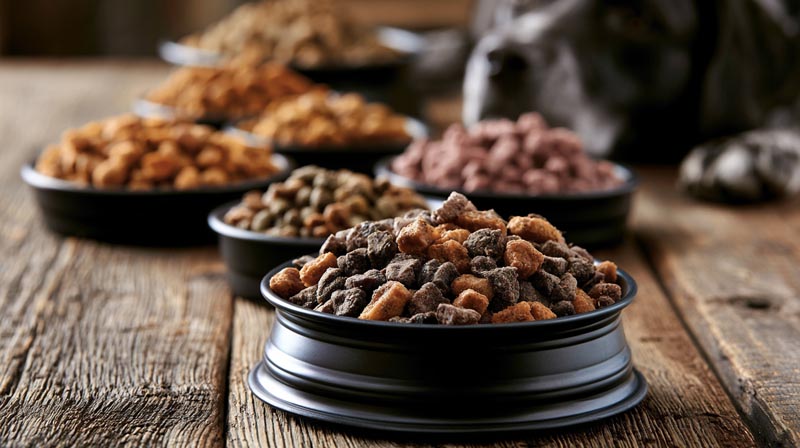
Feeding and storage requirements differ significantly across Redbarn formats. Using the wrong approach wastes food and money.
Food Transition Protocol
Redbarn and Chewy both recommend a 4-week graduated transition, not the standard 7-10 day protocol used for most kibble switches. The extended timeline applies specifically when switching to or from semi-moist or high-moisture formats:
- Week 1: 25% Redbarn, 75% previous food
- Week 2: 50% Redbarn, 50% previous food
- Week 3: 75% Redbarn, 25% previous food
- Week 4: 100% Redbarn
Dogs moving from processed kibble to high-protein, minimally processed food like the air-dried Powerfood sometimes experience loose stools in week 1. That is a digestive adjustment, not a reaction. Most dogs stabilize within 10-14 days.
Storage by Format
Kibble and air-dried: 18-month sealed shelf life. Once opened, seal tightly and store in a cool, dry place. Use within 6 weeks of opening.
Food rolls (sealed): 18-month shelf life at room temperature. No refrigeration needed before opening. Once cut, refrigerate in an airtight container for up to 2 weeks. Freeze sliced portions for up to 6 months.
One thing I learned the hard way: leaving an opened roll on the counter for more than an hour causes the outer edges to dry out and harden. Cut what you need, wrap the rest, and refrigerate immediately.
Using Rolls as Toppers vs. Complete Meals
A 50-pound adult dog fed Redbarn beef roll as a complete meal needs approximately 3/4 to 1 cup of cubed roll per day, divided across 2 meals (Chewy product data, 2024). As a topper, 2-4 cubes mixed into kibble is enough to significantly increase palatability without meaningfully altering the caloric balance.
When using rolls as a training reward, the soft texture allows them to be cubed into pea-sized pieces without crumbling. That holds up in a treat pouch during outdoor training sessions in a way that biscuit-type treats do not. Combine this with other natural treat formats and collagen chews for a complete treat rotation that supports both training and dental health.
Is Redbarn Dog Food a Good Choice for Puppies and Senior Dogs?
The answer is format-specific. Not every Redbarn product is appropriate at every life stage, and the AAFCO statements on individual SKUs are the only reliable way to confirm suitability.
Redbarn for Puppies
Puppies require higher levels of calcium, phosphorus, and protein than adult dogs, particularly during the first 12 months. AAFCO’s “All Life Stages” designation covers this.
Redbarn Sky (poultry) and Ocean (fish) kibble recipes in both Grain-Free and Whole Grain formats carry the “All Life Stages including growth of large size dogs (70 lbs or more as adult)” AAFCO statement. These are appropriate for puppies.
The Land kibble recipes (beef/lamb) carry adult maintenance-only statements. Do not use Land recipes as a puppy’s primary diet.
One nuance worth knowing: the original beef food roll sold on Chewy carries an adult maintenance AAFCO statement on the actual label, despite the packaging describing it as suitable for all life stages. That inconsistency has confused buyers. Check the specific roll variant’s label rather than trusting the general product page description (Chewy customer Q&A, 2024).
Puppies of larger breeds like a German Shepherd Dog or a Bernese Mountain Dog should stick to Sky or Ocean kibble variants with the “large breed puppy” AAFCO statement confirmed on the label, not just the product page.
Redbarn for Senior Dogs
Vetstreet recommends Redbarn’s Whole Grain dry food for senior dogs specifically, citing the functional ingredients that support aging canine health (Vetstreet, 2024). The probiotics, taurine, L-carnitine, and omega-3 fatty acids from salmon oil and flaxseed are all directly relevant to the 3 most common health concerns in senior dogs: joint function, digestive health, and cardiovascular support.
One genuine limitation: Redbarn does not offer a dedicated senior-specific formula with reduced calories or adjusted calcium levels. The “all life stages” kibble is appropriate for seniors in good health, but dogs with specific senior health conditions (kidney disease, obesity, joint issues) may need a veterinary-formulated diet instead.
Best Redbarn formats for senior dogs:
- Whole Grain Sky or Ocean kibble: complete nutrition, grain-inclusive, heart health support built in
- Food roll as a topper: soft texture suits dogs with dental deterioration or missing teeth
- Air-dried Powerfood: high digestibility for seniors with reduced gut efficiency
Senior dogs of compact breeds like a Pug or a Beagle that are prone to weight gain need caloric intake monitored carefully if using Redbarn rolls as a meal rather than a topper. The caloric density of the rolls is higher than it looks because of the low moisture content relative to canned food.
For owners raising dogs from puppyhood through their senior years, pairing a nutritionally consistent brand like Redbarn with well-chosen chews that support dental health throughout each life stage makes practical sense. Options like natural dental chews, Himalayan yak chews, and safe dog chews appropriate to each age cover the teeth side of the equation that food alone does not address.
FAQ on Redbarn Dog Food
Is Redbarn dog food good for dogs?
Yes. Every Redbarn food formula meets AAFCO nutritional profiles, and most carry the “All Life Stages” designation. The first 5 ingredients across all kibble and roll lines are named animal proteins, with no artificial preservatives or by-products.
Has Redbarn dog food ever been recalled?
Twice, both in early 2018. The recalls involved bully stick chews contaminated by a single raw material supplier. No pet or human illnesses were reported. The FDA terminated both recalls. No Redbarn recalls have occurred since March 2018.
Is Redbarn a grain-free dog food?
Not exclusively. Redbarn offers both grain-free and whole grain kibble lines. The grain-free formulas use lentils, peas, and garbanzo beans. The whole grain line uses oat groats, barley, and brown rice. Owners can choose based on their dog’s dietary needs.
Where is Redbarn dog food made?
Over 80% of Redbarn products are manufactured in Great Bend, Kansas. The corporate office is in Long Beach, California. Bully sticks and select chews are produced in Paraguay. All facilities meet SQF Level 3 food safety certification standards.
What is the Redbarn food roll?
A semi-moist, log-shaped dog food with over 40% fresh meat. It functions as a complete meal, wet food topper, training treat, or pill concealer. Sealed rolls have an 18-month shelf life. Once opened, refrigerate and use within 2 weeks.
Is Redbarn dog food good for dogs with allergies?
It can be. The Ocean recipe (salmon, trout, ocean fish) works as a novel protein option for dogs allergic to chicken or beef. Redbarn is not a veterinary hydrolyzed protein diet, so dogs with severe confirmed allergies should consult a vet first.
How does Redbarn compare to Blue Buffalo?
Both brands deliver similar crude protein levels in kibble. Redbarn has a cleaner ingredient list, no artificial dyes, and a stronger recall record. Blue Buffalo offers wider retail availability and dedicated life stage product lines, including breed-specific formulas.
Is Redbarn dog food suitable for puppies?
Select formulas are. The Sky (poultry) and Ocean (fish) kibble recipes carry AAFCO “All Life Stages including growth of large breed dogs” statements. Land recipes are adult maintenance only. Always check the specific SKU label, not just the product page description.
What protein content does Redbarn dog food have?
Grain-free kibble delivers 31% dry matter protein. Whole grain kibble averages 29%. Air-dried Powerfood reaches 39-41% dry matter protein. The semi-moist food rolls deliver approximately 25-43% dry matter protein depending on the recipe, once moisture is accounted for.
Is Redbarn dog food worth the price?
For most dogs, yes. Redbarn typically costs 20-30% more than mainstream premium brands. Owners consistently report improved coat condition, firmer stools, and better palatability after switching, particularly with the rolls and air-dried formats. The kibble offers competitive value at around $3 per pound.
Conclusion
This conclusion is for an article presenting Redbarn dog food as a family-owned, protein-first brand that has built a genuine track record over nearly 30 years.
The kibble line earns 5 stars from Dog Food Advisor. The air-dried Powerfood delivers 39-41% dry matter protein at a fraction of Orijen’s price. The food rolls remain the most versatile wet food topper on the mid-premium market.
No brand is perfect. The semi-moist rolls score lower on meat inclusion rates, and the grain-free formulas carry legume-related DCM considerations worth discussing with your vet.
But for high protein dog food with clean ingredients, SQF Level 3 certification, and a clean recall record since 2018, Redbarn consistently delivers.
Pick the format that fits your dog’s life stage and digestibility needs. The rest follows.