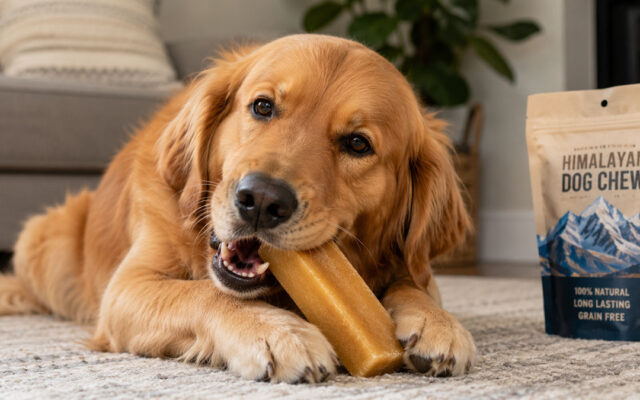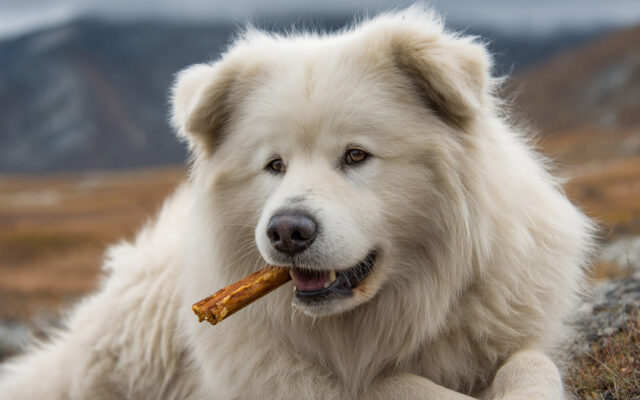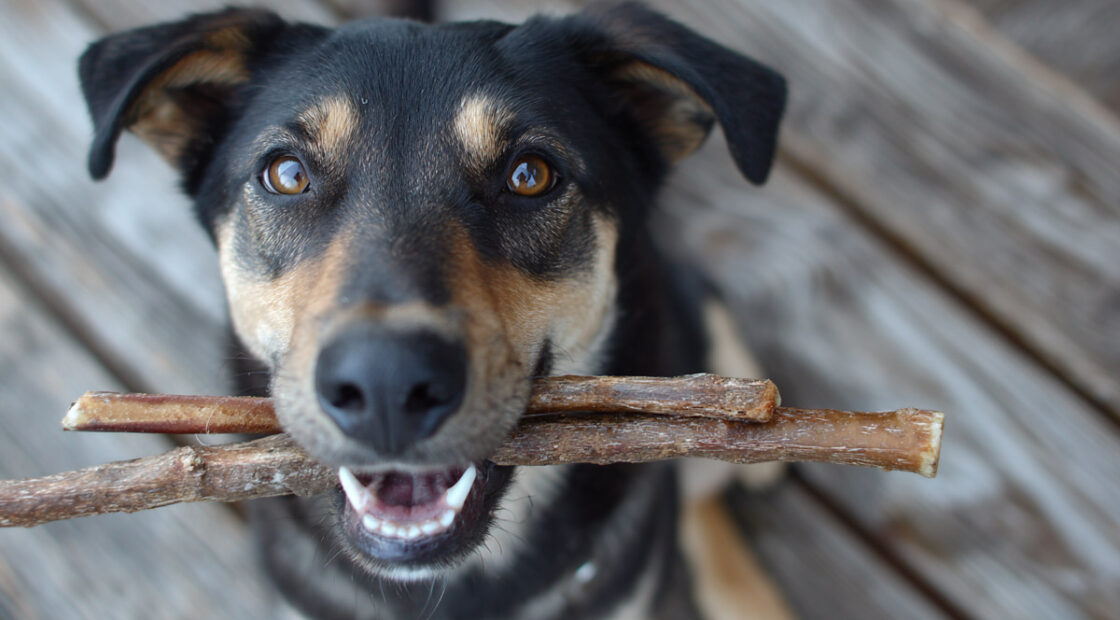
My dog’s vet bill for a cracked premolar was $1,200. That’s when I started paying attention to what chews actually do inside a dog’s mouth. If you’ve ever wondered whether bully sticks are good for dogs’ teeth, the answer isn’t a simple yes or no.
Bully sticks do reduce oral bacteria. A Rutgers University study measured a 60.2% reduction after chewing sessions. But they also carry risks, from tooth fractures to calorie overload, that most treat packaging won’t mention.
This article breaks down the real dental benefits, the specific risks by breed and chewing style, how bully sticks compare to VOHC-approved dental chews, and what veterinary dentists actually recommend for keeping your dog’s teeth clean.
What Are Bully Sticks
Bully sticks are single-ingredient dog chews made from dried beef pizzle. That’s it. No fillers, no artificial preservatives, no mystery ingredients.
They go through a drying process (baked, smoked, or dehydrated) that strips out moisture while keeping the protein intact. The result is a tough, chewy treat that dogs go absolutely nuts over. My dog will abandon literally anything else the second one comes out of the bag.
They come in a few common forms. Standard straight sticks are the most popular. Braided bully sticks are thicker and last longer. Rings and spirals give dogs a different grip angle, which some prefer.
How Bully Sticks Compare to Rawhide
Digestibility is the biggest difference. Rawhide is made from the inner layer of animal hide and can sit in a dog’s stomach for hours without breaking down. Bully sticks dissolve much more easily in stomach acid because they’re muscle tissue, not skin.
Rawhide also tends to be chemically processed during manufacturing. Some products use bleach or hydrogen peroxide to achieve that white color you see on shelves. Whether cow ears count as rawhide is a common question, and the answer depends on processing methods.
Bully sticks don’t splinter the way cooked bones do, either. They soften as the dog chews, which makes them safer from a choking standpoint. But “safer” doesn’t mean “risk-free.” More on that later.

Calorie Content You Should Know About
A study published in the Canadian Veterinary Journal found that bully sticks contain an average of 15 calories per inch. A standard six-inch stick packs roughly 88 calories.
That’s about 30% of the daily calorie needs for a 10-pound dog. For a 50-pound dog, it’s closer to 9%.
If you’re watching your dog’s weight (and you should be), factor these into their daily intake. The same study found that 50% of dog owners underestimate the calorie content of bully sticks. It’s easy to forget that treats count when you’re adding up what your dog eats in a day.
How Chewing Affects a Dog’s Dental Health

Before getting into whether bully sticks specifically clean teeth, you need to understand what chewing actually does inside a dog’s mouth.
Banfield Pet Hospital analyzed data from over 3 million pets and found that 73% of dogs had diagnosed dental issues in 2023. VCA Animal Hospitals reports that over 80% of dogs past age three have active dental disease. The numbers are rough no matter where you look.
Mechanical Plaque Removal Through Chewing
When a dog gnaws on something with some texture and density, the surface scrapes against the teeth. This mechanical action disrupts plaque before it hardens into tartar.
Plaque starts forming on tooth surfaces within 24 hours of a cleaning, according to Today’s Veterinary Practice. Left alone for about three weeks, gingivitis develops in virtually all dogs. So the scraping action from regular chewing matters more than most owners think.
Saliva Production and Oral Hygiene
Chewing triggers saliva production. Saliva contains enzymes that help break down food particles and bacteria clinging to teeth and gums.
The longer a dog chews, the more saliva flows through the mouth. This natural rinse effect reduces bacterial load and helps maintain a healthier oral pH. It’s not as good as brushing. But it’s better than nothing, and honestly, most of us aren’t brushing our dog’s teeth every single day.
Active Chewing vs. Passive Chewing
Not all chewing is equal. A soft treat that disappears in two bites does almost nothing for dental health. That’s passive chewing.
Active chewing, the kind where your dog works on something for 10 to 30 minutes, provides sustained contact between the chew surface and the teeth. The Veterinary Oral Health Council recognizes that daily chewing activities can be effective for maintaining oral health, though they note brushing remains the gold standard.
Do Bully Sticks Actually Clean Dogs’ Teeth
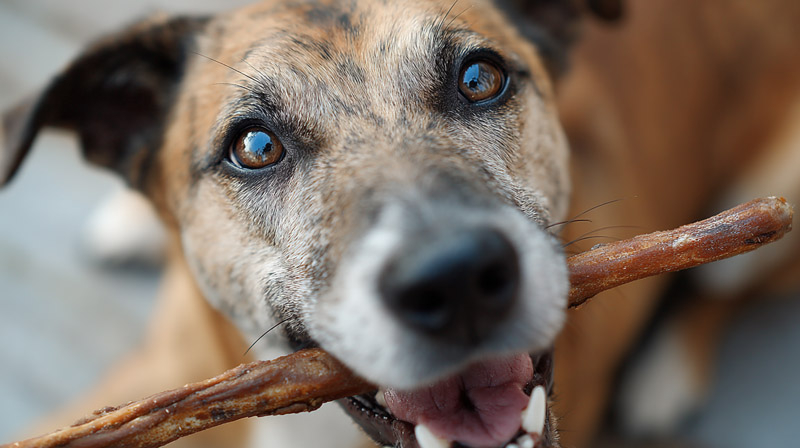
Here’s where it gets interesting. Yes, bully sticks do reduce oral bacteria. But the picture is more complicated than most treat companies want you to believe.
What the Research Shows
A Rutgers University study tested four dental cleaning methods on dogs and measured bacteria reduction on tooth surfaces. The results:
| Method | Bacteria Reduction |
|---|---|
| Raw bones | 79.0% |
| Brushing with enzymatic toothpaste | 70.3% |
| Bully sticks | 60.2% |
| VeggieDent dental chews | 54.6% |
A 60.2% reduction in oral bacteria is genuinely solid. And the study found no statistically significant difference between any of the four methods (p=0.330). That’s a bigger deal than it sounds. It means bully sticks performed in the same statistical ballpark as actual tooth brushing.
But, and this is a big but, the study used only six dogs. Small sample sizes make it hard to draw firm conclusions. Took me a while to find any peer-reviewed research specifically on bully sticks and dental health, and this was basically it.
Bully Sticks vs. VOHC-Approved Dental Chews
The Veterinary Oral Health Council awards its seal of acceptance to products that demonstrate at least a 15% reduction in plaque or tartar across clinical trials, with a mean reduction of 20% or more across two trials.
Products like Greenies, Whimzees, and OraVet chews carry this seal. Bully sticks do not. That’s not because they were tested and failed. They simply haven’t gone through the VOHC trial process. If you’re curious about how Whimzees and Greenies compare to each other, the differences come down to ingredients and texture design.
So when someone asks “are bully sticks as effective as dental chews,” the honest answer is: we don’t have enough controlled data to say definitively. The Rutgers study is encouraging. But one small study isn’t the same as the multiple clinical trials that VOHC-approved products go through.
What Bully Sticks Won’t Fix
Bully sticks won’t reverse existing periodontal disease. Once tartar has hardened below the gumline, no amount of chewing will remove it. That requires professional dental cleaning under anesthesia.
They also can’t replace brushing for dogs already showing signs of gum disease. The American Veterinary Dental College considers daily brushing the most effective home care method. Bully sticks are a supplement to that routine. Not a substitute.
Dental Risks of Bully Sticks
Look, I love giving my dog bully sticks. But pretending they have zero downsides would be dishonest. There are real dental risks worth knowing about.
Tooth Fracture Concerns
Dogs have surprisingly thin enamel. Research published in the Journal of Veterinary Dentistry measured canine enamel thickness at just 0.1mm to 1mm. Human enamel can reach up to 2.5mm. That difference matters a lot.
A study of 621 dogs and cats found that 26.2% had tooth fractures. The most common teeth to crack are the canines and the upper fourth premolar (carnassial tooth). Slab fractures on that carnassial tooth are what veterinary dentists see most often from chewing hard objects.
Bully sticks are generally softer than bones, antlers, or nylon chews. Most pass the “thumbnail test” recommended by veterinary dentists at Cornell University, meaning you can indent them with a fingernail. But a dried-out or very thick bully stick can become hard enough to crack a tooth, especially in dogs that chew aggressively.
VCA Animal Hospitals specifically lists pizzle sticks alongside bones and antlers as chews to evaluate carefully. Not all vets agree on where bully sticks fall on the hardness spectrum. Your mileage may vary depending on the specific product and your dog’s chewing style.
Gum Irritation and Sharp Edges
As a bully stick wears down, it can develop pointed or jagged edges. These edges scrape against gum tissue and can cause irritation, minor bleeding, or small puncture wounds inside the mouth.
This is more of a problem with thinner sticks that fray unevenly. If you notice your dog’s gums looking red or swollen after a chewing session, check the stick’s shape. Take it away if the edges have become sharp.
Bacterial Contamination
A Canadian Veterinary Journal study tested 26 bully sticks from various manufacturers. Of those, 4% tested positive for Clostridium difficile, another 4% for MRSA, and one sample contained tetracycline-resistant E. coli.
The contamination rate was relatively low. But it’s not zero. Always wash your hands after handling bully sticks, and keep them away from immunocompromised family members, small children, and the elderly. Store them in a cool, dry place.
Which Dogs Face Higher Dental Risk from Bully Sticks
Brachycephalic breeds: Dogs like French Bulldogs, Boxers, and Bulldogs have shorter jaws with crowded teeth. This jaw structure creates awkward chewing angles that increase fracture risk. Zoetis Petcare confirms these breeds are more prone to dental disease in general.
Small breeds: Waltham Petcare Science Institute research using Banfield data showed that extra-small breeds (under 14.3 lbs) are up to five times more likely to develop periodontal disease than giant breeds. Breeds like Chihuahuas, Yorkshire Terriers, and Poodles have thinner enamel proportional to their tooth size. A standard-thickness bully stick might be too dense for their smaller jaws.
Senior dogs: Older dogs often have weakened teeth from years of wear or existing periodontal disease. A bully stick that was fine at age three could cause a fracture at age ten.
Bully Sticks vs. Other Popular Dental Chews
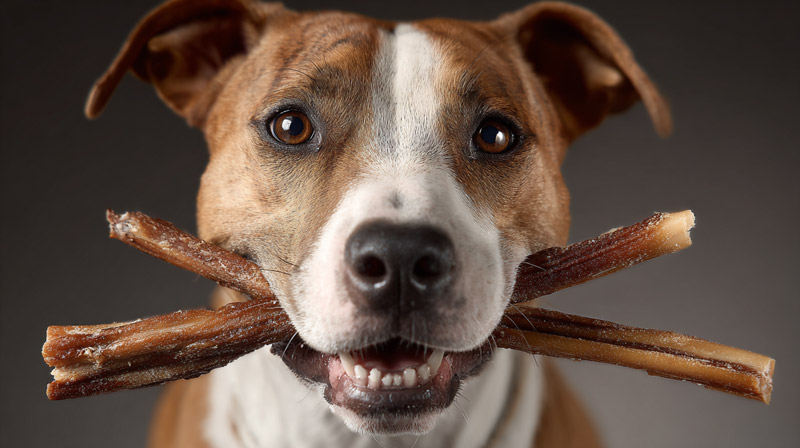
Every dog owner eventually stands in the pet store aisle staring at fifteen different chew options. Here’s how bully sticks actually stack up.
| Chew Type | Dental Benefit | Fracture Risk | Digestibility |
|---|---|---|---|
| Bully sticks | Moderate (60% bacteria reduction) | Low to moderate | High |
| Rawhide | Moderate abrasion | Low | Poor |
| Antlers | High abrasion | Very high | Very low |
| Greenies/Whimzees | VOHC-proven | Very low | High |
| Nylon bones | Minimal | High | None |
Bully Sticks vs. Rawhide
Rawhide is cheaper. That’s about the only advantage. Bully sticks win on digestibility, ingredient transparency, and safety. Rawhide can swell in a dog’s stomach and cause blockages, which is why most vets have moved away from recommending it.
Both provide a scraping action against teeth. But bully sticks soften as the dog chews, while rawhide can remain tough and rubbery for a long time. That extended chew time isn’t necessarily better if the dog starts ripping off large chunks.
Bully Sticks vs. Antlers and Hard Chews
Board-certified veterinary dentists are almost universally against antlers. The material is as hard as bone, and the fracture risk is significant. Many vets report seeing back-to-back slab fractures from antler chewing. Preventive Vet notes that the “antler fad” has caused enough injuries that veterinary dental specialists have started issuing warnings.
If you’re considering whether antlers are actually safe for dogs, the short answer from most veterinary dentists is no. Bully sticks carry substantially less fracture risk because they have give. They compress and soften during chewing rather than staying rock-hard throughout. For dogs that need something longer-lasting though, tougher chews designed for heavy chewers can be a better match than pushing antler hardness.
Bully Sticks vs. VOHC-Approved Dental Treats
Products with the VOHC seal have clinical proof behind their plaque and tartar claims. Bully sticks don’t.
That said, VOHC-approved dental chews often contain multiple ingredients, including some artificial additives. Bully sticks are pure protein with nothing else added. For dogs with food sensitivities or allergies, that simplicity matters. You can find more on single-ingredient dog treats and why they work well for sensitive dogs.
The best natural dental chews tend to balance proven effectiveness with clean ingredient lists. It doesn’t have to be an either/or choice. Many dog owners rotate between VOHC-approved treats and natural chews like bully sticks throughout the week.
What Veterinarians Say About Bully Sticks for Teeth
Vet opinions on bully sticks land somewhere between “they’re fine” and “be careful.” Almost nobody says they’re the best dental tool. But almost nobody says to avoid them entirely, either.
General Practice Veterinarian Perspective
Most general practice vets see bully sticks as a supplementary dental care tool. Not a replacement for brushing or professional cleanings. They’ll usually recommend them over bones or antlers without hesitation because the fracture risk is lower.
The common advice is to use the thumbnail test. Press your fingernail into the bully stick. If it leaves a slight indent, the hardness level is probably safe for your dog’s teeth. If the surface doesn’t give at all, it’s too hard. Cornell University’s veterinary dentistry department endorses this same test for evaluating any chew product.
Vets are also quick to point out that bully sticks can have side effects beyond dental concerns. Digestive upset, calorie overload, and allergic reactions in beef-sensitive dogs all come up in clinical settings.
Veterinary Dentist Perspective
Board-certified veterinary dentists tend to be more cautious than general practitioners. They see the worst outcomes daily: cracked carnassial teeth, infected root canals, emergency extractions.
A veterinary dentist writing in Veterinary Practice News noted that dog enamel averages 0.35 to 0.44mm thick on the maxillary canine tooth. For context, human enamel reaches 2.5mm. Dogs simply have less protection than we do, which means even “softer” chews carry some risk.
The consensus among dental specialists? Bully sticks are acceptable when properly sized for the dog, given under supervision, and taken away before they become small enough to swallow whole. They’re far from the worst option. But they’re also not a guaranteed ticket to clean teeth.
The “Bend Test” and Hardness Guidelines
Beyond the thumbnail test, many vets recommend the “bend test.” Try to flex the bully stick slightly with your hands. If it has some give, it’s likely safe. If it feels like trying to bend a wooden dowel, skip it.
The Pedigree brand’s research team, working with the Waltham Petcare Science Institute, confirmed that a dog’s jaws generate enough force to break their own teeth on objects that are too hard. Bite forces in dogs can reach up to 3,417 Newtons at the molars, according to research published in the Journal of Anatomy. That’s more than enough to fracture enamel on a dense chew.
If you have an aggressive chewer, thicker bully sticks last longer but shouldn’t be significantly harder. Bully sticks designed for aggressive chewers typically use braiding or increased diameter rather than higher density to extend chew time. And always keep an eye on how long your bully sticks are lasting, because a stick that disappears in five minutes isn’t doing much dental work.
How to Use Bully Sticks Safely for Dental Benefits
Getting dental value out of bully sticks comes down to picking the right one and knowing when to take it away. Most problems happen when the stick is too small for the dog, too hard for its teeth, or left unsupervised.
Choosing the Right Size and Thickness
Match the stick to your dog’s jaw. A Labrador Retriever needs a completely different bully stick than a Maltese.
| Dog Size | Recommended Stick | Session Limit |
|---|---|---|
| Under 15 lbs | Thin, 6-inch sticks | 10–15 minutes |
| 15–50 lbs | Standard thickness, 6–12 inch | 15–20 minutes |
| Over 50 lbs | Thick or braided, 12 inch | 20–30 minutes |
Always run the thumbnail test before giving it to your dog. If your fingernail doesn’t leave a slight dent, the stick is too hard. General bully stick safety guidelines apply regardless of breed or size.
When to Take a Bully Stick Away
Once the stick gets small enough to fit entirely inside your dog’s mouth, it’s a swallowing hazard. Most vets say to remove it when less than one inch remains.
Bully stick holders (like the Bow Wow Buddy) grip the last piece so your dog can keep chewing without the risk of gulping it down. They’re worth the investment if your dog tends to try swallowing the final nub. If you want to understand how long dogs should chew on hard chews in general, the principles are the same: supervised sessions with clear time limits.
How Often to Give Bully Sticks
Vets generally recommend 2-3 bully sticks per week for average adult dogs. The 10% treat rule applies here. All treats combined (bully sticks included) should make up no more than 10% of your dog’s daily caloric intake.
An Ipsos survey for Royal Canin found that 43% of dog owners never brush their dog’s teeth at all. If that’s you (no judgment, I’ve been there), a couple of bully sticks per week at least gives your dog some mechanical tooth cleaning between vet visits.
But don’t go overboard. A six-inch stick packs around 88 calories. For a small breed, that’s a huge chunk of their daily allowance. Reduce kibble portions on days you give a bully stick, especially if your dog already gets other treats throughout the day.
A Complete Dental Care Routine That Includes Bully Sticks
Bully sticks alone won’t keep your dog’s mouth healthy. They’re one piece of a bigger picture.
A BARK study found that nearly 70% of dog parents have never brushed their dog’s teeth. And 47% of those who skip brushing believe dental chews alone are enough. Veterinary oral health experts say that’s roughly equal to a human dry-brushing without toothpaste. Not great.
Tooth Brushing as the Baseline
Daily brushing with enzymatic dog toothpaste is the single most effective thing you can do at home. A study in the Journal of Veterinary Dentistry found that brushing daily or every other day produced statistically significant improvements over weekly brushing.
PetMD recommends at least 2-3 times per week as the minimum. Daily is better.
Use a soft-bristled brush or finger brush, and only use toothpaste made for dogs. Human toothpaste contains xylitol and fluoride, both toxic to dogs. VCA Animal Hospitals stresses this distinction, because the toothpaste is meant to be swallowed.
Where Bully Sticks Fit in the Routine
Think of bully sticks as the “between brushings” support.
- Brush teeth on Monday, Wednesday, Friday (or daily if you can)
- Give a bully stick on Tuesday and Thursday for mechanical plaque disruption
- Use a water additive daily for additional bacteria control
This rotation gives your dog regular plaque removal through multiple methods without over-relying on any single one. For dogs that are also aggressive chewers, you might swap in collagen chews on one of those days for variety.
Professional Cleanings and When They’re Needed
The American Animal Hospital Association recommends routine dental cleanings under anesthesia. Once tartar has formed below the gumline, no amount of chewing or brushing at home can remove it.
Banfield Pet Hospital data showed that dogs with advanced periodontal disease were 2.3x more likely to develop chronic kidney disease and 6.3x more likely to develop endocarditis. That’s why professional cleanings aren’t optional for dogs with existing dental issues. They’re the only way to address what’s happening under the gums.
Your vet can tell you how often your dog needs professional cleaning based on breed, age, and current dental health. Some dogs need it annually. Others with breed-specific health problems or genetic predisposition to gum disease may need it more often.
Signs a Bully Stick Is Hurting Your Dog’s Teeth
Dogs are experts at hiding pain. VCA Animal Hospitals notes that few dogs show obvious signs of dental disease, which means you have to actively look for trouble. Don’t wait for your dog to tell you something’s wrong, because they probably won’t.
Visible Damage After Chewing
Check your dog’s teeth after every bully stick session. Look for:
- Chips or cracks on the tooth surface, especially the upper fourth premolar
- Discoloration (pink, gray, or dark spots on a tooth)
- Uneven wear patterns that weren’t there before
A pink or gray tooth usually means the pulp inside has been damaged. That tooth might look fine on the outside but could be dead or dying internally. Dental x-rays under anesthesia are the only way to confirm this.
Behavioral Changes That Signal Mouth Pain
Dunedin Animal Medical Center emphasizes that most dogs show dental disease signs by age three, but owners often miss them because dogs mask discomfort so well.
Watch for these after chewing sessions:
Eating changes: dropping food, chewing on one side, or suddenly preferring soft food over kibble.
Face sensitivity: flinching when you touch their muzzle or head, or pawing at their mouth repeatedly.
Behavior shifts: increased irritability, reluctance to play tug or fetch, or avoiding chew toys they used to love.
When to Schedule a Vet Dental Exam
If you notice any of the signs above, book an exam. Don’t wait for your dog’s annual checkup.
Bleeding gums, persistent bad breath that suddenly worsens, or visible swelling along the jawline all need prompt veterinary attention. These can indicate a tooth root abscess or advanced periodontal disease that requires treatment under anesthesia.
Dogs showing general illness signs like lethargy combined with mouth pain should see a vet quickly, because oral infections can spread to the heart, kidneys, and liver through the bloodstream. Banfield data confirmed the connection between advanced dental disease and organ damage.
And here’s a practical tip that took me a while to figure out: take a photo of your dog’s teeth every few months. Compare the photos over time. Gradual changes in tooth color or gum recession are almost impossible to spot day-to-day, but side-by-side photos make them obvious.
FAQ on Are Bully Sticks Good For Dogs Teeth
Do bully sticks actually clean dogs’ teeth?
Yes, to a degree. A Rutgers study found bully sticks reduced oral bacteria by 60.2%. The chewing action scrapes plaque off tooth surfaces. But they don’t replace brushing or professional dental cleanings for tartar below the gumline.
Can bully sticks break a dog’s teeth?
It’s possible, especially with dried-out or very thick sticks. Dog enamel measures only 0.1 to 1mm thick. Use the thumbnail test before giving one. If your fingernail can’t dent the surface, it’s too hard for your dog’s teeth.
How often should I give my dog a bully stick for dental benefits?
Most vets recommend 2-3 times per week. Keep all treats under 10% of daily calories. A six-inch bully stick contains roughly 88 calories, so adjust meal portions on chew days.
Are bully sticks better than Greenies for teeth cleaning?
Greenies carry a VOHC seal proving plaque and tartar reduction through clinical trials. Bully sticks haven’t gone through that process. Greenies have verified data behind them. Bully sticks offer single-ingredient simplicity but less clinical proof.
Are bully sticks safe for puppies’ teeth?
For puppies with adult teeth, yes, with supervision. Choose thin, softer sticks and limit sessions to 5-10 minutes. Puppies chew aggressively and can damage developing teeth, so watch closely and remove any small pieces.
Do bully sticks help with bad breath in dogs?
They can reduce halitosis by lowering bacterial load in the mouth. Chewing also triggers saliva production, which rinses away food particles. But persistent bad breath often signals periodontal disease that needs veterinary attention, not just chews.
Are bully sticks safer than antlers for dental health?
Significantly safer. Antlers are as hard as bone and cause frequent slab fractures, especially on the upper fourth premolar. Bully sticks soften during chewing and have more give. Most veterinary dentists strongly advise against giving dogs antlers.
What size bully stick should I choose for my dog’s teeth?
Match thickness to your dog’s jaw size. Small breeds need thin sticks. Large breeds do better with thick or braided options. The stick should always be long enough that your dog can’t fit the whole thing in its mouth at once.
When should I take a bully stick away from my dog?
Remove it once it’s chewed down to about one inch. At that size, it becomes a choking and swallowing hazard. A bully stick holder can secure the last piece so your dog chews safely without gulping the nub.
Can bully sticks replace brushing my dog’s teeth?
No. Bully sticks supplement dental care but can’t match the effectiveness of daily brushing with enzymatic toothpaste. Only about 2% of dog owners brush daily, according to AVMA data. Bully sticks help fill gaps in that routine, not replace it.
Conclusion
Bully sticks are not a dental solution on their own. They reduce oral bacteria, scrape plaque off tooth surfaces, and give dogs a solid chewing session. That counts for something.
But they do not replace brushing. They do not remove tartar that has hardened below the gumline. And for small breeds, senior dogs, or aggressive chewers, the fracture risk is real.
What they are good for:
- Filling the gaps between brushing sessions
- Reducing bacterial load through active chewing
- Giving dogs a safer alternative to antlers or hard bones
The honest approach is to treat bully sticks as one part of a broader routine. Brush when you can. Schedule professional cleanings when your vet recommends them. Use bully sticks 2-3 times a week, sized correctly, under supervision.
That combination does more for your dog’s mouth than any single product alone.