Beef heart sits in a strange middle ground in canine nutrition. Most dog owners have never fed it. Most dogs that have tried it absolutely love it.
So is beef heart good for dogs? The short answer is yes. But the fuller answer covers taurine content, CoQ10 density, muscle meat classification, bacterial risks, and breed-specific considerations that make a real difference in how and whether you should add it to your dog’s diet.
This article covers the complete picture, from what beef heart actually is, to how much to feed, which dogs should avoid it, and how it stacks up against beef liver, chicken heart, and standard muscle cuts.
What Is Beef Heart for Dogs?
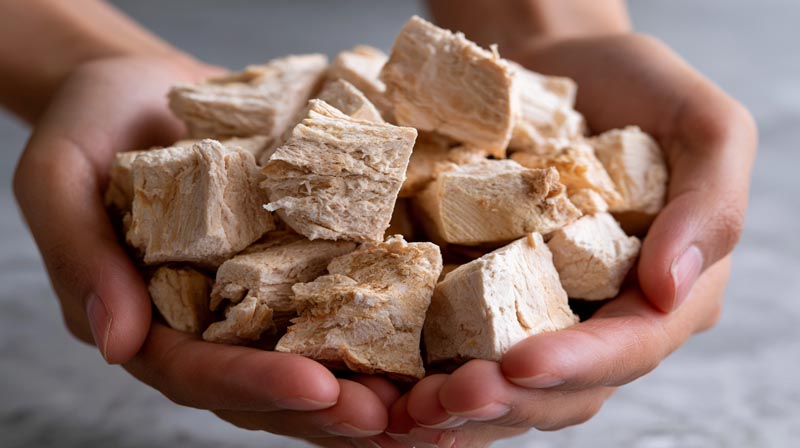
Beef heart is the cardiac muscle of cattle, sold as a protein source for dogs in raw, freeze-dried, and dehydrated forms. AAFCO’s ingredient definition of “meat” specifically includes heart muscle, so for pet food purposes it counts as muscle meat, not organ meat, which directly affects how much of it you can safely include in your dog’s daily diet.
This classification matters more than most people realize. True organ meats like liver, kidney, and spleen are usually limited to about 10-15% of a raw diet under common raw-feeding ratios because of their concentrated nutrient load. Beef heart isn’t. It behaves nutritionally like skeletal muscle, which means it can make up a larger portion of the bowl without the same toxicity risk.
That said, heart is still anatomically an organ. The confusion between its biological structure and its nutritional classification trips up a lot of raw feeders, especially newcomers to BARF-style diets.
Commercially, you’ll find beef heart in three main forms:
- Fresh or frozen raw chunks from butchers and raw pet food suppliers
- Freeze-dried single-ingredient treats, such as Stella and Chewy’s beef heart treats
- Dehydrated treats and chews, such as Farm Hounds beef heart
It shows up in both single-ingredient products and as part of blended raw formulas. Most complete raw diet recipes include it as part of the muscle meat base.
What Nutrients Does Beef Heart Provide for Dogs?

Per 100g of raw beef heart, dogs get 17.7g of protein, 4.31mg of iron, 1.7mg of zinc, 21.8mcg of selenium, and 8.55mcg of vitamin B12, which covers 356% of the human daily value for B12 (USDA FoodData Central). The caloric density sits at 112 kcal per 100g, with only 3.94g total fat and almost zero carbohydrates.
Beyond the standard macros, beef heart has 2 compounds that make it genuinely different from regular muscle cuts.
Taurine and CoQ10 Content Compared to Other Protein Sources
Taurine density: Beef heart has more taurine than most beef cuts. A UC Davis analysis measured about 65mg of taurine per 100g of raw beef heart, compared with about 43mg in raw beef and about 16mg in raw chicken breast (Spitze et al., 2003). It isn’t the top source, though. Dark poultry meat and chicken hearts and livers tested higher in the same study. Taurine plays a direct role in cardiac muscle contraction, vision, and immune function.
CoQ10 density: Every gram of raw beef heart contains about 110 micrograms of CoQ10, roughly 4-5 times the amount in beef muscle, and its CoQ10 was more digestible than muscle CoQ10 in a lab digestion model (Ercan and El, Journal of Food Composition and Analysis, 2011). That’s a meaningful difference. Cooking lowers it, though: frying cut the CoQ10 in beef heart by about 30% in the same study.
Both compounds are harder to source from standard commercial dog food. That’s a big part of why raw feeders specifically seek out beef heart rather than substituting another muscle meat.
| Nutrient | Amount per 100g (raw) | Why It Matters for Dogs |
|---|---|---|
| Protein | 17.7g | Muscle repair, immune function |
| Taurine | About 65mg | Heart muscle function, vision |
| CoQ10 | About 110 mcg/g | Mitochondrial energy, antioxidant |
| Vitamin B12 | 8.55 mcg | Red blood cell production, nerve health |
| Iron | 4.31mg | Oxygen transport, energy metabolism |
| Selenium | 21.8 mcg | Antioxidant defense, thyroid support |
Is Beef Heart Considered an Organ Meat or Muscle Meat?
Beef heart is classified as muscle meat under AAFCO’s ingredient definitions and in standard raw feeding models, including BARF and Prey Model Raw (PMR) diets. In raw feeding, this classification removes it from the organ meat limit that applies to liver and kidney.
In a typical PMR ratio (80% muscle meat, 10% bone, 10% secreting organs), beef heart falls into the 80% muscle meat category alongside tongue, tripe, and skeletal cuts. It does not count toward the 10% organ allowance.
The practical implication is real. Raw beef heart contains essentially no vitamin A (USDA FoodData Central), so you can feed it daily without running into the vitamin A toxicity risk that comes with overfeeding liver. It also means raw diet formulations can use beef heart as a primary protein base rather than treating it as a limited supplement.
Where the confusion comes from is anatomy. Heart is literally an organ inside the body. But in nutritional classification, the term “organ meat” for raw feeding purposes refers specifically to secreting organs: liver, kidney, spleen, pancreas, and similar glands. Cardiac muscle doesn’t secrete anything. It functions more like an extremely active muscle than a metabolic processing organ.
Still, some commercial raw brands label beef heart under “organ meat” on their packaging. That’s a labeling choice, not a nutritional one. For feeding ratio purposes, treat it as muscle meat.
What Are the Health Benefits of Beef Heart for Dogs?
The benefits aren’t vague. They connect directly to specific compounds at measurable concentrations.
Beef Heart and Canine Dilated Cardiomyopathy (DCM)
The FDA began investigating a possible link between certain diets, many labeled grain-free, and canine dilated cardiomyopathy in July 2018. Between January 2014 and April 2019, the FDA received 524 DCM reports, with more than 90% of the reported products being grain-free and 93% containing peas and/or lentils (FDA, 2019). The FDA has not established a causal link, and in December 2022 it said it would not release further updates until there is meaningful new scientific information.
Taurine deficiency is suspected as a contributing factor in some cases. In a UC Davis study of 24 Golden Retrievers with taurine deficiency and DCM, 23 showed significant heart improvement after a diet change plus taurine supplementation (Kaplan et al., PLOS ONE, 2018).
Beef heart can help raise dietary taurine as part of a balanced diet, but it is not a proven way to prevent DCM. Golden Retrievers are over-represented in taurine-deficient DCM. Doberman Pinschers and Great Danes also carry elevated DCM risk, but in Dobermans the disease is largely genetic (Merck Veterinary Manual), so food alone won’t change that risk.
A 2021 University of Liverpool study found low plasma taurine in 13 of 16 English Cocker Spaniels diagnosed with DCM, supporting a dietary taurine connection in that breed, although taurine supplementation was not curative (Basili et al., Journal of Small Animal Practice, 2021).
CoQ10, Iron, and Immune Support
CoQ10 function: Acts as a mitochondrial antioxidant, supporting ATP production in cells. Beef heart delivers it in food form, which is one reason raw feeders value it for mature and active dogs.
Iron support: At 4.31mg per 100g, beef heart provides heme iron, the most bioavailable form. This can be useful for dogs recovering from blood loss, anemia, or heavy parasite loads, alongside whatever treatment your vet recommends.
Zinc for immunity: 1.7mg of zinc per 100g supports white blood cell development, skin repair, and wound healing. Dogs on low-variety diets can run short on zinc.
Are There Any Risks of Feeding Beef Heart to Dogs?
Beef heart has real benefits, but it also has 3 specific risk categories that are worth knowing before you add it to the bowl.
Dogs That Should Avoid Beef Heart
CKD dogs: Beef heart contains 212mg of phosphorus per 100g. Dogs with chronic kidney disease require strict phosphorus restriction. Feeding beef heart to a CKD dog without veterinary guidance can accelerate kidney damage.
Pancreatitis-prone breeds: Untrimmed beef heart carries a higher fat load. Breeds with a history of pancreatitis, including Miniature Schnauzers and Cocker Spaniels, need trimmed, lean portions in small amounts. Fat-triggered pancreatitis flares are painful and potentially dangerous.
Dalmatians with urate stones: Beef heart’s purine content is relevant for Dalmatians and dogs with a history of urate bladder stones. Nearly all Dalmatians carry an inherited mutation that stops them from converting uric acid normally (Cornell Riney Canine Health Center), and high-purine proteins like organ and heart meat increase uric acid production, which contributes to stone formation in susceptible dogs.
Raw Beef Heart Bacterial Risks
A 2022 University of Liverpool study found Salmonella in the feces of 8 of 114 raw-fed dogs and none of the 76 non-raw-fed dogs tested (Groat et al., Journal of Small Animal Practice, 2022). Antimicrobial-resistant E. coli was found in 54% of raw-fed dogs versus 17% of non-raw-fed dogs.
A Public Health Agency of Canada study found a 21% Salmonella prevalence rate across 166 commercial frozen raw diets bought from pet stores (Finley et al., Zoonoses and Public Health, 2008). The AVMA discourages feeding raw or undercooked animal-source protein to dogs and cats, and the CDC does not recommend feeding raw pet food, particularly for households with immunocompromised people, infants, or elderly individuals.
Freeze-dried raw products are still raw. Freeze-drying alone is not a reliable kill step, and Tufts veterinary nutritionists advise treating freeze-dried meat products as raw unless the maker states otherwise (Tufts Petfoodology, 2025). Sourcing from human-grade suppliers helps, and freezing can lower some parasite risk, but freezing does not kill bacteria like Salmonella.
How Much Beef Heart Can a Dog Eat Per Day?
A common raw feeding guideline puts beef heart at 5-10% of total daily food intake. For kibble-fed dogs receiving heart as a supplement, the amounts are considerably smaller.
| Dog Weight | Daily Food Intake | Beef Heart Amount (5–10%) |
|---|---|---|
| 10 lbs | ~0.3 lbs / 136g | 7–14g |
| 30 lbs | ~1 lb / 454g | 23–45g |
| 70 lbs | ~2 lbs / 908g | 45–90g |
These figures apply to dogs on a balanced raw diet. If your dog eats primarily kibble, beef heart works best as a topper or treat, capped at about 10% of total daily calories to avoid digestive upset. Our dog calorie calculator can help you work out that 10% figure for your dog. Too much beef heart at once causes loose stools. Start at the lower end and increase gradually over 1-2 weeks.
Dogs with pre-existing conditions need adjusted amounts. A dog with early kidney disease should have phosphorus-containing foods, including beef heart, reviewed by a vet before adding them to regular rotation.
Daily feeding is acceptable for healthy dogs as long as beef heart is part of a varied, complete diet. It shouldn’t be the only protein source. Rotate it with other muscle meats and a properly balanced organ component.
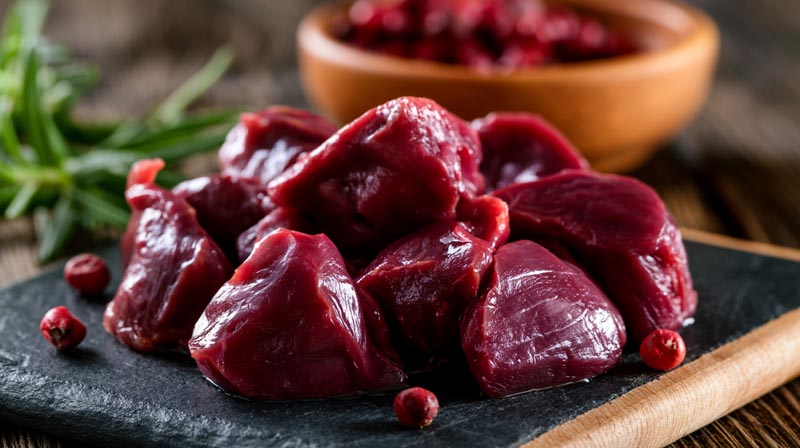
Can Dogs Eat Raw Beef Heart?
Yes, dogs can eat raw beef heart. Whether they should depends on your household, your dog’s health status, and how you handle and source the meat.
The case for raw: Cooking reduces both taurine and CoQ10. Boiling causes the biggest taurine losses, and frying reduced beef heart CoQ10 by about 30% in lab testing. Raw feeding proponents argue that serving beef heart raw preserves the full nutrient profile that makes it worth feeding in the first place.
The case against raw: The bacterial contamination data is real. The 2022 UK study and AVMA guidance both point to measurable contamination risks in raw meat-fed dogs. Veterinary nutritionists at Tufts University’s Cummings School of Veterinary Medicine note that there is no scientific evidence showing health benefits from raw meat diets, while the risks, including bacterial contamination, are documented (Tufts Petfoodology).
The risk is higher for:
- Puppies under 6 months (undeveloped immune response)
- Senior dogs with reduced immune function
- Dogs on immunosuppressive medications
- Households with young children, elderly people, or immunocompromised individuals
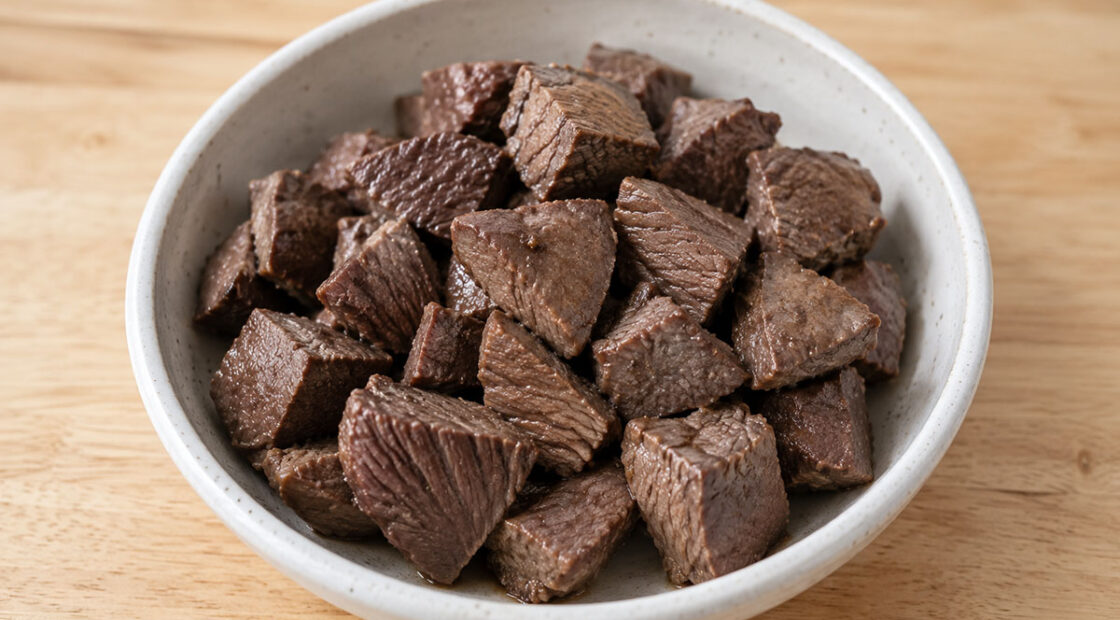
Freeze-dried raw is often marketed as a middle ground between fresh raw and fully cooked. It is more convenient to store and avoids cooking losses of taurine and CoQ10, but it is still a raw product. If you want lower pathogen risk, look for products that state a pathogen-reduction step such as high-pressure processing (HPP), or choose cooked heart.
If you choose to feed fresh raw beef heart, source from a human-grade butcher or a reputable raw pet food supplier. Freezing the product for several days before serving may reduce some parasite risk, but it won’t remove bacteria. Thaw in the refrigerator, not on the counter, and discard any uneaten portion after 30 minutes. Clean all surfaces and hands thoroughly after handling.
How to Prepare Beef Heart for Dogs at Home
Trim excess fat from the surface before serving or cooking. Untrimmed beef heart has a higher fat load, which increases pancreatitis risk in sensitive dogs and adds unnecessary calories for dogs on weight management plans.
No seasoning. No onion. No garlic. Those are non-negotiable. Both onion and garlic are toxic to dogs in any form, cooked or raw.
Cooking Methods and Nutrient Retention
Boiling: Reduces taurine significantly. Taurine is water-soluble and leaches into the cooking liquid, which is why boiling caused the greatest taurine losses in the UC Davis cooking tests. If you boil beef heart, the broth retains some taurine, so pouring it over the food recovers part of what was lost.
Baking or lightly pan-frying: Better option for taurine retention than boiling, since less water carries it away. Heat still reduces CoQ10, and frying cut beef heart CoQ10 by about 30% in one study. Keep cooking times short rather than cooking through at high heat for extended periods.
Freeze-drying: Involves no cooking heat, so it avoids the cooking losses above, although published data on taurine and CoQ10 in freeze-dried heart specifically are limited. Worth noting if you’re adding beef heart specifically for its nutrient profile, as long as you remember it is still a raw product.
Storage is simple. The USDA advises keeping fresh beef liver and other variety meats in the refrigerator for only 1-2 days, or frozen for 3-4 months (USDA FSIS). Cut into portions before freezing so you’re thawing only what you need.
Beef Heart as Dog Treats
For firm, shelf-stable training treats, slice the heart thin, about 1/4 inch, for even drying. The USDA recommends heating meat to 160F (71C) before dehydrating it, then drying at a steady 130-140F (USDA FSIS jerky guidance). Drying usually takes 4-6 hours.
Treat portions count toward daily caloric intake. Dried heart is far more calorie-dense than raw: one commercial dehydrated beef heart treat lists 104 kcal per ounce. For a typical 30 lb adult dog, a 10% treat allowance works out to only about 20g of dried heart a day, or you risk weight gain and digestive upset from excess richness.
Commercially, 3 ready-to-use options cover different needs:
- Freeze-dried single-ingredient beef heart treats (for example, Stella and Chewy’s)
- Dehydrated beef heart chews made from 100% beef heart (for example, Farm Hounds)
- Complete raw or freeze-dried raw blends that include heart as part of the muscle meat portion
Farm Hounds dehydrated beef heart lists a crude protein minimum of 71% in its guaranteed analysis, which illustrates how much moisture removal concentrates the protein compared to raw.
Is Beef Heart Good for Puppies?
Yes, with age-appropriate adjustments. Beef heart’s taurine and CoQ10 content makes it a useful part of a varied puppy diet, particularly for large-breed puppies with a long growth phase.
AAFCO guidelines require a minimum of 22.5% crude protein on a dry matter basis for growing dogs, compared to 18% for adult maintenance (Merck Veterinary Manual, 2024). Beef heart, at roughly 17.7g protein per 100g raw weight, contributes meaningfully to that requirement when used as part of a varied protein rotation.
Age-Based Feeding Guidelines for Puppies
Under 6 months: Avoid fresh raw beef heart. Puppies this young have undeveloped immune responses and face higher bacterial contamination risk from raw meat. Cooked beef heart is the safer option at this age, since freeze-dried raw is still raw.
6-12 months: Many owners introduce freeze-dried heart at this age. Choose products that state a pathogen-reduction step such as HPP, and introduce gradually, starting at 2-3% of daily intake before moving toward the 5-10% adult guideline. Watch stool consistency during the transition period.
Large breed puppies specifically: Large and giant breeds such as Great Danes, Newfoundlands, and Saint Bernards are among the breeds most at risk of DCM later in life (Merck Veterinary Manual). Taurine from beef heart supports normal cardiac muscle function during their extended growth phase, though it won’t offset an inherited predisposition.
Phosphorus intake is worth watching in puppies. Growing dogs need proper calcium-to-phosphorus ratios for skeletal development. Beef heart contains 212mg of phosphorus but only 7mg of calcium per 100g (USDA FoodData Central), which is fine in a balanced rotation but shouldn’t dominate the diet to the point of throwing off that balance.
How Does Beef Heart Compare to Other Organ and Muscle Meats for Dogs?
Each protein source has a specific nutritional role. Beef heart doesn’t replace liver or kidney. It fills a different slot in the diet, one that most other common proteins don’t cover as well.
| Protein Source | Classification | Standout Nutrient | Feeding Cap |
|---|---|---|---|
| Beef heart | Muscle meat | Taurine, CoQ10, B12 | 5–10% of diet |
| Beef liver | Secreting organ | Vitamin A, copper | 5% max (toxicity risk) |
| Beef kidney | Secreting organ | B12, selenium | 5% organ cap applies |
| Chicken heart | Muscle meat | Taurine, omega fatty acids | 5–10% of diet |
| Ground beef (skeletal) | Muscle meat | Protein, creatine | No specific cap |
Beef Heart vs. Beef Liver
Raw beef liver packs about 4,970mcg of vitamin A (RAE) and about 9.8mg of copper per 100g, while raw beef heart has essentially no vitamin A (USDA FoodData Central). That’s both liver’s biggest benefit and its biggest risk. Feeding too much liver can cause vitamin A toxicity in dogs, which can show up as skeletal malformations, spontaneous fractures, and internal bleeding (Merck Veterinary Manual).
Beef heart carries no vitamin A toxicity risk. You can feed it daily without that concern. The trade-off is that beef heart doesn’t supply the copper and vitamin A that liver does, so both belong in a balanced raw diet, not one instead of the other.
Beef Heart vs. Chicken Heart
In the UC Davis taurine analysis, raw beef heart averaged about 65mg taurine per 100g, chicken liver about 110mg, and chicken hearts and livers tested together about 118mg, with beef heart still outperforming regular raw beef at about 43mg per 100g (Spitze et al., 2003). Chicken heart is also richer in CoQ10, at about 192 micrograms per gram in one analysis (Podar and Semeniuc, Metabolites, 2023).
Beef heart contains less fat and more vitamin B12 and riboflavin than chicken heart per 100g: 3.94g of fat versus 9.33g, and 8.55mcg of B12 versus 7.29mcg (USDA FoodData Central). Chicken heart has more calories (153 versus 112 kcal per 100g), more zinc and iron, and tends to be cheaper. Both classify as muscle meat under raw feeding models. Rotating between them gives dogs variety in fatty acid profiles without changing the muscle meat classification.
Beef Heart vs. Skeletal Muscle Cuts
Ground beef, sirloin, and chuck are fine protein sources. What they lack is the CoQ10 concentration found in cardiac tissue. Every gram of raw beef heart provides about 110 micrograms of CoQ10 versus about 23 micrograms in beef loin muscle (Ercan and El, 2011).
Taurine tells a similar story. Raw beef skeletal muscle delivers roughly 43mg taurine per 100g. Beef heart delivers about 65mg per 100g. Neither number is huge, but for dogs on diets that are low in taurine or its building blocks, the difference adds up over daily feeding.
For dogs with elevated cardiac risk, beef heart isn’t interchangeable with ground beef. The two serve different nutritional purposes even if they look similar in a bowl. You can read more about how beef-based dog food stacks up and how different protein-based dog chews compare in terms of safety and nutrition when building a complete feeding plan.
If you’re feeding a Labrador Retriever, Boxer, or any breed with known cardiac sensitivity, rotating beef heart into the diet at least 3-4 times per week gives consistent taurine exposure from food. It is not a substitute for veterinary cardiac screening, which matters most in breeds where DCM is inherited.
FAQ on Is Beef Heart Good For Dogs
Is beef heart safe for dogs to eat?
Yes. Beef heart is safe for healthy dogs when properly sourced and served in appropriate portions. It classifies as muscle meat under AAFCO’s ingredient definitions, contains essentially no vitamin A, and works well raw, cooked, or freeze-dried.
Is beef heart an organ meat or muscle meat for dogs?
Muscle meat. Despite being anatomically an organ, beef heart is classified as muscle meat in AAFCO’s definition of meat and in BARF and Prey Model Raw diets. It falls outside the 10-15% organ limit that raw feeders apply to secreting organs like liver and kidney.
How much beef heart can I feed my dog per day?
Feed beef heart at 5-10% of total daily food intake. For a 30 lb dog eating roughly 454g daily, that’s 23-45g. Start at the lower end and increase gradually to avoid loose stools from the richness.
Can dogs eat raw beef heart?
Yes, but raw feeding carries bacterial risks. A 2022 University of Liverpool study found Salmonella in 8 of 114 raw-fed dogs and none of 76 non-raw-fed dogs. Freeze-dried raw avoids cooking losses of taurine, but it is still raw and can still carry bacteria.
Does beef heart help prevent DCM in dogs?
Not on its own. Beef heart is a good whole-food source of taurine, and taurine deficiency is linked to some cases of canine dilated cardiomyopathy that improved with diet change and taurine supplementation. But no food has been shown to prevent DCM, and in breeds like Doberman Pinschers the disease is largely genetic.
Is beef heart good for puppies?
Yes, with adjustments. Avoid fresh raw beef heart for puppies under 6 months due to immune immaturity. Cooked beef heart is the safer choice, since freeze-dried raw is still raw. Large-breed puppies can benefit from the taurine and CoQ10 content as part of a balanced diet.
How does beef heart compare to beef liver for dogs?
Both are valuable but different. Beef liver is extremely high in vitamin A and copper and is usually capped at about 5% of a raw diet to avoid toxicity. Beef heart has essentially no vitamin A and delivers more taurine and CoQ10 per serving.
Can dogs with kidney disease eat beef heart?
Not without veterinary guidance. Beef heart contains 212mg of phosphorus per 100g. Dogs with chronic kidney disease require phosphorus restriction. Feeding beef heart to a CKD dog without vet approval can accelerate kidney damage.
What is the best way to prepare beef heart for dogs at home?
Trim excess fat, skip all seasoning, and either serve raw, lightly bake, or make dehydrated treats after first heating the meat to 160F. Boiling leaches taurine into the water. Freeze-drying avoids cooking losses, but the result is still a raw product.
Which dog breeds benefit most from beef heart?
Breeds linked to taurine-deficient DCM, such as Golden Retrievers and Cocker Spaniels, have the clearest reason to get steady dietary taurine. Breeds with elevated DCM risk, including Doberman Pinschers, Great Danes, and Boxers, can also include it, but their risk is largely inherited, so regular cardiac screening matters more than any single food.
Conclusion
Beef heart earns its place in a balanced canine diet.
The taurine and CoQ10 content alone separates beef heart from standard muscle cuts. Among commonly fed proteins, only chicken heart rivals it on both counts, and beef heart is the leaner of the two.
Its muscle meat classification means no organ cap. Daily feeding is practical for healthy dogs. Breeds with elevated DCM risk, from Labrador Retrievers to Newfoundlands, can include it regularly as part of a complete diet, alongside routine heart checks with their vet.
Raw, cooked, freeze-dried, or dehydrated as single-ingredient training treats, beef heart works across feeding styles. Just source it well, trim the fat, and keep portions within the 5-10% guideline.