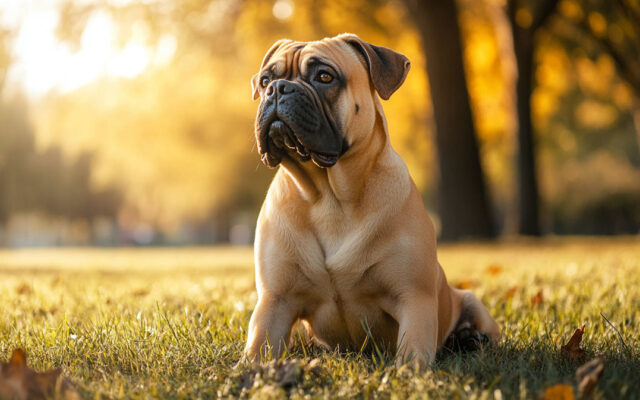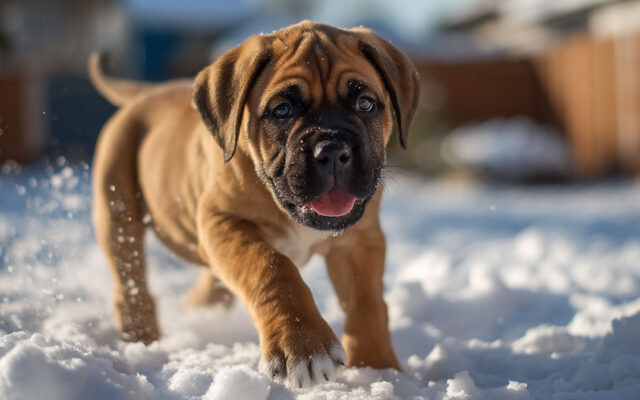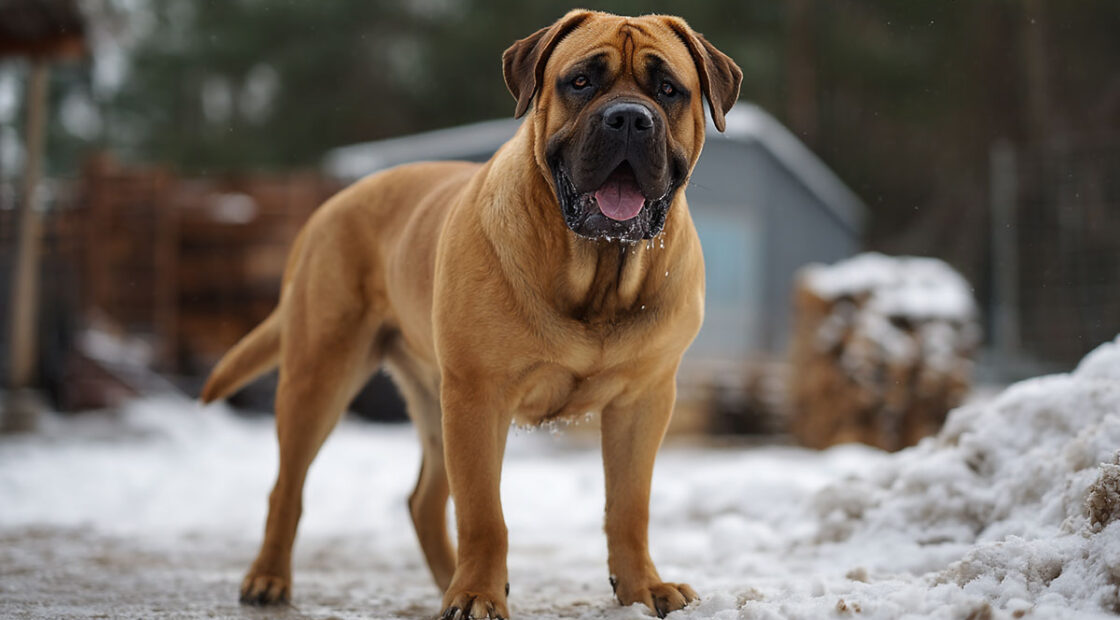
A Bullmastiff puts on real size fast, and what goes in the bowl during the first eighteen months has more to do with joint health later than almost anything else an owner controls early on. Breeders track intake against a published breed weight standard from the day a litter is sent home, not a generic large-dog chart pulled off a pet store shelf.
Large and giant breed dogs in this weight class show a documented 6 percent cumulative incidence of bloat over a lifetime, according to a Purdue University cohort study published in the Journal of the American Veterinary Medical Association (Glickman et al., 2000). That number alone is why feeding habits get so much attention in this breed specifically.
What Is Bullmastiff Feeding
Full height arrives around 18 to 20 months, though plenty of Bullmastiffs keep adding muscle and mass for another year after that. Feeding for this breed means getting portion size and meal timing right, and matching nutrient ratios to that slow, heavy growth curve, rather than reaching for whatever large breed advice happens to apply to a mid-size retriever or a working-line shepherd.
Compared with a true giant like the Mastiff, the size gap is smaller than most people expect. The Bullmastiff vs Mastiff breeds comparison shows a male Bullmastiff topping out around 130 pounds, while a male Mastiff can reach 200 pounds or more.
That still puts the Bullmastiff solidly in giant breed nutrition territory, well above the 70 pound adult weight threshold most large breed puppy formulas are built around.
A handful of things set Bullmastiff feeding apart from ordinary large breed care. Growth rate needs controlling through the first 18 months to protect joints that are still developing. Portions get tied to a giant breed calorie curve instead of a flat cup measurement scooped out of habit. And bloat risk, along with the wider gastric dilatation volvulus danger, stays connected to how the dog eats for its entire life, not just as a puppy.
The AKC breed standard sets adult males at 110 to 130 pounds and adult females at 100 to 120 pounds, and that range is what feeding decisions get measured against as a puppy grows toward adulthood.
How Much to Feed a Bullmastiff by Weight and Age
Body weight, age, and activity level decide a Bullmastiff’s daily food amount. There’s no single number that applies across the whole breed. Puppies eat more per pound of body weight than adults do, simply because growth itself burns calories on top of ordinary maintenance needs.
A few reference figures matter here. Adult dogs typically eat 2 to 3 cups of dry kibble a day, split into two meals, which works out to roughly 40 to 60 pounds of food a month (American Bullmastiff Association). Growth formulas run higher in protein than maintenance food, 22.5 percent crude protein on a dry matter basis compared with 18 percent once a dog reaches adulthood (AAFCO).

Those numbers climb steadily through the first year and level off once the dog nears adult weight, usually somewhere past 12 to 14 months.
Feeding charts built for other giant breeds follow the same underlying logic. A Great Dane feeding chart scales portions to current body weight rather than age alone, and that same principle applies directly to a growing Bullmastiff.
Treats count toward the daily total too. Most veterinary nutritionists cap treats at no more than 10 percent of daily calories, which leaves very little room once a full meal ration is measured out for a dog this size.
Look for a food labeled specifically for large breed growth rather than a generic all life stages formula. Checking general puppy food brands against that large breed growth label is the fastest way to confirm a food is actually built for a dog this size.
Kibble sized for small jaws, or calorie-dense formulas meant for compact breeds, work against a Bullmastiff’s growth curve rather than for it.
How Often to Feed a Bullmastiff
Meal frequency drops as a Bullmastiff matures, moving from several small meals a day as a young puppy down to two meals a day by adulthood. This isn’t just about convenience. Spacing meals out reduces how much food sits in the stomach at any one time, which matters for a deep-chested breed prone to bloat.
Puppy Feeding Frequency

Young Bullmastiff puppies need frequent, smaller meals, since stomach capacity is limited and energy needs run high at this stage. Puppies between 8 and 12 weeks old typically eat four times a day. That drops to three meals from 3 to 6 months old, then tapers to two or three meals between 6 and 12 months as the dog moves toward adult frequency.
Most Bullmastiff breeders send new owners home with a starting schedule based on what the litter was already eating, which makes the early transition easier on a puppy’s digestion.
Adult and Senior Feeding Frequency

Adult Bullmastiffs generally settle into two meals a day for life, spaced roughly 8 to 12 hours apart.
| Life Stage | Meals Per Day | Notes |
|---|---|---|
| Puppy (under 6 months) | 3 to 4 | Smaller portions, frequent spacing |
| Adult | 2 | Standard maintenance schedule |
| Senior | 2, sometimes smaller | Adjusted for lower activity and slower digestion |
Senior dog nutrition often calls for the same two meal structure with a lower calorie total, since older Bullmastiffs typically move less but should not have protein intake cut sharply.
Calcium to Phosphorus Ratio and Large Breed Growth Control
Bone and cartilage development in a growing Bullmastiff tracks closely with the calcium to phosphorus ratio in its food, and getting that ratio wrong in either direction causes real damage. Too little calcium weakens developing bone, though that’s rare in a dog eating a complete commercial diet. Far more common is the opposite mistake. An owner adds calcium on top of a food that’s already balanced, and that excess speeds up growth plate closure and raises the risk of skeletal deformity.
AAFCO, the organization that sets nutrient minimums for pet food sold in the United States, defines a large breed puppy as one expected to reach 70 pounds or more as an adult, a threshold every Bullmastiff clears easily.
| Nutrient | Minimum (dry matter) | Maximum (dry matter) |
|---|---|---|
| Calcium | 1.2% | 1.8% |
| Phosphorus | 1.0% | 1.6% |
| Calcium to phosphorus ratio | 1:1 | 2:1 |
These figures come from AAFCO’s Nutrient Profile for Growth and Reproduction, and any large breed puppy formula worth buying will fall inside that range without extra supplementation needed.
Excess calcium during this stage is one of the documented contributors to Bullmastiff hip dysplasia and other developmental joint problems, which is why vets consistently advise against adding calcium powders or bone meal to a growth diet that already meets AAFCO minimums.
A puppy fed a complete large breed growth formula almost never needs supplemental calcium, even during a growth spurt that looks dramatic from one month to the next.
Bloat and Gastric Dilatation Volvulus Risk in Bullmastiff Feeding
Bloat, or gastric dilatation volvulus (GDV), happens when the stomach fills with gas and twists on itself. It’s a leading emergency risk for deep-chested giant breeds like the Bullmastiff. Feeding habits don’t cause the underlying anatomy that makes a Bullmastiff vulnerable in the first place, but they measurably shift the odds of an episode happening.
Feeding Practices That Raise Bloat Risk
Certain habits show up again and again in research on large and giant breed dogs that developed GDV: eating one large meal a day instead of splitting food into smaller portions, eating quickly (which increases air swallowing along with the food), heavy exercise right before or after a meal, and feeding from a raised or elevated bowl.
That last one surprises most owners. A Purdue University study led by Dr. Lawrence Glickman found a raised feeder was linked to roughly 20 percent of GDV cases in large breed dogs and about 52 percent in giant breeds (Glickman et al., JAVMA, 2000), reversing decades of advice that elevated bowls were protective. A later 2012 survey did not find the same effect, so the research on bowl height isn’t fully settled. Still, no study has ever shown a raised bowl lowering GDV risk.
Feeding Practices That Lower Bloat Risk
The pace of eating matters more than bowl height, based on what the current research actually supports. Splitting daily food into two or three smaller meals instead of one large one helps, and so does feeding from floor level instead of a raised platform. A slow feeder or puzzle feeder cuts down on gulping, and restricting vigorous activity for roughly an hour before and after meals rounds out the list.
The benefits of a slow feeder dog bowl come specifically from pacing, not from bowl height, which lines up with what the Purdue data actually showed.
These habits form the core of most Bullmastiff bloat prevention advice, though feeding changes reduce risk rather than remove it entirely.
Assessing Ideal Body Weight and Body Condition Score in Bullmastiffs
Body condition score, not the number on a scale by itself, is the most reliable way to judge whether a Bullmastiff sits at a healthy weight for its own frame. Two dogs at the same weight can look completely different depending on bone structure and muscle mass, which is exactly why vets rely on hands-on scoring instead of a fixed number.
| BCS Range | Description | Typical Action |
|---|---|---|
| 1 to 3 | Underweight, ribs and spine easily visible | Increase portions, rule out illness |
| 4 to 5 | Ideal, ribs palpable with a visible waist | Maintain current feeding plan |
| 6 to 7 | Overweight, waist barely visible | Reduce calories, add activity |
| 8 to 9 | Obese, no palpable waist | Veterinary weight management plan |
This scale comes from the Purina Body Condition System, a 9 point scoring method adopted by veterinary associations worldwide, and an ideal score for an adult Bullmastiff sits at 4 to 5.
Staying at that ideal score is one of the few feeding related factors an owner actually controls, and it carries real weight for longevity. A 14-year Purina study of Labrador Retriever littermates found dogs kept at ideal body condition had a median lifespan 1.8 years longer, about 15 percent, than their pair-fed littermates allowed to eat freely (Kealy et al., JAVMA, 2002).
Vets now treat that body condition effect as relevant across large and giant breeds generally, including how it shapes long term Bullmastiff lifespan expectations for a breed that already runs shorter than most.
Correct feeding shows up in more than the scale, too. Coat quality is one giveaway, glossy without excess shedding or dryness. Stool should be firm and well formed. And energy stays steady through the day rather than dipping into sluggishness after meals.
Underweight puppies and dogs carrying visible extra weight both call for a portion review, since either extreme puts stress on a large frame already working hard to support its own size.
Choosing a Diet Type for a Bullmastiff: Kibble, Raw, or Home-Cooked

Kibble, raw, and home-cooked diets can all support a healthy Bullmastiff, as long as whichever format gets chosen actually meets the calcium, phosphorus, and protein targets a giant breed puppy or adult needs. The right choice usually comes down to cost and time, plus how much control an owner wants over exact nutrient levels.
| Diet Type | Cost | Prep Time | Nutrient Control |
|---|---|---|---|
| Commercial kibble | Low to moderate | Minimal | Fixed by manufacturer formulation |
| Raw diet | High | Moderate to high | High, but easy to unbalance |
| Home-cooked | Moderate to high | High | Full control, requires formulation expertise |
Commercial large breed formulas remain the most common choice, since they’re built to meet AAFCO growth or maintenance profiles without extra math from the owner. Formulas built specifically for giant breed growth are usually the safer starting point for a Bullmastiff puppy, more so than a line marketed for every life stage at once.
Raw feeding gives more control over ingredient sourcing, but it shifts responsibility for a balanced calcium to phosphorus ratio entirely onto the owner. Some raw feeders use freeze-dried proteins instead of fresh meat for convenience, and whether freeze-dried chicken is actually good for dogs fed this way is worth checking before settling on a brand.
Home-cooked diets carry the highest risk of nutrient gaps, particularly around calcium, unless a board-certified veterinary nutritionist formulates the recipe rather than something assembled from a generic recipe found online. Ingredient sourcing and prep time also affect the ongoing Bullmastiff cost of raw and home-cooked routines, which tend to run noticeably higher than a comparable bag of large breed kibble.
Is Grain-Free Food Linked to Heart Disease in Bullmastiffs
The link between grain-free food and dilated cardiomyopathy is still an open question, despite years of investigation and heavy media coverage. The FDA opened its investigation in July 2018 after veterinary cardiologists flagged an unusual pattern of DCM in breeds with no known genetic risk for the disease.
By its final public update in December 2022, the FDA had logged 1,382 total dog cases tied to the inquiry, with only 255 of those reported since July 2020, a sharp slowdown from the original wave (FDA Center for Veterinary Medicine, 2022). The agency stopped issuing routine updates after that report and has never established a direct causal mechanism.
Taurine looked like the obvious culprit early on, since it plays a role in heart muscle function. Dogs can normally make their own taurine from methionine and cysteine, though, and FDA testing found most grain-free products in its dataset actually met or exceeded the standard methionine-cysteine minimum. That weakens the simple taurine-deficiency explanation considerably.
Grain-inclusive formulas have the longer track record, and nothing in the FDA’s case data points specifically at that category. They also tend to run lower in legumes like peas and lentils, the ingredients most associated with reported cases. The obvious catch here is they’re not an option for a dog with a diagnosed grain allergy.
Grain-free food solves that particular problem, which is the whole reason the category exists, but it shows up overrepresented in the FDA’s DCM reports even though the mechanism remains unproven. A lot of grain-free formulas also lean harder on legumes and potatoes, which happen to be exactly the ingredients the FDA flagged as common across reported cases.
For a Bullmastiff without a diagnosed grain allergy, a grain-inclusive large breed formula remains the lower-uncertainty choice until the research settles.
Reduced stamina, coughing, or labored breathing on any diet is worth a prompt vet visit, since those can point to broader Bullmastiff health problems that deserve ruling out regardless of what’s in the bowl.
Food Allergies and Ingredient Sensitivities in Bullmastiffs
True food allergies are less common in dogs than most owners assume. When they do happen, though, a small handful of ingredients cause most of the reactions. A 2016 review in BMC Veterinary Research analyzed 297 dogs with confirmed cutaneous reactions and ranked the leading offenders.
| Allergen | Share of Confirmed Cases |
|---|---|
| Beef | 34% |
| Dairy | 17% |
| Chicken | 15% |
| Wheat | 13% |
| Lamb | 5% |
Those five ingredients account for the large majority of reported cases (Mueller, Olivry, and Prelaud, BMC Veterinary Research, 2016).
Given beef sits at the top of that list, some owners assume any beef-based dog food is automatically risky. Really, the ingredient is only a problem for a dog with a confirmed sensitivity to it.
A true food allergy is an immune response. It usually shows up as itching, ear infections, or skin irritation rather than vomiting or diarrhea. Food intolerance works differently, since it’s a digestive reaction rather than an immune one, and tends to show up as loose stool, gas, or occasional vomiting instead.
Diagnosing either one takes an actual elimination diet. Guessing from ingredient labels doesn’t cut it.
- Switch to a novel protein or hydrolyzed diet the dog has never eaten before
- Feed only that diet, with no treats or table scraps, for 8 to 12 weeks
- Reintroduce the suspected ingredient and watch closely for symptoms returning
Treats are an easy place for a hidden allergen to sneak back into the trial, so sticking to treats made for sensitive stomachs keeps an elimination diet honest.
Feeding for Joint Health and Hip Dysplasia Prevention in Bullmastiffs

Diet can’t fix a dog’s genetics, but it directly influences how much stress a Bullmastiff’s joints carry over a lifetime. Hip dysplasia shows up often enough in this breed that it’s worth taking seriously from the first bag of puppy food onward.
OFA breed statistics, drawn from decades of hip x-ray evaluations submitted to the registry, show that roughly one in four Bullmastiffs evaluated has some degree of hip dysplasia, one of the higher rates among large and giant breeds. Elbow dysplasia is also documented in the breed, at a meaningfully lower rate (Orthopedic Foundation for Animals breed statistics).
A few dietary levers matter most for joint outcomes. Keeping calcium and calorie intake within AAFCO’s growth range during the first 18 months, covered above in the calcium to phosphorus section, does the most work. Lean body condition matters too, since every extra pound adds mechanical load to hips and elbows already working hard to support a giant frame. Omega-3 fatty acids, specifically EPA and DHA from fish oil, get added commonly to support joint comfort, particularly once a dog starts showing stiffness.
Glucosamine and chondroitin supplements are the most widely sold joint products on the market, but the research behind them is genuinely mixed. An earlier randomized trial found meaningful improvement in pain and weight-bearing scores by day 70 of treatment and judged the combination non-inferior to a prescription NSAID at that point (McCarthy et al., The Veterinary Journal, 2007).
A more recent placebo-controlled trial, however, found glucosamine and chondroitin produced no significant improvement in force-plate measurements over six weeks, unlike the marine-based omega-3 compounds and NSAID comparison groups in the same study (Kampa et al., Frontiers in Veterinary Science, 2023). Taken together, the evidence for a true disease-modifying benefit remains inconsistent across studies.
Collagen has drawn newer interest as a cartilage-support ingredient, and collagen for dogs is worth understanding on its own terms before adding it to a Bullmastiff’s routine.
None of these supplements replace controlled growth and lean body condition as the two levers with the strongest evidence behind them.
How to Transition a Bullmastiff From Puppy Food to Adult Food
Growth plate closure decides the timing here, not a birthday circled on the calendar. Male Bullmastiffs generally finish growth plate closure between 18 and 36 months, while females typically close between 12 and 24 months, so the switch happens across a range rather than on a fixed date.
Once a puppy is within reach of that window and growth has visibly slowed, a gradual food switch prevents the digestive upset a sudden change usually causes.
- Days 1 to 2: feed three quarters puppy food and one quarter adult food
- Days 3 to 4: feed an even fifty-fifty mix of both foods
- Days 5 to 7: feed one quarter puppy food and three quarters adult food
- Days 8 to 10: feed the new adult food exclusively
That 7 to 10 day schedule matches the standard transition plan most major pet food makers publish, Purina’s included.
Watch for loose stool, gas, or a sudden drop in appetite during the switch. All three usually mean the transition needs to slow down rather than push forward. Symptoms that persist past a couple of days, rather than easing as the ratio shifts, are worth a vet visit to rule out something beyond normal Bullmastiff illness signs.
Portion size usually needs a second look right after the switch too, since adult maintenance formulas run less calorie-dense than growth formulas cup for cup.
When Standard Bullmastiff Feeding Guidelines Do Not Apply
Every portion chart and calorie range covered so far assumes a healthy, non-breeding, moderately active adult Bullmastiff. Several common situations break that assumption entirely, and feeding to the standard chart in those cases can do real harm.
Pregnant and Nursing Females
Energy needs climb fast during gestation and climb further once lactation starts. Requirements can reach two to four times a female’s normal maintenance level at peak lactation, roughly three to four weeks after whelping (Purina Institute).
Recovery From Surgery or Illness
A Bullmastiff recovering from a procedure like a gastropexy or an orthopedic surgery often needs a temporary, vet-directed feeding plan rather than the standard adult chart. Calorie needs can drop sharply during limited mobility, and pushing normal portions in that window leads to fast, unwanted weight gain.
Working, Show, or High-Drive Dogs
A Bullmastiff doing regular protection work, weight pulling, or extended Bullmastiff exercise routines burns meaningfully more than the sedentary companion the standard chart assumes. Calorie totals for these dogs often need to run 20 to 40 percent above baseline maintenance, adjusted against body condition score as the dog’s routine changes.
Diagnosed Medical Conditions
Kidney disease, pancreatitis, and certain cardiac conditions all call for prescription therapeutic diets that override normal large breed feeding advice entirely. These diets typically cost more than a standard bag of large breed kibble, one more way owning a dog this size gets expensive once a health condition enters the picture.
In every one of these cases, a veterinarian should set the feeding plan, not a generic chart built for an average healthy adult.
FAQ on Bullmastiff Feeding
How Much Water Should a Bullmastiff Drink Each Day
General guidance puts daily water intake near 1 ounce per pound of body weight, more in heat or after exercise. A 110 to 130 pound male often drinks close to a gallon. Avoid letting a Bullmastiff gulp large amounts right around meals.
Does Feeding Change After a Bullmastiff Is Spayed or Neutered
Yes, and the change matters more than most owners expect. Removing sex hormones lowers resting metabolic rate, and the Purina Institute recommends cutting caloric intake by roughly 30 percent afterward. Skipping that adjustment is one of the most common causes of adult weight gain and a higher body condition score.
What Kibble Size or Shape Suits a Bullmastiff’s Jaw
Large breed kibble runs bigger and denser than standard formulas, built to slow down a powerful jaw rather than let it vanish in one bite. Bigger pieces also cut down on air swallowing, a known contributor to bloat.
Can Bullmastiffs Eat Human Food or Table Scraps Safely
Small amounts of plain cooked meat or vegetables are usually fine. Onions, grapes, chocolate, and xylitol are toxic in any quantity, though, and fatty scraps raise pancreatitis risk in a breed already prone to digestive sensitivity and weight gain.
How Long Can a Bullmastiff Go Without Eating Before It Becomes a Concern
A healthy adult can typically skip a full day without lasting harm, as long as it’s still drinking water. Past 24 to 48 hours, or any refusal paired with lethargy or vomiting, warrants a same-day call to the vet, especially in a giant breed puppy.
What Should You Fix First in Bullmastiff Feeding?
Portion control and bloat-prevention habits produce the fastest safety gains in Bullmastiff feeding, and they should get fixed before diet type or supplements. A wrong portion or a fast one-meal routine causes more acute harm than an imperfect protein source ever will.
In practice, that means fixing portion and meal frequency against current body weight first, then locking in bloat-safe habits like floor feeding, split meals, and rest after meals, and reviewing diet format and supplements last.
A portion or bloat mistake can end in an emergency room visit within hours, while a weaker protein source accumulates harm over months.
Glickman’s giant-breed cutoff sits at 99 pounds, and a male Bullmastiff’s published adult weight clears that line by 11 pounds at the low end of the AKC standard, so the higher raised-feeder risk figure fits this breed more than the large-breed one.
Stable feeding habits free up attention for the coat and skin routines covered in Bullmastiff grooming.