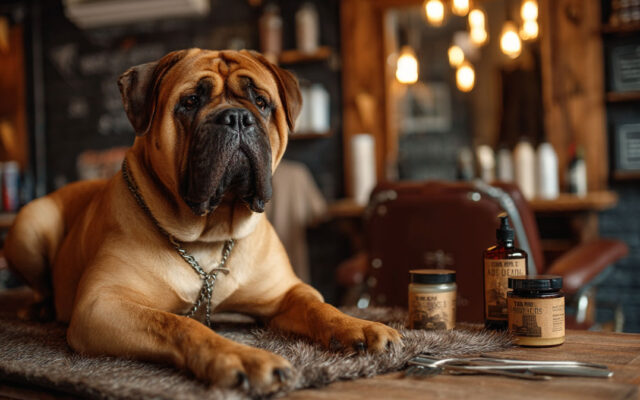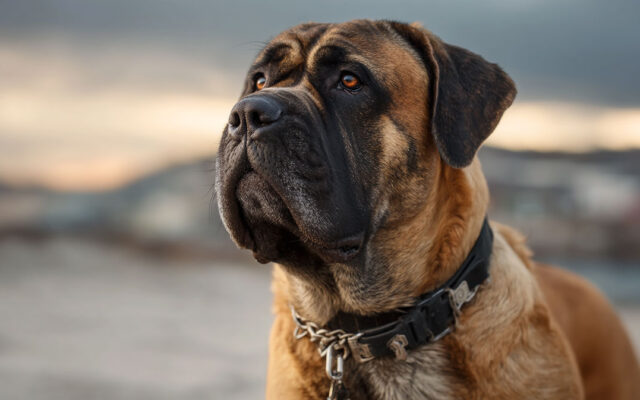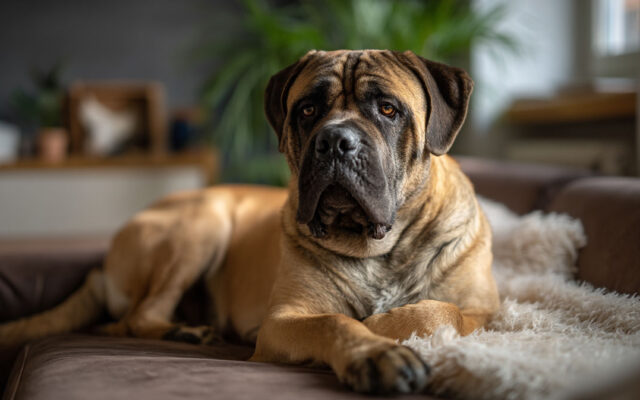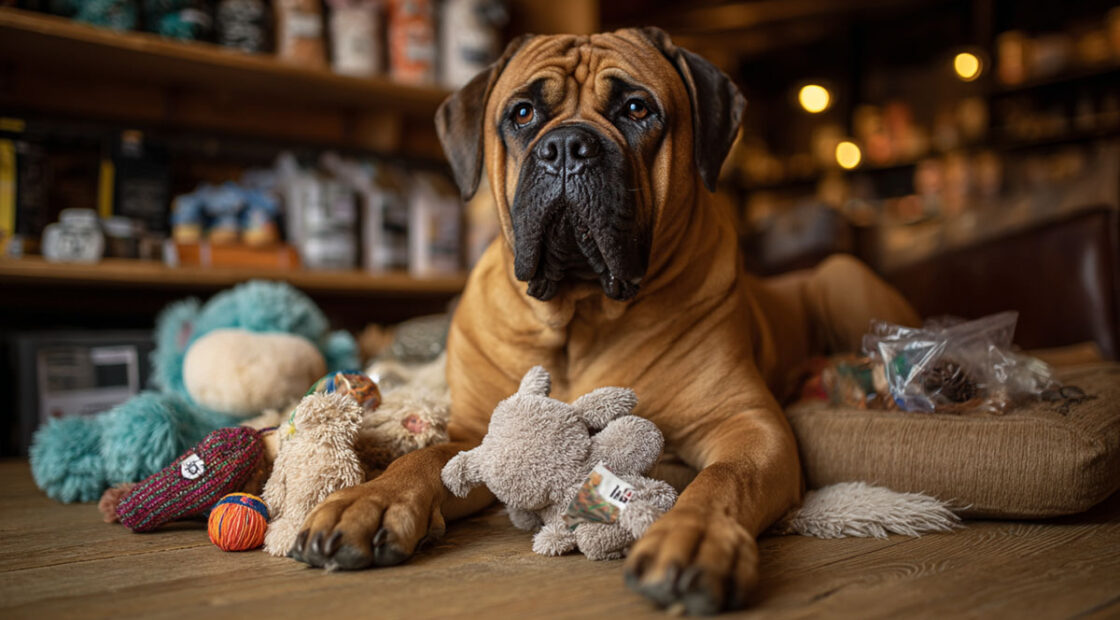
Most large-breed pet gear is sized for dogs that top out around 80 or 90 pounds. A grown bullmastiff blows past that number by 30 or 40 pounds, and the jaw strength behind that bulk chews through gear built for smaller dogs in a single sitting.
Shop the large-breed shelf at a normal pet store and the sizing still assumes a leaner dog than the deep-chested, heavy-skulled frame a mature bullmastiff actually carries. It’s close enough to work for a while. Then it isn’t.
There’s also no legal floor for how tough a chew toy has to be. The Consumer Product Safety Commission’s 2024 toy safety rule, built around ASTM F963, covers children’s toys, not anything sold for dogs. So durability ratings on a bag of rope or a rubber bone come entirely from the company that made it. Nobody checks their homework.
That matters more for this breed than most. A dog strong enough to flatten an average large-dog toy in one sitting is exactly the dog those unverified ratings are supposed to protect.
What Are Bullmastiff Toys and Accessories?
Chew toys, collars and harnesses, crates, beds, feeding bowls, grooming tools, that covers what this breed actually needs. Every item on that list traces back to the same handful of physical facts. A deep chest. A heavy skull. A jaw that closes with real pressure. None of that changes because a toy was on sale.
The Bullmastiff was bred in 19th century England to grapple poachers twice its owner’s size, and that working history still shows up in a living room today. A dog built from that lineage chews differently than a Labrador, pulls differently on a leash than a Vizsla, and flattens a cheap bed under 120 pounds well before month three.
Owners sometimes assume mastiff-family gear is interchangeable. It mostly isn’t. A full Bullmastiff vs Mastiff breeds comparison shows the two differ enough in frame and weight distribution that sizing charts don’t transfer cleanly from one to the other.
Males run 110 to 130 pounds and stand 25 to 27 inches at the withers. Females run 100 to 120 pounds and stand 24 to 26 inches, per the breed standard maintained by the American Bullmastiff Association. Every other number in this guide, a collar length, a crate footprint, a bowl height, works off that range.
What Makes a Chew Toy Durable Enough for a Bullmastiff?
Durability isn’t about the label on the package. It’s about a rating scale and whether the material actually matches the dog. Toys get graded light, moderate, or heavy chewer, and a bullmastiff’s bite puts nearly every adult of the breed into that heavy category whether the owner likes it or not.

Solid rubber holds up best under sustained gnawing and resists puncture better than hollow shapes do, though even solid rubber can crack under a full bite from a serious chewer if it’s left out long enough. Nylon takes a different kind of abuse well. It wears down slowly through grinding rather than tearing apart, which fits dogs that gnaw more than they shred. Rope and canvas are the weak link here. Fine for a tug session, but they shed fibers fast against real bite force, so they’re a supervised-play toy, not something you hand over and walk away from.
A toy earns its heavy chewer rating by surviving sustained gnawing without cracking, but rated toys still wear out eventually. Cracks, an exposed inner core, a seam starting to give, that’s the signal to retire something, not whatever the packaging promised on day one. Swallowed fragments send more dogs to the emergency vet than almost any other toy-related injury there is, so a cracked chew gets pulled the same day somebody notices it.
Best Chew Toys for Bullmastiffs

A handful of brands keep coming up in heavy chewer recommendations, and each one is built around solving a different failure point.
| Product Line | Material | Chew Rating | Best For |
|---|---|---|---|
| KONG Extreme | Solid black rubber | Heavy chewer | Stuffed feeding toys, jaw workouts |
| Nylabone Power Chew | Textured nylon | Heavy chewer | Grinders, teething relief in older pups |
| West Paw Zogoflex | Recyclable rubber | Aggressive chewer | Fetch, tug, guarded chew sessions |
| Mammoth Cloth Rope | Cotton rope | Moderate chewer | Tug play, dental flossing action |
KONG’s Extreme line is the one you’ll see recommended most for stuffed feeding toys. The rubber is dense enough that it slows a fast eater down while they work at the filling, which matters more than it sounds like once you’ve watched a dog empty a bowl in four seconds flat.
Nylabone’s Power Chew wears the way a bullmastiff’s grinding bite actually calls for, abrasive wear instead of tearing. West Paw’s Zogoflex line does something the others don’t. Once a toy is finally chewed through, the company takes it back and recycles the material.
Mammoth’s cotton rope sits lower on the durability scale, and that’s by design, not a flaw. It’s a tug toy. Hand it over for solo chewing and it won’t survive the afternoon.
- Rotate two or three toys instead of leaving one out permanently. Novelty slows destructive chewing down more than people expect
- Size up. A toy built for a 40 pound dog disappears fast in a mouth built for 120
- Skip anything with removable parts, squeakers included, unless someone’s actually watching
Bullmastiff Collar and Harness Sizing
Collar and harness sizing starts with a tape measure, not a size chart guess.
A bullmastiff’s neck typically measures 20 to 26 inches around and the chest girth runs 34 to 42 inches, though individual dogs vary enough that measuring beats estimating from weight alone.
How to Measure Your Bullmastiff for a Collar or Harness
- Wrap a soft tape around the base of the neck, where a collar naturally sits
- Slide two fingers under the tape and record that looser number as the collar size
- Measure around the widest part of the ribcage, just behind the front legs, for harness girth
- Measure chest width across the sternum if the harness has a front strap
- Check the fit again after two weeks. A growing puppy outgrows a collar faster than most owners expect
A properly sized harness sits flat against the chest with no rubbing at the armpits, and a collar leaves room for two fingers but no more.
Martingale Collar vs No-Pull Harness
A martingale collar tightens slightly under pressure, enough to stop a dog from backing out of it, without ever choking them. That matters here specifically because a bullmastiff’s skull is wider than its neck, a trait that lets a standard buckle collar slip right over the head if the dog pulls back hard at the wrong moment.
No-pull harnesses solve a completely different problem. They move the force of a lunge from the throat to the chest. Good for a dog still working on loose-leash walking. Also worth it for any dog recovering from neck strain, where pressure on the throat is the last thing anyone wants.
Hardware matters as much as the collar type. Ruffwear and Julius-K9 both build harnesses with reinforced stitching rated for large working breeds, and Herm Sprenger’s stainless steel clips hold up where lighter plastic hardware snaps under a sudden pull.
Leash strength should match. A braided rope lead handles a sudden lunge better than a thin nylon strap, and a rope dog leash built for large breeds is worth the extra cost over a standard six-footer.
Bullmastiff Crate Size Guide
An adult bullmastiff needs a crate in the 42 to 48 inch range, sized to the dog standing fully upright with room to turn around.
Length needs to run from nose to the base of the tail plus another 3 to 4 inches of clearance. Height works the same way, floor to the top of the head while standing, plus 2 to 4 inches on top of that. Weight matters too, in a less obvious way. Most 42 inch crates top out around 90 pounds, which pushes a lot of adult males straight into the 48 inch category whether their body length technically needed it or not.
Wire crates from MidWest Homes for Pets suit home use and crate training well, while travel-rated builds from Ruff Land Kennels or Diggs handle car transport and outdoor use better than standard wire ever will.
Bullmastiffs share crate sizing territory with other giant breeds. A Great Dane often needs the same 48 inch category despite standing taller, and a full Mastiff can push into 54 inch territory once body weight climbs past 180 pounds.
Buy for the adult size the puppy will reach, not the puppy in front of you right now, and use a divider panel to shrink the space temporarily.
A crate that’s too large defeats house training. One that’s too small becomes a welfare problem well before the dog finishes growing.
Choosing an Orthopedic Bed for a Bullmastiff

Bed support matters more for this breed than most, and the reason shows up in the joint data.
The Orthopedic Foundation for Animals lists a 25 percent hip dysplasia incidence in bullmastiffs, placing the breed among the higher-risk large breeds tracked in its registry. A dog carrying that kind of joint risk benefits from a bed that distributes weight rather than compresses flat under it.
Memory foam contours to the body and takes real pressure off the hips and elbows, which is the whole point for a breed carrying this much joint risk. The catch is quality. Cheaper foam grades lose their loft within a year once sustained giant-breed weight sits on them night after night.
High-density orthopedic foam holds its shape longer. It suits a dog that shifts position a lot through the night, though the firmer feel takes some dogs a few weeks to actually settle into.
Skip standard polyfill stuffing if you can help it. It costs less walking out the store, sure, but it compresses fast under anything over 100 pounds and gives almost none of the pressure relief a dog with hip strain actually needs.
Big Barker and PetFusion both build bed lines rated specifically for large and giant breeds, with foam density figures listed right on the product page rather than buried in marketing copy.
Dogs already showing stiffness after rest, or any diagnosed hip dysplasia, do better on the firmer orthopedic grade than on a soft decorative bed built for smaller breeds.
Feeding Equipment and Bloat Risk

Bowl choice connects directly to one of the breed’s most serious health risks.
Bloat, known clinically as gastric dilatation-volvulus, happens when a deep, narrow chest lets the stomach fill with gas and twist on itself.
- Dogs over 100 pounds carry roughly a 20 percent lifetime risk of bloat, according to VCA Animal Hospitals, a threshold every adult bullmastiff crosses
- Elevated food bowls raise GDV risk in large and giant breeds rather than lowering it, per research summarized by the Purina Institute, reversing decades of common advice
- A typical adult bullmastiff eats 2 to 3 cups of dry kibble twice daily, roughly 40 to 60 pounds of food per month, per the American Bullmastiff Association
That last figure matters for bowl sizing. A bowl too shallow forces gulping, and gulping is one of the fastest ways to swallow air along with food.
Slow feeder bowls with raised ridges or maze patterns force a dog to eat around obstacles instead of straight down, cutting the speed of consumption without raising the bowl off the ground.
PetSafe, Neater Feeder, and UGODOG all make slow feeder or spill-resistant designs built for large breeds, and none of them rely on elevation to do the job.
Full bloat prevention guidance covers feeding schedule and exercise timing too, but the bowl itself is the one piece of equipment directly inside an owner’s control.
Grooming Tools for a Bullmastiff’s Coat and Wrinkles

A bullmastiff’s coat needs less work than most large breeds, but the wrinkles need consistent attention.
The short, dense texture sheds year round with heavier drops in spring and fall, and a rubber curry brush pulls loose hair out faster than a bristle brush ever does on this coat type.
Wrinkle wipes, or honestly just a damp cloth, need to get run through the muzzle folds a few times a week. Trapped moisture and food debris in those folds is exactly the environment bacteria like, so this one isn’t optional even though it feels like a small thing.
Ear cleaning solution matters more here than it would for a prick-eared dog, since drop ears trap more moisture in the first place. A weekly look catches odor or redness early, before it turns into something that needs a vet visit.
Nail clippers or a grinder rated for thick nails is worth the extra few dollars. A bullmastiff’s nail bed runs denser than what standard small-breed clippers in the pet aisle are built to cut through cleanly, and finding that out mid-trim is not a fun surprise.
A 2022 VetCompass study in Scientific Reports put the one-year prevalence of skin fold dermatitis at 0.37 percent across the general dog population, with risk concentrated almost entirely in extreme flat-faced breeds like the English Bulldog and Pug.
A bullmastiff’s moderate muzzle wrinkling sits well outside that high-risk group, which is exactly why routine wiping rather than intensive daily treatment is enough for this breed.
Full Bullmastiff grooming guidance covers bathing frequency and shedding season in more depth than the tool list above.
Puppy vs Adult Bullmastiff Gear
Puppy teething runs from roughly 3 weeks to 6 months of age, according to PetMD, and that window decides most of the early gear swaps.
| Gear Category | Puppy Stage | Adult Stage |
|---|---|---|
| Chew toy material | Softer rubber, rope, rated for teething | Heavy chewer rubber and nylon |
| Collar and harness | Adjustable, resized every few weeks | Fixed size, reinforced hardware |
| Crate size | Divided section within adult crate | Full 42 to 48 inch crate |
Softer rubber and rope hold up fine against a puppy’s developing bite, but they disappear fast once adult teeth and jaw strength arrive around eight months old.
Collar and harness gear needs resizing on a schedule during the growth period, not just whenever the old one visibly stops fitting.
Crate training during this stage doubles as house training and early behavior work, and puppy training milestones often line up with the same weeks gear needs its first upsizing.
Watch for the shift rather than a fixed date on a calendar. A puppy chewing straight through toys rated for its current age is the real signal to size up.
Buying Priority Checklist for New Bullmastiff Owners
Gear for a giant breed adds up fast, and the order you buy in matters more than most new owners expect.
- Crate and bed first, sized for the adult the puppy will become, not the puppy in front of you
- Collar, harness, and leash next, in puppy sizing with room to adjust
- Feeding equipment third, choosing a bowl height and style based on bloat risk rather than convenience
- Chew toys last, starting with softer teething-rated options before moving to heavy chewer materials
- Grooming tools whenever the coat and wrinkles need them, usually not urgent in the first weeks
Buying crate and bed sizes too small is the most common costly mistake here, since owners end up purchasing a second, larger set within a year as the puppy grows into adult dimensions.
Full breed cost breakdowns show the initial gear outlay is only one line item in a much bigger picture. A detailed Bullmastiff cost guide lays out food, vet care, and insurance on top of the equipment covered here.
Giant breed ownership in general runs well past the sticker price of the puppy itself, and it’s worth reading how a dog can end up expensive over a full lifetime before assuming the gear list above is the biggest expense on the table.
When Bullmastiff-Specific Gear Isn’t Necessary
Not every product marketed for the breed earns its higher price tag, and some popular chew options fail regardless of what the label promises.
Rawhide softens unevenly, and a heavy chewer can tear off a chunk big enough to lodge in the throat. That risk has nothing to do with jaw strength and everything to do with how badly the material breaks down once it’s wet.
Tennis balls are worse than people expect. The felt coating is abrasive enough to wear down tooth enamel over repeated chewing, and a bullmastiff’s mouth is large enough to swallow one whole if it comes to that.
Retractable leashes just weren’t built for this. Thin cord, a plastic clasp mechanism, none of it was designed to absorb a sudden lunge from 120 pounds of dog, and it shows the first time it actually gets tested.
Veterinary dentists use what’s known as the kneecap rule, a guideline popularized by veterinary dentist Dr. Fraser Hale: if a chew toy would hurt to be struck against a kneecap, it’s hard enough to fracture a tooth. The Veterinary Oral Health Council (VOHC) is a separate body that reviews and certifies specific dental products for plaque and tartar control, so its seal of approval is a useful cross-check alongside the kneecap rule rather than the source of the rule itself.
Research from the University of Pennsylvania School of Veterinary Medicine, published in Frontiers in Veterinary Science, confirmed that chew products past a certain hardness threshold measurably raise fracture risk in dogs, regardless of how the product is marketed for durability.
That finding cuts against the instinct to buy the hardest toy on the shelf for the strongest chewer in the house. Harder is not automatically safer.
Some individual dogs chew hard enough that no commercial toy, rated or not, survives more than a session or two.
At that point the fix isn’t a harder product. It’s supervision, toy rotation, and pulling anything showing cracks the same day it’s noticed.
FAQ on Bullmastiff Toys And Accessories
How Much Should a New Owner Budget for Bullmastiff Gear?
Crate, bed, and harness costs dominate the first round of gear buying, more than chew toys and bowls combined.
Buying adult-sized crate and bed from the start avoids a second purchase within the year, which is the most common budgeting mistake new owners make.
How Do You Introduce a New Chew Toy Safely to a Heavy Chewer?
Offer a new toy during a calm, supervised session instead of leaving it out unattended on day one.
Watch the first ten minutes to see how the dog actually handles the material, then check for loosened seams before letting them chew it alone.
How Often Should Grooming Tools Be Used on a Bullmastiff’s Coat and Wrinkles?
Wrinkle wipes and ear checks work best two to three times a week.
Bathing only needs to happen every six to eight weeks unless the coat looks obviously dirty, and nails need a trim every three to four weeks given how dense this breed’s nail bed runs.
What Wears Out Fastest in Bullmastiff Toys And Accessories?
Chew toys go first, and it’s not close. Under a heavy chewer they can fail within weeks, while a crate, a bed, or a good collar holds up for years of normal use.
Inspection priority follows that same order:
- Chew toys, checked weekly for cracks or loose fibers
- Collar and harness hardware, checked each season for stitching wear
- Crate and bed, replaced only once frames bend or foam fully compresses
Paying more upfront for a heavy chewer rated line trades a higher purchase price for fewer replacement cycles across the years a bullmastiff spends as an adult.
That math only holds up against how long the dog is actually around to use the gear, and average bullmastiff lifespan is what sets that timeline for everything above.