My dog went through a rawhide phase that ended with a vet visit and a promise to find something better. That’s when I started asking: are turkey tendons good for dogs?
Turns out, these dehydrated connective tissue chews pack around 70% protein, almost no fat, and only 15-22 calories per piece. They’re single-ingredient, highly digestible, and don’t require the chemical processing that rawhide goes through.
But “good” depends on your dog’s size, chew style, and health history. This guide covers the full picture, from nutritional profile and dental benefits to choking risks, allergy concerns, and how turkey tendons compare to bully sticks, yak chews, and antlers. Everything you need to decide if they belong in your dog’s treat rotation.
What Are Turkey Tendons?
Turkey tendons are dehydrated strips of connective tissue taken from turkeys, sold as single-ingredient chews for dogs. Nothing else in them. No fillers, no preservatives, no mystery powders.
They come in a few different forms. Whole tendons, split pieces, braided strips, and chopped segments. The texture lands somewhere between chewy and tough, depending on how thick the cut is and how the manufacturer processed it.
How They’re Made
Most turkey tendon chews go through a slow dehydration process at low heat. Some brands use freeze-drying or air-drying instead. The goal is the same: remove moisture while keeping the natural protein structure intact.
This is different from how rawhide gets manufactured. Rawhide goes through chemical baths with sodium sulfide, lime, and bleach before it hits store shelves. Turkey tendons skip all of that.
Turkey Tendons vs. Other Turkey Chews
People mix these up all the time, so let me clear it up.
Turkey necks contain bone and cartilage. They’re harder, crunchier, and carry a splintering risk that tendons don’t have. Turkey feet are loaded with small bones and joints, which makes them a chondroitin source but also a potential choking concern for smaller dogs. Turkey jerky comes from breast meat, costs more, and doesn’t last nearly as long during a chewing session.

Tendons sit in a sweet spot. Tough enough to provide a real chewing experience, soft enough that they won’t crack teeth. My dog barely looks at me when she’s working through one. That’s about 15 to 20 minutes of total silence, which, if you have a vocal dog, you’ll appreciate.
The US pet treat market hit $4 billion for dog treats in 2024, according to Euromonitor data reported by Pet Food Processing. Within that space, single-ingredient natural chews like turkey tendons have carved out growing demand, especially among owners who read ingredient labels the way they read restaurant menus.
Nutritional Profile of Turkey Tendons
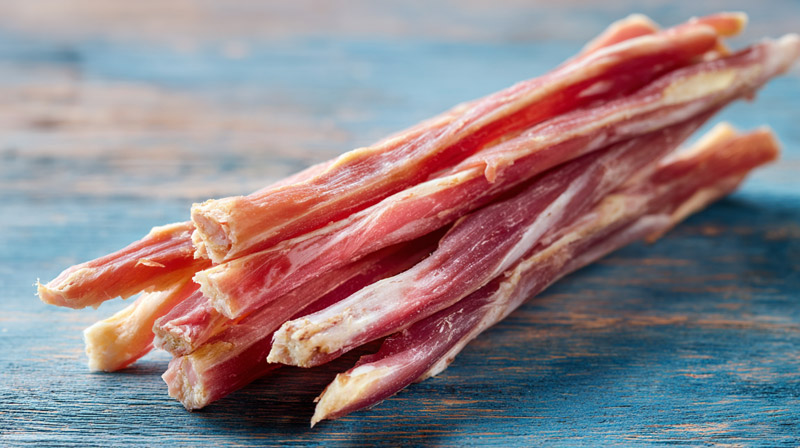
The numbers on turkey tendons are surprisingly good for a chew treat. Most products land around 70% crude protein with only about 1-5% crude fat. That ratio is hard to beat in the treat aisle.
Here’s a typical breakdown based on manufacturer data from brands like Pupford and Bully Sticks Direct:
| Nutrient | Amount |
|---|---|
| Crude Protein | 70% (min) |
| Crude Fat | 1–5% |
| Crude Fiber | 2% (max) |
| Moisture | 10–15% |
| Calories per chew | 15–22 kcal |
That calorie count matters. At 15 to 22 calories per piece, turkey tendons are one of the lowest-calorie natural chews you can find. For context, a standard 6-inch bully stick runs 80 to 130 calories.
How Turkey Tendons Compare to Beef Tendons Nutritionally
Protein content: Both hover around the 70-80% range, so the difference there is minimal.
Fat content: This is where turkey pulls ahead. Beef tendons typically carry more fat, sometimes double what you’ll find in a turkey tendon. For dogs watching their weight (and the Association for Pet Obesity Prevention says 59% of US dogs are overweight or obese), that gap matters.
Calorie density: Turkey tendons run leaner overall. If your dog gets treats daily, those extra calories from beef tendons add up over weeks and months.
Texture and hardness: Beef tendons tend to be denser and harder. Some dogs love that. Others, especially older dogs or puppies, do better with the slightly softer chew that turkey tendons offer.
Turkey tendons also contain naturally occurring glucosamine and chondroitin from the connective tissue. These compounds show up in joint supplements for dogs, and while the amounts in a single chew aren’t therapeutic doses, regular consumption adds a little extra support. Think of it like a bonus, not a replacement for actual joint care.
Health Benefits of Turkey Tendons for Dogs
Turkey tendons do more than keep a dog busy. The benefits are real, and most of them tie back to the high protein content and the physical act of chewing itself.
Joint Support From Natural Collagen
Tendons are connective tissue. That means they’re packed with collagen, glucosamine, and chondroitin, all three of which play a role in maintaining cartilage and joint fluid. Collagen for dogs has become a bigger topic in pet nutrition circles, and for good reason.
These aren’t going to fix hip dysplasia or reverse arthritis. But as a supplementary source of joint-supporting compounds through something your dog actually enjoys? That’s a win. Breeds prone to joint problems, like Labrador Retrievers, Golden Retrievers, and German Shepherds, get a small nutritional edge here.
Dental Health Through Mechanical Chewing
Cornell University reports that 80-90% of dogs over age 3 show some form of periodontal disease. Banfield Pet Hospital’s 2023 data found that 73% of dogs examined across their 1,000+ locations were diagnosed with dental-related issues.
Chewing on the tough, fibrous texture of a dehydrated turkey tendon scrapes against teeth as the dog works through it. This mechanical action helps remove food debris and some plaque buildup. It also increases saliva production, which naturally rinses the mouth.
But let me be honest here. Chews are not a substitute for brushing or professional veterinary dental cleanings. They help. They don’t solve the problem on their own. Pair them with the right dental chews and regular vet checkups, and you’re in much better shape.
Low-Fat Option for Weight-Conscious Dogs
The APOP’s 2024 survey found that 22% of US dogs are clinically obese, with the broader overweight-and-obese category hitting 59%. Treats contribute to that problem. A lot.
Veterinarians generally recommend that treats make up no more than 10% of a dog’s daily caloric intake. At 15-22 calories per turkey tendon chew, you’re looking at a treat that barely dents the calorie budget. Compare that to pig ears, rawhide bones, or bully sticks and the math works in turkey tendons’ favor.
Dogs prone to pancreatitis need low-fat options especially. Breeds like Miniature Schnauzers and Cocker Spaniels are at higher risk for the condition, and fatty treats can trigger flare-ups.
Mental Stimulation and Anxiety Relief
Chewing releases endorphins. This isn’t speculation. It’s basic canine physiology. Dogs that chew regularly tend to show less destructive behavior, less pacing, and fewer signs of anxiety.
Turkey tendons last long enough to provide a meaningful chewing session, usually 10 to 20 minutes depending on the dog’s size and chew style. That’s a solid window of calm focus, which, if your dog struggles with separation anxiety or general restlessness, is genuinely useful. Pupford specifically markets their turkey tendons as tools for redirecting problem behaviors like biting, barking, and nervous chewing.
Risks and Safety Concerns
No chew is risk-free. Turkey tendons are safer than many alternatives, but there are still things to watch for.
Choking and Swallowing Hazards
The biggest danger with any dog chew is the dog that doesn’t actually chew. Aggressive chewers, or dogs that gulp and swallow, can bite off large pieces of turkey tendon and try to swallow them whole.
This isn’t unique to turkey tendons. It happens with any long-lasting chew. But the risk is real. Large chunks of partially chewed tendon can lodge in the throat or, worse, create an obstruction further down in the gastrointestinal tract.
Always supervise your dog while they chew. Throw away small remnant pieces before they become swallowing hazards. That’s the rule for every chew on the market, and turkey tendons are no exception.
Bacterial Contamination
Dehydrated animal products can harbor bacteria like Salmonella if not processed correctly. This is a manufacturing quality issue, not a turkey tendon issue specifically.
Buy from brands that process in the USA under USDA oversight. Check for recalls. Avoid the cheapest options from unknown importers. Poorly processed chews from overseas facilities have a worse track record for contamination.
Caloric Overconsumption
At 15-22 calories each, one or two turkey tendons a day won’t wreck your dog’s diet. But handing them out like candy will.
Small dogs eating multiple chews daily can easily exceed their 10% treat threshold. Track the calories like you’d track your own snacks. Yes, it’s annoying. Yes, it matters. Keeping a dog is expensive enough without adding vet bills from weight-related problems.
Dogs That Should Avoid Turkey Tendons
Dogs with poultry allergies: A study in Veterinary Dermatology found that about 15% of dogs with food allergies react to chicken. Turkey is a separate protein, but cross-reactivity between poultry types exists. One 2024 study suggested that 97% of chicken-allergic dogs showed potential cross-reactivity with turkey. If your dog has a confirmed poultry allergy, skip these entirely.
Very young puppies: Puppies that still have baby teeth shouldn’t get hard chews. Wait until adult teeth are in. Consult your vet on timing, especially for puppy-appropriate chews.
Dogs with active GI issues: If your dog is already dealing with vomiting, diarrhea, or a diagnosed gastrointestinal condition, adding a new protein chew isn’t smart. Stabilize their gut first, then introduce slowly.
Are Turkey Tendons Digestible?
This is the question that matters most to a lot of owners. And the answer is: yes, turkey tendons are highly digestible, especially compared to the alternative that most people know.
Turkey Tendons vs. Rawhide Digestibility
Rawhide is the benchmark for “hard to digest.” One study found that the gastric digestibility of rawhide after 6 hours was only 7%. Even after 18 hours, it climbed to just 41%. Full digestibility including the small intestine? Between 50-85% at best.
That’s a problem. Undigested rawhide sits in the stomach, swells, and can cause blockages that require surgical intervention. The American Kennel Club notes that rawhide is “not easily digested” and that large chunks can cause intestinal obstructions. Many veterinarians now actively recommend safer alternatives.
Turkey tendons are different. They break down much more readily in the stomach because they’re a natural protein, not chemically processed hide. Multiple manufacturers and veterinary sources describe them as 100% digestible or “highly digestible.” They don’t swell, they don’t form hard masses, and they move through the GI tract the way actual food does.
What Affects Digestibility
Product thickness: Thicker tendon pieces take longer to break down. Thin strips dissolve faster in stomach acid.
Processing method: Air-dried and freeze-dried tendons tend to be slightly more digestible than heavily smoked ones. The smoking process can toughen the exterior and slow gastric breakdown.
Dog’s health: A healthy adult dog with normal stomach acid levels will process turkey tendons without issue. Senior dogs or dogs on acid-reducing medications might digest them a bit slower, but blockage risk remains very low compared to rawhide or real bones.
I switched my dog off rawhide years ago after reading about the chemical processing involved. Turkey tendons were one of the first alternatives I tried. No GI issues, no weird stools, no regurgitated chunks showing up on the carpet at 3 AM. That’s not a clinical trial, but it’s a data point.
What Age and Size of Dog Can Have Turkey Tendons?
Turkey tendons aren’t one-size-fits-all. The right approach depends on your dog’s age, weight, and how they chew.
Puppies
Wait until your puppy has a full set of adult teeth. For most breeds, that’s around 6 to 7 months. Giving a hard chew to a puppy with baby teeth risks damaging developing gums and teeth.
Once those adult teeth are in, start with smaller, thinner tendon pieces. Softer, more pliable strips work better for puppies because they’re easier on teeth and gentler on a digestive system that’s still maturing. Keep portions small. A puppy’s calorie needs are carefully balanced, and extra treats can throw off their nutritional plan quickly. Brands like Pupford specifically recommend slow introduction and monitoring.
Small Breeds vs. Large Breeds
| Dog Size | Recommended Tendon Type | Notes |
|---|---|---|
| Small (under 20 lbs) | Thin strips, chopped segments | Watch for gulping; pieces should be proportional |
| Medium (20–50 lbs) | Standard strips or split tendons | Good all-around option for most products |
| Large (50–90 lbs) | Whole tendons, braided tendons | Thicker pieces last longer |
| Giant (90+ lbs) | Whole tendons, braided or doubled | May finish quickly; consider pairing with other chews |
Small breeds like Chihuahuas, Yorkshire Terriers, and Shih Tzus need appropriately sized pieces. A whole turkey tendon meant for a Great Dane is a choking risk for a 7-pound dog.
Large and giant breeds, think Bullmastiffs, Rottweilers, and Saint Bernards, will go through a standard tendon strip in a few minutes. That’s fine. It just means you’re not getting the same 20-minute chewing session that a medium-sized dog gets.
Senior Dogs
Older dogs with worn teeth or dental issues actually do well with turkey tendons because of the texture. They’re tough but not hard like antlers or bones. No risk of tooth fractures, which is a real concern with harder chews.
Senior dogs also benefit from the natural glucosamine and chondroitin in the connective tissue. It’s a small amount per chew, but for a dog that’s already on joint supplements, it complements their existing regimen without adding significant calories. Dogs dealing with conditions like hip dysplasia get a treat that doesn’t actively work against their health.
If your senior dog has lost several teeth or has severe periodontal disease, talk to your vet first. But in most cases, turkey tendons are a gentler option than nearly anything else in the chew aisle.
How to Choose a Quality Turkey Tendon Product
Not all turkey tendon chews are the same. The difference between a good product and a bad one comes down to sourcing, processing, and what’s actually on the ingredient list.
Single Ingredient Is the Standard
Look for products that list one ingredient: turkey tendon. That’s it. Some brands sneak in coconut glycerin, vegetable glycerin, or “natural flavoring” that doesn’t need to be there.
Brands like Pupford, Afreschi, Riley’s Originals, and Nature Gnaws all sell true single-ingredient options. If the label lists more than turkey, ask yourself why.
Sourcing and Manufacturing Location
USA-sourced and USA-made is the gold standard. Companies like Bully Sticks Direct, Sancho and Lola’s, and BarknBig all process their turkey tendons domestically under stricter oversight than imported alternatives.
Packaged Facts reports that the US pet treat and edible chew market reached $12.8 billion in 2024, and “Made in the USA” has become one of the top factors driving purchase decisions. Owners are reading labels more carefully than ever.
Imported chews from countries with less regulatory oversight carry a higher risk of bacterial contamination and undisclosed additives. The FDA has issued multiple recalls on imported pet treats over the years. Spend the extra dollar or two per bag.
Processing Methods Matter
| Method | Texture | Digestibility |
|---|---|---|
| Dehydrated (low heat) | Chewy, pliable | Highest |
| Air-dried | Firm but flexible | High |
| Freeze-dried | Lighter, crunchier | High |
| Smoked | Hard exterior | Moderate |
Slow dehydration at low heat preserves the most amino acids and keeps the chew digestible. Smoked tendons taste great to dogs but the exterior can be tougher on the stomach.
What to Check on the Packaging
- Clear ingredient list (one ingredient, ideally)
- Country of origin for both sourcing and manufacturing
- Calorie count per piece
- Guaranteed analysis showing protein, fat, fiber, moisture
If a package doesn’t tell you where the turkey came from or how it was processed, that’s a red flag. Reputable brands are transparent about both. For dogs with food sensitivities, this is especially true when looking for treats that won’t upset a sensitive stomach.
How Often to Give Turkey Tendons
There’s no universal answer here, but there are clear guidelines that keep things safe and reasonable.
Recommended Frequency by Dog Size
Small dogs (under 20 lbs): Two to three turkey tendons per week. Their daily calorie budgets are tight, sometimes only 200-400 calories total. Even at 15-22 calories per chew, it adds up if you’re not paying attention.
Medium dogs (20-50 lbs): Three to four per week is a comfortable range. Enough to get the dental and mental benefits without blowing the treat budget.
Large and giant breeds (50+ lbs): One per day is fine for most dogs in this range. A Siberian Husky or Alaskan Malamute eating 1,500+ calories daily barely notices 20 extra calories from a tendon chew.
The 10% Rule
Veterinarians consistently recommend that treats should not exceed 10% of a dog’s daily caloric intake. This is the guideline most pet nutrition experts follow, and it’s printed on countless treat packages for a reason.
At 15-22 calories per turkey tendon, the math is simple. A 30-pound dog eating around 800 calories per day has an 80-calorie treat budget. That’s three or four turkey tendons before you hit the limit, assuming no other treats that day.
Supervision Best Practices
- Always watch your dog while they chew
- Provide fresh water alongside any chew session
- Remove small remnant pieces before they become swallowing hazards
If your dog finishes a turkey tendon in under two minutes, they’re probably gulping instead of chewing. Consider a thicker product, or switch to something designed for heavy chewers.
Turkey Tendons vs. Other Natural Dog Chews
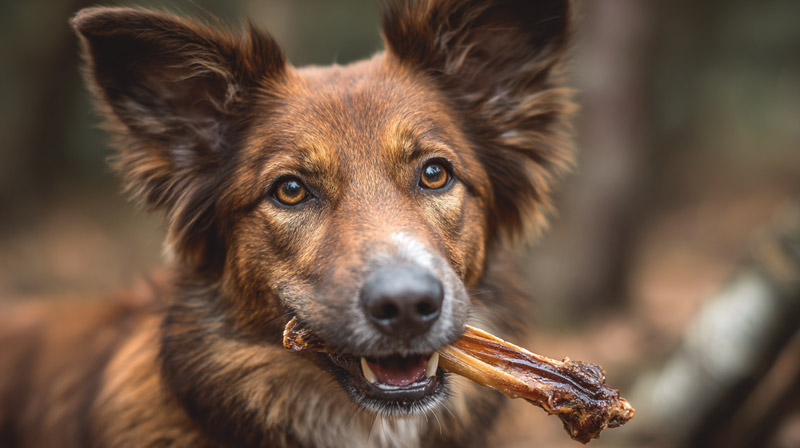
Knowing how turkey tendons stack up against other popular chews helps you pick the right one for your dog’s needs. Each has trade-offs.
| Chew Type | Calories (approx) | Digestibility | Smell | Lasting Time |
|---|---|---|---|---|
| Turkey tendon | 15–22 per chew | Very high | Mild | 10–20 min |
| Bully stick (6″) | ~90 | High | Strong | 20–40 min |
| Rawhide | Varies | Poor (50–85%) | Low | 30–60 min |
| Yak chew | ~50–100 | High | Low | 30–60 min |
| Deer antler | ~0 (not consumed) | N/A | None | Weeks–months |
Turkey Tendons vs. Bully Sticks
A 6-inch bully stick averages about 90 calories, according to research published in the Canadian Veterinary Journal. That’s roughly four to six times what a turkey tendon delivers.
The smell is the other big difference. Bully sticks have side effects that include a strong odor most owners find unpleasant, especially indoors. Turkey tendons are much milder. If you live in an apartment or just don’t want your couch smelling like a farm, turkey tendons are the better pick.
Bully sticks do last longer for most dogs, though. How long bully sticks last depends on the dog, but the trade-off is extra calories and that smell.
Turkey Tendons vs. Rawhide
This one isn’t close. Rawhide’s gastric digestibility sits at just 7% after 6 hours. It swells in the stomach. It’s processed with chemicals. Veterinary sources from the AKC to Preventive Vet recommend avoiding it or at least proceeding with extreme caution.
Turkey tendons break down the way actual food does. No chemical processing, no swelling, no months-long chunks sitting in the GI tract. If you’re still giving your dog rawhide, switching to turkey tendons is one of the easiest upgrades you can make.
Turkey Tendons vs. Yak Chews and Antlers
Himalayan yak chews are harder than turkey tendons and last significantly longer. But that hardness is a double-edged sword. Dogs that chomp aggressively on yak chews can crack teeth, which is why some veterinary dentists caution against them for power chewers.
Antlers present a similar concern. They’re incredibly hard and can cause tooth fractures in dogs that bite down forcefully. Turkey tendons are tough but give under pressure, which makes them a safer choice for most dogs’ teeth.
If your dog has a gentle, patient chewing style, yak chews or split antlers can work well. But for the average dog, turkey tendons hit a better balance of durability, safety, and digestibility.
Signs of a Bad Reaction to Turkey Tendons
Most dogs handle turkey tendons without any issues. But “most” isn’t “all.” Here’s what to watch for, especially the first few times.
Mild Digestive Reactions
Vomiting, diarrhea, or gas within a few hours of eating a turkey tendon usually means one of two things: the dog ate too much too fast, or their stomach isn’t used to the new protein.
Introduce turkey tendons slowly. One small piece on the first day. Wait 24-48 hours. If stools look normal and there’s no vomiting, you’re clear to continue.
Loose stools after a new treat aren’t always a sign of an allergy. Sometimes the GI tract just needs a day to adjust. If it happens once and resolves, it’s probably fine.
Signs of Intestinal Blockage
This is the serious one. Blockages from any chew are a veterinary emergency. PetMD and the AKC both describe intestinal obstruction as a condition that can become life-threatening within 24-72 hours without treatment.
Watch for these symptoms:
- Repeated vomiting, especially if nothing comes up
- Loss of appetite lasting more than a day
- Lethargy or reluctance to move
- Straining to defecate without producing stool
- Swollen or painful abdomen
If you see any combination of these, call your vet. Don’t wait it out. Intestinal blockage surgery can cost $500 to several thousand dollars, according to PetMD, but catching it early improves outcomes significantly.
Allergic Reaction Symptoms
Itching, ear infections, and skin irritation are the most common signs of a food allergy in dogs. These don’t always show up immediately. Sometimes it takes days or weeks of repeated exposure before symptoms appear.
Poultry allergies affect a relatively small percentage of dogs, but they exist. If your dog develops recurring ear infections, paw licking, or face rubbing after you start giving turkey tendons regularly, talk to your vet about an elimination approach with different treat options.
Dogs with known chicken sensitivities deserve extra caution. While turkey and chicken are different proteins, the molecular structures overlap enough that cross-reactivity is possible. Your vet can help you determine whether turkey is safe or if you should stick to completely novel proteins like venison, rabbit, or fish-based jerky treats.
FAQ on Turkey Tendons For Dogs
Are turkey tendons safe for puppies?
Wait until your puppy has a full set of adult teeth, usually around 6-7 months. Start with thin, pliable pieces and supervise every session. Softer strips are gentler on developing gums and easier to digest.
Can turkey tendons cause blockages in dogs?
The risk is low because turkey tendons are highly digestible, unlike rawhide. But dogs that gulp large chunks without chewing can still choke. Always supervise, and remove small remnant pieces before they’re swallowed whole.
How many turkey tendons can I give my dog per day?
Most dogs do well with one per day. Treats should stay under 10% of daily calories. At 15-22 calories each, turkey tendons fit easily into most dogs’ daily budget without causing weight gain.
Are turkey tendons better than bully sticks?
Turkey tendons are lower in calories and have almost no smell. Bully sticks last longer but carry roughly 90 calories per 6-inch stick. For weight-conscious dogs or indoor use, turkey tendons usually win.
Do turkey tendons clean dogs’ teeth?
The tough, fibrous texture scrapes against teeth during chewing, helping remove some plaque and food debris. They also boost saliva production. But chews alone don’t replace brushing or professional dental cleanings.
Are turkey tendons good for dogs with allergies?
Turkey is a single-protein source, making these chews suitable for many dogs with food sensitivities. But dogs allergic to poultry should avoid them entirely. Cross-reactivity between chicken and turkey proteins is possible.
What’s the difference between turkey tendons and beef tendons?
Turkey tendons are leaner with less fat and fewer calories. Beef tendons tend to be denser and harder. Both offer collagen and glucosamine. Turkey works better for overweight dogs or breeds prone to pancreatitis.
Can senior dogs eat turkey tendons?
Yes. Turkey tendons are tough but not hard like antlers or bones, so they won’t crack aging teeth. The natural glucosamine and chondroitin in connective tissue also provides a small boost for joint support.
How should I store turkey tendons?
Keep them in a cool, dry place. Resealable bags work well. Properly stored dehydrated turkey tendons last 12-18 months. Discard any chews that develop mold, a sour smell, or a slimy texture.
Are turkey tendons digestible compared to rawhide?
Far more digestible. Rawhide’s gastric digestibility is only about 7% after 6 hours. Turkey tendons break down like regular food in the stomach. No swelling, no chemical residue, and a much lower blockage risk.
Conclusion
So, are turkey tendons good for dogs? For the vast majority, yes. They deliver high protein, low fat, and real digestibility in a format that dogs genuinely enjoy.
They support dental hygiene through mechanical chewing action. They provide natural collagen, glucosamine, and chondroitin for joint health. And they do all of this at 15-22 calories per piece, making them one of the leanest natural dog chews available.
The key is buying USA-sourced, single-ingredient products and matching the chew size to your dog. Supervise every session. Respect the 10% treat calorie rule.
Skip them if your dog has a confirmed poultry allergy. Otherwise, turkey tendons earn their spot in the treat rotation. My dog would agree, if she could stop chewing long enough to comment.