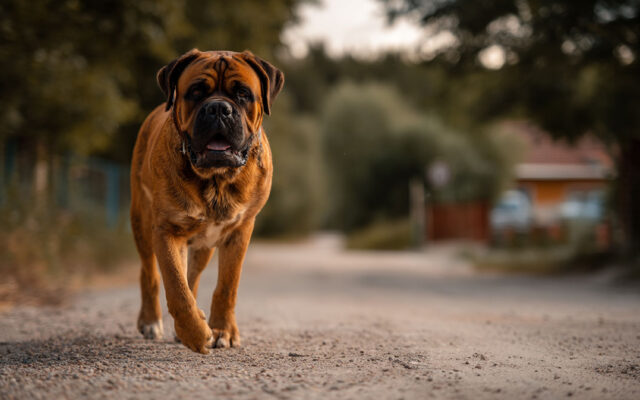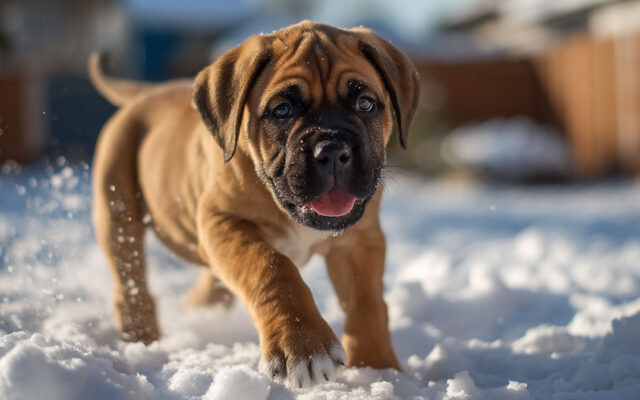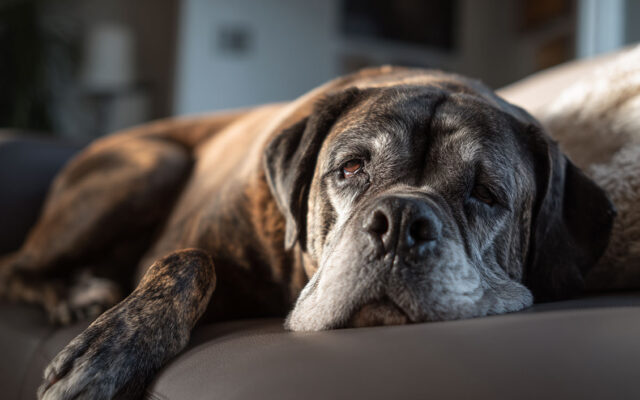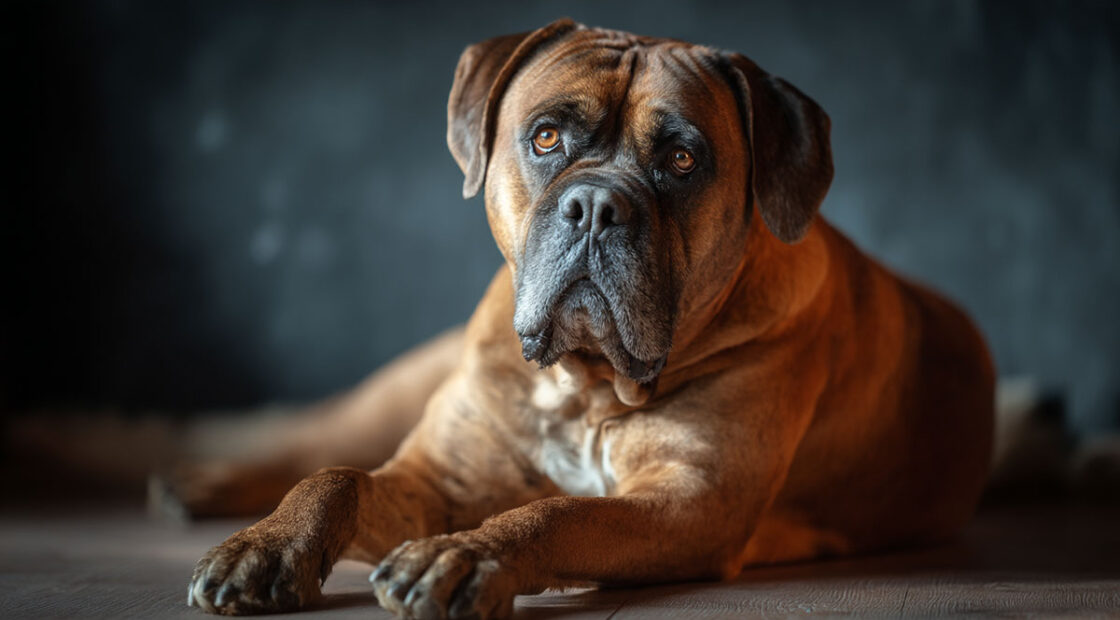
A Bullmastiff tracks an intruder, catches him, and pins him to the ground. It doesn’t maul. That’s the whole design behind this English molosser breed, going back to the estate gamekeepers who built it in the eighteen sixties by crossing the Mastiff with the Old English Bulldog. They needed size and speed in the same dog. That same bite and hold instinct gets used today mostly for home protection, not poacher control.
Hip dysplasia is the catch. Orthopedic Foundation for Animals data puts the rate at roughly 24 to 25 percent, among the highest recorded for any large breed the registry tracks.
What Is a Bullmastiff Guard Dog?
Stopping an intruder without killing him is the whole point of this breed. Nearly everything else about the dog only makes sense once you know that.
The AKC places it in the working group, next to other dogs bred for a specific job rather than a specific look. The Bullmastiff was built to track a man, knock him down, and hold him there until a gamekeeper caught up. No barking match first. No prolonged chase after. Just a hold, controlled and quiet.
It’s a large, short muzzled dog with a deep chest and solid bone, and its job description was always tracking, catching, and holding, never mauling.
Nearly everything else about the breed, the calm indoor manner, the size, the short life span, traces back to that one working job.
Guard Dog or Attack Dog: What a Bullmastiff Actually Does
A Bullmastiff guards by pinning, not by mauling. Gamekeepers in nineteenth century England culled early dogs that tore into a poacher instead of holding him in place.
The Bite and Hold Method
The method itself is simple. Knock the man down, grip an arm or a leg, and hold until the gamekeeper catches up.
Selective breeding favored dogs with enough bite inhibition to hold firmly without tearing tissue, a clear break from the Old English Bulldog’s original pit fighting temperament.
- Track quietly, without warning barks
- Grip and hold rather than repeatedly bite
That trait outlived the poaching era by a long way. Bullmastiffs were historically used to guard De Beers’ diamond mines in South Africa, valuing a dog that restrains an intruder rather than injuring him outright.

How This Differs From Attack Trained Breeds
Personal protection dogs trained under Schutzhund or the modern IGP standard learn to bite, release on command, and re-engage if needed. A Bullmastiff was never built around that release and re-engage cycle.
Picture the difference this way. A trained protection dog bites because it’s told to, releases because it’s told to, and goes back in if the handler calls for it again. A Bullmastiff doesn’t wait for permission like that. It decides on its own when to grip, holds until a person steps in, and rarely lets go early on its own.
Neither approach is safer by default. They just solve different problems for different handlers.
Where the Bullmastiff Guard Dog Comes From
English gamekeepers built the Bullmastiff around 1860 to stop poachers on large estates. Poaching cost landowners real money, and the era’s punishment for it was hanging, which made the job dangerous for everyone involved.
The Mastiff and Bulldog Cross

Gamekeepers first tried Mastiffs on their own. Too slow, and short on the drive needed to actually bring a man down and hold him, according to the American Bullmastiff Association’s own account of the breed’s early trials.
The Old English Bulldog of that period solved the speed problem but had been bred to savage a target, a habit left over from the pit sport that gave the breed its name. The final mix ran close to sixty percent Mastiff for size, bone, and a calmer temper, and forty percent Bulldog for speed, grip, and tenacity.
That ratio earned the dog its working nickname, the Gamekeeper’s Night Dog, for how quietly it could move after dark. One of the earliest recorded dogs of this type belonged to William Burton of Thorneywood Kennels, whose dog reportedly never lost a hold once he caught a man.
From Estate Guardian to Family Protector
The Kennel Club in Britain recognized the Bullmastiff as its own breed in 1924, ending its run as an unofficial estate cross. The American Kennel Club followed in 1934, and the United Kennel Club added its own recognition in 1948.
Registration numbers tell the rest of the story. In the AKC’s own 2024 registration-based popularity rankings, the Bullmastiff placed 67th among all AKC-recognized breeds (AKC, 2024).
Poaching estates are long gone. The dog that guarded them moved into ordinary homes and kept most of the job description intact.
Bullmastiff Size, Coat, and Physical Traits
A Bullmastiff carries the bulk of its Mastiff ancestor on the frame of a faster, more compact dog. Males typically outweigh females by ten to twenty pounds, and both sexes stay low and wide for their size.
Height and Weight by Sex
The AKC breed standard sets exact ranges for both sexes. Males run 25 to 27 inches and 110 to 130 pounds. Females come in smaller, at 24 to 26 inches and 100 to 120 pounds. Average life span for the breed sits at 7 to 9 years.
A puppy reaches most of that frame fast, often hitting adult height well before adult bone density and muscle catch up. That short average life span compared to mid size breeds is one reason people research how long a Bullmastiff typically lives before committing to the breed.
Coat Colors and the Black Mask
Fawn shows up most often, running anywhere from light tan to a deep red gold. Red is really just a richer, more saturated version of that same base color. Brindle is the one early gamekeepers actually preferred, since the dark stripes over a fawn or red base helped hide the dog after dark.
Every acceptable color pairs with a dark muzzle, the black mask that breeders treat as close to non negotiable for correct type.
The coat itself is short and dense, and sheds lightly enough that most owners handle the full grooming routine in a few minutes a week.
How the Bullmastiff Guarding Instinct Works
The guarding instinct in a Bullmastiff isn’t something an owner installs through training. It shows up largely on its own, once the dog reaches physical and social maturity.
Body Blocking and Territorial Behavior
Body blocking is the clearest sign of the instinct at work. The dog positions itself between its owner and a doorway, a stranger, or an open gate, without being asked.
At a door, it tends to plant itself between you and whoever’s arriving. In a crowd, it’ll lean into your leg once things feel unfamiliar. On a walk, it often drifts slightly ahead or beside you, watching a wider stretch than you are.
Breed specialists writing for Modern Molosser describe a dog that refuses to budge from a doorway once a stranger arrives, holding position until it decides there’s no threat.
When the Guard Instinct Develops
Modern Molosser’s coverage of the breed places the onset of real guarding behavior between 10 and 18 months of age, tied to sexual maturity rather than any fixed birthday. A six month old Bullmastiff puppy rarely guards anything.
Some owners even worry their dog loves every stranger it meets, right up until the instinct switches on almost overnight. Getting early socialization in before that switch flips shapes whether the instinct comes out as calm assessment or as blanket suspicion of anyone new.
Why Bullmastiffs Rarely Bark First
Silence was the whole point of the original job. A dog that barked at every poacher gave away the gamekeeper’s position along with its own.
Bullmastiffs kept that trait. Most stay quiet through daily life and only escalate to a deep bark once a threat is close and immediate. The bark, when it happens, tends to be a last step rather than a first warning.
Bullmastiff Temperament With Family, Kids, and Strangers
Around people it knows, a Bullmastiff runs closer to a golden retriever than the guard dog stereotype suggests. That gentle side shows up consistently in how the breed actually behaves at home, though the mood shifts once a stranger enters the picture.
Singer Bob Dylan kept one of these dogs, a Bullmastiff named Brutus, back in the 1960s and 70s. An early sign of how far the breed had already drifted from poacher catcher toward family fixture.
Behavior With Children
Bullmastiffs generally do well with children they grow up around. Size is the real risk factor here, not temperament.
A friendly shoulder check from a 120 pound dog can knock a toddler flat without any aggression involved at all.
- Supervise play with young children
- Give the dog a retreat space away from chaos
Most breed clubs frame the dog as a nanny with poor spatial awareness rather than as a threat.
Behavior With Strangers and Other Dogs
Strangers get a slower welcome. A Bullmastiff typically studies a new person before deciding whether to relax, which reads as aloof rather than hostile.
Same sex aggression is the more common issue, particularly between two unneutered males that weren’t raised or socialized together. High prey drive around cats and other small pets is a separate concern worth planning around, apart from the dog to dog issue.
Working through that risk early, before the guarding instinct fully sets in, is most of what preventing aggression in this breed actually comes down to.
Bullmastiff vs Other Guard Dog Breeds
Every large guard breed solves the same problem differently. A Rottweiler or German Shepherd Dog solves it with a trained bite and release cycle. A Mastiff mostly solves it just by existing.
| Breed | Weight Range | Guarding Style | Average Life Span |
|---|---|---|---|
| Bullmastiff | 100 to 130 lbs | Silent, bite and hold | 7 to 9 years |
| Rottweiler | 80 to 135 lbs | Bark, bite, sustained hold | 9 to 10 years |
| German Shepherd Dog | 50 to 90 lbs | Alert bark, trained protection | 9 to 13 years |
| Mastiff | 120 to over 200 lbs | Passive deterrent by size | 6 to 10 years |
The pattern holds loosely across these rows: heavier giant-breed dogs like the Mastiff tend to run toward the shorter end of the large-breed life span range.
Set next to those three, the Bullmastiff wins in a few real ways. It’s quieter day to day, which counts for a lot in tight neighborhoods. A hold carries less injury risk than repeated biting. And indoors, it runs calmer than a working line Shepherd or Rottweiler usually does.
It loses ground in other spots too. Longevity, for one, since the average Bullmastiff won’t outlive a Rottweiler or German Shepherd Dog. Heat tolerance sits lower, and the drooling runs heavier, than either comparison breed. Obedience training also tends to move slower, next to lines bred specifically for drive.
Owners choosing between a Bullmastiff and a Mastiff are really choosing between a working guard dog and a giant, mostly passive one, a distinction covered in more depth in a dedicated look at how the Bullmastiff and Mastiff actually differ.
When a Bullmastiff Is Not the Right Guard Dog
A Bullmastiff isn’t a good fit for every household, and pretending otherwise does the dog no favors. Several ordinary situations rule the breed out before temperament ever becomes the issue.
First-time owners without large-breed experience often underestimate what 110 to 130 pounds of stubborn muscle actually requires day to day. A dog this size needs a handler who can physically manage it during the awkward second year, right as the guarding instinct is settling in.
A few situations rule it out fast. Households where young kids and an untrained, adolescent dog would be left alone together, for one. Renters and HOA communities are another problem entirely, since some homeowners policies exclude the breed outright. And if you’re hoping for a dog that barks at every passerby, this isn’t it.
Home insurance breed lists in the U.S. commonly name the Bullmastiff among breeds some carriers won’t cover without an added liability policy.
Hot, humid regions raise a separate concern tied to the dog’s short muzzle. A 2024 study published in Veterinary Record found brachycephalic dogs face 4.21 times the odds of heat related illness compared to mesocephalic (normal muzzle length) dogs.
An owner without reliable air conditioning, or one who wants a running partner for summer miles, is setting the dog up to struggle.
What Does a Bullmastiff Guard Dog Cost?
Buying a Bullmastiff is the smallest expense in the whole relationship. Everything after the purchase price scales with the dog’s size and its health risk profile.
Purchase Price by Source
Reputable breeders who screen for hip, elbow, and cardiac issues charge accordingly.
| Source | Typical Price | What It Covers |
|---|---|---|
| Reputable breeder | $1,000 to $2,000 | Health testing, early vaccines, papers |
| Champion bloodline breeder | Up to $3,500 | Show quality lines, titled parents |
| Rescue or shelter adoption | $250 to $500 | Spay or neuter, vaccines, vet check |
Industry cost guides put the average first year total, including the puppy itself, at roughly $5,000 to $5,300.
Finding a breeder who actually does that screening matters more than shaving a few hundred dollars off the sticker price. Going through rescue instead of a breeder cuts the upfront cost sharply, though most rescue dogs arrive already past the guarding instinct’s onset with habits already formed.
Lifetime Ownership Costs
Monthly costs settle down after the first year, but they never get small. Food alone runs higher than it would for a mid-size dog, simply because of how much a 120 pound animal needs to eat.
Emergency costs are where this breed gets expensive. Bloat surgery alone commonly runs $3,000 to $7,000, and a single hip replacement can cost roughly the same as the dog’s entire first year combined.
Owners who budget for these possibilities upfront tend to handle them better than owners who treat pet insurance as optional.
How to Train and Socialize a Bullmastiff Guard Dog
Training a Bullmastiff is less about teaching commands and more about shaping judgment. Most structured approaches to training this breed start long before the guarding instinct ever shows up.
The Early Socialization Window
Work done before the guarding instinct fully sets in during the second year carries the most weight.
- Start exposing the puppy to new people, sounds, and surfaces around eight weeks old
- Invite calm visitors over on a regular basis so strangers stop registering as novel
- Introduce other dogs early, especially male dogs if this one is male
- Practice controlled greetings on leash before the dog reaches sixty pounds
- Keep training sessions short and reward based, not correction heavy
- Keep the exposure going through the awkward adolescent stretch, not just as a puppy
Owners working toward an AKC Canine Good Citizen certification often find the test items double as a built-in socialization checklist.
That credential can matter outside the show ring too. Some insurers ask about it before granting an exception for a restricted breed.
Daily Care, Exercise, and Feeding for a Bullmastiff Guard Dog

A Bullmastiff doesn’t need to run for miles to stay fit. Moderate, consistent activity keeps the joints healthy without pushing a heat sensitive dog too hard.
Exercise Needs
Two shorter walks beat one long one for this breed. Morning and evening, on lead, avoiding the peak heat hours, works better than a single big outing. Add some light play or a short training session in between. And right after a meal, it’s rest, not exercise.
The short muzzle covered earlier in this guide is exactly why planning exercise around the heat matters more here than it does for a longer nosed breed.
Feeding and Weight Management
Weight is the single biggest lever an owner actually controls. An overweight Bullmastiff puts more strain on hips and elbows that are already working against a breed lifespan on the short side.
Split meals matter for a different reason entirely. Two or three smaller meals a day, rather than one large one, reduces the exercise-adjacent trigger most often linked to gastric torsion.
Owners managing a full feeding schedule for this breed usually build weight checks into the routine rather than treating them as an afterthought.
Bullmastiff Health Problems That Affect a Guard Dog’s Working Life
The same size and build that make a Bullmastiff an effective guardian also drive most of its health risk. The shorter lifespan noted earlier in this guide traces back almost entirely to the conditions below.
Joint and Orthopedic Conditions
Hip dysplasia hits this breed harder than most large dogs. OFA data puts the Bullmastiff’s hip dysplasia incidence at roughly 24 to 25 percent, among the higher rates recorded for any large breed the registry tracks.
- Elbow dysplasia, often diagnosed alongside hip issues
- Cruciate ligament tears, common enough that the American Bullmastiff Association tracks them as a separate condition
Catching the early signs of hip dysplasia before it progresses gives an owner more options for managing it without surgery.
Bloat and Gastric Torsion
Gastric dilatation volvulus is the single most urgent emergency this breed faces. The stomach fills with gas, twists on itself, and cuts off blood flow within hours. Even with fast treatment, survival isn’t guaranteed.
The Merck Veterinary Manual puts treated mortality between 20 and 45 percent, depending on how quickly surgery happens.
A preventive gastropexy, often done during spay or neuter surgery, is one part of a broader bloat prevention plan worth discussing with a vet early.
Cancer Risk and Inherited Eye Conditions
Lymphoma and hemangiosarcoma are among the cancers most often flagged by breed health surveys as common in the breed. Hemangiosarcoma is especially dangerous because it can grow silently in the spleen with no outward symptoms until it ruptures.
Entropion, an inward rolling of the eyelid, and progressive retinal atrophy round out the breed’s other major inherited conditions. Neither is life threatening, but both need a vet’s attention early to avoid lasting damage.
FAQ on Bullmastiff Guard Dog
Do Bullmastiffs Drool a Lot?
Bullmastiffs drool more than average, especially after drinking, eating, or getting excited. Loose jowls and a heavy head cause it. Most owners just keep a towel by the door and wipe the jowls after meals rather than fight the habit.
Is a Bullmastiff’s Bite Dangerous?
A Bullmastiff’s jaw carries real force behind a large molosser frame, but the raw bite itself isn’t the main risk. The bred-in instinct to grip and hold is what makes an untrained dog’s bite hard to stop once it starts.
Are Bullmastiffs Restricted or Banned Anywhere?
Some cities and counties list the Bullmastiff on dangerous dog ordinances, alongside Rottweilers and pit bulls. Humphrey, Arkansas is one documented example. Outright bans stay uncommon for this breed. Insurance restrictions affect far more Bullmastiff owners nationwide than any single city ordinance ever does.
Where Should You Start With a Bullmastiff Guard Dog?
Health clearances on both parents come before temperament, price, or training when evaluating a Bullmastiff, because a joint or cardiac problem inherited at birth outweighs every later decision an owner makes about socializing or feeding the dog.
What decides whether the rest of the process is worth starting isn’t temperament. It’s paperwork.
- Hip and elbow clearances on both parents
- Cardiac screening paperwork from the breeder
- An honest read on household tolerance for the guarding instinct
A below average lifespan paired with an above average rate of joint disease means veterinary spending, not the sticker price, drives the real cost of this breed over time. Choosing the health-tested route over the cheaper option accepts a higher purchase price in exchange for lower odds of a five figure surgery bill later.
Once a Bullmastiff is home, learning to recognize the early signs of illness turns that screening advantage into faster intervention when something goes wrong.