Summarize this article with:
When my Bullmastiff puppy first cowered at the sound of a garbage truck, I realized we had work to do. Proper socialization isn’t optional with this powerful breed—it’s essential.
The 120-pound guardian at my feet today bears no resemblance to that fearful puppy. The difference? A systematic approach to early exposure during those critical first months.
Bullmastiff socialization shapes every aspect of your dog’s adult behavior. These naturally protective dogs need carefully structured experiences to distinguish between genuine threats and normal life events.
Without proper socialization, their guardian instincts can morph into problematic fear responses.
This guide breaks down:
- The science behind canine social development
- Essential socialization areas for Bullmastiff puppies
- Practical techniques for everyday owners
- Common challenges specific to this breed
- Consequences of neglecting proper exposure
- Resources to support your socialization journey
Your puppy’s future temperament depends on what you do today. Let’s get started.
The Science Behind Canine Social Development

Neurological Development in Puppies
A Bullmastiff puppy’s brain develops rapidly during the first weeks of life. Neural pathways form at an astonishing rate.
These connections literally shape how your puppy will interact with the world for years to come.
Brain development happens in predictable stages. During the first 3 weeks, puppies are mostly sensory beings—responding to touch, temperature, and smell.
By week 4, vision and hearing sharpen dramatically. This rapid development creates the perfect foundation for social learning to begin.
Experiences during these early weeks don’t just teach puppies—they physically create pathways in the brain.
Each positive interaction builds neural connections that support confident behavior.
Each negative experience can create pathways associated with fear. This is why early exposure is so critical to puppy training.
The window of opportunity for social learning is surprisingly brief. The period between 3-14 weeks represents the critical socialization window.
During this time, puppies are incredibly receptive to new experiences without the fear response that develops later.
Missing this window makes temperament development much harder down the road.
Impact of Genetics vs. Environment
The debate between nature and nurture is particularly relevant when discussing Bullmastiff temperament.
These dogs have inherited certain traits that influence their socialization needs:
- Natural guardian instincts
- Moderate territorial behavior
- Reserved approach to strangers
- Strong family loyalty
Genetic tendencies provide the foundation, but environment shapes how these traits express themselves.
A Bullmastiff with protective instincts can become either a well-adjusted family companion or develop problematic aggression, depending largely on early training and exposure.
The balance between genetics and environment is delicate. Some behavioral problems in Bullmastiffs have genetic components that make them more challenging.
However, proper socialization can minimize these tendencies and prevent dominance issues from emerging.
The right environmental influences can help modify even strong genetic predispositions.
Fear Periods and Their Significance
Fear periods represent crucial developmental stages when puppies are particularly sensitive to negative experiences.
These periods typically occur around 8-10 weeks and again at 6-14 months. During these times, a single frightening incident can create lasting behavioral issues.
Identifying these fear periods requires careful observation. Signs include:
- Sudden reluctance to approach previously familiar objects
- Startle response to normal sounds
- Backing away from new people or dogs
- General hesitation in previously comfortable environments
Negative encounters during fear periods affect dogs long-term. A scary experience might create an association that lasts for life.
This is why puppies who encounter aggressive dogs during fear periods often develop dog-dog aggression themselves.
Similarly, rough handling by strangers during these periods can create lasting human-directed fear.
Managing these periods constructively means creating controlled, positive experiences. Proper introduction methods during fear periods should involve:
- Maintaining handler confidence
- Using high-value rewards
- Keeping exposures brief and positive
- Never forcing interactions
Noise desensitization is particularly important during these sensitive times. Gradually introducing unusual sounds while pairing them with treats builds resilience against fear reactions.
Essential Socialization Areas for Bullmastiff Puppies

Human Socialization
Exposure to different types of people sits at the top of the priority list for Bullmastiff puppy training. These dogs need to meet people of varying:
- Ages (especially children)
- Heights and builds
- Clothing styles (hats, uniforms, etc.)
- Voices and movement patterns
The goal isn’t to make your Bullmastiff love every stranger—that would contradict their natural reserved temperament.
Rather, you want them to distinguish between normal human behavior and actual threats.
Handling and touch tolerance must be developed early. Your puppy should accept touching of:
- Paws and nails
- Ears and mouth
- Tail and hindquarters
- Collar area
This type of socialization prevents touch sensitivity that could make veterinary visits and grooming sessions nightmarish later on.
Building trust with strangers while maintaining appropriate guardian instincts requires a balanced approach.
The goal is teaching discrimination—helping your puppy understand that most human encounters are neutral or positive, while still preserving their natural protective abilities.
This balance is crucial for a Bullmastiff guard dog who must also function safely in family settings.
Animal Socialization
Interactions with other dogs teach crucial canine social skills. Puppies learn bite inhibition, body language reading, and play etiquette primarily from other dogs.
For Bullmastiffs, who can develop same-sex aggression as adults, early positive experiences with both male and female dogs are essential.
Dog parks can be valuable but require supervision. The goal isn’t to make your Bullmastiff a social butterfly—rather to ensure they remain neutral and controlled around other animals.
Given their size and strength, proper leash training during these interactions is non-negotiable.
Exposure to other pets and animals helps prevent predatory responses. Cats, livestock, and small animals might trigger chase instincts in unsocialized dogs.
Controlled introductions teach your Bullmastiff which animals are family members versus which might be appropriate to guard against.
Learning appropriate play and communication skills prevents many behavioral problems later.
Bullmastiffs play differently than smaller breeds—they’re less bouncy and more physical.
Finding appropriate playmates helps them learn to moderate their strength and understand canine body language cues for “too rough” or “enough.”
Environmental Socialization
Different locations expand your dog’s comfort zone. Urban environments require different skills than rural settings. A well-socialized Bullmastiff should experience:
- City streets and traffic
- Parks and natural areas
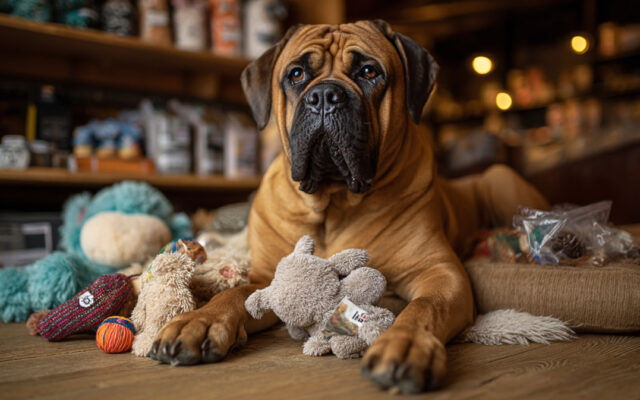
- Pet stores and dog-friendly businesses
- Friends’ homes and unfamiliar buildings
Surface variation matters too. Many dogs develop odd fears of specific walking surfaces. Expose your puppy to:
- Slippery floors
- Metal grates
- Grass and dirt
- Stairs and ramps
Getting comfortable with various sounds prevents noise phobias. Thunderstorms, fireworks, and household appliances can trigger panic in undersocialized dogs.
Gradual exposure paired with positive reinforcement creates resilience against these common triggers.
Different weather conditions should be part of your socialization checklist.
Bullmastiff exercise needs must be met regardless of weather, so early exposure to rain, snow, and varying temperatures builds adaptability.
Object and Situation Socialization
Everyday objects often trigger fear in undersocialized dogs. Umbrellas, vacuum cleaners, and wheelchairs shouldn’t cause panic.
Systematic exposure to household items and tools creates a bomb-proof dog who takes novel objects in stride.
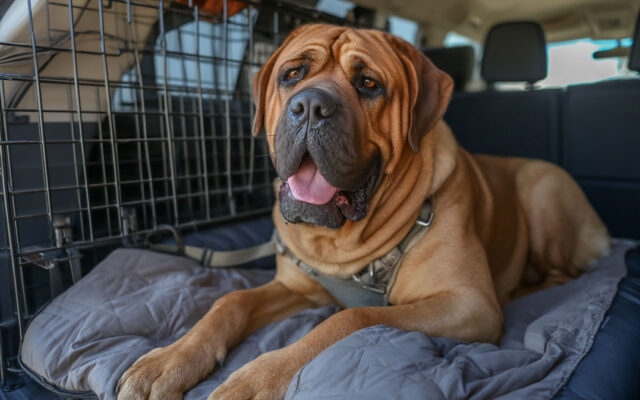
Acclimation to cars, crates, and transportation prevents travel stress.
For a breed as large as a Bullmastiff, comfortable car travel is essential since many living environments require driving to reach suitable exercise locations.
Early positive associations with vehicles prevent the development of travel anxiety.
Veterinary equipment and handling deserve special attention. Grooming tools, examination tables, and medical procedures are unavoidable realities in your dog’s life.
Mock examinations and handling exercises prepare your puppy for these experiences, potentially saving you from having to muzzle or sedate a full-grown, fearful Bullmastiff during necessary care procedures.
Proper socialization isn’t optional—it’s the foundation that determines whether your puppy develops into a confident, stable companion or a liability.
The time invested during those critical early weeks pays dividends throughout your dog’s life in reduced behavioral issues and increased reliability.
Practical Socialization Techniques for Bullmastiff Owners

Creating a Socialization Schedule
Setting up a week-by-week plan from 8-16 weeks creates structure during this critical period.
My girl Ruby’s training began the day she arrived home. I mapped out exactly which experiences she needed each week:
- Week 8-9: Home exploration, family members, basic sounds
- Week 10-11: Brief car rides, quiet outdoor areas, 1-2 calm visitors
- Week 12-13: Pet stores (carried if needed), 3-4 new people weekly
- Week 14-16: Dog-friendly public spaces, supervised dog interactions
Balancing exposure with safety before vaccinations requires creativity. I used a stroller to expose Ruby to environments without ground contact. Friends brought their fully-vaccinated dogs to my yard. Puppy classes with Bullmastiff-experienced professionals checked vaccination records for all attendees.
Socialization doesn’t end at 16 weeks. The juvenile period (4-12 months) requires continued exposure as your puppy develops.
Ruby needed ongoing socialization through adolescence when fear periods resurfaced around 6-8 months.
Her confident adult temperament today reflects this consistent work.
Positive Reinforcement Methods
Using treats strategically builds positive associations. High-value rewards create stronger connections than kibble or praise alone.
For Ruby, freeze-dried liver became the special “new experience” treat—reserved exclusively for socialization scenarios.
Clicker training provides precise timing for socialization.
The click marks the exact moment your Bullmastiff makes a brave choice, creating clear communication during potentially overwhelming situations. This training method excels at building confidence through small victories.
Creating positive associations requires proper sequencing:
- Present the new stimulus at a comfortable distance
- Immediately offer high-value treats
- Remove treats when stimulus disappears
- Gradually decrease distance as comfort increases
The goal isn’t just tolerance—it’s genuine enjoyment of new experiences. A truly well-socialized Bullmastiff looks forward to novel situations rather than merely enduring them.
Reading Your Bullmastiff’s Body Language
Signs of comfort include loose body posture, soft eyes, and relaxed breathing. Watch for subtle stress signals:
- Lip licking
- Yawning when not tired
- Whale eye (showing whites)
- Stiffened movement
- Avoidance behaviors
Bullmastiffs typically communicate discomfort subtly before showing obvious fear. These large dogs often suppress obvious signs of stress, making owner awareness crucial.
Knowing when to push forward versus back off requires experience. As a general rule, mild stress with quick recovery indicates a productive learning opportunity.
Persistent stress signals mean you’ve pushed too far too fast.
Ruby once stiffened at the sight of a man with a beard—I increased distance until her body relaxed, then worked gradually closer over several sessions.
Building confidence through incremental challenges works better than flooding. Each small success builds the emotional resilience needed for the next challenge.
Rather than forcing Ruby to interact with twelve strangers at once, we started with one calm person and gradually increased complexity.
Managing Controlled Exposures
First impressions shape long-term perceptions. When introducing Ruby to new dogs, I always arranged meetings:
- On neutral territory
- With compatible temperaments first
- Using parallel walking before direct greeting
- With plenty of space for both dogs to retreat
Traveling with Bullmastiff puppies requires planning for successful exposures. Short trips with rewards create positive associations before attempting longer journeys.
Environmental acclimation happens gradually, not through sink-or-swim experiences.
Gradual desensitization techniques work for specific fears. When Ruby showed concern about the vacuum cleaner, we:
- Kept the vacuum visible but off for several days
- Rewarded calm behavior near the silent vacuum
- Turned it on in another room while playing games
- Gradually decreased distance while maintaining play
Recovery strategies matter when things don’t go as planned. After Ruby had a frightening encounter with an aggressive dog, we immediately:
- Removed her from the situation
- Engaged in familiar, confidence-building activities
- Arranged successful interactions with stable dogs
- Returned to easier socialization scenarios temporarily
Common Socialization Challenges with Bullmastiffs
Managing Their Size and Strength
Teaching leash manners early prevents lifelong struggles. A fully-grown Bullmastiff can pull with tremendous force—establishing proper walking habits during puppyhood is non-negotiable.
I started Ruby with a front-clip harness and consistent training, preventing the development of pulling behaviors that would make walks unpleasant.
Preventing jumping requires consistency from all family members. Bullmastiffs naturally greet at face level—adorable in puppies but dangerous in adults.
We established a sit-for-greeting rule that every visitor enforced, creating clear expectations for proper greeting behaviors.
Size-appropriate play with smaller dogs and children demands careful supervision. Ruby needed to learn:
- Appropriate play intensity based on playmate size
- When to move away from smaller companions
- How to adjust her body movements in confined spaces
Large-breed training differs significantly from small dog approaches. Bullmastiff grooming and handling procedures must be practiced extensively while puppies are still manageable.
A 120-pound adult who fears nail trimmers creates a genuinely dangerous situation.
Addressing Protective Instincts
Balancing natural guardian tendencies with social openness represents one of the biggest Bullmastiff behavioral issues.
These dogs were bred to protect, but modern living requires discernment.
Ruby needed to learn that the mail carrier, repair person, and delivery drivers were expected visitors, not threats.
Teaching discrimination between actual threats and normal interactions requires supervised exposure. My approach included:
- Controlled meetings with uniform-wearing visitors
- Neutral greetings with varied strangers
- Practice with doorbell responses
- Reward-based training for calm behavior during arrivals
Preventing overprotective behaviors means addressing the earliest signs of territorial display.
When Ruby showed excessive alertness toward strangers approaching our property, we implemented immediate counter-conditioning:
- Created distance from the trigger
- Redirected attention to handler
- Rewarded calm observation
- Gradually decreased distance with continued rewards
Bullmastiff aggression prevention starts with proper socialization.
Dogs with appropriate early exposure rarely develop the fear-based protectiveness that leads to unpredictable behavior.
Ruby’s confidence with strangers today reflects thousands of positive neutral encounters during her developmental period.
Overcoming Stubborn Tendencies
Working with the Bullmastiff’s independent nature requires patience. These dogs think for themselves—a trait that made them excellent estate guardians historically.
Socialization must work with this tendency rather than fighting against it.
I found that giving Ruby choices within controlled parameters worked better than forced interactions.
Maintaining consistency during pushback phases prevents regression. Around 7-9 months, many Bullmastiffs test boundaries.
Ruby suddenly “forgot” her socialization training during this period—showing uncharacteristic wariness with familiar situations. This regression required:
- Return to basics
- Higher-value rewards
- Shorter training sessions
- More environmental management
Using their intelligence encourages cooperation. Bullmastiff vs Mastiff breeds comparisons often highlight the Bullmastiff’s problem-solving capabilities.
When Ruby resisted certain socialization scenarios, incorporating puzzle-solving or training challenges alongside exposure increased her willingness to participate.
Handler confidence dramatically impacts success. Dogs read our emotions with uncanny accuracy—showing hesitation during socialization undermines the process.
When approaching new situations, I learned to project calm assurance even when feeling uncertain about Ruby’s response.
Socialization takes significant time investment. Sessions must remain short enough to end on success but frequent enough to create lasting change.
Three ten-minute successful exposures weekly create more progress than one overwhelming hour-long session.
Bullmastiff cost considerations should include professional training support.
Most owners benefit from structured classes and occasional private sessions, especially when addressing breed-specific challenges like appropriate protective responses.
Tools can support successful socialization.
The right Bullmastiff toys and accessories make training more effective—puzzle toys build confidence, properly fitted equipment ensures safety, and appropriate training tools facilitate communication during challenging scenarios.
Socialization never truly ends. Environmental changes, new family members, or health issues can necessitate refresher work even with well-adjusted adult dogs.
Maintaining Ruby’s social skills requires ongoing positive exposures throughout her life, not just during puppyhood.
Consequences of Poor Socialization

Behavioral Problems That Develop
Inadequate socialization creates significant issues in Bullmastiffs. These aren’t minor inconveniences—they’re serious problems that affect everyone’s quality of life.
Fear-based aggression emerges when Bullmastiffs haven’t experienced enough positive encounters during critical developmental periods.
A dog who growls at children hasn’t learned that small humans are safe. One who lunges at other dogs likely missed crucial dog-to-dog socialization.
This behavior stems from fear, not malice.
Territorial aggression beyond normal guardian behavior presents another common issue.
While Bullmastiffs naturally protect their homes, poorly socialized dogs can’t distinguish between appropriate and inappropriate protective responses.
When my neighbor’s unsocialized Bullmastiff couldn’t differentiate between welcome guests and actual threats, the family couldn’t have visitors without crating their dog.
Anxiety, phobias, and stress-related issues plague many undersocialized dogs. These manifest as:
- Excessive barking at normal sounds
- Destructive behavior when left alone
- Self-harm like excessive licking or chewing
- Digestive issues triggered by stress
Prevention beats treatment every time. The work of proper socialization pales compared to the effort required to rehabilitate an adult with established fear responses.
Impact on Daily Life
Limitations affect where you can take your dog.
Many Bullmastiff owners with poorly socialized dogs find themselves restricted to early morning walks when few people are around. Veterinary visits become nightmares.
Boarding facilities refuse to accept their dogs. Family vacations require expensive in-home pet sitters rather than standard boarding options.
Stress during necessary activities creates mutual suffering.
When my friend’s undersocialized Bullmastiff needed surgery, the dog required heavy sedation just for pre-operative examination.
This increased anesthesia risks and recovery time. Simple nail trims became two-person operations with muzzles and restraints.
Increased risk of incidents brings liability concerns. Insurance companies may cancel policies or increase premiums after bite incidents.
One lawsuit from an injured child or pet can devastate finances. The legal consequences of a poorly socialized large-breed dog’s behavior can be severe.
Public perception suffers when poorly socialized Bullmastiffs reinforce negative breed stereotypes.
Each reactive display confirms biases against bully breeds. Responsible owners must work doubly hard to overcome these impressions.
Effects on the Human-Canine Bond
Trust issues strain relationships from both sides. Dogs who haven’t learned appropriate social responses can’t fully trust their owners in novel situations.
Owners grow frustrated with unpredictable reactions. The cycle perpetuates as tension travels down the leash during encounters.
Missed opportunities for enrichment and activities create less fulfilling lives. Well-socialized Bullmastiffs can enjoy:
- Dog-friendly restaurant patios
- Hiking trails and beaches
- Therapy dog work in hospitals or schools
- Canine sports and activities
The emotional toll affects both dog and owner. Living with a reactive dog creates constant vigilance and stress.
Owners report feeling isolated, anxious, and guilty about their dog’s quality of life. The dogs themselves experience chronic stress that impacts physical health.
Relationships with family and friends suffer when dogs can’t safely interact with visitors. Holiday gatherings become logistical challenges.
Children’s friends can’t visit freely. The entire household adjusts to accommodate the dog’s limitations.
Special Considerations for Bullmastiffs

Working with Rescue or Adult Bullmastiffs
Assessing socialization gaps requires systematic evaluation.
When I adopted my second Bullmastiff from a rescue adoption organization, we created a checklist of experiences to carefully test:
- Reactions to different human types
- Comfort with handling and restraint
- Response to normal household sounds
- Behavior around other animals
Rehabilitation strategies differ from puppy socialization. Adult dogs with established fear responses need:
- Increased distance from triggers initially
- Higher value rewards for neutral responses
- More gradual progression between steps
- Greater management to prevent rehearsal of unwanted behaviors
Setting realistic expectations prevents disappointment. Some fears may improve but never completely resolve.
My rescue Bullmastiff made tremendous progress with men but always remained slightly wary of tall men with deep voices—a response we managed rather than eliminated.
Patience becomes your greatest asset. Progress with adult dogs happens over months, not days. Celebrate small victories rather than expecting complete transformations.
Health Considerations During Socialization
Balancing exposure with vaccination protocols requires veterinary guidance.
The American Kennel Club recommends socialization begin before vaccination series completion—the risks of behavioral issues from delayed socialization outweigh disease risks in most areas.
I used these guidelines for safe early exposure:
- Carried puppy in public areas
- Arranged play dates with fully vaccinated dogs
- Visited homes of friends with clean vaccination histories
- Limited public ground contact until core vaccines took effect
Joint and growth plate protection matters in large breeds. Excessive exercise during socialization can damage developing joints.
Jumping, stair climbing, and rough play require moderation.
Short, frequent socialization sessions minimize physical stress while maximizing learning opportunities.
Heat sensitivity affects training sessions. Bullmastiffs’ brachycephalic characteristics make them vulnerable to overheating.
I scheduled summer socialization for early morning or evening, kept sessions brief, and always carried water.
Signs of heat stress (heavy panting, bright red gums) meant immediate breaks.
Bullmastiff lifespan considerations influence socialization approaches.
Since these dogs typically live 8-10 years, establishing good social patterns early provides maximum benefit throughout their relatively short lives.
Breed-Specific Social Traits
Handling aloofness with strangers requires nuanced training. Bullmastiffs naturally maintain some reservation with unfamiliar people—a trait that made them excellent estate guardians.
The socialization goal isn’t creating an exuberantly friendly dog but rather one who remains calm and neutral with strangers.
Managing dog-to-dog interactions needs breed awareness. Bullmastiffs typically:
- Play less actively than sporting breeds
- Prefer one-on-one interactions over group play
- May show less tolerance for rude behavior from other dogs
- Often prefer similar-sized playmates
Working with same-sex aggression tendencies requires early prevention. Many Bullmastiffs, particularly males, develop less tolerance for same-sex dogs as they mature.
Early positive experiences with well-mannered dogs of both sexes build foundations for later success.
Socialization with children deserves special focus. Bullmastiffs generally love “their” children but may be wary of unfamiliar ones without proper exposure.
Supervised interactions with children of various ages teach appropriate gentleness and tolerance.
Early exposure to health care procedures prevents stress during necessary medical care.
Regular handling of ears, feet, and mouths helps prevent struggles during treatments for common Bullmastiff hip dysplasia or other health issues.
Understanding breed-specific body language improves training outcomes.
Bullmastiffs communicate more subtly than many breeds—a slight stiffening might indicate significant stress where another breed would growl or bark. Learning to read these subtle signals allows intervention before problems escalate.
Bullmastiff bloat prevention education should accompany socialization.
Teaching calm behavior before and after meals reduces excitement that can contribute to this dangerous condition. Early training for relaxed veterinary examinations facilitates treatment if bloat occurs.
Learning to recognize Bullmastiff illness signs through body language enables faster intervention.
Well-socialized dogs allow physical examinations that help owners identify problems early.
This combination of socialization and health awareness optimizes care throughout your dog’s life.
Resources and Support Systems

Professional Help Options
Working with a qualified trainer makes a tremendous difference. My Bullmastiff’s reactivity decreased significantly after six sessions with a professional. Look for trainers with:
- Force-free, positive reinforcement methods
- Experience with guardian breeds
- Certification from reputable organizations
- Knowledge of fear periods and canine body language
Finding Bullmastiff-experienced professionals requires research. Not all dog trainers understand the unique temperament of this breed.
I interviewed three trainers before finding one who understood the difference between appropriate watchfulness and problematic guarding.
Different training options suit different needs:
Group Classes: Great for controlled social exposure and learning to focus around distractions. My Bullmastiff thrived in a small group setting with clear boundaries.
Private Sessions: Ideal for addressing specific behavioral challenges. When my dog developed wariness of men with hats, targeted private training resolved the issue quickly.
Board and Train: Useful in specific situations but requires extensive follow-up. The best programs include substantial owner training components.
Dog behaviorists provide specialized help for serious issues. If your Bullmastiff shows concerning behaviors despite basic training efforts, a certified behaviorist can develop a tailored modification plan.
These experts understand the connection between early socialization gaps and adult behavior problems.
Community and Social Support
Bullmastiff clubs offer invaluable resources. Joining our local club connected me with experienced owners who shared practical socialization tips. Many clubs host:
- Socialization walks in controlled environments
- Breed-specific training clinics
- Educational seminars on health and behavior
- Fun meets with appropriate playmates
Online communities provide 24/7 support. Facebook groups, forums, and breed-specific websites offer advice when facing socialization challenges. Just be selective—look for groups that emphasize positive methods and responsible ownership.
Finding suitable playmates requires thoughtful matching. The local pet store’s free-for-all puppy hour wasn’t right for my Bullmastiff. Instead, I arranged one-on-one playdates with appropriate dogs:
- Similar play styles (not overly rough or bouncy)
- Balanced size relationships
- Compatible energy levels
- Social but not overwhelming personalities
Veterinarians can recommend social opportunities appropriate for your dog’s vaccination status.
Many veterinary offices host “puppy parties” offering controlled exposure during the critical socialization window. These events combine health monitoring with valuable social experiences.
Tools and Equipment
Appropriate gear makes socialization outings safer and more productive. Essential equipment includes:
Properly Fitted Collar and Harness: A front-clip harness provided control without discomfort during my dog’s reactive phase.
Double-Handle Leash: The second grip near the collar offers additional control during unexpected situations.
Treat Pouch: Quick treat access means better timing for rewards during socialization exercises.
Portable Water Bowl: Keeping your Bullmastiff hydrated prevents heat stress during socialization outings.
Identification: Secure tags and microchipping provide peace of mind during off-property socialization.
Training tools support socialization progress. My toolkit includes:
Target Stick: Helps direct attention away from triggers and builds focus.
Clicker: Marks precise moments of appropriate behavior for clearer communication.
Portable Mat: Creates a familiar safe space in new environments.
Long Line: Allows controlled freedom during environmental socialization.
Calming aids have their place when used appropriately. Options include:
Compression Shirts: Provide gentle pressure that soothes some anxious dogs.
Pheromone Products: Collars or diffusers that may reduce stress in certain situations.
Supplements: Some veterinarian-approved calming supplements support training efforts.
Barrier Systems: Visual blocks like canine shower curtains for car windows reduce reactive responses during travel socialization.
Educational resources empower owners with knowledge. I found these particularly helpful:
- “Control Unleashed” by Leslie McDevitt
- “The Other End of the Leash” by Patricia McConnell
- The “Fenzi Dog Sports Academy” online courses
- “Behavior Adjustment Training 2.0” by Grisha Stewart
Professional organizations provide referral resources. The Association of Professional Dog Trainers and the Certification Council for Professional Dog Trainers maintain directories of qualified professionals.
Dog training schools offer structured socialization opportunities. Look for facilities that provide:
- Clean, safe environments
- Appropriate grouping by size and temperament
- Qualified instructors with large-breed experience
- Positive, science-based methods
Local community centers sometimes host dog-friendly events. These controlled public exposures create excellent socialization opportunities for your Bullmastiff.
Working dog organizations understand guardian breeds. Even though modern Bullmastiffs are primarily companions, organizations focused on working breeds often provide the most appropriate training advice.
Pet-friendly establishments offer real-world training opportunities. Before visiting, I always:
- Call ahead to confirm policies
- Visit during quiet hours initially
- Bring appropriate supplies
- Plan an exit strategy if needed
Dog training forums provide solutions to specific challenges.
When my Bullmastiff developed fear of metal surfaces, online communities suggested gradual desensitization techniques that worked beautifully.
The Canine Good Citizen program provides a structured goal for socialization. Working toward this certification gave our training clear objectives and benchmarks.
Remember that professional guidance should complement your efforts, not replace them.
The strongest human-canine bonds develop through shared learning experiences and consistent training.
Your commitment to proper socialization will shape your Bullmastiff into the confident, stable companion this magnificent breed was meant to be.
FAQ on Bullmastiff Socialization
When is the critical socialization period for Bullmastiff puppies?
The critical window spans 3-14 weeks of age. This period offers unparalleled neural plasticity when puppies form lasting impressions about their world.
After 14 weeks, fear responses develop naturally, making socialization more challenging.
Early exposure during this window creates the foundation for confidence throughout your dog’s life.
Can adult Bullmastiffs be socialized if they missed early socialization?
Yes, but with realistic expectations. Adult dogs with socialization gaps can improve through systematic counter-conditioning and desensitization.
Progress happens more slowly and may never reach the same level as properly socialized puppies.
Patience, professional training support, and consistent positive exposure can create significant improvements in most cases.
How do I balance socialization with vaccination concerns?
Work with your veterinarian to create a safe plan. Many puppy socialization classes require proof of initial vaccines.
Use carriers in public, arrange playdates with vaccinated dogs, and invite visitors home.
The American Veterinary Society of Animal Behavior states socialization benefits typically outweigh disease risks when using common sense precautions.
How do I socialize my Bullmastiff with children?
Start with calm, dog-savvy children for brief, supervised interactions. Teach proper child-dog etiquette to both parties—kids learn gentle approaches while puppies learn appropriate greetings.
Never force interactions. Use barriers like baby gates initially if needed.
Reward calm behavior. Gradually increase exposure variety as your puppy demonstrates consistent comfort.
What are signs my Bullmastiff is being over-socialized?
Watch for stress signals: excessive panting, avoidance behaviors, yawning when not tired, or refusal to take treats.
A tired puppy may appear “shut down” rather than relaxed. Quality matters more than quantity—one positive interaction teaches more than multiple overwhelming experiences.
Give sufficient recovery time between socialization outings and respect your dog’s individual tolerance.
How do I socialize a Bullmastiff with protective instincts?
Channel natural guardian tendencies through structured exposure. Teach discrimination between normal and concerning situations through positive associations with various people.
Use controlled introductions with clear boundaries. Reward calm assessment rather than immediate friendliness.
The goal isn’t eliminating protective behavior but teaching appropriate thresholds for response.
Should I use dog parks for Bullmastiff socialization?
Approach with caution. Many dog behaviorists advise against dog parks for guardian breeds.
Uncontrolled environments invite negative experiences that can create lasting issues.
If you choose dog parks, visit during quiet hours, stay briefly, and leave at the first sign of discomfort.
Structured playdates with known, compatible dogs generally provide better socialization.
How do I socialize my Bullmastiff to handle veterinary care?
Practice handling exercises daily. Touch ears, paws, tail, and mouth briefly, followed by treats. Visit your clinic for “happy visits” without procedures. Ask staff to offer treats.
Practice positioning for examinations at home. Use grooming tools and mimic examination handling frequently so these sensations become routine rather than stressful.
Can socialization help prevent aggression in Bullmastiffs?
Absolutely. Proper socialization significantly reduces fear-based aggression by teaching puppies to recognize normal situations as safe rather than threatening.
Aggression prevention through early, positive exposure creates neural pathways supporting confident responses rather than defensive reactions.
Most problematic aggressive behavior stems from fear or uncertainty—exactly what good socialization prevents.
How do I know if my socialization efforts are working?
Watch for relaxed body language in new situations—soft eyes, loose movements, and willingness to explore or take treats.
Recovery speed after mild stressors indicates resilience. A well-socialized Bullmastiff may show initial caution (appropriate for the breed) but quickly returns to comfortable behavior.
Progress appears as shorter adjustment periods and increased confidence in previously challenging situations.
Conclusion
Bullmastiff socialization is a journey that demands patience, consistency, and a solid understanding of large breed dog training.
For owners, helping a Bullmastiff become a well-adjusted dog means exposing them to new experiences, building positive dog interactions, and paying close attention to early puppy development.
A well-socialized Bullmastiff becomes a calm companion—whether they’re joining puppy play groups, exploring different living environments, or integrating into family life.
-
Emphasizing responsible dog ownership and proper behavioral modification is key.
-
Using reward-based training, gentle dog introductions, and a structured socialization checklist for puppies ensures your Bullmastiff grows into a friendly, confident member of any canine social group.
By focusing on confidence building in dogs, understanding behavioral phases, and seeking expert advice when needed, you help your Bullmastiff thrive.
The end result is a loyal family pet with an adaptable temperament, capable of navigating any environment with ease.