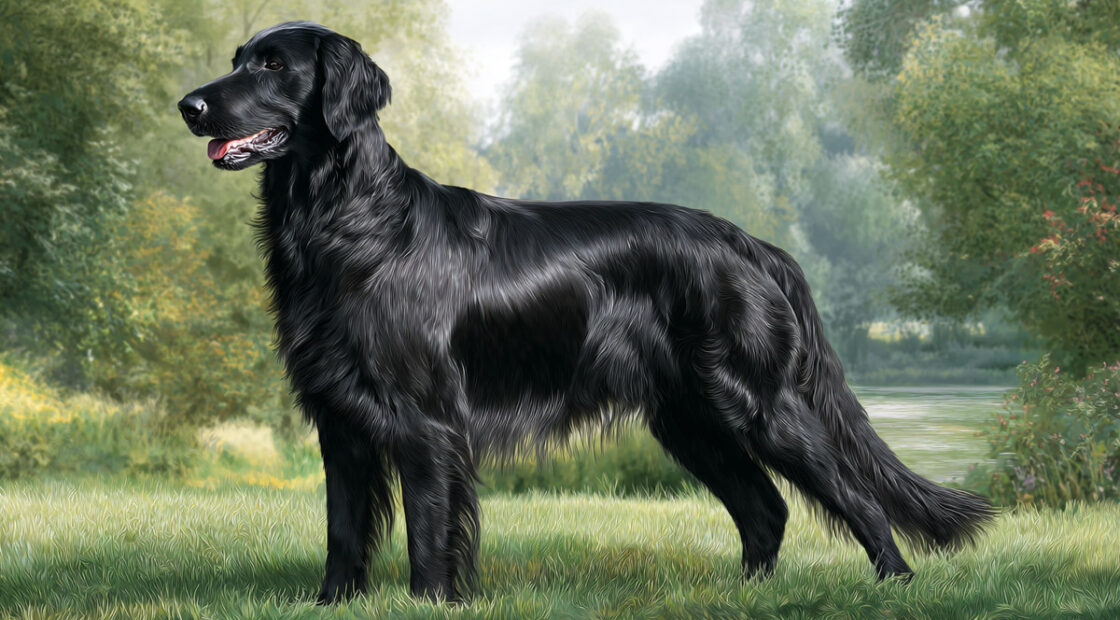
Picture a dog that greets every day like it’s Christmas morning, tail wagging with infectious enthusiasm. The Flat-Coated Retriever embodies this joyful spirit while maintaining the athletic grace of a true sporting dog.
These medium-sized dogs combine the intelligence of Border Collies with the gentle nature perfect for family life. Unlike their more famous retriever cousins, Flat-Coats remain relatively rare, making them special discoveries for those seeking an active breed with personality.
What you’ll discover:
- Rich breed history from Victorian hunting grounds
- Exercise needs and training approaches for their playful nature
- Grooming requirements for that beautiful black coat
- Health considerations and finding responsible breeders
- Real-life experiences from current owners
Whether you’re considering adding a gun dog to your family or already share your home with one of these enthusiastic companions, this guide covers everything from puppy care through senior dog nutrition.
Flat-Coated Retriever Breed Stats
| Characteristic | Details |
|---|---|
| Size | Medium-Large |
| Weight | Males: 60-70 lbs, Females: 55-65 lbs |
| Height | Males: 23-24.5 inches, Females: 22-23.5 inches |
| Lifespan | 8-10 years |
| Energy Level | Very High |
| Exercise Needs | 90-120 minutes daily |
| Grooming | Moderate (weekly brushing, seasonal heavy shedding) |
| Shedding | Moderate to High |
| Training | Moderate (intelligent but slow to mature) |
| Good with Kids | Excellent |
| Good with Pets | Very Good (with proper socialization) |
| Apartment Living | Not Recommended |
| Climate Tolerance | Good in cold, moderate in heat |
| Barking Level | Moderate |
| Drooling | Low |
| Coat Type | Dense, flat, water-repellent double coat |
| Coat Colors | Black or Liver |
| AKC Group | Sporting Group |
| Origin | England (1860s) |
| Purpose | Gun dog, water retriever |
| Temperament | Friendly, optimistic, outgoing, confident |
| Health Concerns | Cancer (high risk), hip dysplasia, eye conditions |
| Puppy Price | $1,500-$3,500 |
| Monthly Costs | $150-$300 (food, insurance, care) |
The Rich History Behind This Beloved Breed
Origins in 19th Century England
Victorian era hunters needed a versatile gun dog that could work both land and water. Enter the Flat-Coated Retriever.
Key Development Points:
- Cross-breeding water spaniels with existing retriever lines
- Strong swimming ability from Newfoundland genetics
- Natural retrieve instinct refined through selective breeding
The breed emerged as the perfect sporting dog for waterfowl hunting. Their black coat and liver coat variations made them stand out in field trials.
Early breeders like H.R. Cooke shaped breed characteristics we see today. These dogs excelled at water work and upland game retrieval.
Rise to Popularity and Near Extinction
Early 1900s marked peak popularity for this working retriever. Dog shows featured them regularly alongside Golden Retrievers and Labrador Retrievers.
The World War Impact:

Both world wars devastated breeding programs. Food shortages meant fewer dogs. Many kennels closed permanently.
By 1960, the breed nearly vanished. Dedicated breeders in England and North America launched recovery efforts. They focused on maintaining hunting instinct while improving health testing.
Modern Recognition and Breed Standards
The Kennel Club recognized them in 1903. American Kennel Club followed in 1915.
Current Standards:
- Medium-sized dog with athletic build
- Feathered tail and elegant movement
- Gentle mouth for game bird retrieval
- Active breed requiring substantial exercise needs
Today’s position differs from their retriever cousins. While Chesapeake Bay Retrievers dominate hunting trials, Flat-Coats excel as family pets with working ability.
What Makes Flat-Coated Retrievers Perfect Family Dogs
Natural Love for Children

My neighbor’s Flat-Coat, Max, taught me about their incredible patience. Kids can tug his ears and he just wags that feathered tail.
Child-Friendly Traits:
- Soft mouth prevents accidental injury
- Gentle play style with toddlers
- Protective instincts without aggression
They’re like having a furry babysitter. Mine follows my six-year-old everywhere during backyard adventures.
Their dog temperament stays calm during chaos. Birthday parties, sleepovers, playground visits – they handle it all.
Social Butterflies with Other Pets
Getting Along with Everyone:
Unlike some Australian Cattle Dogs that can be territorial, Flat-Coats welcome new friends. My cat initially hated our puppy. Now they share the dog bed.
Pack mentality helps with other dogs. Dog park visits rarely involve conflicts. They prefer playing fetch games over confrontation.
Introduction Tips:
- Start with leash walks together
- Use positive reinforcement during meetings
- Watch body language for stress signals
Small animals need careful introduction. Their hunting companion background means some prey drive exists.
Adaptability to Different Living Situations
Apartment Living Reality Check:
These aren’t Chihuahuas. They need space and daily activity requirements. Minimum exercise time recommendations suggest 2+ hours daily.
Apartment dwellers must commit to:
- Morning and evening dog walking sessions
- Weekend hiking adventures
- Access to dog parks for running
Suburban Advantages:
Fenced yards let them practice natural retrieve behaviors. Swimming pools become favorite spots (with proper water safety).
Family life benefits from their social needs. They participate in everything – barbecues, yard work, kids’ sports games.
Rural Living Paradise:
Farm environments suit their working retriever heritage perfectly. They’ll help with outdoor adventures while maintaining that intelligent dog nature.
Mental stimulation comes naturally through exploration. No destructive behavior patterns when they can roam safely.
Exercise Warning Signs:
Excessive barking means boredom. Weight gain indicates insufficient activity. These active breed dogs need both physical and mental challenges.
Dog training becomes easier when exercise needs are met. A tired Flat-Coat is a well-behaved Flat-Coat.
Pet ownership with this breed means embracing an outdoor lifestyle. They’ll motivate you to explore nature while providing loyal companionship.
Exercise Needs: Keeping Your Flat-Coat Happy and Healthy
Daily Activity Requirements

Minimum Time: 90-120 minutes split across morning and evening sessions.
My Flat-Coat gets cranky without proper exercise. These aren’t Pekingese content with short walks.
Age-Appropriate Guidelines:
- Puppies (8-16 weeks): 5 minutes per month of age, twice daily
- Young Adults (6 months-2 years): Full exercise with careful joint monitoring
- Seniors (8+ years): Maintain activity but reduce intensity
Mental stimulation matters as much as physical activity. Puzzle toys prevent destructive behavior patterns during rest periods.
Best Activities for Flat-Coated Retrievers
Water Activities Win Every Time
Swimming ability makes them natural water dogs. Lake trips, beach visits, even kiddie pools work.
Unlike Bulldogs that struggle in water, Flat-Coats thrive. Their water work heritage shows in every paddle stroke.
Retrieving Exercises:
- Tennis ball fetch (classic choice)
- Dummy training for hunting preparation
- Frisbee games in open spaces
- Hide-and-seek with dog toys
Outdoor Adventures:
- Hiking trails with varied terrain
- Camping trips (they love exploring)
- Dog park socializing
- Beach runs during cooler hours
Field training satisfies their sporting dog instincts. Even non-hunters benefit from retriever training basics.
Signs Your Dog Needs More Exercise
Red Flag Behaviors:
Excessive barking at neighbors usually means boredom. My friend ignored this with her Flat-Coat. Now the dog barks at everything.
Watch For:
- Destructive chewing on furniture
- Digging holes in yard
- Attention-seeking behaviors
- Restlessness during evening hours
Weight gain happens fast with insufficient activity. Unlike Italian Greyhounds that need less movement, these medium-sized dogs require consistent exercise.
Health Concerns from Under-Exercise:
- Joint stiffness
- Muscle atrophy
- Behavioral problems
- Depression symptoms
Use dog age calculators to adjust exercise as they mature.
Training Your Flat-Coated Retriever: Working with Their Playful Nature

Understanding Their Learning Style
The “Teenager” Phase Challenge
Between 6-18 months, they act like rebellious teens. Yesterday’s obedient puppy suddenly “forgets” commands.
Patience wins here. Unlike Border Collies that mature quickly, Flat-Coats take 2-3 years to fully settle.
Positive Reinforcement Rules:
- High-value dog treats work better than praise alone
- Keep training sessions short (10-15 minutes)
- End on successful notes
- Use their natural retrieve instinct as reward
Their intelligent dog nature means they get bored easily. Vary exercises to maintain engagement.
Basic Commands Every Flat-Coat Should Know
House Training Fundamentals
Crate training accelerates the process. Choose appropriate dog crate size – big enough to stand, not so large they soil one corner.
Essential Commands:
- Sit/Stay: Foundation for everything else
- Come: Critical for off-leash safety
- Drop It: Prevents resource guarding
- Leave It: Protects from dangerous items
Leash Walking Basics:
Their enthusiasm can drag smaller owners. Start with proper dog collar fitting and quality dog leash.
Practice heel commands during puppy care stages. Adult Flat-Coats pulling on walks become difficult to manage.
Social Skills Training:
- Polite greetings (no jumping)
- Dog park etiquette
- Calm behavior around food
- Respectful interaction with visitors
Socialization prevents fear-based behavioral problems later.
Advanced Training Opportunities
Hunting and Field Work
Even pet-only Flat-Coats benefit from basic retriever club activities. It satisfies their working dog heritage.
Popular Options:
- Water retrieval training
- Upland game bird introduction
- Field trial participation
- Gundog training basics
Competitive Sports:
Dog agility suits their athletic abilities. Unlike Great Danes that struggle with quick direction changes, Flat-Coats excel.
Other Possibilities:
- Dock diving competitions
- Rally obedience
- Tracking events
- Therapy dog certification
Service Work Potential:
Their gentle temperament makes them candidates for therapy work. Some excel as emotional support animals in hospitals and schools.
Professional dog trainer evaluation helps identify individual strengths. Not every Flat-Coat suits every role, but most have untapped potential beyond basic pet ownership.
Grooming Your Flat-Coated Retriever: Keeping That Beautiful Coat Healthy
Daily Grooming Routine
Brushing Schedule:
- Daily: Quick 5-minute sessions during shedding season
- 3x weekly: Maintenance brushing year-round
- Weekly: Thorough coat inspection
Use a slicker brush for the undercoat, pin brush for feathering. Unlike Poodles requiring professional grooming every 6 weeks, Flat-Coats need basic home maintenance.
Seasonal Shedding Reality Check
Spring and fall bring coat blowouts. My vacuum runs overtime during these periods.
Essential Tools:
- Undercoat rake for dense areas
- Metal comb for feathered sections
- Nail clippers (weekly trims)
- Ear cleaning solution
Check ears daily. Their floppy design traps moisture, leading to infections faster than German Shepherds with upright ears.
Bathing and Professional Grooming
Bathing Frequency: Every 6-8 weeks unless they’ve discovered something smelly.
Their water-repellent coat makes thorough soaking challenging. Pre-wet completely before applying shampoo.
Product Selection:
- Gentle, dog-specific shampoos only
- Conditioner for feathered areas
- Avoid human products (pH differences cause skin irritation)
When to Seek Professional Help:
- Severe matting around legs
- Nail trimming fears
- Show preparation needs
- Sanitary area trimming
Professional pet groomers handle difficult tasks safely.
Special Coat Care Considerations
Managing Feathering
Legs, tail, and chest feathering attracts burrs like magnets. Post-hike inspections prevent painful mats.
Outdoor Debris Solutions:
- Spray detangler before brushing
- Work from tips toward skin
- Cut severely matted sections rather than pulling
Nutrition Impact on Coat Health:
Quality dog nutrition shows in coat shine. Omega-3 supplements improve texture during seasonal changes.
Unlike Chinese Cresteds needing special skin care, Flat-Coats benefit from standard coat-supporting diets.
Health Considerations: Keeping Your Flat-Coat in Top Shape
Common Health Issues in the Breed

Cancer Risks (The Hard Truth)
Flat-Coats face higher cancer rates than most breeds. Hemangiosarcoma and osteosarcoma occur frequently.
Early Detection Signs:
- Unusual lumps or bumps
- Sudden lethargy changes
- Loss of appetite
- Difficulty breathing
Hip and Elbow Dysplasia
Unlike Greyhounds with naturally sound joints, Flat-Coats need screening.
Prevention Strategies:
- Maintain healthy weight
- Avoid excessive jumping during growth
- Provide joint supplements as adults
- Choose breeders with health testing
Eye Conditions:
- Progressive Retinal Atrophy (PRA)
- Cataracts in senior dogs
- Glaucoma (less common)
Annual veterinary eye exams catch problems early.
Preventive Care and Regular Checkups
Vaccination Schedule:
Puppy shots start at 6-8 weeks. Beagles and other hunting breeds share similar exposure risks.
Core Vaccines:
- DHPP (Distemper, Hepatitis, Parvovirus, Parainfluenza)
- Rabies (required by law)
- Optional: Lyme, Leptospirosis based on region
Parasite Prevention:
Year-round protection prevents heartworm, fleas, ticks. Monthly treatments work better than seasonal approaches.
Dental Care Essentials:
- Daily tooth brushing (ideal)
- Dental chews 3x weekly (realistic)
- Professional cleanings every 2-3 years
Poor oral health affects heart and kidney function.
Nutrition for Optimal Health
Life Stage Feeding:
Puppies (8 weeks-12 months): High-protein puppy food, 3-4 meals daily Adults (1-7 years): Quality maintenance diet, twice daily Seniors (7+ years): Lower-calorie senior formula with joint support
Portion Control Matters
Unlike Siberian Huskies that self-regulate, Flat-Coats will overeat. Measure portions using proper cups, not random containers.
Weight Management:
- Feel ribs easily without pressing
- Visible waist when viewed from above
- Tuck-up visible from side view
Food Quality Indicators:
- Named meat as first ingredient
- No excessive fillers or by-products
- AAFCO feeding trial approval
- Appropriate for life stage
Avoid These Foods:
- Chocolate, grapes, onions (toxic)
- High-fat table scraps
- Excessive treats (under 10% of daily calories)
Special Considerations:
Active dogs need higher protein than couch potatoes. Hunting season requires increased calories. Hot weather means more water access.
Pet insurance helps manage unexpected veterinary costs. These health issues can become expensive quickly.
Finding and Choosing Your Flat-Coated Retriever
Responsible Breeder Selection

Health Testing Requirements:
- Hip and elbow clearances (OFA or PennHIP)
- Eye certifications (CERF annually)
- Cancer screening in breeding lines
- DNA tests for inherited conditions
Questions for Breeders:
- “Can I meet both parents?”
- “What health guarantees do you provide?”
- “Do you take dogs back if needed?”
- “Can I visit your facility?”
Unlike Labradoodles where standards vary wildly, purebred Flat-Coats should meet consistent breed standards.
Red Flags to Avoid:
- Multiple litters available simultaneously
- No health testing documentation
- Puppies always available
- Won’t let you visit premises
- Selling through pet stores
Price Reality Check: $1,500-$3,500 from reputable breeders. Cheap puppies often mean expensive veterinary bills later.
Rescue and Adoption Options
Flat-Coated Retriever Rescue Organizations:
National breed rescues specialize in placement. They understand temperament better than general shelters.
Benefits of Adult Dogs:
- House training usually complete
- Temperament fully developed
- Past destructive puppy phase
- Often basic obedience trained
Rescue Dog Expectations:
- Adjustment period of 3-6 months
- Possible separation anxiety initially
- Unknown health history
- May need behavioral rehabilitation
Unlike Rottweilers that sometimes have aggression histories, Flat-Coat rescues typically involve lifestyle changes, not behavioral problems.
Preparing Your Home for Your New Friend
Puppy-Proofing Checklist:
- Secure electrical cords
- Remove toxic plants
- Install baby gates
- Lock cabinets with cleaning supplies
Essential Supplies:
- Quality dog bed (washable cover)
- Food and water bowls (stainless steel preferred)
- Dog collar with ID tags
- 6-foot dog leash for training
- Dog crate appropriate for adult size
Feeding Setup:
- Designated eating area
- Non-slip bowls
- Storage for dog food
- Measuring cups for portions
First Week Priorities:
- Veterinary appointment scheduling
- Pet insurance enrollment
- Local dog training class research
- Emergency vet clinic location
Living with a Flat-Coated Retriever: Real-Life Experiences

Daily Life with Your Flat-Coat
Morning Routine (6:30 AM):
- Outside for bathroom break
- Breakfast feeding
- 30-minute walk or backyard play
- Quick grooming check
Evening Schedule (5:00 PM):
- Longer exercise session
- Dinner feeding
- Training practice (10 minutes)
- Family time indoors
Social Needs Reality:
They follow you everywhere. Privacy becomes rare. Unlike Basenjis that are independent, Flat-Coats want constant interaction.
Managing Public Enthusiasm:
- Practice “gentle” greetings at home
- Use treats to redirect jumping
- Teach “settle” command for crowds
- Carry business cards explaining friendly nature
Common Embarrassing Moments:
- Stealing food at picnics
- Jumping in strangers’ cars
- “Helping” with yard work
- Collecting random objects during walks
Seasonal Activities and Considerations
Summer Fun:
- Early morning hikes beat heat
- Kiddie pools provide cooling
- Beach trips require fresh water rinse
- Paw protection on hot pavement
Water Safety Rules:
- Always supervise swimming
- Check for strong currents
- Bring flotation device for boats
- Rinse salt/chlorine afterward
Winter Adaptations:
Their double coat handles cold better than Whippets, but ice balls form between toes.
Cold Weather Prep:
- Trim hair between paw pads
- Use paw balm for protection
- Limit exposure during extreme cold
- Provide warm, dry sleeping area
Holiday Considerations:
- Secure decorations from curious mouths
- Limit rich holiday foods
- Maintain exercise routines despite weather
- Plan pet care for travel
Travel and Adventure Planning
Car Travel Essentials:
- Crash-tested dog harness or crate
- Water and collapsible bowls
- Favorite dog toys for comfort
- Cleanup supplies for accidents
Road Trip Tips:
- Stop every 2 hours for breaks
- Research dog-friendly restaurants
- Pack familiar bedding
- Bring health certificates for border crossings
Camping Adventures:
They excel at outdoor life. Set boundaries early or find them in neighboring campsites “helping” with breakfast.
Hiking Preparedness:
- Check trail regulations for dogs
- Bring collapsible water bowls
- Pack first aid kit including paw protection
- Use GPS collars in unfamiliar areas
Dog-Friendly Accommodations:
- Call ahead to confirm pet policies
- Understand additional fees
- Bring cleaning supplies for accidents
- Research nearby dog parks and trails
Flying Considerations:
- Most require cargo due to size
- Avoid extreme weather travel dates
- Health certificates within 10 days
- Anxiety medication consultation with vet
Living with a Flat-Coat means embracing adventure. They’ll push you outdoors more than any Maltese owner experiences.
The Flat-Coated Retriever Community: Connecting with Other Owners

Local Clubs and Organizations
Flat-Coated Retriever Society of America hosts regional events nationwide. Unlike Akita clubs that focus heavily on conformation, these groups emphasize working ability.
Regional Club Benefits:
- Monthly training meetups
- Access to professional dog trainers
- Puppy socialization classes
- Equipment sharing for water work
Training Groups:
- Retriever club activities every weekend
- Dummy training sessions
- Water entry practice
- Field trial preparation
Show Opportunities:
Conformation shows happen year-round. Even pet-quality dogs can participate in fun matches.
Competition Categories:
- Breed conformation (appearance judging)
- Field trials (hunting simulation)
- Hunt tests (individual skill assessment)
- Water dog events
Unlike American Eskimo Dogs that excel in agility, Flat-Coats dominate retriever sports.
Online Communities and Resources
Facebook Groups:
“Flat-Coated Retriever Owners” has 15,000+ active members. Daily posts cover everything from health questions to training tips.
Popular Discussion Topics:
- Puppy development milestones
- Exercise routine sharing
- Grooming technique videos
- Health concern discussions
Specialized Forums:
- Breed-specific websites with expert advice
- Training technique databases
- Health research updates
- Breeder recommendation threads
Educational Resources:
- Webinars on cancer prevention
- Training video libraries
- Nutrition guidance from canine nutritionists
- Behavioral modification techniques
Emergency Support Networks:
Lost dog alerts spread quickly through community networks. Transport volunteers help move rescue dogs between states.
Crisis Support:
- 24/7 health emergency advice
- Behavioral problem troubleshooting
- Financial assistance programs
- Grief support for pet loss
Giving Back to the Breed
Rescue Volunteer Opportunities:
Transport dogs between shelters and foster homes. Most rescues need weekend drivers for 2-3 hour trips.
Foster Care:
- Temporary homes for medical recovery
- Puppy mill survivor rehabilitation
- Senior dog hospice care
- Behavioral assessment assistance
Fundraising Events:
- Annual fun walks and charity runs
- Online auction donations
- Local business sponsorship coordination
- Adoption event organization
Supporting Breed Health Research:
Morris Animal Foundation funds Flat-Coat cancer studies. Your $50 donation helps researchers understand genetic factors.
Research Participation:
- DNA sample submission for studies
- Health survey completion
- Longevity tracking programs
- Treatment outcome reporting
Mentoring New Owners:
Share your experience with first-time owners. Unlike Anatolian Shepherds requiring extensive livestock experience, Flat-Coats suit many lifestyles.
Mentorship Activities:
- Puppy class assistance
- Training technique demonstrations
- Grooming workshop leadership
- New owner question answering
Breed Promotion:
Participate in dog shows and public events. Well-behaved representatives help combat misconceptions about active breeds.
Public Education:
- School visit programs with therapy dogs
- Hunting expo booth staffing
- Pet fair participation
- Social media breed advocacy
Preservation Efforts:
Support responsible breeding through breeder education. Unlike popular Goldendoodles facing no regulation, purebreds need careful management.
Conservation Activities:
- Breeder mentorship programs
- Genetic diversity monitoring
- Historical record preservation
- International breeding cooperation
The community welcomes newcomers enthusiastically. Your knowledge grows through shared experiences with fellow enthusiasts.
FAQ on Flat-Coated Retriever
Are Flat-Coated Retrievers good family dogs?
Excellent family pets with natural love for children. Their gentle mouth and patient temperament make them ideal around kids. Unlike Jack Russell Terriers that can be nippy, Flat-Coats show remarkable tolerance. They thrive in active households that match their exercise needs and social requirements.
How much exercise do Flat-Coated Retrievers need daily?
Minimum 90-120 minutes split between morning and evening sessions. These sporting dogs require both physical activity and mental stimulation. Swimming, retrieving games, and hiking satisfy their working dog heritage. Insufficient exercise leads to destructive behavior patterns and excessive barking in this active breed.
Do Flat-Coated Retrievers shed a lot?
Moderate shedding year-round with heavy seasonal coat blowouts in spring and fall. Daily brushing during shedding season helps manage loose hair. Their double coat requires regular grooming but less intensive maintenance than Poodles. Weekly brushing suffices during non-shedding periods.
What health problems do Flat-Coated Retrievers have?
Higher cancer rates than most breeds, particularly hemangiosarcoma and osteosarcoma. Hip and elbow dysplasia also occur. Eye conditions like Progressive Retinal Atrophy need monitoring. Unlike Greyhounds with fewer health issues, Flat-Coats require careful breeder selection and regular veterinary screening.
How long do Flat-Coated Retrievers live?
Average lifespan of 8-10 years. Cancer risks unfortunately shorten their lives compared to other retriever breeds. Quality nutrition, regular exercise, and preventive veterinary care help maximize longevity. Early cancer detection through routine checkups improves treatment outcomes significantly.
Are Flat-Coated Retrievers easy to train?
Intelligent dogs that respond well to positive reinforcement training. Their “teenager phase” between 6-18 months requires patience. Unlike Border Collies that mature quickly, Flat-Coats take 2-3 years to fully settle. Keep training sessions short and engaging to match their playful nature.
How big do Flat-Coated Retrievers get?
Males: 60-70 pounds, 23-24.5 inches tall. Females: 55-65 pounds, 22-23.5 inches tall. Medium-sized dogs that fit well in suburban homes with yards. Larger than Cocker Spaniels but smaller than Great Danes. Their athletic build requires adequate space for movement and play.
Do Flat-Coated Retrievers get along with other pets?
Excellent with other dogs due to their pack mentality and social nature. Proper introduction helps them accept cats and small animals. Their hunting heritage means some prey drive exists. Early socialization prevents conflicts and promotes peaceful multi-pet households.
How much do Flat-Coated Retriever puppies cost?
$1,500-$3,500 from reputable breeders with health testing. Higher prices reflect comprehensive health clearances and quality breeding programs. Rescue dogs cost $300-$800. Pet insurance helps manage potential veterinary expenses. Avoid cheap puppies from puppy mills that lack proper health screening.
Are Flat-Coated Retrievers good for first-time dog owners?
Challenging for beginners due to high exercise needs and extended adolescence. Their size and enthusiasm require confident handling. Unlike Cavalier King Charles Spaniels that suit novices, Flat-Coats need experienced owners who understand active breed requirements and commit to consistent training.
Conclusion
The Flat-Coated Retriever stands out as a remarkable gun dog that transforms seamlessly into a devoted family companion. Their water retriever heritage shines through every swimming session and dummy training exercise.
Key considerations for potential owners:
- Commit to 90+ minutes daily exercise
- Budget for potential health concerns including cancer screening
- Prepare for 2-3 years of enthusiastic adolescence
- Invest in quality dog nutrition and regular veterinary care
These working retrievers demand active lifestyles but reward owners with unwavering loyalty and infectious joy. Unlike lower-maintenance Havanese or independent Basenji breeds, Flat-Coats thrive on human interaction and outdoor adventures.
Success requires matching their energy levels and social needs. From field trials to weekend camping trips, they’ll eagerly participate in family activities while maintaining their gentle temperament around children.
The breed community offers invaluable support through local retriever clubs and online forums. Their enthusiasm becomes addictive once you experience life with these perpetually optimistic sporting dogs.