Few breeds combine raw power, intelligence, and water mastery like the Chesapeake Bay Retriever. This Maryland state dog transforms from gentle family companion to tireless waterfowl hunter in seconds.
Unlike popular retrievers such as Golden Retrievers or Labrador Retrievers, Chessies possess unique traits that make them both challenging and rewarding pets. Their independent nature and strong-willed personality demand experienced owners who understand working dog mentality.
This guide reveals everything about living with these remarkable water dogs. You’ll discover their natural swimming abilities, training requirements, home behavior patterns, and health considerations.
What you’ll learn:
- Natural water instincts and swimming techniques
- Training methods from puppyhood through adulthood
- Home environment needs and behavioral traits
- Exercise requirements and mental stimulation
- Health management and grooming essentials
- Socialization strategies with other pets
Whether you’re considering adding a Chessie to your family or already own one, these insights help you understand what makes this breed truly special.
Chesapeake Bay Retriever Breed Statistics
| Characteristic | Details |
|---|---|
| Size | Large breed |
| Male Weight | 65-80 pounds |
| Female Weight | 55-70 pounds |
| Male Height | 23-26 inches |
| Female Height | 21-24 inches |
| Life Expectancy | 10-13 years |
| Exercise Needs | Very High (2+ hours daily) |
| Energy Level | High |
| Trainability | Moderate (independent thinking) |
| Intelligence | High |
| Grooming Needs | Moderate to High |
| Shedding | Heavy (seasonal) |
| Good with Kids | Yes (with proper socialization) |
| Good with Pets | Moderate (needs early socialization) |
| Apartment Living | Not recommended |
| Barking Level | Low to Moderate |
| Drooling | Minimal |
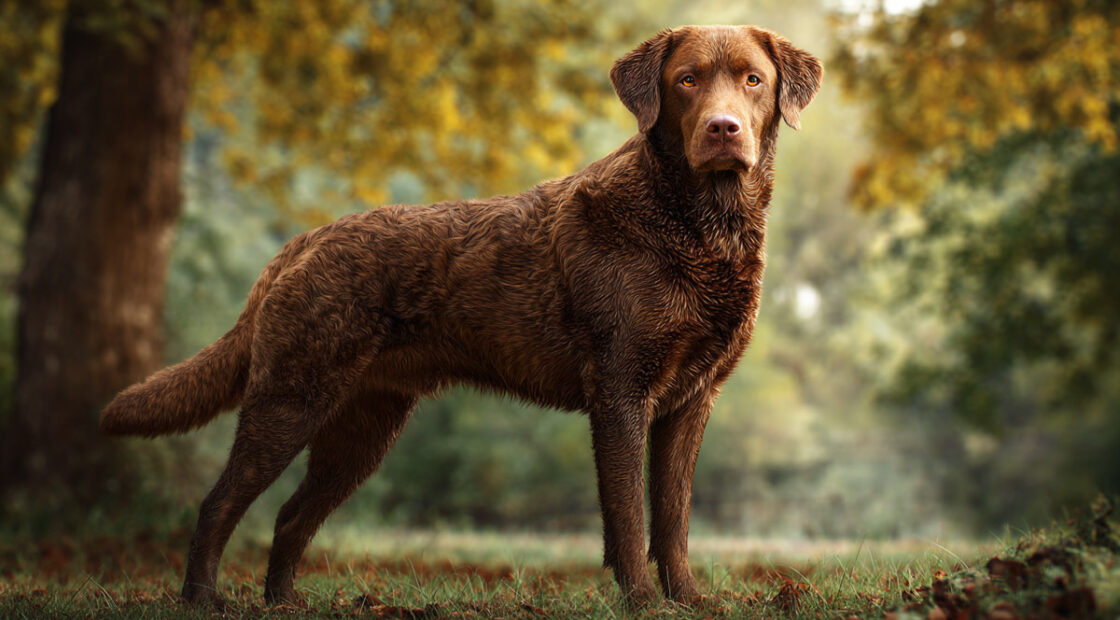
| Coat Type | Dense double coat, water-resistant |
| Coat Colors | Brown, sedge, deadgrass |
| Weather Tolerance | Excellent cold, moderate heat |
| Swimming Ability | Exceptional |
| Hunting Instinct | Very High |
| Guarding Tendency | Moderate |
| Social Needs | Moderate |
| Independence Level | High |
| First-Time Owner | Not recommended |
| Activity Requirements | Water work, retrieving, vigorous exercise |
| Common Health Issues | Hip dysplasia, PRA, ear infections |
| AKC Group | Sporting |
| Origin | Maryland, United States |
Natural Water Instincts and Abilities
Genetic Predisposition for Water Work
Inherited swimming drive sets Chessies apart from other sporting dogs. Their ancestors developed these traits through generations of waterfowl hunting along the Chesapeake Bay. The breed’s DNA carries an unmatched passion for water that surpasses even Golden Retrievers and Labrador Retrievers.
Cold water tolerance comes naturally to these hardy retrievers. While breeds like the American Water Spaniel handle moderate conditions, Chessies thrive in near-freezing temperatures that would stop other gun dogs.
Their natural retrieval instincts kick in automatically around water. Unlike land-based breeds that need extensive training, Chessies understand marking fallen birds and soft mouth techniques instinctively.
Physical Adaptations for Aquatic Environments
Oil-resistant coat properties make Chessies waterproof champions. Their double coat repels moisture better than any other retriever breed. The outer guard hairs contain natural oils that shed water instantly.
Key coat characteristics:
- Dense undercoat for insulation
- Water-repellent outer layer
- Sedge, deadgrass, or brown coloring
- Wavy texture that traps air
Strong hindquarters for propulsion power their swimming abilities. Chessies possess muscular rear legs that generate tremendous thrust underwater. Their webbed feet act like natural paddles.
Powerful chest and lung capacity support extended water work. These dogs can hold their breath longer than most breeds while diving for submerged objects. Their barrel chest houses large lungs for sustained swimming sessions.
Instinctive Water Behaviors
Automatic swimming techniques appear without training. Puppies often display natural paddling motions before their first water experience. This genetic programming separates them from breeds requiring extensive swimming lessons.
Natural diving abilities let Chessies retrieve from significant depths. They can dive several feet underwater to grab downed waterfowl. This skill proves invaluable during hunting season when birds fall in deep water.
Wave and current navigation skills help them work in challenging conditions. Chessies read water patterns instinctively and adjust their swimming to compensate for strong currents or rough waves.
Swimming Techniques and Water Skills
Basic Swimming Mechanics
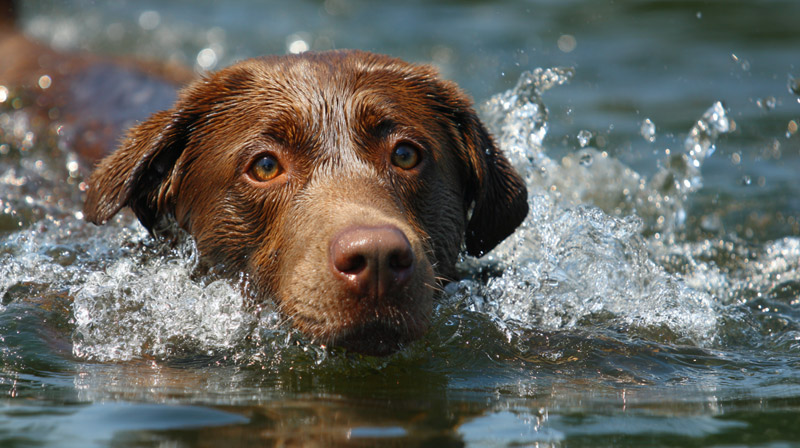
Paddle stroke patterns in Chessies follow efficient biomechanics. Their front legs provide steering while powerful hindquarters drive forward motion. The swimming style conserves energy for long retrieves.
Body positioning in water stays naturally horizontal. Chessies maintain proper trim without instruction, keeping their head up for visibility while their body cuts through water efficiently.
Breathing techniques while swimming come instinctively. These dogs coordinate breathing with stroke patterns, taking quick breaths between paddle cycles without breaking rhythm.
Advanced Water Maneuvers
Diving for submerged objects showcases their aquatic mastery. Chessies can dive up to 8 feet deep in pursuit of game birds. They use their tail as a rudder while underwater.
Swimming against strong currents demonstrates their power and determination. Where other retrievers struggle, Chessies push through challenging water conditions with ease.
Long-distance endurance swimming sets them apart from all other sporting breeds. These dogs can swim for miles without fatigue, making them perfect for extensive waterfowl hunting sessions.
Performance comparisons:
- Chessies: 2+ miles continuous swimming
- Labs: 1 mile average
- Goldens: 0.5-1 mile typical
- Newfoundlands: Shorter bursts, less endurance
Retrieval Skills in Water
Soft mouth technique for waterfowl protects valuable game birds. Chessies carry ducks and geese without puncturing the skin or damaging meat. This gentle grip transfers from water to land seamlessly.
Marking fallen birds across water shows their exceptional memory and focus. These dogs track multiple downed birds across large water bodies, remembering exact locations even after long swims.
Multiple retrieve capabilities make them ideal hunting companions. A trained Chessie can handle complex retrieval patterns involving several birds scattered across different water areas.
Their working intelligence combined with physical capabilities creates the ultimate waterfowl retriever. Unlike many purebred dogs that excel in single areas, Chessies master every aspect of water work naturally.
Training Water Skills from Puppyhood
Early Water Introduction Methods
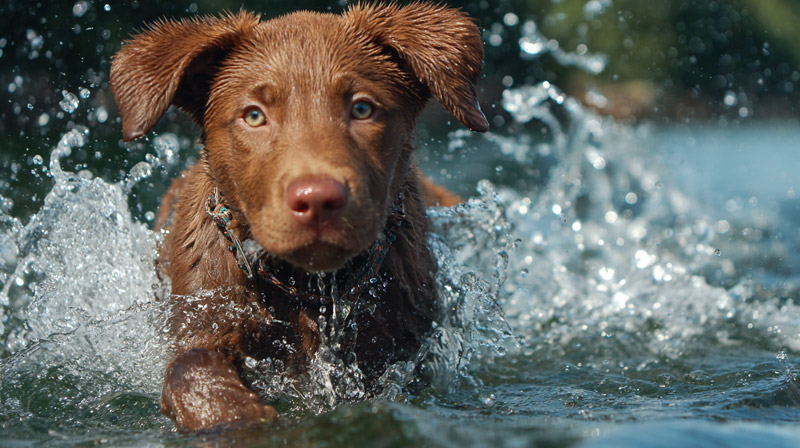
Safe first water experiences start around 8-12 weeks. Use shallow kiddie pools or calm lake edges. Never force puppies into deep water. Let curiosity drive their initial contact.
Building confidence gradually prevents water fear. Start with ankle-deep water and treats. Progress to chest-deep swimming over several weeks. Patience during this phase determines lifelong water enthusiasm.
Age-appropriate water activities match puppy development:
- 8-12 weeks: Shallow wading, water bowl play
- 12-16 weeks: Short swimming sessions (5-10 minutes)
- 4-6 months: Basic retrieval training
- 6-12 months: Advanced water work
Unlike breeds such as Poodles that may resist water initially, Chessie puppies typically show immediate interest. This natural drive makes early training smoother than with most sporting dogs.
Basic Water Training Exercises
Simple fetch in shallow water builds foundational skills. Throw tennis balls just beyond their comfort zone. This encourages swimming while maintaining confidence. Use positive reinforcement consistently.
Swimming encouragement techniques work better than forced methods:
- Walk into water yourself
- Use floating toys they love
- Praise enthusiastic attempts
- Keep sessions short and fun
Water entry and exit training teaches proper technique. Practice controlled entries rather than wild splashing. Train calm exits to prevent rushing and potential injuries.
Advanced Water Training Techniques
Blind retrieve training develops professional-level skills. Dogs must find downed birds without seeing them fall. This complex skill separates working retrievers from family pets.
Hand signal responses in water require intense focus. Chessies learn directional commands while swimming, allowing handlers to guide them to distant birds. This training takes months to master.
Working in various water conditions prepares dogs for real hunting scenarios:
- Choppy waves
- Strong currents
- Cold temperatures
- Different water depths
Success in advanced training often exceeds that of German Shorthaired Pointers or other gun dogs due to Chessies’ natural water abilities.
Home Environment and Indoor Behavior
Living Space Requirements
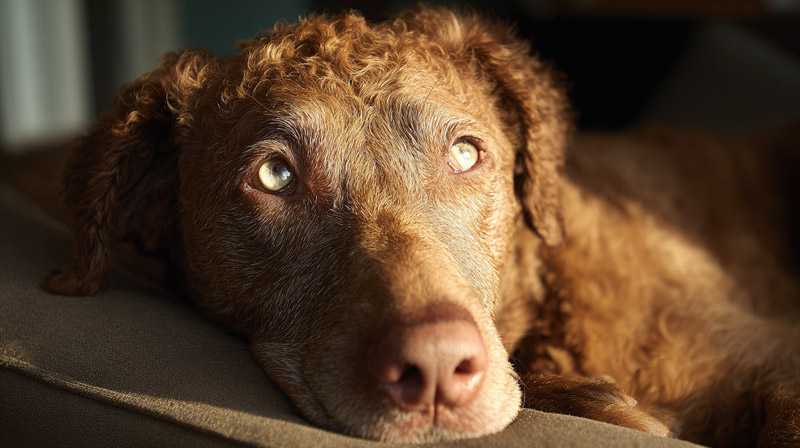
Space needs for large breed dogs can’t be ignored. Adult males reach 65-80 pounds, requiring room to move comfortably. Cramped spaces stress these active dogs and lead to destructive behavior.
Indoor comfort preferences include cool temperatures and soft surfaces. Their dense coat makes them heat-sensitive indoors. Provide tile floors or cooling mats during warm months.
Temperature and humidity considerations matter more than with breeds like Chihuahuas or other small dogs. Chessies overheat quickly in poorly ventilated homes. Maintain 65-72°F for optimal comfort.
Minimum space recommendations:
- Apartment: Not recommended
- Small house: 1,200+ sq ft with yard
- Ideal: 2,000+ sq ft with large yard
- Outdoor access: Daily for several hours
Daily Routine and Activity Patterns
Energy levels throughout the day follow predictable patterns. Morning and evening show peak activity, with afternoon rest periods. Working-line Chessies maintain higher energy than show-line dogs.
Rest and sleep habits require 12-14 hours daily for adults. Puppies need 16-18 hours. Unlike high-strung breeds such as Jack Russell Terriers, Chessies settle well indoors when exercised properly.
Indoor exercise needs include mental stimulation beyond physical activity. Puzzle toys, training sessions, and scent work prevent boredom-related destruction.
Interaction with Family Members
Bonding patterns with different age groups vary significantly. Chessies often choose one primary person while remaining friendly with others. Children receive gentle, protective treatment.
Protective instincts in the home emerge naturally around 18-24 months. These dogs alert to strangers without excessive barking like some terrier breeds. Their size alone deters most intruders.
Attention and affection needs stay moderate compared to breeds like Golden Retrievers. Chessies enjoy family time but don’t demand constant interaction. They’re content lying nearby while families go about daily activities.
Family interaction characteristics:
- With toddlers: Patient, gentle supervision
- With children 6-12: Playful, protective companions
- With teenagers: Loyal, less demanding friends
- With adults: Strong working partnerships
Behavioral Traits and Personality at Home
Independence and Decision-Making
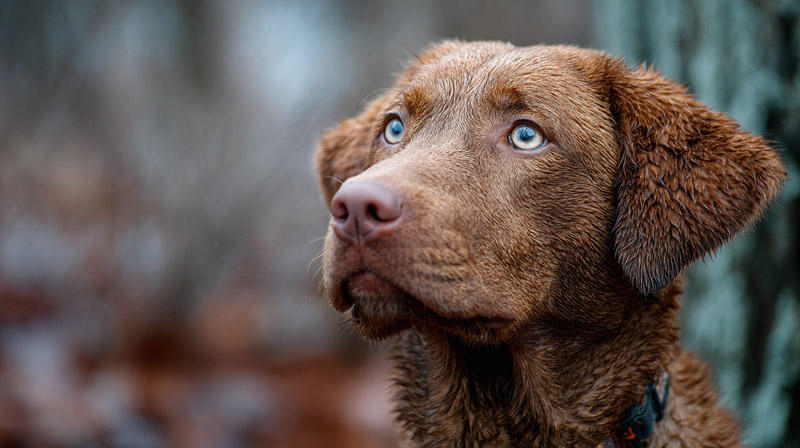
Self-reliant problem-solving defines Chessie personality. These dogs think before acting, unlike impulsive breeds such as Beagles or Border Collies. They assess situations independently and make calculated decisions.
Selective listening tendencies frustrate novice owners. Chessies evaluate commands before obeying. They’ll ignore requests that seem unnecessary or poorly timed. This intelligent breed requires confident leadership, not mindless submission.
Confidence in familiar environments shows in their relaxed demeanor at home. Unlike anxious breeds, Chessies move through their territory with quiet assurance. They patrol without aggression, simply monitoring their domain.
Social Behavior with Household Members
Pack hierarchy understanding comes naturally to these working dogs. Chessies respect clear leadership but challenge weak authority. They establish their position within family dynamics quickly and decisively.
Gentle nature with children emerges from their balanced temperament. Unlike high-energy breeds such as Australian Cattle Dogs, Chessies adjust their play style for smaller family members. They show remarkable patience during child interactions.
Reserved approach to strangers reflects their protective instincts. Chessies observe newcomers carefully before accepting them. This caution serves families well but requires proper socialization to prevent overprotectiveness.
Social characteristics:
- Family loyalty: Absolute devotion
- Stranger wariness: Initial suspicion, gradual acceptance
- Child tolerance: High patience, gentle play
- Guest behavior: Polite but watchful
Communication and Vocalization
Barking patterns and triggers stay minimal compared to vocal breeds like Yorkshire Terriers or Pomeranians. Chessies bark for specific reasons: intruders, urgent needs, or excitement during water activities.
Body language signals communicate more than vocalizations. Ear position, tail carriage, and stance reveal their emotional state clearly. Owners learn to read these subtle cues quickly.
Attention-seeking behaviors include gentle pawing or leaning against family members. They rarely demand attention through destructive actions like some terrier breeds.
Exercise and Mental Stimulation Needs
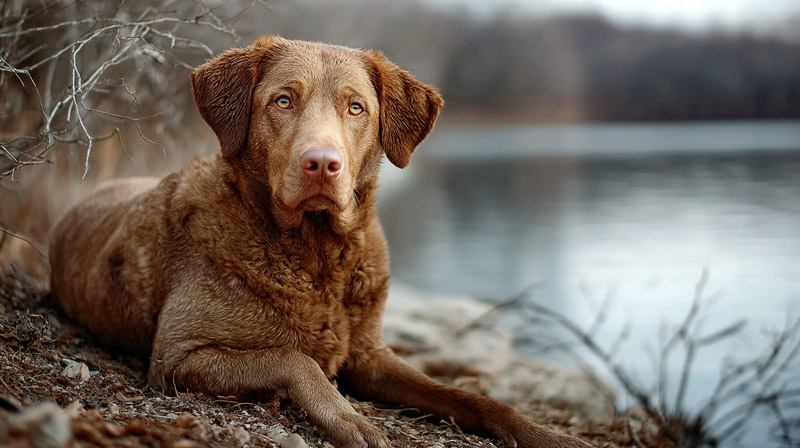
Physical Exercise Requirements
Daily activity minimums exceed most family pets’ needs. Adult Chessies require 2+ hours of vigorous exercise daily. Sedentary lifestyles lead to destructive behavior and health problems.
High-intensity exercise preferences include swimming, retrieving, and running. Unlike breeds content with walks, Chessies need heart-pumping activities. Swimming provides ideal low-impact conditioning.
Seasonal activity adjustments accommodate weather changes:
- Summer: Early morning/evening sessions, water activities
- Winter: Ice swimming, longer land-based exercise
- Spring/Fall: Peak activity periods, extended outdoor time
Exercise requirements by dog age:
- Puppies (2-6 months): 30-45 minutes daily
- Juveniles (6-18 months): 60-90 minutes daily
- Adults (2-7 years): 120+ minutes daily
- Seniors (8+ years): 60-90 minutes daily
Mental Challenges and Enrichment
Problem-solving games and puzzles engage their intelligent minds. Chessies excel at complex toys that challenge working breeds. Simple puzzle feeders bore them quickly.
Scent work and tracking activities tap into their hunting heritage. Hide treats around the house or yard for them to find. This mental exercise tires them more than physical activity alone.
Training sessions as mental exercise provide dual benefits. Short, frequent training periods challenge their minds while reinforcing obedience. Unlike some sporting dogs, Chessies thrive on varied training routines.
Mental stimulation activities:
- Puzzle toys: Rotating selection to maintain interest
- Hide and seek: With treats or toys
- New commands: Weekly training additions
- Scent trails: Indoor and outdoor tracking games
Balancing Water and Land Activities
Combining swimming with other exercises maximizes fitness benefits. Alternate water retrieval with land-based activities for complete conditioning. This prevents overuse injuries common in single-activity routines.
Weather-dependent activity planning requires flexibility. Ice-covered water bodies limit swimming but increase land exercise needs. Plan alternative activities for extreme weather periods.
Indoor alternatives to water work become necessary during harsh weather. Basement stairs provide climbing exercise. Hallway retrieving games maintain skills when outdoor access is limited.
Activity rotation schedule:
- Monday/Wednesday/Friday: Water work (swimming, retrieving)
- Tuesday/Thursday: Land exercise (hiking, running)
- Saturday: Mixed activities (training, play)
- Sunday: Light exercise, mental games
Training and Obedience in Home Settings
Basic House Training Principles
Establishing routines and schedules prevents accidents and builds structure. Chessies respond well to consistent meal times, potty breaks, and exercise periods. Unlike stubborn breeds such as Bulldogs, they adapt quickly to household rules.
Positive reinforcement techniques work better than harsh corrections. Use high-value treats, praise, and play rewards. Chessies shut down under heavy-handed training methods that might work with breeds like Rottweilers.
Consistency in command structure across all family members prevents confusion. Everyone must use identical words and hand signals. Mixed messages create training setbacks.
Managing Strong-Willed Tendencies
Firm but fair leadership approaches earn respect without creating fear. Chessies test boundaries more than compliant breeds like Cavalier King Charles Spaniels. Establish rules early and enforce them consistently.
Motivation techniques for compliance include:
- Food rewards for difficult commands
- Play sessions after successful training
- Swimming privileges as ultimate reward
- Variable reward schedules to maintain interest
Working with independent thinking requires patience and creativity. These dogs evaluate commands before obeying. Unlike eager-to-please breeds, Chessies need logical reasons for compliance.
Training challenges by behavior:
- Selective hearing: Use higher-value rewards
- Stubbornness: Break commands into smaller steps
- Testing limits: Immediate, consistent corrections
- Boredom: Vary training locations and methods
Specialized Training for Home Behavior
Furniture and boundary rules must be clear from puppyhood. Decide early whether sofas and beds are allowed. Changing rules later confuses these intelligent dogs and creates behavioral problems.
Greeting behavior modification prevents jumping and overexcitement. Unlike naturally calm breeds such as Basset Hounds, Chessies can become overly enthusiastic with visitors.
Calm indoor demeanor development takes time and consistency. These working dogs need outlets for their energy before expecting settled behavior inside. Without proper exercise, indoor training fails.
Health Considerations Related to Water Activities
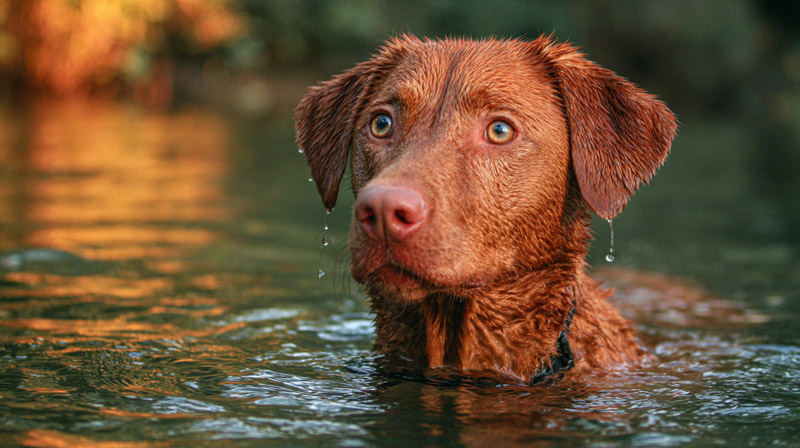
Common Water-Related Health Issues
Ear infections and prevention top the concern list for water-active dogs. Chessies’ ear structure traps moisture more than breeds with erect ears like German Shepherd Dogs. Check and dry ears after every water session.
Prevention steps:
- Dry thoroughly: Use absorbent towels inside ear flaps
- Air circulation: Lift ear flaps for 10-15 minutes post-swim
- Weekly cleaning: Use vet-approved ear solutions
- Monitor symptoms: Odor, discharge, head shaking indicate problems
Skin conditions from water exposure include hot spots and dermatitis. Their dense coat holds moisture against skin longer than short-haired breeds. Bacteria growth in wet fur causes irritation and infection.
Joint health and swimming benefits create a paradox. Swimming provides excellent low-impact exercise that protects joints, but cold water exposure can worsen arthritis symptoms in older dogs.
Seasonal Health Management
Cold weather precautions protect against hypothermia and frostbite. Even cold-adapted Chessies have limits. Monitor for shivering, lethargy, and pale gums during winter water work.
Hot weather safety measures prevent overheating and dehydration:
- Early morning swims: Before temperatures peak
- Shade access: Provide covered rest areas
- Fresh water: Always available during activities
- Paw protection: Check for hot sand/concrete burns
Water quality considerations affect health more than owners realize. Stagnant ponds harbor bacteria and parasites. Blue-green algae kills dogs quickly. Choose swimming locations carefully.
Safe water sources:
- Clean lakes: Clear water, minimal vegetation
- Ocean: Away from pollution sources
- Swimming pools: Properly chlorinated, not over-treated
- Rivers: Fast-moving, upstream from contamination
Recovery and Care After Water Sessions
Proper drying techniques prevent skin and coat problems. Work systematically from head to tail, ensuring complete moisture removal. Pay special attention to thick undercoat areas.
Coat maintenance requirements increase during active water seasons. Daily brushing removes dead hair and prevents matting. Unlike low-maintenance breeds such as Whippets, Chessies need consistent grooming.
Signs of overexertion or fatigue include:
- Heavy panting lasting over 30 minutes
- Reluctance to continue activities
- Stumbling or coordination problems
- Excessive drooling or pale gums
Post-swim care checklist:
- Rinse salt/chlorine: Fresh water rinse removes irritants
- Check paws: Remove debris, check for cuts
- Monitor temperature: Ensure dog isn’t chilled
- Provide rest: Quiet space for recovery
Grooming and Maintenance for Water Dogs
Coat Care for Water-Active Dogs
Regular brushing schedules prevent matting and remove debris. Brush 3-4 times weekly during active water seasons, daily during shedding periods. Unlike low-maintenance breeds such as Boxer dogs, Chessies need consistent coat attention.
Managing wet coat odors requires immediate action after water activities. Their dense undercoat traps moisture and bacteria. Thorough drying prevents the musty smell that plagues water dogs.
Seasonal shedding patterns intensify twice yearly. Spring and fall bring heavy coat loss as they prepare for temperature changes. Expect significantly more hair than breeds like Boston Terriers.
Brushing tools needed:
- Slicker brush: Daily surface brushing
- Undercoat rake: Weekly deep brushing
- Pin brush: Finishing and fluffing
- De-shedding tool: During heavy shed periods
Post-Swimming Care Routines
Immediate after-swim procedures start with thorough rinsing. Remove salt, chlorine, or pond debris before it irritates skin. Fresh water rinse prevents chemical buildup in their coat.
Ear cleaning and drying prevents infections common in water dogs. Lift ear flaps and dry thoroughly with cotton balls. Never use cotton swabs deep in ear canals.
Paw and nail maintenance increases during water season. Swimming softens nails, making them prone to splitting. Check between toes for cuts from shells or rocks.
Home Grooming Setup and Tools
Necessary grooming equipment costs more initially but saves money long-term:
- High-velocity dryer for thick coats
- Professional-grade brushes and combs
- Waterproof grooming table or area
- Quality shampoos for oily coats
Creating efficient grooming spaces streamlines the process. Designate areas with good drainage and ventilation. Unlike compact breeds such as Maltese, Chessies need room to move during grooming.
Professional grooming frequency depends on activity level. Water-active dogs need professional care every 6-8 weeks. Show dogs require monthly appointments.
Socialization and Integration with Other Pets
Introducing Chessies to Other Dogs
Pack dynamics and hierarchy matter more with Chessies than submissive breeds. They establish dominance quickly and challenge weak leadership. Introduce new dogs on neutral territory.
Size considerations with smaller dogs require careful supervision. Adult Chessies can accidentally injure small breeds like Pekingese during play. Their size and strength demand respectful interactions.
Play style compatibility varies significantly between breeds. Chessies prefer physical, wrestling-type play over gentle games preferred by breeds like Bichon Frise. Match play partners carefully.
Introduction timeline:
- Week 1: Parallel walks, no direct contact
- Week 2: Brief supervised meetings
- Week 3-4: Longer interactions with breaks
- Month 2+: Unsupervised time as comfort allows
Behavior Around Non-Dog Pets
Natural hunting instincts management prevents problems with small pets. Chessies have strong prey drive toward birds and small mammals. Unlike gentle breeds such as Cavalier King Charles Spaniels, they may chase cats instinctively.
Training for peaceful coexistence starts early. Teach “leave it” commands before introducing cats or small pets. Consistent correction prevents hunting behaviors from developing.
Supervised interaction protocols protect all pets:
- Always supervise initial meetings
- Separate animals when unsupervised
- Provide escape routes for smaller pets
- End sessions before stress builds
Community and Public Behavior
Dog park etiquette and behavior requires preparation. Chessies can overwhelm other dogs with their size and energy. Unlike naturally social breeds, they need socialization training for public spaces.
Leash walking in neighborhoods challenges many owners. Their strong pulling instinct and size make control difficult. Start leash training early with proper equipment.
Public swimming area conduct affects community access. Train recall commands before allowing off-leash water time. Respect other users and clean up after swimming sessions.
Socialization checklist:
- Puppy classes: Early group exposure
- Regular outings: Weekly public experiences
- Controlled meetings: With various dog sizes/breeds
- Ongoing training: Reinforce good behavior consistently
FAQ on Chesapeake Bay Retriever
Are Chesapeake Bay Retrievers good family dogs?
Yes, but they need experienced owners. Chessies bond strongly with families and show gentle nature with children. However, their independent thinking and strong-willed personality require consistent training. Unlike compliant breeds such as Golden Retrievers, they challenge weak leadership and need firm boundaries from day one.
How much exercise do Chesapeake Bay Retrievers need daily?
Adult Chessies require 2+ hours of vigorous exercise daily. Swimming provides ideal conditioning, but they also need land-based activities. Without adequate exercise, these working dogs become destructive. Their energy levels exceed most family pets, making them unsuitable for sedentary owners.
Do Chesapeake Bay Retrievers shed a lot?
Yes, especially during seasonal shedding patterns in spring and fall. Their dense double coat requires brushing 3-4 times weekly. Unlike short-haired breeds such as Boxer dogs, Chessies need consistent grooming. Expect significantly more hair than typical family pets during shedding seasons.
Are Chesapeake Bay Retrievers aggressive?
No, but they’re naturally reserved with strangers. Chessies show protective instincts without aggression when properly socialized. Their size and confident demeanor can intimidate, but well-trained dogs remain calm. Early socialization prevents overprotectiveness while maintaining their natural guarding abilities.
How trainable are Chesapeake Bay Retrievers?
Moderately trainable with strong-willed tendencies. Chessies evaluate commands before obeying, unlike eager-to-please breeds. They need motivational training methods and consistent leadership. Their intelligence makes them capable learners, but independent thinking requires patient, experienced handlers who understand working dog mentality.
Do Chesapeake Bay Retrievers like water?
Absolutely. Water instincts define the breed. Chessies possess genetic programming for swimming and retrieving that surpasses other gun dogs. Their oil-resistant coat and natural diving abilities make them exceptional water workers. Most show immediate enthusiasm for swimming from puppyhood.
What health problems do Chesapeake Bay Retrievers have?
Common issues include hip dysplasia, progressive retinal atrophy, and ear infections from water exposure. Their dense coat traps moisture, causing skin problems. Joint health benefits from swimming but requires monitoring in older dogs. Regular veterinary care and proper grooming prevent most water-related health issues.
Are Chesapeake Bay Retrievers good with other dogs?
With proper socialization, yes. However, pack dynamics matter more with Chessies than submissive breeds. They establish dominance quickly and need careful introductions. Size considerations apply with smaller dogs like Pekingese. Their physical play style may overwhelm gentle breeds.
How big do Chesapeake Bay Retrievers get?
Males reach 65-80 pounds, females 55-70 pounds. Adults stand 21-26 inches tall. Their large breed size requires adequate living space and exercise areas. Unlike compact dogs, Chessies need room to move comfortably both indoors and outdoors for proper development.
What is the lifespan of a Chesapeake Bay Retriever?
Typically 10-13 years with proper care. Life expectancy depends on genetics, exercise, nutrition, and health management. Regular veterinary checkups, quality diet, and appropriate exercise help maximize longevity. Their working dog heritage contributes to generally robust health when bred responsibly.
Conclusion
The Chesapeake Bay Retriever stands apart as a unique blend of working ability and family devotion. These hardy water dogs demand respect through their intelligence, independence, and unwavering loyalty to those who earn their trust.
Ownership considerations:
- Requires experienced handlers familiar with gun dog mentality
- Needs substantial daily exercise and mental stimulation
- Thrives with access to water for swimming activities
- Benefits from early socialization and consistent training
Unlike breeds such as Shih Tzus or Pugs that adapt to various lifestyles, Chessies need active families committed to their specific needs. Their retrieval instincts, cold water tolerance, and oily coat properties make them exceptional waterfowl hunters and swimming companions.
Success with this breed requires understanding their selective listening tendencies and pack hierarchy understanding. When properly matched with the right family, these remarkable retrievers become irreplaceable companions who excel both in the field and at home.