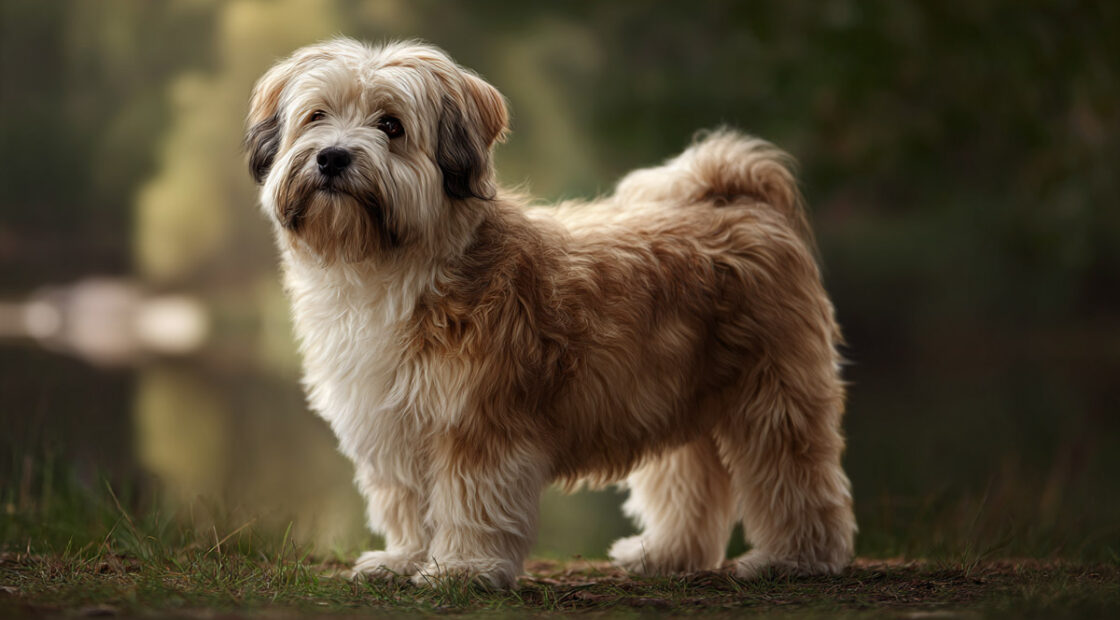
The AKC calls the Havanese the only dog breed native to Cuba. It’s a toy breed from the bichon family with a long, silky double coat, developed there as a household companion, and it still acts like one.
American registrations put it at No. 25 of 202 breeds in the AKC’s 2025 statistics, the same rank it has held since 2023. The small size and sociable nature suit apartments and city homes, as long as someone stays home most of the day.
What Is a Havanese?
Under a foot tall, with a long silky double coat and a springy gait that the AKC standard treats as part of correct type. That covers the basics.
Where to file it is less settled. The AKC and the Kennel Club (UK) both put it in the Toy Group, and the CKC lists it in Group V, Toys. The UKC goes with the Companion Dog Group instead. The FCI has it in Group 9, Section 1, which covers Bichons and related breeds.
The names vary too. The FCI registers the breed as Bichon Havanais, and the UKC standard adds Habanero and Havana Silk Dog as alternates.
Havanese vs Havana Silk Dog
The two names don’t mean the same dog everywhere. The UKC standard lists Havana Silk Dog as another name for the Havanese itself.
Orvis describes something different. A group of breeders is developing a silkier dog with a longer muzzle and longer forelegs, and the AKC does not recognize it, which is why the separate Havana Silk Dog breeding project deserves its own look.
So a seller using the name is describing either a Havanese or a distinct line. I’d ask which registry issued the papers before going any further.
Where Did the Havanese Come From?
Sea merchants carried bichon-type dogs from the Western Mediterranean to Cuba, and the breed took its modern form there as a pet of wealthy families. Both the FCI and CKC standards give this account.

The FCI standard calls the Havana-origin story a legend, started by the breed’s common tobacco-brown color. It places the roots on the Spanish and Italian coasts.
Related bichon breeds took shape in different ports. The AKC ties the Maltese to the island of Malta.
Another relative, the Bichon Frise breed, was established on the Canary Island of Tenerife. Dogs NSW traces the Havanese back through the extinct Blanquito de la Habana to a Tenerife bichon.
Two theories compete on the route. One runs through Argentina, with Bolognese dogs bred to a now-extinct South American toy poodle, and the other has Spanish merchants picking up bichons in the Canary Islands and Maltese on Malta on the way west (AKC, citing breed historian Jeannette Stark).
The UKC standard says all published origin theories rest on speculation.
What happened after the dogs reached Cuba is better documented. Small bichon dogs were given as gifts to the wives and daughters of sugar plantation owners, and they were bred only inside elite households, never sold commercially.
Plantation families later moved to Europe with their dogs. The breed fell from fashion there and worked circus acts, and no Havanese was known to survive in Europe after the world wars.
Cuba didn’t fare much better. Political events wiped out the old bloodlines on the island, according to the FCI standard, and the CKC standard says the Cuban revolution of the late 1950s severely decimated numbers.
The AKC history page records only two Cuban families, the Perez and Fantasio households in Florida, and a man named Barba in Costa Rica, as taking Havanese into exile. The breed was preserved through those dogs alone.
Dorothy Goodale began rebuilding it in the mid-1970s, using the 1963 FCI standard as her benchmark. She later helped reintroduce the Havanese to European breeders (AKC).
Recognition came in stages. The FCI accepted the breed on a definitive basis on 24 September 1963, and the UKC followed in July 1991. The AKC admitted the first Havanese to its show rings in 1996 and accepted the breed into the Toy Group on January 1, 1999 (Petfinder), the same year the CKC recognized it.
How Big Do Havanese Get?
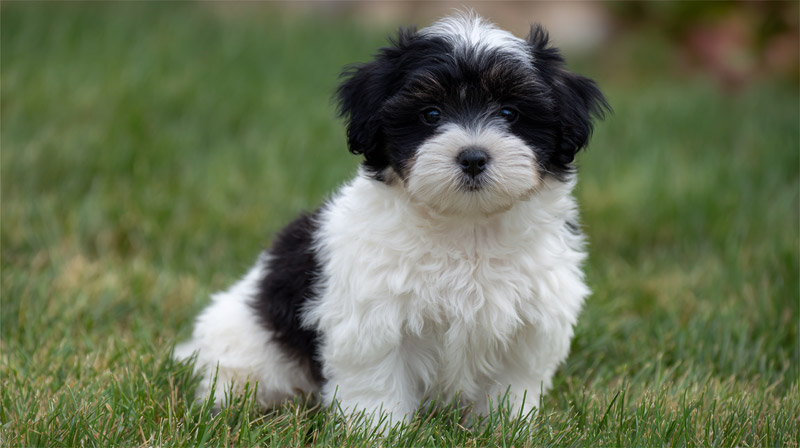
Under the AKC standard, a Havanese stands 8.5 to 11.5 inches at the withers, with 9 to 10.5 inches ideal.
The registries disagree on the upper limit, and only one of them sets a weight.
| Standard | Height at withers | Weight |
|---|---|---|
| AKC (approved 2011) | Ideal 9 to 10.5 in, accepted 8.5 to 11.5 in | None stated |
| UKC (revised 2014) | 8.5 to 10.5 in | 7 to 14 lb |
| CKC (effective 2011) | Ideal 9 to 10.5 in, tolerance 8.25 to 11.5 in | Proportionate to height and bone |
| FCI (2016) | 23 to 27 cm, tolerance 21 to 29 cm | None stated |
That gap matters in one case. An 11-inch Havanese fits the AKC and CKC ranges, but the UKC lists any height over 10.5 inches as an eliminating fault.
The UKC also disqualifies weight under 7 or over 14 pounds, while saying height limits matter more than weight.
Breed profiles from Orvis and Hill’s Pet print 7 to 13 pounds. That figure is a profile convention, since the AKC standard text sets no weight at all.
Most Havanese reach full size at 6 to 8 months and mature around their first birthday, according to Hill’s Pet. The AKC standard gives one height range for both sexes, and the UKC notes males are slightly more muscular.
These limits decide show-ring eligibility only. A pet outside them is still a Havanese.
What Does the Havanese Coat Look Like, and How Do You Care for It?
Long, soft and wavy, and double layered. The Kennel Club (UK) lists grooming as an everyday job for a dog kept in full length, so the coat is the biggest commitment the breed asks for.
Texture and colors
The AKC standard describes a coat that is silky to the touch and light in both outer coat and undercoat, with the outer coat carrying slightly more weight. It is long, abundant and wavy, stands off the body slightly and flows with movement.
A single, flat, frizzy or curly coat is faulted. A coarse, wiry coat counts as a disqualification, and so does a short, smooth coat with or without furnishings.
Adult topcoat runs 12 to 18 cm (about 4.75 to 7 in) under the FCI and CKC standards, and the CKC and UKC standards say it must not reach the ground. The UKC says the full adult coat may take two to four years to develop, and the AKC and CKC standards say puppy coats are shorter and softer.
On color, the AKC, UKC and CKC standards accept every color and marking, and the AKC rates them as equal in merit. The FCI is narrower. Its standard lists fawn shades, black, havana-brown, tobacco and reddish-brown, with patches and tan markings allowed, and it calls pure white rare.
Brushing routine and mat prevention
Mats form first on the legs and ears, according to Dogzonline, so those areas get the most attention.
Dogster recommends misting the coat with water before brushing and bathing right after a brushing session, so tangles do not tighten in the wash. Professional grooming every few months, or more often, covers the work a home routine misses (BorrowMyDoggy).
Full coat, puppy cut and corded coat
Most Havanese end up in one of these styles, and each one trades time against looks.
Full coat
This is the look the AKC standard describes, shown brushed in the ring, and it keeps the flowing movement the breed is judged on. It’s also the style that punishes a skipped day. Daily brushing is the baseline, mats show up at the legs and ears when a day slips, and the coat is slow to mature, up to four years (UKC).
Puppy cut
Shorter hair tangles less and takes less brushing time, and it’s easier to keep clean outdoors. For most pet owners that settles it.
The downsides are real, though. A puppy cut is ineligible for the ring, since the AKC standard penalizes any sculpting so severely that the dog cannot place, and the FCI and CKC standards fault a trimmed or groomed coat. It still needs regular brushing, and groomer visits are needed to hold the shape.
The common pet trims are laid out in this guide to haircut styles for the Havanese.
Corded coat
The Havanese is the smallest corded breed and the only one in the AKC Toy Group. Adult corded dogs are completely covered in tassel-like cords, while young dogs show wavy sections first (AKC standard).
No brushing or combing is needed, and the style is fully accepted in the ring. The catch is that no breed is born corded, and the cords are the product of many hours of careful work. Bathing is slow too, since a soak of about half an hour is needed before water penetrates the cords (AKC).
Shedding and allergies
The Havanese sheds very little. The Kennel Club (UK) lists it as a non-shedding breed, though Dogs Queensland notes some hair still comes out in the brush and on furniture and bedding.
“Hypoallergenic” is a different claim. Vredegoor and colleagues (Journal of Allergy and Clinical Immunology, 2012) measured the main dog allergen, Can f 1, in 196 dogs from four breeds marketed as hypoallergenic and in 160 control dogs.
The hypoallergenic group carried more allergen in hair and coat samples, and airborne levels did not differ. Havanese were not among the tested breeds (Labradoodle, Poodle, Spanish Water Dog, Airedale Terrier), but the authors found no evidence for calling any breed hypoallergenic.
Low shedding is accurate for the Havanese. An allergic buyer should still spend time with the specific dog first.
What Is the Havanese Temperament Like?

Friendly, playful, alert and intelligent, with a sweet disposition that avoids quarrels. That’s the AKC standard’s version.
All four registries penalize shyness and aggression. The AKC faults both, the CKC faults excessive shyness or aggression, the UKC disqualifies viciousness or extreme shyness, and the FCI disqualifies aggressive or overly shy dogs. An outgoing nature is part of the breed definition, not an extra.
The other standards add some color. The UKC describes a quiet, gentle disposition that still enjoys rowdy play, and a dog that prefers to stay at its owner’s side and alerts to approaching strangers. The CKC calls it bright, attentive and a bit of a clown, and the FCI calls it an easily trained alarm dog that loves children.
The AKC history page ties performance to companionship, saying Havanese do their best with constant human contact. It describes them as good matches for dog-oriented children and as natural playmates.
The breed’s past shows in its habits. Havanese historically herded household poultry, worked as circus performers, and swim well when raised near water (AKC).
How Long Do Havanese Live, and Which Health Problems Do They Get?
Most sources put Havanese lifespan between 12 and 16 years, and they disagree on where the average falls.
Lifespan: why the figures differ
The Havanese Club of America’s 2018 to 2019 Rainbow Bridge Survey covered 156 dogs and calculated a natural lifespan of 15.1 years from its older-age death categories.
Registry and clinic figures run lower, mostly. The AKC figure, as reported by DogWellNet, is 14 to 16 years, which sits close to the survey. The VCA Hospitals breed profile says 12 to 14 years, and Finnish Kennel Club mortality data, via DogWellNet, give an average of 11 years 9 months.
The gap follows the sample. About a third of the HCA respondents were or had been breeders, while the Finnish figure comes from a national registry.
Plan on 12 to 14 years and treat anything beyond that as a bonus.
Common conditions and how they present
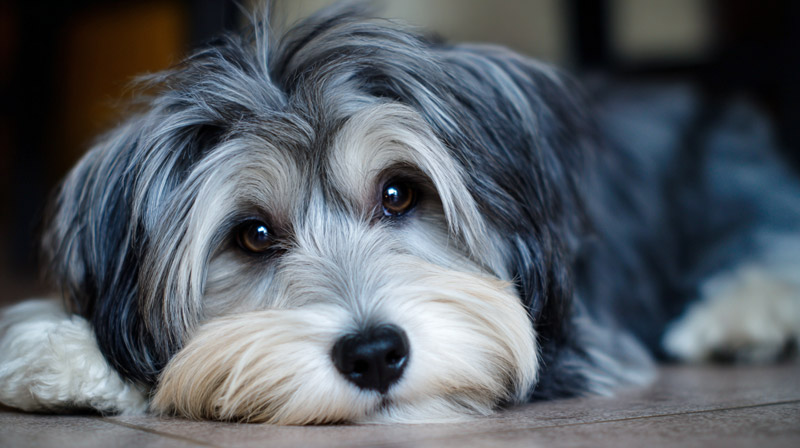
- Luxating patella, where the kneecap slips out of place. Mild cases are monitored, and severe ones may need surgery (Dogzonline).
- Eye disease, including cataracts, cherry eye and distichiasis, where eyelashes grow from the inside of the eyelid and rub the eye (DogWellNet, Purina UK).
- Heart disease, listed among the breed’s main hereditary problems by DogWellNet.
- Portosystemic shunt (liver shunt), on the same DogWellNet list and in Orvis’s profile.
- Cranial cruciate ligament rupture, a knee ligament tear, also on the DogWellNet list.
Orvis adds hip dysplasia and deafness to its roster, so profiles do not agree on the full list.
Weight is the problem owners control. VCA Hospitals notes that the thick coat hides weight gain, so check the ribs by hand.
How Do You Train and Exercise a Havanese?
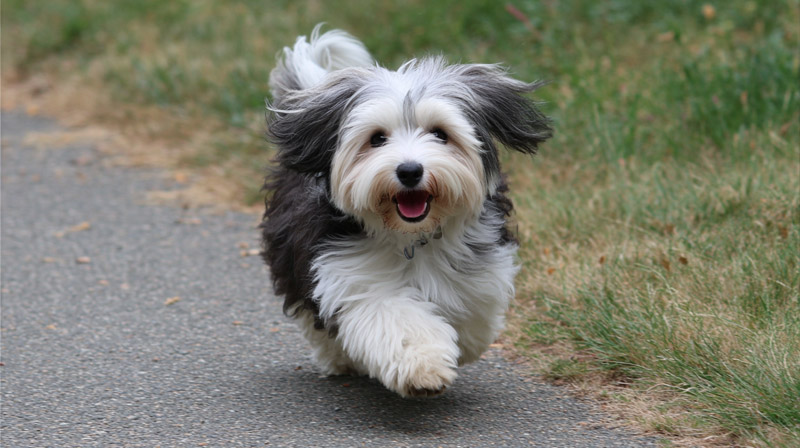
Positive methods work well on a Havanese. Exercise runs up to 30 minutes a day (Kennel Club UK), and the dog needs gradual practice at being alone.
The AKC calls the breed highly intelligent and eager to please, but sensitive. Puppy classes and early socialization come first.
Small rewards work best, and VCA’s warning about a coat that hides weight gain applies here. Count treats against meals and choose small healthy treats broken into tiny pieces.
For house training, Dogster’s guide advises a crate sized so the dog cannot use one corner as a toilet and another as a bed.
Owners who add pads for the first weeks can see how they work in this explainer on how puppy pads work.
The AKC calls moderate exercise enough, meaning brisk walks or playtime with the owner. The Kennel Club (UK) rates the breed as suitable for a flat or apartment.
Trained Havanese have a record in AKC performance events, including agility, obedience and canine musical freestyle, along with Canine Good Citizen certificates and therapy work.
Being alone is the harder lesson. The AKC says the breed does not fare well when left alone for long periods.
Trainers recommend building alone time in small steps. Start on day one with a baby gate or closed door for short separations while you are home (Zoom Room). Break the usual cues by picking up your keys and putting on a coat, then staying put (Dogster). After that, step out and return, then stretch to 5 minutes, then 10 (Dogster). A puzzle toy gives the dog a job to do meanwhile (Rover).
Long crate time works against all of this, and Dogster flags it as a trigger.
When Is a Havanese the Wrong Fit?

A home that sits empty through the workday. The AKC says the breed would be happiest with a family that has plenty of time and attention to give, and Orvis links a full workday alone to destructive behavior.
Owners who won’t brush daily or pay a groomer will also struggle (Kennel Club UK, AKC). So will anyone who wants a guard dog, since Dogs NZ rates watchdog ability high and protection ability very low. And homes with dogs that are not friendly are a poor match, because the AKC pairs the breed with non-aggressive pets.
The good fits are easier to describe. Remote workers, retirees and families with someone home most of the day do well, and so do apartment and city dwellers (AKC, Kennel Club UK). First-time owners can manage it too if they accept the coat work, since the AKC calls the breed easier on training and sociability.
One chore people skip. The AKC says to clean the corners of the eyes daily to prevent tear stains and to check the ears regularly.
No registry publishes a safe alone-time limit. Treat any number you find online as a guess.
Havanese vs Bichon Frise and Maltese
The three breeds share bichon ancestry, but the standards describe them differently enough that they suit different owners.
| Attribute | Havanese | Bichon Frise | Maltese |
|---|---|---|---|
| AKC size rule | Height range only | Height, 9.5 to 11.5 in | Weight, under 7 lb (4 to 6 preferred) |
| Coat | Silky, wavy, double | Curly outer coat over soft undercoat | Single, flat, silky, no undercoat |
| Color | All colors | White, with cream, buff or apricot shading tolerated | White, light tan or lemon on ears permitted but not desirable |
| AKC group | Toy | Non-Sporting | Toy |
The standards also contradict each other. The UKC’s Bichon Frise standard calls the breed unique among bichons as a double-coated dog, yet the UKC’s own Havanese standard describes a profuse double coat.
If you want the rounded powder-puff look that both the AKC and UKC standards describe, the Bichon Frise is the one. Hill’s Pet says the coat needs regular grooming, bathing and trimming, and the shapes are covered in this guide to haircut styles for the Bichon Frise.
The Maltese makes sense when size is the priority. WebMD notes the missing undercoat accounts for most of the shedding other breeds do, and owners pick between a full-length coat and shorter trims, as shown in this overview of Maltese haircut styles.
That leaves the Havanese for people who like color variety and a sturdier frame. The UKC describes it as light framed but sturdy, and the AKC calls the bone moderate, never coarse or fragile.
How Much Does a Havanese Cost, and How Do You Find a Healthy Puppy?
No registry publishes a Havanese puppy price, so the real cost depends on the breeder, the health testing behind the litter, and what you spend on grooming and vet care afterward.
Puppy price and annual costs

Consumer guides quote anywhere from about $650 (SpotPet) to $3,500 (A-Z Animals), and neither shows the sales data behind its range.
A-Z Animals also flags very low and very high prices as warning signs of a puppy mill or backyard breeder.
After the purchase, grooming is the steady expense. That means daily brushing at home plus professional visits every few months, or more often (BorrowMyDoggy). Vet care covers routine visits, with patella and eye checks as the dog ages, and food stays modest since portions are small and change with age.
Portions scale with age, and this feeding chart for the Havanese shows how.
Health tests to ask for

The AKC’s breed health testing page lists three tests recommended by the national breed club: patella evaluation, hip evaluation and ophthalmologist evaluation. The Havanese Club of America dropped BAER hearing testing from its CHIC requirements in 2022.
The Kennel Club (UK) points UK buyers to different schemes, the BVA/KC hip and elbow schemes plus a breed club health scheme.
Some breeders go further. An AKC breeder profile describes Jean Nagle of Jangle Havanese testing for cardiac and elbow problems, which the Havanese Club of America Code of Ethics does not require.
- Ask for the sire’s and dam’s results by test name. In the US that means patella, hip and eye, and in the UK it means hip and elbow scores.
- Check that the results appear in the CHIC database rather than relying on a certificate screenshot.
- Look for membership signals. The HCA Code of Ethics bars sales to pet stores, wholesalers and brokers, and AKC Bred with H.E.A.R.T. breeders certify that breeding stock is tested to the parent club’s recommendations.
- Meet the dam and litter in person or on live video. BBB Scam Tracker reports in 2020 showed many fraudsters telling buyers they could not meet the animals before paying.
- Read the contract. A-Z Animals advises that it should return the puppy to the breeder if you cannot keep it.
BBB data put the average puppy-scam loss at $850 in 2022, up 60 percent since 2017.
Your Dog magazine (UK) quotes a breeder saying imported Havanese from Eastern Europe are often not raised to breed standards, and some are not Havanese at all.
Rescue and adult dogs
Havanese Rescue Inc. is the national rescue designated by the Havanese Club of America and the AKC (GuideStar, 2025). Its adoption fee runs on a sliding scale that falls as foster dogs age.
The application asks for permission to make a home visit.
Adult dogs are usually house-trained and calmer than puppies (Dogster). Orvis notes most shelters do not DNA-test, so a dog listed as a Havanese mix is identified by looks and surrender notes.
Havanese FAQ
Do Havanese bark a lot?
Moderately, and sources disagree. The AKC says the breed tends to bark only to alert its owners, while the Westminster Kennel Club rates barking at 4 out of 5.
Barking tied to being left alone responds to gradual alone-time practice.
Can a Havanese work as a therapy dog?
Yes. The AKC reports that many Havanese have earned Canine Good Citizen certificates and work as therapy dogs.
Vetstreet credits the easy temperament and a size that fits any lap.
What counts as a Havanese mix?
One Havanese parent and a second breed. The Poodle cross sold as a Havapoo is the usual example, and Orvis lists mixes as uncommon in shelters.
Temperament in a mix may not follow the breed standard, and the coat may not match either.
Will a Havanese take to water?
Often, when introduced early. The AKC says Havanese raised near water, or exposed to it young, often swim and dive well.
Vetstreet calls the breed a good swimmer if it grows up around water.
Preparing Your Home Before a Havanese Arrives

Some preparation can wait and some can’t. Verifying the parents’ health results comes first because test results cannot be rebuilt after the sale.
Alone-time practice is next, since it should begin on day one. Brushes and a groomer booking come last, because the AKC standard describes a puppy coat as shorter and softer than an adult coat, so the heavy work arrives later.
Daily brushing across the 12 to 14 years VCA Hospitals lists adds up to roughly 4,400 to 5,100 sessions for a full coat. That time is the price of the breed’s coat.
The order shifts if the parent club adds a cardiac exam to its recommended tests (position verified October 2026).