Some puppy faces stop you mid-scroll. Not because you planned to care, but because your brain made that call before you did.
The cutest puppies share a set of measurable physical traits that trigger an instinct in humans going back to 1943, when ethologist Konrad Lorenz first described the baby schema effect.
This guide covers the breeds that consistently score highest on those traits, from fluffy toy breeds and big-eyed small dogs to large-breed puppies with an unexpectedly short cute window.
You will also find out which mixed breeds are driving the biggest search volumes right now, which breeds retain their puppy look longest, and how to find one from a source worth trusting.
What Makes a Puppy Cute?
Puppy cuteness is not random. It follows a set of measurable physical and behavioral traits that trigger an instinct in humans to care, protect, and engage.
The science behind this goes back to 1943, when ethologist Konrad Lorenz described the Kindchenschema, or baby schema. It is a specific set of facial proportions that reliably activate caregiving behavior in humans across cultures and species.
Research published in PLOS ONE (Golle et al., 2013) confirmed the effect transfers across species. Participants exposed to cute puppy faces showed the same perceptual responses as those exposed to cute human infant faces, suggesting a shared neural mechanism for detecting cuteness.
What Is the “Baby Schema” Effect in Dogs?
Baby schema (Kindchenschema) is the biological term for infant-like facial features that trigger nurturing behavior in adult humans.
Konrad Lorenz first described it in 1943. Research from National Geographic (2024) notes that the brain’s response to these features is largely automatic and hard to suppress.
Dogs with more pronounced baby schema features spend shorter periods in shelters before being adopted, according to research published in the Proceedings of the Royal Society B (2024). That is a real-world consequence of cuteness biology.
The 4 core baby schema features in dogs are:
- Large, forward-facing eyes relative to face size
- Rounded, soft head shape
- Short, compact muzzle
- Floppy, oversized ears
Which Physical Traits Make Puppies Look Cuter?
Coat texture, body proportions, and movement patterns all contribute to perceived puppy cuteness alongside the baby schema features.
Soft, dense coat texture activates tactile-related visual responses. Puppies with plush coats, like the Samoyed or Pomeranian, consistently rank higher on cuteness assessments than smooth-coated breeds at the same developmental stage.
Behavioral traits add a second layer. Puppy clumsiness, high-pitched vocalizations, and erratic play movements all amplify the baby schema response. These are not accidents of development. They are signals the puppy cannot yet fully coordinate its own body, which activates human protective instincts.
| Trait Category | High-Cuteness Signal | Breeds That Maximize It |
|---|---|---|
| Eyes | Large, round, forward-facing eyes | Cavalier King Charles Spaniel, Pug, Chihuahua |
| Coat | Soft, dense, fluffy texture | Pomeranian, Bichon Frise, Samoyed |
| Face shape | Round head with a short, compact muzzle | French Bulldog, Shih Tzu, Boston Terrier |
| Body | Chunky build, oversized paws, and a low center of gravity | Golden Retriever, Bernese Mountain Dog |
What Are the Cutest Puppy Breeds?
The French Bulldog held the No. 1 AKC registration spot for the 4th consecutive year in 2024, according to the American Kennel Club. It is not a coincidence. The Frenchie checks almost every physical cuteness marker at the puppy stage, and that appeal is driving real registration numbers.
But registration data only tells part of the story. According to the AVMA 2024 Pet Ownership Sourcebook, rescued mixed breeds now outnumber AKC-registered purebreds in U.S. homes, which means the cutest puppies are not always the ones with pedigrees.
The list below covers breeds that consistently score highest on measurable cuteness factors including baby schema features, coat texture, and puppy behavioral appeal. Each entry includes the traits that justify its placement.
Toy Breeds With the Highest Cuteness Ratings
Toy breeds dominate cuteness rankings because their small adult size means baby schema features do not shrink as dramatically as they do in larger dogs.
French Bulldog: Bat-shaped ears, round skull, flat face, compact 20-28 lb adult frame. Ranked No. 1 in U.S. AKC registrations 2022-2024. Puppy coat is smooth but the oversized facial features more than compensate.
Pomeranian: Adults max out at 7 lbs. Double coat, fox-like face, plumed tail. Queen Victoria is credited with breeding them down to their current compact size in the 19th century. Pomeranians moved up 3 spots in the 2025 AKC rankings to No. 19, according to AKC data.
Cavalier King Charles Spaniel: Soulful large eyes, silky floppy ears, gentle round face. Consistently described as having the most prominent baby schema features of any toy breed. Adults stay under 18 lbs.
Maltese: Pure white coat, round dark eyes, small compact build. Adults weigh under 7 lbs. Their cotton-like puppy coat is one of the softest of any breed.
Shih Tzu: Originally bred in Tibet to resemble a lion. Round eyes, flat face, long silky coat. Held the No. 20 spot in AKC rankings 2023-2024. Known for retaining puppy-like facial features well into adulthood.
Small Breeds Known for Big Eyes and Round Faces
Eye size relative to face size is the single strongest driver of the baby schema response. These breeds score highest on that specific metric.
Pug: Extremely large eyes relative to face, deep facial wrinkles, compact frame. Adults weigh 14-18 lbs. The wrinkled forehead amplifies an expression that reads as permanently curious or worried, which humans find endearing.
Boston Terrier: Round skull, large forward-facing eyes, small compact ears. Adults typically 12-25 lbs. Consistently appears on cuteness rankings despite a smooth coat because facial proportions are strong.
Chihuahua: Apple-dome skull with the largest eye-to-face ratio of any AKC breed. Adults under 6 lbs. Their giant eyes on a tiny frame produce an almost exaggerated baby schema effect.
Cocker Spaniel: Large liquid eyes, long floppy ears, round head. Adults 20-30 lbs. The combination of eye size and ear length produces one of the most enduringly cute puppy faces across all size categories.
Which Fluffy Puppy Breeds Are the Cutest?
Coat texture ranks as the second strongest physical driver of cuteness after eye size. Soft, dense coats activate the same neural pathways associated with tactile comfort, which is why fluffy puppies consistently get more attention in shelters, on social media, and in search data.
According to a 2024 We Love Doodles study, the top 10 most searched dog breeds generate 13.67 million global monthly searches and 386.51 million Instagram hashtags combined. A significant portion of those top breeds share one trait: pronounced fluffiness at the puppy stage.
Pomeranian
Adult weight: 3-7 lbs. Coat type: dense double coat with a soft undercoat and longer outer coat.
Modern Pomeranians descended from 30-lb sled dogs. Queen Victoria bred them down to their current size in the 19th century while selectively favoring their heavy, rounded coat, according to the American Pomeranian Club.
The Pomeranian lifespan runs 12-16 years, making them one of the longest-living dog breeds (PetMD). They retain their fluffy, round appearance through most of that lifespan, which is unusual. Most breeds lose their puppy coat look by 18 months. Poms largely do not.
Grooming reality: daily brushing required. The “line brushing” technique, working through the coat from the skin outward in layers, is needed to maintain the full ball-of-fluff look. Worth knowing before buying.
Bichon Frise
Adult weight: up to 18 lbs. Coat type: soft curly double coat, very low shedding.
The Bichon Frise is technically low-shedding. Dead hair gets caught in the curls rather than falling, which makes them more allergy-friendly than most fluffy breeds and makes their coat appear consistently full and cloud-like.
Originally bred as lapdogs for French aristocracy in the 16th century. That lineage shows. They are calm, sociable, and genuinely comfortable being handled. Professional grooming every 4-6 weeks keeps the trademark spherical silhouette intact.
Samoyed
Adult weight: 35-65 lbs. Coat type: thick double coat, long straight outer coat over a dense soft undercoat.
Samoyed fur is so soft it has historically been spun into yarn warmer than sheep wool, used for high-end scarves and hats. As puppies, Samoyeds are pure white fluff balls with the classic “Sammy smile,” a naturally upturned mouth that prevents icicle formation in their native Siberian climate.
They shed heavily once or twice a year. Outside of shedding season, coat maintenance is manageable. The puppy phase, roughly 8 weeks to 6 months, produces what many experienced breeders consider the most visually striking puppy coat of any large-breed dog.
Chow Chow
Adult weight: 45-70 lbs. Coat type: rough or smooth double coat, dense and thick around the neck forming a lion-like mane.
Chow Chow puppies carry an almost disproportionate amount of fur for their body size. The mane develops prominently even by 8-10 weeks. Add the distinctive blue-black tongue and the deep-set eyes half-hidden by fur and you have a puppy that looks more like a stuffed toy than a real dog.
They are not the most social breed and need early, consistent handling. But as a pure visual exercise in cute puppy coat texture, they are hard to beat in the medium-to-large size category.
Keeshond
Adult weight: 35-45 lbs. Coat type: thick double coat, silver-black coloring, fox-like face with distinctive “spectacles” markings.
The Keeshond is related to the Pomeranian, sharing the German Spitz lineage. As puppies, the spectacle markings (lighter shading around the eyes creating a “glasses” effect) combined with the dense silver coat make them immediately distinctive.
Ranked No. 87 in AKC 2025 breed popularity. Underrated in terms of sheer puppy cuteness. The feathery tail and fox-like face produce a look that holds well past the puppy stage.
What Are the Cutest Small Puppy Breeds?
Small breeds dominate urban dog ownership in 2024-2025. According to Busy Pet Parent’s 2026 dog ownership data, 65% of small breed owners say their dog fits their lifestyle better, driven by apartment living trends and the shift toward compact, low-exercise dogs in cities.
The French Bulldog held the No. 1 AKC registration spot for 4 consecutive years as of 2024 (AKC). That run is the longest for any small breed since the Poodle’s reign from 1960 to 1982. Small breeds dominate not just in numbers but in search volume, social media presence, and puppy cuteness rankings across every major metric.
French Bulldog
AKC rank: No. 1 (2022-2025). Adult weight: 20-28 lbs. Puppy peak cuteness window: 8-16 weeks.
Bat ears set fully upright, round skull, flat face with deep skin folds, compact brachycephalic head structure. The French Bulldog hits almost every physical cuteness marker except for coat fluffiness. It compensates with facial expressiveness, specifically that permanently wide-eyed, slightly worried expression that humans read as endearing.
Health note: brachycephalic breeds face breathing-related health risks. The OFA (Orthopedic Foundation for Animals) database is worth checking before purchasing.
Cavalier King Charles Spaniel
Named after King Charles II of England. Often described as “comfort spaniels” for their calm, gentle, close-contact temperament.
The Cavalier King Charles Spaniel consistently places at the top of cuteness rankings specifically because of its eyes. Large, round, warm brown, set in a soft rounded skull with long silky ears. Adults stay under 18 lbs and the puppy facial structure changes very little with age, which means they stay visually appealing longer than most small breeds.
AKC No. 5 among small breeds in 2024. Also ranks among the top 5 most popular breeds searched on Petfinder and Adopt-a-Pet.
Shih Tzu
Adult weight: 9-16 lbs. Coat: long, silky, double-layered. AKC rank: No. 20 (2023-2024 unchanged).
The name means “lion dog” in Mandarin. Originally bred as companions for Chinese royalty, the Shih Tzu has a round, doll-like face with short pushed-in muzzle, round dark eyes, and a coat that flows to the floor if left uncut. That combination produces a puppy that looks almost toy-like at 8-12 weeks.
Their adaptability is genuine. Shih Tzus function equally well in apartments or houses and show no strong preference for high or low exercise environments, which broadens their appeal considerably.
Pug
| Feature | Puppy Stage (8-12 weeks) | Adult Stage (18 months+) |
|---|---|---|
| Weight | 2-4 lbs | 14-18 lbs |
| Facial wrinkles | Deep, soft, and highly pronounced | Retained, though often slightly less exaggerated |
| Eye prominence | Very high relative to skull size | Remains relatively high throughout life |
| Cuteness window | Extended because juvenile features persist | Longer-lasting than in the average dog breed |
The Pug has one of the most extended cuteness windows of any small breed. The wrinkled forehead, oversized eyes, and compact frame change relatively little between 3 months and 3 years. That consistency makes Pugs a reliable choice for people who want a dog that holds its puppy look longer than average.
Maltese
Adult weight: under 7 lbs. Coat: long, pure white, silky. AKC rank: No. 37 (2024).
The Maltese is ancient. It appears in Greek and Roman artwork going back over 2,000 years. At the puppy stage, the all-white coat combined with round black eyes and a delicate compact body produces a look that is genuinely difficult to distinguish from a stuffed animal.
Low-shedding. Generally well-suited for allergy-sensitive households. Adults stay under 7 lbs for their entire 12-15 year lifespan, which means the “tiny puppy” aesthetic never fully disappears.
What Are the Cutest Large Puppy Breeds?
Large-breed puppies get overlooked in cuteness rankings. That is a mistake. Several large breeds produce some of the most visually striking puppy phases of any size category, specifically because the contrast between enormous chunky paws, oversized ears, and a still-compact body is highly unusual and visually arresting.
The baby schema effect actually works in large breeds’ favor at the puppy stage. A 12-week-old Bernese Mountain Dog weighing 20 lbs still has the proportional head, soft coat, and clumsy movement of a much smaller animal. That mismatch between size and behavior amplifies the cuteness response.
Golden Retriever
Adult weight: 55-75 lbs. Puppy weight at 8 weeks: 10-15 lbs. AKC rank: No. 3 (2024-2025).
The Golden Retriever is the breed most associated with the “photogenic” descriptor. According to Rover’s 2025 breed data, Golden Retrievers are among the most photographed and socially shared breeds in the U.S., partly driven by the “Golden Retriever Boyfriend” trend on social media.
At the puppy stage: soft golden coat, floppy ears, large liquid brown eyes, chunky oversized paws relative to body. The warm coat color amplifies visual softness in a way that most other large breeds do not match. Golden Retrievers also have one of the longest puppy behavioral phases of any large breed, retaining playful, bouncy energy well past 12 months.
Bernese Mountain Dog
Adult weight: 70-115 lbs. Puppy weight at 8 weeks: 12-20 lbs. Coat: thick tricolor, black, white, and rust.
The Bernese Mountain Dog produces one of the most visually distinctive puppy coats of any large breed. The tricolor pattern is visible even at 8 weeks, the white blaze on the face framing an expression that reads as gentle and slightly solemn.
A Golden Retriever-Bernese Mountain Dog mix (sometimes called the Golden Mountain Dog) went viral in March 2026 on TikTok, accumulating over 1.5 million views and 232,000 likes within days (Newsweek, 2026). The clip showed the resulting puppy’s soft face with Bernese coloring and Golden Retriever expression. The comment section largely consisted of people expressing disbelief that the dog was real.
Berners have a relatively short lifespan for a large breed, 7-10 years. That is worth knowing. The puppy phase is proportionally more significant compared to total lifespan.
Great Pyrenees
Adult weight: 85-160 lbs. Coat: thick white double coat, weather-resistant outer layer over dense soft undercoat.
The Great Pyrenees puppy is essentially indistinguishable from a polar bear cub at 10-14 weeks. Pure white, round-headed, with soft dense fur covering oversized paws. Adults reach 27-32 inches at the shoulder. The difference between week 8 and month 12 in size is one of the largest of any breed, which makes the puppy stage particularly striking.
Independent temperament. They were bred as livestock guardian dogs and retain that autonomous decision-making tendency. Early handling and socialization matter a great deal with this breed.
Saint Bernard
Adult weight: 120-180 lbs. Coat: either short-haired smooth or long-haired rough, both extremely soft as puppies.
The Saint Bernard puppy features an almost comically large head, deep facial wrinkles, floppy ears, and a massive paw-to-body ratio at 8-12 weeks. The wrinkled face combined with soft, deep-set eyes produces an expression that reads as both worried and gentle simultaneously.
Adults reach 120-180 lbs, which means the 15-lb puppy phase is short. Approximately 4-6 months for the classic “cute puppy” visual window before size outpaces the baby schema proportions.
Newfoundland
Adult weight: 100-150 lbs. Coat: thick, water-resistant double coat, usually black or brown. AKC rank: No. 40 (2024).
The Newfoundland puppy is a dense, round ball of dark fur with a broad flat head and surprisingly calm demeanor for its age. Adults are known as “nanny dogs” for their patience with children, and that gentleness is apparent even in young puppies.
Heavy shedding, significant drool. Those are non-negotiables with the breed. But the 8-16 week puppy window produces one of the most impressive combinations of size, softness, and gentle expression in any large breed.
Which Puppy Breeds Have the Biggest Eyes?
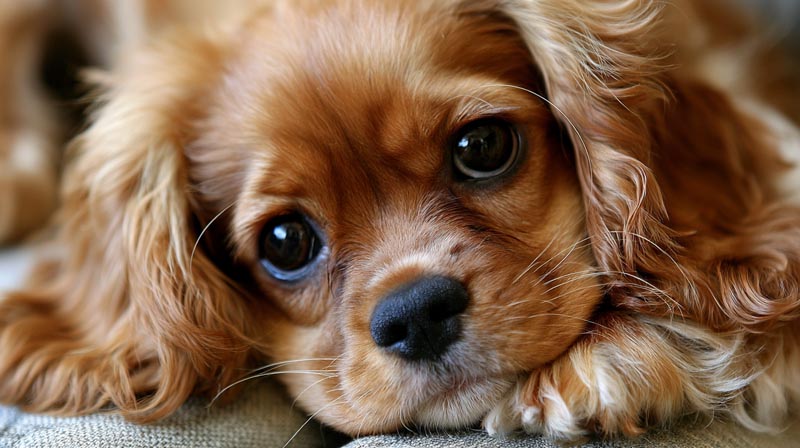
Large eyes relative to face size are the primary driver of the baby schema response, ahead of coat texture and body proportions. Research from Proceedings of the Royal Society B (2024) confirms that dogs with more pronounced paedomorphic facial expressions spend shorter periods in shelters before adoption. The mechanism is neurological, not aesthetic preference.
The 5 breeds with the most prominent eye-to-face ratios are the Cavalier King Charles Spaniel, Pug, Boston Terrier, Chihuahua, and Cocker Spaniel. All 5 are brachycephalic or semi-brachycephalic, meaning their compressed facial structure pushes eye prominence forward and upward.
Health Context: Brachycephalic Breeds and Eye Risk
The same structural feature that makes these breeds visually appealing at the puppy stage, the compressed skull pushing eyes forward, creates real health risks that owners need to understand before purchasing.
Brachycephalic Ocular Syndrome (BOS) affects breeds with protruding eyes. Risks include:
- Corneal ulcers from reduced eyelid coverage
- Exposure keratopathy (corneal damage from air exposure)
- Entropion (eyelid rolling inward)
- Dry eye (reduced tear production)
The OFA database allows prospective buyers to check health clearances for specific breeding pairs before purchasing. For brachycephalic breeds, eye health certifications are as important as hip and cardiac clearances.
Eye Color Changes in Puppies
Most puppies are born with blue-grey eyes. Permanent eye color develops between 6 and 16 weeks as melanin production increases in the iris.
Breeds that commonly retain blue eyes into adulthood: Siberian Husky, Australian Shepherd, and some Weimaraners. All others typically transition to brown, amber, or hazel by 4 months.
The Siberian Husky is notable for heterochromia, one blue eye and one brown, which appears in roughly 15% of the breed and adds to their striking puppy appearance.
What Are the Cutest Mixed-Breed Puppies?
Mixed breeds now outnumber AKC-registered purebreds in U.S. homes, according to the AVMA 2024 Pet Ownership Sourcebook. 53% of dogs in U.S. households are mixes, up from previous decades, driven largely by the designer breed boom that started in the 1990s.
According to a 2024 We Love Doodles breed popularity study, the Goldendoodle generates 3.57 million combined global monthly searches among the top 5 mixed breeds. That is not casual interest. That is sustained, high-frequency demand.
Cavapoo
Parent breeds: Cavalier King Charles Spaniel x Poodle. Size: 8-25 lbs depending on Poodle parent type. Coat: soft, low-shedding, wavy or curly.
The Cavalier’s large round eyes combined with the Poodle’s soft, non-shedding coat produces a puppy that hits both the visual and tactile cuteness triggers simultaneously. Cavapoos draw 586,000 monthly global searches and 4.24 million Instagram hashtags (We Love Doodles, 2024).
Originated in Australia in the late 1990s. Now one of the most popular companion breeds in the UK and Australia. Therapy animal use is common due to the calm, gentle temperament inherited from the Cavalier parent.
Cockapoo
Parent breeds: Cocker Spaniel x Poodle. The original designer breed, first bred in the U.S. in the 1960s. Monthly global searches: 481,100 (We Love Doodles, 2024).
Cockapoos generate 10.23 million Instagram hashtags, the highest of any Poodle-mix breed. That number reflects visual appeal specifically. The Cocker Spaniel’s long floppy ears and large eyes combined with the Poodle’s soft curly coat produce a puppy that photographs exceptionally well.
Available in 3 sizes: toy (under 12 lbs), miniature (13-18 lbs), and standard (19-30 lbs). The toy and miniature sizes retain the baby schema proportions longest into adulthood.
Goldendoodle
Parent breeds: Golden Retriever x Poodle. First gained popularity in the 1990s following the Labradoodle. Available in 3 sizes: miniature (15-35 lbs), medium (35-50 lbs), standard (50-90 lbs).
The Goldendoodle dropped one spot in Rover’s 2025 popularity rankings but remained in the top 5 most popular breeds in the U.S. Ranked 4th overall. The combination of the Golden Retriever’s warm coloring and gentle face with the Poodle’s soft, low-shedding coat is part of why this breed drives consistent search and social media volume.
Coat types vary across 3 categories: curly (most Poodle-like, lowest shedding), wavy (most common, moderate shedding), and straight (most Golden-like, higher shedding). Puppy coat type is not reliably predictable before 12-16 weeks. See Goldendoodle haircut styles for grooming options once the adult coat develops.
Pomsky
Parent breeds: Pomeranian x Siberian Husky. Size: 20-30 lbs typically. Coat: thick, dense double coat in a wide range of Husky-influenced patterns and colors.
The Pomsky is relatively new as a standardized designer breed. It combines the Pomeranian’s compact round face and fluffy coat with the Siberian Husky’s striking coloring and sometimes blue eyes. As puppies, the result can be genuinely unusual. A small, round, fluffy ball with Husky markings and often bright blue eyes.
Temperament variability is high in first-generation crosses. Two puppies from the same litter can have markedly different energy levels depending on which parent’s traits dominate. Worth asking breeders about both parents’ individual temperaments before committing.
Maltipoo
Parent breeds: Maltese x Poodle. Size: 5-20 lbs. Monthly global searches: 783,000 (We Love Doodles, 2024).
The Maltipoo is one of the highest-search designer breeds despite no official AKC recognition. The Maltese contributes pure white soft fur and a gentle round face. The Poodle adds curly, low-shedding coat texture and trainability.
At 8-12 weeks, Maltipoo puppies typically weigh 1-3 lbs. That extreme small size combined with their soft coat and round face produces a puppy that routinely gets described as looking like a stuffed animal. Adults rarely exceed 10-15 lbs in the toy varieties, which keeps the compact, cute proportions throughout their lifespan.
| Mixed Breed | Parent Breeds | Adult Size Range | Primary Cuteness Trait |
|---|---|---|---|
| Cavapoo | Cavalier King Charles Spaniel × Poodle | 8-25 lbs | Large eyes combined with a soft, low-shedding coat |
| Cockapoo | Cocker Spaniel × Poodle | 12-30 lbs | Floppy ears paired with a soft, curly coat |
| Goldendoodle | Golden Retriever × Poodle | 15-90 lbs | Warm golden coloring and a soft facial expression |
| Pomsky | Pomeranian × Siberian Husky | 20-30 lbs | Husky markings in a compact, fluffy body |
| Maltipoo | Maltese × Poodle | 5-20 lbs | Extremely small size with a soft white coat |
How Do Puppy Cuteness Traits Change With Age?
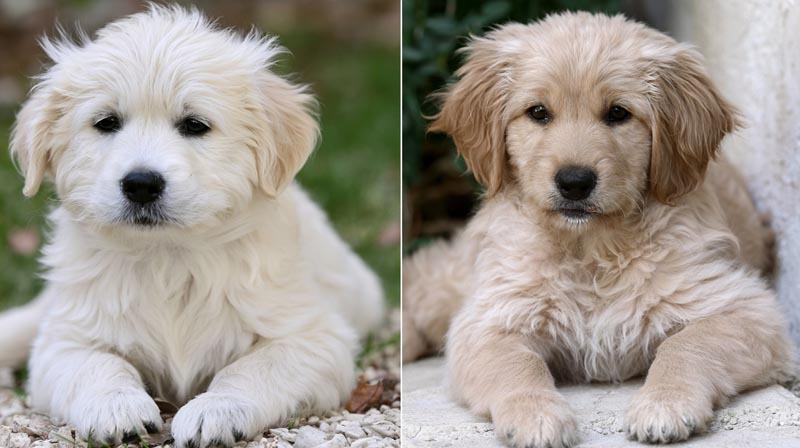
Puppy cuteness has a measurable peak. Research published in Anthrozoös (Arizona State University, Wynne et al.) found that puppies reach maximum attractiveness to humans between 6 and 10 weeks of age, right at weaning time. The timing is not accidental. That window aligns exactly with when puppies are most vulnerable and most in need of human intervention.
Cuteness scores in the study were lowest at birth, climbed sharply to peak before week 10, then declined steadily. Cane Corsos peaked at 6.3 weeks, Jack Russell Terriers at 7.7 weeks, White Shepherds at 8.3 weeks (Wynne et al., Anthrozoös).
The practical implication: most dogs are at their most visually compelling right when breeders and shelters send them home. After that, it varies significantly by breed.
Which Breeds Retain Puppy Features Longest?
Toy breeds consistently outlast large breeds in retaining baby schema features. Small adult size preserves the proportional relationship between eye size and skull size that drives human caregiving responses.
The 5 breeds with the longest puppy-feature retention:
- Pomeranian (lifespan 12-16 years, retains round fluffy face and compact proportions throughout)
- Shih Tzu (flat face and round eyes change very little between 6 months and 6 years)
- Maltese (stays under 7 lbs for life, preserving small-scale baby schema features)
- Cavalier King Charles Spaniel (skull structure remains rounded, eyes retain prominence into adulthood)
- Bichon Frise (coat texture and round head shape persist through the full 14-15 year lifespan)
Physical Changes From 8 Weeks to 18 Months
The 4 physical changes that most reduce perceived puppy cuteness after 10 weeks:
Muzzle elongation: Most breeds develop a longer, more adult snout by 6 months. Brachycephalic breeds like French Bulldogs and Pugs are the exception, retaining their compressed facial structure permanently.
Coat transition: The soft puppy coat, present from birth to roughly 6-12 months, gives way to the stiffer adult double coat in most breeds. The puppy coat is uniformly softer, finer, and less dense than the adult coat.
Eye-to-skull ratio shift: As the skull grows, eyes appear proportionally smaller. This is the primary reason large-breed puppies have such a short cute window. A 100-lb adult Newfoundland has the same eye size as its 15-lb puppy form, but the proportion has inverted.
Body proportion normalization: The oversized paws, round belly, and low center of gravity that define puppy body language flatten out as muscle and skeletal structure develop, typically between 9 and 14 months depending on breed size.
| Breed Size | Puppy Look Ends (Approx.) | Breeds That Are Exceptions |
|---|---|---|
| Toy (under 10 lbs adult) | Around 12-18 months, with puppy-like features often retained into adulthood | Pomeranian, Maltese, Chihuahua |
| Small (10-25 lbs adult) | Approximately 12-18 months | Shih Tzu, Cavalier King Charles Spaniel, Bichon Frise |
| Medium (25-60 lbs adult) | Approximately 10-14 months | Beagle (often retains a puppy-like appearance longer than many medium breeds) |
| Large (60-100+ lbs adult) | Approximately 6-10 months | Golden Retriever (typically maintains youthful facial features longer than most large breeds) |
Behavioral Cuteness: What Fades vs. What Persists
Physical changes are only half the story. Behavioral traits drive a significant portion of the cuteness response and follow their own separate timeline.
Fades by 12 months in most breeds: puppy clumsiness and uncoordinated movement, high-pitched puppy vocalizations, erratic play patterns, and the “zoomies” triggered by minor stimulation.
Persists in some breeds well past 12 months: play drive (especially in Golden Retrievers and Boxers), attention-seeking behavior, and lap-seeking comfort behavior in companion breeds.
The Boxer is worth noting specifically. The breed is widely described as having a “Peter Pan” personality that maintains puppy-level energy and play behavior well into 3-4 years of age, which extends the behavioral cute phase significantly past what most large breeds offer.
What Are the Cutest Puppy Breeds for Families?
A Labrador Retriever puppy earned the highest child-tolerance score (94 out of 100) of any breed over 50 lbs, with the lowest bite risk in its size category, according to an analysis of over 127,000 owner reviews and 2024 Banfield Pet Hospital veterinary bite statistics.
Family suitability and puppy cuteness are not always the same axis. Some of the cutest puppy breeds, the Chihuahua and the Pomeranian, score poorly with young children. Knowing which cute breeds are also safe for family life avoids a common mistake.
Golden Retriever
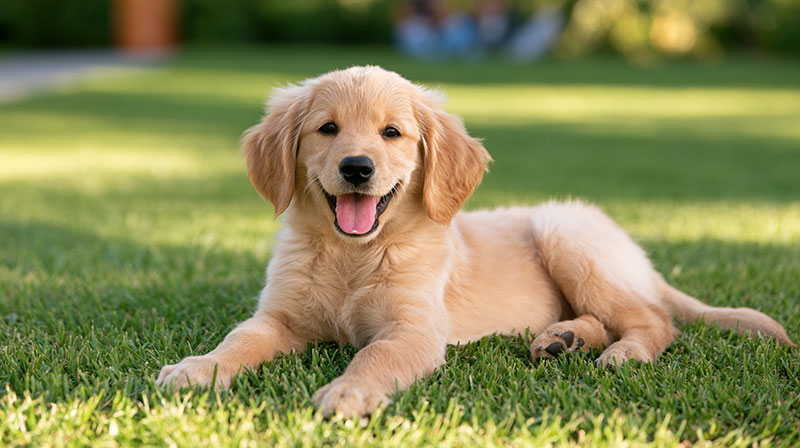
AKC rank: No. 3 (2024-2025). Child-tolerance: top 3 of all breeds. Adult weight: 55-75 lbs.
Rover’s 2025 data names the Golden Retriever as one of the most photographed and socially shared breeds in the U.S. It is also the top choice for pediatric therapy programs, according to West Virginia dog training research (2025). The combination of a soft, warm-colored coat, floppy ears, and genuine emotional responsiveness to children makes it visually and behaviorally ideal for families.
The “soft mouth” trait bred into Goldens for retrieving birds means they learn to control bite pressure from puppyhood, making accidental nips significantly less damaging than in breeds without this history.
Labrador Retriever
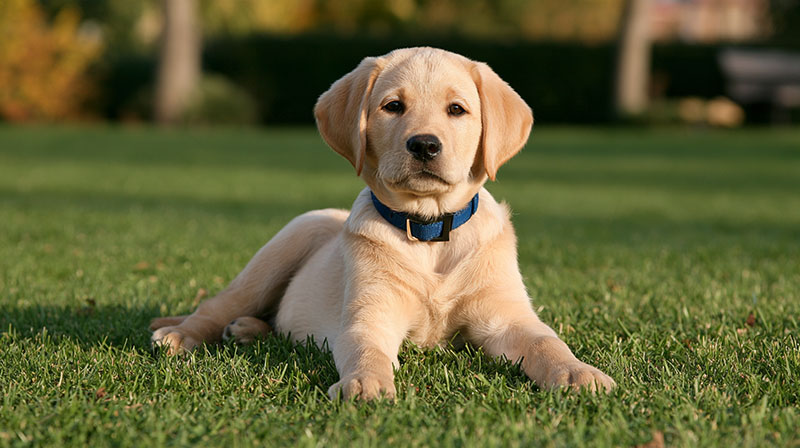
94/100 child-tolerance score. Lowest bite risk of any breed over 50 lbs (Banfield 2024). AKC No. 2 for 2024 and 2025.
Available in 3 coat colors: black, chocolate, and yellow. All 3 share the same round puppy face, large eyes, and floppy ears at the 8-12 week stage. The Labrador Retriever held the No. 1 AKC spot for 31 consecutive years before the French Bulldog’s rise. That tenure reflects genuine cross-household adaptability.
Worth noting: English Labs tend to be calmer and lower-energy than American Labs. For families with toddlers, that distinction matters more than most people realize when selecting a puppy.
Beagle
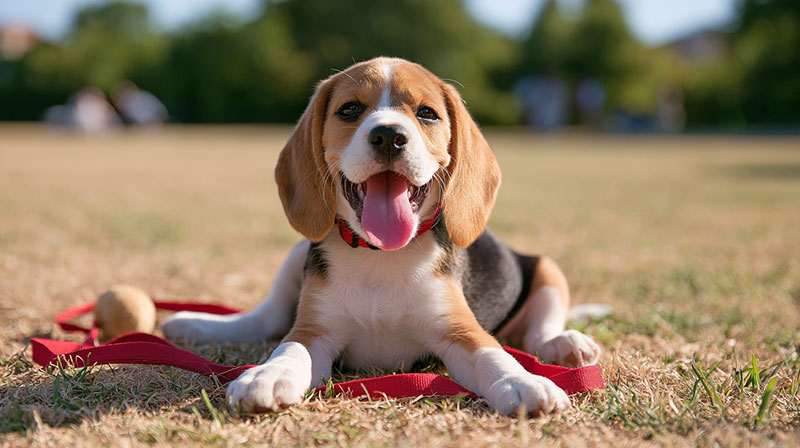
Adult weight: 20-30 lbs. AKC rank: No. 7 (2024). Temperament: pack-oriented, food-motivated, gentle with children.
Beagles are pack animals by origin. They integrate naturally into family groups and show high tolerance for the noise and unpredictable movement of young children. Their compact size reduces injury risk compared to large breeds in small spaces.
Stubbornness is real with this breed. Beagles follow their nose before they follow commands, which makes them harder to train than Labs or Goldens. The upside: that same curiosity and energy level makes them genuinely entertaining puppies for kids.
The Beagle’s puppy face, large round eyes, floppy ears, and compact tricolor body, holds up well past 12 months. Most Beagles look distinctly puppy-like well into their second year.
Cavalier King Charles Spaniel
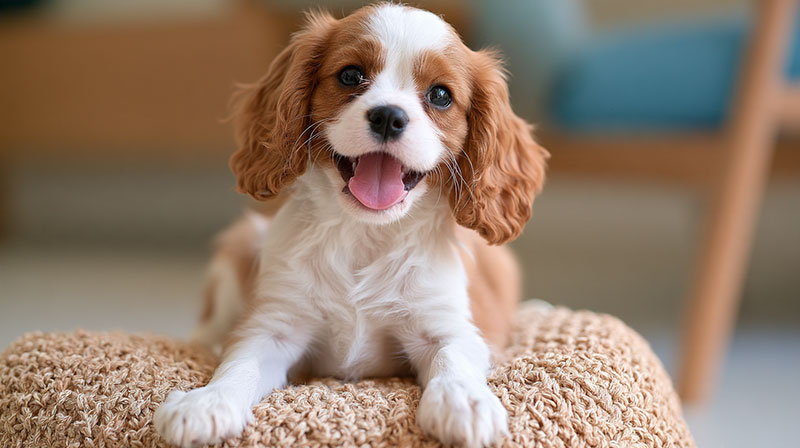
Ranked No. 7 on Bixby Animal Hospital’s top 10 family breed list (2025). Gentle, calm, and low-energy enough for apartment families.
The Cavalier is one of the few small breeds that consistently appears on family-friendly lists alongside larger dogs. Most toy breeds score poorly with children due to fragility. The Cavalier hits 13-18 lbs at maturity, which is enough physical resilience for gentle play with kids over 6.
Moderate exercise needs. Adapts equally well to small apartments and larger homes. That flexibility makes it one of the most broadly applicable cute puppy breeds for urban families.
Cute Breeds That Do Poorly With Young Children
Two of the most popular cute puppy breeds require honest qualification here.
Pomeranian: At 3-7 lbs adult weight, rough play or accidental falls cause real injury risk. Poms can also be protective and nippy when startled. Best with children over 10 who understand gentle handling.
Chihuahua: Same fragility issue, compounded by a tendency toward anxiety and snapping when cornered. Their cuteness is undeniable. Their suitability for households with toddlers is not.
Where Can You Find Cutest Puppy Breeds for Adoption?
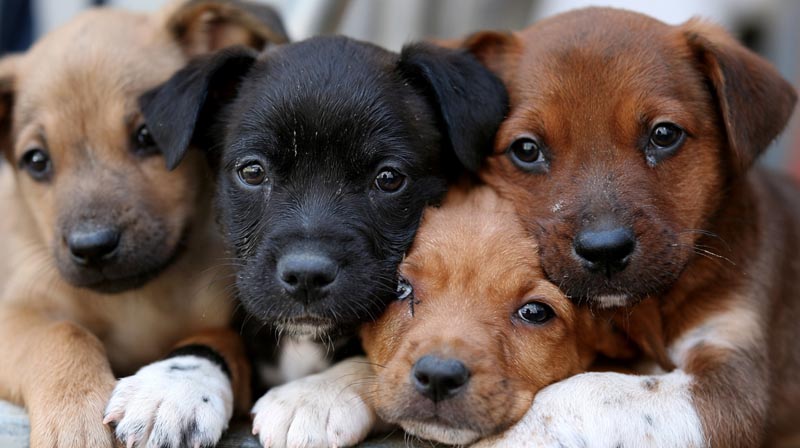
Over 2.9 million dogs entered U.S. shelters in 2024, with 29% of those being puppies, according to Humane World for Animals. There is no shortage of puppies available through legitimate rescue channels. The challenge is knowing where to look and how to tell good sources from bad ones.
The average puppy price from a reputable breeder runs $500 to $2,500 across most breeds, based on PetBudget’s analysis of nearly 50,000 puppy listings. French Bulldogs are a clear outlier, with 80% of listings priced between $1,800 and $4,500 (PetBudget). Adoption fees from shelters and rescues run $50 to $500 for most breeds, often including spay/neuter, vaccinations, and a vet check.
Reputable Breeder Directories
AKC Marketplace is the most vetted purebred directory in the U.S. All listed puppies come from AKC-registered parents. The platform also connects buyers with breed-specific club registries, which maintain their own independent breeder standards above AKC minimums.
Key questions to ask any breeder before committing:
- Can I visit the facility and meet both parents?
- What health clearances do the parents carry (OFA hips, cardiac, eye certification)?
- What is your return/rehoming policy if the placement doesn’t work?
- Do you provide a written health guarantee?
Reputable breeders rarely have puppies immediately available. Waiting lists of 3-12 months are normal for popular cute breeds like Cavalier King Charles Spaniels, Golden Retrievers, and Bernese Mountain Dogs. If a breeder always has puppies ready to go, that is a flag worth noting.
Rescue and Adoption Platforms
Petfinder and Adopt-a-Pet are the two largest U.S. rescue aggregators. Both list dogs from verified shelter and rescue organizations and allow filtering by breed, age, size, and location.
Breed-specific rescues are often the best source for finding a purebred puppy through adoption. Organizations like Golden Retriever Rescue, Beagle Freedom Project, and dozens of regional Cavalier rescues take in purebreds surrendered by owners and match them with vetted adopters.
The Shelter Animals Count database shows dog adoption rates down roughly 4% year-over-year from 2024 to 2025, despite over 2.9 million dogs entering shelters annually. There are more dogs available than adopters. The supply side is not the problem.
Red Flags When Buying Puppies Online
Pets are the No. 1 subject of online purchase scams, accounting for more than one quarter of all reported “product” scams, according to Better Business Bureau Scam Tracker data. Experts estimate at least 80% of sponsored pet advertisements online may be fraudulent (ASPCA).
4 hard red flags to walk away from immediately:
- Seller refuses an in-person visit to the facility
- Multiple breeds always available, no waiting period
- Price significantly below the breed average
- Request for wire transfer, gift cards, or cryptocurrency payment
The ASPCA documented over 800 violations by USDA-licensed dog dealers in 2024, with 45% of commercial dog dealers never receiving a compliance inspection that year. USDA licensing alone does not guarantee humane breeding conditions.
“Puppy laundering,” a tactic where puppy mill-bred dogs are funneled through fake nonprofit organizations and marketed as rescues, is an active and documented fraud, according to ASPCA investigations. If an “adoption” fee exceeds $800 and the organization has no verifiable physical address, treat it with significant skepticism.
Price Ranges for Top Cute Breeds (2024)
| Breed | Reputable Breeder Range | Rescue/Adoption Fee |
|---|---|---|
| French Bulldog | $1,800-$5,000+ | $250-$750 |
| Golden Retriever | $1,000-$3,500 | $100-$400 |
| Cavalier King Charles Spaniel | $1,500-$3,500 | $150-$500 |
| Pomeranian | $1,500-$4,000 | $100-$350 |
| Goldendoodle | $2,000-$4,000 | $200-$500 |
Prices from PetBudget analysis (48,000+ listings) and breed-specific rescue organization data (2024). Regional variation exists. Prices in major metro areas typically run 15-20% above national averages.
One thing worth knowing before you start the search: owning a dog is expensive regardless of how you acquire it. The first-year cost of caring for a dog, including routine vet visits, food, supplies, and training, ranges from $1,150 to $4,420 according to Whitelands Animal Hospital’s 2025 cost analysis. The puppy price is just the start. See how expensive dog ownership can really get before committing to a breed.
And if you are weighing puppy food brands once you bring your new dog home, choosing a breed-appropriate formula from day one matters for long-term health, especially in large-breed puppies where growth rate directly affects joint development.
FAQ on Cutest Puppies
What are the cutest puppy breeds in the world?
The consistently top-ranked cute puppy breeds include the French Bulldog, Golden Retriever, Pomeranian, Cavalier King Charles Spaniel, and Shih Tzu. Rankings are driven by measurable physical traits: large eyes, round faces, soft coats, and compact body proportions that activate the baby schema response.
What age are puppies at their cutest?
Research published in Anthrozoös (Arizona State University) found puppies reach peak cuteness between 6 and 10 weeks old, right at weaning age. Cuteness ratings are lowest at birth, climb sharply before week 10, then gradually decline as adult features develop.
Which small puppy breeds stay cute the longest?
Toy breeds retain puppy features longest because their small adult size preserves the eye-to-skull ratio that drives the cuteness response. The Pomeranian, Maltese, and Shih Tzu all maintain distinctly puppy-like facial proportions well into adulthood.
What makes a puppy look cute to humans?
Konrad Lorenz identified this in 1943 as the baby schema effect: large eyes, a round head, short muzzle, and soft coat texture trigger an automatic caregiving response in humans. These features signal vulnerability, which activates protective instincts regardless of species.
What are the cutest fluffy puppy breeds?
The top fluffy puppy breeds for visual cuteness are the Samoyed, Pomeranian, Bichon Frise, and Chow Chow. Dense, soft coats amplify the tactile cuteness response and are consistently associated with higher perceived adorableness in dog preference studies.
What are the cutest mixed-breed puppies?
The Goldendoodle, Cavapoo, Cockapoo, Maltipoo, and Pomsky are the most searched designer breeds for cuteness. Mixed breeds now outnumber AKC-registered purebreds in U.S. homes, per AVMA 2024 data, with 53% of dogs in U.S. households being mixes.
Which puppy breeds have the biggest eyes?
The Cavalier King Charles Spaniel, Pug, Chihuahua, Boston Terrier, and Cocker Spaniel all carry the largest eye-to-face ratios of any recognized breeds. Large eyes are the single strongest physical driver of the baby schema cuteness response in dogs.
Are cute puppies good family dogs?
Not always. The Golden Retriever, Labrador Retriever, and Beagle are both cute and reliably family-safe. The Pomeranian and Chihuahua, despite being visually appealing, score poorly with young children due to fragility and temperament.
How much do the cutest puppy breeds cost?
Prices vary widely. French Bulldogs run $1,800 to $5,000+ from reputable breeders. Golden Retrievers range from $1,000 to $3,500. Adoption fees through rescue organizations typically run $50 to $500 for most breeds, often including vaccinations and a vet check (PetBudget, 2024).
Where can I find cute puppies for adoption?
Petfinder and Adopt-a-Pet are the two largest U.S. rescue aggregators listing verified shelter dogs by breed, age, and location. Breed-specific rescues are the best source for finding a purebred puppy through adoption. Over 2.9 million dogs entered U.S. shelters in 2024 (Humane World for Animals).
Conclusion
This conclusion is for an article presenting the full picture of cutest puppies, from the biology behind why certain breeds stop us cold to the practical decisions that follow.
Puppy cuteness is not arbitrary. The baby schema effect, soft coat texture, large round eyes, and compact body proportions all work together to trigger measurable caregiving responses in humans.
Whether you are drawn to fluffy small breeds like the Bichon Frise, a gentle giant like the Bernese Mountain Dog, or a designer mix like the Cavapoo, the traits that make puppies adorable are consistent across breed categories.
Knowing those traits helps you choose a dog whose puppy look you will actually live with long-term, not just one that photographs well at eight weeks.