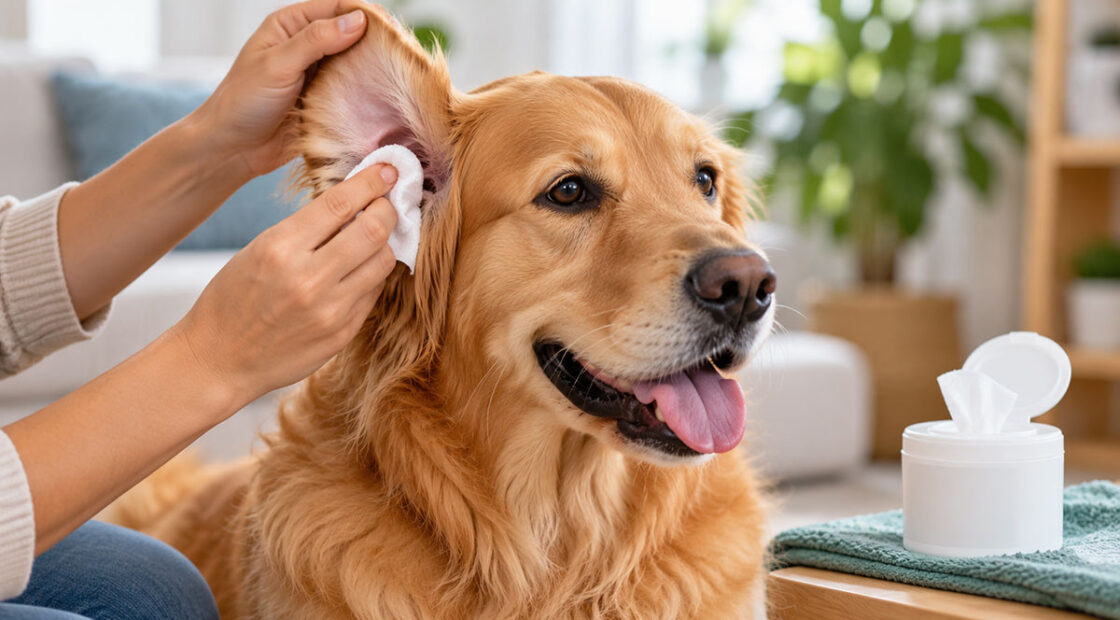
A good ear wipe does two things at once: pH balanced enough not to sting, and textured enough to actually lift wax off the canal wall in one pass. Cheap wipes usually only manage one of those.
Picture a pre-moistened pad, single use, that cleans the outer canal on contact. No runoff, no soaked cotton dripping down the dog’s neck the way a pour-in cleanser tends to leave behind.
Groomers and owners reach for them between full liquid cleanings, mostly on dogs with floppy ears or ears packed with hair. It’s maintenance, not treatment.
And there’s a reason that maintenance matters. VetCompass tracked more than 22,000 dogs across the UK and found a one-year prevalence of otitis externa, the clinical term for outer ear inflammation, at 7.30 percent (O’Neill et al., VetCompass, 2021).
What Are Dog Ear Wipes?
Pick one up and it’s obvious what it’s for: a flat pad, pre-moistened, made to run once around the flap and canal opening and pull grime off on contact.
They lift wax, debris, and the low musty smell that builds up in a hairy ear, all without the liquid runoff a pour-in cleanser leaves on your hands and the dog’s fur.
Formulas split into two camps, pretty cleanly.
- Natural, soothing wipes built around witch hazel or aloe vera for routine maintenance
- Medicated wipes built around chlorhexidine or boric acid for dogs already showing early irritation
Earth Rated’s ear wipe line falls into the first camp: large 5×5 inch viscose pads soaked in aloe vera, no added alcohol. That size does more work than it sounds like it should. A pad that big covers the flap and canal opening in two or three swipes, which is really the entire job a wipe needs to do.
Worth knowing why any of this matters in the first place. Otitis externa turns up in an estimated 1 in 7 dogs seen in veterinary practice at some point in their life (Merck Animal Health, 2026). Hospital-admission studies have put dogs presenting with outer ear inflammation somewhere between roughly 7.5% to 16.5% of canine cases, with other primary-care surveys pushing that range closer to 8.7% to 20%. And the VetCompass surveillance study mentioned above, more than 22,000 UK dogs, recorded that 7.30% one-year prevalence (O’Neill et al., 2021).

The Merck Veterinary Manual lists ear inflammation as one of the most commonly diagnosed conditions across the canine ear, skin, and coat combined.
A wipe is not treatment for that condition. It’s the thing standing between a clean ear canal and the moisture, wax, and yeast buildup that let inflammation start.
What Ingredients Are in Dog Ear Wipes?
Two ingredient philosophies show up here, and picking the wrong one for a specific ear can undo the whole point of wiping in the first place.
Natural and Soothing Ingredients
You’ll mostly find the same actives across natural formulas: witch hazel (a mild astringent, decent at lifting wax), aloe vera to calm irritated or dry skin, and colloidal oatmeal, which turns up in some formulas built for sensitive-skin dogs.
None of these kill bacteria or yeast, and that’s kind of the point. They clean what’s visible and leave the skin barrier alone, which is exactly what a dog with no active infection needs.
Vet’s Best Ear Relief Finger Wipes lean into this idea: aloe vera and witch hazel plus tea tree oil, built to dissolve gunk rather than just push it around the ear flap.
Medicated and Antimicrobial Ingredients
Some formulas step it up with actives meant to control bacteria and yeast directly, not just clean around them.
Chlorhexidine is the antiseptic most of these lean on, cutting bacterial load on the skin surface. Boric acid shows up too, mostly as a drying agent for ears that stay damp.
Formulation matters just as much as which active a brand picked. Physiological studies of the healthy canine ear canal put its natural pH at around 6.1 to 6.3, mildly acidic rather than neutral (Panzutti et al., Veterinary Dermatology, 2022; Song et al., BMC Veterinary Research, 2023). That’s the whole reason reputable wipes get labeled pH balanced. They’re formulated toward that mildly acidic range instead of something neutral or alkaline.
Get the pH wrong and a wipe doesn’t just clean poorly. It can nudge the ear’s natural chemistry toward exactly the yeast and bacteria it’s supposed to keep in check.
How Do Ear Wipes Compare to Liquid Ear Cleaner?
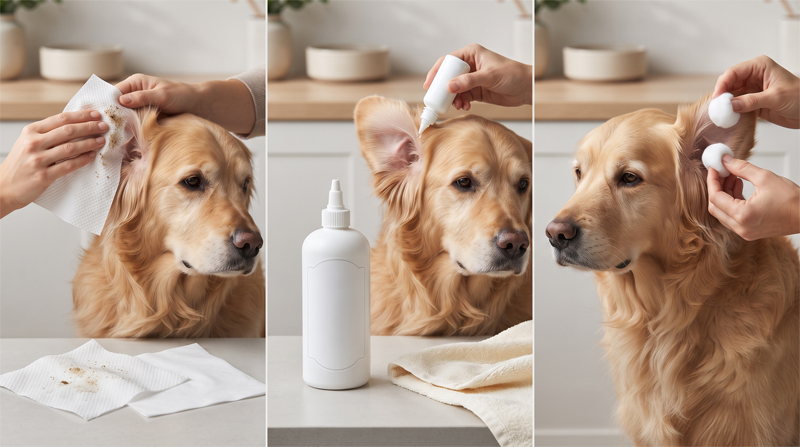
A wipe grabs whatever’s sitting on the surface the moment it touches skin. A liquid cleanser goes further, flooding the canal and breaking wax down before it’s massaged out and wiped away. Different depth, different mess, different job.
| Method | Cleaning Depth | Mess Level | Best Use Case |
|---|---|---|---|
| Ear Wipes | Outer flap and canal opening | Minimal | Routine maintenance and quick touch-ups |
| Liquid Cleanser | Deeper cleaning of the vertical and horizontal canal | Moderate; towel recommended | Compacted wax and post-swim cleaning |
| Cotton Balls | Outer flap only | Low | Spot cleaning and wiping away visible debris |
Texture actually changes the outcome here. A textured wipe pulls more debris off in a single pass than a smooth one does, though if the ear’s already irritated, smooth is gentler and probably the better call.
Virbac’s Epi-Otic line comes up a lot as the reference point for liquid cleansers, a pH-balanced micellar solution built to emulsify wax and get the canal ready for whatever medication comes next.
Neither one replaces an actual vet-performed flush when wax has compacted or there’s a real infection going. Both are maintenance tools. Neither is treatment.
Best Dog Ear Wipes Overall
Formulation, texture, and price are where these separate from each other, and a few products keep pulling ahead on reviewer consensus.
Top Pick
Vet’s Best Ear Relief Finger Wipes lead here, and it’s not particularly close. Aloe vera, witch hazel, and tea tree oil dissolve gunk instead of sliding it around the ear, with no alcohol sting involved.
On the plus side, it cuts musty odor and calms irritated skin without any alcohol sting. The downside is that the finger-wipe format needs more hand control than a flat pad, and it’s not fragrance-free, so it’s not the pick for a scent-sensitive dog.
Runner-Up
Earth Rated Dog Ear Wipes take runner-up, mostly on size and how transparent the ingredient list is, more than any single standout feature. The pads run 5×5 inches, large enough to cover a whole ear in a few swipes. The base is hypoallergenic, built around aloe vera, with no added alcohol, parabens, or sulphates.
It’s gentle enough for daily use, and it’s cruelty-free certified, though it still carries a light fragrance despite the hypoallergenic label. That rules it out if the dog is sensitive to scent.
Budget Pick
Frisco Ear Wipes pack 100 wipes per box at a price per wipe well under the premium brands, which makes them the obvious pick for a household running more than one dog through a cleaning routine. High wipe count, low cost per use, but it’s a basic formula meant for maintenance, not for a dog already showing recurring infection symptoms.
Best Dog Ear Wipes by Breed and Ear Type
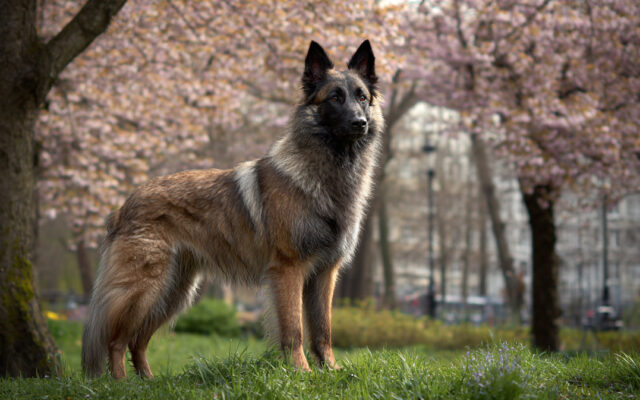
Floppy ears need more frequent wiping than erect ears, plain and simple. A hanging flap traps warm, moist air right against the skin, and that moisture doesn’t have anywhere to go.
The Basset Hound sits at the extreme end of that risk profile, with heavy, low-hanging ears that limit airflow into the canal almost constantly.
Chihuahuas and Border Collies land on the opposite side of that spectrum. Erect ears, lighter and less frequent cleaning needed by comparison.
| Breed | Ear Carriage | Relative Odds of Otitis Externa |
|---|---|---|
| Basset Hound | Pendulous | 5.87× vs. crossbred dogs |
| Golden Retriever | Pendulous | 2.23× vs. crossbred dogs |
| Beagle | Pendulous | 2.54× vs. crossbred dogs |
| Chihuahua | Erect | 0.20× vs. crossbred dogs (protective) |
Pendulous-eared breeds carry 1.76 times the odds of otitis externa compared with erect-eared breeds, per that same VetCompass dataset (O’Neill et al., 2021).
Water adds a second risk on top of ear shape entirely. The Labrador Retriever gets tagged with what’s commonly called swimmer’s ear fairly often, moisture trapped after a lake or pool session setting up the same conditions a floppy ear creates on its own.
Coat type is its own variable too. A Poodle’s hair-filled canal traps more debris than a smooth-coated dog’s ever will, which is exactly why a textured wipe outperforms a smooth one on that coat specifically.
Best Dog Ear Wipes for Allergies and Sensitive Skin
A dog with allergies needs a wipe stripped down to the fewest possible irritants, not the most active ingredients.
That means a hypoallergenic base, aloe vera or oatmeal, skipping the essential oil blends. Fragrance-free matters more than people expect, since scent additives trip up plenty of dogs even in otherwise gentle wipes. Alcohol-free is close to non-negotiable too. It dries and cracks skin that’s already compromised.
Pet MD’s Aloe Vera and Eucalyptus Dog Ear Wipes, sold in a 100-count pack, get picked often by owners managing chronic skin sensitivity rather than an active ear problem.
Patch-test any new formula on a small section of the ear flap first, and wait a day before full use.
Redness that shows up right after wiping usually points to a reaction to the product. Redness with odor or discharge points somewhere else entirely: infection. That distinction changes what happens next.
Best Dog Ear Wipes for Yeast and Recurring Infections
A dog with a history of yeast overgrowth needs a wipe formulated to control Malassezia, not just clean around it.
Cytology and culture studies of otitis externa cases disagree quite a bit on how often Malassezia yeast is the organism involved, anywhere from around one in five cases up to the majority in some surveys, depending on the population studied and the diagnostic method used. Bacterial or mixed bacterial-yeast infections account for much of the rest.
Chlorhexidine and antifungal-formulated wipes target that yeast overgrowth directly. Enzymatic systems like Zymox take a different route, using natural enzymes to disrupt bacterial and yeast cell walls instead of a chemical antiseptic.
A wipe manages symptoms between vet visits. It does not replace a diagnosed treatment plan for an active infection.
Recurrence in the same ear, over and over, usually points to something structural or allergy-driven rather than a gap in the cleaning routine.
The Cocker Spaniel illustrates this well. A Finnish survey of nearly 99,000 dogs found otitis externa prevalence of 27.0% in American Cocker Spaniels, with 24% of affected dogs seeing symptoms recur within a month or persist despite treatment (Kaimio et al., 2017).
For a breed with that pattern, a medicated wipe is part of a maintenance routine a vet sets, not a substitute for one.
Are Dog Ear Wipes Safe for Daily Use?
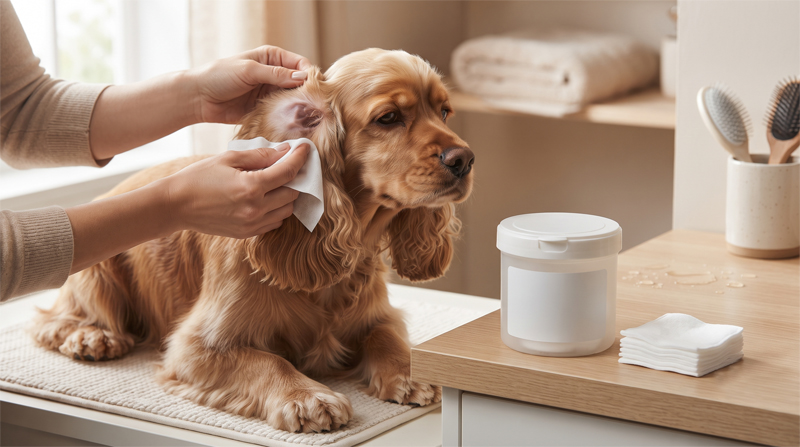
Most alcohol-free, pH balanced wipes are gentle enough for frequent use. Frequent is not the same as daily, though, not for a dog with healthy ears to begin with.
Cornell’s vet college puts maintenance cleaning at roughly every one to two weeks, and reserves daily cleaning for active infection treatment, at least at the start (Cornell University College of Veterinary Medicine).
Frequency shifts with the dog in front of you, not a fixed calendar. Floppy ears or a history of allergies push that number up. So does regular swimming or bathing. A past or current yeast infection does too.
Any one of those is reason enough to wipe more often than a dog with erect ears and no history of irritation.
A 2022 clinical study in Veterinary Sciences tested routine ear cleaning on a schedule ranging from daily to every third day, depending on how bad the secretion was, and found it cut cytology scores by as much as 73% within two weeks. Pruritus, secretion, and OTIS-3 inflammation scores fell by roughly 53% to 61% over that same period (Moog et al., 2022).
Healthy ear wax is not the enemy here. It lubricates the canal and blocks bacteria on its own, so wiping a clean, odor-free ear every single day just strips that protection away for no real gain.
When Dog Ear Wipes Do Not Work
A wipe cannot fix a problem that lives past the outer canal, and using one in the wrong situation makes things worse, not better.
Chlorhexidine, a common medicated-wipe ingredient, is potentially ototoxic. Most chlorhexidine-containing ear products carry label warnings against use when the eardrum is ruptured or its condition is unknown, a caution that applies even at the low concentrations found in most over-the-counter wipes, not just at higher ones.
A few situations call for putting the wipe down entirely. A ruptured or unconfirmed eardrum is the big one, since any product risks reaching the middle ear from there. Active discharge or a strong odor signals infection that needs diagnosis, not more cleaning. Compacted or deep wax won’t respond to a wipe anyway, since a wipe only reaches the flap and canal opening, not what’s packed further in. And with a foreign object like a grass awn, wiping can push it deeper instead of getting it out.
Persistent odor that returns right after a normal wiping routine is not a sign to wipe harder or more often.
It’s a sign the odor is coming from somewhere a wipe was never built to reach.
How to Use Dog Ear Wipes Correctly
Technique matters more than the product itself once you’ve picked a formula suited to the dog’s skin and ear type.
- Fold the wipe around one or two fingers rather than pushing it in flat.
- Wipe the visible flap and canal opening in one outward motion, never deeper than you can see.
- Fold to a clean section of the same wipe, or grab a fresh one, before starting the second ear.
- Watch the dog’s reaction. Stop if there’s a pain response and check with a vet before continuing.
- Reward with a treat once both ears are done, so the routine stays low stress.
VCA Animal Hospitals’ cleaning instructions add one more detail worth repeating: if the dog needs medicated ear treatment afterward, clean first and apply medication second.
One rule overrides the rest: never insert a finger, wipe, or applicator past what you can see with the naked eye.
Common Mistakes When Cleaning a Dog’s Ear with Wipes
Most ear-cleaning mistakes come from good intentions applied with the wrong technique.
- Pushing the wipe or a finger past the visible canal opening
- Reaching for a scented or alcohol-based wipe on skin that’s already irritated
- Wiping through active discharge instead of scheduling a vet visit
- Reusing the same section of a wipe on the second ear
- Skipping the second ear entirely because the first one looked fine
PetMD’s official guidance singles out cotton-tipped applicators as a specific hazard, since they can pack debris and wax deeper into the canal instead of lifting it out.
The fallout from aggressive wiping, and the head shaking it triggers, isn’t always just another ear infection.
Excessive head shaking from an irritated ear canal is a documented trigger for aural hematoma, a painful pooling of blood inside the ear flap (Merck Veterinary Manual).
When to See a Vet Instead of Using a Wipe
A wipe belongs in a maintenance routine. It does not belong in the response plan for a dog that’s clearly in distress.
| Sign | Home Wiping Appropriate | Vet Visit Recommended |
|---|---|---|
| Light brown wax with no unusual odor | Yes | No |
| Strong odor or yellow/green discharge | No | Yes |
| Head tilting, frequent pawing, or ear scratching | No | Yes |
| No improvement after several days of gentle cleaning | No | Yes |
A swollen, pillow-like ear flap is its own category entirely. AKC’s expert advice is direct on this point: an aural hematoma needs veterinary evaluation, not home treatment, since draining it incorrectly risks permanent scarring of the ear flap.
None of these signs mean the wipe failed. They mean the job has moved past what a wipe was ever designed to handle.
FAQ on Best Dog Ear Wipes
What pH should a dog ear wipe be?
Aim for the mildly acidic 6.0 to 6.5 range. That’s closest to the natural pH of a healthy dog’s ear canal, which studies put at around 6.1 to 6.3 rather than neutral (Panzutti et al., Veterinary Dermatology, 2022; Song et al., BMC Veterinary Research, 2023).
Go too far in either direction, acidic or alkaline, and it disrupts the skin barrier and encourages the exact yeast overgrowth wipes are meant to prevent.
How much do dog ear wipes cost compared to liquid ear cleaner?
They land in roughly the same price band.
One national retailer prices a 100-count pack of medicated ear wipes at 12.9 cents per wipe (Walmart, 2026), close to the per-use cost of a comparable liquid formula.
Can you make dog ear wipes at home?
A clean cloth dampened with a vet-approved ear cleanser works for a quick wipe.
Homemade solutions using vinegar, hydrogen peroxide, or essential oils risk irritation and ototoxicity. Commercial pH balanced wipes remove that guesswork.
Do vets recommend ear wipes over cotton balls?
For routine surface cleaning, generally yes.
Wipes carry active ingredients and a consistent, sanitary dose per use, while a plain cotton ball offers no antimicrobial or pH balancing benefit and mostly pushes debris around rather than lifting it.
What’s the difference between ear wipes and tear stain wipes?
Tear stain wipes handle the fur below the eyes, using ingredients like boric acid to break down porphyrin staining.
Ear wipes target the ear flap and canal opening instead, with wax-dissolving, antimicrobial formulas.
Where Do Best Dog Ear Wipes Fit Into a Full Ear Care Routine?
Wipes are step one of a routine with three real stages. They handle daily-to-weekly surface maintenance, a liquid cleanser takes over once debris sits past the canal opening, and a veterinary ear flush handles anything compacted or infected.
The order matters more than the product chosen. Wipe first for visible wax and odor. Move to a liquid cleanser once debris sits past the canal opening. Book a vet visit once discharge, pain, or head tilting appears.
A pendulous-eared dog already carrying 1.76 times the odds of otitis externa (VetCompass, 2021), stacked against a 7.30% national baseline, works out to something close to one in eight affected in a given year, the range where wipe-only maintenance stops covering the risk on its own.
A finished ear care routine pairs well with the rest of a hygiene routine, including a scent-safe dog cologne chosen for the same sensitive-skin profile.