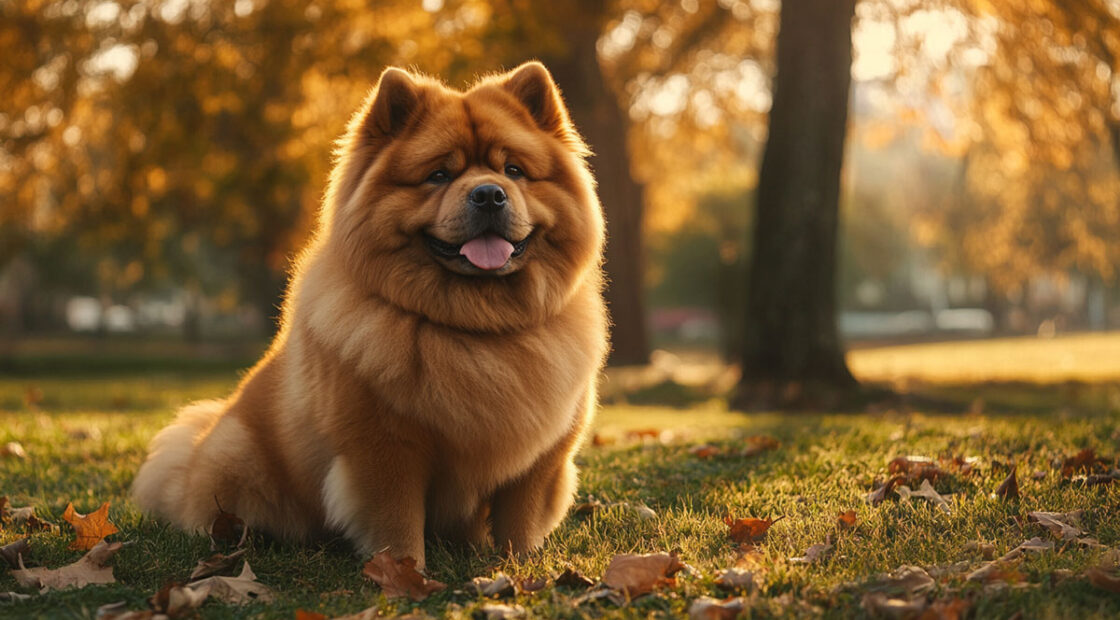
The Chow Chow comes from northern China and is easy to pick out by its blue-black tongue, lion-like mane and stilted gait. It’s a medium-sized spitz-type dog with a dense double coat, rough or smooth, and the American Kennel Club files it in the Non-Sporting group.
The temperament is dignified and aloof with strangers, though very loyal at home.
Heat is where the breed struggles most. A VetCompass study of 905,543 UK dogs found the breed had the highest odds of heat-related illness among the breeds compared (Hall et al., Scientific Reports, 2020).
What Is a Chow Chow?
The AKC breed standard describes an all-purpose dog of northern Chinese origin that hunted, herded, pulled loads and guarded the home. The tail curls over the back, and the coat is dense and double.
Registries don’t agree on which group the breed belongs in.
| Registry | Group | Note |
|---|---|---|
| American Kennel Club | Non-Sporting | Parent club: Chow Chow Club, Inc. |
| The Kennel Club (UK) | Utility | Standard drawn from FCI No. 205 |
| United Kennel Club | Northern Breed Group | Describes a sturdy, spitz-type dog |
| FCI | Group 5 (Spitz and primitive types), Section 5: Asian Spitz and related breeds | Patronage: Great Britain |
In the United States, the Chow Chow Club, Inc. is the AKC parent club, and the AKC recognizes its breed standard.
Chow-chow is also a pickled relish of chopped green tomatoes, onions, cabbage and peppers popular in North America (Wikipedia), and Dictionary.com lists a Chinese ginger preserve under the same name. Neither has anything to do with the dog, so the rest of this article sticks to the breed.
Chow Chow History and Origin in China
Evidence of a dog of this type reaches back to the Han dynasty, and northern China is where the breed began.
Age and Origin
The Federation Cynologique Internationale says the Chow has been known in China for upwards of 2,000 years (FCI Standard No. 205, 2011).

Han dynasty pottery (206 BCE to 220 CE) shows a square-built dog with erect ears, a heavy coat around the neck and a tail curled over the back, according to Canine Chronicle’s breed history. Britannica dates the breed to the same period.
A 2004 study in Science by Parker and colleagues compared 85 domestic dog breeds and separated a group of breeds with ancient origins from the breeds with modern European origins. The Chow Chow falls in the ancient group, which makes it one of the oldest dog breeds in the genetic record.
The Asian cluster also includes the Shar-Pei, Pekingese, Shih Tzu, Shiba Inu and the Japanese Akita.
None of this proves an unbroken pedigree. Parker et al. measured relatedness and the pottery shows a similar-looking dog, so 2,000 years describes the type, not a documented bloodline.
One outdated claim is worth dropping. The AKC’s 1935 Complete Dog Book speculated that the breed began in northern Siberia (Canine Chronicle), but the current AKC standard states northern Chinese origin.
Name Origin
Nobody agrees on where the name comes from.
The most popular story is sailors’ slang. “Chow chow” was the shipboard word for mixed cargo carried from the Orient to England (Dogsey). Britannica lists a Chinese word for “edible” as a possibility, and VCA Animal Hospitals mentions an English term for oriental knick-knacks.
Dogsey judges the cargo-slang origin more likely than the Chinese-word theory, and that’s the one I’d bet on too.
Arrival in the West
The registries agree on the order of events more than on the details.
- China’s closed-door policy kept Chows out of other countries until about 1800 (FCI)
- In 1865 Queen Victoria received a Chow, which drew public interest in Britain (Canine Chronicle)
- The Chow Chow Club (UK) formed in 1895 and became the first breed club outside China (Canine Chronicle)
- The AKC registered its first Chow, Yen How, in 1903 (Canine Chronicle)
- In 1906 the Chow Chow Club of America formed and the AKC breed standard was approved (Showsight Magazine)
The FCI standard and VCA Animal Hospitals date the first UK arrival to the late 18th century, and Canine Chronicle points to naturalist Gilbert White recording the breed in 1789. The AKC breed page dates the first US shows to the 1890s.
Chow Chow Size, Coat Types and Colors
Medium in size, squarely built and heavy-boned, the Chow Chow wears a rough or smooth double coat in five accepted colors.
Height and Weight
Published height ranges overlap but do not match.
The AKC standard and the UKC standard both give the average adult height as 17 to 20 inches. Purina’s breed profile splits the figures by sex instead, putting males at 19 to 22 inches and 57 to 70 pounds, and females at 18 to 20 inches and 44 to 55 pounds.
The Chow Chow Club points out that the standard gives no weight at all, so every weight figure you see comes from a breed profile, not the standard. Showsight Magazine adds that overall proportions matter more than size when the breed is judged.
Rough and Smooth Coats
Rough and smooth Chows share one double coat structure and one breed standard.
The rough coat is abundant, dense, straight and offstanding, rather coarse over a soft undercoat, with a profuse ruff around the head (AKC standard). The smooth coat is hard, dense and smooth over a definite undercoat. It’s judged the same way, apart from the references to coat quantity and distribution.
Coat and ruff run longer in dogs than in bitches. The puppy coat is soft, thick and woolly before it changes to the adult coat.
Chow Chow Club breeder Linda Love Banghart writes in Showsight that the rough coat is the more common of the two.
Standard and Non-Standard Colors
The AKC accepts red, black, blue, cinnamon and cream on an equal basis, solid or solid with lighter shading in the ruff, tail and featherings.
Red runs from light golden to deep mahogany and blue from silver blue to dark slate (Canadian Kennel Club standard). Cinnamon runs from light fawn to deep cinnamon (AKC standard).
On red and black Chows the nose is solid black, and on blue and cinnamon Chows it’s solid dark blue-gray or slate (Canadian Kennel Club standard). A cream Chow’s nose can be dark black or brown fading to pinkish, as a puppy or an adult, and the AKC standard calls all of these equally correct.
The Kennel Club (UK) lists non-standard colors separately and advises choosing a dog that fits the standard on every point.
Because cinnamon covers light fawn, a “fawn” Chow sold as a rare color is worth checking against its registration papers.
Blue-Black Tongue and Gait
The AKC standard names the blue-black tongue, the scowling expression and the stilted gait as the traits that define Chow type.
Tongue, lips and mouth tissue are blue-black, and the standard prefers the darker shade. A pink tongue or one spotted with pink is a disqualification under the Chow Chow Club standard.
Nobody has documented why the breed carries the trait, according to Chow Chow Club officer Linda Love Banghart, quoted by the AKC.
The only other dog whose standard requires bluish-black mouth pigment is the Shar-Pei, another Chinese breed. Blue spots also turn up in breeds such as Newfoundlands and Labrador Retrievers, so a spot alone does not prove Chow ancestry (AKC).
The stilted gait comes from structure. The AKC standard says the straight, short-striding build produces a gait found in no other breed, and the UK standard calls straight hocks necessary for it.
The scowl comes from small erect ears set forward and deep-set eyes, never from loose wrinkled skin (FCI). The Chow Chow Club notes that outward appearance says little about temperament.
What Is a Chow Chow’s Temperament Like?
Breed clubs and reference sources describe much the same dog, dignified and loyal to its household but aloof with outsiders. The UKC standard calls it a dignified, aloof dog, and Britannica describes it as extremely independent, even stubborn.
Family and Strangers
Sources split on how affectionate the breed is.
The AKC breed page calls the Chow devoted and loyal to family and indifferent to strangers. Bark goes warmer and describes a reserved, cautious and warm temperament.
Wisdom Panel is cooler. It says the breed is independent and not very affectionate, even toward beloved owners, and Britannica tells buyers to accept an independent and sometimes impersonal nature.
Both can be true at once. The Chow gives loyalty to the household without much visible affection, which suits some people and drives others up the wall.
Aggression and Bite Risk
The Chow Chow Club says bad-tempered Chows are not representative of the breed and usually come from indiscriminate breeding and poor socialization.
Britannica takes a more cautious line. The breed tends to be aloof toward strangers and unfriendly toward strange dogs and people.
Bite statistics rarely settle breed questions, which is why Duffy, Hsu and Serpell (Applied Animal Behaviour Science, 2008) surveyed owners instead. They split aggression by target, covering unfamiliar people, familiar people, unfamiliar dogs and dogs in the same household.
The study found significant breed differences across targets. Aggression was generally most severe toward other dogs, then unfamiliar people, then household members.
A review hosted on DogWellNet notes that most behavior studies also find meaningful differences within breeds. Ask a breeder how the parents behave around strangers and other dogs.
How to Train and Socialize a Chow Chow
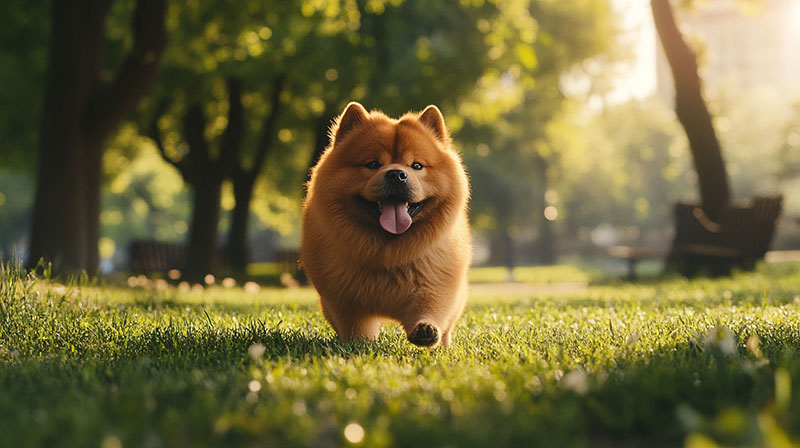
Begin socialization in puppyhood, keep sessions short, and train with rewards and consistency instead of force. The AKC ties the breed’s stubborn streak directly to its need for early socialization and training.
Socialization matters most. Vetstreet’s breed profile says early and frequent exposure teaches the dog to tell a real threat from ordinary activity.
Dogsey rates the breed as intelligent but not easy to train.
- Short, fun sessions keep the dog from getting bored (Vetstreet)
- Rewards the dog values, such as high-value treats, do the heavy lifting (Bark)
- Patience, positive handling and consistency matter (WebMD)
- Dogsey adds that the owner needs to show firmly but kindly where household authority sits
Harsh verbal or physical correction backfires, because the Chow will not be forced (Dogsey). So does skipped socialization, which the Chow Chow Club links to bad-tempered dogs.
Vetstreet describes the breed as highly territorial and says it needs to live inside the house, which makes practice with visitors and guests part of socialization.
Which Health Problems Affect Chow Chows?
Eyes and joints carry documented risks in this breed, and heat-related illness is unusually common on top of that. The table puts the best-supported figures side by side.
| Condition | Published figure | Screening or control |
|---|---|---|
| Entropion | 9.28% annual prevalence vs 0.33% in all UK dogs (O’Neill et al., PLOS ONE, 2025) | Eye exam; Kennel Club standard bars entropion |
| Glaucoma | 4.70% vs 0.89% across all breeds at North American veterinary teaching hospitals, 1994 to 2002 (Gelatt and MacKay, Veterinary Ophthalmology, 2004) | Eye exam by a veterinary ophthalmologist |
| Elbow dysplasia | 64% of 219 graded dogs scored grade 1 to 3 (BVA/Kennel Club, 2025) | Elbow grading, breeding from grade 0 |
| Heat-related illness | Odds 16.61 times those of Labrador Retrievers (Hall et al., Scientific Reports, 2020) | No test; adjust exercise timing |
Eye Conditions
With entropion, the eyelid rolls inward and the lashes rub the cornea. In most breeds loose eyelids cause it, but the UFAW genetic welfare assessment says a narrow eye opening is the usual cause in Chow Chows, with the upper lids often involved too.
Glaucoma shows up more in females among affected Chow Chows, and most breeds first present between ages 4 and 10 (Gelatt and MacKay).
UFAW says a rule against breeding from dogs that have had entropion may lower prevalence, but it calls that approach untested.
Joint Conditions
The AKC breed page lists hip dysplasia, elbow dysplasia and patellar luxation for the breed.
The BVA/Kennel Club scheme grades elbows from 0 to 3, where grade 1 is mild osteoarthritis and grades 2 and 3 are marked osteoarthritis, and it recommends breeding only from dogs with an overall grade of 0.
- OFA hip certification requires the dog to be at least 24 months old, so a puppy has no final hip result
- Judge a litter by its parents’ hip and elbow records
- Patellar luxation has its own OFA evaluation
Thyroid and Other Conditions
Sources disagree on thyroid disease in the breed.
The AKC breed page names thyroid disorders among the breed’s health concerns. Researchers at the University of Veterinary Medicine Vienna, studying Eurasiers (a breed founded partly on the Chow Chow), write that the Chow Chow has no known predisposition for hypothyroidism.
Neither source explains the gap. Autoimmune thyroiditis causes most hypothyroidism in dogs (OFA), and OFA runs a thyroid panel, so ask for the parents’ result.
The heat figure in the table rests on a small number of Chow Chow cases, so its confidence interval is wide (6.21 to 44.44).
A follow-up paper by the same group found the Chow Chow had the highest odds for both exertional and environmental heat-related illness, again with very wide confidence intervals because the Chow Chow was the smallest breed group in the study (Hall et al., Animals, 2020).
How Long Do Chow Chows Live?
Most breed guides put the Chow Chow’s lifespan at 8 to 12 years, though ranges up to 15 years also circulate.
Britannica and Showsight Magazine say 8 to 12 years, Bark says 8 to 13, and Tesco Insurance says up to 10. Pet Circle is the optimistic outlier at 12 to 15.
Part of that spread is a spread between datasets. Vet-practice records in England gave an overall median longevity of 12.0 years (O’Neill et al., 2013), while Kennel Club registered dogs had a median age at death of 10.33 years in the Kennel Club’s 2014 survey, published in 2018.
That is 1.7 years apart before any breed effect, and neither abstract reports a Chow Chow figure. None of the guide ranges above can be checked against them.
O’Neill et al. also found longevity falls as bodyweight rises across breeds, which makes weight the one factor an owner controls directly.
Treat 10 to 12 years as a realistic planning range.
Chow Chow Grooming, Exercise and Heat Care
Grooming starts the day the puppy comes home, and heat needs more attention than anything else.
Grooming and Shedding
The Chow Chow Club’s welfare committee says to begin brushing on day one. You must be able to see the skin as you brush, even on a heavily coated dog (Chow Chow Club), and the coat should be misted first, never brushed dry (Wahl).
The coat sheds heavily about twice a year, and a metal comb or shedding blade clears the dead hair (Wahl). Before a bath, remove large mats and dry the area between the rear legs thoroughly (Chow Chow Club).
Skin trouble follows neglected coat care. The Chow Chow Club notes that a flea-allergic Chow can go into a coat-chewing frenzy over a single bite.
Exercise and Heat
Heat is the main care risk, and it outranks exercise needs.
Britannica puts exercise at about an hour a day, not strenuous, in a well-fenced yard because some Chows are gifted escape artists.
The Chow Chow Club’s welfare committee says the thick coat protects the dog from heat as well as cold. The VetCompass heat data covered in the health section point the other way, and the Canadian Kennel Club standard treats the breed as brachycephalic, a skull type with higher heat risk in the Hall research.
Wisdom Panel says to skip vigorous exercise in hot, humid weather. The Hall research team advises moving walks and play to cooler hours for predisposed breeds (Royal Veterinary College).
Feeding
Puppy formula guidance differs by source.
Pet Circle recommends a medium-breed puppy formula, switching to large-breed formula when expected adult weight exceeds 25 kg. VCA Animal Hospitals says a large-breed growth food slows the growth rate without changing final size, and Healthy Paws also recommends large-breed puppy food.
A 25 kg cutoff is about 55 pounds, which sits below the male weights in the size section, so Pet Circle’s own rule puts most male puppies on large-breed food. Once the formula type is settled, comparing individual puppy food brands is a separate job.
For adults, the AKC breed page recommends a complete and balanced wet or dry food.
Is a Chow Chow the Right Dog for Your Household?
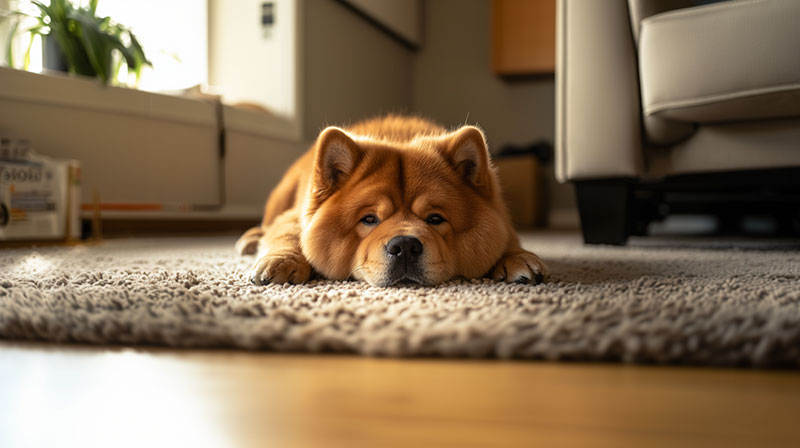
Experienced owners in a cool, quiet home do best with this breed, especially if they want a dignified, low-key dog and don’t mind steady grooming. It fits poorly in hot climates, with first-time owners, and in households that want a playful or cuddly dog.
The upside is real. Exercise needs are moderate, so apartment living can work (Hepper). Showsight Magazine counts it among the cleanest dog breeds, and it makes a watchful household guard that stays calm indoors.
The downsides are just as real.
- Regular brushing and heavy seasonal shedding
- Elevated eye, elbow and heat risks
- A reserved manner with strangers and an independent streak in training
- Restrictions in some homeowners insurance policies
Hot climates are the clearest dealbreaker. Without cool indoor space, heat risk outweighs everything else on the list.
First-time owners should think twice. Showsight Magazine says the breed’s intelligence, independence and aloofness challenge people new to dog ownership.
Young children are a mixed case. VCA Animal Hospitals calls the breed generally tolerant but not playful enough for them, and advises supervision.
Check your insurance before anything else. Bankrate lists the Chow Chow among breeds that appear on carriers’ restricted lists, and those lists vary by carrier.
Credible, via Fox Business, adds that more insurers have no breed restrictions than have them. One phone call to your agent settles the question.
How to Buy or Adopt a Chow Chow
Buy from a breeder who health-tests both parents and welcomes questions, or adopt through a breed rescue. Either route beats an unverified online listing.
- Start with the parent club. The Chow Chow Club, Inc. keeps a breeder directory, and its welfare committee runs the national adoption listings.
- Request the parents’ health records. Ask for hip and elbow evaluations, an eye examination and thyroid results, and look them up in the OFA public database.
- Read the results, not the CHIC number. OFA’s own CHIC documentation says the number shows the required tests were performed, not that the dog passed them.
- Check both parents’ eyes and elbows. Entropion should never be present under the Kennel Club standard, and elbow changes are common in the breed, so look for clear grades.
- Meet the parents. Watch how they behave with you and with other dogs, and expect the breeder to question you about your home in return (Vetstreet).
Chow Chow puppy prices vary widely by region, pedigree and breeder, and published price guides rarely cite their data. Compare breeders by their testing records, not by quotes alone.
Because the standard judges all five accepted colors equally, a color-based premium has no breed-standard basis. Budget with how expensive a dog is over a lifetime in mind, not only on pickup day.
On the adoption side, the Chow Chow Club, Inc. Welfare Committee runs a national adoption site that lists available Chows by state.
Baby puppies are seldom abandoned, so rescues rarely have them, and adoption fees run higher for puppies and lower for seniors (Wisconsin Chow Chow Rescue). That rescue offers a two-week trial adoption with a fee refund if the match fails.
The welfare site says reputable rescues temperament-test their dogs and will not knowingly place a Chow with a bite record. If you already own a dog, it recommends adopting a Chow of the opposite sex.
Chow Chow FAQ
Are Chow Chow puppies born with blue tongues?
No. Chow Chow puppies are born with pink tongues, and the blue-black color begins to develop as the puppy’s eyes open, usually reaching its dark shade by 8 to 10 weeks (AKC). A pink tongue on a very young puppy is normal, and the final shade shows later.
Do Chow Chow mixes keep the blue-black tongue?
Usually, yes. The tongue gene appears dominant, because most mixed-breed dogs with a Chow Chow parent retain the color (Wikipedia).
Coat, size and temperament vary widely in a mix, since no breed standard governs the result.
Is there a difference between male and female Chow Chows?
Yes, mainly in build. Males run larger and more robust, while Orvis describes females as slightly more refined.
Hepper adds that personality differences show most between females and unneutered males.
Do Chow Chows bark a lot, and are they good guard dogs?
They make good guards without being big barkers. The FCI standard describes a quiet dog and a good guard, and the PDSA says the breed is not known for heavy barking.
The protective instinct is still part of its nature.
Can a Chow Chow live with cats?
It depends on the individual dog. The PDSA notes the breed’s hunting history means a high prey drive can come naturally.
Introduce a cat or small pet early and under supervision.
How popular is the Chow Chow today?
Far less popular than in the 1980s. The AKC’s 2025 rankings place the breed 94th of 202 breeds.
The Chow Chow Club says it was the sixth most popular breed when its welfare committee formed in 1990.
What a Chow Chow Costs to Keep Healthy
Eyes and elbows are where the breed’s disease rates run highest, so that’s where most of the money goes. Heat management costs a changed routine, not a bill.
Two figures give a rough spending order. Entropion occurs at about 28 times the all-dog rate (9.28% against 0.33%, O’Neill et al., 2025) and glaucoma at about 5 times (4.70% against 0.89%, Gelatt and MacKay, 2004). Eye care is therefore the likeliest recurring bill.
In practice, I’d get the parents’ eye and elbow results before purchase and set up a cool-hours exercise routine from week one. Eye examinations come next, once the dog reaches adulthood.
Prevention sits ahead of detection in that order, because screening the parents is the only step that acts before the puppy exists.
This was last verified in October 2026. The heat guidance rests mainly on 2016 UK clinic records, and a 2022 UK emergency-care study also found raised odds for the breed (odds ratio 11.46; Beard et al., Veterinary Record, 2024), though that figure too rests on very few Chow Chow cases. Newer VetCompass data would change how much exercise to allow in warm weather.