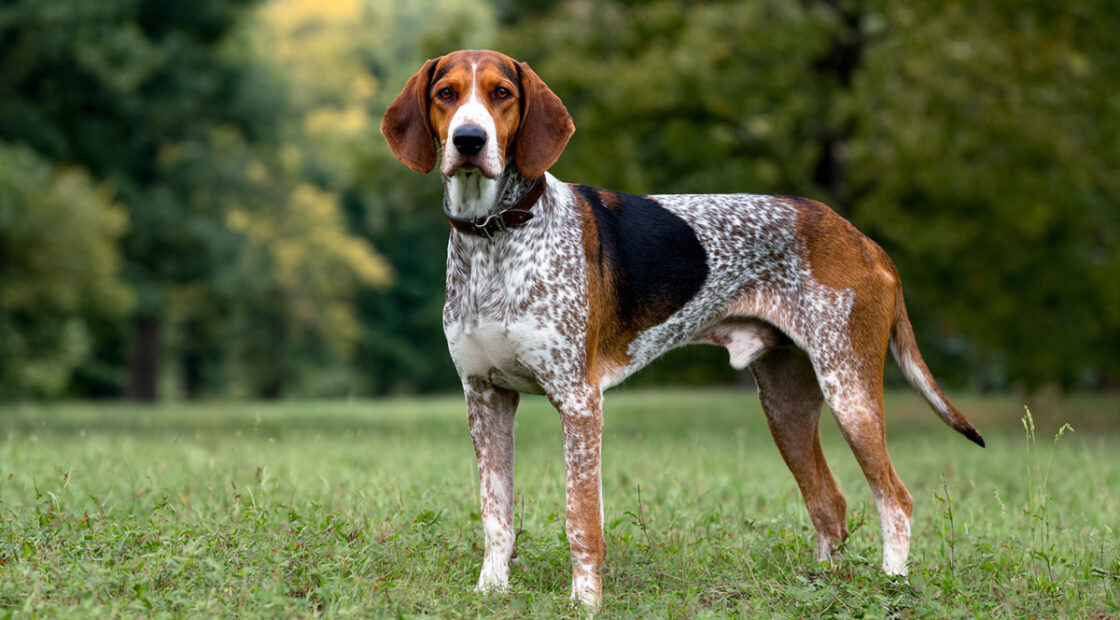
Hunters call the same dog the English Coonhound or the Redtick, but the AKC lists it as the American English Coonhound, a scent hound in the Hound Group that runs a raccoon down at speed and trees it.
Southern hunters built the breed from English Foxhound stock, mostly for speed on hot trails, and dogs of this type still run in nite hunts and field trials.
The two main registries don’t agree on the name or the date. The UKC registered it in 1905 as the English Fox and Coonhound. The AKC waited until 2011, then recognized it and added “American” to the name.
What Is the American English Coonhound?
Look for a ticked coat, a racy build and a loud voice. It works fresh scent fast instead of slowly, and it’s a raccoon dog first.
The names get confusing. The AKC uses American English Coonhound, and the club added “American” to make the breed’s origins on this side of the Atlantic clear. The UKC calls the same breed the English Coonhound, as a Showsight breed article confirms. Redtick Coonhound is a nickname taken from the most common coat color, and English Fox and Coonhound was the original UKC registry name.
Southern hunters have always called the dog simply “the English dog,” the AKC reports.
It isn’t the Treeing Walker Coonhound or the Bluetick Coonhound, though both began as varieties of the English and later became breeds of their own.
Where the American English Coonhound Comes From
Colonists brought hounds over from England, and Southern hunters reshaped them for faster raccoon work.
Like every AKC-registered coonhound except the Plott, the breed traces back to English Foxhound stock. The UKC breed standard names the Virginia Hounds as the base from which the modern breed was developed.

The AKC notes that English Foxhounds carry heavier bone and bodies, since fox hunting over small British holdings never required speed.
Coonhounds needed more pace across wide-open American country. That produced a leaner, more aerodynamic outline.
Even the AKC gives two dates for the import. Its breed history says the foxhounds reached the colonies in the 17th and 18th centuries, while its coonhound overview says the early 1800s. Read together, the two pages place the arrival of the ancestors anywhere from the 17th century to the early 1800s.
Recognition came in stages, and the two registries sit far apart in time. The UKC first registered the breed in 1905 as the English Fox and Coonhound (UKC breed standard). The Treeing Walker was registered as a separate breed in 1945 (UKC breed standard), and the UKC began registering the Bluetick separately in 1946 (UKC Bluetick standard). The AKC didn’t recognize the breed as the American English Coonhound until 2011 (AKC).
That is a 106-year gap between the two registries, and it explains why the breed carries two names.
How the American English Coonhound Hunts
The dog trails a raccoon by night, forces it up a tree, and bays at the base until the hunter walks up.
Westminster Kennel Club notes that these hounds originally ran fox by day and raccoon by night. They hot-trail, which means working fresh scent at speed, and they’re strong at short range with enough endurance for areas where raccoons are scarce. The chop bark changes pitch between trailing and treeing.
Showsight Magazine describes this speed and voice in its breed profile, and the AKC adds that the English dog is used on newer, hot trails rather than the cold trails that Blueticks follow.
Coonhounds also bay bear and cougar, darting in and out to keep the animal busy until the hunter catches up, according to the AKC.
Events the breed competes in
The AKC Raccoon Hound Events Program runs nite hunts, hunt tests, field trials, water races and bench shows.
Nite hunts are the most popular. The dogs work natural areas where native game must be trailed and has not been planted, the AKC says.
The UKC lets spayed and neutered dogs enter all of its licensed coonhound events, including bench shows, nite hunts, water races and field trials.
English dogs have been bred for success in the field over a consistent show-ring look, so few appear as show dogs (AKC). One field record stands out. The UKC breed standard credits an English dog named Bones, owned by Colonel Leon Robinson, with winning the first Leafy Oak, the first major coonhound field trial.
American English Coonhound Size, Coat and Colors
Height and weight
Registries measure height at the withers, and their ranges for males overlap without matching. The AKC wants males at 24 to 26 inches and females at 23 to 25 inches. The UKC allows males anywhere from 22 to 27 inches, with weight in proportion to height.
Neither standard fixes a weight. The AKC asks for weight in proportion to height, enough that the dog looks capable of an all-night hunt.
That gap explains why profile pages disagree. Purina lists 50 to 75 pounds, while Westminster tops out at 65.
The AKC standard calls for a racy but strong body with a deep chest, a strong back, a broad loin and defined muscle. The deep chest leaves room for the lungs during long runs.
Coat and colors
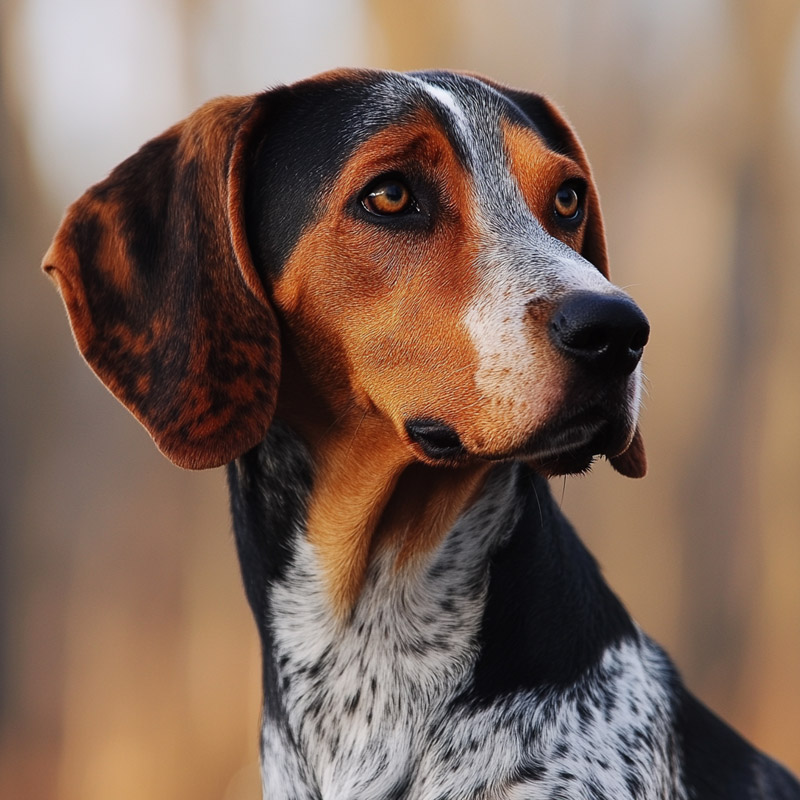
The AKC standard accepts red and white ticked, blue and white ticked, tricolored with ticking, red and white, and white and black.
A tricolor coat without ticking disqualifies a dog. So does a solid color with less than 10 percent ticking, and so does any brindle. An overshot or undershot bite is a disqualification too.
Redtick is the most common pattern, and the AKC states there is no such thing as a solid-colored English dog. The UKC standard agrees that redticked dogs dominate the breed today.
Coat care and shedding
The coat is hard and protective, and sources split on its length. Westminster calls it medium, while WebMD describes it as short and smooth.
Either way, grooming demands stay low. Westminster rates both grooming needs and shedding at the low end, and WebMD recommends weekly brushing.
American English Coonhound vs. Other Coonhound Breeds
Ticking and coat color are what separate the American English from its two closest relatives. From the Redbone, the Black and Tan and the Plott (the other AKC coonhounds), it’s mostly ancestry and size.
| Breed | Link to the English | AKC recognized | Tell-apart trait |
|---|---|---|---|
| Treeing Walker | Split off, UKC 1945 | 2012 | Tricolor with clear, unticked white |
| Bluetick | Split off, UKC 1946 | 2009 | Heavier bone, mostly blue mottled body |
| Redbone | Separate breed | 2009 | Red-mahogany coat |
| Black and Tan | Separate breed | 1945 | Black coat, tan markings, largest coonhound |
| Plott | Separate, German-derived | 2006 | Brindle coat |
Tricolored Treeing Walkers are the nearest look-alikes, since both breeds come in that pattern. The AKC standard disqualifies tricolored English dogs without ticking, because Walkers carry clear, unticked white markings.
Blue-ticked English dogs can pass for Bluetick Coonhounds, which carry heavier bone and were developed to follow cold trails. The 10 percent ticking floor for solid colors in the English standard helps keep the two apart.
How many coonhound breeds exist depends on which registry you ask. The AKC’s breed overview names six, but its Raccoon Hound Events Program lists seven by adding the Leopard Hound. The UKC goes further, since its Scenthound Group also includes the American Leopard Hound (recognized in 2008) and the Treeing Tennessee Brindle (recognized in 2017).
Temperament at Home and on the Trail
Indoors the breed is sociable and mellow. Once it picks up a scent, it turns driven and loud.
Westminster Kennel Club calls the breed pleasant, alert, confident and sociable with both humans and dogs. Embark’s breed profile adds that these hounds are “nesters” that hunt out comfortable spots to sleep, couch included. Between outings they stay calm and friendly.
The hunting side shows up as a strong prey drive, bawling and baying at full volume, and a stubborn, independent streak.
Prey drive matters most in homes with small animals, the AKC cautions, because a cat or a rabbit can look more like quarry than a housemate. Embark advises socializing the puppy with smaller animals early.
Westminster rates barking at 4 out of 5.
Embark ties the noise to confinement, noting that a hound that is cooped up will bark and bark.
Sources split on house-dog suitability. Wikipedia says the breed usually makes a good house pet, while WebMD says it is not an ideal one.
Read together, the sources point to activity level as the deciding factor. A dog that works off its energy settles indoors, and one that does not gets loud.
How Much Exercise and Training Does the Breed Need?
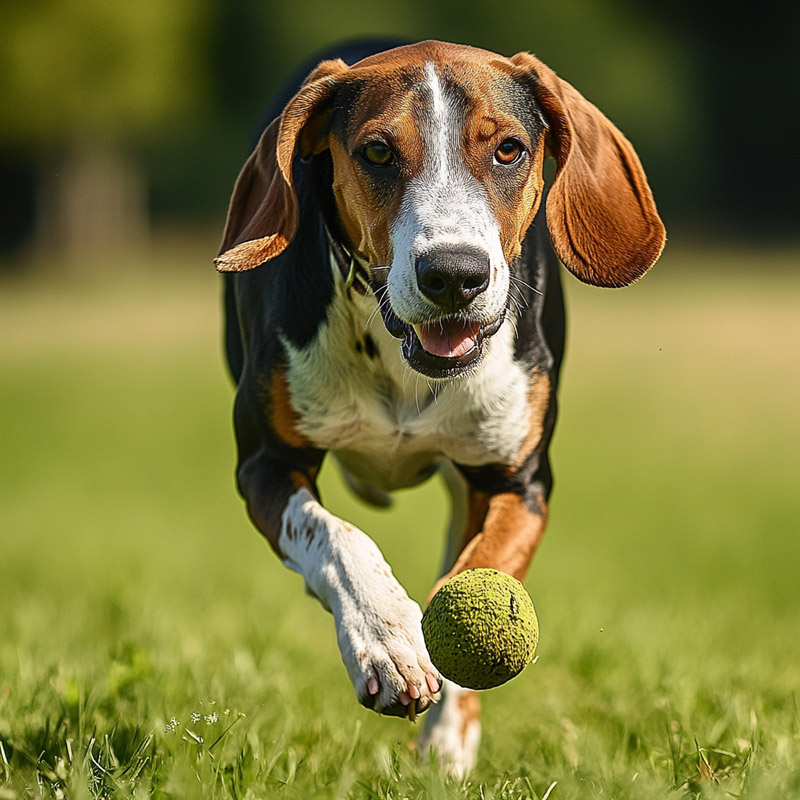
Plan on hours of daily activity and training that starts in puppyhood. The breed was built to run all night and follow its nose, and it hasn’t forgotten.
Daily exercise
The AKC and Purina describe the need as regular exercise to stay in condition, while Dogster tells owners to expect hours of activity every day. Neither description gives a minute count.
Wisdompanel suggests runs, swims and hikes, and Dogster adds bikejoring. Purina lists tracking and obedience among the breed’s activities, which gives the nose a job as well as the legs.
Training and recall
Socialization should begin the day the puppy arrives (PetMD), and it should include smaller animals. Bark recommends positive reinforcement as the method.
Recall needs proof before anything else. Test it on a long line or inside a fence before any off-leash work near wildlife.
Small, healthy dog treats make workable rewards for recall drills, because the nose is the main competitor for attention.
Sources disagree on difficulty. Dogster calls the breed very stubborn, while Hepper says training is less rigorous than with many breeds.
Both can be true. Indoor work is easier than training against a fresh scent.
Common Health Problems and Lifespan
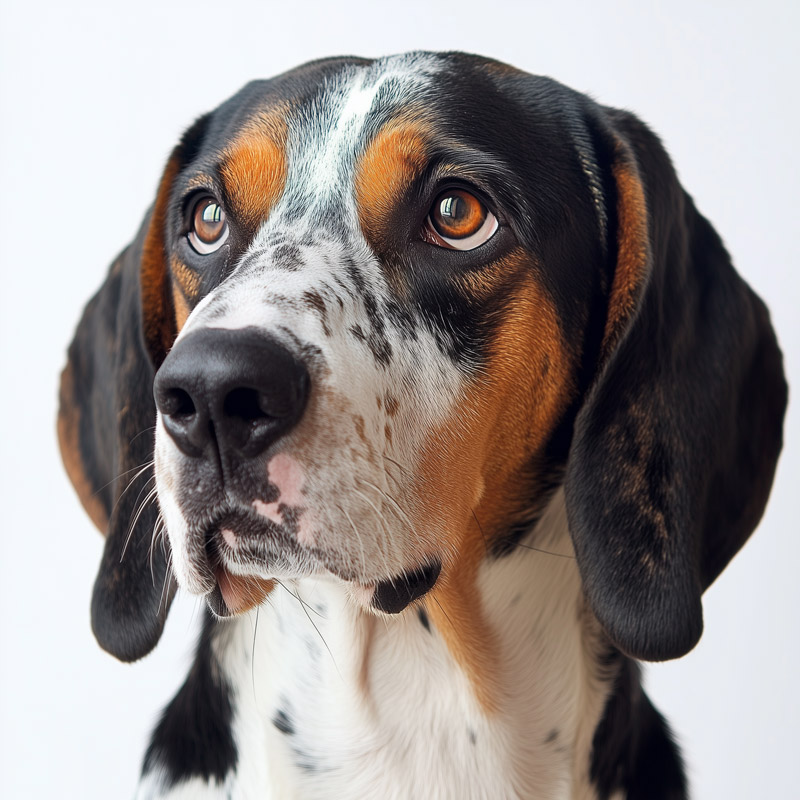
Most of these dogs live 11 to 12 years. Hip dysplasia, ear infections and bloat come up most often in the sources.
WebMD and PetMD give that 11 to 12 range, Dogster says 10 to 12, Westminster tops out at 12, and Zoetis stretches it to 14.
Hip and elbow dysplasia
Profile pages list hip and elbow dysplasia as risks for a large hound, and WebMD tells buyers to ask for proof that both parents were cleared of health conditions.
The Orthopedic Foundation for Animals (OFA) runs the voluntary hip database most breeders use. Its evaluation requires a dog at least 24 months old, according to a Veterinary Information Network review.
That rule has a practical consequence. Check the parents’ records, because a puppy cannot have a final OFA hip result yet.
Ear infections and ear care
Wikipedia says drop-eared breeds need frequent ear checks for wax and debris buildup, and Wisdompanel puts the routine at weekly cleaning and checking.
A weekly wipe with ear wipes made for dogs covers routine upkeep. An ear that smells or looks inflamed needs a vet visit.
Check the ears the same day after swimming or water-race training.
Bloat
The AKC standard asks for a deep chest, and the American College of Veterinary Surgeons (ACVS) lists a deep chest as a risk factor for gastric dilatation-volvulus (GDV), the stomach-twisting emergency known as bloat.
Sources disagree on how often it kills. ACVS reports mortality of approximately 15 percent, while a British Columbia government fact sheet from 2024 puts it at 25 to 30 percent.
The British Columbia sheet recommends several small meals instead of one large one, and no exercise before meals or right after them. ACVS adds that gastropexy does not stop the stomach from expanding, but it should prevent the life-threatening twist. For a high-risk dog, ask the vet about a preventive gastropexy.
A slow feeder bowl helps a dog that gulps its food, since fast eating adds swallowed air, MedVet notes. A suspected case is an emergency.
What Is Coonhound Paralysis, and Does It Target the Breed?
The proper name is acute polyradiculoneuritis, a sudden nerve inflammation that follows contact with raccoon saliva. Any breed can develop it, and the Merck Veterinary Manual describes it as common in dogs and rare in cats.
Veterinarians use the name coonhound paralysis when a raccoon bite or scratch came first (WSAVA 2013 proceedings). The identical disease without raccoon exposure is called idiopathic polyradiculoneuritis, and VCA Animal Hospitals lists vaccination or a stomach or respiratory infection as other precursors.
The cause is described two ways. VCA calls it an immune reaction to raccoon saliva, while the University of Illinois College of Veterinary Medicine says the exact mechanism is still unknown.
Signs appear 7 to 14 days after a raccoon bite or scratch (Merck Veterinary Manual). They start as a stiff-legged gait and progress to paralysis of all four legs. Most affected dogs can still wag their tails, and pain sensation stays intact. No confirmatory test exists, so a published case report describes diagnosis as a process of ruling out other causes.
The Merck Veterinary Manual puts complete recovery at 2 to 6 months, and death from respiratory paralysis occurs in severe cases. Illinois says some dogs recover within days or weeks, while many take months.
Treatment is supportive nursing, meaning preventing pressure sores, limiting muscle loss, managing pain and keeping nutrition up (VCA). WSAVA warns that re-exposure to raccoons can trigger a relapse, which rules out raccoon work for a dog that has recovered.
To prevent it, remove the food sources that attract raccoons to the yard, as Illinois advises.
Is an American English Coonhound the Right Dog for Your Home?
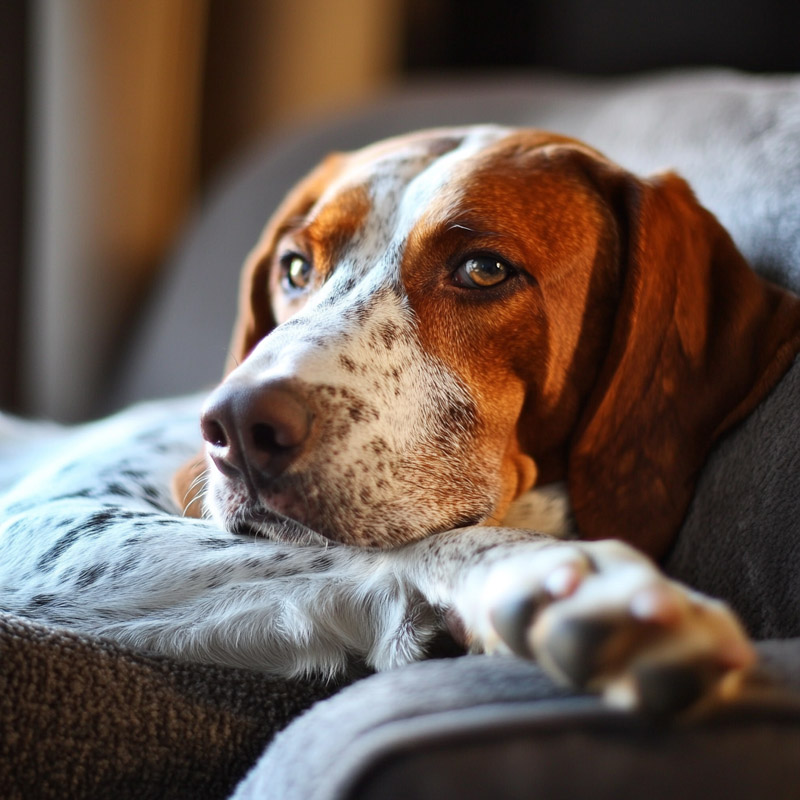
It suits active households that want a sociable dog and can live with noise. It fails in sedentary homes, in households with small pets, and wherever off-leash reliability is required.
Households that fit
- Owners with hours a day for running, hiking or swimming
- Hunters and competitors who enter nite hunts and field trials
- Homes with other dogs, since Westminster rates the breed highly with them
- People whose neighbors tolerate a loud voice
Purina’s profile pairs an easy-care coat with a warning to provide enough exercise. The coat is the easy part.
Households that do not
- A dog bred to hunt all night will not settle for a walk around the block, so sedentary routines are a bad match.
- The AKC flags prey drive around cats and small pets, so supervise closely or pick another breed.
- Strict noise limits are a problem, since the AKC says being vocal is simply part of who these dogs are.
- The AKC calls them scent-obsessed, and a fresh trail beats a recall command every time, so off-leash freedom is out.
If any two of these describe your home, look at a lower-drive breed.
Finding a puppy or an adult dog
- Start with the breed’s AKC parent club. The AKC approves one national club per breed, and each club publishes health testing recommendations.
- Check the AKC’s Hound Group health testing page for the tests the national club recommends for this breed. Breeders in the AKC Breeder of Merit and Bred with H.E.A.R.T. programs certify that those screens were done.
- Ask for written results on both parents, not on the puppy.
- Ask what the parents do (hunt, compete or live as pets), because that shows how much drive to expect.
- Allow time. Dogster says puppies can be hard to find because the breed is not overly popular, and Embark notes it is seldom kept only as a pet outside the South.
An adult dog shows its energy and voice before you commit. That makes it a fair route for a first-time hound owner.
American English Coonhound FAQ
How much does an American English Coonhound puppy cost?
Listings on the Good Dog marketplace run from $400 to $1,000, while PetMD cites $800 to $1,200 and up to $2,000. Both tie the price to the breeder.
Pay the premium for documented parent health testing.
How often should an American English Coonhound eat?
Adults eat two meals a day, morning and evening, and puppies need three to four smaller meals, according to PetMD.
Amounts depend on age, weight and activity, so start from the food label and adjust with a vet. PetMD also advises against raised bowls.
Can an American English Coonhound be left home alone?
Only for short stretches at first. Embark notes that a confined hound barks, and the ASPCA lists barking, howling, chewing and escape attempts as signs of separation anxiety.
Build alone time gradually, and exercise the dog hard beforehand.
Is the American English Coonhound a good watchdog?
It works as an alarm more than a guard. Bark says the loud howl suits watchdog duty, but Westminster rates protectiveness at just 3 out of 5.
Expect announcement, not defense.
Is the American English Coonhound the fastest coonhound?
Breed profiles from WebMD, Bark and PangoVet rank it the fastest of the six AKC coonhound breeds.
The AKC standard opens by calling the breed renowned for speed and endurance.
What to Do First With a New American English Coonhound
A new American English Coonhound needs containment before training, socialization before sport, and a vet plan before the first hard run.
Escape and raccoon contact carry the highest irreversible risk, so they come first. Behavior work starts the same day, but a lost or raccoon-bitten dog costs more than a late lesson.
Secure a fence or long line and remove raccoon food sources. Start socializing with people, other dogs and smaller animals. Then book a vet visit to set meal timing and talk through gastropexy.
Choose a diet from the puppy food brands the vet approves, since feeding schedule and bowl type both affect bloat risk.
The trade-off is off-leash freedom, which the breed gives up for its own safety. This sequence reflects sources checked in October 2026, and a change in the parent club’s recommended health tests would change the vet-visit step.