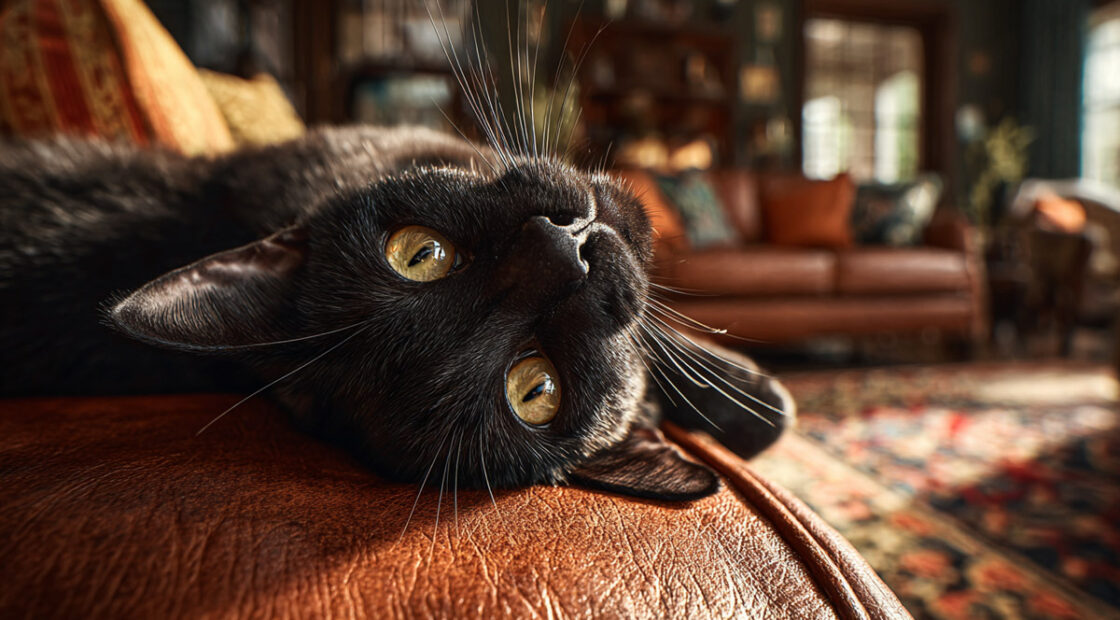
Picture a miniature black panther lounging on your couch, copper eyes gleaming as it follows your every move. That’s life with a Bombay cat.
These sleek felines combine wild appearance with affectionate, dog-like personalities. Their patent leather coats and golden eyes turn heads, but their velcro cat behavior steals hearts.
If you’re considering adding one of these rare beauties to your home, you need the complete picture. This guide covers everything from their muscular build and playful temperament to health concerns, costs, and whether this attention-seeking breed matches your lifestyle.
You’ll learn what makes Bombays different from other black cats, how much care they actually need, and if you’re ready for a cat that refuses to leave your side.
Bombay Cat Breed Statistics
| Characteristic | Details |
|---|---|
| Weight | Males: 8-11 lbs, Females: 6-9 lbs |
| Height | 8-10 inches |
| Lifespan | 12-16 years |
| Coat Type | Short, glossy, single-layer |
| Coat Color | Solid black only |
| Eye Color | Copper to gold |
| Shedding | Low to moderate |
| Grooming Needs | Low (weekly brushing) |
| Energy Level | Moderate to high |
| Personality | Affectionate, social, playful, vocal |
| Good with Kids | Yes |
| Good with Dogs | Yes (with proper introduction) |
| Good with Other Cats | Yes |
| Trainability | High (intelligent, food-motivated) |
| Vocalization | Moderate to high |
| Attention Needs | High (people-oriented) |
| Exercise Requirements | Moderate (interactive play daily) |
| Health Issues | Generally healthy; watch for hypertrophic cardiomyopathy, respiratory issues |
| Origin | United States (1950s) |
| Price Range | $500-$2,000 |
| Best For | Families, singles, seniors, first-time cat owners |
| Not Ideal For | People away from home frequently |
What Is a Bombay Cat?

The Bombay is a medium-sized domestic cat with a jet black coat, muscular build, and striking copper to gold eyes, created to resemble a miniature black panther.
Developed in the 1950s by breeder Nikki Horner in Louisville, Kentucky, this breed combines the sleek appearance of a wild cat with a gentle, affectionate temperament.
The Bombay resulted from crossing sable Burmese cats with black American Shorthair cats. After several attempts, Horner successfully created the breed in 1965.
The Cat Fanciers’ Association recognized the Bombay in 1970. The International Cat Association followed with recognition in 1979.
This breed is named after the Indian city of Bombay (now Mumbai), referencing the habitat of black panthers. Two variants exist: American Bombay cats (with copper eyes) and British Bombay cats (with green eyes).
Physical Characteristics
How Big Do Bombay Cats Get?
Males: 8-11 pounds
Females: 6-8 pounds
Height: 8-10 inches at shoulder
The Bombay has a medium-sized, muscular body that feels surprisingly heavy when picked up. Their weight distribution comes from dense muscle mass rather than fat.
These cats have a cobby body type. Compact and stocky, they possess exceptional strength despite their moderate size.
Bombays reach full physical maturity slowly. They don’t achieve their complete adult size until 2-3 years old, unlike many breeds that mature by one year.
What Does a Bombay Cat’s Coat Look Like?
The Bombay’s coat is short and close-lying with a satin-like texture. When properly maintained, the fur has a patent leather appearance with a high-gloss sheen.
Color: Only solid black is accepted in breed standards. The coat is black from root to tip with no paling allowed in mature cats.
Texture: Fine, silky, and tight to the body
Even the whiskers, nose leather, and paw pads are black. This complete black coloring distinguishes true Bombays from other black cats.
Shedding level: Low to moderate
Bombay kittens may display sable or brown coloring with faint tabby markings. The coat darkens over the first few months, eventually becoming the signature solid black.
Grooming needs: Weekly brushing with a rubber curry brush
Distinctive Physical Features
Eyes: Large, round, and set far apart. Colors range from bright copper to warm golden. Green eyes disqualify American Bombays but appear in British Bombays.
Head: Pleasingly rounded with no sharp angles. The face is full with considerable breadth between the eyes.
Muzzle: Broad, well-developed, and maintains rounded contours. A visible but moderate nose stop creates a slight indentation at the bridge.
Ears: Medium-sized, wide-set, and rounded at the tips. They tilt slightly forward, creating an alert expression.
Tail: Medium length with elegant carriage
Walk: Distinctive swaying gait that resembles the movement of an Indian black leopard
The entire cat presents a rounded appearance. Head, ear tips, eyes, chin, and even feet have rounded characteristics that contribute to the breed’s unique look.
Bombay Personality and Temperament

Are Bombay Cats Affectionate?
Yes. Bombays are extremely affectionate and people-oriented.
These cats earned the nickname “Velcro cats” because they follow their owners from room to room. They crave constant human interaction and physical contact.
Bonding style: Forms strong attachments to all family members, not just one person
Bombays love lap time and will frequently drape themselves across whatever you’re reading or working on. They demand attention through head-butting, kissing, and persistent meowing until acknowledged.
Stranger reaction: Friendly and gregarious
Unlike aloof cats, Bombays typically greet visitors with curiosity rather than hiding. They adapt well to new people and situations.
Attention requirements: High (2-3 hours daily interaction needed)
How Active Are Bombay Cats?
Energy level: Moderate to high
Bombays remain playful throughout their lives. While adult cats are more placid than kittens, they never completely lose their kittenish enthusiasm.
Exercise needs: 60-90 minutes of daily play and activity
These cats are excellent climbers and jumpers. They need vertical space like cat trees and perches to satisfy their athletic nature.
Favorite activities:
- Fetching balls and toys
- Interactive games with owners
- Climbing and perching in high places
- Window watching
Intelligence: Very high
Bombays can learn tricks, walk on a leash, and even play fetch like dogs. Their problem-solving abilities mean they’ll invent their own entertainment if bored.
Trainability: Excellent with positive reinforcement
Do Bombay Cats Get Along with Others?
Children: Excellent compatibility, especially with properly supervised kids of all ages
The breed’s social nature and gentle disposition make them ideal family cats. They tolerate handling well and enjoy interactive play.
Dogs: Very good compatibility
Bombays often bond with cat-friendly dogs. Their dog-like personality helps them adapt to canine companions.
Other cats: Good, but may be dominant
While generally friendly with feline housemates, Bombays like being the alpha cat. Slow, proper introductions prevent territorial disputes.
Multi-pet households: Well-suited
These adaptable cats thrive in busy homes with multiple pets and people.
Alone time tolerance: Poor
Bombays suffer from separation anxiety if left alone for extended periods. They need companionship, whether from humans or other pets.
How Vocal Are Bombay Cats?
Vocalization frequency: Moderate to very vocal
Bombays communicate frequently with their owners. They use meowing to express needs, desires, and opinions.
Voice characteristics: Soft to moderate volume with varied tones
Not as loud as Siamese cats, but more talkative than average breeds. Their vocalizations sound conversational rather than demanding.
Communication style: Expressive and interactive
These cats “talk” to their owners throughout the day, commenting on activities and requesting attention.
Health and Lifespan
How Long Do Bombay Cats Live?

Average lifespan: 12-16 years
Maximum lifespan: Some individuals reach 18-20 years
Bombays live slightly longer than the average domestic cat (12-14 years) when provided proper care.
Longevity factors:
- High-quality diet
- Regular veterinary care
- Maintaining healthy weight
- Indoor living environment
- Genetic health testing by breeders
Common Health Issues in Bombay Cats
Hypertrophic Cardiomyopathy (HCM)
The most common heart disease in cats. HCM causes the heart’s ventricular walls to thicken, reducing pumping efficiency.
Symptoms: Difficulty breathing, lethargy, rapid breathing, fainting, sudden collapse
Age of onset: Can develop at any age but typically appears in adulthood
Prevalence: Higher than average in Bombays due to Burmese heritage
Treatment: No cure exists. Management focuses on medication to regulate heart rate and address fluid buildup.
Prevention: Genetic screening of breeding cats, regular cardiac monitoring
Craniofacial Defect (Burmese Head Defect)
A genetic mutation causing severe malformation of the skull and facial structure in affected kittens.
Symptoms: Deformed skull, improperly formed jaws, brain protrusions visible at birth
Age of onset: Present at birth
Severity: Fatal. Affected kittens are usually stillborn or require immediate euthanasia.
Genetics: Requires two copies of the mutated gene. Cats with one copy are carriers with shortened muzzles but no life-threatening defects.
Prevention: Genetic testing available. Responsible breeders screen breeding stock and never breed carriers together.
Familial Episodic Hypokalemic Polymyopathy (Burmese Hypokalemia)
Inherited disorder causing intermittent low potassium levels.
Symptoms: Muscle weakness, difficulty walking, head and neck drooping toward chest
Age of onset: 2-6 months in kittens
Treatment: Lifelong potassium supplementation manages symptoms
Prevention: Genetic testing identifies carriers
Respiratory Issues
Short muzzles predispose Bombays to breathing difficulties and sinus problems.
Symptoms: Snuffly breathing, nasal congestion, sinus infections
Management: Keep environment dust-free, monitor during hot weather
Excessive Tearing (Epiphora)
Shortened facial structure distorts tear drainage canals.
Symptoms: Constant tearing, staining on face below eyes
Treatment: Regular facial cleaning with damp cloth prevents staining
Gingivitis and Dental Disease
Prevention: Daily teeth brushing, dental treats, regular professional cleanings
Age-related risk: Increases with age without proper dental care
Obesity
Bombays love food and can easily gain weight, especially as indoor cats with reduced activity.
Risk factors: Overfeeding, constant food access, insufficient exercise, spaying/neutering
Prevention: Measured portions, scheduled feedings, daily play sessions
Health consequences: Diabetes, joint problems, heart strain
What Health Testing Should Bombay Cats Have?
Genetic screening for breeding cats:
- Craniofacial defect gene testing
- Hypokalemia gene testing
- HCM genetic markers
Regular veterinary checks:
Kittens (under 1 year): Multiple visits for vaccinations, every 2-3 months
Adults (1-7 years): Annual wellness exams
Seniors (7+ years): Bi-annual checkups
Breed-specific monitoring:
Cardiac screening: Echocardiogram starting at 1 year, repeated annually or as recommended
Blood work: Annual panels to check potassium levels and organ function
Pre-breeding health certifications:
- Cardiac clearance
- Genetic testing for known mutations
- Overall health assessment
Caring for a Bombay Cat

What Do Bombay Cats Eat?
Protein requirements: 35-45% of diet
As obligate carnivores, Bombays need animal-based protein for muscle maintenance and energy.
Feeding frequency:
Kittens (under 1 year): 3-4 small meals daily
Adults: 2 scheduled meals daily
Portion sizes: Based on weight and activity level
Sedentary adult (8 lbs): Approximately 200-250 calories daily
Active adult (10 lbs): Approximately 280-320 calories daily
Always follow food packaging guidelines and adjust based on your cat’s body condition.
Wet vs. dry food:
Wet food provides better hydration and typically contains fewer carbohydrates. Many owners combine both types.
Special dietary considerations:
High-quality food with real meat as the first ingredient. Avoid foods with excessive fillers, grains, or artificial additives.
Bombays develop slowly, reaching maturity at 2 years. Feed kitten food until age 2, then transition to adult formulas.
Foods to avoid:
- Onions and garlic
- Chocolate
- Grapes and raisins
- Raw meat (risk of parasites)
- Excessive treats (no more than 10% of daily calories)
Weight management: Critical for this breed
Monitor body condition weekly. You should feel ribs easily but not see them prominently. Measured portions prevent obesity better than free-feeding.
How Do You Groom a Bombay Cat?
Brushing frequency: Once weekly with rubber curry brush
The short, tight coat requires minimal maintenance. Regular brushing removes loose hair and distributes natural oils for enhanced shine.
Bathing requirements: Rarely needed (2-3 times yearly or as needed)
Most Bombays keep themselves clean. Bathe only if the coat becomes greasy or dirty.
Nail trimming: Every 2-3 weeks
Start nail care early to acclimate kittens. Trim just the sharp tip to avoid cutting the quick.
Dental care: Daily brushing recommended
Use vet-approved cat toothpaste (never human toothpaste). Daily brushing prevents tartar buildup and expensive dental treatments.
Eye cleaning: As needed
Bombays may experience tearing due to facial structure. Wipe tear stains daily with a damp, soft cloth.
Ear cleaning: Weekly inspection, clean monthly or as needed
Check for redness, odor, or discharge. Clean with vet-recommended ear cleaner and cotton ball. Never use cotton swabs inside ear canal.
Professional grooming: Not necessary
Owners can handle all grooming needs at home. Professional grooming costs around $50 per session if desired.
How Much Exercise Does a Bombay Cat Need?
Daily activity requirement: 60-90 minutes combined play and exploration
Indoor vs. outdoor: Best suited as indoor cats with supervised outdoor access
Bombays adapt well to apartment living and single-room environments. They’re perfectly content as indoor-only cats when provided adequate enrichment.
Recommended toys and enrichment:
- Interactive feather wands
- Laser pointers (always end with catchable toy)
- Puzzle feeders
- Treat-dispensing toys
- Balls for fetching
- Cardboard boxes for hiding
Mental stimulation needs: High
These intelligent cats require mental challenges. Rotate toys regularly to prevent boredom.
Climbing/vertical space importance: Essential
Install cat trees with multiple levels and perches. Window perches provide entertainment and satisfy their love of observation.
Interactive play frequency: 2-3 sessions of 15-20 minutes daily
Bombays thrive on interactive play with their owners. Games of fetch, chase, and hunt satisfy their predatory instincts.
Exercise tips:
Leash training works well with Bombays. They can learn to walk on harnesses for safe outdoor exploration.
Prevent obesity by encouraging movement. Place food bowls away from resting areas to add steps throughout the day.
Living with a Bombay Cat

Are Bombay Cats Good for Apartments?
Yes, excellent for apartments
Space requirements: Can thrive in small spaces, even single rooms
Bombays adapt remarkably well to compact living environments. They don’t need large territories when provided vertical space and attention.
Noise level: Moderate
While vocal, Bombays aren’t excessively loud. Their soft to moderate meowing rarely disturbs neighbors.
Neighbor compatibility: Good
These cats don’t create disturbances. Their playfulness stays indoors without excessive noise.
Indoor-only suitability: Perfect
Bombays are content living entirely indoors. They don’t develop the restlessness some breeds experience without outdoor access.
Vertical space needs: Important
Use vertical territory efficiently with wall-mounted shelves, cat trees, and window perches. This maximizes limited floor space.
What Environment Do Bombay Cats Need?
Temperature tolerance:
Heat: Good tolerance but provide cool areas during hot weather
Cold: Low tolerance due to short coat. Keep indoor temperatures comfortable (65-75°F)
Humidity preferences: Average household humidity suitable
Safe outdoor access options:
Catios: Screened outdoor enclosures provide fresh air safely
Leash walking: Many Bombays enjoy supervised walks on harness
Supervised yard time: Only in fully fenced, escape-proof areas
Environmental enrichment specifics:
Multiple hiding spots satisfy their love of enclosed spaces. Bombays enjoy tunnels, covered beds, and even closets.
Window perch importance: Critical
These cats spend hours watching outdoor activity. Window access prevents boredom.
Scratching post requirements:
Provide both vertical and horizontal scratching surfaces. Place near sleeping areas and high-traffic zones.
Sisal-wrapped posts work better than carpet-covered options for most Bombays.
Are Bombay Cats Good for First-Time Owners?
Yes, suitable for beginners
Care difficulty level: Beginner to intermediate
Time commitment required: 2-3 hours daily for interaction and play
Experience level needed: No prior cat ownership necessary
Common challenges for new owners:
Their high attention needs surprise first-time owners. Bombays don’t function well as independent pets who entertain themselves.
Separation anxiety can develop without adequate planning. First-time owners must arrange companionship (human or pet) during work hours.
Why they work for beginners:
- Straightforward grooming needs
- Generally healthy breed
- Highly trainable and responsive
- Clear communication about needs
- Adaptable to various living situations
- Forgiving of minor care mistakes
Not ideal if: You work long hours without other pets at home, travel frequently, or prefer low-interaction pets.
Bombay Kittens
What Are Bombay Kittens Like?

Appearance: Born with sable or brown coats that darken over 6-12 months. May show faint tabby markings initially.
Personality: Extremely playful, curious, and energetic
Kitten energy levels are high but manageable. They love interactive games and exploration.
Early socialization needs:
Critical period: 2-7 weeks for basic socialization
Extended period: 8-16 weeks for environmental adaptation
Handle kittens daily from 2 weeks old. Expose them to various people, sounds, and experiences during the first 4 months.
Personality development:
Bombay temperament emerges by 8-12 weeks. Affectionate, social traits become obvious early.
Training windows:
Litter box training: Usually learn from mother by 4-5 weeks
Basic commands: Start at 8-10 weeks
Leash training: Begin at 12-16 weeks
When Can Bombay Kittens Leave Their Mother?
Minimum age: 12 weeks (3 months)
Ideal age: 14-16 weeks
Many reputable breeders keep kittens until 16 weeks for optimal development.
Developmental milestones:
8 weeks: Fully weaned, basic socialization complete
12 weeks: Eating solid food independently, litter trained, initial vaccines received
16 weeks: Personality established, advanced socialization complete, most vaccines finished
Vaccination schedule before adoption:
6-8 weeks: First FVRCP (feline viral rhinotracheitis, calicivirus, panleukopenia)
10-12 weeks: Second FVRCP booster
14-16 weeks: Third FVRCP booster, rabies vaccine
Spay/neuter timing:
Most breeders spay or neuter before adoption (by 16 weeks).
Some breeders require owners to complete the procedure between 4-6 months.
Breeding and Genetics
Bombay Breed Standards

CFA (Cat Fanciers’ Association) Standards:
Body: Medium size, muscular, surprisingly heavy for size. Neither compact nor rangy.
Head: Rounded with no sharp angles. Broad, well-developed muzzle maintaining rounded contours.
Ears: Medium, wide-set, tilted slightly forward, rounded tips
Eyes: Large, round, set wide apart. Gold to copper color only.
Coat: Short, close-lying, fine texture. Satin-like with high gloss. Solid black from root to tip.
Color: Black only (nose leather, paw pads, coat)
TICA (The International Cat Association) Standards:
Similar to CFA with allowance for slight variations in type. Recognizes both American and British Bombays.
British Standards (GCCF):
Green eyes permitted. Part of the Asian Group of breeds.
Show quality vs. pet quality:
Show quality: Meets all breed standards precisely. Perfect coat color, eye color, and body proportions.
Pet quality: May have minor deviations like eye color variations or slight head shape differences. Equally healthy and wonderful companions.
Disqualifying faults:
- Green eyes (in CFA American standard)
- White locket or spots
- Kinked tail
- Wrong eye color at maturity
- Incorrect number of toes
Genetics of Bombay Cats
Hereditary traits:
The solid black coat results from dominant black gene (B). The glossy appearance comes from selective breeding for coat quality.
Coat color genetics:
Black: Dominant B allele produces black pigment (eumelanin)
Sable undertones: Influenced by Burmese genetics
All Bombays carry genes for black coloration. The patent leather appearance requires the tight, short coat gene.
Breed-specific mutations:
Craniofacial defect: Autosomal recessive mutation. Both parents must carry gene for affected kittens.
Hypokalemia: Autosomal recessive inheritance pattern.
Outcross breeds (CFA approved):
- Black American Shorthair
- Sable Burmese
Outcrossing is permitted but done infrequently due to body type differences between parent breeds.
Genetic diversity concerns:
Limited breeding population creates potential for reduced genetic diversity. Responsible breeders carefully plan pedigrees to minimize inbreeding.
DNA testing recommendations:
- Craniofacial defect screening (all breeding cats)
- Hypokalemia testing (all breeding cats)
- HCM genetic markers when available
- Blood type testing
History of the Bombay Cat
Where Do Bombay Cats Come From?

Geographic origins: Louisville, Kentucky, United States (not India)
Breed type: Developed breed (not natural)
The name references Bombay (Mumbai), India, where black panthers live. However, no genetic connection exists to Indian cats.
Historical context:
Created during the 1950s-1960s when hybrid breeds gained popularity. Breeders experimented with combining traits from established breeds to create new varieties.
Original purpose: Companion cat bred for appearance
Nikki Horner wanted a domestic cat resembling a miniature black panther. The goal was purely aesthetic—creating a stunning pet with wild appearance but domestic temperament.
How Did the Bombay Breed Develop?
1953: Nikki Horner begins development
Horner, a Louisville breeder, starts crossing sable Burmese with black American Shorthair cats.
1958: First breeding attempt fails
Initial crosses don’t produce desired results. Horner refines her breeding program.
1965: Successful breed establishment
After careful selection and multiple generations, Horner achieves the miniature panther look she envisioned.
1966: Breed birth officially recognized
The first true Bombay cats meeting breed standards are born.
Development timeline: Nearly 20 years from concept to CFA championship status
Key breeders:
Nikki Horner: Founder and primary developer. Her cattery “Shawnee” in Louisville produced the foundation cats.
Herb and Suzanne Zwecker: Early breeders who helped establish the breed
Important foundation cats:
Specific cat names are documented in breed registries but not widely publicized. Foundation stock combined the best traits from both parent breeds.
Breed evolution:
Modern Bombays more closely resemble Burmese than original crosses. Selective breeding refined the rounded head, muscular body, and patent leather coat.
Related breeds:
British Bombay: Developed separately using European Burmese and British Shorthair cats
Asian Group: British Bombays are part of this larger breed category
When Was the Bombay Recognized?
CFA (Cat Fanciers’ Association):
1970: Initial breed recognition
1976: Championship status granted
TICA (The International Cat Association):
1979: Full recognition
GCCF (Governing Council of the Cat Fancy – UK):
Recognizes British Bombays as part of the Asian Group
Timeline to championship:
From 1958 (breeding start) to 1976 (championship status) took 18 years.
Despite stunning appearance, Bombays initially faced skepticism. Their hybrid nature and solid black color (considered unlucky by some) slowed acceptance.
Current status:
Recognized by all major cat registries worldwide. Remains relatively rare, especially compared to popular breeds like Persian or Maine Coon.
Cost of Owning a Bombay Cat
How Much Does a Bombay Cat Cost?
Adoption (Shelter/Rescue):
Fee range: $15-$200
What’s included: Usually spay/neuter, initial vaccines, microchip, health check
Availability: Rare in shelters due to limited breeding numbers
Reputable Breeder Prices:
Pet quality: $500-$750
- Purebred with pedigree
- Minor deviations from show standard
- Spay/neuter required or already completed
- Health guarantee included
Breeding quality: $800-$1,500
- Meets breed standards closely
- Breeding rights included
- Extensive health testing documentation
- Superior genetics
Show quality: $1,200-$2,000+
- Adheres perfectly to breed standards
- Championship bloodlines
- Show potential confirmed by breeder
- Premium genetics
Price factors:
Pedigree: Championship lineage increases cost significantly
Eye color: Perfect copper coloring commands premium prices
Coat quality: Patent leather appearance with high gloss
Gender: Females sometimes cost more (breeding potential)
Location: Limited breeders create regional price variations
Breeder reputation: Established breeders with health testing charge more
Age: Kittens cost more than adult cats
Additional initial costs:
- Cat carrier: $30-$60
- Litter box and scoop: $20-$50
- Food and water bowls: $15-$30
- Scratching post: $25-$100
- Cat tree: $50-$200
- Initial food supply: $30-$50
- Toys and enrichment: $30-$75
- Initial vet visit (if not included): $50-$100
- Microchip (if not done): $45-$60
Total initial setup: $300-$725
What Are the Ongoing Costs?
Annual veterinary care: $400-$600
- Wellness exams (1-2 per year): $50-$100 each
- Vaccines and boosters: $100-$200
- Fecal tests: $25-$50
- Blood work (annual for adults): $100-$150
- Dental cleaning (as needed): $200-$500
Food expenses:
Monthly: $30-$60
Annual: $360-$720
High-quality food costs more but prevents health issues. Wet food typically costs more than dry food.
Litter and supplies:
Monthly: $20-$40
Annual: $240-$480
Litter type affects cost. Clumping clay, crystal, and natural litters vary in price.
Grooming costs:
DIY (supplies only): $50-$100 annually for brushes, nail clippers, toothbrush, toothpaste
Professional grooming: $50 per session (rarely needed)
Pet insurance:
Monthly: $15-$40
Annual: $180-$480
Covers accidents, illnesses, and sometimes wellness care. Premiums vary by coverage level and deductible.
Unexpected costs:
Emergency vet visits: $500-$2,000+
Chronic illness management: $500-$5,000 annually
Maintain an emergency fund of $1,000-$2,000 for unexpected veterinary needs.
Lifetime cost estimate:
For a cat living 15 years: $10,000-$25,000
This includes purchase price, supplies, food, routine care, and average medical expenses.
Where Can You Get a Bombay Cat?
Reputable breeders:
What to look for:
- Registration with CFA, TICA, or other major registry
- Health guarantees (typically 1-2 years)
- Genetic testing documentation for parents
- Clean, well-maintained cattery
- Socialized kittens raised in home environment
- Willing to answer questions thoroughly
- Provides contract outlining responsibilities
- Requires spay/neuter for pet-quality kittens
Breeder certifications:
Membership in breed clubs and cat associations. Adherence to ethical breeding standards.
Health guarantees should cover:
- Genetic defects (craniofacial, hypokalemia)
- Congenital health problems
- Minimum 1-year guarantee period
Contract elements:
- Spay/neuter requirements
- Return policy if circumstances change
- Health guarantee details
- Breeding restrictions (pet-quality cats)
- Microchip and registration transfer
Red flags to avoid:
- No health testing documentation
- Won’t show cattery or parent cats
- Kittens available before 12 weeks
- Multiple breeds available (kitten mill)
- No contract or health guarantee
- Won’t answer questions about health history
- Prices significantly below market rate
- Sells through pet stores
- No references from previous buyers
Questions to ask breeders:
- Have the parents been tested for genetic conditions?
- What health guarantee do you provide?
- When can kittens go home?
- Are kittens socialized with people and other animals?
- What vaccines and deworming have been done?
- Can I visit and meet the parents?
- What do you feed your cats?
- Will you take the cat back if circumstances change?
- Can you provide references from previous buyers?
- Are you registered with any cat associations?
Breed-specific rescues:
- Purebred Cat Rescue (national)
- Bombay & Burmese Rescue (if available)
- Regional Asian cat breed rescues
Contact breed clubs for rescue referrals. Many breeders also maintain waitlists for adults needing rehoming.
General rescue/shelter considerations:
True purebred Bombays are extremely rare in shelters. Most “Bombay” cats in shelters are black domestic shorthairs.
Benefits of adoption:
- Lower cost
- Adult personality already developed
- Usually already spayed/neutered
- Often includes initial vets care
- Saves a life
Adult cat vs. kitten considerations:
Kittens:
- Longer wait (6-12 months common)
- Higher energy requiring extensive playtime
- Training needed for basic behaviors
- More expensive
- Personality still developing
Adults:
- Often available sooner
- Established personality visible
- Already trained
- Lower cost
- May have adjustment period
Waitlist expectations:
Due to rarity, expect 6-12 month waiting periods with reputable breeders. Reserve your kitten early with a deposit.
Finding breeders:
- CFA Breeder Referral List
- TICA Breeder Directory
- Breed-specific clubs and associations
- Cat shows and exhibitions
- Recommendations from veterinarians
- Online breed communities (with caution)
Bombay vs. Similar Breeds

Bombay vs. Burmese
Physical differences:
Size: Similar medium build, but Burmese slightly smaller and more compact
Coat: Bombays only come in black. Burmese have multiple colors (sable, champagne, blue, platinum)
Eyes: Bombays have copper to gold eyes. Burmese typically have yellow to gold eyes.
Body type: Both cobby and muscular. Burmese slightly more rounded overall.
Temperament differences:
Both breeds are affectionate and people-oriented. Burmese tend to be slightly more vocal and demanding.
Bombays have a more dog-like personality with stronger following behavior.
Care requirement differences:
Grooming needs identical for both breeds. Weekly brushing sufficient.
Both require high interaction time. Neither tolerates being alone well.
Health concern differences:
Both share risk for craniofacial defects and hypokalemia due to shared genetics.
Burmese additionally prone to diabetes. Bombays more prone to HCM.
Cost differences:
Bombay: $500-$2,000 from breeder
Burmese: $600-$1,200 from breeder
Lifespan comparison:
Both live 12-16 years on average with proper care.
Bombay vs. American Shorthair
Physical differences:
Size: American Shorthair larger (11-15 pounds vs. 6-11 pounds)
Coat: American Shorthair comes in dozens of colors and patterns. Bombay only solid black.
Build: American Shorthair more athletic and powerful. Bombay more refined and compact.
Eyes: American Shorthair various eye colors. Bombay only copper to gold.
Temperament differences:
American Shorthair more independent and less demanding of attention.
Bombays crave constant interaction. American Shorthair cats content with moderate attention.
American Shorthair adapts to being alone better than Bombays.
Care requirement differences:
American Shorthair requires less daily interaction time.
Both have simple grooming needs.
Health concern differences:
American Shorthair generally healthier with fewer breed-specific conditions.
Bombays have higher risk for genetic defects from Burmese heritage.
Cost differences:
Bombay: $500-$2,000
American Shorthair: $600-$1,200
Lifespan comparison:
American Shorthair lives 15-20 years. Bombay lives 12-16 years.
How to Choose Between Bombay and Similar Breeds
Choose Bombay if:
- You want a velcro cat that follows you everywhere
- You’re home frequently or have other pets for companionship
- You love the miniature panther appearance
- You want a dog-like cat personality
- You enjoy highly interactive pets
- You can provide 2-3 hours daily attention
Choose Burmese if:
- You want similar personality with color options
- You prefer slightly smaller cats
- You’re comfortable with very vocal cats
- You want similar care needs to Bombay
Choose American Shorthair if:
- You want a more independent cat
- You work long hours without other pets
- You prefer lower maintenance temperament
- You want variety in coat colors
- You prioritize longevity and health
Lifestyle considerations:
Active families: Bombay thrives
Busy professionals: American Shorthair better choice
Retirees or work-from-home: Bombay excellent match
Frequent travelers: Avoid Bombays due to separation anxiety
Fun Facts About Bombay Cats

The “Patent Leather Kid with New Penny Eyes”
This nickname perfectly describes the breed’s appearance. The coat shines like patent leather shoes, and the eyes gleam like freshly minted copper pennies.
Everything is Black
Unlike most black cats, true Bombays have black paw pads, black nose leather, and even black whiskers. This complete melanistic coloring is rare.
They Walk Like Panthers
Bombays have a distinctive swaying gait that mimics the movement of black leopards. Their hips sway side to side when walking, creating an exotic appearance.
World’s Rarest Black Cat
Fewer than 100 registered Bombays existed at the end of the 20th century. They remain one of the rarest pedigreed breeds today.
They Play Fetch
More dog-like than most cats, many Bombays naturally retrieve toys. Some owners successfully train them to play fetch regularly.
Heat-Seeking Missiles
Bombays love warmth and will find the warmest spot in any room. They frequently burrow under blankets or drape themselves across laptops and heating vents.
Chatty but Not Loud
While vocal, Bombays have soft, pleasant voices. They “converse” with their owners throughout the day without excessive volume.
Kitten Coloring Mystery
Bombay kittens are born brown or sable-colored. The dramatic transformation to jet black takes 6-12 months, creating surprise for new owners.
They Invented a New Color Standard
The breed established the “new penny” eye color standard. This specific shade of copper-gold became a benchmark in cat fancy.
Celebrity Lookalikes
Several famous “black cats” in media are likely Bombays or Bombay mixes, though often uncredited due to breed rarity.
Athletic Despite Appearance
Their compact, muscular build hides impressive athletic ability. Bombays are excellent jumpers and climbers despite looking stocky.
The Velcro Cat Phenomenon
The breed earned this nickname independently from multiple owners. Their following behavior is so consistent it’s considered a defining trait.
Temperature Sensitivity
Despite their panther appearance, Bombays have low cold tolerance. They seek warmth constantly and prefer ambient temperatures above 70°F.
Surprise Weight
First-time owners consistently comment on how heavy Bombays feel when picked up. Their dense muscle mass creates surprising weight for their size.
Is a Bombay Cat Right for You?
Best Homes for Bombay Cats

Ideal owner personality types:
- Affectionate and hands-on
- Enjoys interactive play
- Patient with demanding pets
- Home frequently or has other pets
- Likes “shadow” pets that follow constantly
- Comfortable with moderate vocalization
Lifestyle compatibility:
Work-from-home professionals: Perfect match. Bombays love being near working owners.
Retirees: Excellent. Plenty of time for interaction and companionship.
Families with children: Great fit. Gentle nature tolerates kid activity.
Active households: Well-suited. Energy matches family dynamics.
Home environment requirements:
- Indoor living with climate control
- Secure windows and doors (curious cats)
- Vertical space for climbing
- Multiple perches and resting spots
- Safe enrichment opportunities
Time availability needs:
Minimum 2-3 hours daily for interaction, play, and attention. This doesn’t mean constant petting—just being present and available.
Cannot be left alone regularly for 8+ hours without companion pets.
Who Should Avoid Bombay Cats?
Incompatible lifestyles:
Frequent travelers: Bombays develop separation anxiety. Even with cat sitters, extended absences cause stress.
Long work hours (8+ hours) without other pets: These cats cannot handle isolation.
Students with unpredictable schedules: Inconsistent routines stress Bombays who crave stability.
Very quiet households: If you need silence, the moderate vocalization may frustrate.
Allergy considerations:
Bombays are not hypoallergenic. They produce normal levels of Fel d 1 protein (primary cat allergen).
The short coat sheds moderately. People with cat allergies should spend time with the breed before committing.
Challenge factors:
Attention demands: Can become destructive or develop behavioral issues when ignored
Separation anxiety: May excessive vocalize, urinate inappropriately, or destroy items when lonely
Following behavior: Some people find constant shadowing overwhelming
Food motivation: Prone to begging and stealing food
Better breed alternatives:
For independence: Russian Blue, Norwegian Forest Cat, British Shorthair
For quieter cats: Chartreux, Ragdoll
For hypoallergenic needs: Siberian, Balinese
For easier alone time: American Wirehair, Scottish Fold
Questions to Ask Before Getting a Bombay Cat
Financial readiness:
- Can you afford $500-$2,000 purchase price?
- Do you have $1,000-$2,000 emergency fund for vet care?
- Can you budget $100-$150 monthly for food, litter, and supplies?
- Will you maintain pet insurance or self-insure for health issues?
Time commitment:
- Are you home enough to provide 2-3 hours daily interaction?
- Can you maintain this schedule for 12-16 years?
- Will you play interactively multiple times daily?
- Can you handle potential separation anxiety issues?
Living situation stability:
- Will you live in the same place for several years?
- Does your lease allow cats (if renting)?
- Can you take the cat if you move?
- Is your home cat-proofed and safe?
Family agreement:
- Do all household members want a cat?
- Is anyone allergic?
- Does everyone understand the attention requirements?
- Who handles care if primary owner is unavailable?
Long-term planning:
- Who cares for the cat during vacations?
- What happens if your life circumstances change drastically?
- Can you commit to 15+ years of care?
- Have you considered end-of-life care costs and decisions?
Travel considerations:
- How often do you travel?
- Do you have reliable pet sitters?
- Can you afford boarding when needed?
- Will you prioritize staying home more?
Other pet considerations:
- Do you have pets already?
- Will they accept a dominant cat?
- Can you provide slow, proper introductions?
- Do existing pets have compatible energy levels?
Specific Bombay considerations:
- Can you handle a cat that follows you everywhere, including bathrooms?
- Are you comfortable with moderate vocalization?
- Will you provide adequate enrichment to prevent boredom?
- Can you manage food portions strictly to prevent obesity?
- Are you prepared for potential genetic health issues?
Honest assessment:
Take several days to think through these questions. Talk to Bombay owners if possible.
Visit breeders or meet Bombays in person before committing.
Consider fostering first if available through breed rescues.
The right match creates 15+ years of joy. The wrong match creates stress for both you and the cat.
FAQ on Bombay
Are Bombay cats rare?
Yes, Bombay cats are rare. Fewer than 100 registered Bombays existed at the end of the 20th century.
Only a handful of certified breeders operate in the United States. Most prospective owners face 6-12 month waitlists for kittens.
Do Bombay cats shed?
Bombays shed moderately despite their short coat. Weekly brushing with a rubber curry brush removes loose hair and minimizes shedding around your home.
Their fine, satin-like fur sheds less than long-haired breeds but more than people expect from such a tight coat.
Are Bombay cats hypoallergenic?
No. Bombays produce normal levels of Fel d 1 protein, the primary allergen in cat saliva and skin.
Their short coat doesn’t reduce allergic reactions. People with cat allergies should spend time with the breed before adopting.
How much do Bombay cats cost?
Adoption from shelters costs $15-$200. Reputable breeders charge $500-$2,000 depending on quality.
Show-quality kittens with championship bloodlines reach the higher end. Pet-quality cats from ethical breeders typically cost $500-$750.
Are all black cats Bombay cats?
No. All Bombays are black cats, but not every black cat is a Bombay.
True Bombays are purebred with documented pedigrees. Most black cats are domestic shorthairs without Bombay lineage or breed characteristics.
Do Bombay cats like water?
Bombays tolerate water better than many breeds but aren’t typically water-loving cats. Some individuals enjoy playing with water from faucets or fountains.
Bathing is rarely needed, only 2-3 times yearly when the coat becomes greasy.
Can Bombay cats be left alone?
No. Bombays suffer from separation anxiety when left alone for extended periods.
They need companionship from humans or other pets. These velcro cats follow owners constantly and become destructive when isolated for 8+ hours regularly.
What health problems do Bombay cats have?
Hypertrophic cardiomyopathy (heart disease), craniofacial defects, and hypokalemia (low potassium) are the main genetic concerns.
Respiratory issues and excessive tearing occur due to shortened muzzles. Obesity is common without portion control and regular exercise.
How long do Bombay cats live?
Average lifespan is 12-16 years. Some healthy individuals reach 18-20 years with excellent care.
Indoor living, quality nutrition, regular vet checkups, and genetic health testing from breeders increase longevity significantly.
Are Bombay cats good for first-time owners?
Yes. Their straightforward grooming needs, trainability, and clear communication make them beginner-friendly.
However, first-time owners must understand the high attention requirements. These cats need 2-3 hours daily interaction and don’t tolerate being ignored.
Conclusion
Bombay cats bring something different to the table. Their patent leather coat and copper to gold eyes make them stand out, sure, but it’s really the personality that seals the deal.
These miniature black panthers act more like dogs than typical felines. They follow you around, want constant attention, and actually enjoy meeting new people.
The grooming needs are minimal. One quick brush per week keeps that glossy black coat looking sharp.
Health-wise, they’re pretty sturdy compared to other purebred cats. Most live 12 to 16 years without major issues if you keep up with vet visits.
They’re not the right fit for everyone, though. If you travel a lot or work long hours, a Burmese or even an American Shorthair might handle alone time better. These heat-seeking lap cats need interaction and don’t do well being ignored.
But for families or anyone home regularly? They’re hard to beat as companion animals.