Silent as shadows yet built like sturdy little tanks, Chartreux cats have captivated French cat lovers for centuries with their unique combination of muscular bodies and gentle souls.
These blue-gray felines with their distinctive woolly coats and copper-colored eyes represent one of France’s oldest natural breeds.
Often nicknamed “potatoes on toothpicks” for their robust bodies perched on relatively fine legs, Chartreux possess a rare blend of working cat toughness and companion cat affection.
With their famously quiet nature – many communicate through chirps rather than meows – these intelligent mousers have evolved from monastery companions to beloved family pets.
This guide explores everything from the Chartreux’s ancient French origins to their health needs, helping you understand why this rare breed deserves consideration as your next feline companion.
Chartreux Cat Breed Statistics
| Characteristic | Details |
|---|---|
| Origin | France |
| Size | Medium to large |
| Weight | Males: 10-18 pounds<br>Females: 7-12 pounds |
| Height | 9-11 inches at shoulder |
| Body Type | Cobby, muscular |
| Coat Length | Short to medium |
| Coat Texture | Woolly, dense double coat |
| Coat Colors | Blue-gray (exclusively) |
| Eye Color | Copper to gold |
| Lifespan | 12-16 years (up to 20 with good care) |
| Temperament | Gentle, intelligent, quiet |
| Activity Level | Moderate |
| Vocalization | Very quiet (often silent) |
| Shedding | Moderate year-round, heavy seasonal shedding |
| Grooming Needs | Weekly combing, daily during shedding seasons |
| Compatibility with Children | Good, especially with children over 5 |
| Compatibility with Dogs | Generally good with proper introduction |
| Compatibility with Other Cats | Usually good |
| Health Concerns | Patellar luxation, polycystic kidney disease (PKD) |
| Intelligence Level | High |
| Trainability | Good, can learn tricks and commands |
| Indoor/Outdoor | Primarily indoor |
| Apartment Suitability | Excellent |
| Exercise Needs | 20-30 minutes daily |
| Recognition | CFA, TICA, FIFe, and other major registries |
| Average Cost | $1,000-$1,500 (pet quality) |
What Is a Chartreux Cat?
The Chartreux is a rare French cat breed known for its blue-gray woolly coat, muscular body, copper to gold eyes, and characteristically “smiling” face. This ancient working breed is recognized for its silent nature and exceptional hunting abilities.
Chartreux cats are recognized by all major cat registries including CFA, TICA, GCCF, and FIFe.
This natural breed has existed in France for centuries, with documentation dating back to the 16th century.
Their sturdy build and dense water-repellent coat developed naturally, making them excellent mousers and valued companions.
Physical Characteristics
How Big Do Chartreux Cats Get?

Chartreux cats are medium to large-sized with a robust, muscular build. Males typically weigh 10-18 pounds, while females weigh 7-12 pounds.
These cats stand about 9-11 inches tall at the shoulder.
Chartreux have a cobby, substantial body type with broad shoulders and a deep chest.
They mature slowly, reaching full size between 3-5 years of age, with males significantly larger than females.
What Does a Chartreux Cat’s Coat Look Like?
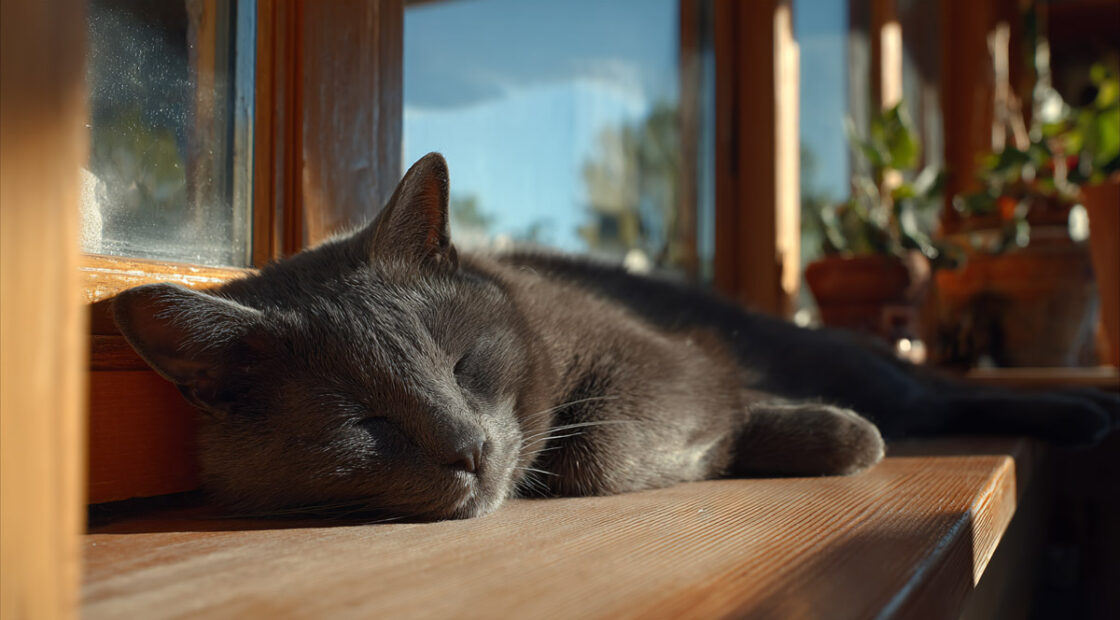
The Chartreux coat is short to medium-length with a distinctive woolly texture that’s often described as feeling like sheep’s wool.
Their double coat features a thick, water-repellent outer layer and dense undercoat, providing excellent insulation.
Chartreux only come in varying shades of blue-gray, from light ash to deep slate. The coat should be solid without markings, though kittens may show faint tabby patterns that fade with age.
The coat’s wooly texture creates a slightly upturned appearance at the edges, adding to their distinctive look.
Shedding is moderate most of the year but becomes heavy during seasonal changes, particularly in spring.
Distinctive Physical Features
Chartreux cats have round, expressive eyes ranging from copper to deep gold, which contrast beautifully with their blue coat.
Their ears are medium-sized, set high on the head with a slight forward tilt.
The head is broad with full cheeks and a narrow muzzle, creating their famous “smiling” expression.
Their body appears somewhat disproportionate, with a robust torso supported by relatively short, fine-boned legs—earning them the nickname “potato on toothpicks.”
The tail is moderate in length, thick at the base and tapering to a rounded tip.
Paws are rounded and medium-sized, with quick, precise movements reflecting their hunting heritage.
Chartreux Personality and Temperament
Are Chartreux Cats Affectionate?

Chartreux cats form strong bonds with their families and typically show special attachment to one particular person. They’re affectionate without being demanding.
These gentle companions enjoy being near their humans without necessarily needing to be on laps or constantly petted.
They’re generally reserved with strangers at first but warm up after proper introductions.
While not overly demonstrative, they show affection through following their favorite person around the house, often maintaining a polite distance—watching and keeping company rather than demanding attention.
How Active Are Chartreux Cats?
Chartreux have moderate energy levels, balancing playful periods with relaxation. They’re not hyperactive but enjoy interactive play sessions.
They require about 20-30 minutes of dedicated play daily to maintain physical and mental health.
These intelligent cats enjoy puzzle toys, hunting games, and activities that showcase their impressive reflexes and problem-solving abilities.
Many Chartreux can learn tricks and some even play fetch, showing dog-like learning capabilities.
Despite their substantial size, they’re surprisingly agile and enjoy climbing to observe their surroundings from elevated positions.
They remain playful well into adulthood, though their activity patterns become more predictable with age.
Do Chartreux Cats Get Along with Others?
Chartreux cats generally have excellent compatibility with children, especially those over 5 who understand how to interact respectfully with pets.
They tend to be patient and tolerant, rarely showing aggression.
Many Chartreux coexist well with dog breeds that respect their space, thanks to their adaptable and mild-mannered nature.
They typically get along with other cats, especially when introduced properly and given time to adjust.
Their non-confrontational temperament makes them suitable for multi-pet households, though they appreciate having their own quiet retreats.
While not particularly territorial, they do appreciate routine and predictability in their environment.
How Vocal Are Chartreux Cats?
Chartreux cats are famously quiet, with some being completely silent. When they do vocalize, it’s typically a soft chirp or trill rather than a meow.
Their quiet nature is one of the breed’s most distinctive characteristics, with some legends suggesting they were bred by Carthusian monks who valued silence.
Instead of vocal communication, Chartreux often use body language, facial expressions, and their expressive eyes to communicate needs and desires.
This silent nature makes them excellent apartment cats and suitable companions for those who prefer a peaceful home environment.
When a Chartreux does vocalize, it’s often for a specific reason like greeting their favorite person or indicating a need.
Health and Lifespan
How Long Do Chartreux Cats Live?

Chartreux cats typically live 12-16 years, with some reaching up to 20 years with proper care.
Their naturally robust constitution contributes to their longevity, as they developed as working cats with strong immune systems.
Regular veterinary care, proper nutrition, and maintaining a healthy weight significantly impact their lifespan.
Compared to the average domestic cat lifespan of 12-15 years, Chartreux tend to be on the longer-lived end of the spectrum.
Indoor living substantially extends their life expectancy by protecting them from outdoor hazards.
Common Health Issues in Chartreux Cats
While generally healthy, Chartreux may experience several breed-specific health concerns:
Patellar Luxation:
- Condition where the kneecap dislocates from its normal position
- Symptoms include intermittent limping or “skipping” while walking
- Usually appears by 2 years of age
- Can be managed with weight control or corrected surgically in severe cases
Polycystic Kidney Disease (PKD):
- Hereditary condition causing cysts to form in the kidneys
- May not show symptoms until middle or older age
- Can be detected through ultrasound and genetic testing
- Managed through diet and medication to slow progression
Bladder Stones:
- More common in Chartreux than some other breeds
- Symptoms include frequent urination, blood in urine, or straining
- Preventable with proper hydration and diet
- Treatable through medication or surgery depending on severity
Obesity Risk:
- Their robust build and moderate activity level make them prone to weight gain
- Excess weight can exacerbate joint issues and other health problems
- Requires portion control and regular exercise
Chartreux are not particularly prone to dental issues, heart problems, or many genetic disorders that affect other purebred cats.
What Health Testing Should Chartreux Cats Have?
Responsible breeders screen Chartreux for several health conditions through specific tests:
Genetic Screening:
- PKD DNA test
- Blood typing (particularly important for breeding)
Regular Veterinary Evaluations:
- Annual comprehensive exams through adulthood
- Bi-annual exams for senior cats (10+ years)
- Regular dental checks due to their predisposition for tartar buildup
Age-Specific Monitoring:
- Patellar examination starting at 6-12 months
- Kidney function tests from middle age onward
- Regular weight monitoring throughout life
Early detection of health issues through routine screening can significantly improve treatment outcomes and quality of life.
Caring for a Chartreux Cat
What Do Chartreux Cats Eat?

Chartreux cats thrive on high-protein diets with 35-40% protein content to support their muscular build.
Kittens should be fed 3-4 times daily, while adults typically do well with twice-daily feeding schedules.
Portion sizes should be carefully monitored, with the average adult needing approximately 250-300 calories daily, adjusted for activity level and age.
Both wet and dry foods can be appropriate, though wet food provides additional hydration which benefits urinary health—important for a breed with some predisposition to urinary issues.
Some Chartreux benefit from grain-free formulations, though this varies by individual.
Foods high in artificial additives, excessive carbohydrates, or low-quality protein sources should be avoided.
Weight management is crucial for this breed, as they can easily become overweight without proper portion control.
How Do You Groom a Chartreux Cat?
The Chartreux’s dense, woolly coat requires weekly brushing with a comb rather than a brush to prevent matting and reduce shedding.
During seasonal coat changes (primarily spring and fall), daily grooming may be necessary to manage heavier shedding.
Bathing is rarely needed as their water-resistant coat repels dirt, but when necessary, be aware that thoroughly wetting their dense coat can be challenging.
Nail trimming should be performed every 2-3 weeks to prevent overgrowth.
Dental care should include weekly tooth brushing with cat-specific toothpaste to prevent periodontal disease.
Regular ear checks and cleaning with a veterinarian-approved solution help prevent wax buildup or infections.
Eye cleaning is generally unnecessary unless discharge is present, as Chartreux typically have good eye health.
How Much Exercise Does a Chartreux Cat Need?
Chartreux cats benefit from 20-30 minutes of interactive play daily, divided into shorter sessions throughout the day.
As natural hunters with excellent reflexes, they particularly enjoy wand toys, laser pointers, and toys that mimic prey movements.
While primarily indoor cats, some enjoy supervised outdoor time in secure enclosures or on harnesses.
Mental stimulation through puzzle feeders, training sessions, and rotating toys helps prevent boredom and maintains cognitive sharpness.
Vertical spaces like cat trees and shelves are essential, allowing them to climb and observe their environment from elevated positions.
Interactive play sessions not only provide physical exercise but strengthen the bond between the cat and owner.
Living with a Chartreux Cat
Are Chartreux Cats Good for Apartments?

Chartreux cats adapt exceptionally well to apartment living due to their quiet nature and moderate activity level.
They don’t require extensive space, though they appreciate having room to explore and play within a smaller environment.
Their naturally soft vocalization or complete silence makes them ideal neighbors in close living situations.
While they can thrive as indoor-only cats, providing enrichment through climbing opportunities, toys, and interaction is essential.
Vertical space is particularly important in smaller homes, with cat trees or wall shelves allowing them to use the full volume of living space.
What Environment Do Chartreux Cats Need?
Chartreux adapt well to various temperatures but prefer moderate climates. Their dense coat provides good insulation against cold.
They may be less comfortable in very hot, humid environments without access to cooler areas.
While primarily indoor cats, many enjoy secure outdoor experiences through catios, enclosed gardens, or leash walks.
Environmental enrichment should include:
- Multiple scratching posts (both vertical and horizontal)
- Climbing structures of varying heights
- Hiding spots for security and rest
- Window perches for observing outdoor activity
- Rotating toys to prevent boredom
They particularly appreciate routine and predictability in their living environment, showing a preference for stable household patterns.
Are Chartreux Cats Good for First-Time Owners?
Chartreux make excellent cats for first-time owners due to their adaptable, even-tempered nature and moderate care requirements.
They require a moderate time commitment of approximately 1-2 hours daily for care, feeding, litter maintenance, and interaction.
Their intelligence makes them responsive to training, while their independent nature means they don’t demand constant attention.
Common challenges for new owners include:
- Managing seasonal shedding
- Providing sufficient mental stimulation
- Preventing obesity through portion control
- Understanding their subtle communication style
Their low drama and forgiving temperament makes them more accommodating of the learning curve that comes with first-time pet ownership.
Chartreux Kittens
What Are Chartreux Kittens Like?

Chartreux kittens are playful and curious with a sweet disposition that hints at their adult personality.
Early socialization from 2-9 weeks is crucial for developing well-adjusted adults who are comfortable with handling, other pets, and various household experiences.
Kitten energy levels are moderate compared to some breeds, with play sessions typically followed by solid nap periods.
The critical training window extends from 8-16 weeks, making this an ideal time to establish boundaries, litter box habits, and appropriate play behaviors.
Chartreux kittens may display faint tabby markings that typically fade as they mature into their solid blue coat.
When Can Chartreux Kittens Leave Their Mother?
Chartreux kittens should remain with their mother and littermates until at least 12 weeks of age, with 14-16 weeks being preferable for optimal social development.
By 12 weeks, kittens have reached key developmental milestones:
- Weaning is complete
- Basic litter box habits are established
- Initial socialization with littermates has occurred
- Immune system is more developed
The vaccination schedule before adoption typically includes:
- First FVRCP vaccine at 8 weeks
- Second FVRCP vaccine at 12 weeks
- Rabies vaccine at 12-16 weeks depending on local regulations
Responsible breeders typically begin spaying/neutering between 12-16 weeks, though some may place kittens with spay/neuter contracts to be completed by the new owner at an appropriate age.
Breeding and Genetics
Chartreux Breed Standards

The Cat Fanciers’ Association (CFA) standard emphasizes a robust, muscular body with substantial bone structure and the distinctive blue-gray coat with woolly texture.
TICA standards similarly focus on the cobby body type, broad head, and the unique “smiling” expression created by the head structure and muzzle shape.
European registries like FIFe may place additional emphasis on the historical French type, with slightly different interpretations of ideal head shape and body proportion.
Show quality Chartreux must display solid blue coloration without markings, proper woolly coat texture, and copper to gold eye color.
Disqualifying faults include:
- White patches or lockets
- Tabby markings in adult cats
- Green or yellow eyes
- Visible tail kinks
- Crossed eyes
- Incorrect coat texture (silky rather than woolly)
Genetics of Chartreux Cats
The Chartreux’s distinctive blue coloration comes from the dilution gene acting on black pigment, creating the blue-gray appearance.
All Chartreux cats are homozygous for the dilute gene (dd) and the non-agouti gene (aa), giving them their solid color.
The breed is naturally evolved rather than being the result of specific mutation breeding programs.
Genetic diversity has been a concern due to the breed’s near extinction after World War II, requiring careful breeding practices.
Limited outcrossing with British Shorthairs and blue Persians occurred historically to maintain genetic diversity without changing key breed characteristics.
DNA testing recommendations include:
- PKD testing
- Blood type determination
- General genetic health panels to identify carrier status for common feline diseases
History of the Chartreux Cat
Where Do Chartreux Cats Come From?

Chartreux cats originated in France, with their earliest documented mentions appearing in French literature from the 16th century.
This natural breed developed in rural areas of France where they were prized for their exceptional mousing abilities.
While legends connect them to Carthusian monasteries (hence their name), historical records from the Grande Chartreuse monastery don’t confirm this association.
An alternative origin theory suggests they descended from feral cats brought from Syria by returning Crusaders in the 13th century.
Their original purpose was primarily as working cats for rodent control on farms, in stables, and potentially in monasteries.
How Did the Chartreux Breed Develop?
The Chartreux breed was nearly decimated during World War I and continued to decline during World War II, with wild populations disappearing.
A formal breeding program began in France in the 1920s by breeders who recognized the need to preserve this historic French breed.
The Léger sisters from Belle-Île-en-Mer are credited with selecting and breeding some of the best remaining specimens, establishing foundation lines.
Post-World War II recovery involved some careful crossbreeding with blue British Shorthairs and Persians to restore genetic diversity while maintaining type.
Helen and John Gamon imported the first Chartreux to the United States in 1971, establishing the North American breeding program.
Modern Chartreux have remained remarkably consistent with historical descriptions, maintaining their distinctive appearance and temperament through centuries.
When Was the Chartreux Recognized?
The Chartreux received championship status from the Cat Fanciers’ Association (CFA) in 1987, relatively late compared to many other natural breeds.
TICA and other international registries recognized the breed earlier, with various European organizations acknowledging the Chartreux as distinctly French.
In France, the breed has been formally recognized since the 1930s following the establishment of dedicated breeding programs.
The delay in widespread recognition relates to the breed’s rarity outside France until the latter half of the 20th century.
Cost of Owning a Chartreux Cat
How Much Does a Chartreux Cat Cost?

Chartreux kittens from reputable breeders typically cost between $1,000-$1,500 for pet quality, reflecting their rarity and the care involved in breeding.
Show quality specimens may range from $1,500-$2,500 depending on lineage and conformation to breed standards.
Breeding rights for exceptional examples of the breed can increase the price to $2,000-$3,000.
Price variations depend on:
- Geographic location (higher in areas with fewer breeders)
- Lineage and pedigree depth
- Gender (males sometimes priced higher due to larger size)
- Specific coat shade and eye color
Initial setup costs beyond the purchase price include approximately $200-$500 for supplies like carriers, litter boxes, beds, scratching posts, and initial veterinary visits.
What Are the Ongoing Costs?
Annual veterinary care for a healthy Chartreux averages $200-$400, including routine examinations and vaccinations.
Monthly food expenses range from $40-$70 depending on quality, with higher-protein premium foods at the upper end of the range.
Litter and basic supplies cost approximately $25-$40 monthly.
Professional grooming is rarely necessary, though some owners opt for occasional services during heavy shedding seasons ($40-$60 per session).
Pet insurance premiums for a Chartreux typically run $25-$50 monthly depending on coverage level and deductible.
Establishing an emergency fund of $1,500-$2,000 is recommended to cover unexpected veterinary expenses.
Where Can You Get a Chartreux Cat?
Reputable Chartreux breeders typically:
- Provide health guarantees and genetic testing results
- Are registered with major cat associations
- Allow visits to see their facilities and meet parent cats
- Have waiting lists due to limited litters
- Provide ongoing support after adoption
When evaluating breeders, look for:
- Health testing for PKD and patellar luxation
- Cats raised in home environments rather than cages
- Contracts that protect both buyer and seller
- Clear communication about health history
- Willingness to take back cats if needed
Breed-specific rescues occasionally have adult Chartreux available for adoption, though they’re rare outside France.
General shelters may sometimes have blue cats that resemble Chartreux, though true purebreds rarely end up in shelters.
Adoption costs for adult Chartreux typically range from $100-$300, significantly less than purchasing a kitten from a breeder.
Adult adoption offers advantages of known personality and health history, while kittens provide the full developmental experience.
Chartreux vs. Similar Breeds
Chartreux vs. Russian Blue

Physical differences:
- Chartreux have stockier, more muscular bodies compared to the elegant, foreign body type of Russian Blues
- Chartreux coats are woolly in texture, while Russian Blues have plush, silky coats
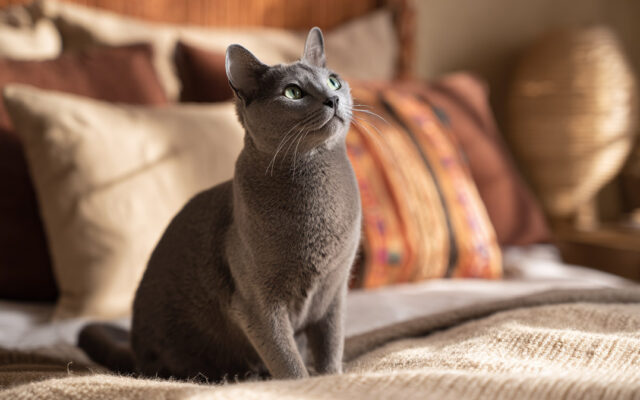
- Chartreux have copper to gold eyes, whereas Russian Blues have vivid green eyes
- Chartreux heads are broader with a distinct “smile,” while Russian Blues have wedge-shaped heads
Temperament differences:
- Both breeds are intelligent and gentle, but Chartreux tend to be more playful into adulthood
- Russian Blues are typically more shy with strangers
- Chartreux are generally quieter, sometimes completely silent
- Russian Blues tend to form more equal bonds with family members, while Chartreux often choose a favorite person
Care requirements:
- Both have double coats, but the Chartreux’s woolly texture requires different grooming tools (combs rather than brushes)
- Russian Blues shed less than Chartreux during seasonal changes
Chartreux vs. British Shorthair
Physical differences:
- British Shorthairs come in many colors and patterns, while Chartreux are exclusively blue
- British Shorthairs are generally larger and more round overall
- Chartreux have a distinctive woolly coat texture compared to the dense, plush coat of British Shorthairs
- Eye color differs, with British Blues typically having copper or orange eyes similar to Chartreux
Temperament differences:
- Chartreux tend to be more playful and active than the typically sedate British Shorthair
- British Shorthairs are often more reserved with physical affection
- Both breeds are good with children and other pets, though Chartreux may be slightly more adaptable to new situations
Health considerations:
- Both breeds can be prone to obesity if overfed
- British Shorthairs have higher incidence of hypertrophic cardiomyopathy (HCM)
- Chartreux more commonly experience patellar luxation
How to Choose Between Chartreux and Similar Breeds

Lifestyle considerations:
- If you prefer a very quiet cat, the Chartreux’s silent nature may be preferable
- For households with frequent visitors, a British Shorthair may adapt more easily
- Active households might better match a Chartreux’s playful nature
- Those seeking a lap cat might prefer a Russian Blue, as Chartreux often prefer nearby companionship to constant physical contact
Decision factors:
- Color preferences (if you want options beyond blue, consider British Shorthair)
- Activity level compatibility (Chartreux are moderately active, Russian Blues slightly more so, British Shorthairs less)
- Communication style (vocal vs. silent)
- Grooming commitment during shedding seasons
Fun Facts About Chartreux Cats
The famous French president Charles de Gaulle owned a Chartreux named Gris-Gris who reportedly followed him from room to room.
“Ste Cat,” a blue Chartreux, serves as the mascot of the Montreal International Jazz Festival, the world’s largest jazz festival.
The Chartreux naming convention in France requires all kittens born in a given year to have names beginning with the assigned letter for that year, cycling through the alphabet (excluding K, Q, W, X, Y, and Z).
Some Chartreux have been reported to learn how to operate light switches, radio buttons, and even door latches, showcasing their intelligence.
The breed’s nickname “potato on toothpicks” humorously describes their sturdy body perched on relatively fine-boned legs.
Famous French novelist Colette was a Chartreux owner and admirer, featuring the breed in some of her writings.
Despite their silent reputation, Chartreux are known for their loud, rumbling purrs that contrast dramatically with their quiet meows.
Is a Chartreux Cat Right for You?
Best Homes for Chartreux Cats

Ideal Chartreux owners are those who appreciate a moderately active, intelligent companion that balances independence with affection.
They thrive with owners who enjoy interactive play and providing mental stimulation through games and training.
Homes with predictable routines match well with the Chartreux preference for stability and consistent patterns.
These cats do well in both active family settings and quieter households, adapting to their environment while maintaining their gentle demeanor.
They make excellent companions for seniors who want feline companionship without overwhelming energy or neediness.
Who Should Avoid Chartreux Cats?
Those seeking a highly vocal, talkative cat may find the silent Chartreux disappointing.
Owners who travel frequently without making arrangements for their cats might not provide the stability these routine-loving cats prefer.
People with severe allergies should note that while their coat is dense, Chartreux are not hypoallergenic and still produce dander.
Those unprepared for seasonal heavy shedding might find the grooming requirements challenging during coat-blowing periods.
Highly dynamic households with constant changes in routine may create stress for these creatures of habit.
Questions to Ask Before Getting a Chartreux Cat
Financial considerations:
- Can you afford the $1,000+ initial purchase plus setup costs?
- Is your budget sufficient for quality food, litter, and annual veterinary care?
- Have you planned for potential emergency medical expenses?
Lifestyle compatibility:
- Do you have 1-2 hours daily for care, play, and interaction?
- Is your living situation stable for the next 12-16 years?
- Does everyone in your household want and welcome a cat?
Long-term planning:
- Do you have arrangements for your cat’s care during vacations or emergencies?
- Have you researched veterinarians in your area with feline expertise?
- If you have other pets, have you considered introduction strategies?
Environmental considerations:
- Do you have space for climbing structures, scratching posts, and play areas?
- Is your home safe and secure for an indoor cat?
- Do you have quiet spaces where your cat can retreat when needed?
FAQ on Chartreux
Are Chartreux cats hypoallergenic?
Chartreux cats are not hypoallergenic. Their dense, woolly double coat sheds moderately year-round with heavier shedding in spring. While their short blue-gray fur may produce fewer allergens than some breeds, they still produce the proteins that trigger cat allergies.
How rare are Chartreux cats?
Chartreux cats remain quite rare, especially outside France. Nearly extinct after World War II, careful breeding programs saved this ancient French breed. In North America, fewer than two dozen active breeders exist, making these blue-gray mousers difficult to find.
Why are Chartreux cats so quiet?
The silent nature of Chartreux comes from their natural evolution and possibly selective breeding. Legends suggest Carthusian monks favored silent cats during meditation. When these cats vocalize, it’s typically a soft chirp rather than a meow, earning them the nickname “silent companions.”
Do Chartreux cats shed a lot?
Chartreux have moderate shedding throughout the year with heavy seasonal shedding in spring. Their dense, water-resistant double coat requires weekly combing with more frequent grooming during shedding seasons. The woolly texture of their blue coat can make shed hair more noticeable.
How can you tell a Chartreux from a Russian Blue?
Chartreux cats have stockier, muscular bodies with copper-gold eyes and woolly fur. Russian Blues are more slender with emerald green eyes and silky coats. The Chartreux face appears “smiling” with a broader head, while Russian Blues have wedge-shaped heads.
How long do Chartreux cats live?
The average lifespan of a Chartreux ranges from 12-16 years, with some reaching 20+ years with proper care. As a naturally developed breed, they tend to be robust and healthy compared to some designer breeds. Indoor living significantly extends their life expectancy.
Are Chartreux good apartment cats?
Chartreux make excellent apartment cats due to their naturally quiet nature and moderate activity level. These intelligent felines adapt well to smaller spaces, particularly appreciating vertical climbing opportunities. Their silent communication style won’t disturb neighbors through thin walls.
Do Chartreux get along with dogs?
Many Chartreux cats coexist well with dog-friendly breeds thanks to their adaptable, mild-mannered temperament. Their non-confrontational nature helps them establish boundaries peacefully. Early socialization and proper introductions significantly improve the likelihood of harmonious relationships between species.
How much do Chartreux cats cost?
Pet-quality Chartreux kittens typically cost $1,000-$1,500 from reputable breeders. Show-quality specimens range from $1,500-$2,500, while breeding rights can increase prices to $2,000-$3,000. Their rarity, especially in North America, contributes to their relatively high price point.
Are Chartreux cats good with children?
Chartreux cats typically show excellent compatibility with children, especially those over 5 years old. Their patient, tolerant nature and moderate playfulness make them good family pets. Despite their sturdy build, supervise interactions with very young children who might not understand proper handling.
Conclusion
Chartreux cats represent one of the most distinctive French feline breeds, combining historical significance with practical companionship. Their medium-sized yet muscular build makes them both substantial and agile hunters.
The loyal nature of these intelligent felines often leads them to form strong bonds with one particular family member, following them from room to room.
Their trademark blue-gray coat with its unique woolly texture requires specific grooming approaches – combing rather than brushing to maintain its distinctive feel.
Despite their quiet demeanor, these cats communicate volumes through expressive copper eyes and subtle body language.
With proper care, these slow-maturing cats remain playful well into adulthood while maintaining their gentle disposition.
For those seeking a silent companion with dog-like loyalty, moderate maintenance needs, and exceptional mousing abilities, the Chartreux offers a rare combination of ancient breed history and modern pet compatibility.