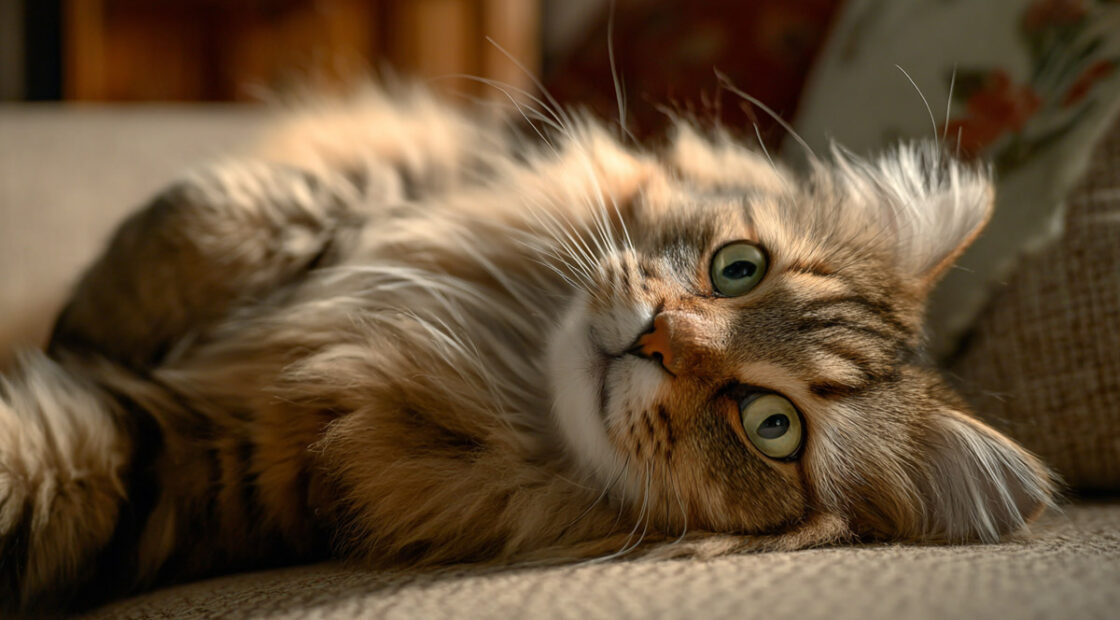
That thick, luxurious coat and those piercing eyes caught your attention, didn’t they?
Siberian cats rank among the most sought-after breeds worldwide, yet misconceptions about their hypoallergenic properties and care needs lead many potential owners astray. These Russian forest cats aren’t your typical house pets.
This guide covers everything you need to know about the Siberian cat breed. You’ll learn about their unique triple coat, true allergen levels, personality traits, health concerns, and whether this natural breed fits your lifestyle.
From kitten care to adult maintenance, costs to common health issues like hypertrophic cardiomyopathy, we break down the reality of Siberian cat ownership. By the end, you’ll know if this affectionate, dog-like feline is your perfect match.
Siberian Cat Breed Statistics
| Characteristic | Details |
|---|---|
| Weight | Males: 15-20 lbs, Females: 8-15 lbs |
| Height | 9-12 inches at shoulder |
| Length | 17-25 inches (nose to tail) |
| Lifespan | 11-18 years (average 15+ years) |
| Coat Type | Semi-long to long, triple coat (guard hairs, awn hairs, undercoat) |
| Coat Texture | Water-resistant, coarse to soft depending on color |
| Shedding Level | Moderate to high; heavy seasonal molts twice yearly |
| Colors | All traditional colors and patterns accepted |
| Eye Colors | Gold, green, blue, copper (all shades) |
| Energy Level | High to very high (especially first 3-5 years) |
| Exercise Needs | 60-90 minutes daily interactive play |
| Playfulness | Very high; retains kitten-like behavior into adulthood |
| Affection Level | High; bonds strongly with family |
| Social Needs | High; prefers companionship, not suited to being alone |
| Intelligence | Very high; excellent problem solvers |
| Trainability | Excellent; can learn tricks, leash walk, fetch |
| Vocalization | Quiet to moderate; soft chirps and trills |
| Kid-Friendly | Excellent with all ages |
| Dog-Friendly | Very good; bold and confident with dogs |
| Cat-Friendly | Good to excellent; communal nature |
| Stranger-Friendly | Cautious initially, then friendly |
| Apartment Suitable | Yes, with adequate vertical space |
| Climate Tolerance | Excellent cold tolerance, moderate heat tolerance |
| Grooming Frequency | 2-3 times weekly (daily during sheds) |
| Grooming Difficulty | Moderate; less matting than Persian breeds |
| Hypoallergenic | Partially; 50% produce lower Fel d 1 allergen levels |
| Health Issues | HCM, PKD, periodontal disease, FLUTD |
| Maturity Age | 3-5 years (slow-maturing) |
| Origin | Russia (Siberia) |
| Breed Type | Natural landrace |
| Registry Recognition | TICA, CFA, FIFe, GCCF, WCF |
| Purchase Price | $1,200-$4,000 (breeders), $75-$250 (adoption) |
| Annual Cost | $1,500-$3,500 |
| Good for First-Time Owners | Yes, with commitment to exercise and grooming |
| Special Traits | Water-loving, dog-like behavior, exceptional jumpers |
What Is a Siberian Cat?
The Siberian cat is Russia’s native forest cat, a natural breed that developed over 1,000 years ago in the dense forests of Siberia.
This medium to large cat features a thick triple coat designed for harsh winters, a muscular build, and produces lower Fel d 1 allergen levels than most breeds.
The breed represents one of the oldest naturally occurring cat varieties. Unlike developed breeds, Siberians evolved naturally without human intervention for centuries. They appear in Russian fairy tales and children’s books dating back hundreds of years.
Major cat registries including The International Cat Association (TICA), Cat Fanciers’ Association (CFA), FIFe, and GCCF recognize the Siberian. CFA granted Championship status in 2006.
The colorpoint variant, called Neva Masquerade, is categorized as a separate breed by some registries including FIFe and WCF.
This is a slow-maturing breed. Full size isn’t reached until 3-5 years of age, making them one of the slowest developing cat breeds.
Physical Characteristics
How Big Do Siberian Cats Get?
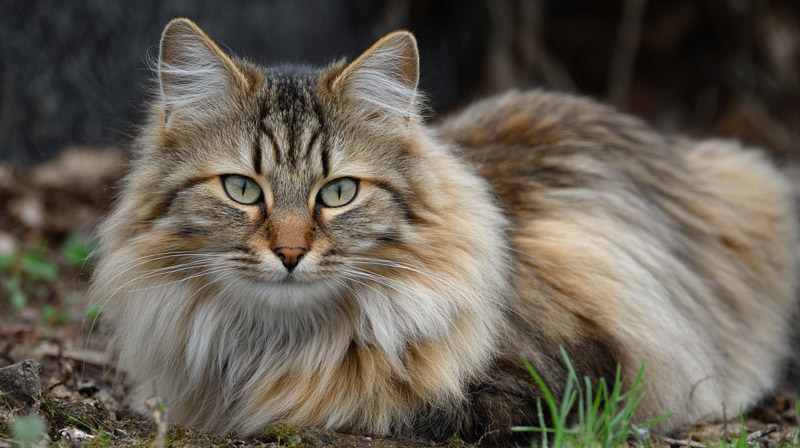
Male Siberians:
- Weight: 15-20 pounds (some exceed 20 pounds)
- Height: 10-12 inches at shoulder
- Length: 17-25 inches (nose to tail)
Female Siberians:
- Weight: 8-15 pounds
- Height: 9-11 inches at shoulder
- Length: 15-18 inches (nose to tail)
Body type is classified as substantial with a modified wedge head. The build is muscular and powerful rather than sleek or oriental.
Growth happens slowly. Most reach full physical maturity at 5 years old, with males taking longer than females.
The back is slightly arched and sits higher than the shoulders. Hind legs are a bit longer than front legs, giving them exceptional jumping ability.
What Does a Siberian Cat’s Coat Look Like?
The coat is semi-long to long with three distinct layers. This triple coat includes long guard hairs on the outside, awn hairs in the middle, and a dense downy undercoat close to the skin.
Texture varies from coarse to soft depending on color. The coat is water-resistant, designed to protect against Siberian winters.
An abundant full collar ruff frames the head in adults. Hair on shoulder blades and lower chest is thick but slightly shorter. Belly and britches may develop thick curls, though the coat itself isn’t wavy overall.
Recognized colors and patterns include:
- All traditional colors (brown, black, red, cream, blue, silver)
- Tabby patterns (classic, mackerel, spotted, ticked)
- Solid colors
- Colorpoint (Neva Masquerade variety)
- Tortoiseshell and calico
- White markings in any amount
- Golden variants
Silver Siberians are among the rarest and most sought-after.
Shedding: Moderate to high. The breed sheds heavily twice per year during spring and late summer molting seasons. Daily brushing is needed during these periods.
Between major sheds, the coat is manageable with weekly brushing.
Distinctive Physical Features
Eyes: Medium to large, almost round, set slightly angled toward the ear base. Colors range from gold to green to blue, with many shades in between. Eye color isn’t related to coat color except in colorpoint varieties (which have blue eyes).
Ears: Medium-sized, rounded tips, well-furnished with tufts. Set wide apart on the head. Lynx tips (ear tufts) are preferred but not required.
Head: Modified wedge shape with rounded contours. The muzzle is full and rounded, not pointed.
Tail: Medium length, thick and bushy. Tapers slightly from base to rounded tip. Carried proudly.
Paws: Large and round with substantial tufting between toes. This “snowshoe” feature helped them walk on snow in their native environment.
Overall presence: The appearance conveys strength, agility, and alertness with a sweet facial expression.
Siberian Personality and Temperament
Are Siberian Cats Affectionate?
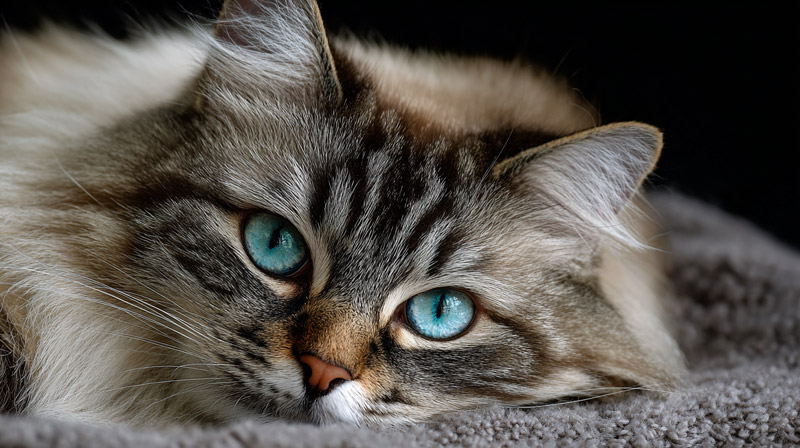
Siberians are highly affectionate with family members. They form strong bonds with their humans and show loyalty similar to dogs.
Attention requirements: Moderate to high. They thrive on companionship and don’t do well when left alone for extended periods. Many breeders recommend a two-cat home so they have company.
These cats are not typically “velcro cats” that demand constant physical contact. They prefer to be near you rather than on you, though many enjoy lap time when they’re in the mood.
Stranger reaction: Cautious initially, then friendly. They warm up to new people gradually but rarely show aggression or excessive shyness.
Siberians show exceptional emotional intelligence. They sense when family members need support and often position themselves nearby during stressful times. This makes them excellent candidates for emotional support animals.
How Active Are Siberian Cats?
Energy level: High to very high, especially in the first 3-5 years before full maturity.
Play drive: Intense and sustained. These cats retain their playful nature well into adulthood.
Exercise requirements: 60-90 minutes of daily interactive play and activity. They need both physical exercise and mental stimulation.
Favorite activities:
- Climbing to high places (top of refrigerators, tall cat trees)
- Jumping (they’re exceptional jumpers with powerful hind legs)
- Water play (unusually fond of water compared to most cats)
- Fetching toys (dog-like behavior)
- Puzzle toys and problem-solving games
- Chasing and hunting games
Intelligence level: Very high. Siberians are skilled problem solvers who can learn to open doors, cabinets, and drawers. They quickly figure out how mechanisms work.
Trainability: Excellent. They can learn tricks, come when called, and even walk on a leash with proper training.
These cats will turn any available object into a toy. Expect to find them on shelves, countertops, and other elevated surfaces.
Do Siberian Cats Get Along with Others?
Children compatibility: Excellent with children of all ages. Their patient, gentle nature and playful energy make them ideal family cats. They tolerate handling well and rarely use claws during play with kids.
Dog compatibility: Very good. Many Siberians get along better with dogs than with other cat breeds. Their bold, confident nature and size help them hold their own with dogs.
Other cats compatibility: Good to excellent. They’re communal by nature and genuinely enjoy feline companionship. Introducing a second cat is often beneficial.
Multi-pet households: Highly suitable. They adapt well to homes with multiple pets of various species.
Territorial tendencies: Low to moderate. They’re less territorial than many breeds and usually accept new animals after proper introductions.
How Vocal Are Siberian Cats?
Vocalization frequency: Quiet to moderate. Siberians are not chatty cats compared to breeds like Siamese.
Voice characteristics: Soft chirps, trills, and quiet meows. Many make bird-like chirping sounds, especially when greeting family members or watching birds outside.
Communication style: They prefer loud purring to meowing. When they do vocalize, it’s usually purposeful rather than constant chatter.
Some owners describe their vocalizations as almost melodic. Males and females sound similar, unlike some breeds where males are notably louder.
Health and Lifespan
How Long Do Siberian Cats Live?
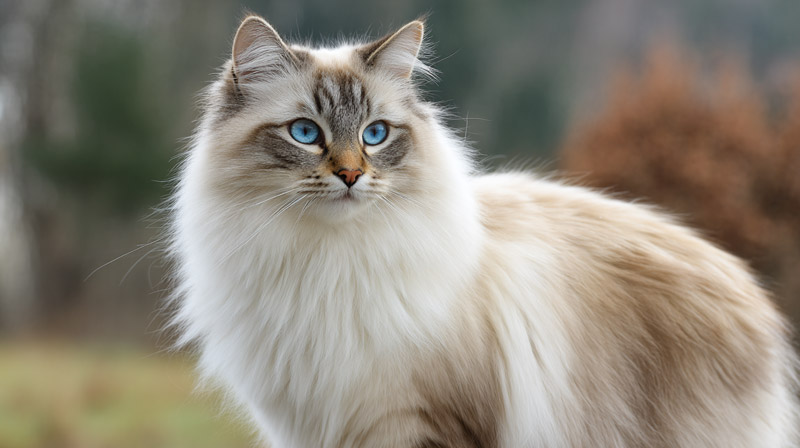
Average lifespan: 11-18 years, with many living 15+ years.
Several factors affect longevity:
- Genetic health (purebred from health-tested lines typically live longer)
- Diet quality (high-protein, appropriate portions)
- Activity level (maintaining healthy weight)
- Indoor vs. outdoor lifestyle (indoor cats live significantly longer)
- Regular veterinary care
Compared to the average domestic cat lifespan of 12-15 years, Siberians fall within normal range but often exceed it when well cared for.
Common Health Issues in Siberian Cats
As a natural breed with high genetic diversity, Siberians are generally healthy. However, several conditions are more common in this breed.
Hypertrophic Cardiomyopathy (HCM):
The most prevalent health concern in Siberians. This heart condition causes the heart muscle walls to thicken abnormally.
- Symptoms: Difficulty breathing, lethargy, loss of appetite, sudden collapse, rear leg weakness or paralysis, open-mouth breathing
- Age of onset: Can appear as early as 1 year but most commonly shows at 5-10 years
- Prevalence: Widespread in Siberian lines worldwide, affecting a significant portion of the breed
- Treatment: No cure, but medications can manage symptoms and improve quality of life. ACE inhibitors, beta-blockers, and blood thinners may be prescribed
- Prevention: Choose breeders who screen breeding cats with echocardiograms at 1, 3, and 5 years
HCM entered the breed from multiple foundation points in Moscow, St. Petersburg, Germany, and the United States. Only one defective gene is needed to predispose a cat to this condition.
Polycystic Kidney Disease (PKD):
A genetic mutation causing fluid-filled cysts to develop in the kidneys and sometimes liver.
- Symptoms: Excessive thirst, frequent urination, weight loss, lethargy, vomiting, poor coat quality
- Age of onset: Typically 7-10 years, but can occur earlier or later
- Prevalence: More common than desired due to Persian cats being introduced into some breeding programs
- Treatment: No cure. Special diets, fluid therapy, and medications can slow progression and manage symptoms
- Prevention: DNA testing available. Breeders should test and not breed affected cats
Affected kittens are born with microscopic cysts that slowly enlarge over time, eventually destroying kidney function.
Periodontal Disease:
Dental issues are common in Siberians, more so than in many other breeds.
- Symptoms: Bad breath, red or swollen gums, difficulty eating, pawing at mouth, drooling
- Age of onset: Can begin as early as 2-3 years without proper care
- Treatment: Professional dental cleaning, tooth extraction in severe cases, antibiotics for infections
- Prevention: Daily tooth brushing (or at minimum 4-5 times weekly), dental treats, annual vet dental checks
Feline Lower Urinary Tract Disease (FLUTD):
Formation of crystals or stones in the bladder and urinary tract.
- Symptoms: Straining to urinate, blood in urine, frequent trips to litter box, urinating outside box, crying while urinating
- Age of onset: Any age, but more common in middle-aged cats
- Treatment: Depends on type of crystals. May include diet changes, increased water intake, medications, or surgery in severe cases
- Prevention: Ensure adequate hydration, feed wet food, maintain healthy weight
Hereditary Cancer (primarily in pure white Siberians):
Genetic cancer linked to specific pedigree lines, particularly descendants of “Gesha Olenya Krasa” and “Dolka Olenya Krasa.”
- Symptoms: Vary depending on cancer type and location
- Age of onset: Variable
- Prevalence: Higher in solid white cats from specific lineages
- Treatment: Depends on cancer type. Early detection improves outcomes
- Prevention: Regular vet checkups, especially for white Siberians from known lines
Pyruvate Kinase Deficiency:
A blood disorder that doesn’t cause abnormal bleeding but can show prolonged clotting times during lab tests.
- Symptoms: Usually asymptomatic. Some cats may show mild anemia
- Treatment: Generally doesn’t require treatment
- Prevention: Genetic testing available
Obesity:
Not a genetic condition but common in indoor Siberians with sedentary lifestyles.
- Symptoms: Visible weight gain, difficulty jumping, decreased activity, heavy breathing
- Treatment: Portion control, diet adjustment, increased activity
- Prevention: Measure food portions, provide daily exercise, avoid free-feeding
Obesity increases risks for diabetes, arthritis, and heart problems.
What Health Testing Should Siberian Cats Have?
Before Breeding (for breeders):
- Echocardiogram for HCM at 1 year, 3 years, 5 years, then every 2-3 years
- DNA test for PKD
- Pyruvate kinase deficiency genetic test
- Blood type testing
- General health screening
For Pet Owners:
- Annual veterinary checkups
- Echocardiogram screening recommended at 1-3 years even for pets, especially if family history unknown
- Dental exams at each vet visit
- Blood work panel starting at age 7, then annually
Reputable breeders provide health certifications for breeding cats. Always request documentation showing parents have been tested clear for HCM and PKD.
Caring for a Siberian Cat
What Do Siberian Cats Eat?
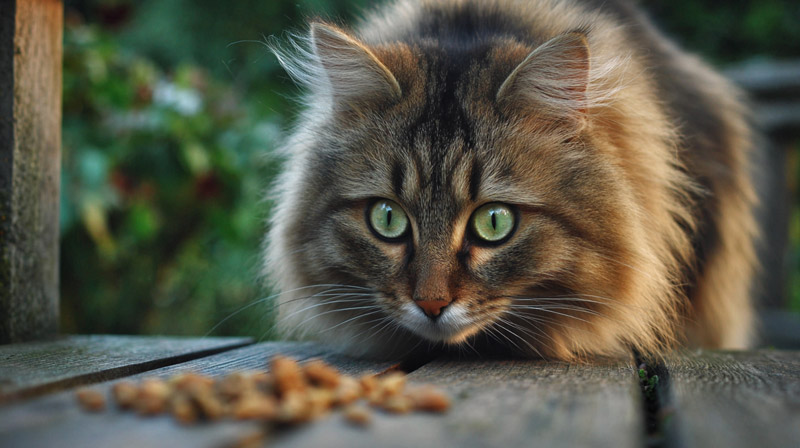
Protein requirements: 35-45% protein minimum. As obligate carnivores, Siberians need high-quality animal protein to support their muscular build.
Feeding frequency:
- Kittens (under 6 months): 3-4 meals daily
- Young adults (6 months to 2 years): 2-3 meals daily
- Adults (2+ years): 2 meals daily
Portion sizes: Based on weight and activity level. Average adult Siberian needs approximately 250-350 calories daily, but large males may require 400+ calories.
Because they’re slow-maturing, many can stay on kitten food longer than other breeds. However, monitor weight carefully as kitten food is calorie-dense.
Wet vs. dry food: A combination works best. Wet food provides hydration and is closer to natural diet. Dry food supports dental health. Many owners feed wet food twice daily with dry food available for snacking.
Special dietary needs:
- High-quality animal protein (chicken, turkey, fish, beef)
- Limited carbohydrates (under 10% of diet)
- Omega-3 and Omega-6 fatty acids for coat health
- Taurine for heart health
- Adequate moisture (wet food or water fountains)
Foods to avoid:
- Grain-heavy foods
- By-products and fillers
- Foods with artificial colors or preservatives
- Human foods: chocolate, onions, garlic, grapes, dairy products
Weight management: Critical for this breed. Monitor body condition monthly. You should feel ribs easily but not see them prominently.
How Do You Groom a Siberian Cat?
Brushing frequency:
- Normal seasons: 2-3 times per week (20-30 minutes per session)
- Shedding seasons (spring and late summer): Daily (30-45 minutes)
Despite the long coat, Siberians don’t mat as badly as Persian or Himalayan cats. Their coat texture is more manageable.
Tools needed:
- Slicker brush for removing loose hair
- Undercoat rake for reaching dense undercoat during heavy sheds
- Wide-toothed metal comb for checking for mats
- Nail clippers
Bathing requirements: Occasional, every 2-3 months or as needed. Good news: many Siberians actually enjoy water. If introduced to baths as kittens, they may tolerate or even like them.
The water-resistant coat repels dirt naturally, so they stay cleaner than many long-haired breeds.
Nail trimming schedule: Every 2-3 weeks. Trim just the sharp tip to avoid the quick.
Dental care: Brush teeth daily if possible, minimum 4-5 times weekly. Use cat-specific toothpaste (never human toothpaste).
Eye cleaning: As needed. Siberians don’t typically have excessive tearing. Wipe away any discharge with damp cotton ball.
Ear cleaning schedule: Check weekly, clean monthly or as needed. Use cat ear cleaner and cotton balls (never Q-tips deep in ear canal).
Look for mats primarily in these areas:
- Behind ears
- Armpits
- Belly
- Britches (back leg fur)
- Under tail
Professional grooming: Optional. Most owners can manage grooming at home. Professional grooming costs $30-100 per session if desired.
How Much Exercise Does a Siberian Cat Need?
Daily activity requirements: 60-90 minutes of interactive play and exercise minimum.
Indoor vs. outdoor: Best kept as indoor cats for safety and longevity. They adapt well to indoor life if given adequate stimulation.
If outdoor access is desired, consider:
- Catio (enclosed outdoor space)
- Leash walking (they train well for this)
- Supervised outdoor time in secure yard
Recommended toys and enrichment:
- Tall cat trees (6+ feet) for climbing
- Interactive wand toys for hunting simulation
- Puzzle feeders for mental stimulation
- Water toys or fountains (they love water)
- Balls they can chase
- Toys they can fetch
- Window perches with bird views
- Automated toys for solo play
Mental stimulation needs: High. These intelligent cats get bored easily. Rotate toys weekly and provide new challenges regularly.
Climbing/vertical space importance: Critical. Siberians are acrobatic climbers who need multiple vertical levels. Install cat shelves, provide tall trees, and ensure safe high perches.
Interactive play frequency: At least two 20-30 minute sessions daily. More if possible, especially for young adults under 5 years.
Without adequate exercise, Siberians can become destructive, overweight, or develop behavioral issues.
Living with a Siberian Cat
Are Siberian Cats Good for Apartments?
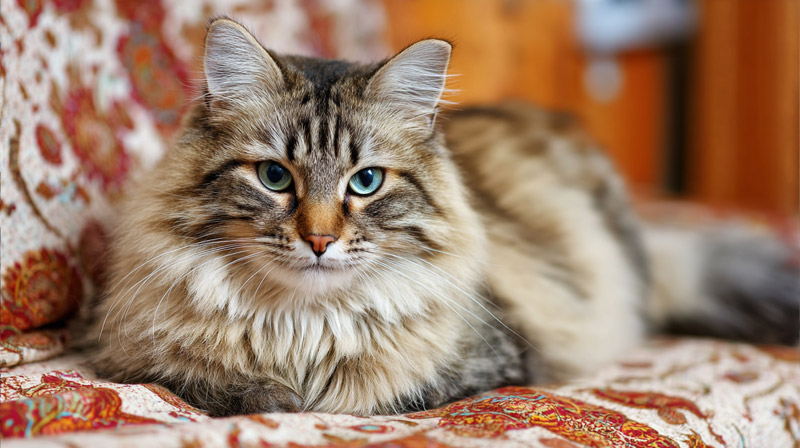
Space requirements: They adapt well to apartments if given adequate vertical space. Minimum 500-700 square feet recommended, but smaller apartments work with proper enrichment.
Noise level: Low to moderate. They’re quiet cats unlikely to disturb neighbors.
Neighbor compatibility: Excellent. Their docile nature and low vocalization make them ideal for shared-wall living.
Indoor-only suitability: Very suitable. They adjust well to indoor life and don’t exhibit the restlessness some breeds show.
Vertical space needs: More important than horizontal space. Invest in tall cat furniture that reaches ceiling height.
Key for apartment success:
- Multiple cat trees
- Window perches with views
- Daily interactive play
- Mental stimulation through puzzles
What Environment Do Siberian Cats Need?
Temperature tolerance:
- Cold tolerance: Excellent. Their triple coat evolved for Siberian winters
- Heat sensitivity: Moderate. They handle summer heat adequately but appreciate cool spaces. Provide air conditioning or fans in hot climates
Humidity preferences: Adaptable to various humidity levels.
Safe outdoor access options:
- Screened catio for fresh air and bird watching
- Leash training for supervised outdoor exploration
- Secure fenced yard with supervision
Environmental enrichment specifics:
- Rotating toys to maintain interest
- Hiding treats for “hunting” games
- Cardboard boxes for hiding
- Paper bags (handles removed) for play
- Cat grass for chewing
- Background sounds (bird videos, cat TV)
Window perch importance: High. They’re watchers who enjoy monitoring outdoor activity for hours.
Scratching post requirements: Multiple posts in different locations. Siberians prefer tall, sturdy posts that won’t wobble. Sisal rope or corrugated cardboard work well.
Provide at least:
- One tall vertical post (3+ feet)
- One horizontal scratcher
- One angled scratcher
Are Siberian Cats Good for First-Time Owners?
Care difficulty level: Beginner to intermediate.
Pros for beginners:
- Generally healthy, natural breed
- Friendly, forgiving temperament
- Trainable and adaptable
- Not overly demanding
- Manageable grooming despite long coat
Challenges for beginners:
- High energy requires commitment to daily play
- Grooming during shedding seasons is intensive
- Can be expensive to purchase
- Potential for serious genetic health issues requires awareness
- Size and strength mean they can knock things over
Time commitment required: 1-2 hours daily for:
- Interactive play (60-90 minutes)
- Grooming (15-30 minutes, more during sheds)
- General interaction and companionship
Experience level needed: None required, but helpful to research cat care basics. First-time cat owners do well with this breed if committed to their needs.
Common challenges for new owners:
- Underestimating exercise needs
- Not budgeting for potential health issues
- Struggling with initial grooming learning curve
- Being surprised by their size and strength
- Not realizing how long they take to fully mature
Siberian Kittens
What Are Siberian Kittens Like?
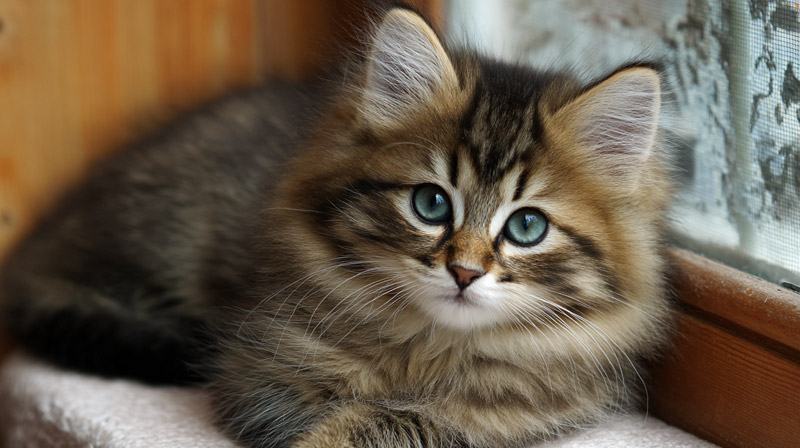
Personality: Curious, bold, and playful from the start. They’re confident explorers who investigate everything.
Kitten energy levels: Very high. Expect near-constant play sessions. They race around, climb everything climbable, and play rough with littermates.
Development timeline:
- 0-8 weeks: With mother and littermates (should not be separated)
- 8-12 weeks: Primary socialization period
- 3-6 months: Rapid growth phase
- 6-12 months: Continued growth, sexual maturity if not altered
- 1-3 years: Young adult, still growing
- 3-5 years: Finally reach full size
Early socialization needs: Critical during 3-12 weeks. Proper socialization during this window shapes their adult temperament.
Kittens should be exposed to:
- Different people (adults, children, various appearances)
- Household sounds (vacuum, TV, doorbell)
- Gentle handling (paws, ears, mouth for future grooming/vet care)
- Other pets if applicable
- Various textures and surfaces
Training windows: Begin training early. Siberians are most receptive to learning during kittenhood. Start litter training, scratching post use, and basic handling immediately.
When Can Siberian Kittens Leave Their Mother?
Minimum age: 12-14 weeks minimum. Reputable breeders typically keep kittens until 12-16 weeks.
Some breeders wait until 16 weeks for emotional and physical readiness.
Why not earlier?
Kittens need time with mother and littermates to:
- Learn proper cat behavior and communication
- Develop immune system fully
- Complete weaning naturally
- Build confidence through play
- Receive all initial vaccinations
Developmental milestones before adoption:
- Complete weaning from mother (8-10 weeks)
- Litter box trained consistently
- Eating solid food independently
- Initial vaccinations completed (FVRCP series)
- Basic socialization with humans
- Playing appropriately with toys
Vaccination schedule before adoption:
- First FVRCP: 6-8 weeks
- Second FVRCP: 9-11 weeks
- Third FVRCP: 12-14 weeks
- Rabies: 12-16 weeks (varies by location)
Spay/neuter timing: Most breeders sell pet kittens already altered (pediatric spay/neuter at 12-16 weeks). Some contracts require owners to alter by 6 months.
Breeding and Genetics
Siberian Breed Standards
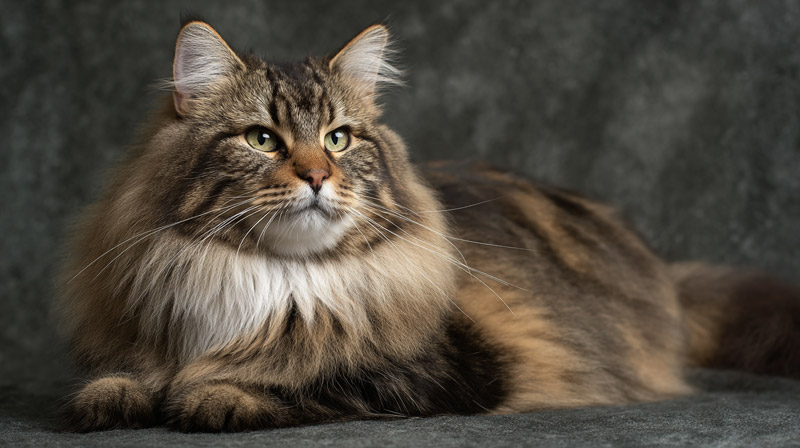
CFA Standards (summary):
- Body: Medium to medium-large, substantial, strong, barrel-shaped
- Head: Modified wedge with rounded contours, full muzzle
- Eyes: Medium to large, nearly round, set slightly angled
- Ears: Medium, rounded tips, wide-set, well-furnished
- Coat: Triple coat, semi-long to long, full collar ruff
- All colors and patterns accepted
Full official CFA standard available at cfa.org.
TICA Standards: Similar to CFA with slight variations in language. Championship status since 2006.
Other registries: FIFe and WCF separate Neva Masquerade as distinct breed. GCCF recognizes both as one breed.
Show quality vs. pet quality:
Show quality cats meet all breed standard points with no faults. They’re suitable for breeding and exhibition.
Pet quality cats may have minor faults like:
- Incorrect eye color
- Tail kinks
- Coat that’s too short
- Incorrect ear placement
- Weak chin
These don’t affect health or temperament but disqualify from show ring.
Disqualifying faults:
- Polydactyl (extra toes)
- Kinked or abnormal tail
- Weak hind legs
- Obvious physical deformities
Genetics of Siberian Cats
Hereditary traits:
The triple coat is controlled by multiple genes. The water-resistant property and dense undercoat are breed-defining traits.
Coat color genetics:
- Tabby patterns result from Agouti gene variations
- Solid colors from non-agouti gene
- White markings from white spotting gene (can appear anywhere)
- Colorpoint from Himalayan gene (temperature-sensitive pigment)
- Dilution gene creates blue, cream, lilac versions
Breed-specific mutations:
Siberians have mutations affecting Fel d 1 protein production. Research identified changes in Ch1 and Ch2 genes (which encode Fel d 1) in some Siberians, potentially explaining lower allergen levels.
Outcross breeds: None permitted. Siberians must be purebred to maintain breed integrity and natural characteristics.
Genetic diversity concerns:
Siberians have the highest genetic diversity of any purebred cat breed, comparable to random-bred cats. This is a major health advantage.
Maintaining this diversity is crucial. Responsible breeders:
- Avoid excessive inbreeding
- Use diverse bloodlines
- Introduce new foundation cats from Russia when possible
- Track coefficients of inbreeding (COI)
DNA testing recommendations:
- HCM gene testing (when available – research ongoing)
- PKD DNA test
- Pyruvate kinase deficiency
- Blood type testing
- Parentage verification
History of the Siberian Cat
Where Do Siberian Cats Come From?
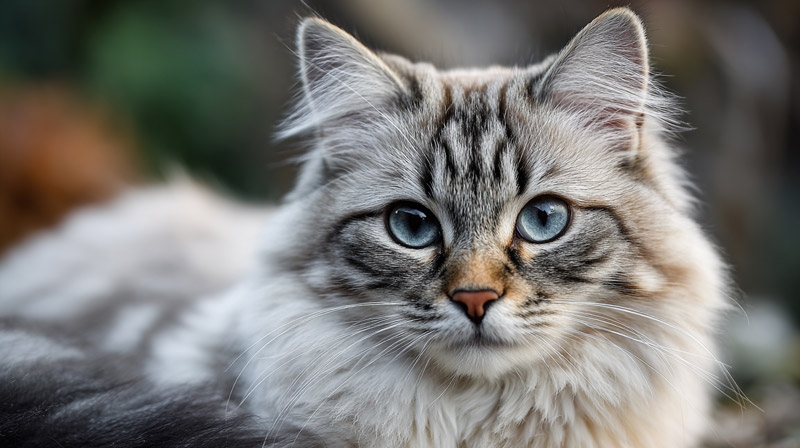
Geographic origins: Siberia and Russia, particularly dense forests of the Siberian region.
Historical context: These cats survived brutal Siberian winters for centuries, developing their thick coats and hardy constitution through natural selection.
They lived as semi-feral forest cats, later moving to farms and villages where they earned their keep as rodent hunters.
Original purpose: Working cats for rodent control on farms and estates. They protected grain stores from mice and rats. Russian families valued them for both pest control and companionship.
Natural breed status: This is a natural landrace that developed without human selective breeding for centuries. Nature shaped their appearance and temperament.
How Did the Siberian Breed Develop?
Development timeline:
- Pre-1000 AD: Cats present in Russia and Siberia
- 1000 AD: First recorded mentions in Russian history
- 1800s: Appear in Harrison Weir’s “Our Cats and All About Them” (1889) as Russian Longhair
- 1871: Mentioned at first cat show in England
- 1987: Soviet Union lifts restrictions on pet ownership
- Late 1980s: Formal breeding programs begin in Russia (Moscow and St. Petersburg)
- 1990: First Siberians arrive in United States (June 1990)
- 1991: Additional imports to U.S.; breeding programs established
- 1992-1995: Various registries begin accepting breed
- 2000: CFA accepts Siberians for registration
- 2006: CFA grants Championship status
Key breeders and programs:
Early Russian breeders in Moscow and St. Petersburg developed the first breed standards. Foundation cats came from various regions of Russia.
In the United States, early importers and breeders established the breed through careful selection of imported Russian cats.
Important foundation cats: Many foundation lines trace to cats imported from Moscow, St. Petersburg, and other Russian cities in 1990-1992.
Breed evolution: Standards have been refined but the goal remains preserving the natural appearance and temperament. The breed has maintained genetic diversity better than most.
Related breeds: While Norwegian Forest Cat and Maine Coon share some physical similarities (large size, long fur), genetic testing shows they’re distinct breeds that evolved separately.
When Was the Siberian Recognized?
Major registry recognition dates:
- FIFe: Early 1990s
- TICA: 1992 (registered), 1996 (Advanced New Breed), 2006 (Championship)
- CFA: February 2000 (registration), February 2006 (Championship status)
- GCCF: 2002
- WCF: Early 1990s
Achieving Championship status in CFA took 16 years from initial breed appearance in America – relatively fast for a newly introduced breed.
Cost of Owning a Siberian Cat
How Much Does a Siberian Cat Cost?
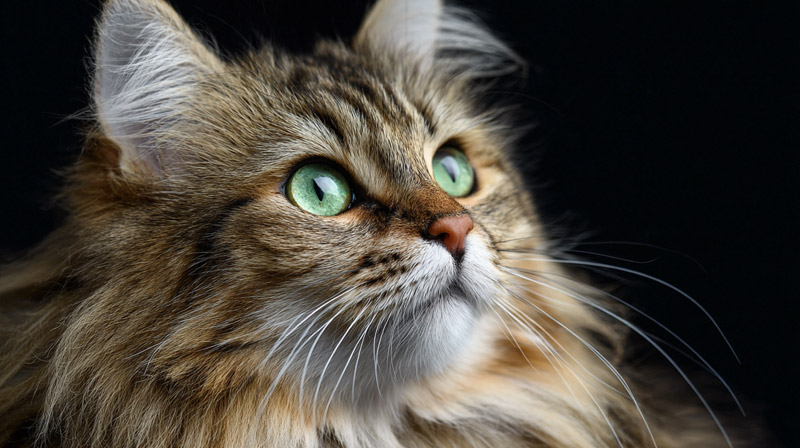
Purchase price ranges in 2025:
From breeders:
- Pet quality: $1,200-$2,500 (most common range)
- Show quality: $2,500-$4,000
- Breeding rights: $3,000-$5,000+
Rare colors (silver, golden) command premium prices at the higher end of ranges.
From rescues/shelters:
- Adoption fee: $75-$250
Rarely found in shelters due to breed rarity and demand. Specialized breed rescues occasionally have adult Siberians.
Price factors:
- Lineage: Champion bloodlines cost more
- Color: Silver and rare colors premium priced
- Gender: Males sometimes slightly more expensive
- Location: Higher prices in major cities (New York, Los Angeles, San Francisco)
- Breeder reputation: Established breeders with health testing charge appropriate premiums
- Age: Young kittens (8-12 weeks) cost more than older kittens or young adults
Geographic variations:
- East Coast (especially New England): $1,200-$2,800
- West Coast: $1,500-$3,500
- Midwest: $1,200-$2,500
- South: $1,200-$2,500
Additional initial costs:
- Spay/neuter (if not included): $150-$500
- Microchip (if not included): $30-$70
- Initial vaccinations (if not complete): $100-$200
- Carrier: $30-$100
- Litter boxes (recommend 2): $20-$60
- Litter: $15-$30 monthly
- Food/water bowls: $15-$40
- Cat tree: $100-$300
- Scratching posts: $20-$60
- Toys: $30-$60
- Bed: $20-$50
Total initial setup: $500-$1,000 beyond purchase price
What Are the Ongoing Costs?
Annual veterinary care: $200-$500
- Routine checkups (2 visits): $100-$200
- Vaccinations: $50-$100
- Fecal exam: $25-$50
- Blood work (for adults 7+): $100-$200
Food expenses:
- Monthly: $40-$80
- Annual: $480-$960
High-quality cat food (wet and dry combination) for a large cat requires substantial budget.
Litter and supplies:
- Monthly: $20-$40
- Annual: $240-$480
Large cats use more litter. Multiple litter boxes increase costs.
Grooming costs:
- DIY: $50-$100 annually (brushes, nail clippers, toothbrush, supplies)
- Professional (optional): $30-$100 per session, 2-4 times yearly = $60-$400 annually
Pet insurance:
- Monthly: $25-$60
- Annual: $300-$720
Given genetic health risks (HCM, PKD), insurance provides peace of mind. Younger cats have lower premiums.
Flea/tick prevention: $150-$300 annually
Dental care: $200-$400 for professional cleaning when needed
Toys and enrichment: $100-$200 annually for rotation and replacement
Unexpected emergency fund: Budget $1,000-$3,000 reserve for emergencies
Heart issues, kidney problems, or accidents can result in $2,000-$5,000+ bills.
Total annual cost estimate: $1,500-$3,500 (not including emergencies)
Where Can You Get a Siberian Cat?
Reputable breeders:
Look for breeders who:
- Provide health certifications (HCM echocardiograms, PKD testing)
- Register with TICA, CFA, or other recognized registries
- Keep kittens until 12-16 weeks minimum
- Raise kittens in home environment (not cages)
- Allow you to visit and meet parents
- Provide written health guarantee
- Answer questions thoroughly
- Request you sign contract
- Check your references
- Stay available for lifetime support
Breeder certifications to verify:
- TICA or CFA registration
- Member of breed clubs
- Show accomplishments of breeding cats
- Health test results for parents
Health guarantees should cover:
- Genetic defects for 1-2 years
- Initial health (72-hour vet check required)
- FeLV/FIV negative status
- Parasite-free guarantee
Contract elements:
- Spay/neuter requirements for pets
- Return policy if issues arise
- Breeding restrictions
- Registration papers transfer terms
Red flags to avoid:
- Prices well below market ($600-$800 range is suspicious)
- Won’t let you visit
- No health testing documentation
- Kittens available immediately without wait
- Multiple breeds available
- Ships without meeting you
- Demands full payment upfront without deposit protection
- No contract or health guarantee
- Won’t provide references
- Pressure tactics
Breed-specific rescues:
- Siberian Cat Rescue groups (search online for current organizations)
- Purebred Cat Rescue organizations
- Occasionally available through general rescues
Rescue cats typically cost $75-$250. They’re usually adults, already altered, vaccinated, and sometimes have known temperaments from foster care.
Adoption vs. breeder considerations:
Breeder pros:
- Know full health history
- Choose kitten age and appearance
- Meet parents, see temperament genetics
- Health guarantees
Breeder cons:
- Expensive ($1,200-$4,000+)
- May wait months for kitten
- Supporting breeding industry
Rescue pros:
- Save a life
- Much less expensive ($75-$250)
- Adult cats with known personalities
- Already altered and vaccinated
Rescue cons:
- Rare to find purebred Siberian
- Unknown health history possible
- Limited choice in age/appearance
- May have behavioral issues from past trauma
Siberian vs. Similar Breeds
Siberian vs. Maine Coon
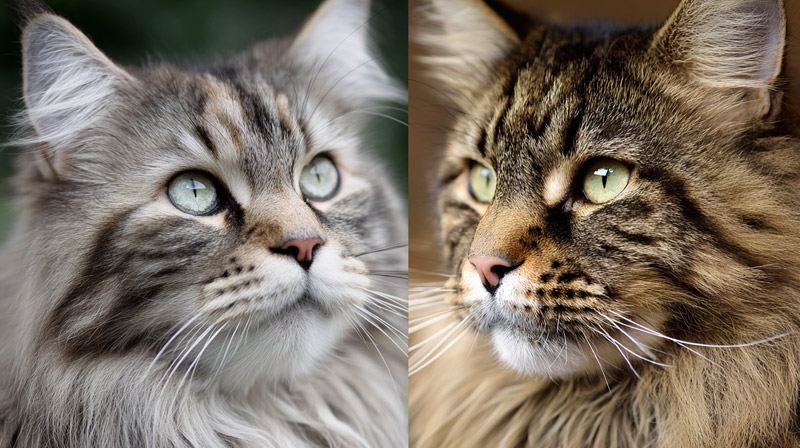
Physical differences:
Maine Coons are significantly larger. Males reach 18-25 pounds (some exceed 25), females 12-15 pounds.
Siberians are medium-large: males 15-20 pounds, females 8-15 pounds.
Body shape: Maine Coons have rectangular bodies with broad chests and tails as long as their bodies. Siberians are more barrel-shaped with shorter tails.
Head shape: Maine Coons have square heads with high cheekbones. Siberians have rounded, modified wedge heads.
Coat: Both long-haired, but Maine Coon coat is silkier. Siberian coat is denser with stronger water resistance.
Temperament differences:
Both are friendly and dog-like. Maine Coons are often described as “gentle giants” with laid-back personalities. Siberians are more energetic and playful, especially when young.
Maine Coons vocalize more than Siberians (chirps and trills). Siberians are quieter overall.
Care requirements:
Maine Coons need more grooming due to silkier coat that tangles easier. Siberians shed more dramatically during seasonal molts but mat less.
Health concerns:
Both prone to HCM. Maine Coons also face spinal muscular atrophy and hip dysplasia. Siberians deal with PKD more commonly.
Cost: Similar price ranges ($1,200-$3,000 for pets).
Lifespan: Maine Coons 12-15 years, Siberians 11-18 years. Slight advantage to Siberians.
Siberian vs. Norwegian Forest Cat
Physical differences:
Norwegian Forest Cats are larger overall. Males 12-20 pounds, females 8-12 pounds. Similar to Siberian size but Norwegian body is longer.
Body structure: Norwegians have shorter bodies with higher rumps and longer legs. Siberians are more compact and barrel-shaped.
Head shape: Norwegians have triangular heads. Siberians have rounder heads with fuller muzzles.
Coat: Both triple-coated, but Norwegian coat forms distinct triangle shape. Siberian coat is fuller around the body.
Temperament differences:
Both gentle and people-oriented. Norwegians are slightly more independent and reserved. Siberians are more outgoing and social.
Energy levels similar, though Siberians may be slightly more playful into adulthood.
Care requirements:
Similar grooming needs (2-3 times weekly, daily during sheds). Norwegian coat sometimes tangles more.
Health concerns:
Norwegians prone to glycogen storage disease IV and retinal dysplasia. Siberians face HCM and PKD more commonly.
Cost: Comparable ($1,200-$3,000).
Lifespan: Both 12-16 years typically.
How to Choose Between Siberian and Similar Breeds
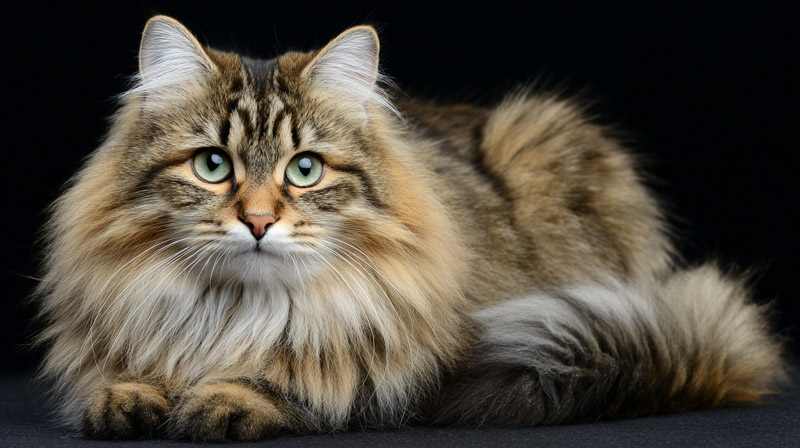
Choose a Siberian if you want:
- Lower allergen levels (best choice for allergy sufferers among large breeds)
- Extremely playful, energetic personality
- Dog-like loyalty and trainability
- Love of water and unique quirks
- Rounder, “teddy bear” appearance
- Strong Russian cultural heritage
Choose a Maine Coon if you want:
- The largest possible cat
- More laid-back, gentle giant personality
- Distinctive tufted ears and square facial structure
- Slightly more vocal, chatty companion
Choose a Norwegian Forest Cat if you want:
- Slightly more independent personality
- Distinctive triangular head and profile
- Scandinavian heritage
- Similar size to Siberian but more elegant build
Lifestyle considerations:
- Active families: Siberian excels with high energy
- Allergy sufferers: Siberian only viable option
- Small children: All three work well, slight edge to Maine Coon for patience
- Apartment living: All three adapt, but Siberian’s smaller size helps
- First-time owners: Maine Coon slightly easier due to calmer temperament
Fun Facts About Siberian Cats
National cat of Russia: Officially recognized as Russia’s native cat breed and considered a national treasure.
Ancient breed: Existed for over 1,000 years. They appear in Russian fairy tales and folklore dating back centuries.
Water lovers: Unusual for cats, many Siberians are fascinated by water. They may play in water bowls, join you in the shower, or fish toys out of water dishes.
Slow maturing: Among the slowest-maturing breeds. A 2-year-old Siberian is still essentially a kitten in a large body.
Exceptional jumpers: Their powerful hind legs make them some of the best jumpers in the cat world. They can leap 6+ feet vertically from a standstill.
Ancestor breed theory: Many experts believe Siberians are ancestors to all modern long-haired cat breeds, making them one of the foundation breeds.
Survived the Cold War: The breed remained largely unknown outside Russia until the Cold War ended in 1990. They couldn’t be exported during Soviet restrictions.
Intelligence level: Ranked among the most intelligent cat breeds. They solve puzzles quickly and can learn complex tricks.
Emotional support abilities: Their sensitivity to human emotions makes them excellent emotional support animals. They naturally gravitate toward distressed family members.
Triple coat uniqueness: The triple coat isn’t just thick – it’s water-resistant and changes density with seasons. Winter coats are dramatically fuller than summer coats.
Genetic diversity champion: Highest genetic diversity of any purebred cat breed, making them healthier overall than most pedigreed breeds.
Celebrity connections: While not as famous as some breeds, Siberians are gaining popularity among cat enthusiasts and appear increasingly in cat shows and social media.
Allergen research subject: More studied for allergen levels than almost any other breed due to hypoallergenic claims. Ongoing research at UC Davis and other institutions.
Russian prestige: In Russia, owning a purebred Siberian is considered prestigious. They’re associated with wealth and good taste.
Is a Siberian Cat Right for You?
Best Homes for Siberian Cats
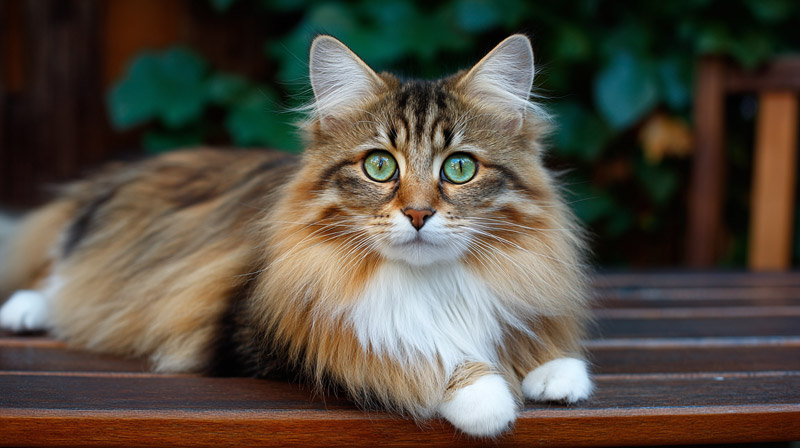
Ideal owner personality types:
- Active individuals who enjoy interactive play
- Patient people committed to long-term companionship (15+ years)
- Cat enthusiasts seeking engaged, social feline
- Allergy sufferers willing to test compatibility
- People who appreciate intelligence and trainability
- Those who enjoy grooming and maintenance tasks
Lifestyle compatibility:
Best for:
- Families with children
- Multi-pet households
- People home frequently or with companion pet
- Active households with daily play time
- Those with space for climbing furniture
- Owners willing to provide mental stimulation
Home environment requirements:
- Space for tall cat trees and climbing
- Windows with views (bird watching)
- Room for exercise and play
- Safe areas for high perches
- Climate-controlled environment (A/C in hot climates)
Time availability needs:
Minimum 1-2 hours daily for interaction, play, and grooming. This breed doesn’t thrive with absent owners unless paired with another pet.
Who Should Avoid Siberian Cats?
Incompatible lifestyles:
- Frequently traveling with no pet care arrangements
- Working long hours with cat home alone 10+ hours daily
- Minimal time for daily play and interaction
- Unable to afford potential veterinary emergencies
- Seeking low-maintenance, independent cat
- Wanting quiet, sedentary lap cat exclusively
Allergy considerations:
Not all Siberians are low-allergen. About 50% produce normal or high Fel d 1 levels. If you have severe cat allergies, you MUST:
- Visit breeder and spend time with cats
- Request allergen testing results for specific kitten
- Test with that specific cat before purchasing
- Have backup plan if allergies develop
Never assume any Siberian is hypoallergenic without testing. Some cause severe reactions.
Challenge factors:
- High energy can be overwhelming for sedentary owners
- Shedding seasons produce massive amounts of fur
- Potential for expensive genetic health issues (HCM, PKD)
- Long wait times from reputable breeders
- High initial purchase cost ($1,200-$4,000+)
- Need for lifetime commitment (15+ years)
Better breed alternatives if Siberian isn’t right:
- For laid-back personality: British Shorthair, Ragdoll
- For low grooming: Russian Blue, American Shorthair
- For apartment quiet: Chartreux, Birman
- For independence: Norwegian Forest Cat
Questions to Ask Before Getting a Siberian Cat
Financial readiness:
- Can I afford $1,200-$4,000 purchase price?
- Do I have $1,500-$3,500 annually for routine care?
- Can I handle $2,000-$5,000 emergency vet bills?
- Will I maintain pet insurance or emergency fund?
- Can I afford high-quality food and supplies?
Time commitment:
- Can I commit 1-2 hours daily for interaction and play?
- Am I home enough, or can I get a second cat for company?
- Can I maintain grooming schedule (especially during sheds)?
- Will I have time for training and mental stimulation?
- Can I commit to daily tooth brushing?
Living situation:
- Does my lease allow cats?
- Is my home stable for next 15-20 years?
- Do I have space for cat trees and climbing furniture?
- Can I cat-proof my home (secure high shelves)?
- Do I have quiet space for litter boxes?
Family agreement:
- Are all household members on board?
- Does anyone have untested cat allergies?
- Are children old enough to handle interactions respectfully?
- Who will be primary caregiver?
- What happens if relationship changes?
Long-term planning:
- What’s my plan for 15-20 year commitment?
- Who will care for cat during vacations?
- Can I afford pet care if financial situation changes?
- What if I need to move? Will I take cat?
- Do I have backup caregivers if needed?
Travel considerations:
- How often do I travel?
- Can I afford pet sitters ($25-$50 daily)?
- Or boarding facilities ($25-$100 daily)?
- Will I take cat with me when possible?
- Do I have reliable backup care?
Other pet considerations:
- How will my current pets react?
- Am I prepared for introduction period?
- Can I manage multiple pets?
- Do I have space for separate resources?
- Can I afford multiple pets?
Honest self-assessment:
- Am I truly ready for a cat, or caught up in the idea?
- Have I researched thoroughly beyond this article?
- Did I visit breeders and spend time with the breed?
- Am I prepared for less-than-perfect scenarios?
- Will I commit regardless of behavioral challenges?
If you answered “yes” to most questions: You’re likely ready for a Siberian cat.
If you have multiple “no” answers: Wait until circumstances improve or consider a different breed or pet type.
The decision to bring home a Siberian is significant. These magnificent cats deserve owners who understand their needs and can provide appropriate care for their entire lives.
With proper preparation, research, and commitment, a Siberian cat becomes more than a pet. They become a loyal, intelligent, playful companion who enriches your life for 15-20 years.
FAQ on Siberian
Are Siberian cats hypoallergenic?
About 50% of Siberians produce lower Fel d 1 allergen levels than other breeds. However, no cat is truly hypoallergenic. Roughly 15% produce very low levels suitable for severe allergy sufferers, while others cause normal reactions.
How much does a Siberian cat cost?
Expect to pay $1,200-$2,500 for pet-quality kittens from reputable breeders. Show-quality cats range $2,500-$4,000. Rare colors like silver command premium prices. Adoption from rescues costs $75-$250 but purebred Siberians are rarely available.
How big do Siberian cats get?
Males weigh 15-20 pounds, females 8-15 pounds. They reach 17-25 inches in length and 9-12 inches tall at the shoulder. This natural breed takes 3-5 years to reach full size, making them slow-maturing compared to other cats.
Do Siberian cats shed a lot?
Yes, especially during seasonal molts in spring and late summer. Their triple coat sheds heavily twice yearly, requiring daily brushing during these periods. Between sheds, weekly grooming manages the thick undercoat and prevents matting in the dense fur.
What is the personality of a Siberian cat?
Siberians are affectionate, playful, and dog-like in behavior. They’re highly intelligent problem solvers who enjoy water, climbing, and interactive play. These social cats need 60-90 minutes daily activity and don’t thrive when left alone for extended periods.
What health problems do Siberian cats have?
Hypertrophic cardiomyopathy (HCM) is the most common concern, affecting heart muscle. Polycystic kidney disease (PKD), periodontal disease, and urinary tract issues also occur. Reputable breeders screen for HCM and PKD through genetic testing and echocardiograms.
How long do Siberian cats live?
Average lifespan is 11-18 years, with many reaching 15+ years. Their high genetic diversity as a natural landrace contributes to overall breed health. Indoor lifestyle, quality diet, regular vet care, and healthy weight significantly impact longevity.
Are Siberian cats good with kids and dogs?
Excellent with both. Their patient, gentle temperament and playful energy suit families with children of all ages. They’re bold and confident with dogs, often forming strong bonds. Their size and dog-like personality help them integrate into multi-pet households easily.
How often should you groom a Siberian cat?
Brush 2-3 times weekly during normal seasons. Daily brushing is necessary during spring and summer shedding periods. Despite long fur, their coat tangles less than Persian or Himalayan breeds. Bathe every 2-3 months, trim nails biweekly, brush teeth daily.
Where do Siberian cats come from?
Russia’s native forest cat, Siberians developed naturally over 1,000 years ago in Siberian forests. They survived harsh winters through natural selection, developing their water-resistant triple coat. The breed remained largely unknown outside Russia until the Cold War ended in 1990.
Conclusion
Siberian cats offer a unique combination of beauty, intelligence, and reduced allergen production that few breeds can match. Their thick water-resistant coat, powerful build, and affectionate temperament make them standout companions for the right families.
These Russian forest cats require commitment. Daily interactive play, regular grooming during shedding seasons, and awareness of health issues like polycystic kidney disease matter.
Budget $1,200-$4,000 upfront plus $1,500-$3,500 annually. Factor in potential veterinary costs for genetic conditions.
Test your compatibility before purchasing, especially if you have allergies. Not every Siberian produces low Fel d 1 levels.
Choose a breeder who screens for hypertrophic cardiomyopathy and provides health certifications. This slow-maturing breed reaches full size at 3-5 years and can live 15+ years with proper care.
Ready for an energetic, loyal, dog-like feline? A Siberian might be your perfect match.