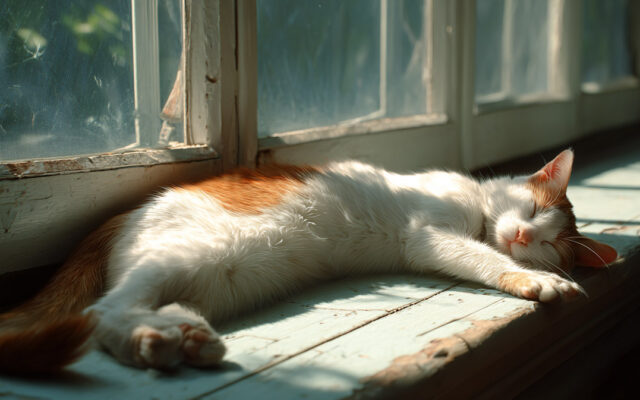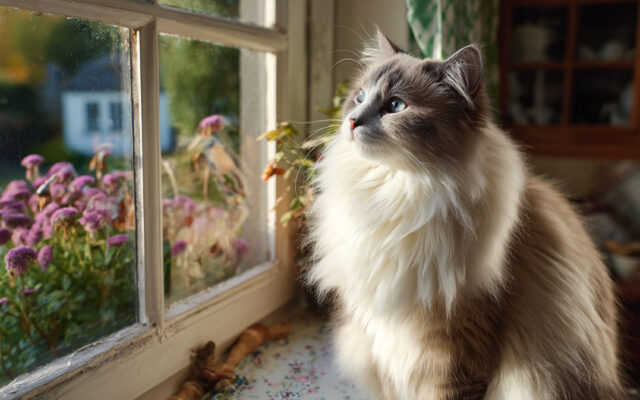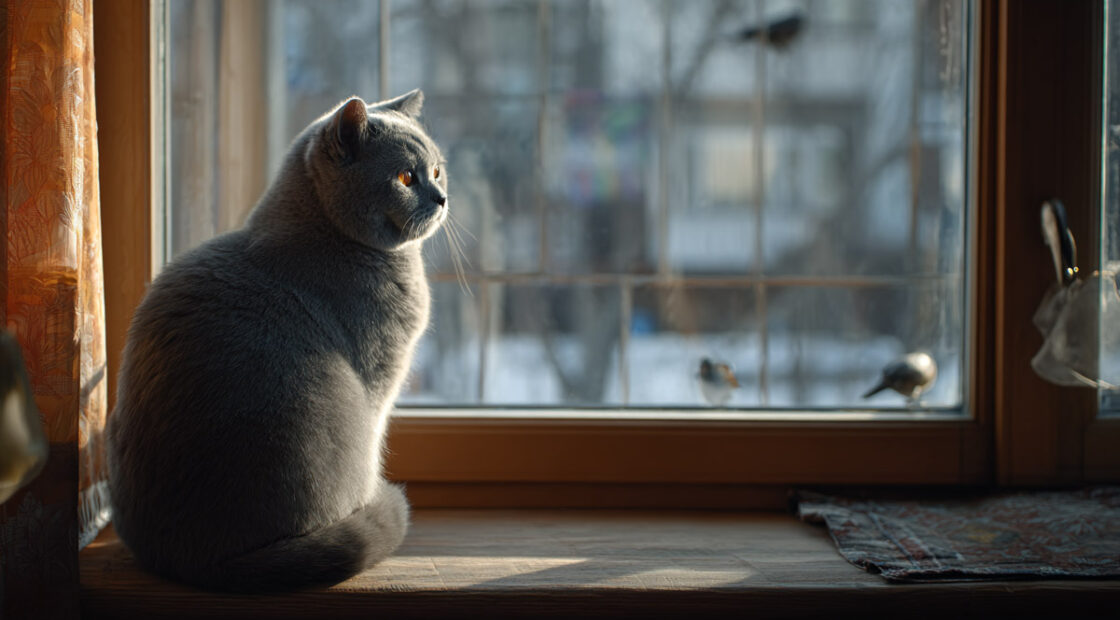
Breed profiles love to quote 12 to 20 years for a British Shorthair, and England’s vet records say a little less. Among 4,009 recorded deaths in the VetCompass data, the 69 cats of this breed had a median age at death of 11.8 years (O’Neill et al., Journal of Feline Medicine and Surgery, 2015), below the 12 to 20 years that Chewy’s 2026 breed profile lists.
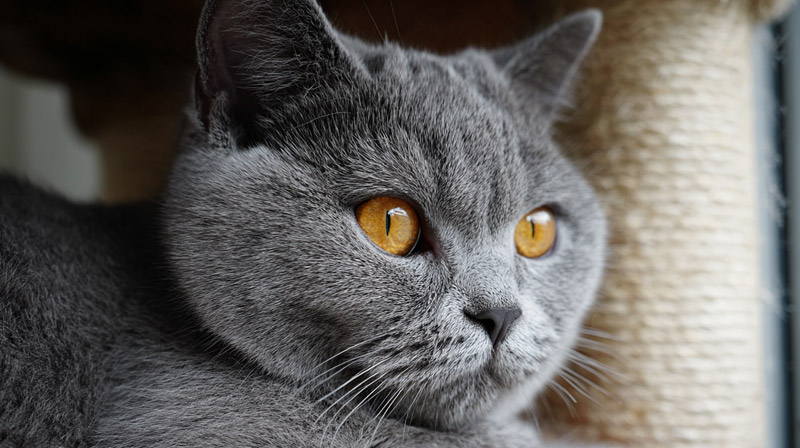
The cat itself is a pedigreed breed with a cobby, muscular body and a dense, plush coat. The temperament is calm, which is why it suits indoor homes so well.
Medium to large in size, it holds full recognition in the registries compared by the World Cat Congress (2023), including the GCCF, CFA, TICA and FIFe.
What Is a British Shorthair?
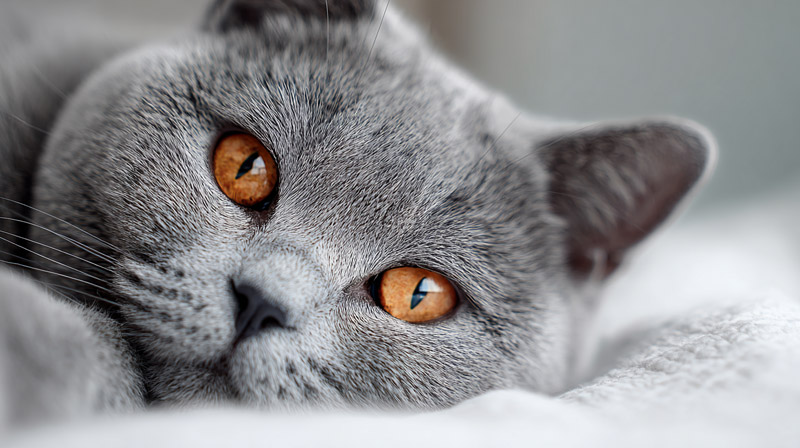
Registries class it as a medium to large cat from the United Kingdom, built cobby and muscular, with a round head and a short, dense coat.
The WCF standard calls for a broad, massive chest, shoulders and back, medium ears set wide apart, and large round eyes. The CFA standard asks for a round head with round cheeks and a firm chin.
Judges weigh the body above everything else, and the CFA point score shows it. The body gets 35 of 100 points, ahead of head (25), coat (20) and color (20).
Royal Canin UK gives male weights as 6 to 9 kg and female weights as 4 to 6 kg. Full maturity takes 3 to 5 years (Royal Canin, VCA Hospitals), which is slow compared with most cats.
Published weights do not agree. Chewy’s breed profile (updated June 2026) lists 10 to 17 lb for the breed as a whole, roughly 4.5 to 7.7 kg.
Next to a slimmer shorthair like the Russian Blue, a British Shorthair has heavier bone and a broader chest, and the legs are shorter.
That bulk is also why weight gain hides so easily on this breed.
What Colors and Coat Types Does the British Shorthair Come In?
Nearly every color is accepted. The coat gets judged the same way everywhere, short and crisp with a dense feel.
The WCF standard (2021 revision) says the coat stands away from the body like plush and is crisp, not woolly. The NZCF standard (2020) lists a soft, over-long or fluffy coat as incorrect.
The long-coated version is the British Longhair, and registry recognition of it varies.
Solid and tabby colors
Blue is the classic. The British Blue is a solid grey-blue cat, usually with copper or gold eyes according to Chewy.
Hill’s Pet lists these colors and patterns for the breed:
- Solid colors: white, blue, black, cream, red, brown
- Silver and cameo
- Bluecream, tortoiseshell and torbie
- Smoke and shaded
Heavy tabby markings count as a fault in the NZCF standard, except in red and cream cats.
Eye color follows coat color. The WCF standard (2023 revision) gives orange through deep orange to copper as the usual range, with green allowed in golden and silver cats.
Bicolor, colorpoint and other patterns
Bicolor and van cats are white combined with a color. Blue and odd eyes are allowed only in pure white cats and in bicolor, van and harlequin cats with a white mask (WCF).
The WCF recognizes colorpoint, meaning Siamese-style points without white, though recognition differs between registries.
Tortoiseshell turns up in Hill’s Pet’s list next to bluecream and torbie, and calico is a color the CFA recognizes.
Color carries 20 points in the CFA score. That equals coat texture and sits below the body.
What Is the British Shorthair’s Temperament Like?
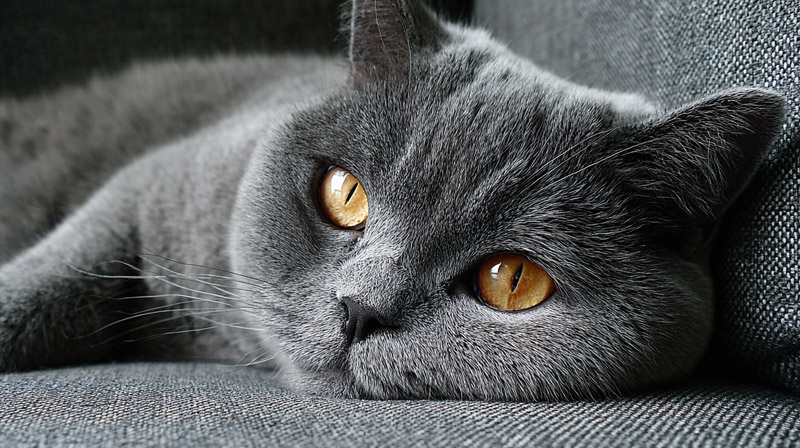
The breed is calm and reserved, and it bonds with its people without asking for constant attention.
The GCCF breed description, quoted by Burgess Pet Care, calls it patient and relaxed, not talkative, and prone to laziness once mature.
It bonds with people of all ages and tolerates dogs and rabbits (GCCF). With other cats and less boisterous dogs it plays well, provided the animals are socialized, matched and introduced gradually (GCCF).
Being left alone is tolerated (Hill’s Pet), though the cat enjoys a calm companion (Perfect Pets). Strangers get a reserved reception (Petsure Australia).
When lifting one, support the hindquarters (Hill’s Pet).
Affectionate does not mean clingy. Purina describes a cat that curls up beside you rather than on your lap.
The GCCF considers the breed suitable for indoor-only homes, with one condition. It needs stimulation, and weight gain has to be managed.
How Long Does a British Shorthair Live?
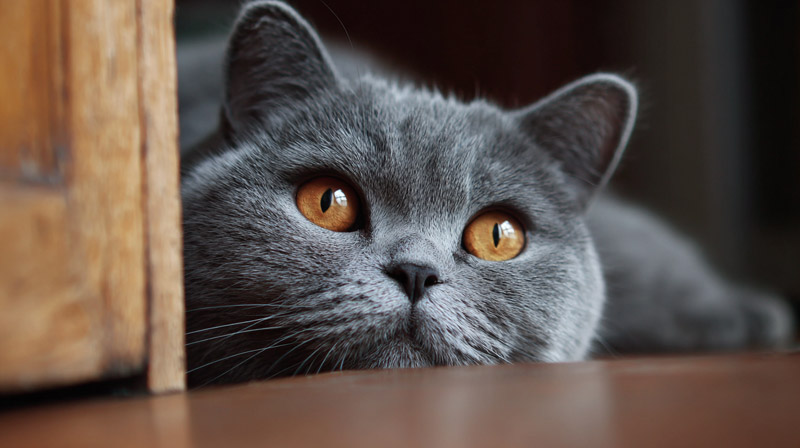
England’s VetCompass records put the median lifespan at 11.8 years (O’Neill et al., Journal of Feline Medicine and Surgery, 2015), just below the 12 to 20 years many breed profiles quote.
The spread is wide. The interquartile range runs from 5.8 to 16.3 years, so about a quarter of the British Shorthairs in that dataset lived past 16.
| Source | Reported lifespan | Basis |
|---|---|---|
| VetCompass England (2015) | 11.8 years median | Recorded deaths, 69 British Shorthairs in a 4,009-cat sample |
| VCA Canada | 15 to 20 years | Breed profile |
| Chewy (2026) | 12 to 20 years | Breed profile |
| Hill’s Pet | 7 to 12 years | Breed profile |
Profile ranges rarely show their source. The VetCompass figure rests on recorded deaths, so that’s the one I’d lean on.
Weight is the lever owners control. A 2024 VetCompass analysis (Teng et al.) linked purebred status, being entire and non-ideal body weight to shorter life expectancy in UK cats, and “non-ideal” covers cats that are too light as well as too heavy.
The Australian British Shorthair data points the same way. Cats above 3.3 kg in their first year had shorter survival beyond 12 months than lighter cats (Frontiers in Veterinary Science, 2023).
Owners control body condition, and the target is an ideal one, not just avoiding obesity. Neutering matters too, unless the cat is a breeding animal. Any cat used for breeding should get heart screening.
Which Health Problems Affect the British Shorthair?
HCM tops the list. Obesity, polycystic kidney disease and hemophilia B follow, and a high share of type B blood adds risks for transfusions and kittens.
- Denmark’s HCM screening cohort had 329 British Shorthairs examined by echocardiography (Granstrom et al., Journal of Veterinary Internal Medicine, 2011).
- At Australian first-opinion clinics from 2008 to 2017, 48% of the British Shorthairs seen were overweight (VetCompass Australia, Frontiers in Veterinary Science, 2023).
- Type B blood showed up in 16.7% of Iberian donors, against 33.3% to 58.7% in earlier studies (Journal of Feline Medicine and Surgery Open Reports, 2017).
- Feline infectious peritonitis was the top insurance claim in 2024 (Agria Pet Insurance UK).
Agria’s 2024 claims then ranked gastrointestinal disorder, diarrhea, gingivitis and vomiting. Claims data and screening data answer different questions.
Hypertrophic cardiomyopathy
HCM thickens the wall of the left ventricle without enlarging the chamber (ACVIM consensus statement, 2020).
The Danish cohort found the disease often appeared early and hit males harder than females. Its authors strongly recommend echocardiographic screening, especially for breeding cats.
Outcomes differ by cat. The ACVIM panel notes that some cats live with mild disease at a normal life expectancy, while others progress to congestive heart failure, arterial thromboembolism or sudden death.
Echocardiography is the screening tool. The Swedish Maine Coon club started an echocardiography-based HCM screening program in 2004, PawPeds has administered it since June 2010, and the breed has its own entry in the PawPeds database.
The Maine Coon DNA test does not transfer. The A31P mutation turned up in a single British Shorthair in the literature (Mary et al., 2010, as cited in Veterinarija ir Zootechnika, 2022).
And a clear scan is only a snapshot. A 2018 SLU thesis on PawPeds screening found that cardiomyopathy gets missed when the exam is not repeated.
Obesity and joint strain
Heavy bone and a placid nature make weight gain easy to miss.
In the Australian dataset, desexed males had the highest mean weight. The GCCF flags the breed’s tendency to gain weight.
Chewy’s breed guide adds that the stocky frame hides the gain and strains joints with age, especially in overweight cats.
Ranges this wide, 4 to 9 kg across the two sexes, mean a number on the scale proves little. Ask the vet to score body condition.
Inherited kidney and blood conditions
Polycystic kidney disease came in through outcrossing. The PKD1 mutation common in Persian cats reached British Shorthair lines that way. Two of four affected cats in a case report by Nivy et al. carried it, and the authors link it likely to earlier Persian crosses.
A DNA test for the mutation exists, so breeders can test before mating.
Hemophilia B is inherited in the breed but uncommon, according to the UFAW Genetic Welfare Problems of Companion Animals resource. The gene sits on the X chromosome, so males are affected more often, and cats with factor IX activity below 1% usually die at or soon after birth.
A large share of British Shorthairs carry blood type B, which matters for transfusions and for matings. The spread across studies is wide, and the Iberian authors attribute it to geography.
Published surveys recommend blood typing before any transfusion or mating.
How Do You Care for a British Shorthair?
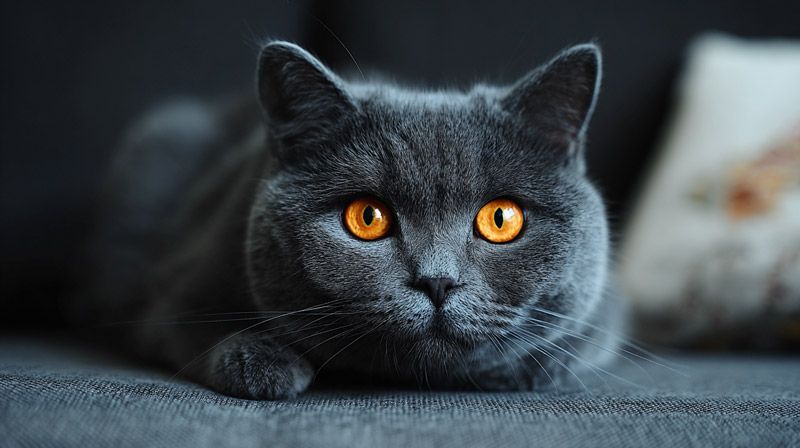
Brushing is weekly most of the year, and meals should be measured.
Sources split on brushing. VCA Hospitals advises combing at least weekly with a metal or curry comb, while Hill’s Pet recommends daily brushing around seasonal changes, when the coat thickens or thins.
Knots form without regular brushing (Hill’s Pet), and the dense coat sheds hardest at those seasonal changes.
On food, Royal Canin says digestion matures around 12 months, when a cat can move to adult food. It also advises setting the diet and portion size from kittenhood, given how easily the breed gains weight.
A low-activity cat needs daily play and a cat tree to keep it moving. Chewy names portion control and daily play as the two best tools against obesity.
Teeth need attention as well. Chewy lists teeth and gums as a main care concern for the breed, and gingivitis ranked in Agria’s top five British Shorthair claims for 2024.
Weigh the cat on a regular schedule and have the vet score body condition at checkups.
How Do Cat Registries Define the British Shorthair?
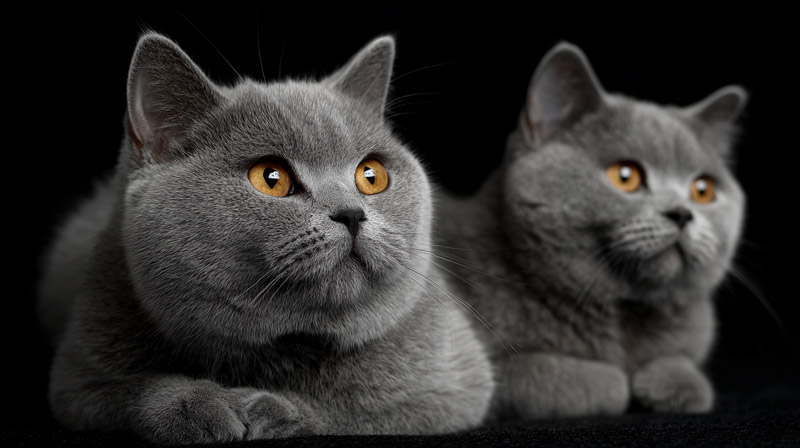
Every major registry recognizes the British Shorthair in full, but they disagree on colors, patterns and outcrosses (World Cat Congress breed comparison, 2023 edition).
The GCCF adds one caveat, full recognition except for new patterns.
| Registry | Chocolate and lilac | Colorpoint | Outcrosses |
|---|---|---|---|
| CFA | Not accepted | Not accepted | None |
| GCCF | Accepted | Accepted | Approved breeding programs only |
| TICA | Accepted | Accepted | Within breed group, no unknowns |
| FIFe | Accepted | Accepted | None |
| WCF | Accepted | Accepted, without white | British Longhair |
The CFA’s exclusions trace back to its breeding restrictions: no chocolate, lavender or Himalayan pattern, and no longhair.
FIFe’s treatment of coat length needs a caveat. The World Cat Congress 2023 comparison lists longhairs under XLH, but FIFe has recognized the British Longhair (BLH) since 2017, and its current standard covers BLH and BSH together. FIFe is firm on Scottish Folds. No progeny of a straight-eared Scottish Fold can be registered as a British Shorthair.
NZCF notes that the longhair gene is present in the breed. It recommends testing, since a carrier can produce longhair kittens depending on its mate’s genotype.
The championship dates, in order:
- 1967: the American Cat Association grants championship status, under the name British Blue
- June 1979: TICA grants championship status
- May 1980: CFA grants championship status
- 15 February 2017: GCCF recognizes the name British Longhair
- November 2021: GCCF grants the British Longhair championship status
The 1967, 1980 and GCCF dates come from PetPlace, CFA and the GCCF breed page. TICA’s 1979 date appears in breed histories from Embrace Pet Insurance and Purina.
A chocolate or colorpoint British Shorthair accepted by GCCF, TICA and FIFe has no place in the CFA ring.
Where Does the British Shorthair Come From?
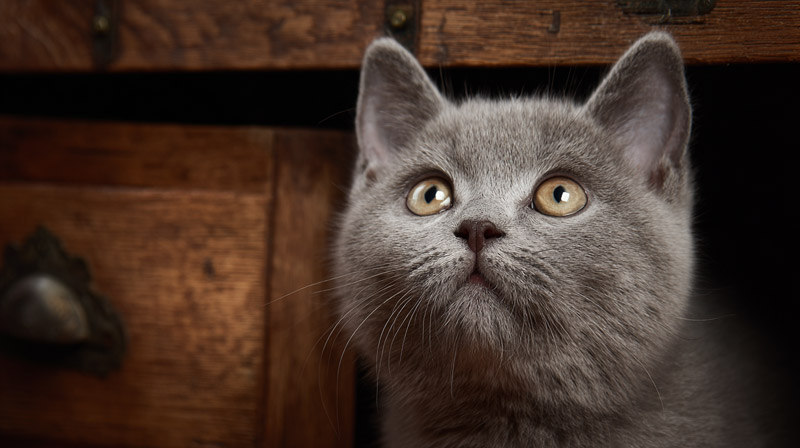
The breed descends from British barn and street cats that Victorian fanciers turned into a show breed, starting with the first UK cat show at the Crystal Palace on 13 July 1871 (GCCF).
Many profiles credit Roman soldiers who brought cats to Britain. The GCCF’s own breed history starts with Harrison Weir and the 1871 show, and the profiles repeating the Roman story cite no documents for it.
The development, roughly in order:
- 1871: “English Shorthair” cats appear as the forerunners of the breed, judged against standards Weir drew up (GCCF)
- 1887: Weir founds the National Cat Club, which still exists (GCCF)
- 1901: a red tabby male named Belle of Bradford becomes the first shorthaired cat registered in the Americas (CFA)
- 1914 to 1918: World War I slows the English cat fancy, and breeders begin outcrossing to Persians to regain type, a practice repeated after World War II (CFA)
- 1930s: show numbers recover by the end of the decade (GCCF)
Sources disagree on the star of that first show. GCCF and CFA say Best in Show went to a 14-year-old blue tabby shorthair owned by Weir, while the CFA Foundation’s Cat-o-pedia describes his cat, The Old Lady, as 12 years old and shown “on exhibition only”.
After the Second World War the GCCF says depleted numbers forced breeders to outcross for genetic diversity. They brought in the Russian Blue and the Burmese, plus the French Chartreux.
Popularity recovered fully in the UK. Your Cat’s breed profile says a quarter of kittens registered with the GCCF each year are British Shorthairs, while the GCCF’s own breed page says half.
Waggel’s 2026 breed history also reports around half, which makes half the better current figure.
How Much Does a British Shorthair Cost?
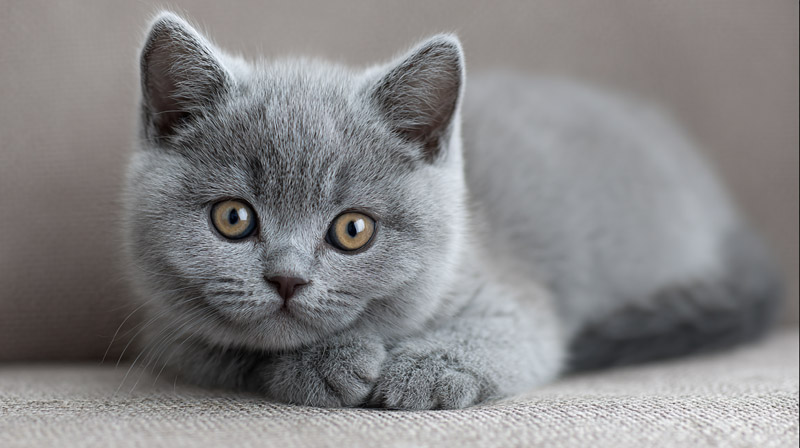
In the UK, Pets4Homes’ sales data for 2025 put the average British Shorthair kitten at £524, up 7.1% on the previous year (reported April 2026).
An average across all listings says nothing about what a given price includes.
| Cost item | Figure | Source |
|---|---|---|
| Average kitten price, UK 2025 | £524 | Pets4Homes |
| Minimum lifetime cost, UK cat | £11,400 to £13,600 (11.7 to 14 years) | PDSA |
| Average lifetime care, US cat | About $32,000 over 16 years | Rover, 2025 |
The lifetime totals dwarf the purchase price. A kitten that costs a few hundred pounds sits inside a bill above £11,000.
PDSA’s range is a minimum, based on a life expectancy of 11.7 to 14 years. Other outlets working from PDSA research quote higher totals.
England adds a legal cost. Every cat must be microchipped and registered on a database by 20 weeks old, and owners who miss it face fines up to £500 (rules in force since 10 June 2024).
US breeders set prices individually, so collect three written quotes and compare what each covers.
Ask what the price includes:
- Registration papers (GCCF, TICA or CFA)
- Vaccinations and a microchip
- Parent health results for HCM and PKD
- A written contract
A price far below the market average is a prompt to ask which of these was skipped.
British Shorthair vs Scottish Fold, Persian and Maine Coon
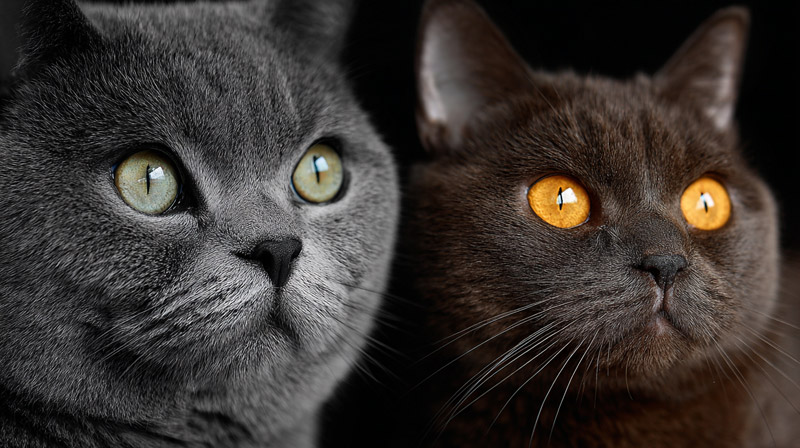
Choose the British Shorthair when conformation-related welfare risk is your top filter, and the Maine Coon when you want a bigger, more active cat.
| Breed | Coat and grooming | Temperament | Main health issue |
|---|---|---|---|
| British Shorthair | Short plush coat, weekly comb | Calm, reserved | HCM, obesity |
| Scottish Fold | Short dense coat, low grooming | Loving, quiet voice | Osteochondrodysplasia |
| Persian | Long thick coat, daily grooming | Calm, quiet | Flat-face breathing and eye problems |
| Maine Coon | Long coat, brushing a couple of times a week | Gentle, can be high energy | HCM, hip dysplasia |
The Scottish Fold carries the fold gene behind a painful bone and cartilage disease. The GCCF and FIFe refuse to register it on welfare grounds (Battersea).
Flanders banned breeding and trading of folded-ear cats from 1 October 2021 (FECAVA), and International Cat Care calls continued breeding unethical.
International Cat Care singles out very flat-faced Persians and Exotics as breeds whose conformation harms health, and says the long coat needs daily grooming. It also highlights a University of Edinburgh study that found flatter-faced cats more likely to have breathing problems.
The Maine Coon is the largest pedigreed cat according to the CFA, with weights up to 20 pounds (Parade’s breed roundup).
Heavy British Shorthair males reach into the same weight band, so frame and coat separate the two more than the scale does.
UC Davis’s Veterinary Genetics Laboratory offers a DNA test for the Maine Coon HCM mutation A31P, but states the mutation is not the sole cause of HCM in the breed.
If welfare risk matters most, go British Shorthair, or a Maine Coon from scanned parents. If daily grooming is a deal-breaker, British Shorthair again. If size and play come first, Maine Coon.
Is a British Shorthair the Right Cat, and When Is It Not?
It suits households that want a low-key cat and accept routine weight and heart checks. It fails for allergic households and for buyers who skip parent testing.
On the plus side, it adapts to a busy household or a quiet apartment (Chewy) and suits first-time owners (Royal Canin). The short coat needs modest grooming, and registry backing is strong, with PawPeds records and GCCF breed support.
On the minus side, it is not hypoallergenic. Breeding cats need heart scans and pets need weight checks. Waiting lists show up wherever breeders are scarce.
PetPlace says buyers in the US often join waiting lists. In the UK, where the GCCF registers more British Shorthairs than any other pedigree breed, supply is wider.
Three situations make it the wrong choice. An allergic household is the first, since Hill’s Pet lists the breed as not less allergenic. An owner wanting a playful cat will be disappointed, because Royal Canin rates the breed’s energy level low. And a buyer who cannot verify the parents takes on the heart and kidney risks of an untested kitten.
Allergy outcomes depend on the individual cat more than the breed. Researchers writing in The Conversation (University of Southern Queensland, 2025) cite a 2024 review that found no scientific evidence for a hypoallergenic cat breed, and note that unneutered males produce more of the main allergen, Fel d 1, than females or neutered males.
If anyone at home reacts to cats, spend time with an adult British Shorthair before reserving a kitten.
How Do You Choose a Reputable British Shorthair Breeder?
Buy only from a registry-affiliated breeder who shows you the parents’ heart scans and lets you meet the kittens with their mother.
- Confirm registry membership. PDSA says pedigree cats should be registered with the GCCF, Felis Britannica or TICA, whose rules restrict breeders and protect mothers and kittens. In the UK, the GCCF Breeder Scheme lists breeders who have signed up to its code of ethics.
- Read the parents’ heart scans. Ask for echocardiography results for both parents and check them in the PawPeds British Shorthair database, where veterinarians, not owners, submit results.
- Find out when the next scan is due. PawPeds’ published schedule, drafted for Maine Coons, calls for a first scan at age 1, yearly scans until past age 3, then another at 5.
- Get the PKD and blood-type results in writing. That means the PKD1 DNA result and the blood type of both parents.
- Meet the kittens with their mother where they were born. In England since 6 April 2020 (Lucy’s Law), third-party sales of kittens under six months are banned, and licensed breeders must show kittens with their mother at the place of birth.
- Check age and paperwork. Cats Protection says kittens should stay with their mother at least eight weeks, while the GCCF kitten checklist asks for at least 13 weeks, full vaccination and pedigree registration.
- Read the contract. PDSA advises asking for the mother’s vaccination, worming and flea-treatment paperwork from her vet.
Eight weeks is the charity guidance and 13 is the GCCF standard. Take the longer one from a GCCF-scheme breeder.
Scan prevalence swings with who gets scanned. The Danish screening cohort classed 8.5% of its British Shorthairs as HCM-positive (Granstrom et al., 2011), while a Ukrainian series that included both symptomatic and asymptomatic cats reported 28% (thesis held in the Technical University of Moldova repository).
A clear result from a young cat is a snapshot, not a clearance.
Walk away if the breeder has no parent scan results. Same if kittens are sold through pet shops or online dealers, or if the breeder will not show you the mother.
British Shorthair FAQ
Do British Shorthairs meow a lot?
No. Petfinder describes the breed as not vocal, squeaking rather than meowing, and Purina lists it among its quiet breeds.
Individual cats still vary, so judge the kitten in front of you, not the breed label.
Where does the Cheshire Cat connection come from?
It comes from a theory that Lewis Carroll saw a British Shorthair on a Cheshire cheese label. Wikipedia lists it as one proposed inspiration among several, including the idiom of grinning like a Cheshire cat, tied to the shaping of Cheshire cheese, and a grinning sandstone carving at St Wilfrid’s Church in Grappenhall.
Royal Canin states the link as fact, but the character’s origin has puzzled readers since 1865.
When should you insure a British Shorthair?
Before any condition appears. PDSA states that new policies do not cover pre-existing conditions, and says insuring a young pet protects it before such conditions develop.
Lifetime cover keeps paying for ongoing conditions as long as you renew every 12 months.
Can a British Shorthair live indoors only?
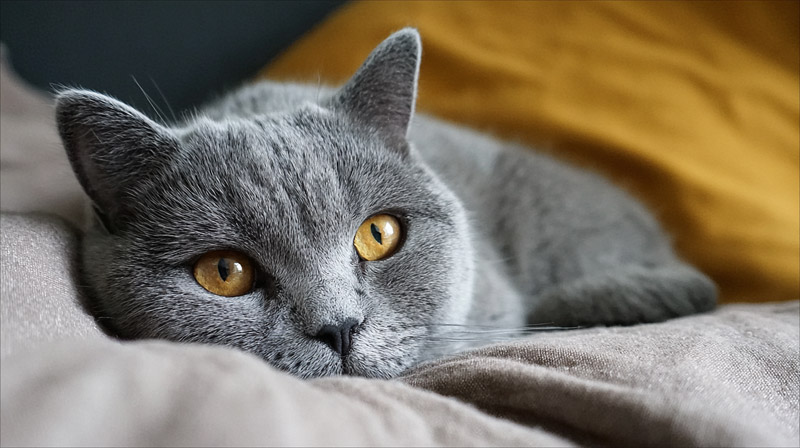
Yes, provided its needs are met. The Feline Veterinary Medical Association’s 2024 position statement warns that unmet environmental needs can lead to anxiety and stress-related illness.
Plan daily play, climbing and scratching. England’s microchipping rule applies to indoor cats too.
Why is the British Shorthair also called the British Blue?
Blue became the breed’s best-known color. The American Cat Association granted championship status in 1967 under the name British Blue, and the CFA followed in 1980 as British Shorthair, the name all North American associations use today (PetPlace).
Golden is a color variety of the same breed, listed by registries such as the CFA and FIFe, not a separate one.
Your First 30 Days With a British Shorthair
Sort out insurance first. Microchip registration comes next, with the baseline vet check after that.
Insurance leads because PDSA excludes any condition recorded before a policy starts, so findings from an exam taken earlier fall outside the cover.
Microchipping sets the deadline. The GCCF kitten checklist asks for at least 13 weeks and England requires a chip by 20 weeks, which leaves at most 7 weeks to chip and register a kitten the breeder has not already chipped.
The catch is that premiums start before a vet has examined the kitten, so the owner pays for cover against an unknown baseline.
Position verified 27 October 2026. A published HCM screening schedule specific to the British Shorthair would change the vet-check step.