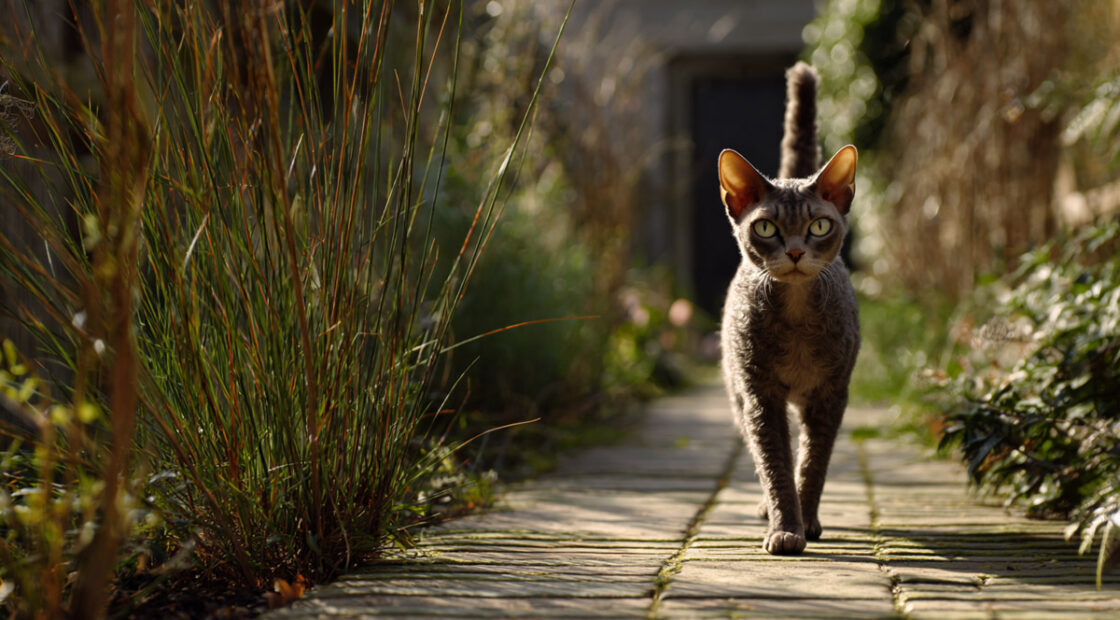
With their otherworldly appearance and pixie-like demeanor, Devon Rex cats have captivated feline enthusiasts since their discovery in 1960s England.
These remarkable short-haired cats feature a distinctive curly coat that feels like suede to the touch, earning them the affectionate nickname “poodle cats.”
Beyond their unique wavy fur, Devon Rex cats possess oversized ears, slender bodies, and mischievous personalities that set them apart from typical domestic breeds.
Known for their high intelligence and playful nature, these medium-sized felines form exceptionally strong bonds with their human families, often following them from room to room like loyal companions.
Whether you’re considering adopting this unique breed, curious about their special care requirements, or simply fascinated by their unusual genetics, this guide explores everything from Devon Rex health and temperament to grooming needs and compatibility with children and other pets.
Devon Rex Cat Breed Statistics
| Characteristic | Details |
|---|---|
| Origin | Devon, England (1960s) |
| Size | Medium |
| Weight | Males: 8-10 lbs (3.6-4.5 kg)<br>Females: 5-8 lbs (2.3-3.6 kg) |
| Height | 10-12 inches (25-30 cm) at shoulder |
| Body Type | Semi-foreign (slim, athletic) |
| Coat Length | Short |
| Coat Texture | Soft, wavy, suede-like |
| Coat Colors | All colors and patterns |
| Shedding Level | Low |
| Grooming Needs | Low brushing, moderate bathing (every 4-6 weeks) |
| Hypoallergenic | Partially (reduced allergens, not allergen-free) |
| Energy Level | High |
| Playfulness | Very high, remains kitten-like into adulthood |
| Affection Level | Very high (“velcro cat”) |
| Vocalization | Moderate |
| Intelligence | High |
| Trainability | Excellent |
| Good with Children | Yes |
| Good with Other Pets | Yes |
| Apartment-Friendly | Yes |
| Indoor/Outdoor | Indoor only recommended |
| Temperature Sensitivity | High (sensitive to cold) |
| Lifespan | 12-15 years |
| Common Health Issues | Hypertrophic cardiomyopathy (HCM)<br>Devon Rex myopathy<br>Patellar luxation<br>Skin conditions |
| Average Purchase Cost | $800-$1,500 (pet quality)<br>$1,500-$2,500 (show quality) |
| Monthly Food Cost | $40-$60 |
| Annual Veterinary Cost | $200-$400 (plus specialized testing) |
What Is a Devon Rex Cat?
The Devon Rex is a unique cat breed distinguished by its wavy, short coat, oversized ears, and slender body. This breed resulted from a natural mutation discovered in Devon, England in 1960.
The breed originated from a curly-coated stray cat named Kirlee, whose distinctive coat was caused by a recessive gene different from the Cornish Rex.
Devon Rex cats are recognized by all major registries including CFA, TICA, GCCF, and FIFe, and classified as a mutation-based breed.
Physical Characteristics
How Big Do Devon Rex Cats Get?

Devon Rex cats are medium-sized with males weighing 8-10 pounds and females typically 5-8 pounds. They stand about 10-12 inches at the shoulder.
They have a slim, athletic body type classified as semi-foreign, with long legs compared to their body size.
Devon Rex cats reach their full size by 18-24 months, though they develop more slowly than some other breeds.
What Does a Devon Rex Cat’s Coat Look Like?
The Devon Rex coat is short, soft, and features distinctive waves or curls caused by the unique “rex” mutation.
The coat has a suede-like texture that’s incredibly soft to touch, earning them the nickname “poodle cats.”
Their fur lacks guard hairs and consists primarily of down and awn hair, which contributes to their reputation as low-shedding cats.
Devon Rex cats come in virtually all colors and patterns including:
- Solid colors (white, black, blue, cream)
- Tabby patterns
- Bicolor
- Colorpoint (similar to Siamese markings)
- Tortoiseshell and calico variations
The Devon Rex coat is considered low-maintenance with minimal shedding compared to most cat breeds.
Distinctive Physical Features
Devon Rex cats have strikingly large ears set low on a short, wedge-shaped head with high cheekbones and prominent whisker pads.
Their eyes are large, oval-shaped, and set wide apart, coming in colors ranging from copper and gold to green and blue, depending on coat color.
The breed features a slender neck, long legs, and oval paws with long toes often described as “monkey-like” for their dexterity.
Their tail is long, slender, and covered in fine, wavy fur that matches the body coat.
The most defining characteristic is their rippled coat pattern, which varies in waviness depending on genetics, age, and health.
Devon Rex Personality and Temperament
Are Devon Rex Cats Affectionate?

Devon Rex cats are exceptionally affectionate, forming strong bonds with their human families and often described as “velcro cats” for their tendency to stick close to their owners.
They typically seek physical contact, enjoying cuddling and often sleeping under blankets with their people.
This breed craves attention and interaction, frequently following their owners from room to room and participating in household activities.
Devon Rex cats generally warm up quickly to strangers, showing curiosity rather than fear, though individual personalities may vary.
How Active Are Devon Rex Cats?
The Devon Rex is a highly active, playful breed with energy levels remaining kitten-like well into adulthood. They require about 30-45 minutes of active play daily.
Their intelligence makes them highly trainable—they can learn tricks, play fetch, and even understand simple commands.
Devon Rex cats are known for their acrobatic abilities, often found perching on high places or making impressive leaps from furniture.
Favorite activities include:
- Interactive play with wand toys
- Puzzle toys that challenge their intelligence
- Climbing and exploring vertical spaces
- Playing fetch with small toys
Their curiosity and problem-solving abilities mean they need mental stimulation as much as physical exercise.
Do Devon Rex Cats Get Along with Others?
Devon Rex cats generally exhibit excellent compatibility with children of all ages, enjoying the energy and playfulness kids bring.
They typically get along well with cat-friendly dogs, especially when introduced properly and at a young age.
This social breed usually accepts other cats readily, though they may prefer to be the center of attention.
Devon Rex cats can adapt to multi-pet households including birds and small mammals, though supervision is recommended due to their playful hunting instincts.
They show minimal territorial behavior compared to many cat breeds, generally preferring companionship over solitude.
How Vocal Are Devon Rex Cats?
Devon Rex cats are moderately vocal, communicating with soft, melodic meows and chirps rather than loud, demanding vocalizations.
Their voice is often described as sweet and musical, with various sounds used to express different needs and emotions.
They’re communicative but not excessive, typically vocalizing when seeking attention, during play, or expressing excitement.
Many Devon Rex owners report their cats develop a unique “language” with them through specific sounds and body language.
Health and Lifespan
How Long Do Devon Rex Cats Live?

Devon Rex cats typically live 12-15 years, with many reaching 16 or more with proper care.
Good nutrition, regular veterinary check-ups, and keeping them as indoor-only cats can extend their lifespan significantly.
This is comparable to the average domestic cat, though their unique genetic makeup can predispose them to certain health issues.
Common Health Issues in Devon Rex Cats
Hypertrophic Cardiomyopathy (HCM)
HCM is a heart condition where the heart muscle thickens, reducing its efficiency. Symptoms include labored breathing and lethargy.
This condition typically appears in middle-aged cats and can be monitored with regular cardiac ultrasounds.
Devon Rex Myopathy
This breed-specific muscle weakness condition typically manifests before 18 months of age, causing a distinctive head bobbing and awkward gait.
While not curable, affected cats can live quality lives with accommodations for their reduced muscle strength.
Patellar Luxation
This joint condition where the kneecap dislocates occurs more frequently in Devon Rex cats than in many other breeds.
Symptoms include intermittent lameness or skipping steps when walking. Severity ranges from mild to severe cases requiring surgery.
Coat and Skin Issues
Devon Rex cats are prone to excessive skin oiliness, which can lead to greasy fur, skin irritation, and sometimes hair loss.
Regular gentle bathing with appropriate cat shampoos can help manage this condition.
Urticaria Pigmentosa
This skin condition causes hypersensitivity and excessive production of mast cells, resulting in crusty skin patches.
It’s more common in Devon Rex cats than other breeds and typically requires dermatological treatment.
Dental Issues
The breed has a tendency toward periodontal disease and tooth loss due to their small jaws and unique facial structure.
Regular dental check-ups and home dental care are essential preventative measures.
What Health Testing Should Devon Rex Cats Have?
Devon Rex cats should undergo genetic testing for the myopathy gene before breeding.
Regular cardiac screenings including echocardiograms are recommended starting around age 2 to monitor for HCM.
Annual veterinary exams should include:
- Comprehensive dental evaluation
- Skin and coat assessment
- Joint evaluation for patellar issues
- Complete blood count and chemistry profile
Kittens should be evaluated for congenital abnormalities including heart murmurs and skeletal defects.
Caring for a Devon Rex Cat
What Do Devon Rex Cats Eat?

Devon Rex cats thrive on a high-protein diet (35-40%) with moderate fat content (15-20%) to maintain their muscle mass and active metabolism.
Adult cats typically require 20-25 calories per pound of body weight daily, divided into 2-3 meals.
Premium quality commercial foods formulated for active cats are suitable, with some owners choosing wet food to increase moisture intake.
Due to their high energy needs and fast metabolism, free-feeding is sometimes appropriate for Devon Rex cats that don’t overeat.
Special dietary considerations include:
- Adequate taurine to support heart health
- Omega fatty acids for coat and skin health
- Avoiding dairy products, as many cats are lactose intolerant
- Careful weight monitoring, as their thin appearance can mask obesity
How Do You Groom a Devon Rex Cat?
The Devon Rex coat needs gentle handling as the curly hair is fragile and can break with over-brushing. Using fingers to smooth the coat weekly is often sufficient.
Despite their short coat, Devon Rex cats need regular bathing every 4-6 weeks due to their oily skin, using gentle cat-specific shampoos.
Nail trimming should be done every 2-3 weeks, taking care with their delicate paws.
Ear cleaning requires special attention as their large ears collect dirt easily. Check weekly and clean with a vet-approved solution as needed.
Dental care is crucial for this breed—brush teeth 2-3 times weekly with cat-specific toothpaste to prevent periodontal disease.
Their sensitive skin may react to harsh grooming products, so using hypoallergenic, gentle options is recommended.
How Much Exercise Does a Devon Rex Cat Need?
Devon Rex cats need 30-45 minutes of active play daily to satisfy their high energy levels and prevent behavior problems.
Interactive toys that stimulate their intelligence are particularly beneficial, such as puzzle feeders and treat-dispensing toys.
They excel with training sessions that double as exercise—many learn to fetch, perform tricks, or navigate obstacle courses.
Indoor environmental enrichment is essential for this active breed:
- Cat trees and vertical spaces for climbing
- Window perches for observation
- Rotating toy selection to prevent boredom
- Interactive play sessions with their humans
Devon Rex cats should be kept as indoor-only pets due to their low body fat, thin coat, and susceptibility to cold.
Living with a Devon Rex Cat
Are Devon Rex Cats Good for Apartments?

Devon Rex cats adapt excellently to apartment living due to their moderate size and indoor-oriented lifestyle.
Their energy needs can be met in limited space through interactive play and vertical territory like cat shelves and trees.
Their moderate vocalization level typically won’t disturb neighbors in close-quarter living situations.
Providing adequate vertical space is essential in smaller homes—wall-mounted shelves, tall cat trees, and climbing opportunities help utilize limited square footage.
What Environment Do Devon Rex Cats Need?
Devon Rex cats are sensitive to cold temperatures due to their fine, thin coats. Maintain indoor temperatures of at least 70°F for their comfort.
They enjoy sunny spots for warming themselves but should have shade access to prevent overheating.
This breed particularly benefits from:
- Window perches for bird watching
- Cat-safe plants to explore
- Multiple sleeping spots at various heights
- Scratching posts with different textures
Devon Rex cats can be trained to walk on leashes, providing safe outdoor access while protecting them from temperature extremes.
Are Devon Rex Cats Good for First-Time Owners?
Devon Rex cats are generally excellent for first-time cat owners due to their adaptable, friendly nature and moderate care requirements.
They’re highly interactive and responsive, providing clear feedback on their needs and forming strong bonds with their owners.
The breed does require some specialized knowledge regarding their coat care, temperature sensitivity, and potential health issues.
Time commitment is moderate to high, as these social cats need regular interaction, play, and mental stimulation.
First-time owners should be prepared for:
- Regular veterinary care, including cardiac monitoring
- Potential skin and coat maintenance
- Meeting their social and activity needs
- Temperature management in the home
Devon Rex Kittens
What Are Devon Rex Kittens Like?

Devon Rex kittens are extraordinarily playful and curious, with energy levels that exceed even most other kittens.
Their social nature emerges early—Devon kittens typically bond quickly with their humans and seek constant interaction.
Early socialization between 2-9 weeks is crucial for developing their already friendly temperament and adaptability.
Devon Rex kittens may go through awkward physical stages as they grow, with their ears appearing disproportionately large and their coat waviness varying dramatically.
Training can begin early, as these intelligent kittens quickly learn litter box use, accept handling, and even start learning simple commands.
When Can Devon Rex Kittens Leave Their Mother?
Devon Rex kittens should remain with their mother and littermates until at least 12 weeks of age, with many breeders preferring 14-16 weeks.
This extended time is crucial for:
- Proper socialization with other cats
- Learning appropriate play behaviors
- Developing immune system strength
- Stabilizing their unique coat pattern
Before adoption, kittens should receive:
- Initial vaccination series (typically at 8, 12, and 16 weeks)
- Multiple deworming treatments
- Veterinary health check
- Initial grooming experiences
- Socialization with humans and possibly other pets
Breeding and Genetics
Devon Rex Breed Standards

CFA standards emphasize the Devon Rex’s distinctive coat (short, soft, wavy without guard hairs), large low-set ears, and high cheekbones on a short, wedge-shaped head.
TICA standards highlight similar features while allowing a wider range of body types, from medium to more slender frames.
Both registries accept all colors and patterns, with emphasis on coat texture rather than specific colors.
Disqualifying faults include:
- Straight coat without waves
- Significant bare patches (except naturally sparse areas like behind the ears)
- Cobby body type
- Crossed eyes or tail abnormalities
Genetics of Devon Rex Cats
The Devon Rex coat results from a recessive gene (dr) distinct from the Cornish Rex mutation (r).
When bred together, Devon and Cornish Rex cats produce offspring with normal coats, proving they’re caused by different genes.
The breed’s diversity includes:
- Color genes including colorpoint, mink, and sepia series
- Dilution genes affecting color intensity
- White spotting genes of various expressions
Acceptable outcrosses historically included domestic shorthairs and American Shorthair cats to maintain genetic diversity.
DNA testing is recommended for the Devon Rex myopathy gene before breeding to prevent passing this condition.
History of the Devon Rex Cat
Where Do Devon Rex Cats Come From?

Devon Rex cats originated in Buckfastleigh, Devon, England, giving the breed both its name and geographic identity.
The breed began with a curly-coated feral tom cat living in an abandoned tin mine near Devonshire in the late 1950s.
Unlike many breeds, the Devon Rex developed from a spontaneous natural mutation rather than selective breeding for specific traits.
The rural English landscape where these cats originated featured abandoned mines and slate roofs where the original curly-coated cats found shelter.
How Did the Devon Rex Breed Develop?
In 1960, Beryl Cox noticed a curly-coated kitten in a litter born to her straight-coated calico cat, who had mated with a curly-coated feral tom near an abandoned mine.
This kitten, named Kirlee, became the foundation of all Devon Rex cats worldwide.
Initially thought to be related to the Cornish Rex (discovered in 1950), breeding tests showed the Devon carried a different mutation.
Development timeline:
- 1960: Discovery of Kirlee, the first Devon Rex
- 1960s: Establishment of breeding programs using outcrosses
- 1970s: Spread to America and international development
- 1980s-1990s: Growing popularity and breed refinement
The breed’s development focused on maintaining the unique coat while developing a distinctive head type different from the Cornish Rex.
When Was the Devon Rex Recognized?
The Devon Rex gained GCCF (Governing Council of the Cat Fancy) recognition in the United Kingdom in 1967, just seven years after Kirlee’s birth.
TICA (The International Cat Association) recognized the breed shortly after its founding in the 1970s.
CFA (Cat Fanciers’ Association) granted provisional status in 1969 and full championship status in 1979.
FIFe (Fédération Internationale Féline) recognized the breed internationally, helping establish it throughout Europe.
Cost of Owning a Devon Rex Cat
How Much Does a Devon Rex Cat Cost?

Pet-quality Devon Rex kittens typically cost between $800-$1,500, depending on color, pattern, and pedigree.
Show-quality kittens from championship lines generally range from $1,500-$2,500 or more.
Breeding rights for Devon Rex cats may add $500-$1,000 to the base price.
Factors affecting price include:
- Coat quality and distinctiveness
- Ear size and placement
- Head shape conforming to breed standards
- Rarity of color or pattern
Initial costs beyond purchase include:
- Veterinary check-up: $50-$100
- Initial vaccinations: $100-$200
- Microchipping: $45-$60
- Spay/neuter surgery: $200-$500
- Basic supplies (litter box, carrier, beds): $200-$300
What Are the Ongoing Costs?
Annual veterinary care for a Devon Rex typically costs $200-$400, with additional costs for cardiac screening ($200-$300) recommended every 1-2 years.
Monthly food expenses range from $40-$60 for premium cat food appropriate for their nutritional needs.
Litter and basic supplies cost approximately $25-$40 monthly.
Grooming supplies including specialized shampoos for their oily skin cost around $15-$30 every couple of months.
Pet insurance ranges from $25-$50 monthly depending on coverage level, which is recommended due to potential breed-specific health issues.
Owners should maintain an emergency fund of $1,000-$2,000 for unexpected health issues, particularly cardiac or skin-related conditions.
Where Can You Get a Devon Rex Cat?
Reputable Devon Rex breeders should provide:
- Health testing for HCM and Devon Rex myopathy
- Written health guarantee
- Full vaccination records
- Evidence of proper socialization
- Support after adoption
- Registration papers from recognized cat associations
Red flags when selecting a breeder include:
- No health testing or guarantees
- Kittens available before 12 weeks
- Unable to see the parents or living conditions
- Excessive number of litters or breeds
- No screening of potential owners
Breed-specific rescues occasionally have Devon Rex cats available, including:
- Rex Cat Club Rescue (UK)
- Rex and Sphynx Rescue (US)
Adoption costs from rescues typically range from $150-$350, including initial veterinary care and spay/neuter surgery.
Adult Devon Rex cats may be better for certain households, offering known personality traits and often requiring less adjustment time.
Devon Rex vs. Similar Breeds
Devon Rex vs. Cornish Rex

Devon Rex cats have a looser, more unstructured wave pattern compared to the tight, uniform marcel waves of the Cornish Rex.
Devon Rex cats have shorter whiskers that curl and break easily, while Cornish Rex cats have longer, curled whiskers.
The Devon Rex has a shorter, broader head with higher cheekbones compared to the longer, egg-shaped head of the Cornish Rex.
Both breeds share similar temperaments, though Devons are often described as slightly more mischievous and clown-like compared to the elegant Cornish Rex.
Health issues differ somewhat, with Devons more prone to myopathy and skin issues, while both share susceptibility to HCM.
Devon Rex vs. Sphynx
Both Devon Rex and Sphynx cats have fine-boned, lithe bodies, large ears, and wedge-shaped heads, creating a similar distinctive appearance.
The obvious difference is coat—Devon Rex cats have a short, wavy coat while Sphynx cats appear hairless (though they actually have a fine down).
Both breeds require special temperature considerations, though Sphynx cats need more protection from cold and sun exposure.
Both breeds share playful, people-oriented temperaments, high intelligence, and clown-like personalities.
Devon Rex cats generally require less specialized skin care than Sphynx cats, who need weekly bathing to remove skin oils.
How to Choose Between Devon Rex and Similar Breeds
Active households seeking an interactive, playful companion would enjoy either a Devon Rex or Cornish Rex, with Devons being slightly more adaptable to various lifestyles.
Those concerned about allergies might prefer a Sphynx over a Devon Rex, though both may be better tolerated than fully-coated breeds.
For multi-pet households, the Devon Rex’s adaptable nature may make introductions easier than with some other breeds.
Climate considerations: Devon Rex cats handle average home temperatures well, while Sphynx cats need more environmental management and sometimes clothing in cold weather.
All three breeds (Devon Rex, Cornish Rex, and Sphynx) require responsible owners committed to their special needs, with Devons perhaps being the most “beginner-friendly” of the three.
Fun Facts About Devon Rex Cats
Devon Rex cats can rotate their ears 180 degrees independently, giving them radar-like hearing abilities that contribute to their alert nature.
The breed has been nicknamed “poodle cat,” “alien cat,” and “pixie cat” due to their distinctive appearance.
Famous Devon Rex owners have included musician David Bowie and actress Mia Farrow.
A Devon Rex named Kevlar held the Guinness World Record for loudest purr, measuring 100.8 decibels, comparable to a car engine.
Their unique metabolism often causes Devon Rex cats to feel warmer to the touch than other cat breeds, earning them the nickname “hot water bottles with fur.”
Devon Rex cats have appeared in several movies and television shows, including the film “Cat People” and BBC’s “Doctor Who.”
Unlike most cats who groom with their paws, many Devon Rex cats lick themselves directly like dogs due to their short whiskers.
Is a Devon Rex Cat Right for You?
Best Homes for Devon Rex Cats

Active households where someone is home frequently are ideal, as Devon Rex cats thrive on human interaction and play.
Families with older children who understand gentle handling make excellent homes for this social, playful breed.
Owners interested in training and interactive play will appreciate the Devon Rex’s high intelligence and eager-to-please nature.
Homes with secure, warm environments work best due to their temperature sensitivity and indoor lifestyle needs.
Multi-pet households can work well, as Devon Rex cats typically enjoy the company of other animals when properly introduced.
Who Should Avoid Devon Rex Cats?
Households where no one is home for extended periods may not be suitable, as Devon Rex cats can become lonely and develop behavior problems without adequate companionship.
Those unwilling to provide regular veterinary care including cardiac monitoring should consider a different breed with fewer health concerns.
People seeking a low-energy, independent cat would find the Devon Rex’s playful, attention-seeking nature challenging.
Extremely budget-conscious owners may struggle with the potential costs associated with breed-specific health issues.
Households keeping windows and doors open frequently should consider the breed’s temperature sensitivity and escape potential.
Questions to Ask Before Getting a Devon Rex Cat
Are you prepared for a 12-15 year commitment to a highly interactive pet?
Is your home environment suitable for an indoor-only cat with temperature sensitivity?
Can you afford regular veterinary care including potential cardiac screening and treatment for breed-specific conditions?
Does your lifestyle allow time for daily interactive play and attention for a social, people-oriented cat?
Have you researched and found a reputable breeder or rescue organization for this somewhat uncommon breed?
Are all family members (including other pets) compatible with an energetic, curious cat that wants to be involved in household activities?
Do you have arrangements for care when traveling, as Devon Rex cats form strong bonds and may experience separation anxiety?
FAQ on Devon Rex
Are Devon Rex cats hypoallergenic?
Devon Rex cats aren’t truly hypoallergenic, but their short, curly coat produces fewer allergens than many other breeds. Their minimal shedding and reduced dander can make them better tolerated by some allergy sufferers, though individual reactions vary significantly.
How long do Devon Rex cats live?
The typical lifespan of a Devon Rex ranges from 12-15 years with proper care. Good nutrition, regular veterinary checkups, maintaining a healthy weight, and keeping them as indoor-only cats can help them reach the upper end of this range.
Do Devon Rex cats shed a lot?
Devon Rex cats are considered low-shedding pets due to their unique coat mutation. Their fur lacks most guard hairs and consists primarily of down hair, resulting in significantly less shedding than typical cat breeds, though they aren’t completely non-shedding.
How much do Devon Rex kittens cost?
Pet-quality Devon Rex kittens typically cost between $800-$1,500 from reputable breeders. Show-quality kittens or those from championship lines may cost $1,500-$2,500. Adoption from breed-specific rescues can range from $150-$350.
Are Devon Rex cats good with children?
Devon Rex cats generally form excellent bonds with children due to their playful, affectionate temperament. Their social nature and adaptability make them patient companions, though as with any breed, interactions between young children and cats should always be supervised.
What health problems are Devon Rex cats prone to?
The breed is predisposed to several health conditions including hypertrophic cardiomyopathy (heart muscle thickening), Devon Rex myopathy (muscle weakness), patellar luxation (kneecap dislocation), and skin issues related to their unique coat.
How often should you bathe a Devon Rex cat?
Despite their short coat, Devon Rex cats benefit from bathing every 4-6 weeks due to their naturally oily skin. Use gentle, cat-specific shampoos and ensure thorough drying afterward to prevent chilling their temperature-sensitive bodies.
Do Devon Rex cats need special care?
Devon Rex cats require some specialized care including temperature management (they’re sensitive to cold), gentle coat handling, regular ear cleaning for their large ears, and monitoring for breed-specific health conditions through regular veterinary checks.
Are Devon Rex cats indoor or outdoor cats?
Devon Rex cats should be kept as indoor-only pets due to their thin coat, low body fat, and temperature sensitivity. Their curious, trusting nature also makes them vulnerable outdoors. Secure outdoor enclosures or leash training can provide safe outdoor experiences.
What is the personality of a Devon Rex cat?
The Devon Rex personality is often described as intelligent, playful, and extremely social. These active, affectionate “velcro cats” form strong bonds with their families, often following them everywhere and participating in all household activities with kitten-like enthusiasm throughout adulthood.
Conclusion
Devon Rex cats represent one of the most distinctive feline breeds with their curly coat, oversized ears, and slender physique. Their playful temperament and affectionate nature make them exceptional companions for those seeking an interactive pet.
These intelligent, social creatures thrive in homes where they receive plenty of attention and mental stimulation. Their low-maintenance coat requires minimal brushing yet needs occasional bathing due to skin oil buildup.
While not completely hypoallergenic, their reduced shedding makes them potentially suitable for some allergy sufferers.
Consider these factors when deciding if a Devon Rex is right for your household:
- Temperature sensitivity requires a consistently warm environment
- Interactive play needs mean daily engagement
- Health monitoring for breed-specific conditions is essential
- Multi-pet compatibility makes them adaptable to various households
For those seeking a unique, loving companion with an extraordinary appearance and dog-like loyalty, the pixie-like Devon Rex makes an unforgettable addition to the right home.