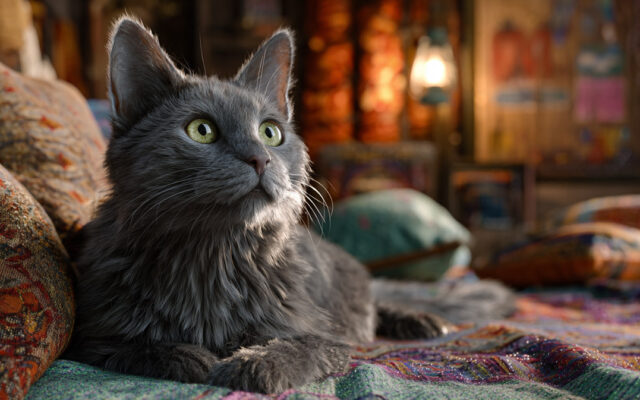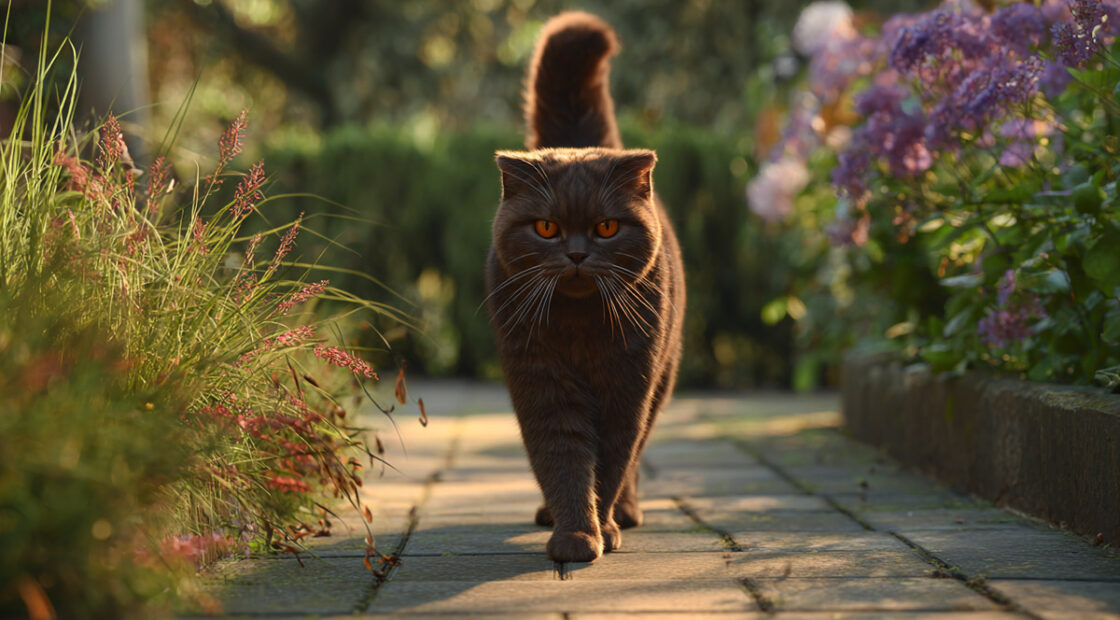
Those folded ears aren’t just adorable. They’re a genetic mutation that affects every bone and joint in the body.
Scottish Fold cats are among the most recognizable breeds worldwide, loved for their owl-like appearance and sweet temperament. But behind that cute exterior lies a serious health concern that every potential owner needs to understand.
This guide covers everything about Scottish Folds. You’ll learn their history, personality traits, care requirements, and the unavoidable health challenges linked to their signature folded ears.
We’ll explore their medium-sized build, dense coat variations, and gentle nature. You’ll discover feeding guidelines, grooming needs, and exercise requirements.
Most importantly, we’ll discuss osteochondrodysplasia – the cartilage condition affecting 100% of folded-eared cats. You’ll learn about costs, lifespan expectations, and whether this breed fits your lifestyle.
By the end, you’ll know exactly what owning a Scottish Fold entails, from their affectionate companionship to their ongoing veterinary needs.
Scottish Fold Cat Breed Statistics
| Characteristic | Details |
|---|---|
| Weight | Males: 9-13 lbs, Females: 6-9 lbs |
| Height | 8-10 inches |
| Length | 14-16 inches (body only) |
| Lifespan | 11-15 years |
| Coat Type | Short-haired or long-haired (Highland Fold) |
| Coat Texture | Dense, plush, soft |
| Shedding | Moderate |
| Colors | All colors accepted (white, black, blue, red, cream, silver, golden, brown, chocolate, lilac, cinnamon, fawn) |
| Patterns | Solid, tabby, tortoiseshell, bicolor, calico, pointed, shaded, smoke |
| Eye Colors | Gold, green, blue, odd-eyed |
| Energy Level | Moderate |
| Exercise Needs | 20-30 minutes daily |
| Playfulness | Moderate |
| Affection Level | Very high |
| Friendliness | High (people, kids, pets) |
| Intelligence | High |
| Trainability | Good |
| Vocalization | Quiet to moderate |
| Grooming Needs | Low to moderate (weekly brushing) |
| Health Issues | High risk (osteochondrodysplasia, PKD, HCM) |
| Apartment Friendly | Yes |
| Good with Kids | Yes |
| Good with Dogs | Yes |
| Good with Cats | Yes |
| First-Time Owner | Intermediate (due to health needs) |
| Purchase Price | $1,000-$3,000 |
| Annual Cost | $1,500-$3,500+ |
| Origin | Scotland (1961) |
| Breed Recognition | CFA, TICA (not GCCF, FIFe) |
| Breeding Status | Banned in multiple countries |
What Is a Scottish Fold Cat?
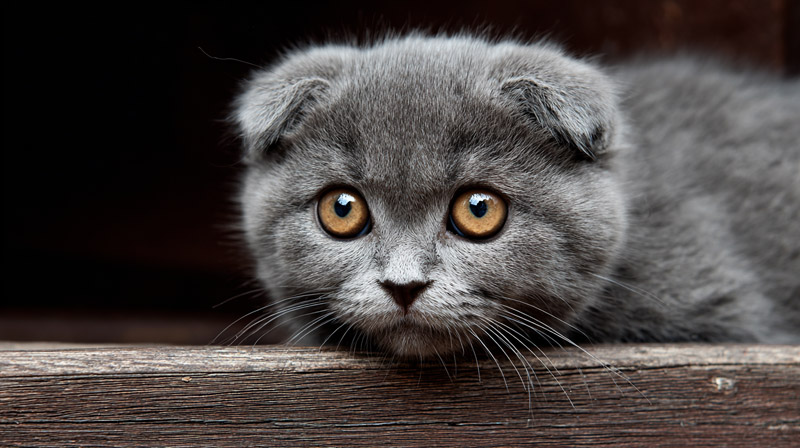
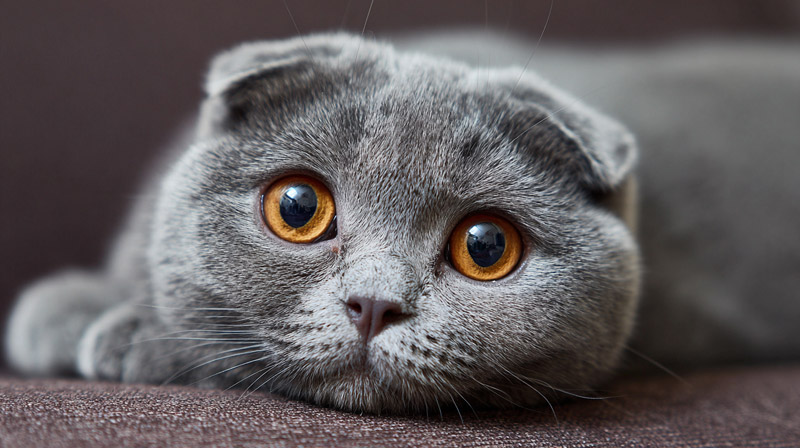
A Scottish Fold is a medium-sized domestic cat breed with forward-folding ears caused by a natural cartilage mutation. This gives them a distinctive owl-like appearance with rounded features and large, expressive eyes.
The mutation is autosomal dominant. Every folded-eared Scottish Fold carries a gene linked to osteochondrodysplasia, which affects cartilage and bone development throughout their body.
The breed originated in Scotland in 1961. A shepherd named William Ross discovered a white barn cat with folded ears on a farm near Coupar Angus in Perthshire.
That cat was named Susie. Every Scottish Fold alive today traces back to her.
Breed Classification: Mutation-based breed from spontaneous genetic change
Registry Recognition:
- TICA recognized them in 1979
- CFA granted championship status in 1978
- GCCF withdrew recognition in 1971
- FIFe refuses to recognize them
Several countries have banned breeding Scottish Folds. These include Austria, Belgium, Netherlands, Norway, and Victoria (Australia).
The reason? All folded-eared cats develop osteochondrodysplasia. Animal welfare organizations consider breeding them unethical.
Responsible breeders only mate folded-eared cats with straight-eared British Shorthair or American Shorthair cats.
Breeding two folded-eared cats together produces kittens with severe skeletal deformities.
Some kittens from Scottish Fold litters have straight ears. They’re called Scottish Straights and don’t develop the bone disease.
Physical Characteristics
How Big Do Scottish Fold Cats Get?
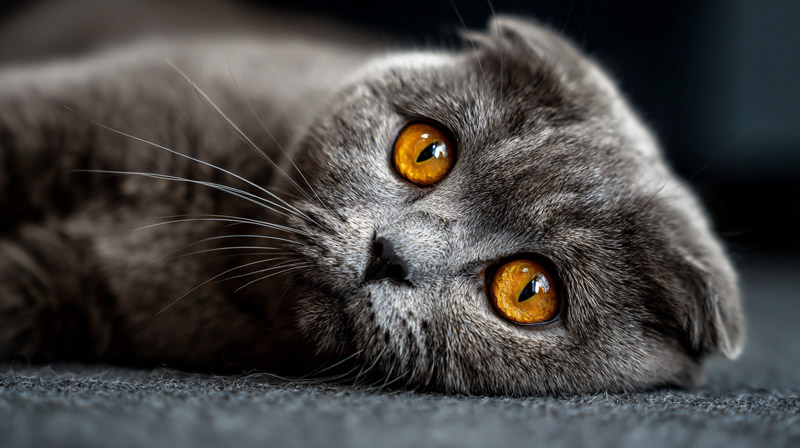
Males: 9-13 pounds
Females: 6-9 pounds
Height: 8-10 inches at shoulder
Body Length: 14-16 inches (not including tail)
Body Type: Cobby, rounded build with medium bone structure
They reach full size at 3-4 years old. This is slower than most breeds.
Growth happens rapidly in the first six months. Kittens can double their weight in the first few weeks.
After six months, growth slows considerably. Most of their size emerges by their first birthday.
Males typically end up 2-4 pounds heavier than females.
The rounded appearance makes them look larger than actual weight. Their compact, padded build gives them a teddy bear quality.
You shouldn’t feel sharp bones when petting them. They’re naturally well-padded.
What Does a Scottish Fold Cat’s Coat Look Like?
Coat Length: Two varieties
Short-haired Scottish Folds have dense, plush coats that stand away from the body.
Long-haired versions are called Highland Folds. They have medium to long fur with ear tufts, toe tufts, a plumed tail, and a neck ruff.
Coat Texture: Dense, resilient, soft to touch
Pattern Types:
- Solid
- Tabby (classic, mackerel, spotted, ticked)
- Tortoiseshell
- Bicolor
- Calico
- Pointed
- Shaded
- Smoke
Color Variations:
- White, black, blue, red, cream
- Silver, golden, brown
- Chocolate, lilac
- Cinnamon, fawn
All colors and patterns are accepted by major registries.
Shedding Level: Moderate
Short-haired cats shed year-round but not excessively. Long-haired varieties shed more during seasonal changes.
Distinctive Physical Features
Eye Color: Gold, green, blue, or odd-eyed
Eye color often relates to coat color. White cats commonly have blue or odd-colored eyes.
Eye Shape: Large, round, widely spaced
Ears: The defining feature
All kittens are born with straight ears. Folding begins around 3-4 weeks if they carry the gene.
Three fold types:
- Single fold: ears bend halfway
- Double fold: tighter bend
- Triple fold: ears lie flat against head (most desired for shows)
Not all kittens develop folded ears. About 50% of litters have folded ears when breeding folded to straight-eared cats.
Head Structure: Round skull with full cheeks, short broad muzzle
Tail: Medium to long, proportionate to body
The tail should be flexible. Stiffness or shortened tails indicate more severe osteochondrodysplasia.
Some Scottish Folds develop thick, inflexible tails that cause pain when moved.
Leg Length: Short to medium, sturdy
Paw Size: Round, well-padded
Some develop misshapen toes from the cartilage mutation.
Unique Breed Markers:
They’re famous for unusual sitting positions. Many sit upright like humans (Buddha position) or sprawl flat like frogs.
These positions may be comfortable due to joint stiffness.
Scottish Fold Personality and Temperament
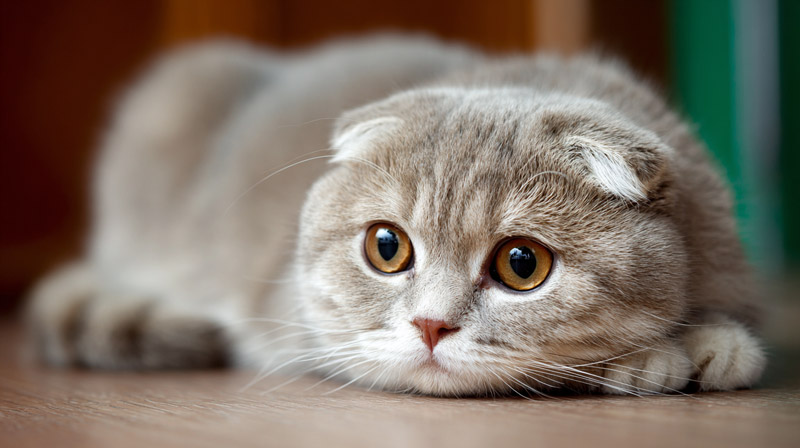
Are Scottish Fold Cats Affectionate?
Extremely. They bond deeply with families and often choose one favorite person.
Human Bonding: Strong lap cat tendencies
They follow owners room to room. Scottish Folds want involvement in whatever you’re doing.
They express affection through headbutts, kneading, purring, and curling up beside you.
Attention Requirements: Moderate to high
They dislike being alone for extended periods. Expect them to seek you out for cuddles multiple times daily.
They’re not clingy but prefer being near their humans.
Stranger Reaction: Friendly to cautious
Most warm up to visitors quickly. They’re social cats that enjoy meeting new people.
Some individuals may be more reserved initially.
How Active Are Scottish Fold Cats?
Energy Level: Moderate
They’re not hyperactive climbers or sprinters. Expect bursts of playfulness followed by long lounging sessions.
Play Drive: Moderate
They enjoy interactive toys like feather wands and puzzle feeders. Their intelligence makes them good problem solvers.
Exercise Requirements: 20-30 minutes daily
Break this into 2-3 short sessions. They tire more easily than highly active breeds.
Their lower activity level makes weight management crucial.
Favorite Activities:
- Batting at toys
- Gentle wrestling with other pets
- Window watching
- Puzzle toys
- Short fetch games
Intelligence Level: High
They learn routines quickly. Training works well with positive reinforcement.
Treats and praise motivate them effectively.
Trainability: Good
They can learn tricks like sit, high-five, and fetch. Consistency and patience work best.
Do Scottish Fold Cats Get Along with Others?
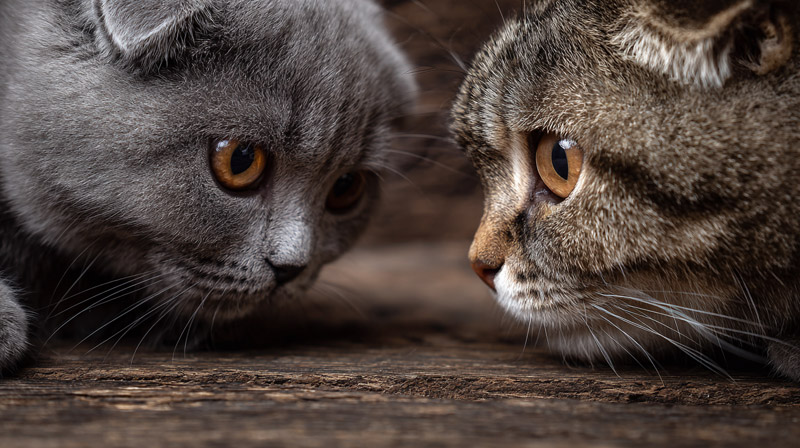
Children Compatibility: Excellent with all ages
Their gentle, patient nature suits family environments. Teach children to handle them carefully, especially the tail.
Dog Compatibility: Generally good
They adapt well to dog-friendly households with proper introductions.
Their calm temperament helps them coexist peacefully.
Other Cats: Good to excellent
They’re not territorial. Most welcome feline companions.
Multi-Pet Household Suitability: High
Territorial Tendencies: Low
They prefer sharing attention to competing for it.
How Vocal Are Scottish Fold Cats?
Vocalization Frequency: Quiet to moderate
They’re not chatty like Siamese cats.
Voice Characteristics: Soft, quiet, gentle
Expect soft trills, chirps, and quiet meows. Their voices match their gentle personalities.
Communication Style: More physical than vocal
They use body language, purring, and slow blinks. You’ll know they’re content without hearing much.
They might become more vocal if ignored or wanting something specific.
Otherwise, they’re pleasantly quiet companions.
Health and Lifespan
How Long Do Scottish Fold Cats Live?
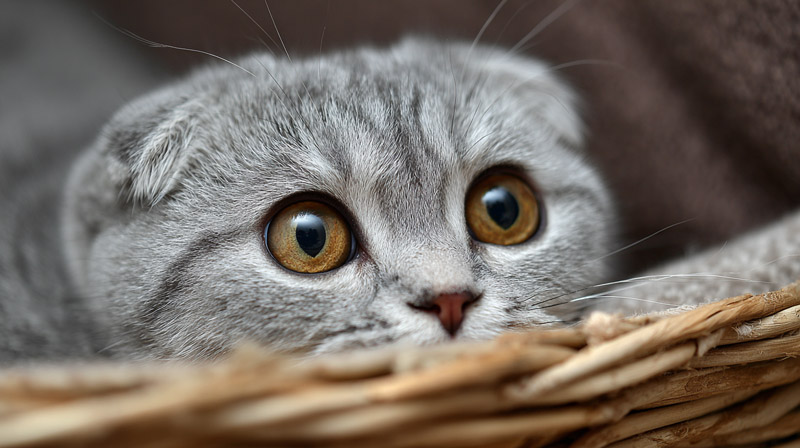
Average Lifespan: 11-15 years
This is shorter than the average domestic cat (15-20 years).
Factors Affecting Longevity:
- Severity of osteochondrodysplasia
- Weight management
- Quality of veterinary care
- Indoor vs outdoor lifestyle
- Diet quality
Cats with less severe joint disease live longer.
Cats with two copies of the fold gene have much shorter lifespans due to crippling arthritis.
Common Health Issues in Scottish Fold Cats
Osteochondrodysplasia (Most Serious)
Every folded-eared Scottish Fold has this condition.
What It Is: Developmental abnormality affecting cartilage and bone throughout the body
The same mutation causing folded ears causes skeletal abnormalities. It affects joints, particularly in the tail, ankles, and knees.
Symptoms:
- Lameness or stiff gait
- Reluctance to jump
- Short, thick, inflexible tail
- Shortened limbs
- Swollen joints (especially ankles)
- Abnormal sitting or walking
- Pain when moving
- Reluctance to be touched on tail or limbs
Age of Onset: Can appear as early as 7 weeks
Heterozygous cats (one fold gene) develop progressive arthritis later in life, typically after 2 years.
Homozygous cats (two fold genes) develop severe, crippling arthritis within months.
Prevalence: 100% of folded-eared cats
Research confirms all cats with folded ears have osteochondrodysplasia to some degree.
Treatment Options:
- Pain medications (NSAIDs like meloxicam)
- Gabapentin for nerve pain
- Solensia (monoclonal antibody targeting pain)
- Joint supplements (glucosamine, chondroitin sulfate)
- Omega-3 fatty acids
- Radiation therapy for pain relief
- Weight management
- Gentle exercise
- Ramps and low-sided litter boxes
Prevention: Cannot be prevented in folded-eared cats
Only straight-eared Scottish Straights avoid the condition.
There is no cure. Treatment focuses on pain management and quality of life.
Some cats develop such severe disease they require euthanasia for welfare reasons.
Polycystic Kidney Disease (PKD)
What It Is: Genetic condition causing cysts to form in kidneys
Symptoms:
- Increased thirst
- Increased urination
- Weight loss
- Poor appetite
- Vomiting
- Lethargy
Age of Onset: Middle age (7+ years typically)
Prevalence: 54% of Scottish Folds tested in one Japanese study had PKD1 mutation
Treatment: No cure. Supportive care includes special renal diet, medications to manage symptoms, fluid therapy.
Prevention: DNA testing breeding cats for PKD1 gene
Hypertrophic Cardiomyopathy (HCM)
Heart muscle thickening that reduces heart function.
Symptoms:
- Difficulty breathing
- Rapid breathing
- Lethargy
- Fainting
- Sudden death
Age of Onset: Can occur at any age
Prevalence: Higher than average for the breed. Japanese study found two genes linked to HCM in Scottish Folds.
Treatment: Medications to manage heart function, reduce fluid buildup, prevent blood clots
Prevention: Screening breeding cats with echocardiograms. DNA testing available for some HCM genes.
Periodontal Disease
Symptoms:
- Bad breath
- Red, swollen gums
- Difficulty eating
- Tooth loss
Age of Onset: Can begin in young adulthood
Treatment: Professional dental cleanings, tooth extractions if needed, antibiotics
Prevention: Regular tooth brushing, dental treats, dental-specific food
Obesity
Lower activity levels put them at high risk.
Extra weight worsens joint problems significantly.
Symptoms: Weight above 13 pounds for males, 9 pounds for females
Prevention: Portion control, regular play sessions, avoiding free-feeding
What Health Testing Should Scottish Fold Cats Have?
Genetic Screening:
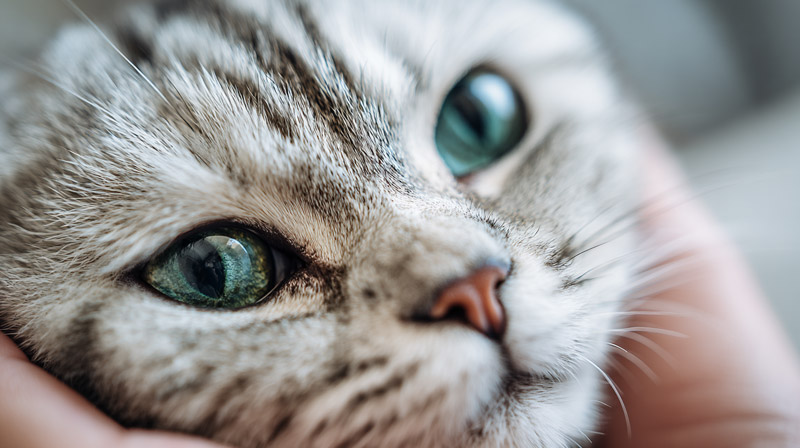
- TRPV4 gene testing (identifies fold mutation)
- PKD1 gene testing
- HCM gene panel
Regular Veterinary Checks:
- Every 6 months minimum
- Monthly at-home tail flexibility checks
- Weekly weight monitoring
Breed-Specific Certifications:
Reputable breeders provide:
- DNA test results for parents
- X-rays showing joint health
- Cardiac screening results
- Health guarantees (typically 1-2 years for genetic conditions)
Age-Specific Monitoring:
- Kittens: X-rays at 7 weeks to assess bone development
- Adults: Annual mobility assessments, dental checks
- Seniors: Bi-annual exams focusing on arthritis progression, kidney function, heart health
Watch for any changes in mobility, jumping ability, posture, or tail flexibility.
Early intervention with pain management dramatically improves quality of life.
Caring for a Scottish Fold Cat
What Do Scottish Fold Cats Eat?
Protein Requirements: 35-45% protein content minimum
High-protein diets support muscle mass and help prevent obesity.
Look for real meat as the first ingredient. Chicken, turkey, fish are excellent choices.
Feeding Frequency:
- Kittens (under 6 months): 3-4 meals daily
- Kittens (6-12 months): 3 meals daily
- Adults: 2 meals daily
- Seniors: 2 meals daily, possibly adjusted portions
Portion Sizes:
Based on weight and activity:
- 6-8 pound cat: 180-220 calories daily
- 9-11 pound cat: 250-300 calories daily
- 12-13 pound cat: 300-350 calories daily
Adjust based on body condition. You should feel ribs easily but not see them prominently.
Wet vs Dry Food:
Combination feeding works well for Scottish Folds.
Wet food provides hydration and helps with weight control. Cats get most water intake from food.
Dry food supports dental health but contains higher carbohydrates.
Many experts recommend primarily wet food for Scottish Folds. Their susceptibility to kidney disease means hydration is critical.
Dry food often contains 40-50% carbohydrates. Cats need only 3-5% carbohydrates.
Special Dietary Needs:
- Low carbohydrate (under 10%)
- Joint-supporting supplements (glucosamine, omega-3 fatty acids, turmeric)
- High moisture content (wet food preferred)
- No plant-based proteins
- Limited grains
Foods to Avoid:
- Chocolate
- Onions and garlic
- Grapes and raisins
- Dairy products (many cats are lactose intolerant)
- Raw fish
- Bones (cooked or tubular)
- Excessive carbohydrates
- Low-quality commercial food with fillers
Feeding Schedule:
Small portions throughout the day work well. If you’re away, leave measured dry food.
Alternate between dry and wet food across meals.
Never free-feed Scottish Folds. They love eating and will overeat.
Weight Management:
Critical for this breed. Extra weight worsens joint problems dramatically.
Monitor body condition monthly. Weigh weekly if overweight.
Once a Scottish Fold becomes overweight, weight loss is extremely difficult.
Supplements:
Discuss with your vet:
- Glucosamine and chondroitin for joints
- Omega-3 fatty acids for inflammation
- Turmeric for joint health
- Cod liver oil
How Do You Groom a Scottish Fold Cat?
Brushing Frequency:
- Short-haired: 1-2 times weekly
- Long-haired: 3-4 times weekly
Use a soft slicker brush or rubber grooming mitt.
This removes dead hair, prevents mats, and distributes natural oils.
Start grooming young to build tolerance. Make it a positive experience with treats and praise.
Bathing Requirements: Rarely needed
Bath only if they get into something dirty or develop skin issues.
Most keep themselves clean through normal grooming.
Long-haired cats may need occasional baths (every few months) to prevent matting.
Always rinse thoroughly and dry completely.
Nail Trimming: Every 2-3 weeks
Use cat nail clippers. Trim just the clear tip, avoiding the pink quick.
If you cut the quick, it bleeds and hurts. Keep styptic powder handy.
Start young so they tolerate it.
Dental Care: Daily brushing ideal, minimum 3 times weekly
Use cat-specific toothpaste (never human toothpaste).
Start young to build tolerance.
Dental treats and dental-specific food help but don’t replace brushing.
Eye Cleaning: As needed
Wipe away discharge with damp cotton balls. Clean from inner corner outward.
Use separate cotton balls for each eye.
Ear Cleaning: Weekly checks, clean as needed
Despite the folds, their ears don’t require more cleaning than other breeds.
Use vet-approved ear cleaner on a cotton ball. Wipe visible parts only.
Never insert anything into the ear canal.
Check for redness, discharge, odor (signs of infection).
Professional Grooming: Generally not needed
Long-haired cats benefit from occasional professional grooming if mats develop.
Most owners handle grooming at home.
How Much Exercise Does a Scottish Fold Cat Need?
Daily Activity Requirements: 20-30 minutes
Split into 2-3 short play sessions. Their lower energy and joint issues make them tire quickly.
Indoor vs Outdoor:
Strictly indoor recommended.
Their health issues and gentle nature make outdoor life dangerous. They lack speed and agility to escape threats.
Outdoor cats face higher risk of injury, disease, theft, and traffic accidents.
Recommended Toys:
- Feather wands for chasing
- Laser pointers (always end with catchable toy)
- Puzzle feeders
- Soft balls
- Crinkle toys
- Interactive treat dispensers
- Small plush mice
Rotate toys weekly to maintain interest.
Mental Stimulation:
Puzzle toys and food dispensers keep them engaged.
Hide treats around the house. Create exploration opportunities.
Window perches provide “cat TV” entertainment.
Climbing/Vertical Space:
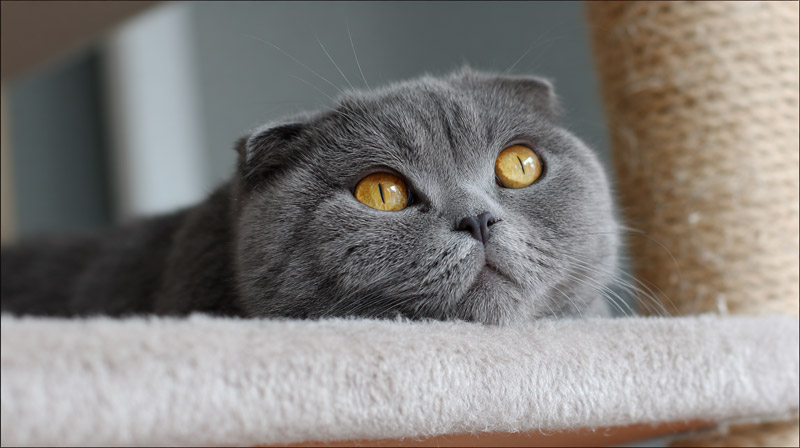
Moderate need. Provide low to mid-height perches.
Avoid high platforms requiring big jumps that stress joints.
Cat trees with ramps work better than tall towers.
Interactive Play Frequency: Daily minimum
Engage them directly. They thrive on human interaction during playtime.
Keep sessions short (10-15 minutes) to avoid overtiring them.
Avoid rough play that could injure delicate joints and tail.
Watch for signs of pain during play. Stop if they show discomfort.
Living with a Scottish Fold Cat
Are Scottish Fold Cats Good for Apartments?
Yes, excellent apartment cats.
Space Requirements: No minimum square footage
They adapt to small spaces easily. Their low to moderate activity level suits compact living.
Noise Level: Quiet
Neighbors won’t hear them. Their soft voices rarely disturb anyone.
Neighbor Compatibility: High
Indoor-Only Suitability: Perfect
They’re homebodies by nature. They don’t yearn for outdoor access.
Vertical Space: Low to moderate need
A cat tree and window perch suffice. They’re not climbers needing floor-to-ceiling structures.
What Environment Do Scottish Fold Cats Need?
Temperature Tolerance:
Heat sensitivity: Moderate (dense coats make them uncomfortable in heat)
Cold tolerance: Good (plush coats provide insulation)
Provide warm bedding in winter. Ensure cool spots in summer.
Humidity Preferences: Average household humidity fine
Safe Outdoor Access:
Catios work well for supervised outdoor time.
Leash walking possible with training but not necessary.
Never allow free outdoor roaming.
Environmental Enrichment:
- Multiple window perches for bird watching
- Scratching posts (at least two)
- Hiding spots (boxes, cat tunnels)
- Sunny lounging areas
- Access to family spaces
Window Perch Importance: High
They love watching outdoor activity. Provides mental stimulation without physical risk.
Scratching Post Requirements:
At least one vertical and one horizontal scratcher.
Sisal, cardboard, or carpet all work. Let them choose preference.
Place near sleeping areas and high-traffic spots.
Are Scottish Fold Cats Good for First-Time Owners?
Yes, but with important caveats.
Care Difficulty: Intermediate
Grooming and general care are beginner-friendly.
Health management requires commitment and financial readiness.
Time Commitment: 1-2 hours daily
They need attention, play, and companionship. Not low-interaction cats.
Experience Level: Intermediate
First-time owners can succeed but must:
- Research osteochondrodysplasia thoroughly
- Budget for ongoing veterinary care
- Commit to twice-yearly vet visits minimum
- Monitor for pain and mobility changes
Common Challenges:
- Managing chronic health conditions
- High veterinary costs
- Monitoring for pain signs
- Preventing obesity
- Finding knowledgeable veterinarians
- Ethical concerns about breed
Their sweet temperament makes daily care enjoyable.
The health challenges require dedication and financial resources.
Scottish Fold Kittens
What Are Scottish Fold Kittens Like?
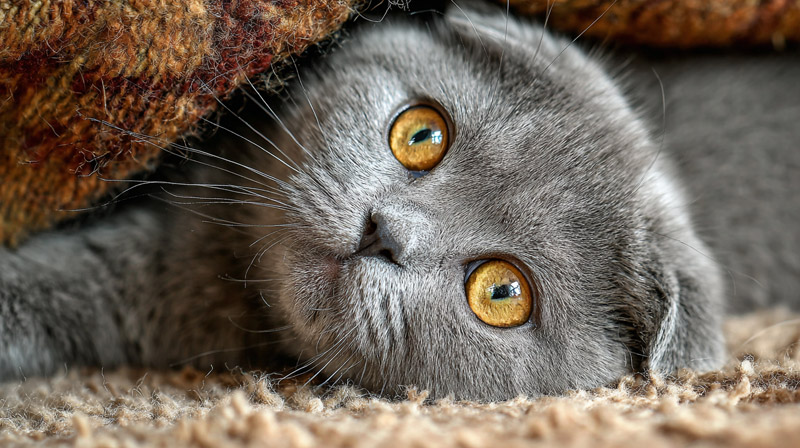
Playful, curious, and social from early age.
Personality Development:
Ears begin folding at 3-4 weeks.
By 8-12 weeks, personality traits emerge clearly.
Early Socialization: Critical window is 2-7 weeks
Kittens need extensive handling during this period.
Exposure to household sounds, people, and gentle pets builds confidence.
Breeders should introduce them to new experiences daily.
Kitten Energy Levels: Moderate to high
More active than adults. They zoom around, wrestle with toys, explore constantly.
Training Windows: 8-16 weeks ideal
Litter box training happens quickly (often learned from mother).
Start nail trimming, tooth brushing, and handling routines early.
Positive reinforcement works best.
When Can Scottish Fold Kittens Leave Their Mother?
Minimum Age: 12-16 weeks
Never accept kittens younger than 12 weeks.
Ethical breeders keep them longer for proper socialization and health monitoring.
Developmental Milestones:
- 3-4 weeks: Ears begin folding or stay straight
- 6-8 weeks: Eating solid food, basic litter training
- 8 weeks: Weaned, litter trained
- 12 weeks: First vaccinations complete, socialized
- 16 weeks: Fully socialized, ready for adoption
Vaccination Schedule Before Adoption:
- FVRCP series (feline viral rhinotracheitis, calicivirus, panleukopenia)
- Rabies vaccine
- FeLV (feline leukemia) vaccine recommended
Spay/Neuter Timing:
Many breeders spay/neuter before adoption (12-16 weeks).
Others require it by 6 months with contract enforcement.
Early spay/neuter is safe and prevents accidental breeding.
Breeding and Genetics
Scottish Fold Breed Standards
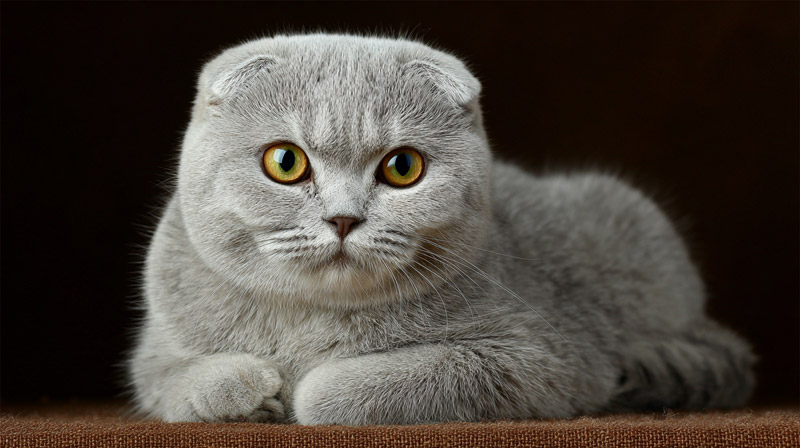
CFA Standards:
- Round head with prominent cheeks
- Ears with at least one fold, set cap-like on head
- Large, round, widely spaced eyes
- Medium-sized body with even proportions
- Rounded appearance throughout
- Medium to long tail, flexible
- All colors accepted
TICA Standards:
- Similar to CFA
- Long-haired variants accepted
- All colors and patterns accepted
Disqualifying Faults:
- Kinked tail
- Incorrect number of toes
- Poor health
- Aggressive temperament
Show Quality vs Pet Quality:
Show quality cats have tight triple folds, perfect proportions, desired colors.
Pet quality may have less tight folds, minor cosmetic variations, or less desirable colors.
All folded-eared cats face same health issues regardless of quality.
Genetics of Scottish Fold Cats
Hereditary Traits:
The fold mutation is autosomal dominant with incomplete dominance.
Fd/fd (heterozygous): Folded ears, moderate to progressive osteochondrodysplasia
Fd/Fd (homozygous): Severe skeletal deformities, often fatal or requiring early euthanasia
fd/fd (no fold gene): Straight ears, no osteochondrodysplasia (Scottish Straight)
Breeding Practices:
Folded × Straight = 50% folded ears, 50% straight ears (all heterozygous folds)
Folded × Folded = 25% homozygous (severe disease), 50% heterozygous, 25% straight
Responsible breeders NEVER breed fold to fold.
Coat Color Genetics:
Scottish Folds can be any color due to outcrossing with British Shorthair and American Shorthair breeds.
Color genetics follow standard feline patterns.
Breed-Specific Mutations:
The TRPV4 gene variant causes both folded ears and skeletal abnormalities.
This gene codes for a protein involved in cartilage development.
Outcross Breeds:
- British Shorthair (most common)
- American Shorthair
These outcrosses maintain genetic diversity and reduce severity of health issues.
Genetic Diversity Concerns:
Limited founding population (all trace to Susie) reduces genetic diversity.
Responsible outcrossing helps maintain health.
DNA Testing Recommendations:
- TRPV4 gene testing for fold mutation
- PKD1 testing for kidney disease
- HCM gene panel for heart disease
History of the Scottish Fold Cat
Where Do Scottish Fold Cats Come From?
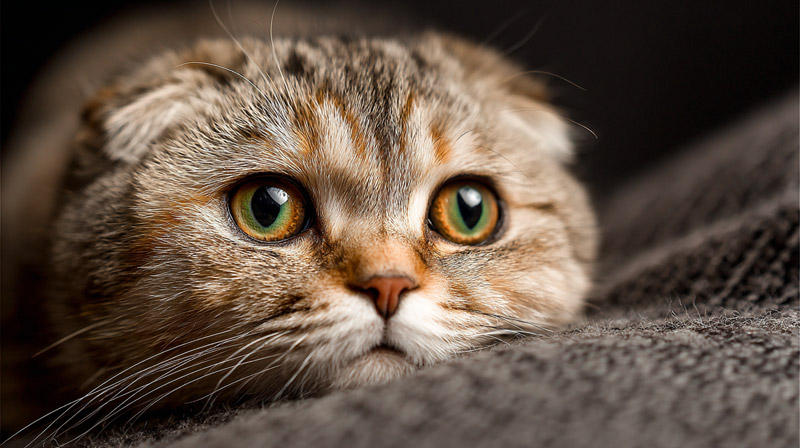
Geographic Origin: Perthshire, Scotland (farm near Coupar Angus)
Natural vs Developed Breed: Natural mutation, then selectively bred
A spontaneous genetic mutation occurred in one cat. Humans then selectively bred to perpetuate the trait.
Historical Context: 1961 discovery
A shepherd named William Ross spotted a white barn cat with unusual folded ears on the McRae farm.
The cat was named Susie. She had folded ears unlike any cat Ross had seen before.
Original Purpose: Companionship
They were never working cats. The mutation was a curiosity that became a beloved pet breed.
How Did the Scottish Fold Breed Develop?
Development Timeline:
1961: Susie discovered on Scottish farm
1963: Susie produces her only litter before being killed by a car. Two kittens had folded ears.
1966: William Ross registers breed with GCCF in UK as “Scottish Fold”
1966-1971: Ross and geneticist Pat Turner breed Scottish Folds. In three years, they produce 76 kittens (42 folded, 34 straight).
1971: GCCF withdraws recognition due to health concerns (ear infections, deafness, crippling limb deformities)
1970s: Breed exported to USA where development continues
1974: CFA accepts Scottish Fold for registration
1978: CFA grants championship status
1979: TICA recognizes the breed
1987-88: TICA accepts long-haired variety (Highland Fold)
1993-94: CFA accepts long-haired variety
2014-2021: Multiple countries ban breeding (Netherlands 2014, Austria 2020, Flanders 2021)
Key Breeders:
- William and Mary Ross (Scotland, founders)
- Pat Turner (geneticist who studied the mutation)
- American breeders who developed breed after UK ban
Foundation Cats:
Susie: White barn cat, original Scottish Fold, killed by car in 1963
Snooks: Susie’s white folded-ear kitten given to William Ross
All Scottish Folds trace ancestry to Susie.
First Official Recognition: GCCF in 1966 (withdrawn 1971)
Breed Evolution:
Early breeding produced severe health problems.
Fold-to-fold matings created kittens with devastating skeletal deformities. Many couldn’t walk.
Breeders learned to cross folded cats only with straight-eared breeds.
This reduced severity but didn’t eliminate osteochondrodysplasia.
Research in 1977 by Oliphant Jackson showed one-third of kittens from folded-eared cats developed osteochondrodysplasia.
Later research confirmed 100% of folded-eared cats have the condition.
Related Breeds:
- Scottish Straight (same breed, straight ears)
- Highland Fold (long-haired variant)
When Was the Scottish Fold Recognized?
CFA Recognition: 1974 for registration, 1978 for championship status
TICA Recognition: 1979
Other Registry Recognition:
Most major registries don’t recognize them:
- GCCF withdrew recognition in 1971
- FIFe refuses recognition
- Many European registries ban them
The breed remains highly controversial due to animal welfare concerns.
Cost of Owning a Scottish Fold Cat
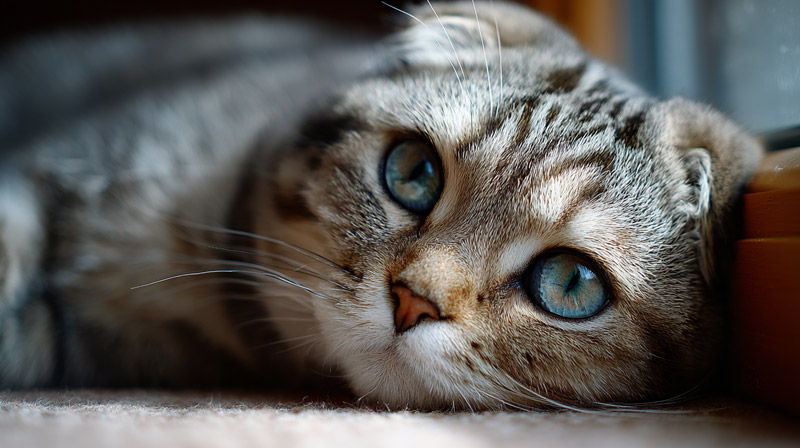
How Much Does a Scottish Fold Cat Cost?
Purchase Price Ranges:
Pet quality: $1,000-$2,000
Show quality: $2,000-$3,000
Breeding rights: $2,500-$3,500+
Rare colors command premium prices. Lilac, smoke, cinnamon, pointed patterns cost more.
Price Factors:
- Lineage and pedigree
- Coat color and pattern
- Ear fold type (triple fold costs more)
- Gender (males sometimes cost slightly more)
- Location (higher in areas with few breeders)
- Breeder reputation
- DNA testing results
- Show potential
Initial Costs Beyond Purchase:
- Initial vet visit: $100-$200
- Spay/neuter (if not included): $200-$500
- Supplies (litter box, carrier, bowls, toys, bed): $200-$300
- Initial vaccinations (if not included): $100-$150
- Microchip (if not included): $50-$75
Total Initial Investment: $1,650-$4,225
What Are the Ongoing Costs?
Annual Veterinary Care: $300-$800+
Includes wellness exams (twice yearly recommended), vaccines, preventatives.
Scottish Folds need more frequent monitoring than average cats.
Expect higher costs as arthritis progresses.
Food Expenses: $30-$60 monthly ($360-$720 yearly)
High-quality, protein-rich food costs more.
Joint-supporting formulas run higher.
Litter and Supplies: $20-$40 monthly ($240-$480 yearly)
Includes litter, replacement toys, scratching posts.
Grooming Costs: $0-$300 yearly
Most owners groom at home (minimal cost).
Long-haired cats might need professional help occasionally ($50-$80 per session).
Pet Insurance: $30-$50 monthly ($360-$600 yearly)
Highly recommended due to breed health issues.
Expect higher premiums than average breeds.
Many insurers charge more for Scottish Folds or exclude osteochondrodysplasia coverage.
Medications and Supplements: $200-$600 yearly
Joint supplements, pain medications increase with age.
Some cats require daily medication costing $50-$100 monthly.
Emergency Fund: $1,000-$3,000 recommended
Osteochondrodysplasia can require surgery or intensive treatment.
Emergency vet visits cost $500-$2,000+.
Total Annual Costs: $1,500-$3,500+
Higher end is more realistic as cats age and arthritis progresses.
Lifetime costs can exceed $30,000-$50,000 over 11-15 years.
Where Can You Get a Scottish Fold Cat?
Reputable Breeders:
Look for these qualities:
- TICA or CFA membership
- Willingness to show you their facility
- Health testing results for parents (TRPV4, PKD1, HCM)
- Written health guarantees (typically 1-2 years)
- Contracts requiring spay/neuter for pet quality
- Knowledge about osteochondrodysplasia with honest discussion of risks
- References from previous buyers
- Kittens kept minimum 12 weeks
- Only breed fold to straight
- Limit litters per year
Contract Elements Should Include:
- Health guarantee period and coverage
- Spay/neuter requirements and timing
- Return policy if health issues arise
- Breeding restrictions
- What happens if you can’t keep the cat
Red Flags to Avoid:
- Unwillingness to show breeding facility
- No health testing documentation
- Selling kittens under 12 weeks
- Breeding fold-to-fold
- Multiple litters available constantly
- No contract or health guarantee
- Unusually low prices (under $800)
- Won’t answer questions about osteochondrodysplasia
- Pressure to buy immediately
Breed-Specific Rescues:
Scottish Fold rescues are rare but exist. Search for specialized purebred cat rescues.
Some rescues focus specifically on cats with health issues.
General Rescue/Shelter Considerations:
Scottish Folds occasionally appear in shelters, though uncommon.
Adoption fees: $75-$500
Much less than breeder prices. Usually includes spay/neuter and initial vaccines.
Adult Cat vs Kitten Considerations:
Adult cats cost less. Personality is established. Health issues may already be apparent, giving clearer expectations.
Kittens cost more but allow you to raise them from the start. Severity of health issues won’t be known for months or years.
Scottish Fold vs Similar Breeds
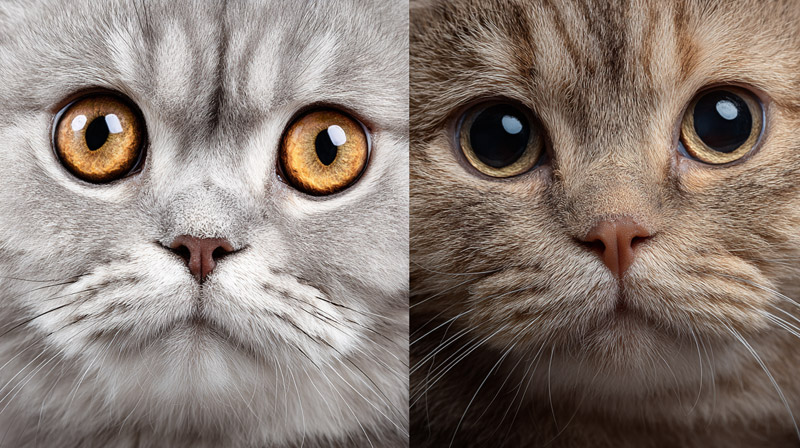
Scottish Fold vs British Shorthair
Physical Differences:
British Shorthair cats are larger (9-18 pounds vs 6-13 pounds).
They have straight ears and a chunkier, more muscular build.
Both have round faces and plush coats. British Shorthairs have rounder eyes.
Temperament Differences:
British Shorthairs are more independent. They enjoy affection but on their terms.
Scottish Folds are more people-oriented and seek constant companionship.
Both are calm and gentle. Neither is hyperactive.
Care Requirements:
British Shorthairs have no breed-specific health concerns like osteochondrodysplasia.
They’re significantly lower maintenance medically.
Grooming is similar for both (weekly brushing for short-haired).
Health Concerns:
Scottish Folds have severe joint disease risks affecting 100% of folded-eared cats.
British Shorthairs are generally healthy. Minor risks include HCM and PKD (but lower prevalence).
Cost Differences:
British Shorthairs cost $1,200-$2,500 initially (similar to Scottish Folds).
Lifetime costs are significantly lower due to fewer health issues.
Lifespan Comparison:
British Shorthairs live 12-20 years. Scottish Folds live 11-15 years.
Scottish Fold vs American Curl
Physical Differences:
American Curl cats have ears that curl backward (opposite direction).
Both result from genetic mutations affecting ear cartilage.
American Curls don’t have the skeletal problems Scottish Folds do.
Temperament Differences:
American Curls are more active and playful.
Scottish Folds are calmer with lower energy.
Both are affectionate and people-oriented.
Care Requirements:
American Curls are healthier overall. Their ear mutation doesn’t cause widespread skeletal issues.
Both need regular ear checks.
Health Concerns:
American Curls have minimal breed-specific health problems.
Scottish Folds have osteochondrodysplasia affecting joints, tail, limbs.
Cost Differences:
American Curls cost $1,000-$2,500 initially (similar pricing).
Lower lifetime costs due to better health.
Lifespan:
American Curls live 12-16 years, slightly better than Scottish Folds.
Scottish Fold vs Persian
Physical Differences:
Persian cats have flat faces and long, luxurious coats.
Scottish Folds have round faces but normal muzzles.
Both have rounded features and sweet expressions.
Temperament Differences:
Persians are more laid-back and sedentary.
Scottish Folds are moderately playful.
Both are affectionate lap cats.
Care Requirements:
Persians need daily grooming (high maintenance).
Scottish Folds need weekly grooming (moderate maintenance).
Health Concerns:
Persians have breathing issues, eye problems, kidney disease.
Scottish Folds have joint disease.
Both breeds have significant health challenges.
Cost Differences:
Persians cost $1,200-$3,000 initially.
Both have high lifetime costs due to health issues.
How to Choose Between Scottish Fold and Similar Breeds
Lifestyle Considerations:
Choose Scottish Folds if you:
- Want an extremely affectionate lap cat
- Can commit to ongoing health management
- Have budget for higher veterinary costs
- Are home frequently
- Prefer calm, gentle cats
Choose British Shorthair if you:
- Want similar appearance without health issues
- Prefer more independent cats
- Want lower lifetime costs
- Value robust health
Choose Ragdoll if you:
- Want an affectionate, docile companion
- Prefer healthier breed
- Don’t mind longer grooming needs
Decision Factors:
- Health care budget (most important)
- Ethical comfort with mutation-based breeding
- Desire for lap cat vs independent cat
- Grooming time available
- Activity level preference
- Longevity expectations
Which Breed for Which Owner:
Scottish Folds suit owners who:
- Can afford $1,500-$3,500+ annually in care costs
- Want devoted, affectionate companion
- Are home frequently (not traveling)
- Don’t need active, playful cat
- Are comfortable with breed’s health issues
- Can handle emotional toll of chronic pain management
Fun Facts About Scottish Fold Cats
All Scottish Folds descend from one white barn cat named Susie who lived on a farm in Perthshire, Scotland in 1961.
Susie lived only two years before being killed by a car. She produced just one litter.
Taylor Swift owns two Scottish Folds named Meredith Grey and Olivia Benson (both named after TV characters).
She frequently features them on social media. Her cats have their own Instagram following.
Ed Sheeran also owned a Scottish Fold named Calippo.
They’re famous for the “Buddha position” where they sit upright on their haunches with legs stretched out.
They also sprawl flat on their backs with legs in the air (the “frog position”).
These unusual positions may actually be more comfortable due to joint stiffness.
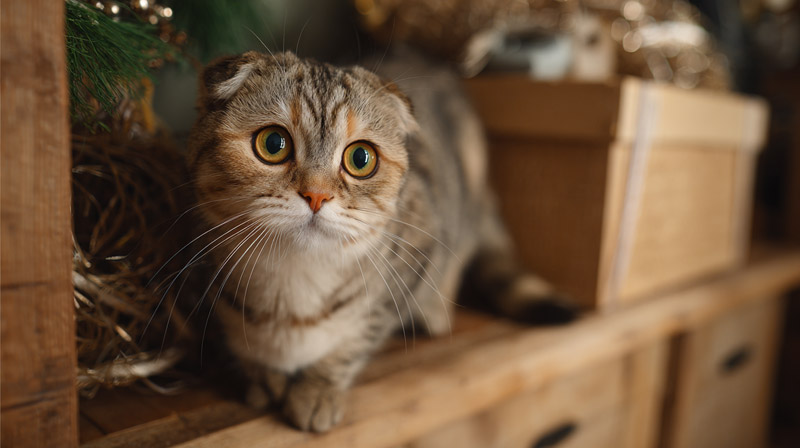
Their owl-like appearance comes from round faces, large eyes, and folded ears.
The breed was originally called “Lops” after lop-eared rabbits before “Scottish Fold” became standard in 1966.
Within three years of starting his breeding program, William Ross produced 76 kittens. 42 had folded ears, 34 had straight ears.
About 50% of kittens develop folded ears when breeding folded to straight-eared cats.
They’re not recognized in their country of origin. The UK’s GCCF withdrew recognition in 1971 over health concerns.
Some Scottish Folds learn to open doors and cupboards due to their intelligence.
Not all Scottish Fold kittens develop folded ears. Straight-eared kittens are called Scottish Straights.
The fold develops at 3-4 weeks. Kittens are born with straight ears.
They’re one of the most expensive cat breeds due to rarity and breeding difficulty.
Several countries have legally banned breeding them due to animal welfare concerns.
Is a Scottish Fold Cat Right for You?
Best Homes for Scottish Fold Cats
Ideal Owner Personality:
- Patient and gentle
- Attentive to health needs
- Financially stable with emergency savings
- Home frequently
- Seeks affectionate companionship
- Emotionally prepared for chronic health issues
Lifestyle Compatibility:
Perfect for:
- Work-from-home professionals
- Retirees with time and resources
- Families with older children
- Apartment dwellers
- People wanting calm, devoted pets
- Those who enjoy constant feline companionship
Home Environment Requirements:
Quiet, stable households work best.
They adapt to various living situations but thrive with consistent routines.
Indoor-only environment is mandatory for their safety.
Time Availability Needs:
1-2 hours daily for interaction, play, and companionship.
They need you present and engaged, not just physically there.
Who Should Avoid Scottish Fold Cats?
Incompatible Lifestyles:
Avoid this breed if you:
- Travel frequently for work
- Work long hours away from home
- Want low-maintenance pets
- Seek athletic, active cats
- Prefer outdoor cats
- Have unpredictable schedules
Budget Constraints:
Avoid if you can’t afford:
- $1,500-$3,500 annually in routine care
- $1,000-$3,000 emergency fund
- Ongoing pain management medications ($50-$100+ monthly)
- Pet insurance premiums ($30-$50 monthly)
- Twice-yearly vet visits minimum
Allergy Considerations:
Scottish Folds are NOT hypoallergenic.
They shed moderately and produce standard levels of Fel d 1 protein (triggers allergies).
Challenge Factors:
Managing chronic pain conditions requires emotional resilience.
Watching a beloved pet develop progressive arthritis is difficult.
Some cats require euthanasia due to severe disease.
Ethical Concerns:
The breeding controversy bothers many people.
If breeding practices concern you, consider:
- Adopting a straight-eared Scottish Straight
- Choosing a different breed
- Rescuing rather than buying
Better Breed Alternatives:
If you love their look but want healthier cats:
- British Shorthair – similar round face, no health issues
- Exotic Shorthair – round features, playful
- Chartreux – gentle, healthy
If you love their personality:
Questions to Ask Before Getting a Scottish Fold Cat
Financial Readiness:
Can I afford $1,500-$3,500 yearly in routine care?
Do I have $1,000-$3,000 saved for emergency medical costs?
Can I pay pet insurance premiums ($30-$50 monthly)?
Will I afford pain medications long-term ($50-$100+ monthly as they age)?
Am I prepared for potential $40,000+ lifetime costs?
Time Commitment:
Am I home enough for a needy, affectionate cat?
Can I dedicate 1-2 hours daily to interaction?
Will I maintain consistent routines?
Do I have time for vet visits every 6 months?
Can I commit to daily play sessions?
Living Situation Stability:
Does my lease allow cats?
Is my home stable for the next 11-15 years?
Can I provide safe indoor environment?
Do I have space for litter boxes, cat trees, toys?
What happens if I need to move?
Family Agreement:
Is everyone on board with getting a cat?
Are family members educated about osteochondrodysplasia?
Will children handle the cat gently (especially the tail)?
Who will be primary caregiver?
What if someone develops allergies?
Long-Term Planning:
What happens if I move?
Who cares for the cat when I travel?
Can I commit to 11-15 years of care?
Am I prepared for increasing health issues as the cat ages?
What if the cat needs surgery ($2,000-$5,000)?
Travel Considerations:
Do I travel frequently?
Can I afford pet sitters ($30-$50 daily) or boarding ($25-$40 daily)?
Will someone monitor the cat’s health if issues arise while I’m away?
Other Pet Considerations:
Do current pets tolerate new animals?
Can I afford care for multiple pets?
Will I have time for all pets?
How will I introduce them properly?
Ethical Considerations:
Am I comfortable supporting breeding of cats with genetic health problems?
Would adopting a Scottish Straight or different breed sit better with me?
Can I handle people questioning my choice due to welfare concerns?
How do I feel about the breed being banned in multiple countries?
Practical Considerations:
Have I found a veterinarian experienced with Scottish Folds?
Do I understand osteochondrodysplasia and how to recognize pain?
Am I prepared to make quality-of-life decisions if disease progresses severely?
Can I commit to monitoring their mobility, weight, and behavior constantly?
Take time with these questions. Don’t rush into adopting.
Scottish Folds are wonderful companions for the right owners. They offer years of affection, gentle purrs, and that unmistakable owl-like gaze.
But they require committed, prepared owners who understand the health challenges ahead.
The folded ears are adorable. The personality is delightful.
But the genetic disease is real, progressive, and affects every folded-eared cat.
Go in with eyes wide open, budget ready, and heart prepared for the journey.
If you can provide excellent care, financial resources, and devoted companionship, a Scottish Fold will reward you with unconditional love and loyal friendship.
Just know what you’re signing up for. These cats deserve owners who understand their needs and commit fully to their wellbeing despite the challenges.
FAQ on Scottish Fold
Are Scottish Fold cats healthy?
No. Every folded-eared Scottish Fold has osteochondrodysplasia, a painful joint disease affecting cartilage throughout their body. This genetic condition causes progressive arthritis, tail stiffness, and mobility issues. Some develop severe disease requiring euthanasia.
How much does a Scottish Fold cat cost?
Scottish Fold kittens cost $1,000-$3,000 from reputable breeders. Rare colors and show quality cost more. Lifetime expenses reach $30,000-$50,000 due to ongoing veterinary care, pain medications, and joint supplements for their chronic health condition.
Do Scottish Fold cats stay small?
No, they’re medium-sized cats. Males weigh 9-13 pounds, females 6-9 pounds. They reach full size at 3-4 years old, slower than most breeds. Their rounded appearance and compact build make them look smaller than actual weight.
Why are Scottish Folds banned in some countries?
Several countries banned breeding them due to animal welfare concerns. All folded-eared cats develop painful osteochondrodysplasia. Austria, Belgium, Netherlands, Norway, and parts of Australia prohibit breeding. The UK withdrew breed recognition in 1971.
Are Scottish Fold cats affectionate?
Extremely. They bond deeply with families and often choose one favorite person. Scottish Folds follow owners room to room, seek constant companionship, and enjoy lap time. They’re gentle, patient cats with moderate to high attention requirements.
How long do Scottish Fold cats live?
Average lifespan is 11-15 years, shorter than typical domestic cats. Severity of joint disease affects longevity. Cats with two copies of the fold gene have much shorter lifespans due to crippling arthritis developing early.
Do Scottish Fold cats have health problems?
Yes, significant ones. All folded-eared cats develop osteochondrodysplasia causing arthritis, joint pain, and mobility issues. They’re also prone to polycystic kidney disease (54% prevalence), hypertrophic cardiomyopathy, obesity, and periodontal disease requiring ongoing management.
Are Scottish Fold cats good with kids?
Yes, excellent with children of all ages. Their gentle, patient temperament suits family environments well. They’re not aggressive and tolerate handling. Always teach children to be careful with their tail, as stiffness causes pain.
What do Scottish Fold cats eat?
High-protein diets with 35-45% protein content. Feed real meat as first ingredient. They need joint-supporting supplements like glucosamine and omega-3 fatty acids. Wet food preferred for hydration. Avoid high carbohydrates and free-feeding to prevent obesity.
Can Scottish Fold cats live in apartments?
Yes, they’re excellent apartment cats. Their moderate activity level suits compact spaces well. They’re quiet, rarely disturb neighbors, and adapt easily. Indoor-only living is mandatory for their safety due to health vulnerabilities and gentle nature.
Conclusion
Scottish Fold cats offer devoted companionship with their affectionate temperament and distinctive appearance. Their gentle nature makes them excellent family pets for the right households.
But ownership comes with serious responsibilities. The cartilage mutation causing those folded ears guarantees lifelong joint disease in every cat.
Expect ongoing veterinary care, pain management, and monitoring for mobility issues. Budget $1,500-$3,500 annually, with lifetime costs exceeding $40,000.
Their 11-15 year lifespan demands financial stability and emotional commitment. Not everyone should get this breed.
If you can provide excellent medical care and accept the ethical concerns, they’ll reward you with unconditional love. Just understand what you’re committing to before bringing home a kitten.
Research thoroughly. Talk to veterinarians. Consider healthier alternatives like British Shorthairs if the health issues concern you.