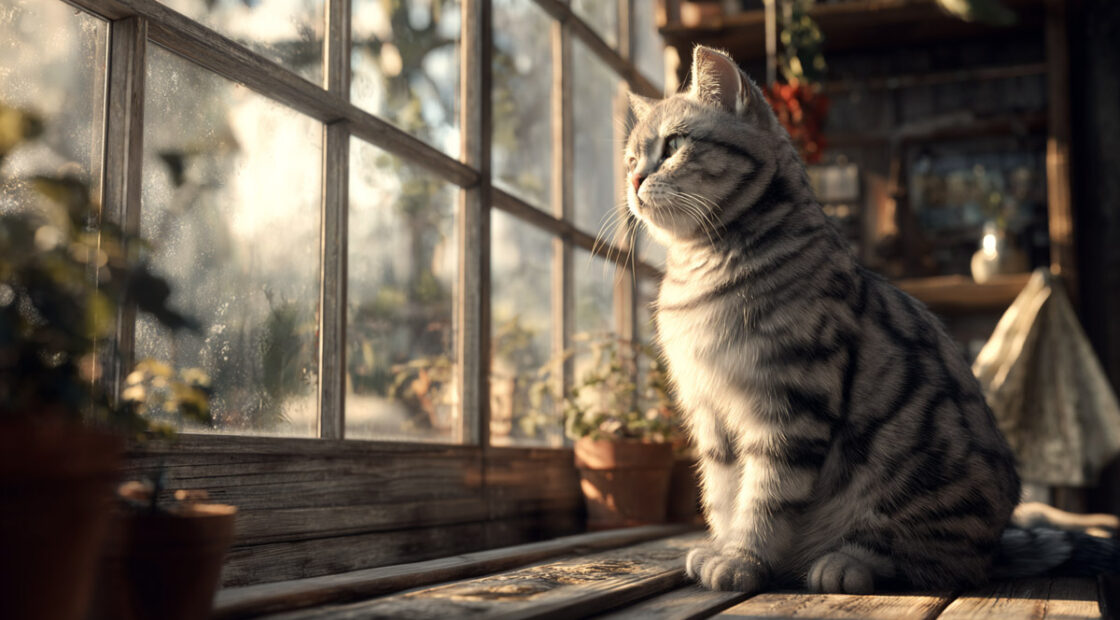
That silver tabby with the round face watching you from the pet store window? Probably an American Shorthair cat.
These cats sailed on the Mayflower, protected colonial food stores from rats, and now rank among America’s most popular purebred felines. But most people can’t tell them apart from regular shorthaired cats.
American Shorthair cats differ from random-bred domestic cats in predictable temperament, health testing, and breed standards. Understanding these differences matters if you’re considering adding one to your family.
This guide covers everything about the breed: physical characteristics, personality traits, health concerns, care requirements, costs, and whether this easygoing feline fits your lifestyle.
You’ll learn what makes these cats special beyond their looks and why they’ve remained American favorites for over a century.
American Shorthair Breed Statistics
| Characteristic | Details |
|---|---|
| Weight | Males: 11-15 lbs, Females: 8-12 lbs |
| Height | 8-10 inches |
| Lifespan | 15-20 years |
| Coat Length | Short |
| Colors | Over 80 variations (tabby, calico, solid, bicolor) |
| Shedding | Moderate |
| Temperament | Calm, adaptable, friendly |
| Energy Level | Moderate |
| Good with Kids | Yes |
| Good with Dogs | Yes (with proper introduction) |
| Good with Other Cats | Yes |
| Trainability | Moderate |
| Grooming Needs | Low to moderate (weekly brushing) |
| Health Issues | Generally healthy, prone to hypertrophic cardiomyopathy |
| Origin | United States |
| Price Range | $600-$1,200 |
| Vocalization | Quiet to moderate |
| Activity Level | Playful but not hyperactive |
| Affection Level | Moderate to high |
What Is an American Shorthair Cat?
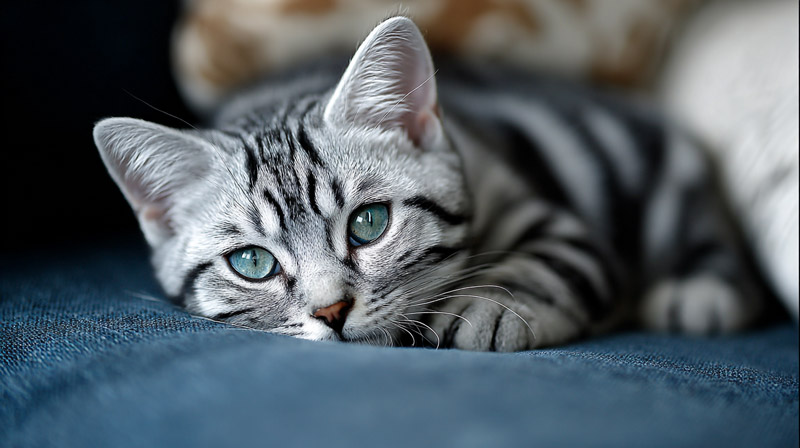
The American Shorthair is a purebred domestic cat breed descended from European working cats brought to North America by early settlers to control rodent populations on ships and in colonies.
These cats developed naturally over centuries, adapting to harsh New England weather and developing the muscular build and dense coat that defines the breed today.
The Cat Fanciers Association recognized them as one of its first five registered breeds in 1906, originally calling them Domestic Shorthairs.
In 1966, breeders renamed them American Shorthairs to distinguish the pedigreed breed from random-bred shorthaired cats.
The breed classification is natural rather than created through selective crossbreeding. TICA, CFA, GCCF, and FIFe all recognize the American Shorthair.
Their defining characteristics include a powerful, rectangular body, round face with full cheeks, and that signature short, dense coat that comes in over 80 color combinations.
Physical Characteristics
How Big Do American Shorthair Cats Get?
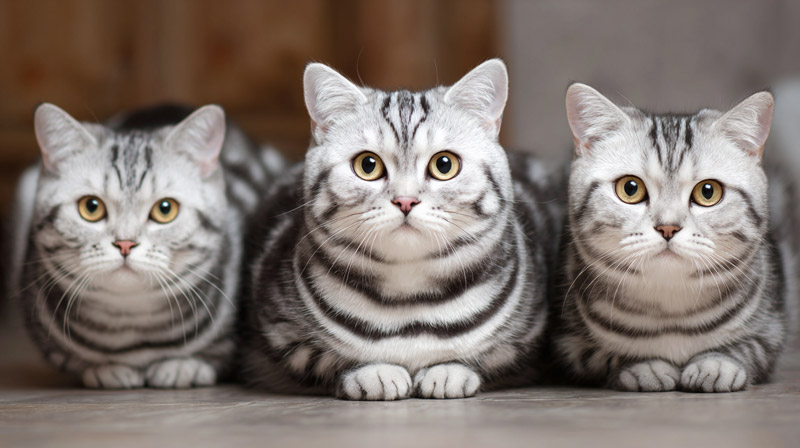
Males weigh 11-15 pounds. Females weigh 6-12 pounds.
At the shoulder, they stand 8-10 inches tall. Body length runs 12-15 inches from shoulder to tail base.
The body type classification is substantial and muscular. Think compact power rather than lean elegance.
Growth happens slowly. Most cats reach their adult size at 3-4 years old, much longer than other breeds that finish growing by 18 months.
During the first year, you’ll see rapid weight gain. After that, they continue filling out and adding muscle mass.
What Does an American Shorthair Cat’s Coat Look Like?
The coat is short and dense. Hard texture. Almost feels coarse when you run your fingers through it.
Thickness varies by season. Winter coats get noticeably thicker for weather protection.
Pattern types:
- Classic tabby (swirled bullseye markings)
- Mackerel tabby (vertical stripes)
- Patched tabby (tabby with tortoiseshell patches)
- Solid (one uniform color)
- Bicolor (white plus another color)
- Calico (tri-color with white)
- Tortoiseshell (black with red patches)
- Smoke (light undercoat with dark tips)
- Shaded (color fading from dark back to white belly)
Recognized colors:
Silver, black, white, blue (gray), red (orange), cream, brown, blue-cream, cameo, and chinchilla patterns. Over 80 combinations exist.
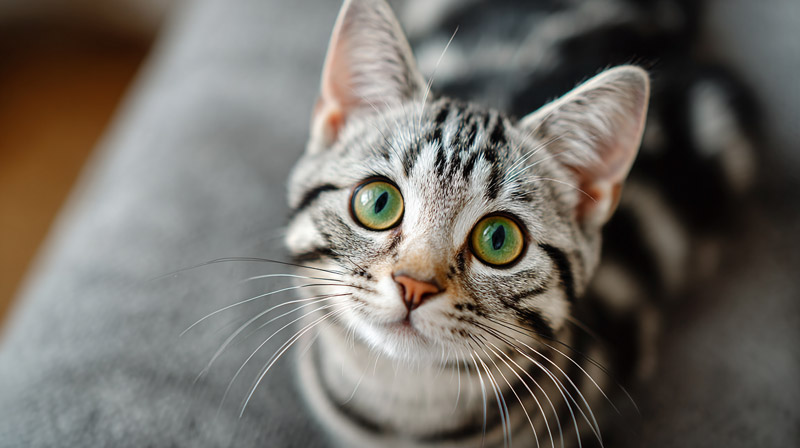
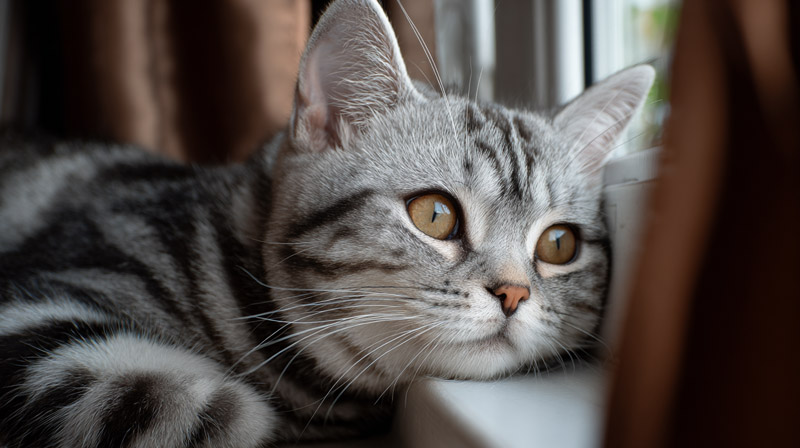
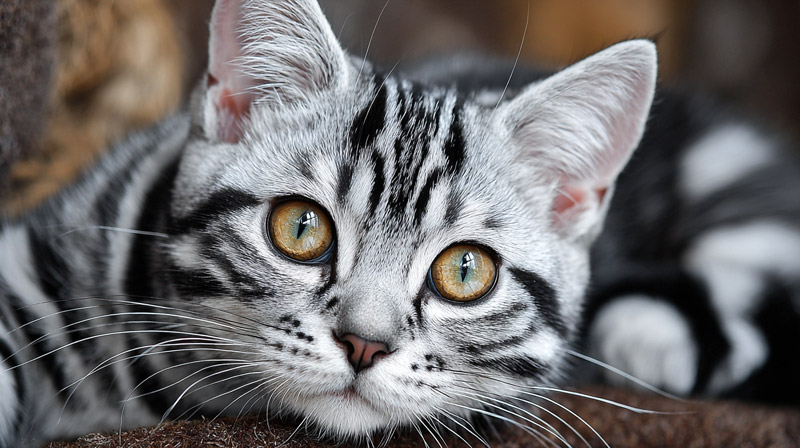
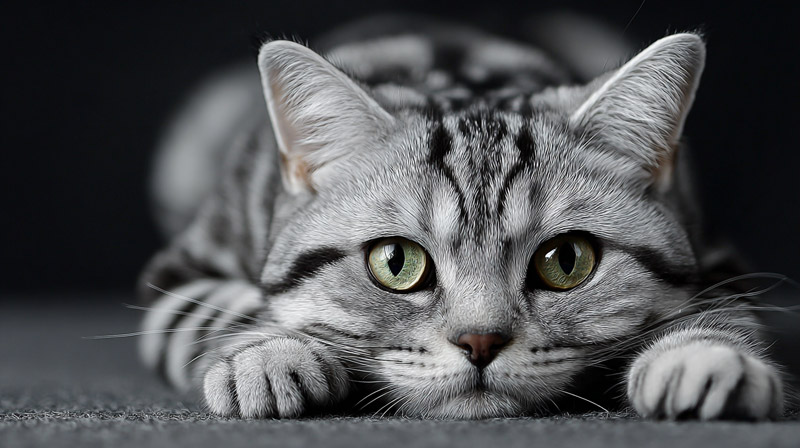
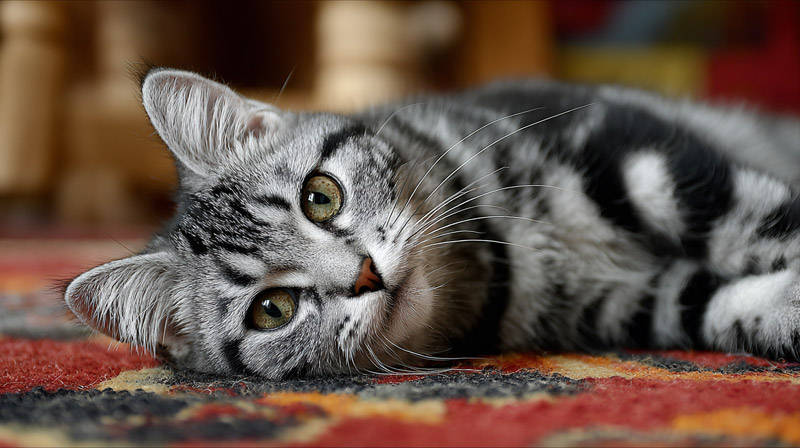
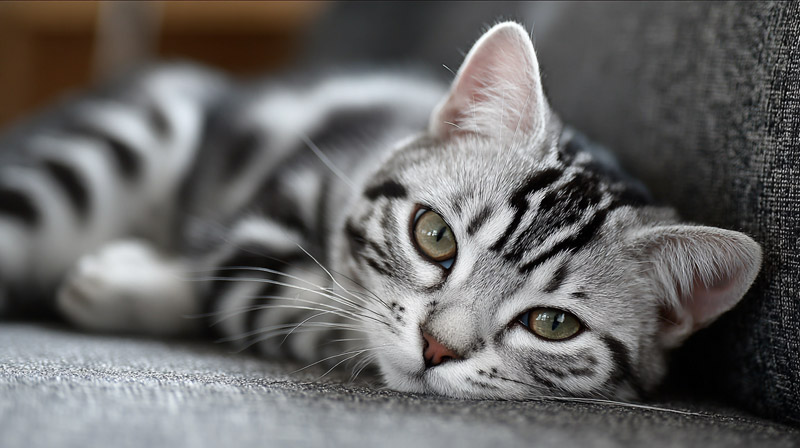
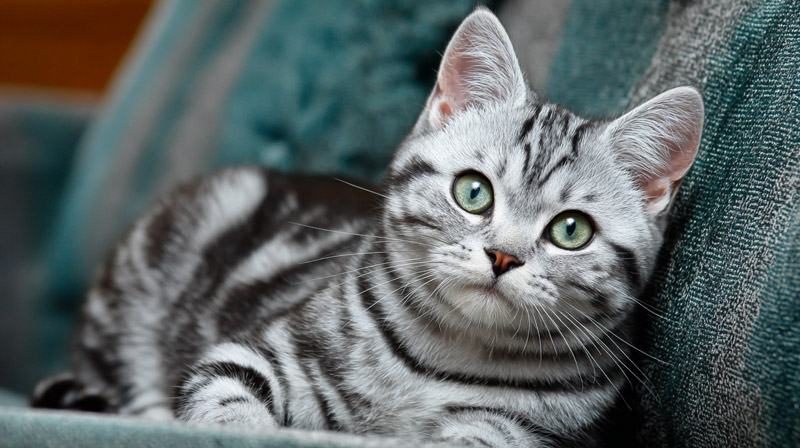
The silver classic tabby with black markings on shimmering silver background is the most recognizable and popular.
Disqualified colors include chocolate, sable, lilac, and Siamese-style points. These indicate crossbreeding.
Shedding level sits at moderate. Expect more hair during spring and fall coat changes.
Distinctive Physical Features
Eyes: Large, wide-set, alert. Colors include gold, green, blue, or copper depending on coat color. Upper lid shaped like half an almond.
Ears: Medium-sized with slightly rounded tips. Set wide apart on the head.
Head: Large and oblong. More length than width. Full cheeks give a sweet expression.
Tail: Medium length, thick at base, tapering to a blunt end.
Legs: Medium length, heavily muscled. Built for pouncing and climbing.
Paws: Large, round, solid. Designed for efficient hunting.
Neck: Medium length, well-muscled, strong.
The overall build suggests power and agility. This cat was designed to work.
American Shorthair Personality and Temperament
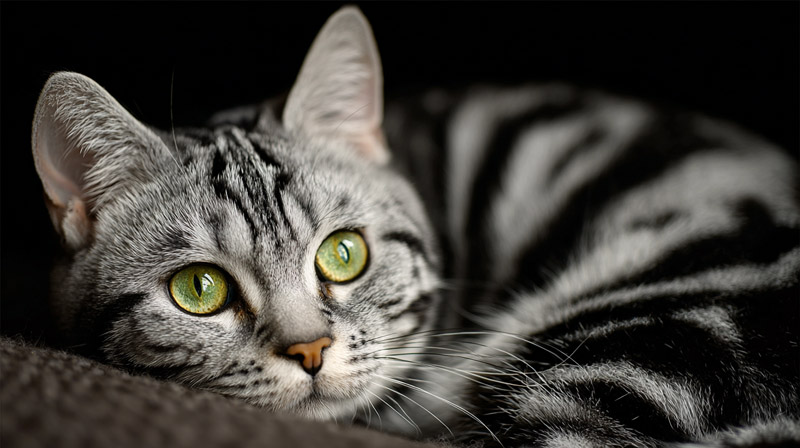
Are American Shorthair Cats Affectionate?
Moderately affectionate. They enjoy human company but won’t demand constant attention.
These cats will sit next to you rather than on top of you. They show affection on their own terms.
Bonding tendency is strong but independent. They like knowing where you are without needing to be held constantly.
Attention requirements are low to moderate. They entertain themselves well.
Stranger reaction: Cautiously friendly. Not shy but not immediately gregarious either. They observe first, then approach when comfortable.
Some owners report occasional “love bites” when their cat wants attention.
How Active Are American Shorthair Cats?
Energy level is moderate. Playful without being hyperactive.
Play drive remains strong, especially for hunting-style games. They love toys that mimic prey movement.
Exercise requirements: 30-60 minutes of daily activity through play sessions.
Favorite activities:
- Chasing feather wands
- Batting at moving toys
- Climbing cat trees
- Bird watching from windows
- Puzzle feeders and treat-dispensing toys
Intelligence level is high. These cats learn quickly and respond well to training.
Trainability is good. They can learn basic commands, use scratching posts instead of furniture, and even play fetch.
Their working cat background shows through. Strong hunting instincts mean they’ll keep your home free of bugs and any rodents that dare enter.
Do American Shorthair Cats Get Along with Others?
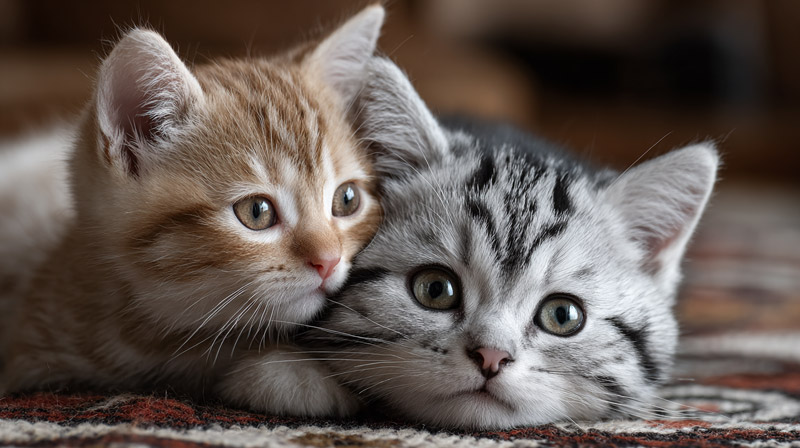
Children compatibility: Excellent with kids of all ages. Patient temperament handles noise and activity well.
Dog compatibility: Good when raised together or properly introduced. Their easygoing nature adapts to canine companions.
Other cats: Generally social with other felines. Can live happily in multi-cat households.
Multi-pet household suitability is high. They’re adaptable enough to fit into various family structures.
Territorial tendencies are low. They’re more interested in coexisting peacefully than defending turf.
How Vocal Are American Shorthair Cats?
Vocalization frequency is low to moderate. Quiet breed overall.
Voice characteristics are soft when they do speak. Not loud or demanding.
Communication happens more through body language and expressions than meowing.
They’ll let you know when they want something but won’t nag about it.
Health and Lifespan
How Long Do American Shorthair Cats Live?
Average lifespan runs 15-20 years. Some live beyond 20 with excellent care.
This exceeds the typical domestic cat lifespan of 13-17 years.
Factors affecting longevity:
- Diet quality and weight management
- Indoor vs outdoor living (indoor cats live much longer)
- Regular veterinary care
- Genetic health of parents
- Environmental stress levels
India, President George W. Bush’s American Shorthair, lived to 18 years old.
Common Health Issues in American Shorthair Cats
Hypertrophic Cardiomyopathy (HCM)
The most significant breed concern. This heart disease causes thickening of the heart muscle.
Symptoms include difficulty breathing, lethargy, weakness, rapid breathing, and potential heart failure.
Age of onset varies but often appears in middle age (4-8 years).
Treatment includes medication to manage symptoms, though no cure exists. Cats with HCM may live 2+ years after diagnosis with proper care.
Prevention strategy: Genetic testing of breeding cats. Echocardiograms for early detection.
Polycystic Kidney Disease (PKD)
A Japanese study found 47% of tested American Shorthairs carried the PKD1 mutation.
Symptoms appear around 7 years old on average: weight loss, vomiting, excessive thirst, poor appetite.
Cysts develop slowly in kidneys and sometimes liver, eventually destroying organ function.
No cure exists. Treatment focuses on slowing progression through special diets and medication.
Prevention: DNA testing of breeding cats. Cats with PKD shouldn’t be bred.
Obesity
Common due to their easygoing nature and love of food.
Can lead to diabetes, joint problems, heart disease, and shortened lifespan.
Prevention: Portion control, regular play, avoiding overfeeding.
Dental Disease
Like many cats, they’re prone to periodontal disease without proper care.
Can lead to systemic infections affecting overall health.
Prevention: Regular teeth brushing, dental treats, professional cleanings.
Hip Dysplasia
Less common but can occur in this sturdy breed.
Causes joint pain and mobility issues in older cats.
What Health Testing Should American Shorthair Cats Have?
Genetic screening tests:
- HCM genetic testing (for A31P mutation)
- PKD DNA testing
- General feline genetic panel
Regular veterinary checks:
- Annual exams for adults under 7 years
- Bi-annual exams for seniors (7+ years)
- Echocardiograms every 1-2 years for HCM screening
Breed-specific health certifications:
Reputable breeders provide health guarantees and proof of parental screening for HCM and PKD.
Age-specific monitoring:
- Kittens: Multiple visits first year for vaccines and development checks
- Adults: Annual wellness exams with bloodwork
- Seniors: More frequent monitoring for kidney function, heart health, and early disease detection
Caring for an American Shorthair Cat
What Do American Shorthair Cats Eat?
Protein requirements run 35-45% of diet. As obligate carnivores, they need meat-based nutrition.
At least 70% of their diet must be animal protein to prevent taurine deficiency, which causes heart and liver problems.
Feeding frequency:
- Kittens (under 6 months): 3-4 small meals daily
- Adults: 2-3 meals daily works better than free-feeding
Portion sizes:
Based on weight and activity. Average adult needs 200-300 calories daily. A 10-pound cat eating dry food might get 1/2 cup per day.
Wet vs dry food: Wet food provides better hydration and helps prevent urinary issues. Dry food supports dental health but can contribute to dehydration.
Mix both for balanced nutrition.
Special dietary needs:
High-protein, moderate-fat formulas work best. Avoid excessive carbohydrates and fillers.
Look for AAFCO-approved foods formulated for appropriate life stages.
Foods to avoid:
Chocolate, onions, garlic, grapes, raisins, excessive carbohydrates, low-quality fillers.
Weight management:
Critical for this breed. Monitor portions carefully. These cats gain weight easily.
Treats should make up no more than 10% of daily calories.
How Do You Groom an American Shorthair Cat?
Brushing frequency: 2-3 times weekly. Daily during seasonal coat changes (spring and fall).
Regular brushing removes dead hair, prevents hairballs, distributes skin oils, and reduces shedding.
Bathing requirements: Rarely needed. Maybe a few times per year or when visibly dirty.
They’re excellent self-groomers.
Nail trimming: Every 2-3 weeks. Prevents overgrowth, snagging, and painful pad injuries.
Dental care: Brush teeth 2-3 times weekly minimum. Daily is better.
Use cat-specific toothpaste. Never human toothpaste.
Eye cleaning: Wipe corners with damp cloth as needed to remove discharge. Use separate areas of cloth for each eye.
Ear cleaning: Check weekly. Clean with 50-50 mixture of cider vinegar and warm water on cotton ball (not swabs) if dirty.
Professional grooming: Not typically required for this low-maintenance breed.
How Much Exercise Does an American Shorthair Cat Need?
Daily activity requirements total 30-60 minutes of active play.
Break into multiple 10-15 minute sessions throughout the day.
Indoor vs outdoor considerations:
Indoor living is strongly recommended. Outdoor cats face risks from traffic, predators, disease, and getting lost.
These cats adapt perfectly to indoor life.
Recommended toys:
- Feather wands
- Laser pointers (finish with catchable toy)
- Puzzle feeders
- Catnip toys
- Interactive battery-operated toys
- Crinkle balls
- Mice toys
Mental stimulation needs:
High. Provide variety in toys. Rotate them to maintain interest.
Food puzzles engage hunting instincts.
Climbing/vertical space:
Moderately important. They enjoy cat trees but aren’t as climbing-obsessed as some breeds.
Provide at least one elevated perch, preferably near a window.
Interactive play frequency:
2-3 dedicated play sessions daily minimum. More for younger cats.
Living with an American Shorthair Cat
Are American Shorthair Cats Good for Apartments?
Yes. Their moderate activity level and quiet nature suit apartment living well.
Space requirements: No strict minimum. They adapt to smaller spaces if given vertical options and enrichment.
Noise level: Low. They’re quiet cats who won’t disturb neighbors.
Indoor-only suitability: Excellent. This breed thrives indoors.
Vertical space needs: Helpful but not critical. One cat tree and a few perches satisfy them.
What Environment Do American Shorthair Cats Need?
Temperature tolerance:
Moderate climate preference. Their dense coat protects against cold but can make them uncomfortable in extreme heat.
Keep indoor temperature comfortable year-round (65-75°F ideal).
Humidity preferences: Average household humidity works fine. No special requirements.
Safe outdoor access options:
Catios provide supervised outdoor time safely. Leash walking works for trained individuals.
Environmental enrichment:
- Multiple scratching posts (vertical and horizontal)
- Window perches for bird watching
- Hiding spots and cozy sleeping areas
- Interactive toys rotated regularly
- Food puzzles
Scratching post requirements:
Multiple posts needed. Some cats prefer vertical posts, others horizontal scratchers.
Place near sleeping areas and high-traffic zones.
Are American Shorthair Cats Good for First-Time Owners?
Yes. This breed is beginner-friendly.
Care difficulty level: Beginner to intermediate. Straightforward maintenance.
Time commitment: 1-2 hours daily for feeding, play, grooming, and interaction.
More time needed for kittens.
Experience level needed: None. Their easygoing temperament forgives new owner mistakes.
Common challenges:
Weight management requires discipline. Obesity prevention demands portion control even when they beg.
Independence might disappoint people wanting a velcro cat.
American Shorthair Kittens
What Are American Shorthair Kittens Like?
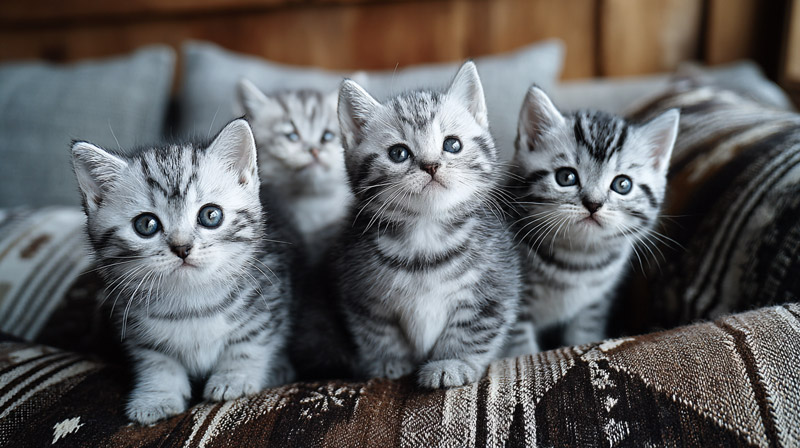
Energetic and curious. More active than adults but not hyperactive.
Personality development timeline:
- 0-3 months: Critical socialization period
- 3-6 months: Peak playfulness, learning boundaries
- 6-12 months: Adolescent energy, some testing of limits
- 1-3 years: Gradual settling into adult personality
Early socialization needs:
The 2-7 week window is critical for handling and exposure to different people, sounds, and experiences.
Proper socialization during this period prevents future behavioral issues.
Kitten energy levels: High. Expect zooming, pouncing, and constant exploration.
Training windows:
Kittens learn fastest between 3-6 months. Perfect time for litter training, scratching post use, and basic commands.
When Can American Shorthair Kittens Leave Their Mother?
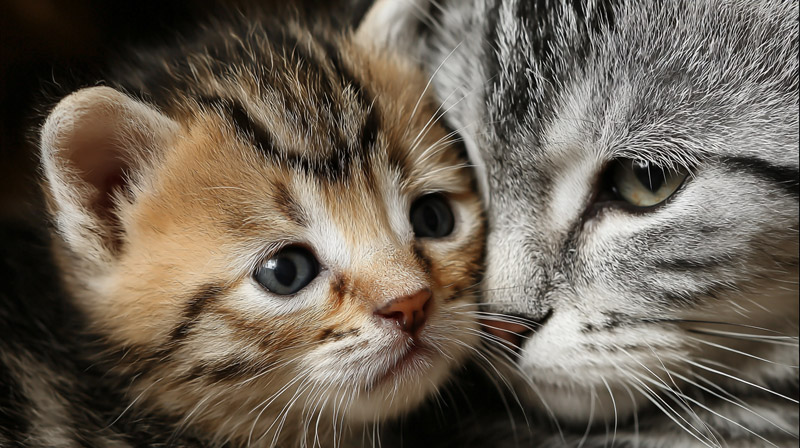
Minimum age is 12 weeks. Responsible breeders won’t separate kittens earlier.
Some breeders prefer 14-16 weeks for better socialization and development.
Developmental milestones:
- 8 weeks: Fully weaned, eating solid food
- 10 weeks: Using litter box consistently
- 12 weeks: Socially developed, ready for adoption
- 3-4 months: Losing baby teeth
Vaccination schedule before adoption:
First FVRCP vaccine at 6-8 weeks. Second dose at 10-12 weeks. Third at 14-16 weeks.
Rabies vaccine at 12-16 weeks.
Reputable breeders provide vaccination records.
Spay/neuter timing:
Many breeders spay/neuter before adoption (around 12-16 weeks).
If not, schedule for 4-6 months of age.
Breeding and Genetics
American Shorthair Breed Standards
CFA standards:
Medium to large body. Powerful, well-balanced, symmetrical. Slightly longer than tall.
Large head with full cheeks. Medium ears with rounded tips. Large, wide eyes.
Coat short, hard-textured, dense. Over 80 color/pattern combinations accepted.
TICA standards:
Similar to CFA. Emphasizes natural, working cat appearance. Muscular build, athletic ability.
Show quality vs pet quality:
Show cats meet stricter conformation standards. Perfect markings, ideal proportions, excellent temperament.
Pet quality cats might have minor cosmetic imperfections (uneven markings, slight build variations) but remain healthy and beautiful.
Disqualifying faults:
Colors suggesting crossbreeding (chocolate, lilac, Siamese points). Kinked tail. Polydactylism. Obvious health defects.
Genetics of American Shorthair Cats
Hereditary traits:
Muscular build, round face, dense coat, hunting instincts all pass reliably through generations.
Coat color genetics:
Complex system involving multiple genes. Agouti gene creates tabby patterns. Silver inhibitor gene produces silver colors.
Solid colors require non-agouti genes. Dilution genes turn black to blue, red to cream.
Sex-linked genes mean most tortoiseshell and calico cats are female.
Breed-specific mutations:
HCM and PKD mutations occur at higher rates than random-bred cats, making genetic testing important.
Outcross breeds:
None currently allowed by major registries. American Shorthair breeding maintains closed studbook.
Genetic diversity concerns:
Relatively healthy genetic pool due to large foundation population of working cats.
Still, responsible breeding practices and health testing remain critical.
DNA testing recommendations:
All breeding cats should be tested for HCM (A31P mutation) and PKD. Many breeders also use comprehensive feline genetic panels.
History of the American Shorthair Cat
Where Do American Shorthair Cats Come From?
Geographic origin: North America, specifically the American colonies.
Descended from European cats (likely British Shorthair ancestry) brought on ships by early settlers.
Natural breed developed through centuries of adaptation rather than deliberate human creation.
Original purpose: Working cats. Rodent control on ships, farms, and in colonies.
How Did the American Shorthair Breed Develop?
Development timeline:
- 1500s-1600s: European cats arrive in North America with explorers and settlers
- 1620: Cats aboard the Mayflower documented
- 1700s-1800s: Natural selection creates hardy, adapted population
- 1900: Breeders begin recognizing their value
- 1904: First recorded breeding program begins
- 1906: CFA recognizes breed as Domestic Shorthair
- 1966: Renamed American Shorthair to distinguish from mixed-breed cats
Key breeding programs:
Early 20th century breeders selected best specimens of natural population and established conformation standards.
Focus remained on health, temperament, and working ability.
Important foundation cats:
Multiple foundation lines from different regions contributed. No single cat established the breed.
First official recognition:
CFA included them among its first five registered breeds in 1906.
Breed evolution:
Minimal intentional changes. Breeders preserved natural characteristics rather than creating new traits.
Selection emphasized coat patterns, especially the silver tabby.
Related breeds:
British Shorthair shares ancestry. Exotic Shorthair developed by crossing Persians with American Shorthairs.
When Was the American Shorthair Recognized?
CFA recognition: 1906 as Domestic Shorthair. Renamed American Shorthair in 1966.
TICA recognition: Recognized from TICA’s founding.
Championship status: Achieved championship status upon initial recognition.
Currently ranks as 8th most popular breed registered by CFA.
Cost of Owning an American Shorthair Cat
How Much Does an American Shorthair Cat Cost?
Purchase price ranges:
- Pet quality: $500-$800
- Show quality: $1,000-$1,500
- Breeding rights: $1,500-$3,000
Price factors:
Lineage and pedigree significantly impact cost. Championship bloodlines command premium prices.
Coat color matters. Silver tabbies typically cost more than solid colors.
Gender sometimes affects price, though less dramatically than other factors.
Location influences cost. Urban areas with more breeders may have competitive pricing.
Age plays a role. Kittens cost more than adults.
Adoption costs:
Shelter adoption runs $50-$200. Often includes spay/neuter, initial vaccines, and microchip.
Additional initial costs:
Budget $300-$700 for supplies: litter box, food bowls, scratching posts, bed, carrier, toys, grooming tools.
First vet visit (if not included): $50-$100.
What Are the Ongoing Costs?
Annual veterinary care: $200-$400 for routine wellness exams, vaccines, flea/tick prevention.
Emergency care costs extra. Budget for unexpected expenses.
Food expenses: $20-$50 monthly for quality cat food. $240-$600 annually.
Higher-end brands or wet food increases costs.
Litter and supplies: $15-$30 monthly. $180-$360 annually.
Grooming costs: Minimal. Home grooming supplies cost $30-$50 upfront. Rarely need professional grooming.
Pet insurance: $25-$50 monthly. $300-$600 annually.
Can save thousands on unexpected medical bills.
Emergency fund recommendations:
Keep $1,000-$2,000 set aside for veterinary emergencies.
Lifetime cost estimate: $20,000-$25,000 over 15-year lifespan.
Where Can You Get an American Shorthair Cat?
Reputable breeders:
Look for CFA or TICA registered breeders. They should:
- Provide health guarantees
- Show health testing results for parents (HCM, PKD)
- Allow facility tours
- Have clean, well-socialized cats
- Provide references from previous buyers
- Give detailed care instructions
- Offer support after adoption
Questions to ask breeders:
- What health testing have parents undergone?
- Can I see health certificates?
- What’s your spay/neuter policy?
- What’s included in the purchase price?
- Do you provide health guarantees? What’s covered?
- What vaccinations has the kitten received?
- Can I meet the parents?
- How do you socialize kittens?
Red flags to avoid:
- Won’t show where cats live
- No health testing of parents
- Selling kittens under 12 weeks
- Multiple breeds available (backyard breeder or kitten mill)
- Won’t provide references
- Pressure to buy immediately
- No contract or health guarantee
Breed-specific rescues:
Search for “American Shorthair rescue” plus your state. Some purebred cat rescues occasionally have American Shorthairs.
General rescue/shelter considerations:
Purebred American Shorthairs sometimes end up in shelters. They closely resemble Domestic Shorthairs, so you might need DNA testing to confirm pedigree.
Adoption costs vs breeder costs:
Adoption ($50-$200) saves money compared to breeders ($500-$3,000).
Adopted cats are often already spayed/neutered and vaccinated.
Adult cat vs kitten considerations:
Adults have established personalities. You know what you’re getting.
Kittens require more training and time but allow you to shape their socialization.
American Shorthair vs Similar Breeds
American Shorthair vs British Shorthair
Physical differences:
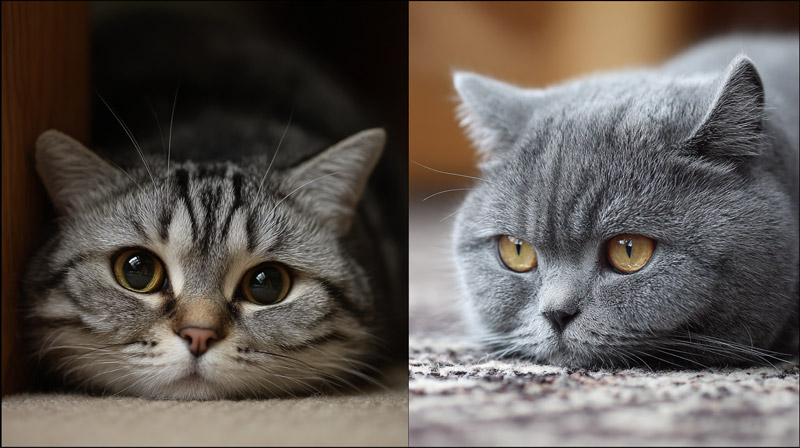
British Shorthairs are larger and stockier. Males reach 12-18 pounds vs American Shorthair’s 11-15 pounds.
British have rounder faces and denser, plusher coats.
Americans have more rectangular bodies; British are more cobby.
Temperament differences:
British Shorthairs are calmer and less active. Americans retain more of their working cat energy.
Both are independent, but British Shorthairs are more laid-back.
Care requirements:
British Shorthairs need more grooming due to denser coats.
Exercise needs similar, though Americans play more actively.
Health concerns:
Both prone to HCM. British Shorthairs also face higher obesity risk.
PKD less common in British Shorthairs.
Cost differences:
British Shorthairs typically cost more ($1,000-$2,000) due to fewer breeders in North America.
Lifespan:
Similar. Both live 12-20 years with proper care.
American Shorthair vs Exotic Shorthair
Physical differences:
Exotic Shorthairs have flat faces like Persians. Americans have normal muzzles.
Exotics have denser, plush coats despite being shorthaired.
Temperament differences:
Exotics are calmer and more lap-oriented. Americans are more independent.
Both are gentle but Exotics crave more attention.
Care requirements:
Exotics need daily facial cleaning due to flat faces. Tear staining common.
Americans require minimal grooming.
Health concerns:
Exotics face breathing issues, dental problems, and eye problems due to brachycephalic features.
Americans are generally healthier overall.
Cost differences:
Exotics cost more ($1,200-$2,500) due to specialized breeding.
Lifespan:
Americans live longer (15-20 years vs 10-15 years for Exotics).
How to Choose Between American Shorthair and Similar Breeds
Lifestyle considerations:
Want low-maintenance? American Shorthair wins.
Prefer lap cats? Consider British Shorthair or Ragdoll.
Active household? American Shorthair’s energy level matches better.
Decision factors:
Budget constraints favor American Shorthairs (lower purchase price, fewer health issues).
Grooming time availability matters. Americans need minimal effort.
Space considerations. Americans adapt to apartments; larger breeds need more room.
Which breed for which owner:
First-time owners: American Shorthair’s forgiving temperament ideal.
Families with kids: American Shorthair’s patience and playfulness perfect.
Seniors wanting calm companionship: British Shorthair might suit better.
Fun Facts About American Shorthair Cats
The breed sailed on the Mayflower in 1620. These cats protected food stores from rats during the voyage.
India “Willie” Bush, an all-black American Shorthair, served as “First Cat” during George W. Bush’s presidency and lived to 18 years old.
American Shorthairs held the original job title “working cat” in breeding records, reflecting their rodent control purpose.
The silver tabby pattern became so popular it almost defined the breed in public perception, even though 80+ color combinations exist.
CFA included American Shorthairs among its first five registered breeds in 1906, making them one of America’s oldest recognized cat breeds.
These cats helped establish the Jamestown Colony by protecting grain stores from vermin.
American Shorthairs can catch mice, insects, and small pests well into old age. That hunting instinct never fades.
The breed contributed genetics to create the Exotic Shorthair by crossing with Persians.
Despite “American” in the name, their ancestors came from Europe. The name reflects where they developed into a distinct breed.
Some American Shorthairs can be trained to walk on leashes, play fetch, and respond to commands like dogs.
Is an American Shorthair Cat Right for You?
Best Homes for American Shorthair Cats
Ideal owner personalities:
Patient, calm people who appreciate independent companions. Those who want a cat that doesn’t demand constant attention.
Active families who enjoy playtime but also value quiet companionship.
Lifestyle compatibility:
Works for busy professionals who are gone during the day. These cats entertain themselves.
Perfect for families with children. Their patient temperament handles kid energy.
Good for retirees who want lower-maintenance companionship.
Home environment requirements:
Apartment or house both work. Size matters less than enrichment.
Indoor living suits them perfectly.
Multi-pet households okay with proper introductions.
Time availability needs:
Minimum 1-2 hours daily for feeding, play, grooming, and interaction.
More independent than clingy breeds, but still need quality time.
Who Should Avoid American Shorthair Cats?
Incompatible lifestyles:
People wanting extremely affectionate lap cats might feel disappointed.
Those unable to commit to 15-20 years of care.
Individuals without stable housing situations.
Allergy considerations:
American Shorthairs are NOT hypoallergenic. They shed moderately and produce normal amounts of Fel d 1 protein (the primary allergen).
People with cat allergies should spend time with the breed before committing.
Challenge factors:
Weight management requires discipline. You must resist those begging eyes.
Vet costs for HCM or PKD can be significant if issues develop.
Better breed alternatives:
Want more affection? Consider Ragdoll or Birman.
Need hypoallergenic? Look at Siberian or Russian Blue.
Want more playful energy? Try Abyssinian or Bengal.
Questions to Ask Before Getting an American Shorthair Cat
Financial readiness:
Can you afford $500-$3,000 upfront plus $1,500-$2,000 annually?
Do you have emergency savings for unexpected vet bills?
Time commitment:
Can you provide daily play and interaction for 15-20 years?
Are you home enough or can you arrange companionship?
Living situation stability:
Is your housing cat-friendly with no breed restrictions?
Planning to move? Can you guarantee cat-friendly housing?
Family agreement:
Does everyone in the household want a cat?
Who handles primary care responsibilities?
Are family members allergic?
Long-term planning:
What happens to your cat if you travel frequently?
Who cares for your cat if you become unable?
Have you considered pet insurance?
Travel considerations:
Can you afford pet sitters or boarding when traveling?
Are you comfortable leaving your cat for extended periods?
Other pet considerations:
How will current pets react to a new cat?
Can you manage multiple pet expenses?
Do you have time and energy for multiple animals?
If you can answer these questions positively and honestly commit to providing a stable, loving home for 15-20 years, an American Shorthair might be perfect for you.
Their easygoing temperament, low maintenance needs, robust health, and gentle nature make them one of the most reliable cat breeds for a wide range of households.
FAQ on American Shorthair
Are American Shorthair cats good pets?
Yes. Their easygoing temperament, patience with children, and adaptability make them excellent family pets.
They balance independence with affection, entertain themselves when alone, and get along with other pets. Low grooming needs and generally robust health add to their appeal.
How much does an American Shorthair cat cost?
Expect $500-$800 for pet quality kittens from reputable breeders. Show quality cats run $1,000-$1,500.
Championship bloodlines can reach $2,000-$3,000. Shelter adoption costs $50-$200, often including spay/neuter and initial vaccinations.
Do American Shorthair cats shed a lot?
Moderate shedding year-round with heavier periods during spring and fall coat changes.
Weekly brushing controls loose hair. Their dense, short coat sheds less than longhaired breeds but more than hairless varieties like the Sphynx.
How big do American Shorthair cats get?
Males weigh 11-15 pounds. Females weigh 6-12 pounds.
They reach 8-10 inches tall at the shoulder with body length of 12-15 inches. Full size isn’t reached until 3-4 years old.
Are American Shorthair cats hypoallergenic?
No. They produce normal amounts of Fel d 1 protein that triggers cat allergies.
Moderate shedding spreads allergens throughout the home. People with allergies should consider truly low-allergen breeds like Siberian or Russian Blue cats instead.
What health problems do American Shorthair cats have?
Hypertrophic cardiomyopathy (HCM) is the primary concern. Polycystic kidney disease affects some lines.
Obesity happens easily due to their food-loving nature. Dental disease occurs without proper care. Reputable breeders test for genetic conditions.
How long do American Shorthair cats live?
Average lifespan runs 15-20 years with proper care. Some exceed 20 years.
Indoor living, quality nutrition, weight management, and regular vet care maximize longevity. They outlive many other purebred cats.
What is the difference between American Shorthair and Domestic Shorthair?
American Shorthairs are pedigreed with documented lineage and predictable traits. Domestic Shorthairs are mixed-breed cats.
Both may look similar, but American Shorthairs meet specific breed standards, undergo health testing, and produce consistent offspring. Only certified papers confirm true American Shorthairs.
Are American Shorthair cats affectionate?
Moderately affectionate. They enjoy human company but won’t demand constant attention like some breeds.
They prefer sitting beside you rather than on your lap. Affection happens on their terms, making them perfect for people wanting companionship without clinginess.
What do American Shorthair cats eat?
High-protein cat food with 35-45% protein content. Their obligate carnivore nature requires meat-based nutrition.
Feed 2-3 small meals daily rather than free-feeding. Mix wet and dry food for balanced hydration and dental health. Portion control prevents obesity.
Conclusion
American Shorthair cats offer the perfect blend of independence and companionship for diverse households. Their working cat heritage shows through in hunting instincts and sturdy builds.
These purebred felines adapt easily to apartment living or houses with yards. Patient temperament makes them excellent choices for families with children and other pets.
Health testing by reputable breeders reduces risks of hypertrophic cardiomyopathy and polycystic kidney disease. Their 15-20 year lifespan provides decades of loyal companionship.
Low grooming requirements and moderate activity levels suit both busy professionals and retirees. The breed’s naturally developed genetics mean fewer inherited problems than many designer breeds.
Whether you choose the iconic silver tabby pattern or another of the 80+ color combinations, you’re getting an authentically American cat breed with centuries of proven reliability.