Balinese cats move like dancers and talk like they have opinions about everything.
These long-haired beauties are basically Siamese cats with silky coats and plumed tails. But there’s way more to them than good looks.
If you’re considering adding one to your family, you need the real story. Not just the glamorous parts.
This guide covers everything about Balinese cats, from their sapphire blue eyes and color point patterns to their demanding personalities and potential health issues. You’ll learn what it actually takes to live with one of these intelligent, vocal felines for 18-22 years.
We’ll walk through their physical characteristics, temperament, care requirements, costs, and whether this breed fits your lifestyle. By the end, you’ll know if a Balinese is your perfect match or if you should keep looking.
Balinese Cat Breed Statistics
| Characteristic | Details |
|---|---|
| Weight | Males: 12-16 lbs, Females: 8-12 lbs |
| Height | 8-11 inches |
| Lifespan | 12-20 years |
| Coat Type | Long, silky, single coat |
| Coat Colors | Seal point, blue point, chocolate point, lilac point, red point, cream point |
| Shedding | Low to moderate |
| Energy Level | High |
| Temperament | Affectionate, vocal, intelligent, social |
| Good with Kids | Yes |
| Good with Other Pets | Yes (dogs and cats) |
| Trainability | High |
| Exercise Needs | Moderate to high |
| Grooming Frequency | 2-3 times per week |
| Common Health Issues | Progressive retinal atrophy, asthma, heart disease, lymphoma |
| Hypoallergenic | No (but produces less Fel d 1 protein than some breeds) |
| Vocalization | Very high |
| Independence Level | Low (needs companionship) |
| Space Requirements | Adaptable (apartment to house) |
| Price Range | $800-$2,500 |
What Is a Balinese Cat?

The Balinese is a long-haired cat breed with Siamese-style color point patterns and striking sapphire-blue eyes.
Males typically weigh 8-12 pounds while females range from 5-8 pounds. This breed originated in the United States during the 1940s-1950s as a natural mutation from Siamese litters.
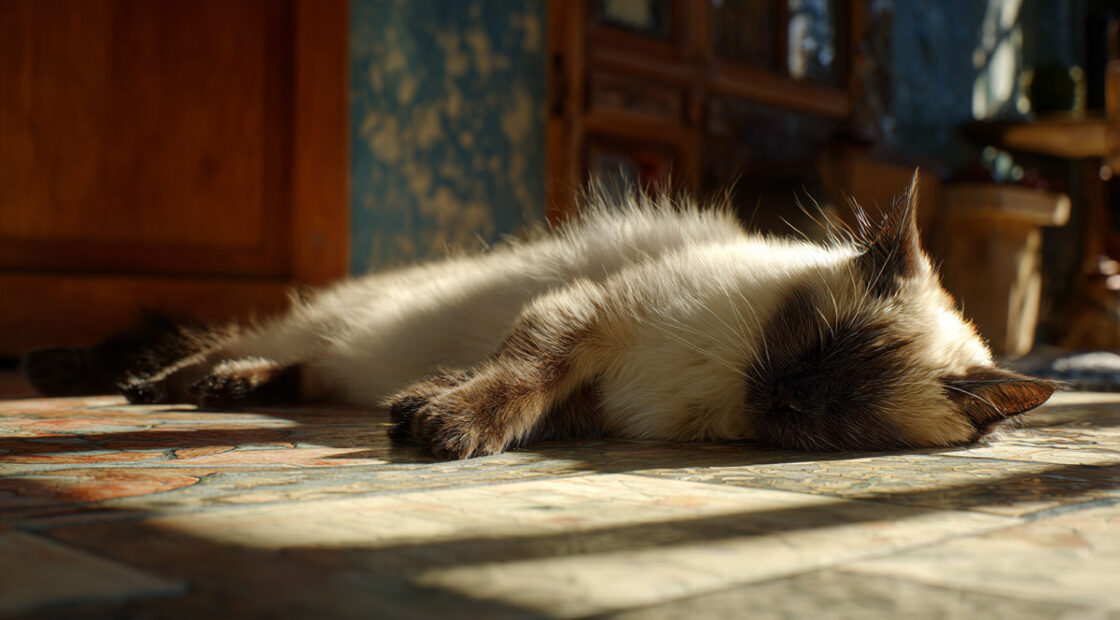
The coat is medium-length and silky with no undercoat, making maintenance easier than most long-haired cats. Color point markings appear on the face, ears, legs, and tail while the body stays lighter.
The Cat Fanciers Association (CFA) recognized the breed for championship competition in 1970. The International Cat Association (TICA) and other major registries also accept Balinese cats as a distinct breed.
This is a naturally occurring mutation, not a hybrid. The recessive long-hair gene appeared spontaneously in purebred Siamese bloodlines.
Physical Characteristics
How Big Do Balinese Cats Get?
Adult males weigh 8-12 pounds. Females are smaller at 5-8 pounds.
Height at the shoulder ranges from 8-10 inches. Despite appearing larger due to their flowing coat, these are actually medium-sized cats.
The body type is classified as oriental. Long, tubular, and svelte with fine bones but surprising muscle tone underneath.
Growth happens slowly. Full physical maturity doesn’t occur until 18-24 months, sometimes up to 3 years old.
What Does a Balinese Cat’s Coat Look Like?
The coat length is medium to long, especially noticeable on the plumed tail.
Texture is silky and fine with no downy undercoat. Hair lies close to the body and flows naturally toward the back, rarely tangling or matting.
Recognized point patterns include:
- Seal point (deep brown markings)
- Blue point (slate gray markings)
- Chocolate point (milk chocolate markings)
- Lilac point (frosty gray-pink markings)
- Lynx point (tabby-striped markings)
- Tortie point (mottled tortoiseshell markings)
- Red point and cream point
In 2008, CFA merged Javanese cats (non-traditional colors) as a color division of Balinese. Over 20 color variations are now recognized.
The body is typically cream or white. Points darken on cooler extremities due to temperature-sensitive pigment distribution.
Shedding level is low to moderate. The single coat produces less loose hair than double-coated breeds.
Distinctive Physical Features
Eye color is always deep sapphire blue or vivid blue. The almond-shaped eyes slant toward the nose, creating an exotic look.
Ears are large, wide at the base, and set to continue the triangular line of the wedge-shaped head.
The head forms a long, narrow triangle from nose to ear tips. No break or stop in the profile.
The tail is long, thin, and carried proudly with flowing plume hair. This distinguishes them from short-haired Siamese relatives.
Legs are long and slim with small, oval paws. Back legs are slightly longer than front legs.
Some Balinese may have crossed eyes (strabismus) or kinked tails, inherited traits from their Siamese ancestry that are now considered faults but don’t affect health.
Balinese Personality and Temperament

Are Balinese Cats Affectionate?
Extremely bonded to their humans. These are velcro cats that follow you everywhere and want to be involved in every activity.
They demand 2-3 hours of daily interaction minimum. Not suitable for people who are away from home frequently.
Balinese greet strangers with cautious curiosity rather than hiding. Once comfortable, they’re friendly and gregarious with guests.
Expect your cat in your lap when you sit and under the covers with you at night. They love sleeping with their heads on pillows next to their owners.
How Active Are Balinese Cats?
Energy level is very high. This is one of the most active domestic cat breeds.
Play drive is intense and lasts well into adulthood. They need 60-90 minutes of active play daily.
Favorite activities include climbing to high perches, playing fetch (yes, like dogs), interactive toy hunting, and puzzle feeders. Some enjoy supervised water play.
Intelligence ranks among the highest of all cat breeds. They can learn tricks, open doors, and solve problems. Trainability is excellent for cats willing to work for treats or praise.
Do Balinese Cats Get Along with Others?
Children compatibility is excellent, especially with kids age 6 and up who can respect a cat’s space. The playful nature matches well with energetic children.
Dog compatibility is very good. Many Balinese enjoy canine companions, particularly dog-friendly breeds. Proper introductions are still necessary.
Other cats are usually welcomed. Multi-cat households work well as long as there’s enough attention and resources for everyone.
Territorial tendencies are low. They prefer companionship over claiming space.
Separation anxiety can develop if left alone too long. A companion pet helps when owners work full-time.
How Vocal Are Balinese Cats?
Vocalization frequency is high. These are talkative cats that comment on everything.
Voice characteristics are softer and quieter than Siamese but still melodic and frequent. Expect conversations, not just meows.
Communication style is persistent. They’ll tell you when they want food, attention, playtime, or when something is wrong. Some owners find this charming, others find it excessive.
Health and Lifespan
How Long Do Balinese Cats Live?

Average lifespan is 18-22 years. Many Balinese reach their early 20s with proper care.
This exceeds the 12-15 year lifespan of average domestic cats. The breed benefits from genetic diversity and selective breeding for health.
Factors affecting longevity include diet quality, indoor living, regular veterinary care, and purchasing from health-tested breeding lines.
Common Health Issues in Balinese Cats
Progressive Retinal Atrophy (PRA)
A genetic eye disorder causing gradual vision loss and eventual blindness.
Night blindness appears first around 1.5-2 years of age. Complete blindness typically occurs by 3-5 years.
Prevalence is significant in Siamese-related breeds, with about 33% of Siamese carrying the CEP290 mutation.
No treatment exists, but blind cats adapt well. DNA testing identifies carriers before breeding.
Systemic Amyloidosis
Abnormal protein deposits accumulate in organs, primarily the liver and kidneys, compromising function.
Age of onset ranges from 1-5 years. Progression can be slow or aggressive.
Treatment options are limited. Management focuses on supporting organ function.
This is a genetic condition traced to specific family lines. Responsible breeders screen breeding stock.
Hypertrophic Cardiomyopathy (HCM)
The heart muscle walls thicken, reducing pumping efficiency.
Symptoms include difficulty breathing, lethargy, and sudden weakness. Some cats show no symptoms until a crisis.
Prevalence is higher in Asian breeds including Balinese.
Treatment includes oral medications and sometimes injections. While progressive, medical management can improve quality of life and longevity.
Asthma and Bronchial Disease
Siamese ancestry increases susceptibility. Symptoms typically appear between 2-8 years, starting with coughing.
Dental Disease
Like all cats, Balinese are prone to gingivitis and periodontal disease without proper oral care.
Crossed Eyes (Strabismus)
Eyes point inward or show nystagmus (flickering). This is cosmetic only and doesn’t affect vision significantly. The brain compensates for the alignment issue.
Lymphoma
Higher risk compared to other breeds, particularly mediastinal lymphoma affecting chest lymph nodes.
Average survival with treatment is around 9 months, though remission is possible with low-grade cases.
What Health Testing Should Balinese Cats Have?
Genetic screening for:
- CEP290 mutation (PRA)
- Amyloidosis markers when available
- HCM genetic markers
Regular veterinary checks:
- Annual exams until age 7
- Bi-annual exams after age 7
- Cardiac ultrasound screening for HCM starting at 1-2 years
- Annual dental evaluations
Before breeding:
- DNA tests for PRA (both parents must be tested)
- Cardiac clearances
- Complete health examinations
Caring for a Balinese Cat

What Do Balinese Cats Eat?
Protein requirements are 35-45% minimum. As obligate carnivores, Balinese need meat-based diets.
Feed adults 2-3 small meals daily. Kittens under 6 months need 3-4 meals. Establishing a feeding schedule provides routine and prevents obesity.
Portion sizes depend on weight and activity level. A typical 8-pound adult needs about 200-250 calories daily. Your vet can calculate exact needs.
Wet food provides hydration and is often more appealing. Dry food helps with dental health. Many owners use both.
High-quality commercial cat foods meeting Association of American Feed Control Officials (AAFCO) standards are recommended. Look for real meat or fish as the first ingredient.
Omega-3 fatty acids support the silky coat. Ensure adequate intake through food or supplements.
Foods to avoid:
- Dog food (lacks taurine)
- Raw diets without proper supplementation (can cause taurine deficiency)
- Excessive treats (no more than 10% of daily calories)
Weight management is crucial for this active breed. Obesity reduces lifespan and joint health.
How Do You Groom a Balinese Cat?
Brushing frequency is 2-3 times weekly. Daily brushing during seasonal shedding periods (spring and fall) helps control loose hair.
Bathing requirements are minimal, maybe once every few months or when the coat appears greasy. Use cat-specific shampoo and rinse thoroughly.
Nail trimming every 2-3 weeks keeps claws from overgrowing. Provide scratching posts as alternatives.
Dental care needs daily attention ideally. At minimum, brush teeth 3-4 times weekly with cat toothpaste. This prevents periodontal disease common in the breed.
Eye cleaning is rarely needed unless discharge appears. Wipe gently with a damp cloth.
Ear cleaning every 2-3 weeks prevents wax buildup. Use cotton swabs or pads with cat ear cleaner, never insert deep into the ear canal.
Professional grooming is unnecessary. The single coat without undercoat makes home care manageable for most owners.
How Much Exercise Does a Balinese Cat Need?
Daily activity requirements are 60-90 minutes of interactive play split into multiple sessions.
Indoor living is strongly recommended. These valuable cats are targets for theft and face outdoor dangers.
Recommended enrichment:
- Multiple cat trees (the taller, the better)
- Window perches for bird watching
- Interactive toys like feather wands and laser pointers
- Puzzle feeders for mental stimulation
- Automated toys for solo play
Mental stimulation needs are high. Boredom leads to destructive behavior. Rotate toys weekly to maintain interest.
Vertical space is critical. Balinese are powerful jumpers that love high perches. Cat shelves and wall-mounted climbing systems satisfy this instinct.
Interactive play sessions 2-3 times daily strengthen your bond and burn energy. Teach tricks or play fetch for additional mental challenges.
Living with a Balinese Cat

Are Balinese Cats Good for Apartments?
Absolutely suitable for apartments. Size is manageable and they adapt well to smaller spaces.
Space requirements are flexible if vertical territory is provided. A 600 square foot apartment works fine with proper cat furniture.
Noise level considerations matter. The vocal nature might disturb neighbors with thin walls. Training can reduce excessive meowing but won’t eliminate it entirely.
Neighbor compatibility depends on sound tolerance. Warn neighbors about potential cat conversations.
Indoor-only suitability is perfect. Balinese thrive indoors with proper enrichment.
What Environment Do Balinese Cats Need?
Temperature tolerance leans toward warmth. The single coat without undercoat provides less insulation. Keep home temperatures between 68-78°F.
Cold tolerance is low. Provide heated cat beds in winter. Never let them outside in freezing weather.
Heat sensitivity is moderate. Ensure cool spots in summer and fresh water always available.
Safe outdoor access options include:
- Catios (enclosed outdoor spaces)
- Leash walking with harness training
- Supervised porch time
Environmental enrichment specifics include puzzle feeders, treat-dispensing toys, and rotating toy selection.
Window perch importance is high. Balinese love watching outdoor activity. Position perches with good views.
Scratching post requirements include multiple posts in different areas. Tall posts for stretching and horizontal scratchers for variety.
Are Balinese Cats Good for First-Time Owners?
Care difficulty level is intermediate. Not the easiest breed but manageable with commitment.
Time commitment required is 2-3 hours daily for play, interaction, and attention. This isn’t a low-maintenance cat.
Experience level needed is moderate. First-time owners can succeed but should research thoroughly and prepare for the demanding personality.
Common challenges for new owners:
- Excessive vocalization
- High energy requiring constant engagement
- Separation anxiety when left alone
- Intelligence leading to mischief (opening cabinets, turning on faucets)
Balinese Kittens
What Are Balinese Kittens Like?

Personality development starts early. Kittens are highly social and playful from 4-5 weeks.
Early socialization needs are critical between 2-7 weeks. Exposure to various people, sounds, and experiences creates well-adjusted adults.
Kitten energy levels are extreme. Expect wild play sessions followed by sudden naps. This is normal.
Training windows:
- Litter box training: 4-6 weeks
- Socialization: 2-14 weeks (most critical)
- Basic commands: 8 weeks onward
When Can Balinese Kittens Leave Their Mother?
Minimum age is 12-14 weeks, preferably 16 weeks. Earlier separation causes behavioral problems.
Developmental milestones before adoption:
- Fully weaned (8 weeks)
- Litter box trained (6-8 weeks)
- Socialized with humans and other cats
- Eating solid food independently
Vaccination schedule before adoption:
- First FVRCP vaccine at 6-8 weeks
- Second FVRCP vaccine at 10-12 weeks
- Third FVRCP vaccine at 14-16 weeks
Spay/neuter timing is typically 4-6 months. Some breeders perform pediatric spay/neuter before release. Discuss options with your veterinarian.
Breeding and Genetics
Balinese Breed Standards

CFA standards define:
- Head: Long, tapering wedge starting at nose and flaring to ear tips
- Body: Medium-sized, long, svelte, and tubular
- Coat: Medium-length, fine, silky, without downy undercoat
- Eyes: Almond-shaped, medium-sized, vivid blue
- Tail: Long, thin, tapering to a fine point with plume
Show quality vs. pet quality distinctions:
- Show quality has perfect conformation meeting all standard points
- Pet quality may have minor faults like wrong eye shape or body proportions
- Breeding quality must pass health tests and have excellent conformation
Disqualifying faults include:
- Eye color other than blue
- Kinked tail (in shows, not a health disqualification)
- White toes or white patches
- Improper point coloration
Genetics of Balinese Cats
The long-hair trait is autosomal recessive. Both parents must carry the gene for long-haired kittens.
Point coloration is controlled by the temperature-sensitive tyrosinase gene. Cooler body parts (extremities) develop darker pigment.
Breed-specific mutations:
- CEP290 gene mutation causing PRA
- Possible amyloidosis genetic markers
Outcross breeds: Siamese, Javanese, Colorpoint Shorthair, and Oriental Longhair are acceptable for maintaining breed health and diversity.
Genetic diversity concerns are moderate. The breed descended from limited foundation cats but has been broadened through careful outcrossing.
DNA testing recommendations include PRA screening for all breeding cats. Carriers should not be bred together.
History of the Balinese Cat
Where Do Balinese Cats Come From?
Geographic origins are the United States, specifically New York and California.
This is a developed breed, not natural. However, the long-hair gene occurred naturally as a spontaneous mutation.
Historical context begins with Siamese cats imported from Thailand (then Siam) to the United States and United Kingdom in the mid-1800s. Some carried the recessive long-hair gene.
Original purpose was purely companionship. These were never working cats.
How Did the Balinese Breed Develop?

Development timeline started in the early 1900s when long-haired kittens occasionally appeared in Siamese litters.
Initially, these kittens were considered faults and sold only as pets. The American Cat Fanciers’ Federation allowed registration as “Long-haired Siamese” in 1928.
Key breeders:
- Helen Smith (Merry Mews cattery, New York) began serious breeding efforts in the 1940s-1950s
- Marion Dorsey (California) collaborated with Smith
- Sylvia Holland (Holland’s Farm cattery) refined the breed standard in the 1960s-1970s
Helen Smith named the breed “Balinese” in the 1950s because the name “Long-haired Siamese” was cumbersome and Siamese breeders objected. The cats’ graceful movements reminded her of Balinese temple dancers.
Sylvia Holland (also an illustrator for Walt Disney Studios) recognized only traditional Siamese point colors: seal, chocolate, blue, and lilac.
Related breeds:
- Javanese (Balinese with non-traditional point colors, merged with Balinese by CFA in 2008)
- Oriental Longhair (non-pointed long-haired oriental type)
When Was the Balinese Recognized?
Cat Fanciers Federation recognition occurred in 1961.
CFA recognition for championship competition came in 1970, initially only for traditional colors.
TICA recognition followed as the breed gained popularity.
Championship status for non-traditional colors (Javanese) was granted in 1979, later merged into one breed in 2008.
Cost of Owning a Balinese Cat
How Much Does a Balinese Cat Cost?
Purchase price ranges:
- Pet quality: $800-$1,500 from reputable breeders
- Show quality: $1,500-$3,000
- Breeding rights: $2,000-$3,000+
- Champion bloodlines: Up to $3,000
Adoption from shelters costs $50-$400 but Balinese are rarely available. Most shelter “Balinese” are mixed-breed cats with similar appearance.
Price factors include:
- Pedigree documentation (registered with CFA or TICA)
- Parent show titles or championships
- Rare color variations (lynx points often cost more)
- Geographic location (urban areas typically more expensive)
- Health testing performed on parents
Initial costs beyond purchase price:
- Spay/neuter: $200-$500 if not included
- Initial vaccinations: $100-$200
- Microchipping: $25-$50
- Supplies: $200-$400 (litter box, scratching posts, carrier, bowls, toys, bed)
What Are the Ongoing Costs?
Annual veterinary care: $300-$600
- Wellness exams: $50-$100 per visit
- Vaccinations: $80-$120 annually
- Fecal tests and bloodwork: $100-$200
Food expenses: $30-$60 monthly
- Premium wet food: $40-$60
- Premium dry food: $20-$40
- Mix of wet and dry: $30-$50
Litter and supplies: $20-$40 monthly
- Clumping litter: $15-$25
- Replacement toys: $5-$15
Grooming costs are minimal since professional grooming isn’t necessary. DIY grooming requires a quality brush ($15-$30 one-time cost).
Pet insurance: $20-$40 monthly
- Covers up to 90% of eligible vet bills
- Reduces financial burden for genetic conditions like PRA, HCM, and amyloidosis
- Recommended given breed predispositions
Emergency fund recommendations are $1,000-$3,000 saved for unexpected medical issues. Heart surgery or cancer treatment can cost $1,000-$5,000+.
Where Can You Get a Balinese Cat?
Reputable breeders:
Look for breeders who:
- Are registered with CFA, TICA, or other legitimate cat associations
- Perform genetic health testing (PRA, HCM screening)
- Provide health guarantees (typically 1-2 years for genetic conditions)
- Allow you to visit and see where cats live
- Ask YOU questions about your home and lifestyle
- Provide references from previous buyers
- Show parent cats and their living conditions
Contract elements should include:
- Health guarantee specifics
- Spay/neuter requirements for pet-quality kittens
- Return policy if things don’t work out
- Registration papers
- Vaccination and deworming records
Red flags to avoid:
- Breeders with multiple litters always available (kitten mills)
- No health testing performed
- Won’t let you see where cats live
- Sell kittens under 12 weeks old
- Prices significantly below market rate ($200-$500)
- Sell through pet stores or online marketplaces
Breed-specific rescues:
- Siamese Cat Rescue Center (also handles Balinese)
- Specialty Purebred Cat Rescue
- Local Siamese rescue groups often help Balinese
General rescue/shelter considerations:
- True purebred Balinese are extremely rare in shelters
- Many shelter cats labeled “Balinese” are long-haired domestic cats with point coloring
- Adoption fees typically include spay/neuter and initial vaccinations
Adult cat vs. kitten considerations:
- Adults (1-3 years) have established personalities
- Kittens require more training but bond from scratch
- Senior Balinese (7+ years) need homes but may have health issues developing
Balinese vs. Similar Breeds
Balinese vs. Siamese

Physical differences: Siamese cats have short, fine coats while Balinese have medium-length silky coats. Balinese tails are heavily plumed versus the thin tapered Siamese tail.
Body type and size are nearly identical – both are svelte, medium-sized oriental types.
Temperament differences: Both are highly vocal, intelligent, and people-oriented. Balinese tend to be slightly quieter with softer voices. Personality is otherwise nearly identical.
Care requirement differences: Balinese need more frequent brushing (2-3 times weekly vs. weekly for Siamese). Otherwise, care is the same.
Health concern differences: Both share the same genetic predispositions (PRA, HCM, amyloidosis, asthma). No significant health differences.
Cost differences: Balinese typically cost $200-$500 more than Siamese due to rarity. Siamese range $600-$1,200 while Balinese range $800-$1,500.
Lifespan comparison: Both breeds live 18-22 years with proper care, significantly longer than average cats.
Balinese vs. Ragdoll
Physical differences: Ragdoll cats are substantially larger (12-20 pounds) with semi-long, plush double coats. Balinese are lighter (5-12 pounds) with single silky coats.
Ragdoll cats have round blue eyes versus almond-shaped blue eyes in Balinese.
Temperament differences: Ragdoll cats are laid-back, docile, and go limp when held. Balinese are high-energy, active, and constantly in motion.
Ragdoll cats are quiet, while Balinese are very vocal.
Care requirement differences: Ragdoll coats require daily brushing due to the thick undercoat. Balinese need only 2-3 times weekly.
Exercise needs differ dramatically. Balinese need 60-90 minutes daily versus Ragdoll cats’ 20-30 minutes.
Health concern differences: Ragdoll cats are prone to HCM like Balinese but have additional risks for polycystic kidney disease. Balinese have higher PRA and amyloidosis risks.
Cost differences: Ragdoll cats cost $1,000-$2,500, similar to Balinese at $800-$1,500.
Lifespan comparison: Balinese live longer (18-22 years) versus Ragdoll cats (12-17 years).
Balinese vs. Birman
Physical differences: Birman cats have white “gloved” paws, a stockier build, and rounder faces. Balinese have pointed paws, angular faces, and slender bodies.
Both have blue eyes and point coloration but Birman points are less contrasted.
Temperament differences: Birman cats are gentle, quiet, and moderately active. Balinese are energetic, vocal, and constantly seeking interaction.
Birman cats adapt better to being alone during work hours.
Care requirement differences: Birman cats have denser coats requiring daily brushing. Balinese coats are easier to maintain.
Health concern differences: Birman cats are prone to HCM and kidney issues. Balinese share HCM risk but have unique PRA and amyloidosis concerns.
Cost differences: Birman cats cost $700-$1,200, slightly less than Balinese.
Lifespan comparison: Birman cats live 12-16 years versus Balinese at 18-22 years.
How to Choose Between Balinese and Similar Breeds
Choose Balinese if you want:
- A highly interactive, vocal cat that acts like a companion
- High energy and constant entertainment
- Lower grooming needs than most long-haired breeds
- Exceptional longevity (18-22 years)
- A cat that plays fetch and learns tricks
Choose Siamese if you want:
- The same personality as Balinese but with minimal grooming
- Lower purchase price
- Identical temperament and characteristics
Choose Ragdoll if you want:
- A calm, laid-back lap cat
- Less vocalization
- A cat that tolerates being alone better
- Larger size
Choose Birman if you want:
- Moderate activity level
- Quiet, gentle temperament
- Better independence during work hours
- Unique white-gloved appearance
Fun Facts About Balinese Cats
The breed name has no connection to Bali, Indonesia. Helen Smith chose it purely because the cats’ graceful movements reminded her of Balinese temple dancers.
Balinese are sometimes called “long-haired Siamese” but Siamese breeders strongly objected to this name in the 1950s, leading to the Balinese designation.
These cats can learn to play fetch better than some dogs. Their retrieving instinct is unusually strong for cats.
Many Balinese enjoy perching on human shoulders like parrots. They’ll ride around on your shoulders during daily activities.
The breed appeared naturally in Siamese litters as early as the 1900s but was considered a “fault” for over 40 years before breeders recognized its appeal.
Sylvia Holland, one of the breed’s founding developers, worked as an illustrator for Walt Disney Studios while refining the Balinese standard.
Despite having long hair, Balinese shed less than many short-haired breeds due to their single coat without undercoat.
Some Balinese have been trained to walk on leashes, use toilets instead of litter boxes, and perform complex tricks like opening doors or turning on light switches.
The temperature-sensitive pigment gene means Balinese kittens are born almost completely white. Points darken gradually over the first year.
Balinese cats can be prone to “chatting back” when scolded, making them entertaining (or frustrating) to discipline.
Is a Balinese Cat Right for You?
Best Homes for Balinese Cats

Ideal owner personality types:
- Highly interactive people who enjoy constant companionship
- Those who appreciate intelligence and can provide mental challenges
- Cat lovers who enjoy vocalization and “conversations”
- Active individuals who play regularly with pets
Lifestyle compatibility:
- Work-from-home professionals (cat wants to be involved)
- Retirees with time for interaction
- Families with older children
- Multi-pet households (they love company)
Home environment requirements:
- Safe indoor space with vertical territory
- Budget for premium food and potential health costs
- Tolerance for vocal communication
- Time commitment of 2-3 hours daily
Time availability needs:
- Minimum 2 hours daily for play and interaction
- Regular grooming sessions 2-3 times weekly
- Daily feeding schedule (not free-feeding)
- Consistent attention and companionship
Who Should Avoid Balinese Cats?
Incompatible lifestyles:
- Frequent travelers without pet-sitting arrangements
- People working long hours away from home
- Those seeking low-maintenance, independent cats
- Anyone not tolerant of frequent vocalization
Allergy considerations: Balinese produce less Fel d 1 protein than many breeds, making them somewhat better for mild allergy sufferers. However, no cat is truly hypoallergenic.
The single coat produces less dander than double-coated breeds. Regular bathing and brushing further reduce allergens.
People with severe cat allergies should spend time with Balinese before committing. Individual cats vary in allergen production.
Challenge factors:
- Demanding attention needs (can become destructive if bored)
- High vocalization (neighbors may complain)
- Intelligence leading to mischief (opening cabinets, stealing items)
- Separation anxiety potential
- Long lifespan commitment (18-22 years is a serious commitment)
Better breed alternatives:
- British Shorthair for independent, quiet cats
- Persian for calm, low-energy companions
- American Shorthair for easygoing family cats
- Russian Blue for quieter, more reserved cats
Questions to Ask Before Getting a Balinese Cat
Financial readiness:
- Can you afford $800-$3,000 for initial purchase?
- Do you have $500-$1,000 for initial setup costs?
- Can you budget $80-$120 monthly for ongoing care?
- Do you have $1,000-$3,000 emergency fund for unexpected vet bills?
- Is pet insurance ($20-$40 monthly) feasible for your budget?
Time commitment:
- Are you home enough to provide 2-3 hours daily interaction?
- Can you maintain consistent feeding schedules?
- Will you play actively with your cat every day?
- Can you handle grooming 2-3 times weekly?
- Do you have time for daily dental care?
Living situation stability:
- Will you live in the same place for 18-22 years?
- Does your lease allow cats? Is there a pet deposit?
- Can you accommodate cat furniture and vertical spaces?
- Will your living situation change (marriage, kids, moves)?
Family agreement:
- Does everyone in the household want a cat?
- Is anyone allergic (even mildly)?
- Will someone be home regularly?
- Who handles care if you travel?
Long-term planning:
- What happens to your cat if you move internationally?
- Who cares for your cat during vacations?
- Can you handle senior cat care (age 12+ with potential health issues)?
- Do you have backup caretakers if you become ill?
Travel considerations:
- How often do you travel for work or pleasure?
- Can you afford professional cat-sitting ($25-$50 daily)?
- Do you have friends or family who can cat-sit?
- Are you willing to limit travel for your cat’s wellbeing?
Other pet considerations:
- Do you have dogs? Are they cat-friendly?
- Do you have other cats? Will you introduce them properly?
- Can you afford and manage multiple pets?
- Do you have time and energy for more than one animal?
FAQ on Balinese
Are Balinese cats hypoallergenic?
Balinese cats produce less Fel d 1 protein than many breeds, making them somewhat better for mild allergy sufferers. However, no cat is truly hypoallergenic. The single coat without undercoat generates less dander than double-coated breeds.
How much do Balinese cats cost?
Pet quality Balinese kittens from reputable breeders cost $800-$1,500. Show quality or breeding rights range $1,500-$3,000. Adoption from shelters runs $50-$400 but purebred Balinese are rarely available in rescue situations.
Do Balinese cats shed a lot?
Balinese shed minimally to moderately despite their long hair. The single coat without downy undercoat produces less loose fur than most long-haired breeds. Brushing 2-3 times weekly controls shedding effectively.
What is the difference between Balinese and Siamese cats?
The primary difference is coat length. Siamese have short, fine coats while Balinese have medium-length silky coats and plumed tails. Personality, size, and color point patterns are nearly identical between the two breeds.
How long do Balinese cats live?
Balinese cats live 18-22 years on average, significantly longer than typical domestic cats. Many reach their early 20s with proper nutrition, indoor living, and regular veterinary care. Longevity exceeds most purebred cat breeds.
Are Balinese cats vocal?
Yes, Balinese are very vocal cats that enjoy conversing with their owners. Their voices are softer and quieter than Siamese but still frequent and melodic. Expect ongoing commentary throughout the day.
Do Balinese cats like to be held?
Balinese love physical affection and human contact but may not enjoy being restrained. They prefer sitting in laps, sleeping beside you, or perching on shoulders. Forced holding can make them uncomfortable despite their affectionate nature.
Are Balinese cats good with children?
Balinese are excellent with children, especially ages 6 and up who understand gentle handling. Their playful, energetic nature matches well with active kids. They’re patient and rarely aggressive, preferring to walk away when overwhelmed.
What health problems do Balinese cats have?
Common health issues include progressive retinal atrophy (PRA) causing blindness, systemic amyloidosis affecting organs, hypertrophic cardiomyopathy (HCM), asthma, and dental disease. Reputable breeders test for genetic conditions before breeding.
Can Balinese cats be left alone?
Balinese tolerate brief periods alone but suffer from separation anxiety if left consistently for 8+ hours. They’re highly social cats requiring 2-3 hours daily interaction. A companion pet helps when owners work full-time.
Conclusion
Balinese cats aren’t for everyone, but they’re perfect for the right person.
These svelte, elegant felines demand attention, conversation, and constant interaction. If you work long hours or travel frequently, look elsewhere.
But if you want a companion animal that acts more like a best friend than a typical cat, this breed delivers. They play fetch, learn tricks, and follow you everywhere.
The silky coat requires minimal grooming despite its length. Health concerns like progressive retinal atrophy and amyloidosis need monitoring through regular vet visits.
Expect to invest $800-$1,500 upfront plus $80-$120 monthly. The 18-22 year lifespan means you’re committing to two decades together.
These intelligent cats thrive in active households with plenty of enrichment. Give them vertical space, interactive toys, and your time.
The payoff? A devoted, entertaining companion who’ll make you laugh daily for years to come.