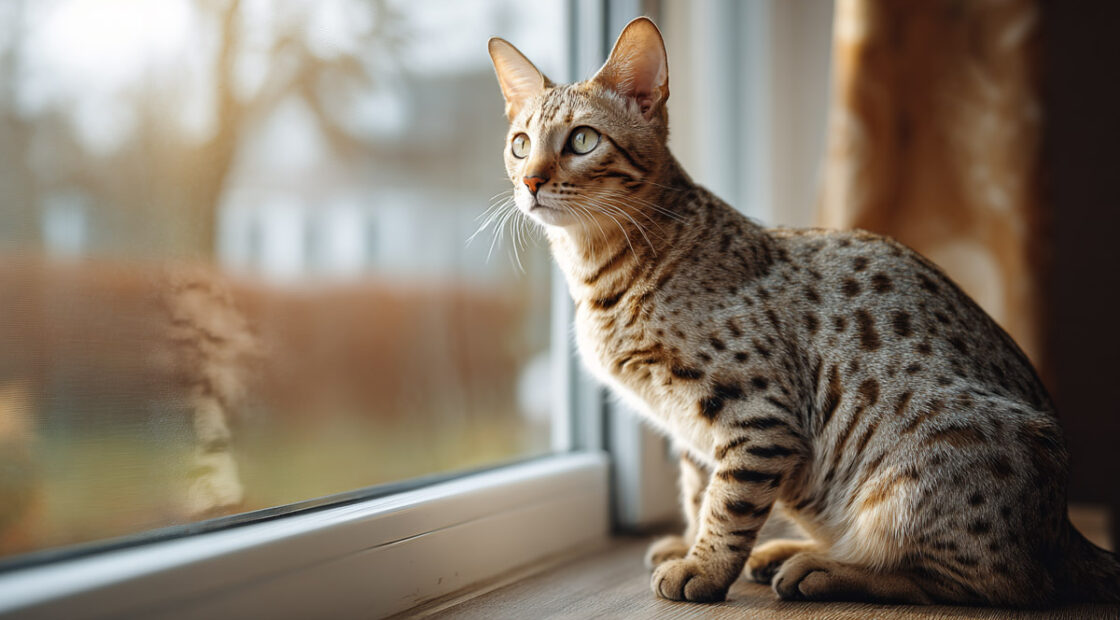
Those striking spots aren’t painted on – they’re the signature of the fascinating Egyptian Mau cats, one of the few naturally spotted domestic cat breeds in existence.
Ancient hieroglyphics dating back to 1550 B.C.E. reveal these spotted felines were once worshipped as temple cats in pharaonic Egypt, where their name “Mau” literally meant “cat” in ancient Egyptian.
Unlike the artificially developed Bengal breed, Egyptian Maus possess a genetic heritage that has remained largely unchanged for thousands of years. Their distinctive random spotted pattern and athletic build make them truly unique among purebred cats.
This medium-sized spotted cat breed combines the exotic appeal of wild feline ancestry with the temperament of a devoted companion. From their gooseberry green eyes to their remarkable speed (they’re the fastest domestic cat!), Egyptian Maus stand out in the feline world.
In this guide, we’ll explore everything about this rare natural breed – their distinctive physical features, affectionate personality traits, proper care requirements, and the fascinating history that makes these spotted treasures so special to cat enthusiasts around the world.
Egyptian Mau Cat Breed Statistics
| Characteristic | Details |
|---|---|
| Origin | Egypt |
| Size | Medium |
| Weight | Males: 10-14 lbs (4.5-6.4 kg)<br>Females: 6-10 lbs (2.7-4.5 kg) |
| Height | 8-10 inches (20-25 cm) |
| Body Type | Athletic, muscular with longer hind legs |
| Coat Length | Short to medium |
| Coat Colors | Silver, Bronze, Smoke, Black, Blue/Pewter (rare) |
| Pattern | Natural random spots |
| Eye Color | Gooseberry green |
| Lifespan | 12-15 years |
| Temperament | Intelligent, loyal, active, moderately vocal |
| Activity Level | High |
| Affection Level | High, but often bonds closely with one person |
| Child Friendly | Good with older, gentle children |
| Dog Friendly | Generally good with proper introduction |
| Other Pet Friendly | Good with cats; caution with small pets due to hunting instinct |
| Grooming Needs | Low (weekly brushing) |
| Vocalization | Moderate with chirps, trills, and soft meows |
| Health Issues | Urolithiasis, Pyruvate Kinase Deficiency, HCM |
| Intelligence | Very high |
| Trainability | Excellent |
| Indoor/Outdoor | Primarily indoor recommended |
| Special Abilities | Fastest domestic cat (up to 30 mph) |
| Recognition | CFA, TICA, GCCF |
| Rarity | Rare (fewer than 200 registered annually) |
| Average Cost | $1,000-$2,500 |
What Is an Egyptian Mau Cat?
The Egyptian Mau is one of the few naturally spotted breeds of domesticated cat, recognized for its elegant appearance and ancient heritage. This medium-sized, muscular feline displays distinctive spotted tabby markings and a lithe, athletic build that sets it apart from other domestic cats.
Unlike artificially developed spotted breeds, the Egyptian Mau’s spots occur naturally on the tips of their coat hairs.
This natural breed traces its ancestry to cats from ancient Egypt, where they were revered as sacred animals.
Officially recognized by major cat registries including the Cat Fanciers’ Association (CFA), The International Cat Association (TICA), and the Governing Council of the Cat Fancy (GCCF), the Egyptian Mau represents one of the oldest domesticated cat breeds in existence.
Physical Characteristics
How Big Do Egyptian Mau Cats Get?
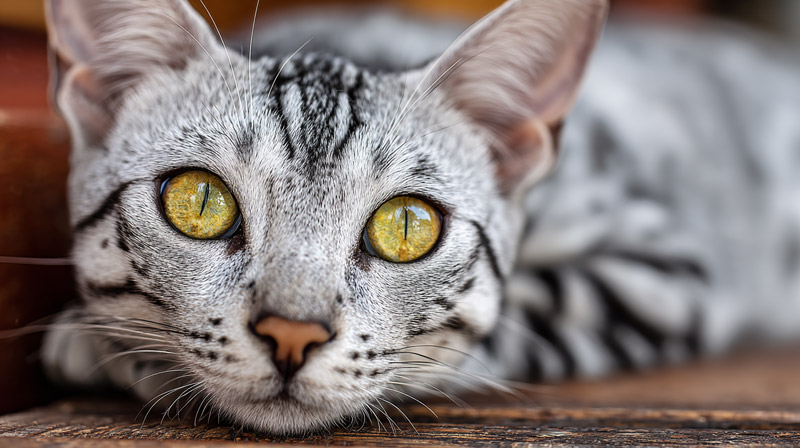
Egyptian Maus are medium-sized cats with males typically weighing 10-14 pounds and females ranging from 6-10 pounds.
They stand about 8-10 inches tall at the shoulder and have a body length of 12-15 inches.
The breed has a medium-foreign body type, neither too slender nor too stocky, with well-developed musculature that supports their exceptional athleticism.
Egyptian Maus take approximately 1-2 years to reach their full adult size, with males developing more slowly than females.
What Does an Egyptian Mau Cat’s Coat Look Like?
The Egyptian Mau has a short to medium-length coat with a lustrous sheen that feels silky to the touch.
The coat is fine and resilient, requiring minimal grooming to maintain its natural beauty.
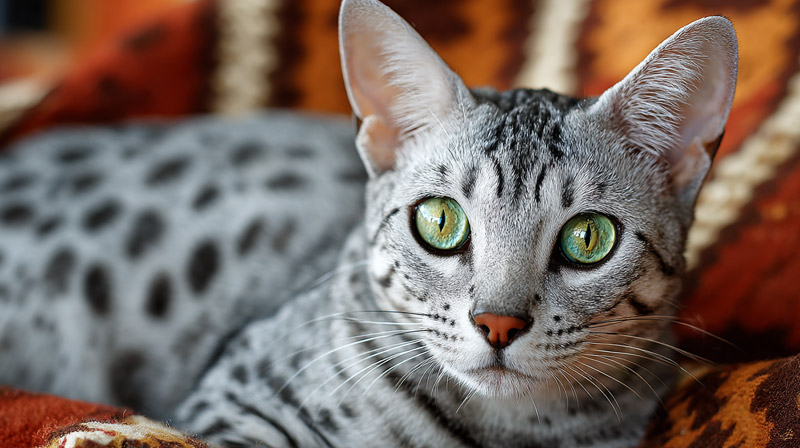
This breed features random spotted patterns that can be any size or shape but must never connect to form stripes or mackerel tabby markings.
Recognized coat colors include:
- Silver: Silver background with charcoal spots
- Bronze: Warm bronze background with dark brown to black spots
- Smoke: Pale silver background with darker spots that appear when the cat moves
- Black: Less common solid color without visible spotting
- Blue/Pewter: Dilute version of other colors (rarer)
The Egyptian Mau sheds at a moderate level, with seasonal variations in spring and fall.
Distinctive Physical Features
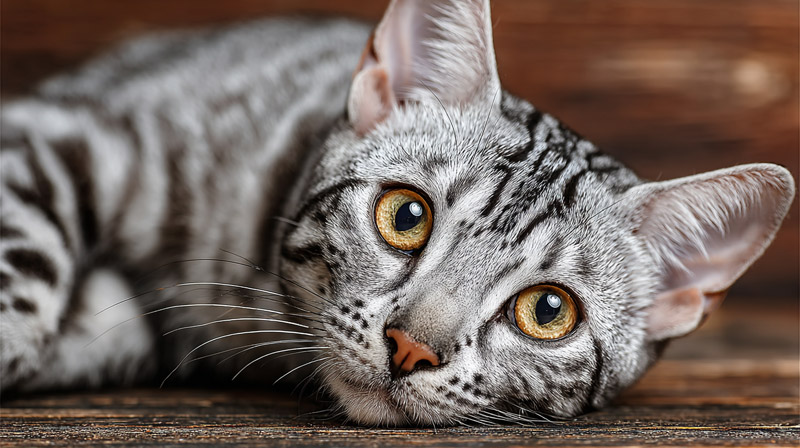
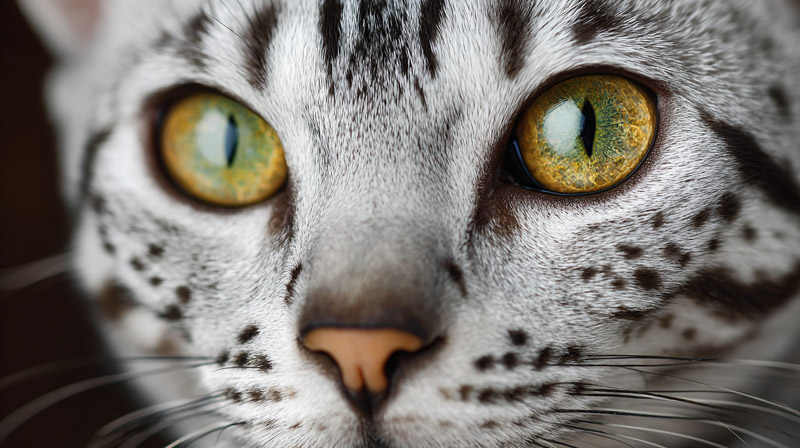
The gooseberry green eyes are perhaps the most striking feature of the Egyptian Mau. These large, almond-shaped eyes slant slightly upward toward the ears, giving the cat a characteristic “worried” expression.
Their ears are medium to large, alert, and set moderately high on the head with slightly pointed tips.
The Egyptian Mau’s head is a slightly rounded wedge of medium length with a gentle profile. Many have distinctive “mascara” lines extending from the eyes across their cheeks.
One unique feature is the “scarab beetle” M marking on their forehead, considered sacred in ancient Egyptian culture.
The Mau possesses a distinctive flap of loose skin extending from the flank to the back knee, providing exceptional freedom and agility in movement.
Their long, slightly tapering tail and longer back legs create their distinctive “tiptoe” stance, allowing them to reach impressive speeds of up to 30 mph, making them the fastest of all domestic cats.
Egyptian Mau Personality and Temperament
Are Egyptian Mau Cats Affectionate?
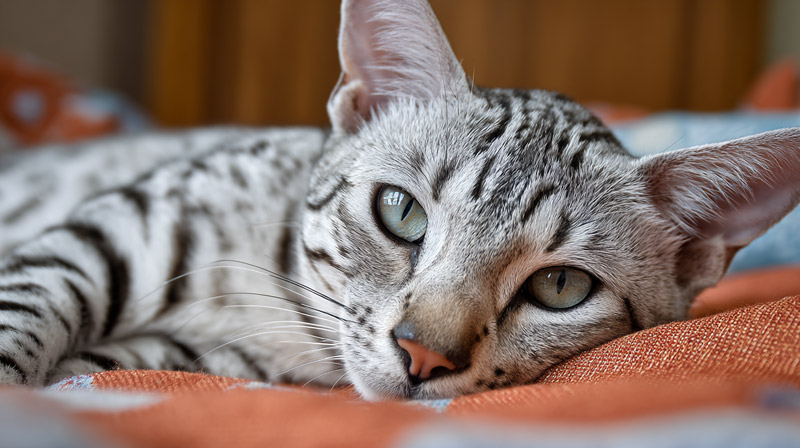
Egyptian Maus form deep, loyal bonds with their human companions but often choose one “special person” to whom they show particular devotion.
These cats display their affection through gentle head butting, purring, and following their favorite person around the home.
While loving toward their family, Egyptian Maus can be initially cautious with strangers, taking time to warm up to new people.
Their sensitivity to human emotions makes them excellent emotional support companions, as they often appear when their owner is feeling down or unwell.
How Active Are Egyptian Mau Cats?
The Egyptian Mau possesses extremely high energy levels and exceptional athleticism. This spirited breed requires about 30-45 minutes of active play daily.
Their intelligence and agility make them excellent at interactive games like fetch and puzzle toys that challenge their problem-solving abilities.
Many Maus enjoy climbing and jumping, capable of leaping up to six feet from a standing position. Providing tall cat trees and perches helps satisfy their natural desire to survey their territory from above.
This active breed maintains their playful, kitten-like behavior well into adulthood, often remaining energetic into their senior years.
Do Egyptian Mau Cats Get Along with Others?
Egyptian Maus typically form positive relationships with children, especially when socialized from kittenhood. They do best with gentle, respectful kids aged 6 and older who understand proper cat handling.
This breed generally gets along well with cat-friendly dogs but may need slow, careful introductions.
Egyptian Maus can coexist peacefully with other cats, particularly when raised together from a young age.
Their strong prey drive may make them unsuitable companions for small pets like birds, hamsters, or gerbils.
While not excessively territorial, they appreciate having their own spaces and resources in multi-pet homes.
How Vocal Are Egyptian Mau Cats?
Egyptian Maus are moderately vocal cats with a distinctive “voice” often described as musical or chirpy.
They communicate through a variety of sounds including soft trills, chirps, and occasional meows, typically using different vocalizations for different needs.
Rather than constant meowing, Egyptian Maus tend to vocalize when they want attention, during play, or when greeting their favorite people.
Their communication style is generally conversational rather than demanding, making them pleasant companions who won’t disrupt your home with excessive noise.
Health and Lifespan
How Long Do Egyptian Mau Cats Live?
The average lifespan of an Egyptian Mau ranges from 12-15 years, though some individuals may live longer with proper care.
Regular veterinary checkups, a balanced diet, adequate exercise, and keeping them indoors significantly contribute to their longevity.
Compared to the average domestic cat lifespan of 12-14 years, Egyptian Maus typically enjoy a similar or slightly longer life expectancy.
Common Health Issues in Egyptian Mau Cats
While generally healthy, Egyptian Maus may be predisposed to several conditions:
Urolithiasis (Bladder Stones)
- More common in male Maus under 6 years old
- Symptoms include frequent urination, blood in urine, urinating outside the litter box
- Can be life-threatening if causing complete blockage
- Treatment includes diet modification, increased water intake, and sometimes surgery
Pyruvate Kinase Deficiency (PK-Def)
- Inherited condition causing anemia
- Genetic testing available for breeding cats
- Most affected Maus show few symptoms and adapt well
Hypertrophic Cardiomyopathy (HCM)
- Thickening of heart muscle walls
- May develop in middle to older age
- Regular cardiac screenings recommended
- Can be managed with medication
Leukodystrophy
- Rare neurological condition appearing in kittens
- Progressive tremors and coordination issues
- Genetic testing available
Dental Disease
- Prone to tartar buildup and gingivitis
- Regular dental care needed to prevent issues
What Health Testing Should Egyptian Mau Cats Have?
Responsible breeders conduct several health screenings:
- Genetic test for Pyruvate Kinase Deficiency
- Heart screening for HCM (echocardiogram)
- Regular urinalysis to monitor for early signs of urolithiasis
As Egyptian Maus age, biannual veterinary exams are recommended, with special attention to:
- Dental health (annual cleaning may be needed)
- Cardiac evaluation (especially after age 5)
- Kidney function testing
- Regular blood panels to monitor overall health
Caring for an Egyptian Mau Cat
What Do Egyptian Mau Cats Eat?
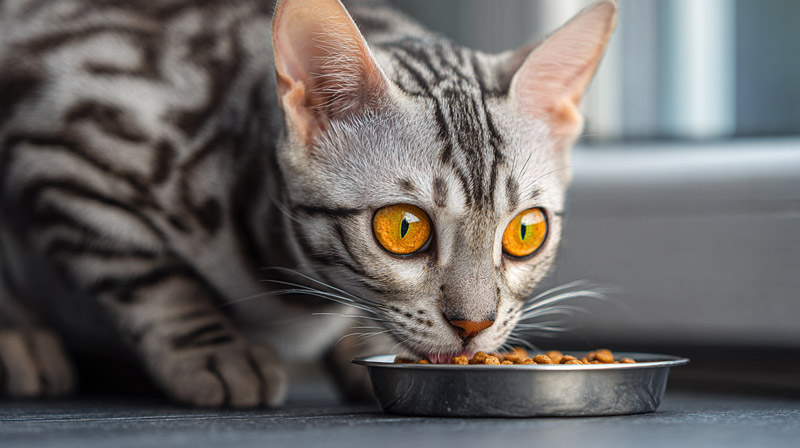
Egyptian Maus thrive on a high-protein diet with 35-40% quality animal protein content.
Adult Maus typically need 20-25 calories per pound of body weight daily, divided into two meals.
Due to their predisposition to urinary issues, many veterinarians recommend:
- Wet food as a significant portion of their diet
- Fresh, clean water always available (fountains often encourage drinking)
- Grain-free formulations for some individuals
Foods to avoid include those with artificial preservatives, excessive carbohydrates, and dairy products.
Weight management is important for this active breed – obesity can exacerbate joint issues and reduce their natural athleticism.
How Do You Groom an Egyptian Mau Cat?
The Egyptian Mau’s short coat is relatively low-maintenance, requiring only weekly brushing to remove loose fur and distribute natural oils.
During seasonal shedding periods (spring and fall), more frequent brushing with a rubber curry brush or grooming mitt helps manage increased hair loss.
Nail trimming every 2-3 weeks helps prevent overgrowth and splitting, especially important for indoor cats.
Dental care should include:
- Weekly tooth brushing with cat-safe toothpaste
- Dental treats or toys to help reduce tartar buildup
Most Egyptian Maus keep themselves meticulously clean, but occasional ear cleaning with a veterinarian-approved solution helps prevent wax buildup.
How Much Exercise Does an Egyptian Mau Cat Need?
Egyptian Maus require 30-45 minutes of dedicated active play daily, divided into several shorter sessions.
Their exceptional athletic abilities thrive with a variety of activities:
- Interactive wand toys that mimic prey movement
- Puzzle feeders that challenge their intelligence
- Fetch games with small toys (many Maus naturally retrieve)
Providing vertical space is essential for this climbing-oriented breed – cat trees, shelves, and perches satisfy their natural desire to observe from heights.
Mental stimulation is as important as physical exercise – training sessions, new toys, and environmental enrichment prevent boredom in this intelligent breed.
Living with an Egyptian Mau Cat
Are Egyptian Mau Cats Good for Apartments?
Egyptian Maus can adapt well to apartment living despite their active nature, provided they receive adequate exercise and enrichment.
A minimum of 500-700 square feet gives them enough space to play and explore, though more is always better.
Their moderate vocalization level makes them less likely to disturb neighbors than some louder breeds.
This breed thrives as indoor-only cats, especially in apartments, which protects them from traffic, predators, and theft (as they are a rare and valuable breed).
Vertical space is crucial in smaller homes – wall-mounted shelves, cat trees, and window perches maximize limited floor space.
What Environment Do Egyptian Mau Cats Need?
Egyptian Maus prefer warm environments, showing sensitivity to cold temperatures due to their desert origins.
Providing warm bedding and sunny spots for lounging helps them stay comfortable in cooler climates.
Safe outdoor access through a secure catio or supervised harness walking satisfies their curiosity while keeping them protected.
Environmental enrichment essentials include:
- Multiple scratching surfaces (both horizontal and vertical)
- Hiding spots and caves for security
- Perches near windows for bird watching
- Interactive toys that engage their hunting instincts
Are Egyptian Mau Cats Good for First-Time Owners?
The Egyptian Mau requires a moderate level of experience and commitment, making them suitable for dedicated first-time owners willing to learn.
Daily time commitment includes:
- 30-45 minutes of active play
- Regular grooming sessions
- Mental stimulation and training
New owners may face challenges with the breed’s high intelligence and energy level if unprepared for their exercise needs.
First-time owners should be ready to provide consistent routines, appropriate outlets for energy, and patience during the initial adjustment period.
Egyptian Mau Kittens
What Are Egyptian Mau Kittens Like?
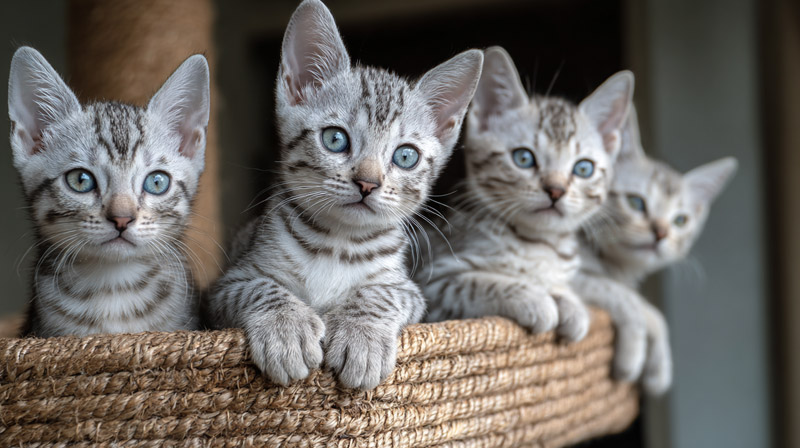
Egyptian Mau kittens are exceptionally playful and curious, with seemingly boundless energy that requires multiple play sessions throughout the day.
Their personality development follows a fairly predictable pattern:
- 2-4 months: Extreme playfulness and social bonding
- 4-8 months: Testing boundaries and developing independence
- 8-12 months: Gradually settling into adult personality traits
Early socialization (8-12 weeks) is crucial for developing a well-adjusted adult cat who’s comfortable with different people, sounds, and experiences.
Egyptian Mau kittens respond exceptionally well to clicker training and positive reinforcement methods between 3-6 months of age.
When Can Egyptian Mau Kittens Leave Their Mother?
Egyptian Mau kittens should remain with their mother and littermates until at least 12-14 weeks of age, longer than many other breeds.
This extended time allows for:
- Complete weaning (typically complete by 10 weeks)
- Critical socialization with littermates
- Learning appropriate cat behaviors and boundaries
Prior to adoption, reputable breeders ensure kittens receive:
- First set of vaccinations (typically at 8 and 12 weeks)
- Multiple deworming treatments
- Health examination by a veterinarian
Spaying or neutering is typically recommended around 4-6 months of age, though some breeders may have specific requirements in their contracts.
Breeding and Genetics
Egyptian Mau Breed Standards
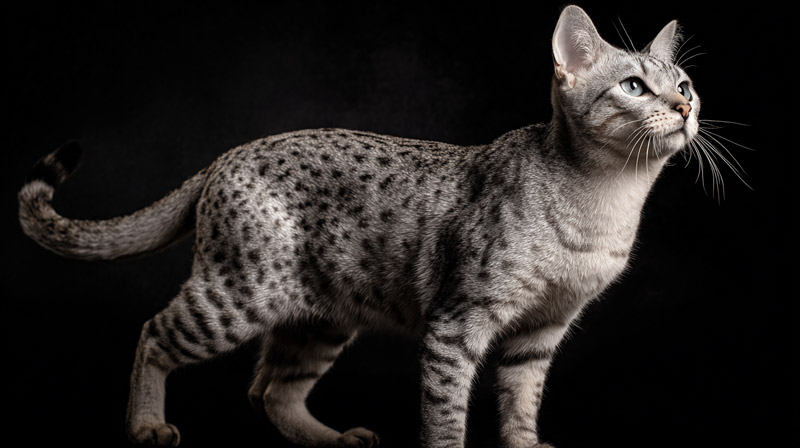
The CFA standard emphasizes the breed’s random spotted pattern, lithe muscular body, and characteristic “worried” facial expression.
TICA standards focus on the distinctive spotted coat pattern, athletic build, and graceful movement with a slight lilt due to longer back legs.
Other registries like GCCF maintain similar standards while placing special emphasis on the breed’s natural appearance and wild-looking spots.
Show-quality Egyptian Maus must display:
- Clear contrast between background color and spots
- No connecting spots forming mackerel tabby patterns
- “Gooseberry green” eye color
- Proper head type and ear set
Disqualifying faults in show rings include:
- Blue eyes or any eye color other than green
- Absence of spots
- Crossed eyes or visible tail kinks
- Any sign of hybridization with other breeds
Genetics of Egyptian Mau Cats
The Egyptian Mau’s spotted coat pattern is caused by the expression of the spotted tabby gene (Sp), which modifies the mackerel tabby pattern.
Coat color inheritance follows standard feline genetics:
- Silver is dominant over bronze
- Smoke coloration results from the inhibitor gene
- Dilute colors (blue/pewter) come from the recessive dilution gene
The breed maintains a relatively small gene pool, making genetic diversity a concern for responsible breeders.
Genetic testing is essential for:
- Pyruvate kinase deficiency (autosomal recessive)
- Progressive retinal atrophy (PRA)
- Blood type compatibility (to prevent neonatal isoerythrolysis)
Some breeding programs allow careful outcrossing with specific breeds to maintain genetic health while preserving distinctive Egyptian Mau traits.
History of the Egyptian Mau Cat
Where Do Egyptian Mau Cats Come From?
The Egyptian Mau originates from Egypt, where spotted cats were depicted in ancient artwork dating back to 1550 BCE.
These natural cats developed in the desert climate of North Africa, explaining their heat tolerance and sensitivity to cold.
Archaeological evidence suggests Egyptian Maus may be direct descendants of the African Wild Cat (Felis lybica), one of the first domesticated cat species.
In ancient Egyptian culture, cats were deeply revered, sometimes mummified, and protected by law – killing a cat was punishable by death.
How Did the Egyptian Mau Breed Develop?
The modern Egyptian Mau breed was established largely through the efforts of Russian Princess Natalie Troubetskoy in the 1950s.
After World War II nearly decimated European cat breeds, Troubetskoy acquired several spotted cats from Egypt with the help of the Syrian ambassador to Italy.
When she emigrated to the United States in 1956, she brought three Egyptian Maus with her, establishing the breed’s foundation in North America.
The original breeding stock included cats named Baba, Liza, and Jojo (or alternately Geppa and Ludol in some accounts).
The breed developed with extremely limited genetic diversity, which presented challenges that required careful breeding strategies to overcome.
When Was the Egyptian Mau Recognized?
The Egyptian Mau received its first championship status from the Cat Fanciers Federation in 1968.
The Cat Fanciers’ Association (CFA) recognized the breed in 1977 after years of development and standardization.
The International Cat Association (TICA) granted recognition in 1979.
The breed arrived in the United Kingdom much later, only appearing in 1998, and receiving full GCCF recognition in 2006.
Even today, Egyptian Maus remain relatively rare, with fewer than 200 kittens registered with the GCCF annually.
Cost of Owning an Egyptian Mau Cat
How Much Does an Egyptian Mau Cat Cost?
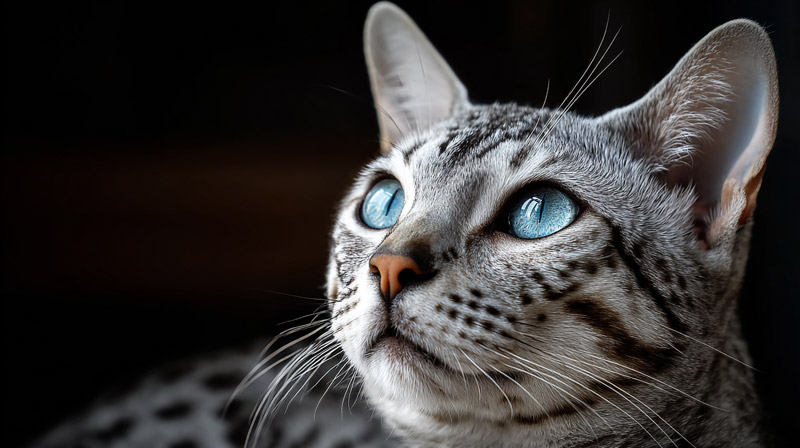
Pet-quality Egyptian Mau kittens typically cost between $1,000-$1,500 from reputable breeders.
Show-quality specimens with excellent confirmation to breed standards range from $1,800-$2,500.
Cats with breeding rights command premium prices of $2,500-$3,500 due to the breed’s rarity.
Price variations depend on:
- Coat color (silver often commands higher prices)
- Lineage and champion bloodlines
- Gender (females sometimes priced higher)
- Geographic location
Initial setup costs add approximately $200-$300 for:
- Litter box and supplies
- Quality food and water dishes
- Scratching posts and cat tree
- Toys and enrichment items
- Carrier for transport
What Are the Ongoing Costs?
Annual veterinary care ranges from $200-$400 for routine checkups, vaccinations, and preventative treatments.
Monthly food expenses run $40-$60 for high-quality commercial diets appropriate for Egyptian Maus.
Litter and basic supplies cost approximately $25-$35 monthly.
Pet insurance premiums average $20-$40 monthly depending on coverage level, providing protection against unexpected medical expenses.
Emergency veterinary care for serious conditions can exceed $1,000-$3,000, making an emergency fund or insurance essential.
Where Can You Get an Egyptian Mau Cat?
Reputable breeders can be found through:
- Cat Fanciers’ Association breeder directory
- The International Cat Association member listings
- Egyptian Mau breed clubs and organizations
When evaluating breeders, look for:
- Health testing documentation for breeding cats
- Clean, spacious living conditions
- Socialization practices with kittens
- Written health guarantees
- Willingness to answer questions and provide support
Breed-specific rescues occasionally have Egyptian Maus available for adoption at costs of $150-$350.
Adult Egyptian Maus might be available through general rescue organizations, though this is rare due to the breed’s scarcity.
Egyptian Mau vs. Similar Breeds
Egyptian Mau vs. Bengal
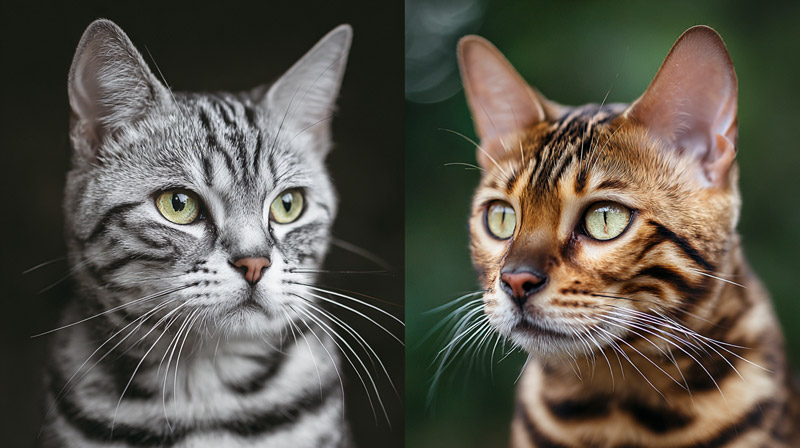
Physical differences:
- Bengals have a larger, more muscular build (10-15 pounds vs. Mau’s 8-12 pounds)
- Bengal spots are often rosettes rather than simple spots
- Bengals have a distinctive glittered coat; Maus have a more subtle sheen
- Maus have the unique “tiptoe” stance that Bengals lack
Temperament differences:
- Bengals typically show more extreme energy levels and athleticism
- Egyptian Maus tend to form deeper bonds with one special person
- Bengals are usually more outgoing with strangers than the reserved Mau
Care requirements differ in:
- Bengals require more intensive exercise regimens
- Egyptian Maus are generally easier to maintain for average households
- Both need significant environmental enrichment but Bengals are more demanding
Egyptian Mau vs. Ocicat
While the Ocicat resembles the Egyptian Mau visually, they differ significantly:
- Ocicats are a created breed (Abyssinian, Siamese, and American Shorthair mix)
- Maus are a natural breed with ancient origins
- Ocicats are typically larger and more robust in build
- Both have spotted coats, but the Ocicat’s pattern was selectively bred
Personality contrasts include:
- Ocicats are more consistently outgoing and social with strangers
- Egyptian Maus maintain more wild-like wariness and selectivity
- Ocicats adapt more easily to household changes and new people
Health profiles vary with:
- Ocicats having fewer breed-specific genetic concerns
- Egyptian Maus’ predisposition to urinary issues
- Ocicats’ occasional dental problems from Siamese ancestry
How to Choose Between Egyptian Mau and Similar Breeds
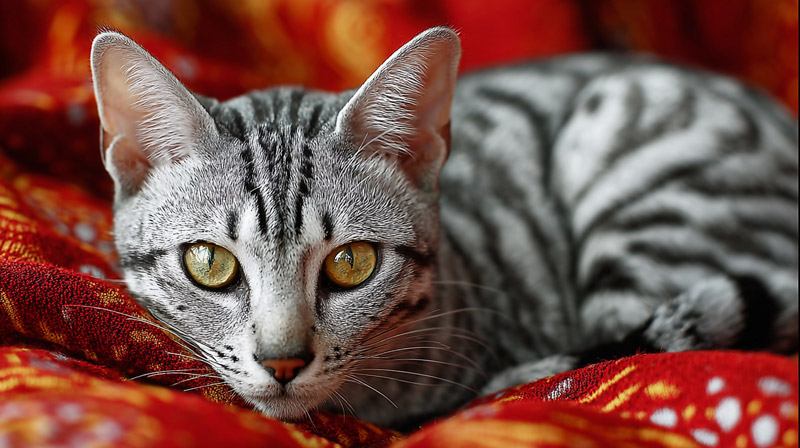
Lifestyle considerations that favor choosing an Egyptian Mau:
- Desire for a cat with historical significance and natural development
- Preference for a devoted one-person companion over a social butterfly
- Appreciation for moderate energy levels that don’t require constant attention
The Egyptian Mau is ideal for owners who:
- Value the mystique and rarity of an ancient breed
- Have moderate activity levels but enjoy interactive play
- Appreciate intelligence and trainability
- Prefer a cat that’s affectionate but not demanding
Consider a Bengal or Ocicat instead if:
- You prefer an extremely outgoing, social cat
- You have an extremely active household
- You desire a larger, more robust-looking spotted cat
Fun Facts About Egyptian Mau Cats
The Egyptian Mau is the fastest domestic cat breed, capable of running up to 30 mph, nearly the speed of a cheetah.
These cats possess unique physical adaptations not found in other breeds:
- A flap of skin extending from flank to back leg for greater stride length
- Longer back legs creating a distinctive “tiptoe” stance
Egyptian Maus appeared in ancient Egyptian artwork dating back over 3,000 years, depicted hunting alongside humans.
The “M” marking on their forehead was considered the mark of the scarab beetle in ancient Egypt, symbolizing protection.
Famous Egyptian Mau owners have included:
- Egyptian royalty and nobility throughout history
- Russian Princess Natalie Troubetskoy, who saved the breed
Egyptian Maus have an unusual fascination with water, often playing with water bowls or joining owners in the shower.
Some Egyptian Maus have been trained to perform tricks typically associated with dogs, such as fetch and coming when called.
Is an Egyptian Mau Cat Right for You?
Best Homes for Egyptian Mau Cats
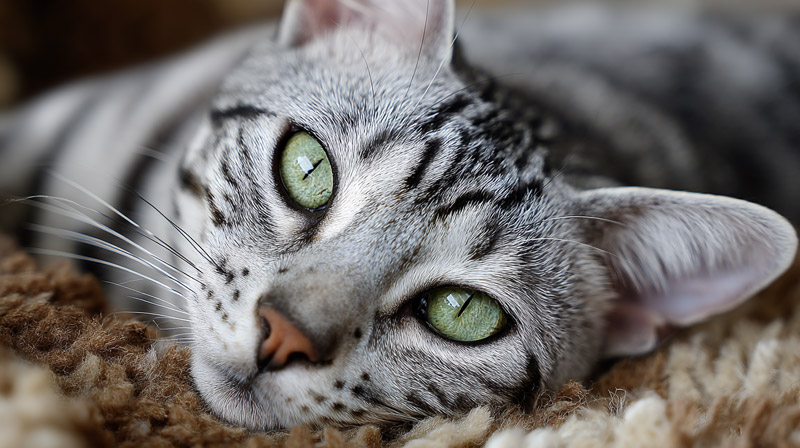
Egyptian Maus thrive with owners who:
- Maintain consistent daily routines
- Provide regular interactive play sessions
- Appreciate intelligence and problem-solving abilities
- Value a loyal, devoted companion
Ideal home environments include:
- Secure indoor living or supervised outdoor access
- Vertical climbing spaces and perches
- Warm, comfortable resting areas
- Enrichment through toys and activities
Egyptian Maus do particularly well with:
- Single adults or couples who can focus attention
- Families with older, respectful children
- Households with moderate activity levels
- Homes where someone is present most of the day
Who Should Avoid Egyptian Mau Cats?
This breed may not be suitable for:
- Extremely busy households with little time for interaction
- Families with very young or rough children
- Those seeking a lap cat that remains inactive for long periods
- People who travel frequently without taking their cat
While not excessively allergenic, Egyptian Maus are not hypoallergenic and may trigger reactions in sensitive individuals.
Better alternatives for these situations might include:
- The laid-back British Shorthair for less active households
- The robust Maine Coon for families with young children
- The Siberian for those with mild allergies
Questions to Ask Before Getting an Egyptian Mau Cat
Financial considerations:
- Can you afford the $1,000-$2,500 initial purchase?
- Is your budget sufficient for $75-$100 monthly care costs?
- Do you have an emergency fund or insurance for unexpected medical expenses?
Time commitment evaluation:
- Can you provide 30-45 minutes of active play daily?
- Will someone be home regularly to provide company?
- Are you prepared for a 12-15 year commitment?
Living situation assessment:
- Does your living space allow pets?
- Is your home secure for an active, intelligent cat?
- Do you have space for cat furniture and play areas?
Family considerations:
- Are all household members enthusiastic about getting a cat?
- Do any family members have allergies to cats?
- Are children old enough to interact appropriately with a cat?
The Egyptian Mau’s unique combination of ancient heritage, striking appearance, and devoted personality makes them a remarkable companion for the right owner, bringing the mystique of ancient Egypt into modern homes.
FAQ on Egyptian Mau
Are Egyptian Mau cats really from Egypt?
Egyptian Mau cats do have authentic Egyptian origins. Archaeological evidence shows spotted feline breeds resembling today’s Maus in ancient Egyptian artifacts dating back to 1550 BCE. The modern breed was developed in the 1950s when a Russian princess brought street cats from Cairo to Italy, then America.
How can I identify a genuine Egyptian Mau?
Look for the natural spotted coat pattern with random markings that never connect. Genuine Maus have a distinctive “M” marking on their forehead (called the “scarab beetle” mark), gooseberry green eyes, and a unique flap of skin extending from flank to back knee for greater agility.
Are Egyptian Mau cats good family pets?
These intelligent felines make excellent family companions. They form deep bonds with their humans but typically choose one “special person.” Egyptian Maus get along well with respectful children and cat-friendly dogs, though their high energy and athleticism require an active household.
How much exercise do Egyptian Mau cats need?
As one of the fastest domestic cat breeds, Egyptian Maus require 30-45 minutes of interactive play daily. Their muscular build and cheetah-like speed (up to 30 mph) demand regular activity. Provide climbing opportunities, puzzle toys, and fetch games to satisfy their physical and mental needs.
Do Egyptian Mau cats have health problems?
This natural breed is generally healthy with a lifespan of 12-15 years. They may be predisposed to urolithiasis (bladder stones), pyruvate kinase deficiency, and occasionally hypertrophic cardiomyopathy. Regular veterinary check-ups and genetic testing from reputable breeders help minimize these risks.
How much do Egyptian Mau kittens cost?
Expect to pay between $1,000-$2,500 for a pet-quality Egyptian Mau kitten from a reputable breeder. Show-quality specimens can range from $1,800-$3,500. Their rarity, natural spotted pattern, and ancient heritage contribute to their premium price compared to common domestic shorthair cats.
Are Egyptian Maus noisy cats?
Egyptian Maus are moderately vocal with a distinctive “voice” often described as musical. They communicate through chirps, trills, and soft meows rather than loud, constant vocalizations. Their communication style is conversational rather than demanding, making pleasant companions for apartment living.
How do I groom an Egyptian Mau?
These short-haired cats require minimal grooming. Weekly brushing with a soft brush removes loose fur and distributes natural oils. Their bronze, silver, or smoke coat maintains its lustrous sheen with little intervention. Seasonal shedding may require more frequent brushing in spring and fall.
Can Egyptian Maus be trained?
The Egyptian Mau’s high intelligence makes them highly trainable. Many can learn tricks like fetch, coming when called, and even walking on a harness. Use positive reinforcement techniques and keep training sessions short and engaging for this athletic cat breed.
Are Egyptian Mau cats rare?
Egyptian Maus remain one of the rarer cat breeds worldwide. Fewer than 200 kittens are registered annually with major cat registries. Their limited gene pool, strict breed standards, and relatively recent recognition (1977 by CFA) contribute to their scarcity compared to popular breeds like Maine Coons or Siamese cats.
Conclusion
Egyptian Mau cats represent one of nature’s masterpieces among domestic felines. Their ancient lineage and natural spotted breed status make them truly special companions for the right owner.
These medium-sized athletic cats bring history into your home with their pharaonic connections and distinctive physical traits.
Beyond their bronze, silver, or smoke coats lies a feline with remarkable intelligence and a devoted personality that forms deep bonds with their chosen human.
While their rarity and specific care needs require commitment, the rewards of living with these natural spotted cats are immeasurable.
For those seeking a cat with extraordinary speed, striking appearance, and the charm of an ancient temple companion, the Egyptian Mau offers an unparalleled feline experience.
These gooseberry-green-eyed beauties remain a living connection to the cats once worshipped along the Nile basin thousands of years ago.