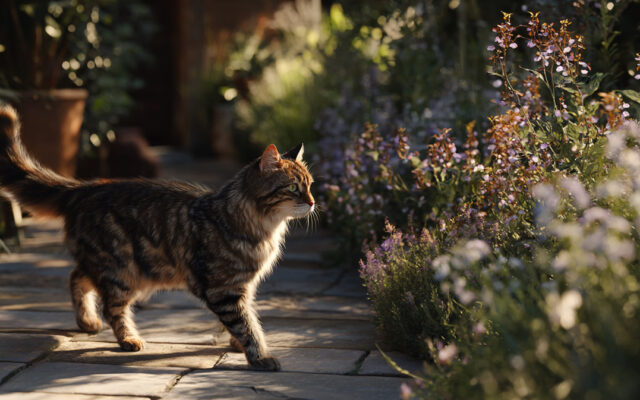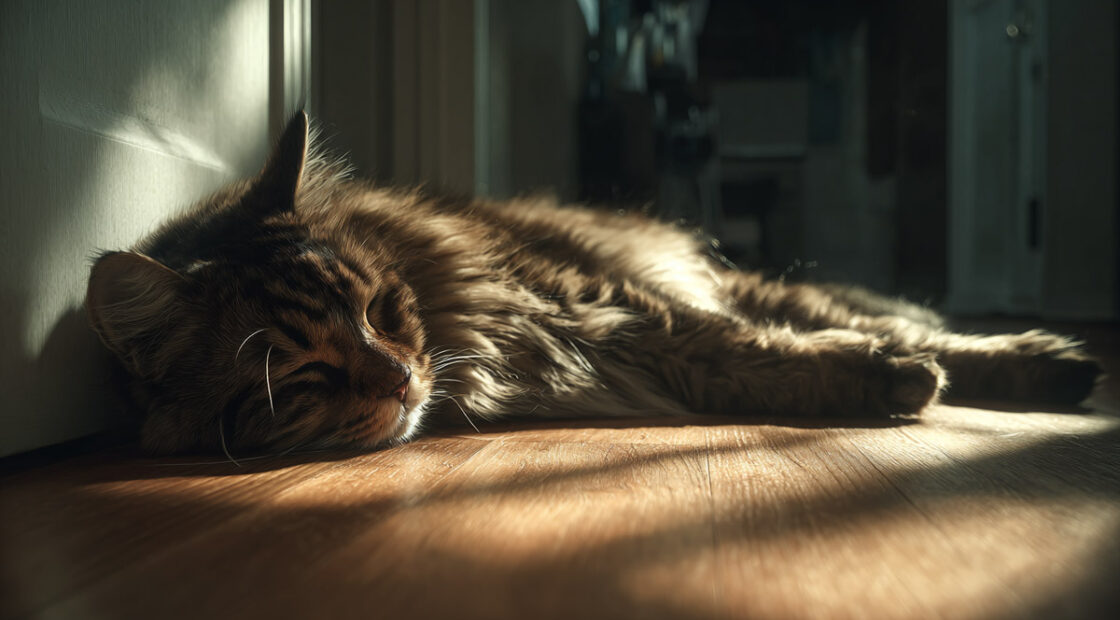
Maine Coons have a heavy coat, tufted ears and a bushy tail, and all of it makes sense for New England winters. The breed developed naturally in the northeastern United States, well before anyone wrote a standard for it.
CFA, TICA, FIFe and the GCCF each publish their own breed standard. CFA describes the cats as sociable, loyal and intelligent.
Heart disease is the breed’s best-documented health risk. A European screen of 2,744 cats of the breed found 41.5% carrying the A31P mutation linked to hypertrophic cardiomyopathy (Journal of Veterinary Cardiology, 2010).
Cats without that mutation still develop the disease, so a negative gene test is not a heart clearance.
What Is a Maine Coon?
Most people spot one by size first, then the tufted ears and the bushy tail. It’s a long, rectangular domestic longhair that developed in the northeastern United States, and the coat is heavy because the winters there were. It also goes by Coon Cat, Maine Cat, Maine Shag and American Longhair.
Breeders standardized an existing farm cat instead of designing one, which is why it counts as a natural breed. The International Cat Association (TICA) calls it the only native longhaired breed among American pedigreed cats, as USA Today reported in its breed overview. Maine made it the official state cat in 1985.
A couple of assumptions don’t hold up. It isn’t a raccoon or bobcat hybrid, and CFA says domestic cats can’t breed with either because they belong to different genera. Ear tufts alone don’t make a Maine Coon either, since plenty of domestic longhairs have tufts and a shaggy tail. A pedigree is what confirms the breed.
How Big Do Maine Coons Get?
It depends which registry you ask. In the CFA breed article, adult males average 12 to 15 pounds and females 9 to 12 pounds, and some males pass 20 pounds. TICA’s averages, as USA Today reported them, run higher at 13 to 18 pounds for males and 9 to 13 pounds for females, so no single number settles the question.
Growth is slow. CFA says full development takes up to 3 years in its current breed profile and 3 to 4 years in its longer breed article. TICA puts full maturity at 3 to 5 years, and the GCCF says up to 4 years. A lanky one-year-old is not a red flag by itself.
Breeder and pet sites often print higher male weights than either registry does. Treat those as the top of the range, not the norm.
Frame matters more than the scale. CFA describes a long rectangular body with a broad chest, so a cat carrying weight beyond that frame is simply overweight, which feeds the hip problems covered further down.
Maine Coon Coat, Colors and Distinctive Features
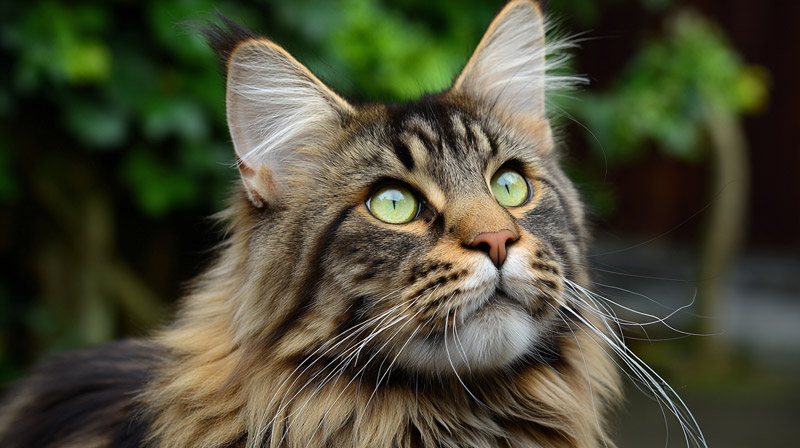
The body is long and rectangular, and the silky coat runs shorter on the shoulders and longer on the belly and britches. Add tufted ears, a long bushy tail and, per CFA’s standard, a squared muzzle.
Coat and Colors
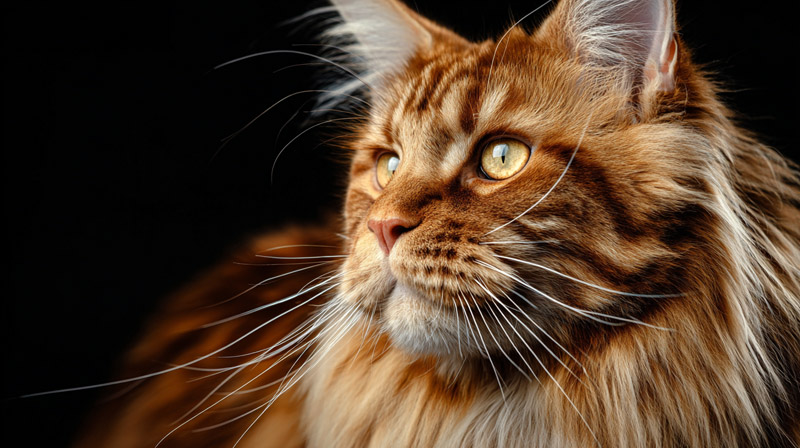
The brown tabby is the look most people picture. CFA suggests its ringed bushy tail is why early New Englanders saw raccoons in these cats.
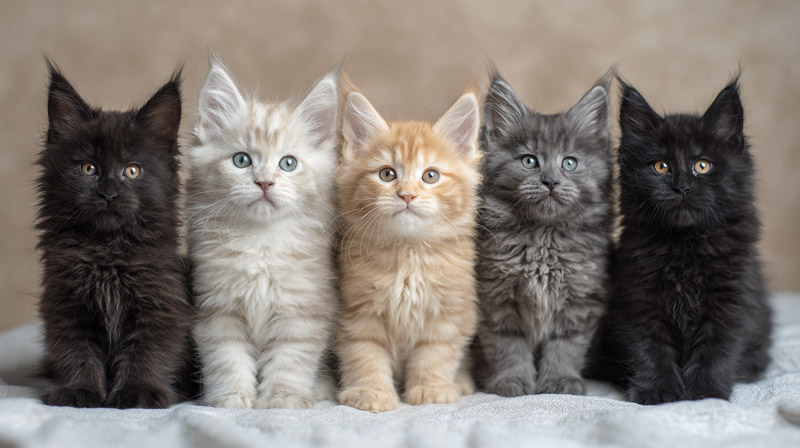
CFA lists nearly 20 color classes in its current standard. Solid, brown tabby, silver tabby, red tabby, tabby with white, bi-color, parti-color, shaded and smoke are among them, along with other Maine Coon colors, and classic, mackerel and ticked are the recognized tabby patterns. The GCCF accepts most colors except chocolate, lilac and colorpointed.
Chocolate, lavender and pointed patterns are excluded because CFA reads them as a sign of hybridization.
Ears, Muzzle and Tail
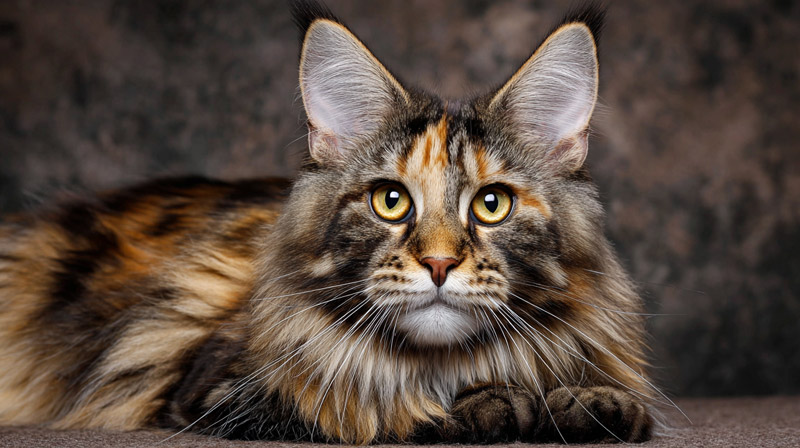
Ears are large and set high, capped with lynx-like tufts. CFA says the tuft curls outward from inside the ear, and fur also grows between the toes.
The muzzle is squared, with high cheekbones and a firm chin in line with the nose and upper lip.
The tail is long and bushy, according to TICA’s description. Together these do most of the work in separating a pedigree Maine Coon from a fluffy domestic longhair.
Polydactyl Paws
Some Maine Coons carry extra toes, and the trait occurs naturally in the breed.
Show-ring rules differ. TICA accepts polydactyl Maine Coons in sanctioned shows (Cats.com breed profile), while other registries handle the trait their own way, so check the standard before entering one.
What Is the Maine Coon’s Temperament?
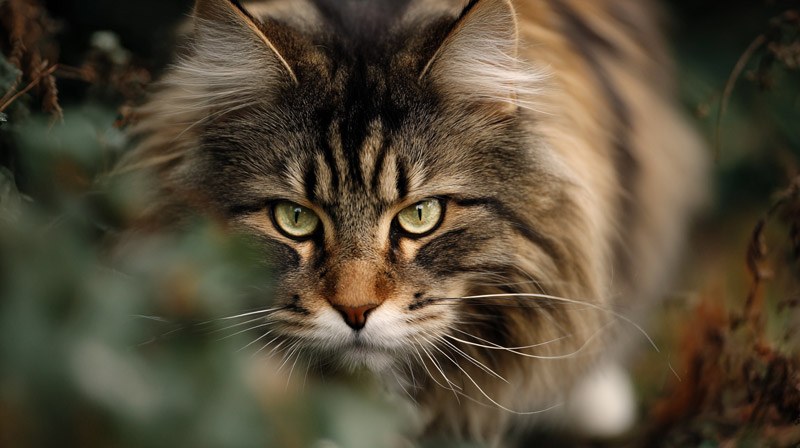
CFA describes the Maine Coon as sociable, loyal and intelligent, and says it gets along with children and dogs. TICA’s words are gentle, friendly and playful. Depending on the dog, a Maine Coon can end up the bigger animal in the house, CFA notes.
Some learn tricks, play fetch or accept a leash, which explains the dog-like reputation. They tend to chirp and trill more than they meow loudly, and they like to help with whatever project the owner has going.
Sources split on volume. CFA’s long-standing breed article lists meows, trills and chirps as part of the vocabulary, while the USA Today overview says CFA notes the breed is not necessarily very vocal.
All of this is tendency, not promise. Genetics, socialization and the home shape each cat, and a Maine Coon can be affectionate without being a lap cat.
Where Did the Maine Coon Come From?
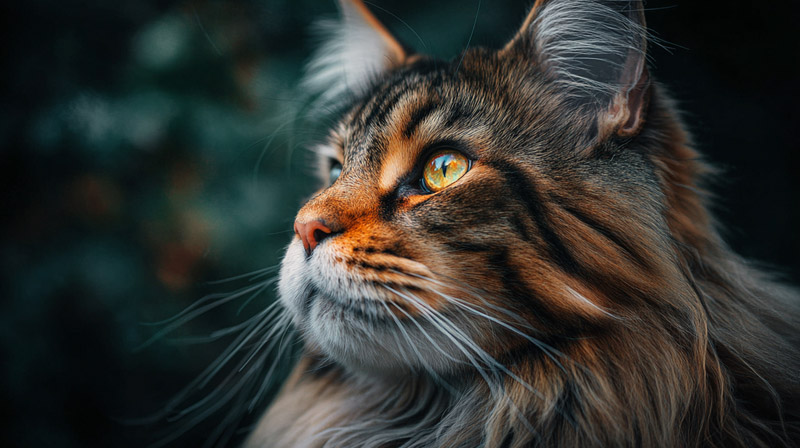
New England farm cats bred with longhaired cats brought in by sailors and settlers, and the Maine Coon came out of that. The “coon” in the name points to the raccoon, which the brown tabby’s ringed bushy tail resembled, according to CFA.
The folklore is more colorful than the record. Bobcat or raccoon crosses show up in the old stories, though CFA calls them genetically impossible. Captain Samuel Clough supposedly carried six of Marie Antoinette’s longhaired cats to Wiscasset, Maine. Another story has an English sea captain named Coon whose longhaired cats bred wherever he landed, and a fourth credits Norwegian Skogkatts brought over by the Vikings.
What can actually be documented:
- 1860s: Maine farmers entered their cats at the Skowhegan Fair
- 1878: a dozen Maine Coons were shown in Boston
- May 1895: a brown tabby female named Cosey won the National Cat Show at Madison Square Garden, and her silver collar is held by the CFA Foundation
- Late 1950s: the breed was declared extinct, wrongly
Alta Smith and Ruby Dyer formed the Central Maine Cat Club in the early 1950s to keep the breed visible, and the club produced one of the first written standards. The Maine Coon Breeders and Fanciers Association followed in 1968.
CFA turned down provisional status in 1970 and again in 1971, partly because only 20 Maine Coons were registered at the first meeting. A breed club formed in 1973, provisional status began in May 1975, and championship status arrived on May 1, 1976.
Maine Coon Health Problems and Screening
Screening in this breed centers on hypertrophic cardiomyopathy (HCM), hip dysplasia and spinal muscular atrophy (SMA), and each has its own test or scan.
| Condition | Inheritance | Screening | Onset |
|---|---|---|---|
| HCM | Autosomal dominant, incomplete penetrance | A31P gene test plus echocardiogram | Adult, rises with age |
| Hip dysplasia | Heritable, no gene test | Scored hip radiographs | Worsens with age |
| SMA | Autosomal recessive | LIX1 gene test | 3 to 4 months |
HCM and the A31P Gene Test
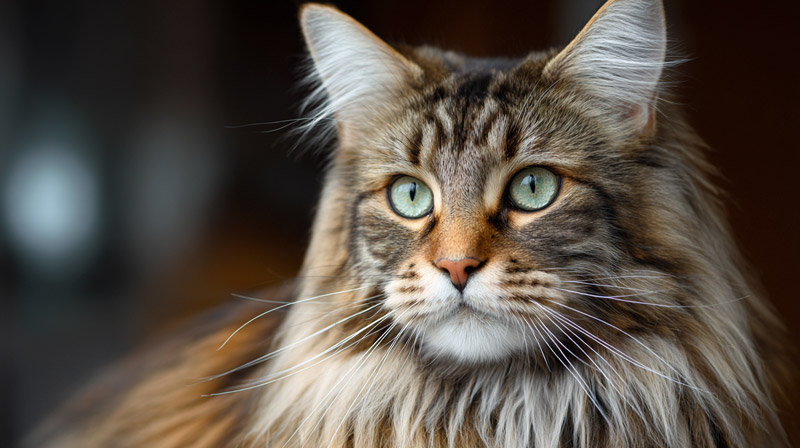
HCM thickens the heart muscle and is the most common inherited heart disease in cats, according to a 2022 paper in Frontiers in Veterinary Science.
The breed mutation is MYBPC3-A31P, a single base change in the gene for cardiac myosin binding protein C, found almost only in Maine Coons (UC Davis Veterinary Genetics Laboratory). In the European screen mentioned earlier, 41.5% of 2,744 Maine Coons carried it (Journal of Veterinary Cardiology, 2010). Cats with two copies are 18 times more likely to develop HCM than cats with normal alleles, and severe disease can end in sudden death by age 4 (UC Davis VGL).
A clear result is not a clean bill of health. Cats without the mutation can still develop HCM, and TICA cautions that genetic testing does not catch every mutation tied to the disease.
Mutation frequency also varies by population. A 49-cat Thai cohort reported a much lower A31P rate than the European sample (Veterinary World, 2022).
Echocardiogram Screening
Swedish researchers who scanned 42 asymptomatic Maine Coons found HCM prevalence anywhere from 9.5% to 26.2%, depending on which reference values they applied (Acta Veterinaria Scandinavica, 2008).
Echocardiography is still the standard diagnostic tool, but Maine Coon cutoffs are not settled and results depend on the operator.
The two tests answer different questions. The gene test gives A31P status and says nothing about the heart today. An echocardiogram shows wall thickness at the time of the scan, and a cardiology specialist reads it best. Because one scan is only a snapshot, the LOOF scientific council, the French pedigree registry, advises regular echocardiograms for breeding cats whatever their gene result (2015 data sheet).
Hip Dysplasia and Spinal Muscular Atrophy
Hip dysplasia prevalence depends on which screening data you read. The Orthopedic Foundation for Animals (OFA) registry found it in 24.9% of 2,548 Maine Coons with non-borderline scores (Journal of Feline Medicine and Surgery, 2018). The Swedish PawPeds programme found 37.4% across 5,038 cats scored over 20 years, with severity rising alongside age and body mass (Scientific Reports, 2019).
Both datasets come from breeders who submitted cats for screening, so neither describes the average pet. The Scientific Reports authors also caution against breed standards that reward large-bodied cats.
SMA is a recessive disorder caused by a roughly 140-kb deletion in the LIX1 gene (Fyfe et al., Genome Research, 2006). Affected kittens show hind-limb weakness and an unsteady gait at 3 to 4 months, and UC Davis VGL describes the disease as non-fatal but disabling.
Two carriers produce affected kittens in about 25% of births, and a gene test sorts cats into normal, carrier and affected. OMIA advises testing every Maine Coon used for breeding.
How Long Do Maine Coons Live?
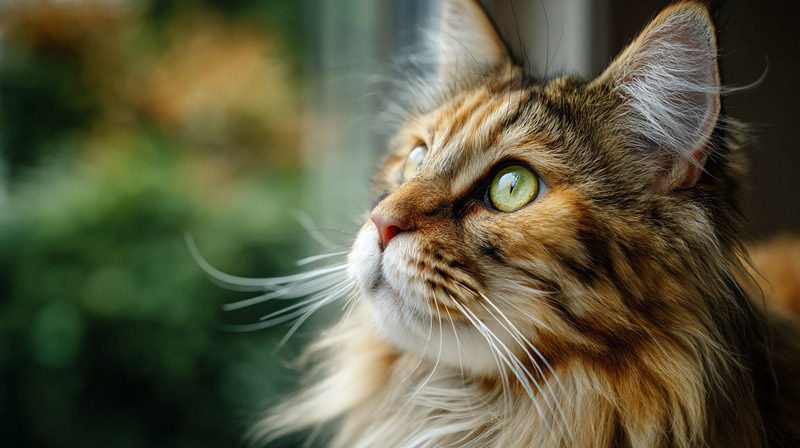
Published Maine Coon lifespans run from 9 to 15 years, and a planning figure of 12 to 13 years sits inside most of them. The sources don’t agree:
- Trupanion says 9 to 15 years
- Vetstream’s Vetlexicon, the reference behind several UK insurer guides, says 10 to 13 years
- LV= pet insurance says 12 to 15 years
The spread comes mostly from who gets counted. Insured cats, registry cats and owner surveys draw different populations, so no single range deserves blind trust.
The Royal Veterinary College’s VetCompass study (2015) put median longevity for purebred cats in England at 12.5 years, drawn from 4,009 cats with confirmed deaths. The figure covers all purebreds, not Maine Coons alone, but it lands inside that 12 to 13 year window.
The longest reported Maine Coon life is Rubble’s. His owner announced in July 2020 that the Exeter Maine Coon had died at 31, earlier that year and shortly before his 32nd birthday, but she never applied to Guinness World Records, so the age rests on her word and local reporting.
Owners control only part of this. CFA recommends indoor living, according to WebMD. USA Today’s breed overview flags a healthy weight as extra important in a large-bodied cat, and routine veterinary care rounds it out.
Maine Coon Care: Grooming, Feeding and Exercise
A Maine Coon needs regular coat brushing, a complete and balanced diet portioned for a large frame, daily play and gear sized for a heavy cat.
Daily chase play keeps weight in check, and the breed’s big paws grab toys well (Royal Canin breed guide). USA Today’s overview advises larger carriers, litter boxes and scratching posts, and a cat tree rated for the weight is worth the extra cost.
Grooming and Shedding
CFA’s breed profile recommends combing two or three times a week. TICA says a silkier coat needs less upkeep than a thick one, which can call for daily combing to prevent tangles (as USA Today reported).
Mats start where the fur is longest, which CFA places on the belly and britches. Check there first, then behind the ears, and match frequency to the individual coat, not the breed label.
Feeding
Pick the food by its nutritional adequacy statement, not by the breed name on the bag.
A food labeled complete and balanced has either met an AAFCO nutrient profile or passed an AAFCO feeding trial, according to the FDA’s summary of the standard. AAFCO publishes separate profiles for growth and for adult maintenance.
Because the breed matures over years, the switch from a growth formula to an adult one is a call for the vet, not the calendar. Royal Canin notes that the breed tends to hold extra weight as it ages, so measure portions.
Taurine is a required dietary nutrient for cats, important for retinal and cardiac function (Journal of the American Veterinary Medical Association, 2015). Taurine deficiency causes dilated cardiomyopathy and retinal degeneration, per Pet Companion Magazine (2020). That is a different heart disease from the HCM that runs in the breed, so a taurine supplement is no substitute for screening.
Maine Coon Cost and Where to Get One
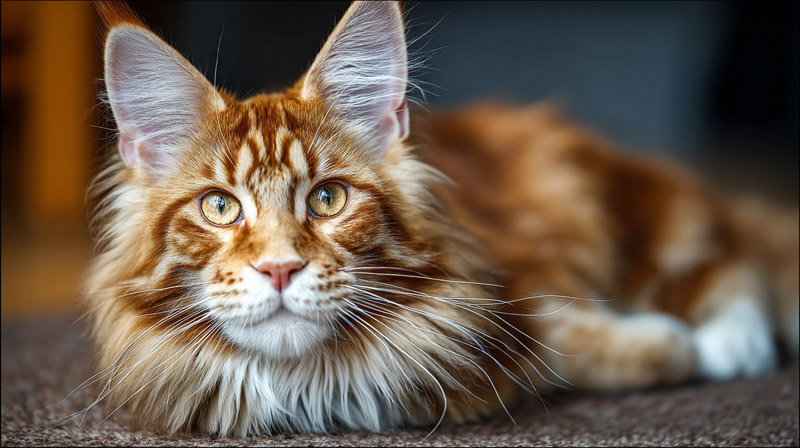
A breeder kitten costs more than a rescue adult, and the gap tracks what the price includes. Parental health testing, registration papers and a written guarantee are what you’re paying for, and each cattery sets its own price.
One cattery that publishes full pricing lists pet kittens at $2,500 to $3,500 including tax. That covers echocardiograms, OFA hip and patella evaluations and a genetic panel on the parents, with a health guarantee to 2 years and an HCM guarantee to 5 years. Compare quotes line by line, not by the bottom-line number.
The A31P gene test is the cheap part of the package. UC Davis Veterinary Genetics Laboratory charges $47 per cat for a single health test (price list effective August 3, 2026), so cost is a poor excuse for skipping it.
Maine Coon Rescue, a nationwide volunteer network, lists purebred Maine Coon kittens at $450 and mix kittens for less, plus a transport fee unless the adopter meets the foster halfway. An adult rescue also shows its temperament and coat before you commit, which a kitten cannot.
Mixes are a gamble on looks. The Maine Coon Breeders and Fanciers Association says it is impossible to tell from appearance alone whether a cat is related to the breed, and only a pedigree settles it. Only Maine Coons Rescue, which mostly places mixes, quotes that guidance on its education page.
When you vet a breeder, go in this order.
- Confirm CFA or TICA registration and ask for the kitten’s pedigree. Registration documents ancestry, not health.
- Ask for A31P results on both parents, shown on the lab certificate as normal, heterozygous or homozygous.
- Ask for SMA results on both parents, reported as normal, carrier or affected. OMIA advises breeding carriers only to tested non-carriers.
- Ask for dated echocardiogram reports on both parents from a cardiology-trained vet. PawPeds, for one, approves screeners with documented cardiology training and a cardiology-grade ultrasound unit.
- Ask for hip scores from OFA or PawPeds.
- Get the health guarantee in writing, including its length and exactly what it covers.
Maine Coon vs Norwegian Forest Cat, Siberian and Ragdoll
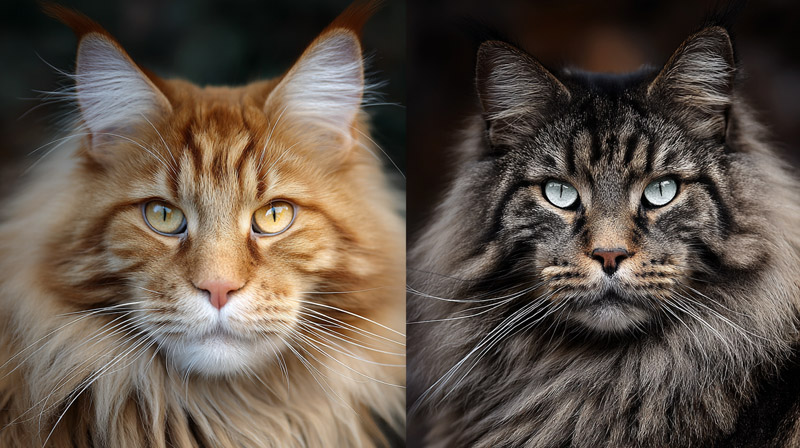
The Maine Coon is the closest match in size to three other large longhairs, and the real differences sit in build, coat and health screening. Choose on those, not on photos.
| Breed | Build and coat | Temperament | Health screening note |
|---|---|---|---|
| Maine Coon | Rectangular body, shaggy silky coat, squared muzzle | Sociable, loyal | HCM (A31P), hip dysplasia, SMA |
| Norwegian Forest Cat | Heavy-boned, double coat, triangular head | Sociable, energetic | HCM, hip dysplasia, glycogen storage disease IV |
| Siberian | Rounded body, triple coat | Playful, outgoing | HCM |
| Ragdoll | Large, long-bodied, plush coat, little undercoat | Docile, placid | HCM (R820W) |
The closest cousin is the Norwegian Forest Cat, a natural Scandinavian breed with a triangular head and a straight profile where the Maine Coon has a squared muzzle (American Cat Fanciers Association breed page). CFA granted it championship status in 1993, 17 years after the Maine Coon.
The Siberian is also a natural breed, but its body is round where the Maine Coon’s is rectangular. Siberians can take up to five years to reach full size, according to VCA Animal Hospitals.
The Ragdoll was developed in California in the 1960s rather than evolving as a working farm cat. CFA says its coat lacks a dense undercoat, which reduces shedding and matting.
Both the Ragdoll and the Maine Coon carry a breed-specific MYBPC3 mutation, and UC Davis tests for each separately. A Maine Coon result says nothing about R820W, and a DNA test for it has been available since 2007, per the GCCF.
If it comes down to a pick:
- Go with the Maine Coon for the largest frame and the most dog-like household cat.
- The Norwegian Forest Cat gives a similar build with a more energetic reputation.
- A Ragdoll suits a calmer cat with a coat that mats less.
When Is a Maine Coon Not the Right Cat?
Households with cat allergies, little tolerance for grooming, outdoor-access plans or a budget that stops at the purchase price should look elsewhere.
WebMD states plainly that Maine Coons are not hypoallergenic. Siberians are the usual alternative, but a Siberian is no guarantee. Siberian Research, a breeders’ association that studies the question, reports that every Siberian tested produced some Fel d 1 and that only a small share tested very low, so spend time with the specific cat first.
Grooming means brushing a couple of times a week at minimum, daily for a thick coat. CFA advises keeping Maine Coons indoors, per WebMD, citing theft and injury. And the Langford lab advises ultrasound screening for any cat with a positive HCM gene result, a follow-up cost no kitten price covers.
On the plus side, the breed is sociable and good with children and dogs (CFA), gene tests exist for HCM and SMA so parents can be screened, and every major registry recognizes it.
The downsides are years of slow growth before full size, a heavy grooming load, no hypoallergenic coat and large-cat costs that run from food to carriers.
If two of those downsides describe your home, look at a shorter-coated rescue before a pedigreed kitten.
Maine Coon FAQ
Which Maine Coon is the longest cat on record?
Stewie, a Maine Coon from the United States, holds the Guinness World Records title for the longest domestic cat ever at 123 cm (48.5 in). Barivel, a Maine Coon from Italy, was verified at 120 cm on 22 May 2018 as the longest living domestic cat.
Do Maine Coons really like water?
Many do. Owner reports and veterinary-reviewed breed guides link the habit to a water-resistant coat that sheds moisture, though individual cats vary and plenty ignore the faucet.
Can a Maine Coon live in an apartment?
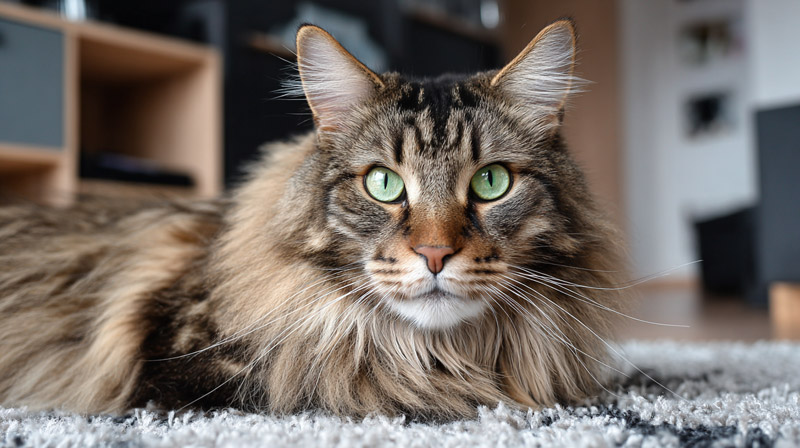
It can. Vetstreet’s behavior advice says floor-to-ceiling space matters more to an indoor cat than floor area.
Wall shelves and one tall, stable tree give a Maine Coon vertical territory to climb and survey in a small flat.
Are Maine Coons easy to train?
Most learn quickly. Breed guides describe them as intelligent, affectionate and responsive to clicker training, and say leash walking works best when started in kittenhood.
How can you tell if a cat is a Maine Coon mix?
Looks cannot confirm it. A large frame, a dense coat and tufted ears only suggest Maine Coon ancestry, while a DNA test reports breed mix down to 1%, according to Wisdom Panel.
Pedigree papers settle the question for registered cats.
Health Checks and Costs After Bringing a Maine Coon Home
A Maine Coon needs heart monitoring across its whole life, not only at purchase. PawPeds reports that HCM often shows no signs before six months and can take several years to diagnose.
A 5-year HCM guarantee, like the one in a cattery’s published terms, ends before the midpoint of a 12 to 13 year life. Scans, not the kitten price, therefore drive the long-run cost.
Spending should follow a rough order. Heart scans on a vet’s schedule come first, then hip and weight checks, then coat care. Heart disease can progress unseen, hips worsen with body mass, and grooming costs stay predictable.
The trade-off is that PawPeds states HCM has no cure. An early scan buys treatment with diuretics, beta blockers or ACE inhibitors, not a different diagnosis.
Position verified October 2026. A test covering HCM mutations beyond A31P would change this advice.