The name is the first thing that trips people up. The UK Royal Kennel Club renamed the breed in 1999 and the AKC followed in 2003, but the UKC kept registering it as the Jack Russell Terrier until 23 April 2008 (United Kennel Club, 2017).
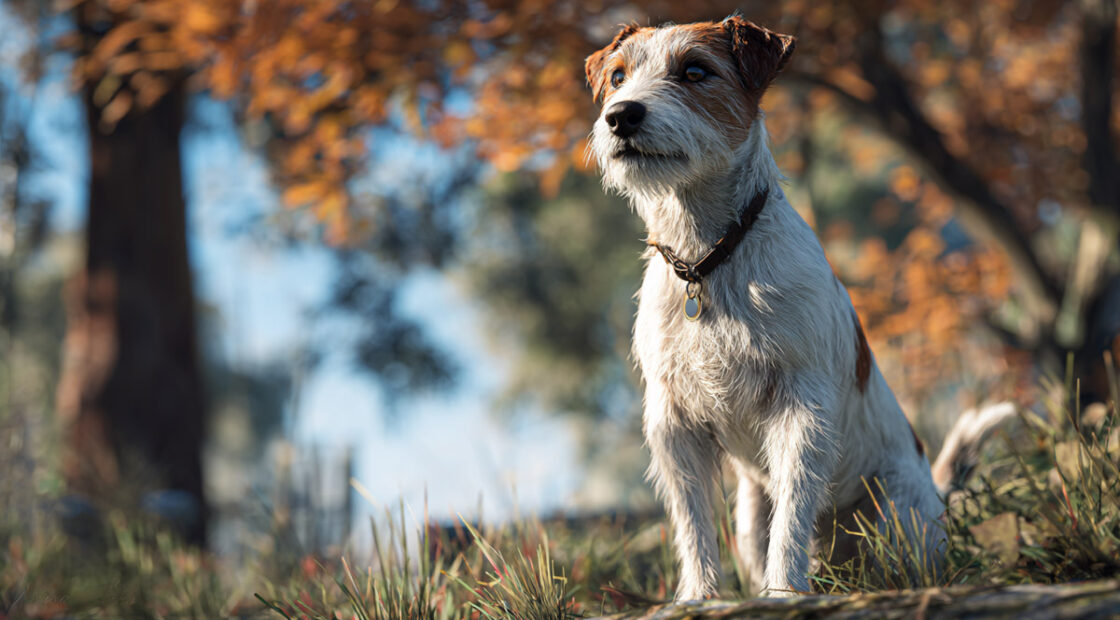
Underneath the label is a small working terrier with a square build and a chest narrow enough to follow a fox underground. It was bred to bolt foxes from their earths.
The Jack Russell Terrier and the shorter Russell Terrier are related but separate dogs. What sets this one apart is its square proportions and longer legs.
Owners run theirs in agility, flyball and earthdog trials. Breeders screen their stock for inherited eye, hearing and kneecap conditions, which is worth knowing before you go looking for a puppy.
What Is a Parson Russell Terrier?

Owners usually just say Parson. Older sources list it as the Parson Jack Russell Terrier.
England is where it was bred, and the job was bolting foxes from their earths. The AKC puts it in the Terrier Group, with the Parson Russell Terrier Association of America as parent club. FCI files it under Group 3, Section 1 (large and medium sized terriers) as standard 339, and the UK Royal Kennel Club lists it in the Terrier Group with a standard last updated 1 April 2025.
Plenty of owners still say Jack Russell, but the Jack Russell Terrier is a related type kept on a separate registry. The label covers more than one dog depending on where you live.
All the standards agree on the job. They want a bold, friendly dog with the stamina to work fox underground. Where they split is on details like height limits and accepted coats.
How Big Does a Parson Russell Terrier Get?
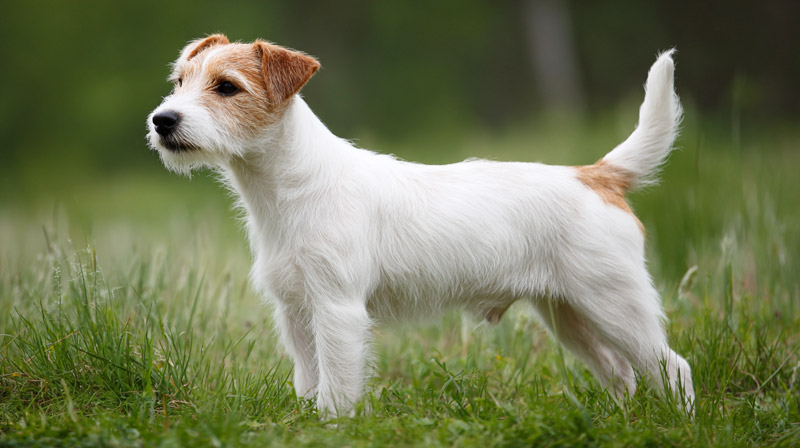

Adults weigh 13 to 17 pounds, according to Britannica. Height is where the registries stop agreeing.
| Registry | Height at the withers | What the standard adds |
|---|---|---|
| AKC (as published by the PRTAA) | Ideal 14 in dogs, 13 in bitches | Disqualified under 12 in or over 15 in |
| UK Royal Kennel Club and FCI 339 | Ideal 36 cm (14 in) dogs, 33 cm (13 in) bitches | Soundness and balance outrank the figure |
| UKC | 10 to 15 in | Two show classes, split at 12.5 in |
An 11-inch dog fits the UKC’s smaller show class and is disqualified under the AKC standard. At the small end of the range, dogs go to the separately recognized Russell Terrier instead.
Proportion gets described three different ways. The Royal Kennel Club and FCI say the distance from point of shoulder to point of buttock should be slightly longer than the height at the withers. The AKC wants height at the withers slightly greater than the distance from withers to tail. The UKC asks for back length from withers to tail set to be roughly equal to height.
The measuring points differ, so the descriptions overlap more than they clash. “Square” is the fair shorthand.
Every standard also requires a chest that average-sized hands can span behind the shoulders. The AKC produced a procedural video on spanning with the PRTAA and the Border Terrier and Russell Terrier parent clubs (Showsight, April 2022).
A chest too deep or too broad is a serious fault under the UKC standard.
Treat the figures as the ideal, not a promise. The Royal Kennel Club notes that a puppy can mature larger or smaller than the standard describes.
Coat, Color and Grooming
Coats come in smooth, broken or rough, and every one of them is white or predominantly white with tan, lemon or black markings. The grooming routine comes down to a weekly brush.
Coat Types and Colors
A smooth coat is short and flat, harsh to the touch and dense over a good undercoat. Broken sits between smooth and rough. It lies closer to the body than a rough coat, with longer guard hairs than a smooth one.
Rough is the wiry one, with eyebrows and a beard. The Royal Kennel Club, FCI and UKC standards accept it, while the AKC standard names only smooth and broken.
Markings sit mostly on the head and the root of the tail under the Royal Kennel Club standard, with a little body color acceptable. The UKC disqualifies dogs that are less than 50 percent white.
Shedding and Grooming Routine
Clippers are the wrong tool for this coat.
The standards ask for a natural, harsh texture. The UKC lists a silky or woolly coat as a serious fault, and the Royal Kennel Club says the prepared coat should never look clipped.
Rough and broken coats can be hand stripped, which means pulling dead outer hair out by hand or with a stripping knife to keep the texture right. The UKC says the artfulness of trimming is not a judging factor, and the AKC standard calls for no sculpted furnishings.
The coat is a double coat, so loose undercoat comes out. A weekly brush covers most of it, in line with PDSA grooming guidance.
Nails get trimmed about monthly (Orvis), and teeth should be brushed several times a week.
Temperament and Prey Drive
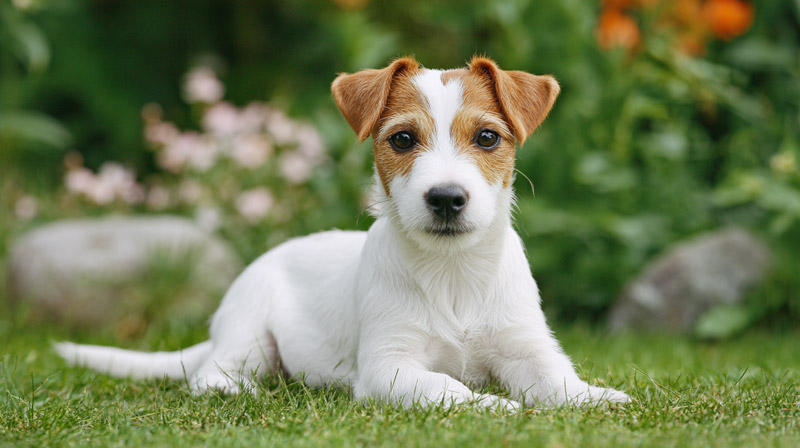
Parsons are bold, friendly and alert. The prey drive is what actually shapes daily life, and it makes small pets and escape attempts the main household risks.
On paper, the Royal Kennel Club and FCI standards ask for a bold, friendly dog. Standards in general add confident, energetic and happy. The UKC wants a terrier that is fearless underground and needs little encouragement to go to ground.
At home that shows up as chasing cats, rabbits and hamsters. It also means digging in the yard, barking at whatever moves outside, and checking the fence for a gap.
The UKC standard says aggression toward anything other than legitimate quarry detracts from a working terrier and should be discouraged. Owners have to teach that line themselves, because manners with people and other dogs are not part of the job description.
Children do well with a Parson when they know how to play without grabbing or cornering the dog. Keep supervising until the dog has proven itself.
Orvis suggests giving the dog one corner of the yard where holes are allowed. That works better than banning digging outright.
A Parson suits an owner who wants a partner, not a pet that sits on the couch all day.
Exercise, Training and Dog Sports
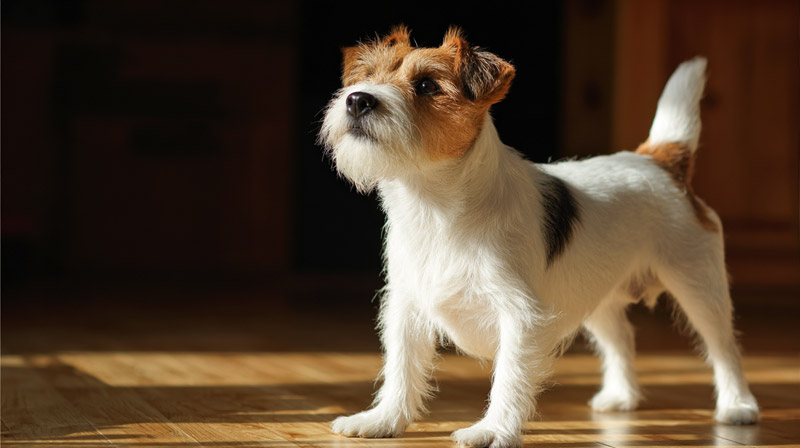
A Parson needs at least an hour of exercise a day plus mental work. Without both, it will invent its own jobs.
Published minimums vary. Dogs NSW lists 40 minutes a day, while PDSA puts the minimum at 1 hour and the ideal at 1 to 2 hours.
The UKC calls the breed high energy and happiest with regular activity. Plan for the higher figure.
Agility, flyball and flying disc all use what the breed was built for. Earthdog trials go a step further and test the instinct to go to ground.
Short, reward-based sessions work best with a clever terrier. A dog that is bored halfway through a drill stops listening.
Start socialization early with people, other dogs and household noise. A puppy that meets the world young learns what is not quarry.
Crate training helps with house rules and quiet time. Long stretches alone add barking and digging to the list.
Lifespan and Health Problems

The Parson Russell Terrier lives 13 to 15 years, according to Britannica and WebMD. The main health risks are inherited eye, knee, hearing and nerve conditions that breeders can test for.
PDSA’s breed guide sets the floor lower, at over 12 years on average. Plan for the middle of the range and be pleased if the dog reaches the top.
Primary lens luxation is the one to know first. The fibres holding the lens in place break down and the lens slips out of position, and complete luxation typically appears between 3 and 8 years of age (DogWellNet).
Patellar luxation is the kneecap slipping, which shows up as a skip or a held-up hind leg after play. Congenital deafness is tied to the mostly white coat and gets checked with a BAER hearing test.
Late onset ataxia and spinocerebellar ataxia both cause loss of coordination, and the Parson Russell Terrier Club UK says affected dogs are often euthanized young because of poor quality of life. Orvis also lists Legg-Calve-Perthes disease, a hip joint disorder, among the breed’s conditions.
When the lens drops forward, glaucoma and vision loss can follow quickly, and the eye hurts. A red, cloudy or squinting eye is an emergency vet visit.
Primary lens luxation is autosomal recessive, according to the UK Kennel Club’s DNA testing guidance. A dog with one copy of the mutation shows no signs but can pass it on, which is why a swab tells you more than a look at the dog.
The UK Royal Kennel Club places the breed in Breed Watch Category 1, meaning no breed-specific points of concern for show judges. The Parson Russell Terrier Club UK credits the breed’s good health partly to its recent and ongoing working role.
That reputation holds for tested lines. It is no reason to skip testing, because the DNA-testable diseases are the ones a healthy-looking puppy hides.
Where Does the Parson Russell Terrier Come From, and Why Did Its Name Change?
Reverend John Russell, a 19th century hunting parson from Devon, bred the fox-working terriers this dog descends from. Kennel clubs only settled on the name Parson Russell Terrier between 1999 and 2008.
Reverend John Russell and the Fox Terrier Roots
Russell lived from 1795 to 1883 and bred terriers that could run with foxhounds and bolt a fox from its earth. The Canadian Kennel Club standard places him in Devon.
He built his line on a small white and tan terrier bitch named Trump. Breed histories date her purchase to either 1815 or 1819.
Show breeders took the smooth-coated Fox Terrier in a different direction over the 19th century.
The wire-coated Fox Terrier followed, and by the end of the century Russell’s old-style dogs were being called a separate breed, according to the UKC standard.
Fans of that old type then resisted all-breed kennel club recognition for years, fearing it would erode hunting ability. The Jack Russell Terrier Club of America, founded in 1976, kept its own registry outside the all-breed system.
How the Name Changed by Registry
Each registry recognized the breed on its own schedule, and not always under the same name.
| Registry | First recognized as | Year | Renamed Parson Russell Terrier |
|---|---|---|---|
| UK Royal Kennel Club | Parson Jack Russell Terrier | 1990 | 1999 |
| AKC | Jack Russell Terrier | 1997 | 2003 |
| UKC | Jack Russell Terrier | March 1991 | 23 April 2008 |
The UK club renamed the breed to separate the show type from the Jack Russell Terrier, and the AKC followed that lead in 2003, per WebMD.
A few web profiles put AKC recognition in 2000 or 2001. WebMD and Orvis both give 1997, so use that date.
How Is It Different From the Jack Russell Terrier and the Russell Terrier?
The Parson is the squarer, longer-legged show-standard type. The Russell Terrier is the shorter dog the AKC recognizes, and the Jack Russell is a wider working type kept on its own registry.
| Feature | Parson Russell Terrier | Jack Russell Terrier | Russell Terrier |
|---|---|---|---|
| Height | Narrower band than the Jack Russell | 10 to 15 in (JRTCA standard) | 10 to 12 in (AKC standard) |
| Build | Square, longer legs | Square on paper, shorter-legged in practice | Longer than tall |
| AKC status | Recognized | Not recognized | Recognized |
| Main club | PRTAA | JRTCA (1976) | American Russell Terrier Club (1995) |
The Jack Russell label covers the widest range because the JRTCA standard accepts any height from 10 to 15 inches. The name alone says little about leg length.
Sources date the Russell Terrier’s AKC recognition differently. The JRTCA chart lists 2004, the year the breed entered the AKC’s Foundation Stock Service, while WebMD and Orvis give 2012, the year of full AKC recognition.
If the show ring or AKC papers matter to you, get a Parson Russell Terrier. For earth work and terrier trials, a Jack Russell Terrier from JRTCA lines makes more sense, since that club runs go-to-ground and racing events. Anyone who wants a smaller dog inside the AKC system should look at the Russell Terrier.
Whether the Parson still works is disputed. Shooting UK calls it a dog bred for showing, not working, while the Parson Russell Terrier Club UK credits its health partly to a recent and ongoing working role.
Ask any breeder which lines the dogs come from before you assume either.
Who Should Not Get a Parson Russell Terrier?
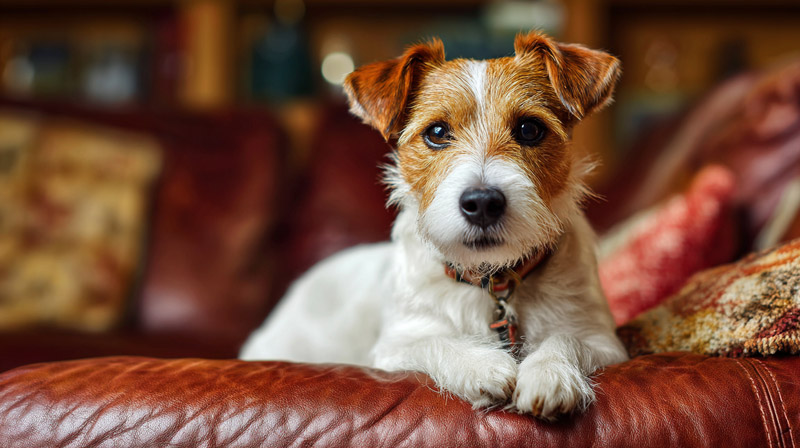
If you want a calm lap dog, skip this breed.
It is also a poor match if you keep rabbits, guinea pigs, hamsters or pet rats, work long days with nobody home, or live in a flat with no quick route to open ground. A first-time owner with no plan for training classes will struggle too.
The UK Royal Kennel Club’s breed page lists a small house as the home size, and Dogs NSW lists a house with a garden. Both point away from a flat.
The obvious pick for a small home is a small dog. The Parson is small but not low-energy, so size is the wrong thing to shop by.
In its favor, it is compact and easy to travel with, sporty, quick to learn and long-lived, and its health problems are specific and testable.
The downsides are plain enough. Daily structure is not optional. Small animals read as quarry. There is test paperwork to chase before you buy, and the strong will needs consistent handling.
A Parson rewards owners who treat exercise and training as the main job. Everyone else ends up with a bored terrier.
How to Choose a Breeder or Rescue, and Which Health Tests to Ask For
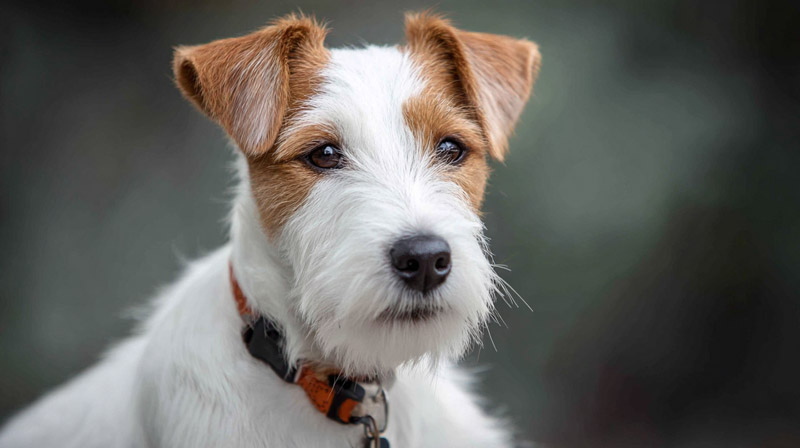
A good breeder hands over written eye, kneecap and hearing results for both parents, plus DNA results for the inherited diseases. The other route is a Russell-type rescue, where you test the dog yourself.
Health Tests Breeders Should Show
Registries do not agree on which tests are required.
| Test | AKC and PRTAA | Parson Russell Terrier Club UK | Dogs NZ accredited breeders |
|---|---|---|---|
| Eye exam | Recommended, board-certified ophthalmologist | Not on club health page | Mandatory, yearly |
| Patella check | Recommended | Not on club health page | Mandatory, yearly |
| BAER hearing | Recommended | Not on club health page | Optional |
| PLL DNA | Recommended before breeding | Available | Mandatory |
| Ataxia DNA (LOA, SCA) | Recommended before breeding | Both available | LOA optional, SCA not listed |
The PRTAA frames its tests as recommendations, while Dogs NZ makes the eye certificate, patella certificate, PLL DNA test and DNA profile conditions of accreditation. The same disease is advice in one country and a requirement in another, so ask for PLL results wherever you live.
A CHIC number shows the breeder completed testing, not that the dog is clear in every test (PRTAA breeder directory, 2026). UK registration papers can show a hereditary status of clear, carrier or affected, worked out from both parents’ results. The Parson Russell Terrier Club UK recommends DNA testing hereditary clears every three or four generations of breeding from clears.
Since 1 November 2022, the UK Kennel Club’s DNA testing has run through Weatherbys Scientific in Ireland. The Parson bundle keeps the PLL, LOA and SCA tests and adds a DNA profile as standard.
A newer urate stone (HUU) test exists. The Parson Russell Terrier Club UK treats it as precautionary until the condition’s prevalence in the breed is known.
Red Flags in a Breeder
- Health claims with no certificates or database entries for both parents.
- A breeder who asks you nothing. The PRTAA says careful breeders ask buyers more questions than buyers ask them.
- No chance to meet the mother or see how the litter is raised.
- A price with no list of what it includes, such as microchip, vaccinations and registration.
Rescue and Adoption
Adoption costs far less than buying from a breeder, and the fee usually covers neutering, vaccines and a microchip, according to Petfinder.
Dogster notes that no Parson-only rescue exists. Russell Terrier and Jack Russell Terrier rescues take in full Parsons and mixes, so search under those names.
An adult rescue arrives without parental test records. A PLL DNA swab plus an eye exam is the practical substitute.
Parson Russell Terrier FAQ
Is a Parson Russell Terrier hypoallergenic?
No. Dog allergens come from dander and saliva as well as hair, and the Parson sheds a double coat anyway, so no coat type removes the risk.
Anyone in the house with allergies should spend time with the dog before committing.
Do Parson Russell Terriers have their tails docked?
Docking is optional. Britannica says it occurs mainly in dogs bred for foxhunting, and the UK Royal Kennel Club standard describes both docked and undocked tails.
The UKC does not penalize a full tail in any of its events.
How long can a Parson Russell Terrier stay home alone?
Part of a day works for an adult, but a full workday alone strains the breed. Exercise the dog hard before you leave and give it a safe space such as a crate.
Puppies need company much more often than adults do.
When does a Parson Russell Terrier stop growing?
Most stop gaining weight before their first birthday, according to Healthy Paws pet insurance.
For show purposes, height is taken at the highest point of the shoulder blade, per the AKC standard the PRTAA publishes.
What a Parson Russell Terrier Asks of Its Owner
Order matters here. Start with parental eye, hearing and kneecap results on paper. Have the fencing and a daily routine in place before pickup, and begin socialization and crate training from day one.
The sequence follows what can be corrected later. Habits can be retrained, but inherited eye, hearing and kneecap conditions are fixed at conception.
The trade-off is patience, since verifying a litter’s paperwork takes longer than answering a classified ad.
This position was verified in October 2026. If the PRTAA moves the three DNA tests from recommended to required, they become the minimum to ask for.
Once the puppy is home, feeding is the next decision, and this guide to comparing puppy food brands covers it.