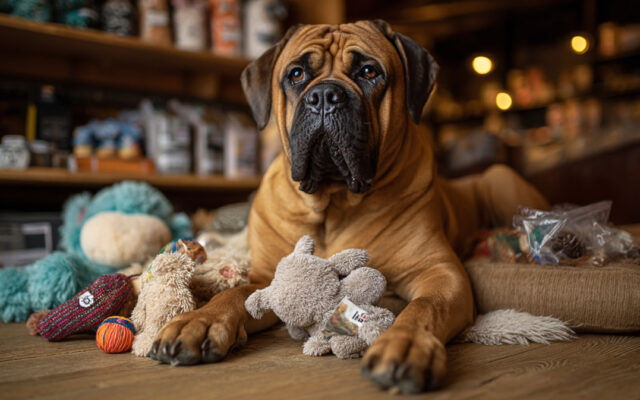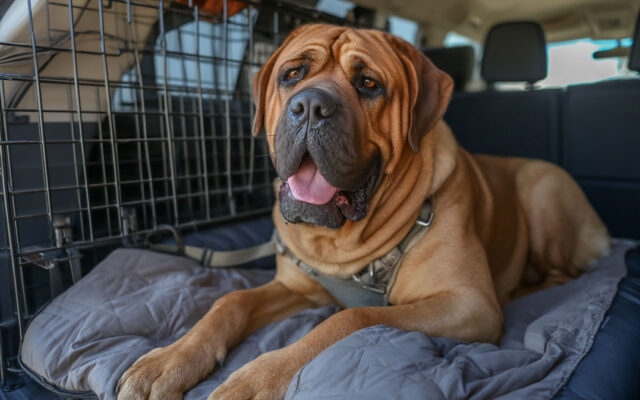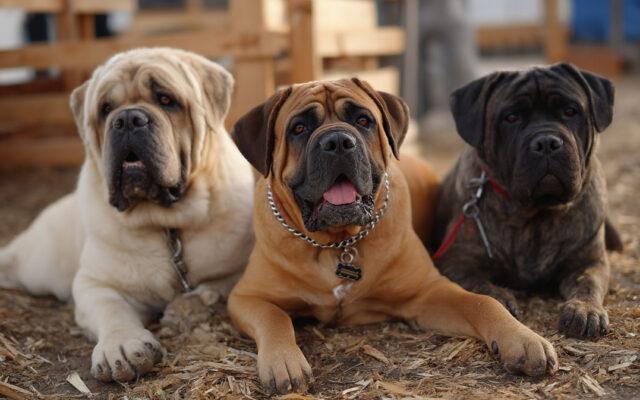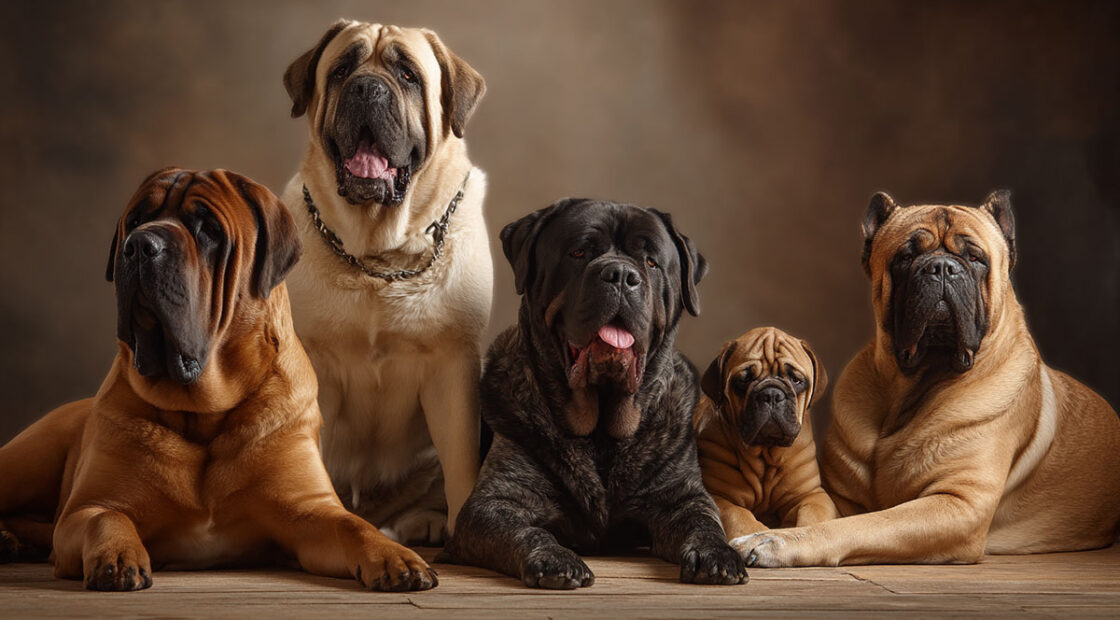
Stand a Bullmastiff and a Mastiff side by side and the size gap is obvious in about two seconds. The parts that actually matter for picking between them, temperament, original job, what each dog was bred to do when a stranger showed up, take a lot longer to sort out.
Kennel clubs and breeders treat the two as distinct entries within the same molosser lineage. The Bullmastiff is shorter and lighter than the taller, heavier Mastiff it descends from, not just a smaller version of the same dog wearing a different name.
The numbers on both breeds have been sliding for a while. The Royal Kennel Club’s registration data puts the Mastiff on its Vulnerable Native Breed register, with just 104 UK puppy births in 2020, and the Bullmastiff landed on the At Watch list in 2022 once annual UK registrations dropped toward the 300 mark. The most recent figures, from 2024, show Bullmastiff registrations falling further still, to 235, which pushed the breed onto the Vulnerable Native Breed list too.
What Is the Difference Between a Bullmastiff and a Mastiff
Standing 24 to 27 inches and weighing 100 to 130 pounds, the Bullmastiff was built from a Mastiff and Old English Bulldog cross, made as a guardian dog with a specific job in mind.
The Mastiff’s breed standard doesn’t even bother with a ceiling. The AKC sets a floor of 30 inches at the shoulder for males and 27.5 inches for females, and males often top 200 pounds. It’s the older breed by a wide margin, the one the Bullmastiff was built from a century later.
Both dogs share molosser ancestry and a nearly identical head shape, which is exactly why people mix them up in photos far more often than they ever would in person.
| Attribute | Bullmastiff | Mastiff | Practical note |
|---|---|---|---|
| Height | 24-27 in | 27.5 in (females) / 30 in (males) minimum, no cap | Mastiff carries no upper height limit in its standard, and males run taller than females |
| Weight | 100-130 lbs | 120-230+ lbs | A male Mastiff routinely outweighs a Bullmastiff by 50 pounds or more |
| Body shape | Nearly square | Rectangular, longer than tall | Silhouette is the fastest way to tell them apart at a glance |
| Original job | Silent poacher takedown | Estate and property guarding | Bullmastiff was bred to physically intercept, not just watch |
A Bullmastiff acts on a threat. A Mastiff, most of the time, just needs to be seen to end one.
The Bullmastiff overview goes deeper on day to day traits, and there’s a matching Mastiff profile for the larger parent breed.
Where Do the Bullmastiff and Mastiff Breeds Come From
The Mastiff’s working history in Britain goes back roughly 2,000 years, long before any kennel club existed to register anything. The Bullmastiff is much newer. English gamekeepers formalized it in the 1860s by crossing the Mastiff with the now-extinct Old English Bulldog, specifically to stop poachers.
Mastiff Origin
Modern recognition for the Mastiff came later, and through several different organizations. The Kennel Club in the UK holds the original English breed standard that the American version still traces back to, and the organization was granted a royal prefix in 2023, now operating as The Royal Kennel Club. The American Kennel Club recognized the Mastiff in 1885, making it one of the registry’s founding breeds, and the Federation Cynologique Internationale classifies it within the broader molosser type group.
Bullmastiff Origin
Gamekeepers on large English estates needed something that could track a poacher in total silence, then physically pin the man down without a long chase or a bite. The Kennel Club in the UK recognized the Bullmastiff as its own breed in 1924. The American Kennel Club followed with recognition in 1934 (some breed-club sources cite 1933, but the AKC’s own official record lists 1934), and the American Bullmastiff Association now serves as the AKC parent club, maintaining the standard and breeder referral resources.
The foundation cross was fixed at 60 percent Mastiff and 40 percent Bulldog, a ratio that shaped the breed’s guarding instinct from the very first litters and still gets referenced by breeders today.
How Do Bullmastiffs and Mastiffs Compare in Size and Appearance

A Mastiff outweighs a Bullmastiff by 50 to 100 pounds on average and carries no maximum height in its breed standard at all. Both share the same dewlap, short coat, and black mask, though color options and drool output differ a bit between them.
Weight and Height
- Bullmastiff. 24-27 inches at the withers (25-27 in for males, 24-26 in for females), 100-130 lbs, per the AKC breed standard.
- Mastiff. 30 inches minimum for males, 27.5 inches minimum for females, with no listed maximum. Males commonly weigh 170-200 lbs and can reach as much as 240 lbs.
- Record holder. Aicama Zorba, an English Mastiff, was verified by Guinness World Records in 1989 at 343 lbs and 35 inches at the shoulder, still the heaviest dog ever confirmed (Guinness stopped accepting weight-based records for animals in 1998).
AKC’s own 2023 breed comparison guide quotes a Mastiff breed expert stating males can weigh as much as 240 pounds, roughly double the Bullmastiff’s upper standard weight.
Coat Colors and Shedding
Both breeds share brindle and fawn, always paired with a black mask around the muzzle and eyes. Apricot shows up in the Mastiff standard too, but it isn’t a recognized Bullmastiff color.
Shedding runs moderate for both, with a seasonal blowout twice a year, and neither dog needs frequent haircuts or trims. Drool is where they really split. Looser jowls on the Mastiff mean more of it, and Bullmastiff grooming routines still need regular wrinkle and ear checks to keep skin fold infections from starting.
What Is the Temperament of a Bullmastiff Compared to a Mastiff
Walk a stranger up to a Bullmastiff and it moves. It positions itself, gets between the visitor and the family, and decides what happens next before anyone tells it to. A Mastiff mostly just watches. Its size does the talking, and a deep bark backs that up if needed.
Bullmastiff Temperament
The breed was built to track a poacher without a sound, then pin him without biting, and that instinct still shows up in dogs today. They position themselves between family and stranger rather than barking from across the room. The full Bullmastiff temperament profile covers how this plays out day to day, including an independent streak that turns obedience work into more of a negotiation than a command.
- Loyal and affectionate with immediate family.
- Wary of unfamiliar people, though not automatically aggressive toward them.
- Gentle with children it grew up around. It won’t put up with teasing, though.
Early socialization work matters more here than with most breeds. An under-socialized Bullmastiff tends to read every stranger as a threat instead of a guest.
Mastiff Temperament
A Mastiff rarely escalates. Its size alone tends to be the deterrent, without the active positioning a Bullmastiff shows. Owners describe the breed as dignified and calm indoors, with an attachment to family that borders on shadowing you room to room.
Neither breed suits a household that wants a dog to greet every visitor like a long lost friend.
How Much Training and Exercise Do Bullmastiffs and Mastiffs Need
Both breeds do best with firm, consistent, reward-based training started early. A Mastiff tends to be a bit more stubborn about it. Daily exercise runs 45 to 60 minutes for either dog, well short of what a high-drive working breed would need.
Trainability
Short, food-motivated sessions that end before the dog loses interest work better than one long weekend block, repeated daily instead. A full puppy training plan started at 8 weeks builds a foundation that carries into the guarding instinct later on, rather than fighting against it at 18 months. Mastiffs respond to the same methods, but they need more repetition since the breed’s calmer disposition comes with a slower response to new cues.
Exercise and Space Requirements
Puppies of either breed should stick to short leash walks. High-impact activity before 18 months puts direct strain on growth plates that haven’t finished developing yet. A Bullmastiff’s exercise routine works best as two moderate walks a day rather than one long outing, especially in hot weather given the breed’s short muzzle.
Apartment living is possible for either dog with consistent daily walks, though a yard makes the whole arrangement a lot easier on both dog and owner.
- Weeks 8 to 12: begin controlled exposure to new people, sounds, and surfaces in short, positive sessions.
- Weeks 12 to 16: start basic obedience cues using food or toy rewards, never physical correction.
- Months 4 to 6: introduce structured visitor greetings, rewarding calm behavior over jumping or barking.
- Months 6 to 12: keep exercise to leash walks and light play. Skip the jogging and jumping while growth plates are still open.
- Months 12 to 18: add impulse control work around distractions, since guarding instincts sharpen around this age.
- 18 months and beyond: higher impact exercise and off leash work can start once the skeleton has finished developing.
What Health Problems and Lifespan Should You Expect
Hip dysplasia and bloat show up often enough in health records for both breeds to warrant real concern, and cancer risk runs high enough that Mastiff group studies name it the single leading cause of death outright. Median lifespan runs roughly 7 to 9 years for a Bullmastiff and 6 to 10 years for a Mastiff, shorter than most large breeds.
Common Health Conditions
- Hip and elbow dysplasia, screened through Orthopedic Foundation for Animals and PennHIP evaluations before breeding.
- Gastric dilatation volvulus, a life-threatening stomach twist common in deep-chested giant breeds that requires emergency surgery.
- Dilated cardiomyopathy, a heart muscle disease flagged repeatedly in Mastiff health surveys.
- Osteosarcoma, a bone cancer that shows up disproportionately in giant breed mortality data.
- Entropion, an inward-rolling eyelid disorder affecting either breed, usually corrected surgically.
A 2021 survey published in Veterinary and Animal Science, covering 1,036 Mastiff-group dogs from an online global owner survey, found cancer responsible for 47 percent of deaths, old age for 16 percent, cardiac disease for 8 percent, and gastric problems including bloat for 7 percent.
Buyers can check a specific litter’s clearances through the Canine Health Information Center database before committing to a puppy. A closer look at what shows up most often in Bullmastiff lines covers each condition and what the screening actually catches.
Average Lifespan
The numbers here depend on which study you’re looking at, and none of them agree exactly.
- A University of Sydney VetCompass Australia study of 2,771 Bullmastiffs, published in Animals in 2024, puts Bullmastiff median longevity at 8.5 years.
- Adams et al.’s UK purebred-dog health survey, published in the Journal of Small Animal Practice in 2010, found a Bull Mastiff median age at death of 7.46 years.
- That same 2010 survey found a Mastiff median age at death of 6.83 years.
- Cancer is the leading cause of death across the Mastiff group, responsible for 47 percent of deaths, according to Bell & Hesketh’s 2021 global owner survey of 1,036 dogs in Veterinary and Animal Science.
The 2024 VetCompass study tracked 2,771 Bullmastiffs through clinical veterinary records over a ten year period (2008-2017), and that tends to run higher than owner-reported survey figures. The gap between the two datasets probably comes down to methodology rather than any real difference in the dogs themselves. Clinical records and self-reported surveys rarely land on identical numbers anyway.
For age-by-age detail on what to expect at each life stage, the life expectancy breakdown goes further into these figures.
How Much Does It Cost to Own a Bullmastiff or a Mastiff
A Bullmastiff puppy from a reputable breeder runs $1,000 to $2,000. A Mastiff puppy costs about the same, at $1,000 to $1,500, though show-quality Mastiff lines sometimes reach $3,000, according to Canine Journal’s pricing guide. Ongoing costs climb faster than the purchase price ever suggests, driven mainly by food volume and giant-breed veterinary care.
Adult Mastiffs eat noticeably more than Bullmastiffs, simply due to body mass, and giant breed puppy food formulated for slower, controlled growth costs more per bag than standard large-breed kibble. Veterinary costs stack up around the conditions covered above. Joint screening, cardiac checkups, and emergency bloat surgery all carry giant-breed pricing rather than average-dog pricing.
The full cost breakdown for a Bullmastiff walks through food, insurance, and veterinary math year by year. Giant breeds push total lifetime costs well past what most first-time owners budget for, and how expensive a dog can actually get over its lifetime catches most new owners off guard.
Which Breed Is the Better Fit, Bullmastiff or Mastiff

A Bullmastiff makes sense for a household that wants an active guardian and has the confidence to manage a dog that’s independent, occasionally stubborn, and not interested in being told twice. A Mastiff fits a different kind of household entirely: calmer energy, more room to spare, and a food budget built for an animal that can weigh as much as two grown men combined.
Either breed can work with kids given early socialization, though a Bullmastiff’s smaller frame and more agile guarding style make supervision around toddlers a bit easier to manage. First-time large-dog owners tend to do better with a Mastiff, since it generally forgives more training inconsistency thanks to its calmer baseline temperament. A Bullmastiff’s independent streak punishes inconsistent handling faster, so it rewards an owner who actually sticks to a routine.
For smaller living spaces, the Bullmastiff wins on size and food cost alone, though neither breed really qualifies as an apartment dog without a committed daily exercise routine. The living environment breakdown covers how each setup actually plays out, apartments, houses, and everything in between.
The Bullmastiff’s case for itself is mostly physical. It’s more agile and easier to manage day to day, food and vet costs run somewhat lower than a full-size Mastiff, but the independent streak resists inconsistent handling, and plenty of home insurers still list it as a restricted breed.
The Mastiff makes a different trade. Its calmer baseline temperament forgives more training gaps, and the passive guarding style lowers the odds of an unplanned physical confrontation. Against that, food, supplements, and vet bills run significantly higher given its mass, there are fewer breeders to choose from, and show-quality lines carry a steeper price at the top end.
Rescue is worth a look too. An adult dog’s temperament is already established, rather than a guess based on an eight-week-old litter. The rescue and adoption route also tends to skip the puppy stage entirely, which matters if the growth-plate and housetraining years aren’t appealing to you.
When Should You Not Get a Bullmastiff or a Mastiff
A small space without secure outdoor access rules out either breed pretty quickly, and so does a hot climate without reliable air conditioning or an unwillingness to commit to real socialization work. Both breeds also show up on plenty of home insurance restricted lists and some local breed-specific ordinances, which changes the ownership math before a puppy ever comes home.
Both breeds need room to move and a securely fenced yard, not just leash walks around the block. The short muzzle on each makes heat regulation harder than it is for narrow-muzzled breeds, so humid summers without air conditioning are genuinely rough on them. Skip early socialization and the guarding instinct in either breed turns into a liability instead of a personality trait. A tight insurance or rental situation matters too: Mastiff and Bullmastiff both appear on breed-restricted lists used by many home insurers. And it’s worth having an emergency medical fund set aside before any of this, since a single bloat surgery can run into thousands of dollars with almost no warning.
Mastiff and Bullmastiff both appear among the breeds named in US breed-specific ordinances, according to the National Canine Research Council’s ordinance database.
Home insurers commonly list Mastiff and Bullmastiff among restricted breeds, and the average dog bite liability claim reached $69,272 in 2024, according to the Insurance Information Institute. The 2025 figure came in slightly lower, at $65,450.
Emergency GDV surgery for bloat runs $2,000 to $7,500 per incident, according to MetLife Pet Insurance, and it arrives with essentially no warning window.
Behavioral risk climbs fast when socialization gets skipped, since a guarding instinct with no social calibration reads every delivery driver as a threat. The behavioral issues guide covers what this actually looks like day to day, and how much of it is preventable.
Owners who already know bloat is a risk but still want the breed should look at prevention before a crisis, not during one. The bloat prevention guide walks through feeding schedule changes and warning signs worth knowing in advance.
FAQ on Bullmastiff Vs Mastiff Breeds
Which Breed Sheds or Drools Less in Practice
Shedding runs close to equal. Both breeds blow their coat twice a year. Drool is where they split. A heavier dewlap and looser jowls make a Mastiff messier after drinking, so a towel by the water bowl earns its keep faster.
How Do Bullmastiffs and Mastiffs Compare to the Neapolitan or Tibetan Mastiff

All three share the name Mastiff, not close ancestry. The Neapolitan Mastiff is an Italian molosser with heavy wrinkled skin, unrelated to the English pair. The Tibetan Mastiff is a Himalayan livestock guardian, genetically closer to primitive spitz breeds than to either English dog.
What Should You Check With a Breeder Before Buying
Ask for OFA or PennHIP hip clearances on both parents before anything else. A responsible breeder also screens for cardiac issues and shares CHIC certification numbers without being asked twice. The full breeder vetting checklist covers red flags worth walking away from.
What Mistakes Do New Owners Commonly Make With These Breeds
Over-exercising a growing puppy causes the most damage, since growth plates stay open until 18 months and one bad hike can undo months of careful management. Skipping early socialization runs a close second, and it directly feeds the stranger wariness both breeds already carry. Underestimated food and vet costs trip up more new owners than anyone likes to admit.
What Should You Weigh First in Bullmastiff Vs Mastiff Breeds
Housing and insurance eligibility should get checked before anything else in the Bullmastiff vs Mastiff decision, then the ongoing giant-breed budget, and only after those two does handler temperament fit really matter. The first two eliminate more households than personality ever does.
Confirming lease terms and insurance eligibility on paper, before the emotional pull of an actual litter enters the picture, costs some time up front. That delay is worth it if it means avoiding a returned or surrendered dog down the road.
Anyone landing on the Bullmastiff side of the decision should move next to the aggression prevention guide, since the same guarding instinct that makes the breed a reliable watchdog needs deliberate management from puppyhood on.