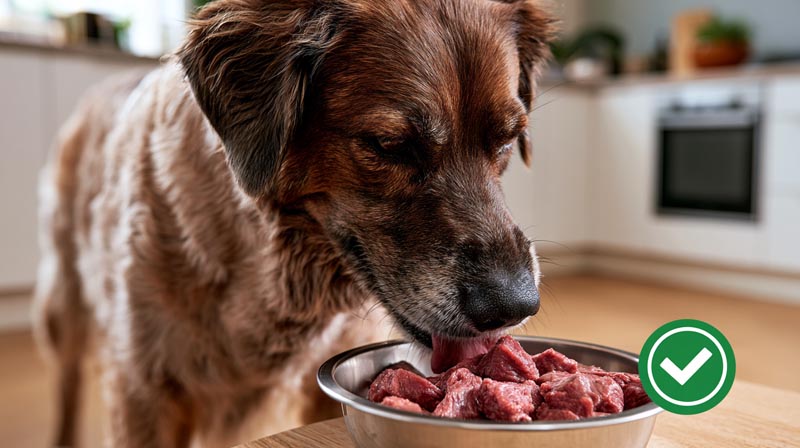
Most dogs will eat beef without hesitation. Whether beef dog food is actually good for dogs is a more complicated question than the empty bowl suggests.
Beef is the most commonly reported food allergen in dogs and one of the most nutrient-dense proteins available to them. Both things are true at the same time.
This article covers what beef provides nutritionally, where it falls short, how preparation method changes the safety profile, and which dogs should avoid it entirely.
By the end, you will know exactly when a beef-based diet makes sense for your dog and when it does not.
Is Beef Dog Food Good for Dogs?
Yes. Beef dog food is good for most dogs. It delivers a complete amino acid profile, meets AAFCO nutritional standards when properly formulated, and supports muscle maintenance, immune function, and coat health across all life stages.
That said, the quality of the beef, how it’s prepared, and whether it fits your individual dog’s health profile all matter just as much as the protein source itself.
Beef remains one of the most recognized animal proteins in commercial dog food, and it is still a go-to choice for many owners even as alternative proteins become easier to find.
For most healthy dogs, a well-formulated beef-based kibble, wet food, or fresh diet covers the full nutritional baseline. The exceptions, including dogs with confirmed allergies or specific health conditions, are covered further down.
| Format | Best For | Key Consideration |
|---|---|---|
| Beef kibble (dry) | Most adult dogs and convenience feeding | Check for a named beef source rather than generic “meat meal” |
| Beef wet food | Seniors and dogs needing more moisture | Higher water content results in lower caloric density |
| Fresh/gently cooked beef | Dogs with digestive sensitivity | Serve plain, with no seasoning or sauces |
| Raw beef | Discouraged by the AVMA; WSAVA warns of the risks | Significant risk of pathogen contamination |
What Nutrients Does Beef Provide for Dogs?
Beef is one of the most nutrient-dense protein sources available for dogs. It supplies the full range of essential amino acids that dogs cannot produce on their own, plus a mineral and vitamin profile that directly supports key physiological functions.

The AAFCO nutrient profiles for adult dogs identify iron, zinc, B vitamins, and selenium as required nutrients in complete and balanced diets. Beef delivers all four in bioavailable forms.
What Proteins and Amino Acids Are in Beef?
Beef muscle meat contains all 10 indispensable amino acids dogs require: lysine, methionine, threonine, tryptophan, histidine, leucine, isoleucine, valine, arginine, and phenylalanine.
A 2022 analysis in the Journal of Animal Science (Templeman and Shoveller) calculated digestible indispensable amino acid scores (DIAAS-like values) for dog food ingredients, using digestibility data from swine and rooster studies. Against AAFCO’s adult maintenance recommendations, beef loin and ground beef scored 89 and 97, far above plant proteins such as corn gluten meal, which scored roughly 34 to 45.
Creatine, found naturally in beef muscle tissue, also supports energy metabolism and contributes to stamina in physically active dogs.
What Vitamins and Minerals Does Beef Contain?
Key minerals in beef:
- Iron (heme form): highly bioavailable, supports red blood cell production and oxygen transport
- Zinc: supports immune function, wound healing, and skin and coat condition
- Selenium: acts as an antioxidant, protects cells from oxidative damage
- Phosphorus: supports bone development and energy metabolism
B vitamins in beef include B12, B6, niacin (B3), and riboflavin (B2). B12 specifically supports red blood cell formation, neurological function, and energy metabolism. These are water-soluble and need consistent dietary supply since dogs cannot store large amounts.
Beef fat also contributes omega-6 fatty acids, which support skin integrity and coat quality. The ratio of omega-6 to omega-3 in beef runs higher toward omega-6, which is worth noting for dogs that need an anti-inflammatory diet.
What Are the Health Benefits of Beef-Based Dog Food?
The nutritional profile of beef supports 5 key health outcomes for dogs: muscle development, immune support, coat condition, red blood cell production, and sustained energy in active dogs.
Beef is a particularly strong choice for working breeds, athletic dogs, and dogs recovering from illness or surgery, where protein demand is higher than average.
Muscle Development and Lean Body Mass
Beef supplies the complete amino acid chain required for muscle protein synthesis. A diet built on high-quality protein helps dogs maintain lean body mass better than one built on lower-quality protein sources.
This matters most for large working breeds like the German Shepherd Dog or high-drive sporting dogs, where muscle integrity affects both performance and joint health over time.
Immune Function and Skin Health
Zinc and selenium in beef are directly tied to immune system performance. Zinc supports T-cell function and antibody production. Selenium reduces oxidative stress, which is linked to chronic inflammation.
The omega-6 fatty acids from beef fat contribute to epidermal barrier function, which affects how well a dog’s skin resists environmental allergens and moisture loss. Improved coat shine is usually the first visible sign of a protein-adequate diet.
Red Blood Cell Production and Energy
Heme iron in beef is absorbed at a significantly higher rate than non-heme iron from plant sources. This directly supports hemoglobin synthesis and oxygen delivery to muscles and organs.
B12 works alongside iron in red blood cell formation. Dogs deficient in either nutrient can show reduced stamina, pale gums, and general lethargy. Beef supplies both through a single protein source.
Is Beef Hard for Dogs to Digest?
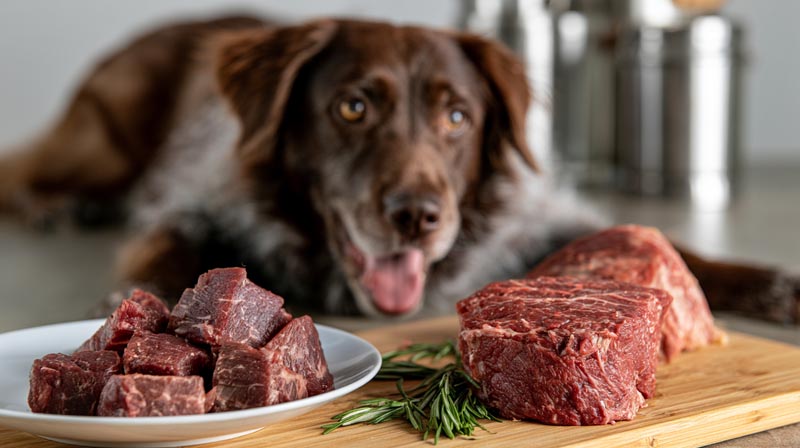
No. Beef is well-tolerated by most dogs and is highly digestible. A 2023 Journal of Animal Science study of commercial frozen and freeze-dried raw dog foods, tested with a rooster digestibility model, found standardized digestibility at or above 90% for most indispensable amino acids.
Digestive issues tied to beef usually trace back to fat content, not the protein itself.
Beef Meal vs. Fresh Beef vs. Ground Beef
Fresh beef: highest moisture content, easiest for dogs to process, retains full amino acid profile without processing degradation.
Ground beef: easy to digest, mixes well with other ingredients, but higher surface area exposure means faster spoilage and higher bacterial risk if raw.
Beef meal: dehydrated and concentrated, higher protein density per gram than fresh beef, but the rendering process can reduce some heat-sensitive nutrients. Still a legitimate and nutritionally adequate ingredient when sourced from named beef (not generic “meat meal”).
Fat Content and Sensitive Stomachs
Dogs that react poorly to beef-based food are more often reacting to high fat content from fattier cuts, not to beef protein itself. Pancreatitis-prone dogs and those with chronic digestive sensitivity do better on lean ground beef or sirloin-based formulas.
For dogs with confirmed sensitive stomachs, switching to a lower-fat beef formula often resolves the issue without needing to eliminate beef entirely.
Can Dogs Be Allergic to Beef?
Yes. Beef is the most commonly reported food allergen in dogs. A systematic review of published studies covering 297 dogs with cutaneous adverse food reactions found that 34% reacted to beef, making it the leading allergen ahead of dairy (17%), chicken (15%), and wheat (13%) (Mueller, Olivry and Prélaud, BMC Veterinary Research, 2016).
The Merck Veterinary Manual also lists beef first among the most common food allergens in dogs, followed by dairy products, chicken, wheat, and lamb.
What Are the Symptoms of Beef Allergy in Dogs?
Symptoms are primarily dermatological, not gastrointestinal. Most owners notice skin signs long before any digestive upset.
- Chronic non-seasonal itching, especially around paws, ears, face, and belly
- Recurring ear infections that don’t resolve with standard treatment
- Hot spots and hair loss from persistent scratching
- Skin hyperpigmentation or thickening in chronic cases
GI signs like vomiting and loose stools can appear, but they’re less reliable indicators. A dog can have a confirmed beef allergy with zero digestive symptoms.
Breeds that appear overrepresented include Labrador Retrievers, German Shepherds, French Bulldogs, and West Highland White Terriers, though any breed can develop a sensitivity.
How Is a Beef Allergy Diagnosed?
The only reliable diagnostic method is an 8 to 12-week elimination diet trial using a hydrolyzed protein or novel single-protein recipe that has never been part of the dog’s diet before.
Blood, saliva, and hair tests are not clinically validated for food allergy diagnosis. A systematic review of these tests (Mueller and Olivry, BMC Veterinary Research, 2017) concluded that an elimination diet followed by a food challenge remains the best diagnostic procedure.
Food allergies build through repeated exposure, not from a single incident, so a dog can eat beef for years before reacting. Onset is most common in young adult dogs, but it has been reported anywhere from under 6 months to 13 years of age.
Is Raw Beef Safe for Dogs?
Raw beef carries real pathogen risk. Cornell’s Riney Canine Health Center puts the odds of a foodborne pathogen (Salmonella, Listeria, or toxigenic E. coli) in frozen raw meat diets purchased online at about 1 in 3, based on an FDA Center for Veterinary Medicine study published in 2014.
Between March 2020 and August 2021, the FDA initiated 28 pet food recalls due to microbiological contamination. 18 of those 28 recalls were for raw pet food products (Frontiers in Veterinary Science, 2022).
Official Positions on Raw Feeding
The AVMA discourages feeding raw or undercooked animal-source protein to dogs and cats, and the WSAVA Global Nutrition Committee warns that raw meat-based diets carry a high risk of bacterial contamination, with no evidence of health benefits over cooked diets. The Cornell Feline Health Center took a definitive stance against raw diets in its 2022 Annual Report, citing pathogen risk to both pets and the humans in contact with them.
Bacterial pathogens were isolated from 35.7% of raw meat-based diet samples tested in the same 2022 Frontiers in Veterinary Science study, compared to zero in extruded (cooked) diets from the same analysis.
Ground Beef vs. Whole Muscle Cuts
Ground beef carries a higher contamination risk than whole muscle cuts. The grinding process spreads surface bacteria throughout the entire mass, not just on the exterior.
If owners choose to feed raw despite the risks:
- Source from suppliers who use high-pressure pasteurization (HPP)
- Keep raw food frozen until immediately before use
- Use separate bowls and cutting surfaces; wash hands thoroughly after handling
- Do not allow raw-fed dogs to lick the faces of immunocompromised individuals, children, or elderly family members
Raw-fed dogs can shed Salmonella and Listeria in their feces without showing any signs of illness. The same Frontiers study found pathogens in 33.3% of fecal samples from raw-fed dogs. The risk extends beyond the dog to the entire household.
Is Cooked Beef Good for Dogs?
Yes. Plain cooked beef is safe, digestible, and nutritionally complete as a protein component. Cooking eliminates Salmonella, Listeria, and E. coli without destroying the amino acid structure or most of the mineral content.
Commercial fresh-cooked dog foods built around cooked beef, vegetables, and digestible grains can meet AAFCO standards for complete and balanced adult nutrition, as long as the label carries an AAFCO nutritional adequacy statement.
What Cooking Does to Beef Nutrition
| Nutrient | Effect of Cooking | Practical Impact |
|---|---|---|
| Amino acids / protein | Structure largely preserved | Bioavailability maintained or improved |
| Iron, zinc, selenium | Mostly retained | No meaningful loss at normal cooking temperatures |
| Vitamin B12, B6, niacin | Some reduction (roughly 10–65%, depending on the vitamin and cooking method) | Substantial amounts still remain after cooking |
| Enzymes | Denatured by heat | Minimal functional significance in digestion |
| Pathogens | Killed when ground beef reaches 160°F (71°C) internal temperature | Eliminates Salmonella, Listeria, and E. coli |
B vitamin and mineral retention figures come from the USDA Table of Nutrient Retention Factors, and 160°F is the USDA’s safe minimum internal temperature for ground beef.
What to Avoid When Cooking Beef for Dogs
Never add: onion, garlic, leeks, or chives (all toxic to dogs), salt, cooking oils in large amounts, or sauces and marinades containing these ingredients.
Cooked beef bones are a separate issue entirely. Cooked bones splinter. Bone fragments can cause intestinal perforation, which is a surgical emergency. Raw bones carry the pathogen risks described above. Neither option is risk-free, and most veterinary nutritionists recommend avoiding bones from cooked beef entirely.
Plain boiled or baked lean beef, cut into appropriate-sized pieces for your dog’s breed, is one of the safest ways to add fresh protein to an existing diet. Dogs prone to weight gain do better with sirloin or round cuts over fattier ground chuck or rib preparations.
How Does Beef Compare to Other Proteins in Dog Food?
Beef is not the best protein for every dog. It is higher in fat than skinless chicken or turkey, richer in iron than fish, and carries a higher allergy risk than most novel proteins. The right choice depends on the dog’s activity level, health history, and current diet.
| Protein | Fat Level | Allergy Risk | Best For |
|---|---|---|---|
| Beef | Moderate-high | Highest (34% of food-allergic dogs) | Active or working dogs; dogs needing additional iron |
| Chicken | Low | Moderate (15%) | Sensitive stomachs and weight management |
| Fish (salmon, pollock) | Moderate | Low (2%) | Dogs needing omega-3s and anti-inflammatory support |
| Lamb | Moderate-high | Low (5%) | Novel-protein elimination diets |
| Turkey | Low | Low | Weight management and low-fat feeding |
Beef vs. Chicken
Beef carries more fat per gram than skinless chicken breast, which makes it the stronger option for active or working breeds but a poor fit for dogs prone to pancreatitis or weight gain.
Both are high-quality proteins. In the 2022 Templeman and Shoveller analysis, chicken breast scored 85 against AAFCO’s adult maintenance recommendations, slightly below beef loin (89) and ground beef (97).
Key difference: Beef delivers significantly more heme iron and zinc than chicken. For dogs that need extra iron and zinc in their diet, beef has a clear nutritional edge over chicken.
Beef vs. Fish
Fish wins on omega-3 fatty acids. Beef is higher in omega-6. For dogs dealing with inflammatory conditions, joint problems, or skin disease, fish (especially salmon or pollock) covers gaps that beef cannot.
Rotation feeding is a practical answer here. Alternating beef and fish across the week provides both the iron and zinc of beef and the EPA and DHA of fish without needing a supplement for either.
Beef vs. Lamb as a Novel Protein
Lamb has a 5% allergen incidence rate in dogs with confirmed food reactions (Mueller, Olivry and Prélaud, BMC Veterinary Research, 2016), compared to beef at 34%.
If a dog has a confirmed beef allergy and needs a novel protein for an elimination diet, lamb is a logical replacement. But lamb meal has shown lower amino acid digestibility than other animal meals in comparative studies, including a University of Illinois study in dogs (Journal of Animal Science, 1998), so formulation quality matters more with lamb than with beef.
What Should You Look for in a Beef Dog Food?
The ingredient label tells you more than any marketing claim on the front of the bag. AAFCO has specific naming rules that determine how much actual beef a product must contain based on the product name.
How to Read a Beef Dog Food Ingredient Label
AAFCO’s naming rules work on a percentage scale:
- “Beef Dog Food”: beef must make up at least 95% of the product by weight (excluding added water)
- “Beef Dinner” or “Beef Entree”: beef makes up at least 25% of the product (excluding added water)
- “With Beef”: beef is at least 3% of the product
- “Beef Flavor”: no minimum beef content required, only enough to detect flavor
“Beef” as the first ingredient in a dry kibble means it is the heaviest single ingredient before moisture removal. After processing, beef drops significantly in weight relative to grains or other dry ingredients. Look for “beef meal” or “deboned beef” in the top 3 ingredients in a dry food to confirm meaningful protein content.
What Certifications or Standards Matter?
The AAFCO nutritional adequacy statement is non-negotiable. A dog food that does not carry “complete and balanced” language is intended for intermittent or supplemental feeding only.
Two methods validate AAFCO compliance:
- Formulation (the recipe is calculated or lab-analyzed to meet AAFCO nutrient profiles)
- AAFCO feeding trials (live animal testing, considered more rigorous)
The WSAVA guidelines on selecting pet foods additionally suggest asking whether a brand employs a qualified nutritionist (PhD in animal nutrition or ACVN/ECVCN board certification), what quality control it runs on ingredients and finished products, and whether it can provide a complete nutrient analysis. Brands like Orijen and Merrick use named beef sources. Purina Pro Plan employs veterinary nutritionists and publishes nutritional research. All are legitimate starting points, but the FDA recalls and withdrawals database remains the most reliable safety check before committing to a brand.
Grain-Free Beef Formulas and DCM Risk
The FDA announced an investigation into a potential link between certain diets, many of them grain-free, and dilated cardiomyopathy (DCM) in dogs in July 2018. In December 2022, the agency said it would not release further updates unless there was meaningful new scientific information, and it has not established a causal link.
Some owners have moved back to grain-inclusive beef formulas in response to the DCM concern. While the science remains unresolved, a grain-inclusive beef formula is a reasonable, cautious choice for most dogs without a specific grain sensitivity.
How Much Beef Can a Dog Eat Per Day?
A common rule of thumb for a fresh or raw meat-based diet is 2 to 3% of the dog’s body weight per day for healthy adult dogs at maintenance activity levels.
By that rule, a 50-pound adult dog at average activity eats approximately 1 to 1.5 pounds of food daily when beef is the primary protein source. The same rule of thumb adjusts upward to 3 to 5% for working or highly active dogs, and down to 1.5 to 2% for sedentary or overweight dogs. Calorie needs vary a lot between individual dogs, so a dog calorie calculator gives a more reliable starting point than body weight percentages alone.
Beef as a Topper vs. Primary Diet Component
As a primary diet source: follow the 2-3% body weight guideline and ensure the full diet meets AAFCO complete and balanced requirements. Beef alone is not a complete diet. It lacks adequate calcium, fiber, and certain fat-soluble vitamins.
As a topper or supplement: 1 to 2 ounces of plain cooked beef per meal for a medium-sized dog adds protein and palatability without displacing nutritional balance. Keep toppers to under 10% of total daily calories to avoid disrupting the base diet.
Beef Liver Daily Limits
Beef liver is nutrient-dense but carries vitamin A toxicity risk if overfed. A common ceiling in raw feeding guidelines is 5% of the total diet by weight for liver.
For a 50-pound dog eating 1 to 1.5 pounds of food a day, that translates to roughly 1 ounce of beef liver daily at most. Exceeding this consistently risks hypervitaminosis A and excess copper intake over time. Dogs already eating a commercial kibble with beef liver listed as an ingredient should not have additional liver added without checking the base diet’s existing vitamin A content.
Is Beef Dog Food Good for Dogs With Specific Health Conditions?
Beef is helpful for some conditions and contraindicated for others. The answer depends almost entirely on which health issue is present and which cut of beef is being used.
Is Beef Safe for Dogs With Kidney Disease?
Standard beef is a poor fit for dogs with chronic kidney disease (CKD). The primary dietary concern in CKD is phosphorus restriction, and like most meats, beef is rich in phosphorus. According to the Merck Veterinary Manual, dogs with CKD fed renal diets that are low in phosphorus with modest amounts of high-quality protein live longer.
A therapeutic renal diet for dogs is specifically formulated to reduce phosphorus, moderate protein, and supplement with omega-3 fatty acids (EPA and DHA). Regular beef, whether ground or whole muscle, does not meet these requirements without significant modification from a board-certified veterinary nutritionist.
Beef liver is especially problematic for CKD dogs. Its high phosphorus and copper content rules it out for most dogs with kidney disease.
Is Beef Good for Dogs With Pancreatitis?
Lean beef in limited amounts can work for pancreatitis patients. High-fat beef cuts are the problem, not beef protein itself.
A 2024 review in the Journal of the American Veterinary Medical Association notes that dogs with both CKD and recurrent pancreatitis may need a diet that is low in fat and moderate in phosphorus. For pancreatitis alone, lean beef cuts or extra-lean ground beef can be included in a veterinarian-supervised home-cooked recovery diet.
Cuts to avoid in pancreatitis: chuck, rib, brisket, and any beef with visible fat marbling. Stick to round, sirloin, or extra-lean ground beef.
Beef for Dogs With Anemia or Iron Deficiency
Beef is one of the richest dietary sources of iron for dogs. Heme iron from beef muscle meat is absorbed at a significantly higher rate than non-heme iron from plant sources, and beef contains more of it than chicken.
Diet is rarely the root cause, though. The Merck Veterinary Manual notes that iron deficiency in dogs is rarely nutritional and most commonly follows chronic blood loss, so a dog with anemia needs a vet workup first. Once the cause is being treated, B12 and bioavailable iron in beef can support red blood cell formation as part of a balanced diet.
What Are the Best Beef Dog Food Brands?
Choosing a beef dog food brand comes down to 3 criteria: named beef source in the ingredient list, AAFCO nutritional adequacy statement with feeding trial validation where possible, and a clean recall history on the FDA database.
The FDA received approximately 1,300 adverse event reports for various Purina products between November 2023 and April 2024. After a full investigation including plant inspection and lab analysis, the FDA concluded that the evidence did not identify a public health concern, and no recall was initiated over those reports. This illustrates why checking the FDA recall database directly is more reliable than brand reputation or social media reports alone.
Brands With Consistent Named Beef Sources
Orijen uses fresh and raw animal ingredients including named beef. Mars Petcare completed its acquisition of Champion Petfoods (Orijen’s parent company) in February 2023.
Merrick Grain-Free Real Texas Beef + Sweet Potato Recipe uses deboned beef as the first ingredient and meets AAFCO nutrient profiles. Merrick has been owned by Nestlé Purina since 2015 but operates as a separate business with its own manufacturing in Texas.
Purina Pro Plan has a full-time veterinary nutrition team and publishes research on its formulas. Check the AAFCO statement on the specific beef formula you are considering to see whether it was substantiated by feeding trials.
What to Check Before Buying
A few things worth doing before committing to any beef dog food:
- Search the brand name on the FDA recalls and withdrawals database (fda.gov/animal-veterinary/safety-health/recalls-withdrawals)
- Confirm “complete and balanced” language on the label for your dog’s life stage
- Check whether beef or beef meal appears in the top 3 ingredients
Fresh beef dog food brands like Redbarn use whole beef with minimal processing and publish ingredient sourcing details. For owners wanting a puppy-specific beef formula, confirm the label includes “growth and reproduction” or “all life stages” in the AAFCO statement, since adult maintenance formulas do not meet puppy nutritional requirements.
Dogs prone to joint issues or with a history of digestive sensitivity may also benefit from pairing a quality beef diet with appropriate healthy treats that complement rather than disrupt the protein balance of their main diet. Owners looking at single-ingredient options might consider single-ingredient dog treats made from beef as a clean, transparent complement to a beef-based diet.
For dogs where beef is confirmed as a tolerated protein and beef heart is being considered as a nutrient-dense addition, it is worth noting that heart is usually counted as muscle meat, not organ meat, in raw feeding, and carries a different nutritional profile than beef liver. It is high in taurine and CoQ10 and much lower in vitamin A than liver.
FAQ on Is Beef Dog Food Good For Dogs
Is beef dog food good for dogs?
Yes, for most dogs. Beef provides a complete amino acid profile, heme iron, zinc, selenium, and B vitamins. It meets AAFCO nutritional standards when properly formulated. The main exceptions are dogs with confirmed beef allergies or specific health conditions like chronic kidney disease.
Can dogs eat beef every day?
Yes, if the diet is complete and balanced. Beef alone is not nutritionally sufficient. It needs calcium, fiber, and fat-soluble vitamins added to meet canine dietary needs. A properly formulated beef-based kibble or fresh diet can be fed daily without issue.
Is beef the most common dog food allergen?
Yes. A systematic review covering 297 food-allergic dogs found that 34% of food-allergic dogs reacted to beef, making it the top allergen ahead of dairy at 17% and chicken at 15% (Mueller, Olivry and Prélaud, BMC Veterinary Research, 2016).
Is raw beef safe for dogs?
Not reliably. Cornell’s Riney Canine Health Center, citing FDA research, puts the odds of Salmonella, Listeria, or toxigenic E. coli in frozen raw meat diets bought online at about 1 in 3. The AVMA discourages raw protein diets, and the WSAVA warns of their contamination risk. Cooked beef eliminates pathogen risk without destroying the protein structure.
How much beef can I feed my dog per day?
A common rule of thumb is 2 to 3% of body weight daily for a fresh or raw meat-based diet. A 50-pound adult dog eats roughly 1 to 1.5 pounds of food per day by that rule. Beef liver should not exceed 5% of the total diet to avoid vitamin A toxicity.
Is beef good for dogs with sensitive stomachs?
Often yes, but fat content is the variable. Dogs reacting to beef-based food are usually responding to high fat from fattier cuts, not beef protein itself. Lean ground beef or sirloin-based formulas are better suited to dogs with digestive sensitivity.
What is the difference between beef and beef meal in dog food?
Fresh beef contains roughly 70% water. Beef meal is dehydrated and concentrated, delivering more protein per gram in dry kibble. Both are legitimate ingredients. Named beef meal (not generic “meat meal”) from a specified source is acceptable and nutritionally adequate.
Is beef dog food bad for dogs with kidney disease?
Generally yes. Beef is rich in phosphorus, which is the primary nutrient restricted in dogs with chronic kidney disease. Standard beef formulas do not meet renal diet requirements. A board-certified veterinary nutritionist should formulate any diet for a dog with CKD.
Can puppies eat beef dog food?
Yes, if the formula carries an AAFCO statement covering growth and reproduction or all life stages. Adult maintenance formulas do not meet puppy nutritional requirements. Check the label before feeding any beef formula to a growing dog, especially large breed puppies.
How do I know if my dog is allergic to beef?
Symptoms are primarily dermatological: chronic itching, recurring ear infections, and paw licking. The only reliable diagnostic method is an 8 to 12-week elimination diet trial using a novel protein. Blood, hair, and saliva tests are not clinically validated for canine food allergy diagnosis.
Conclusion
Beef as a canine protein source doesn’t come down to a simple yes or no.
Beef delivers a strong nutritional profile: complete amino acids, bioavailable heme iron, zinc, selenium, and B12. For active dogs and working breeds, a well-formulated beef-based dog food is hard to beat.
But beef is also the leading food allergen in dogs, and it carries real risks when fed raw or to dogs with chronic kidney disease or pancreatitis.
The AAFCO nutritional adequacy statement, named beef sources, and a clean FDA recall history are your three non-negotiable checkpoints when selecting any commercial beef dog food.
Know your dog’s health profile first. The protein follows from there.